


Could a simple, simmered cup be one of the gentlest ways to soothe your digestive lining? This question drives today’s look at a traditional liquid prized for its collagen and comforting warmth.
We’ll separate folklore from fact and show what this long-simmered preparation can realistically offer for digestion and overall well‑being.
Made by simmering animal bones and connective tissue, this nutrient-rich liquid supplies gelatin, amino acids, and minerals that many say support repair and comfort. Modern dietitians note its rising popularity in paleo trends and classic Asian cooking, while cautioning that nutrient levels vary widely by ingredients and cook time.
Expect clear, balanced guidance: we’ll explain differences between stock and broth, review the current research, and give practical tips on making, storing, and using it safely.
Key Takeaways
- Ancient practice, modern appeal: a protein-forward, soothing liquid with practical uses in daily meals.
- Evidence is emerging: lab and animal studies suggest benefits, while human research is still growing.
- Not a cure-all: valuable as a supportive food, not a standalone remedy.
- Practical tips ahead: learn how to make, shop, and store it safely.
- Want more detail? Read a focused review on bone broth for gut health for deeper context.
Bone broth, not just stock: what it is, why it matters for your gut
A lengthy simmer pulls collagen and amino acids from animal parts, creating a savory, thickened liquid enjoyed worldwide. This distinction isn’t just culinary nitpicking—simmer time changes texture and protein yield, and that matters when you want a richer, gelling result.
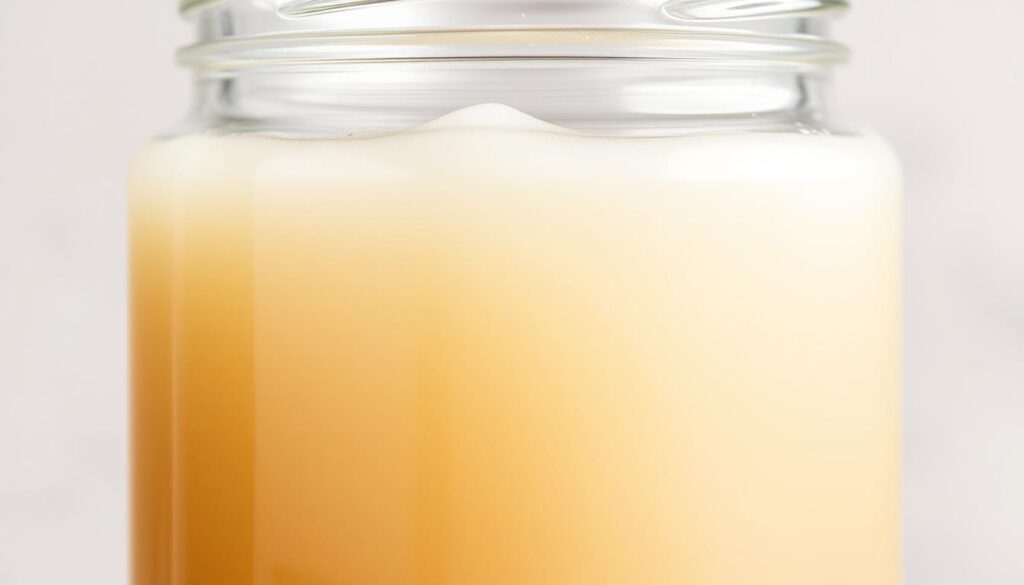
Bone broth vs. stock: simmer time, collagen, and that telltale gel
Stock often cooks for 2–3 hours and may include meat for flavor. In contrast, a slow-simmered version runs 6–24+ hours to extract more collagen and amino acids.
The fridge test is practical: a gelled set signals extracted gelatin, which points to higher protein concentration. Quickly made products labeled as “bone broth” may not reach that texture.
From prehistoric pots to modern mugs: a brief U.S. and global context
Using hooves, feet, and leftover bones has fed people for centuries. Many Asian cuisines kept this tradition alive, and modern U.S. shoppers now find shelf and freezer options marketed for convenience.
- Shop smart: prefer brands that list long simmer times and few additives.
- Use any bones: beef or chicken plus water and aromatics yield different flavor and gel levels.
- Temper expectations: research on the direct effects of the cooked liquid is still limited, so treat it as a supportive food rather than a cure.
For a practical consumer guide and label tips, see this concise review on bone broth every morning.
The science of Bone Broth Gut Health: collagen, gelatin, and the intestinal lining
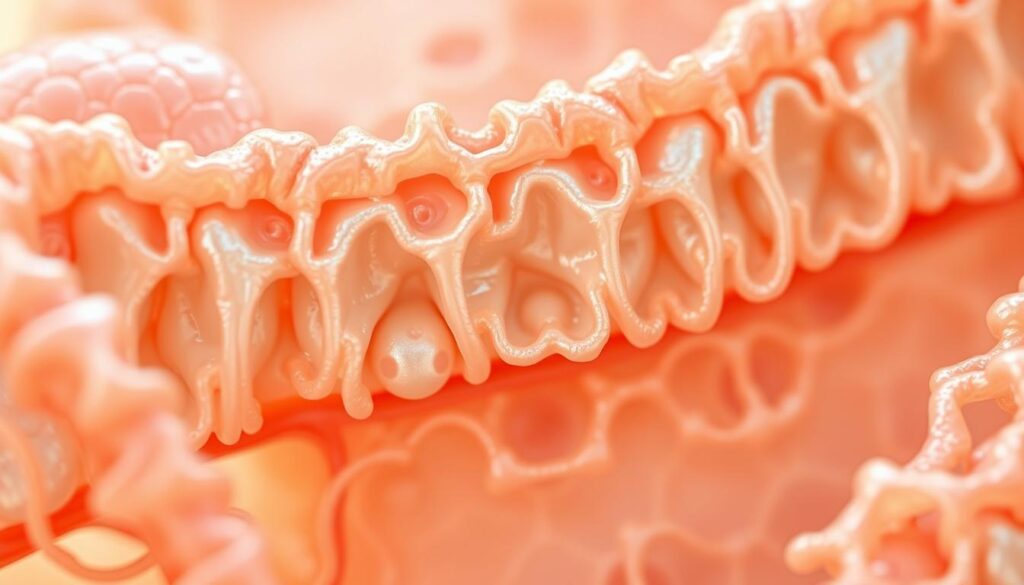
Collagen-derived gelatin supplies simple amino building blocks that experimental studies link to maintenance of the intestinal lining. This section summarizes what lab and animal work suggest, where evidence is solid, and where caution is needed.
How gelatin’s amino acids may support mucosal integrity
Gelatin yields glycine and glutamic acid, which the body can convert to glutamine. These amino compounds help cells that line the intestine and may support barrier function.
Animal and lab findings on anti-inflammatory properties
In rodent colitis models, gelatin-rich preparations reduced mucosal damage and inflammation. A 2021 mouse study found amino profiles from the simmered liquid produced measurable anti-inflammatory effects.
Evidence caveats and variability
Human research is limited. A 2019 analysis concluded the drink likely lacks collagen precursors in doses comparable to supplements. Nutrient content varies by bones used, simmer time, and recipe.
- Takeaway: the drink may help by delivering usable amino and protein compounds, but stronger human trials are needed.
- Practical note: for more background on composition and claims, see this concise review on bone broth.
How to make gut-focused bone broth at home
Start with quality bones, clear water, and a splash of acid—these three items set the stage for a nutrient-forward simmer. This simple base yields savory liquid you can sip or use in recipes.
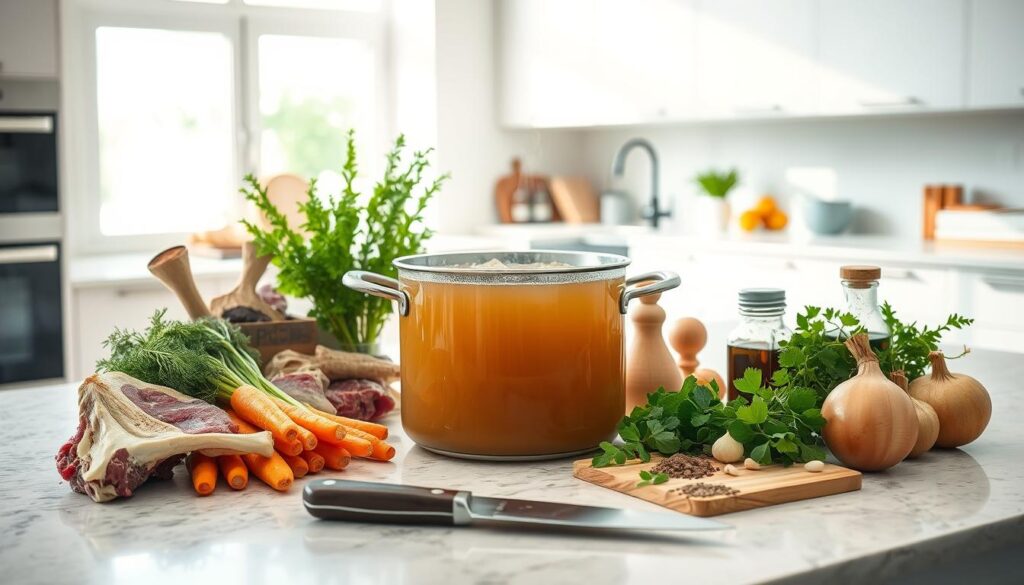
Ingredients that matter
Choose a mix: marrow bones, knuckles, oxtail, and feet boost gelatin and flavor. Add onion, celery, carrot, garlic, parsley, and thyme for extra phytonutrients.
Time and temperature
Low and slow works best. Use about 2–4 pounds of bones with 1 gallon of water and 2 tablespoons of apple cider vinegar. Simmer 12–24+ hours to extract more protein, calcium, and vitamins.
Step-by-step method
- Stovetop: bring to a boil, reduce to a bare simmer, skim, and keep the pot partially covered.
- Slow cooker: set to low and let it run overnight or longer.
- Pressure cooker: shorter cycles work but expect a lighter body and less gel.
Storage and safety
Strain, cool quickly, and refrigerate for 3–4 days or freeze single-cup portions. Reheat gently and taste for salt at the end.
Want a guided chicken version? Try this guided chicken version for a simple template you can adapt by type of bones or meat.
Smart shopping: choosing a quality bone broth in U.S. stores
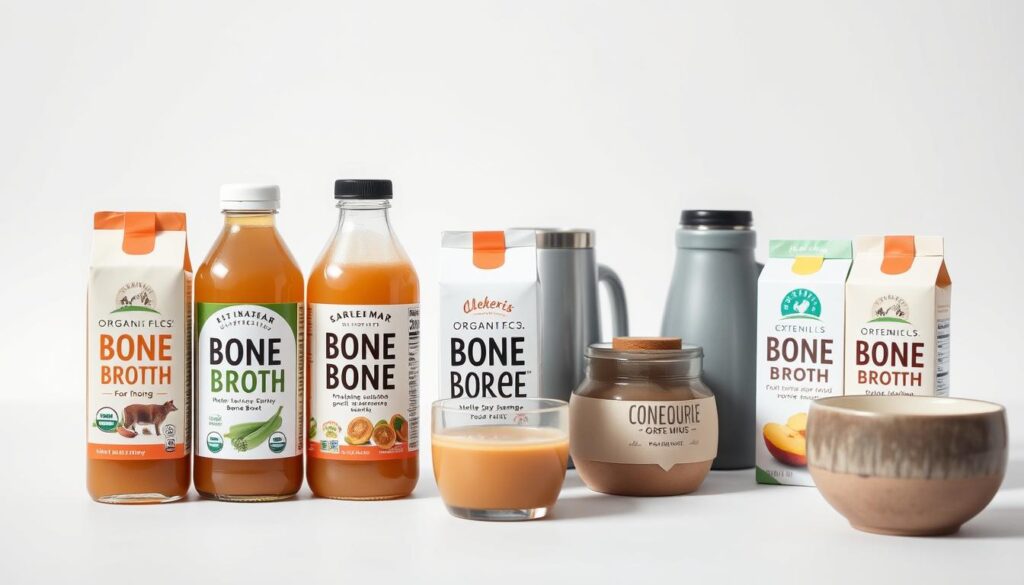
Not all commercial cups are created equal; a few label clues separate long-simmered liquids from short-cooked imitations. Use simple checks—simmer time, protein per cup, and ingredient list—to judge quality quickly.
Read labels closely. Look for explicit simmer times of around 6–24 hours, short ingredient lists, and absence of artificial additives. Compare sodium per cup if you track blood pressure or kidney concerns.
Try the gel test. When chilled, a set gel usually signals good gelatin extraction from real bones. Lack of gel can mean brief cook time, different bones, or added water and flavor enhancers.
- Freezer aisle: frozen products often keep texture and flavor and may store 12–24 months depending on brand guidance.
- Protein label: higher grams per cup generally reflect longer simmering and more bones per batch.
- Convenience options: powders, concentrates, and peptides can work—peptides give targeted collagen while powders mimic broth flavor.
Quick comparison to guide your pick
| Product Type | Key Claim | What to check | When to choose |
|---|---|---|---|
| Ready-to-drink (shelf) | “Bone broth” label | Simmer time, sodium, protein per cup | Everyday use if labels are transparent |
| Frozen | Minimal processing | Storage life, ingredient list, texture when thawed | Best for preserved texture and flavor |
| Powder / Concentrate | Convenience | Added fillers, protein type (peptide vs whole) | Travel or quick recipes |
| Collagen peptides | Targeted collagen | No flavor, dose per serving | Use for protein boost without flavor |
Keep expectations balanced. Brands like Brodo and Butcher’s Bone Broth are often cited by dietitians, but batch variability exists. Use quality as a filter and enjoy this food as part of a varied diet while research continues to evolve.
Using bone broth for gut support in daily life
A versatile savory liquid fits into many meals — from a gentle sip to a flavor boost for grains and sauces. Keep servings modest and pair with fiber-rich foods to maximize comfort and nutrition.

Serving ideas and timing: Sip a warm cup mid-morning or late afternoon, or add one cup to soups, stews, sauces, or rice for instant savory depth and extra protein. Use it as a light pre-meal to curb appetite or as a soothing snack when appetite is low.
Portions and frequency: Start with one cup daily or several cups per week. A typical cup can be ~50 calories and about 7–9 g protein, so it can help with satiety and weight management when paired with balanced meals.
Pairing with whole foods: Combine with leafy greens, root vegetables, legumes (as tolerated), and fresh herbs to support microbiome function and add fiber and micronutrients.
- Be cautious if you have kidney disease or a sodium-restricted plan: consult your clinician before increasing intake.
- Taste before salting: choose lower-sodium products and balance meals with potassium-rich vegetables.
Consuming bone broth can be convenient for recovery days or busy schedules, but track how your body responds and adjust portion size or frequency accordingly.
Beyond the gut: broader benefits and what the evidence says
The simmered liquid offers potential support for joints, muscles, weight control, sleep, and skin—but evidence varies by outcome and dose. Read this section to set realistic expectations and learn how to use it as part of a balanced plan.

How collagen and amino acids relate to joints, muscles, and tissues
Collagen breaks down into gelatin and amino acids that can support connective tissues and muscles. These building blocks may help maintain joint function, but study doses for tissue synthesis often exceed what a cup supplies.
If joint pain is a concern, combine dietary sources with strength work and, when needed, targeted supplements.
Weight, satiety, and protein density
Low-calorie, protein-forward cups can aid weight control by improving fullness. Use a serving as a starter or add it to veggie-heavy soups to boost satiety without many calories.
Sleep and stress: the role of glycine
Glycine supports relaxation. Study doses near 3 g improved sleep, while a single cup typically contains about 0.5–1.7 g.
To reach study levels you’d need multiple servings or a supplement; still, a nightly cup may help as part of good sleep habits.
Skin and aging: promising ideas, mixed proof
Collagen and hydration can plausibly benefit skin elasticity. Lab and animal work show supportive mechanisms, but human trials give mixed results.
For skin results, prioritize a diet with vitamin C, varied protein, and healthy fats alongside regular hydration.
- Practical note: observational and lab data hint at anti-inflammatory properties, but human trials and standard dosing remain limited.
- Athletes: a warm, protein-rich cup complements recovery but doesn’t replace full postworkout protein needs.
- Takeaway: this traditional liquid may offer supportive benefits across joints, weight, sleep, and skin—best used within consistent, nutrient-dense habits.
Conclusion
This traditional, simmered stock can be a simple, nourishing addition to your routine. Use it as a flavorful cup or a base in soups to add protein and small amounts of collagen-derived nutrients.
Quality matters. Choose long-simmered batches or products that gel when chilled, or make your own with a mix of bones, water, and a splash of acid. Store chilled for 3–4 days or freeze portions for later.
Science from labs and animal studies is promising but limited in humans, so treat it as supportive, not curative. For a focused consumer guide and deeper benefits, see this top benefits guide.
Final thought. If you enjoy the ritual and taste, include it often; if not, similar nutrients come from varied, protein-rich meals and colorful plants.
FAQ
What exactly is bone broth and how is it different from stock?
Bone broth is a long-simmered liquid made from animal bones, connective tissue, water, and often vegetables and vinegar. Unlike standard stock, broth is cooked longer (often 12–24+ hours) to extract more collagen and gelatin, which can produce a thicker, gelled texture when chilled. That extended simmer is the main difference that matters for nutrient concentration and mouthfeel.
Which nutrients in bone broth may support the intestinal lining?
Key compounds include gelatin-derived amino acids such as glycine and glutamine, small amounts of collagen peptides, and minerals leached from bones. Glycine and glutamine are often highlighted for their role in mucosal repair and cellular metabolism, but amounts vary by recipe and cooking time.
Is there strong human evidence that bone broth heals the gut?
Human research is limited. Animal and lab studies suggest anti-inflammatory and barrier-supporting effects from gelatin and certain peptides, but clinical trials in people are sparse. Consider broth as a supportive, nutrient-rich food rather than a proven medical treatment.
How should I make a gut-focused batch at home?
Use a mix of joints and marrow or knucklebones, add acid like apple cider vinegar to help extract minerals, cover with water, and include aromatic vegetables. Simmer low for 12–24 hours (or 6–8 in a pressure cooker). Strain, cool, and skim fat as desired. Proper chilling and reheating prevent spoilage.
How long should I simmer to maximize collagen and gelatin?
Longer is generally better: 12–24 hours pulls more connective tissue breakdown into the liquid. Beef and oxtail benefit from the longer end; chicken carcasses often need 6–12 hours. Pressure cookers can shorten time while still extracting useful compounds.
How should I store and reheat broth safely?
Cool quickly, refrigerate within a few hours, and use within 3–4 days. Freeze in portions for longer storage (3–6 months). Reheat to a simmer before eating; avoid repeated reheating cycles to limit flavor and nutrient loss.
What should I look for when buying ready-made broth in U.S. stores?
Read labels for simmer time claims, sodium content, and added ingredients. Look for products with minimal additives, reasonable sodium, and transparency about simmering or collagen content. A chilled gel in the jar can indicate higher gelatin, but it’s not a guarantee of specific nutrient levels.
Are powdered or concentrated broths a good alternative?
Powders and concentrates offer convenience and longer shelf life. They can be useful when fresh or ready-made liquid isn’t available, but check for fillers, added sodium, and artificial flavors. Some powders include hydrolyzed collagen or peptides that mimic aspects of slow-simmered broth.
How much should I drink and how often for gut support?
Practical routines vary; many people sip a cup daily or use 1–2 cups several times weekly as a base for soups or cooking liquids. Focus on consistency and pairing with a balanced diet rather than chasing a specific dose, since clear dosage evidence is lacking.
Can broth help with joint pain, skin, or sleep?
Collagen-related amino acids are plausibly helpful for joint comfort and skin health, and glycine may support sleep in some people. Evidence is mixed and often modest. Use broth as part of a broader nutrition and lifestyle plan rather than a standalone cure.
Who should be cautious about consuming broth regularly?
People on sodium-restricted diets, those with kidney disease, or anyone advised to limit certain minerals should consult a clinician. Also watch for added ingredients, allergens, or high-sodium restaurant and commercial varieties.
Does the gel test reliably indicate nutrient quality?
Gel formation when chilled suggests gelatin presence, which often correlates with longer simmering and more collagen extraction. However, gel alone doesn’t quantify amino acids or minerals, so it’s a useful sign but not a definitive measure of overall nutrient content.
Can I use broth in meals beyond sipping to support gut health?
Yes. Use it as a base for soups, stews, cooking grains, sauces, and braises. Combining it with vegetables, fiber, and whole foods enhances overall digestive support and makes the benefits more practical and sustainable.


Don’t Miss These Picks