Surprising fact: up to 70% of women try dietary strategies for period symptoms, yet many popular rituals lack strong clinical proof.
Seed cycling pairs specific seeds with phases of the menstrual cycle: flax and pumpkin in the follicular phase, then sunflower and sesame in the luteal phase. The goal is to nudge estrogen early and support progesterone later.
Many people report improved PMS, mood, or cycle regularity, but rigorous trials are limited and show mixed results. We examine lignans, omega-3s, mineral roles, and what small studies and lab data actually reveal.
This guide is balanced and evidence-focused. It explains the common protocol, outlines risks, and helps you decide if timing seeds fits your goals. For a deeper review of the science, see this summary on the topic: seed cycling research overview.
Key Takeaways
- Popular but under-studied: pairing seeds with cycle phases is common, yet clinical evidence is limited.
- Mechanisms exist: lignans and omega-3s can influence estrogen and inflammation, but effects vary.
- Low risk for most: adding ground seeds can improve diet quality and is unlikely to harm most women.
- Expect modest changes: don’t assume dramatic hormone shifts without stronger trials.
- Ask a clinician: discuss seeds if you have medical conditions or take hormone-related meds.
- Practical tip: timing seeds by phase is easy to try, but track symptoms to evaluate impact.
Why People Search for Seed Cycling Benefits Right Now
Many are looking for food-based ways to ease monthly hormone symptoms and improve cycle comfort with minimal risk.
Online interest spikes because people want approachable, nonpharmacologic options to manage PMS, irregular periods, and fertility concerns.
Common goals include stabilizing mood and energy, reducing cramps or acne, and trying to support conception without aggressive treatments.
The present landscape mixes strong personal stories with limited trial data. Articles and social posts often praise whole diets and timed seeds, but formal studies mostly test single seeds (not the full protocol).

What readers hope to gain
People with pcos or irregular periods often test diet-based strategies to correct hormonal imbalances. It’s reasonable to expect general nutrition gains from adding ground seeds to the diet.
What the science actually shows
Small trials link flax to modest changes in cycle regularity and less cyclical breast pain, but there’s no strong evidence that timing seeds by phase produces reliable hormone level changes.
- Try it informed: track symptoms for a few months and discuss plans with your clinician, especially if you have complex health needs.
- Be skeptical and curious: nutrient effects differ from claims about precise phase-driven shifts.
What Seed Cycling Is and How It’s Typically Practiced
This method pairs two ground seeds with each half of the cycle to create a repeatable, food-based routine. It is simple to start on the first day of bleeding and track over several cycles.
The most common protocol calls for 1 tablespoon each of freshly ground flax seeds and pumpkin seeds daily through the follicular phase (roughly days 1–13/14).
After ovulation, practitioners switch to 1 tablespoon each of ground sunflower seeds and sesame seeds for the luteal phase until the next period.

Practical notes and variations
Grinding improves digestibility and lignan availability. Many add seeds to yogurt, smoothies, or oats for easy daily use.
People with irregular cycles may still follow a 14-day/14-day template or switch at ovulation if they track basal body temperature.
Menopause and moon-phase adaptations
Those without a regular cycle sometimes align the pairs with lunar phases (new moon start). This is tradition-based rather than research-backed.
| Phase | Typical seeds | Proposed goal |
|---|---|---|
| Follicular phase | Flax seeds, Pumpkin seeds | Support estrogen dynamics |
| Luteal phase | Sunflower seeds, Sesame seeds | Support progesterone-related patterns |
| Postmenopause option | Rotate by moon phase | Maintain routine and track symptoms |
Try it for several cycles and track symptoms. The information in this article is for informational purposes only and is not intended as medical advice. Consult your healthcare provider for personalized guidance.
The Menstrual Cycle Basics: Follicular and Luteal Phases
The menstrual cycle follows predictable hormone swings that set the stage for symptoms, timing, and how interventions might interact. Knowing these phases helps you track day-to-day changes and test practical nutrition steps.
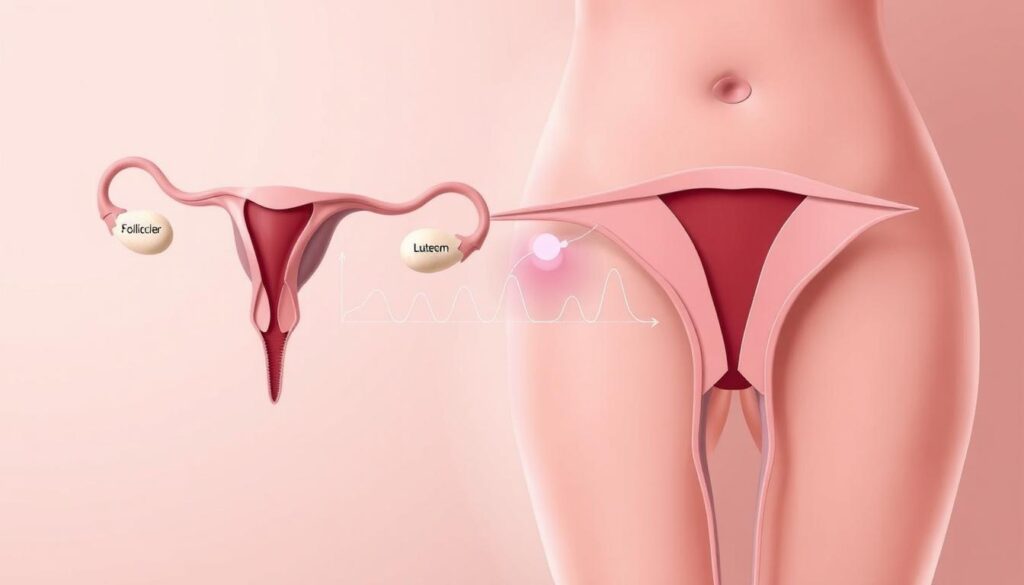
The follicular phase begins on the first day of the period and ends at ovulation. During this time, estrogen slowly rises as follicles develop.
Just before ovulation, FSH and LH surge and trigger egg release. Estrogen dips briefly right after ovulation.

The luteal phase spans ovulation to the next period. In this phase, progesterone and estrogen rise to support implantation, then fall if fertilization does not occur.
- Timing varies: 28-day examples are common, but the follicular length changes more than the luteal.
- Symptoms: shifts in energy, mood, cervical fluid, and basal body temperature often mirror changing hormone levels.
- Nutrition note: nutrient-dense seeds and foods support overall health, but strong proof that food timing reliably changes hormone levels is limited.
Practical tip: mark day 1 of bleeding to track your own cycle. Individual patterns differ, so use tracking to align lifestyle choices and discuss concerns with a clinician.
How Seed Cycling Is Proposed to Work
Advocates propose that plant lignans and specific micronutrients in certain ground seeds interact with liver metabolism and reproductive signaling to gently nudge hormone patterns across the cycle. The idea is plausible but not proven in phase‑specific trials.

Phytoestrogens and lignans from flax and sesame
Flax seeds and sesame are rich in lignans. Gut conversion yields enterolactone and enterodiol, compounds that can weakly mimic or block estrogen depending on dose and context.
Proponents say this may help balance estrogen during the follicular phase, but measured effects in studies tend to be small.
Zinc and vitamin E roles from pumpkin and sunflower
Pumpkin provides zinc; sunflower supplies vitamin E. Both support reproductive health and antioxidant defenses, which can indirectly support healthy hormone signaling.
Expected hormone shifts across the cycle
The protocol aims to time nutrients so rising FSH/LH and pre‑ovulatory estrogen are subtly supported early, then to favor progesterone production after ovulation. Typical physiology features FSH/LH surges, an estrogen peak, and later progesterone rise.
- Reality check: common servings give useful nutrients, but evidence that timing these amounts changes hormone levels or will reliably boost progesterone is limited.
- Possible synergy: fiber, omega‑3s, and antioxidants may improve inflammation and metabolic health, indirectly aiding hormone signaling.
Practical note: trying seed cycling can fit a nutrient‑forward diet, but avoid overstating effects—consult a clinician for personalized advice.
Seed Cycling Benefits: What the Research Supports vs. What’s Claimed
Many claims outpace the evidence. Small trials on single ingredients show modest effects, but robust proof that timing pairs across the menstrual cycle fixes hormonal imbalances is lacking.

- Users report improved PMS, clearer skin, better hair, weight shifts, and thyroid support.
- Some say menstrual pain, infertility, or menopause symptoms eased after trying the routine.
What the data actually show
- Most trials test flax or sesame alone; results are modest (slight drops in cyclical breast pain, minor cycle metric changes).
- Placebo-controlled studies are inconsistent, and no randomized trial tests the full phase‑timed protocol.
“Adding nutrient-dense seeds can improve diet quality, which may explain many reported gains.”
Confounders like diet, sleep, stress, and exercise often explain improvements. For women seeking symptom relief, treat timed seeds as a low-risk nutritional step—not a proven hormone-fixing therapy. Track symptoms for several months and consult a clinician for persistent issues.
Does Seed Cycling Balance Hormone Levels?
It may change some symptoms for a few people, but strong evidence that it reliably alters circulating hormone levels is limited.
Do timed nutritional swaps actually move measurable hormones, or do they mainly change how people feel?

Flax and sesame lignans: weak estrogenic or antiestrogenic action?
Lignans in flax seeds and sesame seeds convert in the gut to metabolites that act as weak phytoestrogens. They can mildly mimic or block estrogen depending on context.
Clinical effects appear small and depend on dose, microbiome, and baseline diet. Most studies focus on cancer-related endpoints or short trials, not long-term hormone balance.
Cycle regularity, luteal phase length, and breast pain findings
Small trials link flax seeds to modest gains: somewhat more regular cycles, a slightly longer luteal phase, and reduced cyclical breast pain in some women.
Those results come from limited sample sizes and vary by study design, so they are promising but not definitive.
“Adding ground lignan-rich foods can influence comfort markers for some, but consistent normalization of hormones is not proven.”
| Outcome | Evidence strength | Notes |
|---|---|---|
| Estrogen modulation | Weak / inconsistent | Lignan activity detectable but clinically variable; few phase‑timed trials |
| Luteal progesterone levels | Not proven | No robust controlled trials show reliable progesterone increases from the protocol |
| Cycle regularity & symptoms | Modest support | Some flax studies show improved regularity and less breast pain; small samples |
What this means for you: individual responses vary with gut microbes, baseline nutrition, and health. Expect modest wellness gains rather than precise hormone tuning.
If your goal is to track hormonal change, consider symptom diaries and lab testing alongside any dietary trial. For personalized care with persistent irregularity or severe symptoms, seek medical evaluation rather than relying on diet alone.
For a balanced review and practical guidance, see this detailed summary: seed cycling for hormone balance.
Menopause and Perimenopause: What Studies Show
Some trials link specific seeds to modest symptom relief in midlife women, but results vary and are not guaranteed.
Several small studies test whether flax seeds reduce hot flashes, ease vaginal dryness, or improve quality of life.
When benefits appear, they tend to be small to moderate. Some trials show better symptom scores; others resemble placebo.
What about sesame?
A short 5‑week trial (about 50 g/day of sesame powder) in postmenopausal women reported improved hormone markers, antioxidant status, and blood fat levels.

How to read these findings
- Heterogeneity: dose, whole versus extract, and study design differ widely.
- Sunflower: often noted for vitamin E, but trials do not show consistent menopausal symptom changes from timing this seed.
- Mechanism: lignans and antioxidants may alter metabolism and oxidative stress, producing indirect comfort gains.
“Adding flax or sesame to the diet can be reasonable for midlife health, but evidence that the seed cycling schedule adds special value is lacking.”
Practical takeaway: include flax or sesame for fiber and healthy fats, track symptoms, and consult your clinician about menopausal care and any medications or allergies.
For a concise overview of practice and evidence, see seed cycling.
PCOS, Fertility, and Menstrual Irregularities
Polycystic ovary syndrome (PCOS) is complex and usually needs more than a single diet change to improve outcomes. Use seeds as a supportive habit, not a replacement for medical care.
Polycystic ovary syndrome features ovulatory dysfunction, androgen excess, and metabolic risks. These drivers often cause irregular periods and make fertility harder for some people.
Where evidence is suggestive vs. unproven
Small studies show that adding ground seeds and fiber can improve triglycerides, insulin markers, and inflammation. That may indirectly help reproductive health.
However, no controlled trial proves that timed seed protocols normalize PCOS hormones or reliably boost fertility rates. Claims about reduced ovarian cysts and restored ovulation remain anecdotal.
Why comprehensive care matters alongside dietary strategies
- Focus on root causes: test for thyroid, insulin resistance, and androgen levels before assuming one intervention will fix a cycle problem.
- Use evidence-based steps: combine balanced nutrition, weight‑neutral metabolic care, and exercise with clinical treatments when needed.
- Monitor progress: track ovulation, luteal phase length, and labs (androgens, fasting insulin) to judge impact.
| Issue | What seeds may do | What is proven |
|---|---|---|
| Insulin & lipids | Provide fiber and healthy fats | Small improvements in metabolic markers |
| Ovulation & fertility | May support overall nutrition | No robust trials showing fertility gains |
| Hormonal imbalances | Contain lignans and micronutrients | Direct hormone level changes are unproven |
Practical takeaway: include ground seeds as part of a nutrient-rich plan if you wish, but prioritize targeted medical care when treating PCOS or pursuing fertility. Coordinate any changes with your clinician, especially if you plan pregnancy or IVF.
Nutritional Upside of Flax, Pumpkin, Sesame, and Sunflower Seeds
These four kernels deliver concentrated nutrients that support metabolic and reproductive health. Simple daily servings raise fiber, healthy fats, minerals, and antioxidant intake without big diet changes.
Adding ground seeds can boost fiber and plant fats that help inflammation and cholesterol levels. Are the effects dramatic? No—but they support overall health in measurable ways.
Fiber and healthy fats
Fiber from these seeds supports regularity, satiety, and a healthier gut microbiome, which in turn can help metabolic markers and comfort across the cycle.
Fats are mostly unsaturated; flax provides plant omega‑3s that help manage inflammation and lipid levels.
Minerals, lignans, and cardiometabolic links
- Minerals & vitamins: magnesium, zinc, copper, thiamine, and vitamin E support energy production and antioxidant defenses.
- Lignans: concentrated in flax and sesame, these compounds are studied for potential anticancer associations and modest effects on hormone pathways.
- Cardiometabolic gains: regular intake of flax, sesame, and sunflower has been linked to improved cholesterol, blood pressure, and blood sugar levels.
Practical tips: try 1–2 tablespoons daily in oats, yogurt, salads, or smoothies. Grind flax for better bioavailability and store mixes in the fridge to protect oils.
How to Try Seed Cycling Safely and Practically
Pick a clear start date, set modest portions, and plan to track symptoms for a few months to judge any meaningful changes.
How to time phases when cycles are irregular
Begin on the first day of bleeding when possible. If you track ovulation, switch at confirmed ovulation.
For irregular cycles, use a 14/14 split as a practical template. Adjust timing as your body gives signals like temperature shifts or cervical changes.
Serving sizes, grinding, and easy meal ideas
Aim for about 1 tablespoon each of ground flax seeds and pumpkin seeds in the follicular window, then 1 tablespoon each of ground sesame seeds and sunflower seeds later.
Grind small batches, refrigerate ground portions, and add to smoothies, oats, yogurt, or salads for effortless intake.
Who should be cautious
Allergies and gut sensitivity: introduce slowly and consider soaking or cooking if digestion is shaky.
Medication check: review interactions if you take anticoagulants or have hormone-sensitive conditions. Always discuss plans with your clinician.
“Treat this as a low-risk nutritional trial, not a proven fix for hormonal balance.”
Conclusion
Trying a phase-based plan adds nutritious seeds to your diet and may ease some symptoms, but it is not proven to reliably change hormone levels.
This structured habit can improve fiber, healthy fats, and micronutrient intake and may modestly affect comfort or metabolic markers. Evidence that timing alone shifts estrogen progesterone dynamics or boosts progesterone production consistently is weak.
Practical takeaways: if you enjoy pumpkin seeds, sesame seeds, and sunflower seeds, include them within a balanced diet and track how you feel across your cycle. For fertility or persistent period issues, pair dietary steps with clinical evaluation.
Stay curious, set a few months to test changes, record symptoms, and review progress with your clinician. For a focused review of the science, see this science review.
FAQ
What does the scientific evidence actually say about seed cycling?
Most direct clinical trials on alternating flax, pumpkin, sesame, and sunflower intake across cycle phases are limited or small. Some studies show benefits from individual seeds—like flax for menopausal hot flashes or pumpkin for zinc—but strong, replicated evidence that the classic phase-based protocol reliably shifts estrogen or progesterone levels is lacking. Nutrition science supports the seeds’ nutrient value, but robust, large randomized trials specifically testing the traditional cycling method are still missing.
Why are so many people searching for seed cycling now?
Interest has grown because people want nonpharmacologic ways to ease PMS, support fertility, and balance hormones. Social media, wellness blogs, and anecdotal reports amplify the approach. That popularity outpaces high-quality scientific proof, so many searchers are trying the method for symptom relief while researchers catch up.
What are the common goals people hope to achieve with this practice?
Typical aims include reducing PMS and cramps, improving cycle regularity, easing acne or breast tenderness, supporting fertility, and easing perimenopausal symptoms like hot flashes. Some also try it to add nutrient-dense foods—fiber, omega-3s, zinc, and vitamin E—to their diet.
How is the classic protocol usually practiced across the follicular and luteal phases?
The common regimen pairs ground flax and pumpkin seeds during the follicular phase (from the first day of menstruation to ovulation) and ground sesame and sunflower seeds during the luteal phase (ovulation through the day before the next period). Typical daily servings are 1–2 tablespoons of each seed, ground for better absorption.
How do people adapt the protocol for irregular cycles or perimenopause?
For irregular cycles, practitioners often time phases by days (e.g., first 14 days vs. last 14 days), use cervical mucus or ovulation tests to identify ovulation, or follow a 28-day model as a starting point. In perimenopause or menopause, some adapt timing to symptom patterns or follow a continuous approach rather than strict phase swaps.
What mechanisms are proposed for how the protocol might affect hormones?
Proposed mechanisms include phytoestrogens and lignans (notably from flax and sesame) that may weakly modulate estrogen receptors, and minerals like zinc and vitamin E from pumpkin and sunflower that support progesterone synthesis and reproductive tissue health. However, these effects are modest and context-dependent.
Do flax and sesame lignans actually balance estrogen?
Lignans can act as weak estrogenic or antiestrogenic compounds depending on a person’s baseline hormone environment. They may mildly influence estrogen metabolism, but they do not produce the same strong effects as prescription hormones. Evidence shows possible modulation, not proven broad rebalancing.
Can following this method increase progesterone levels or fix a short luteal phase?
There’s limited and inconsistent evidence that dietary seed patterns alone will reliably raise progesterone or lengthen the luteal phase. Some users report improvements in symptoms, but objective hormonal changes have not been consistently demonstrated in well-powered studies.
Is there evidence this approach helps with PCOS or fertility?
Research on PCOS and fertility is suggestive but not conclusive. Individual nutrient benefits—improved insulin sensitivity from high-fiber seeds or added healthy fats—might support metabolic aspects of PCOS, but seed-based protocols should be part of a broader clinical plan that includes medical evaluation, lifestyle changes, and, when needed, medications.
What do studies show about flax and menopause symptoms like hot flashes?
Some randomized trials report that flax supplementation can modestly reduce hot flash frequency and severity and may improve aspects of quality of life for perimenopausal and menopausal women. Results vary by dose, form (ground seed vs. oil), and study quality.
What nutritional benefits do flax, pumpkin, sesame, and sunflower provide?
These seeds offer fiber, healthy fats (including alpha-linolenic acid in flax), minerals (zinc, magnesium, selenium), vitamin E, and antioxidants. Those nutrients support gut health, cardiometabolic markers, and overall nutrient status—independent of specific hormone effects.
How should I try the practice safely and practically?
Use ground seeds for better absorption and aim for about 1–2 tablespoons per seed per day in the phase you’re following. Mix into yogurt, oatmeal, smoothies, or salads. Keep total calories in mind and introduce seeds gradually to limit digestive upset. If you have allergies, use caution. Consult your clinician when pregnant, breastfeeding, or on hormone-sensitive treatments.
Are there interactions or people who should avoid this approach?
People on anticoagulants, certain hormone therapies, or those with estrogen-sensitive cancers should consult a clinician, as phytoestrogens and high vitamin E intake could interact with treatments. Also avoid if you have seed allergies or significant gut sensitivity. Discuss with a healthcare provider if you take medications like blood thinners or have complex endocrine conditions.
What serving sizes and preparation tips help maximize benefit?
Grind seeds fresh and store in the fridge. A practical routine is 1 tablespoon of each ground seed daily in its phase, or up to 2 tablespoons if you need more calories or nutrients. Spread intake across meals and pair with a source of fat for absorption of fat-soluble nutrients.
How long should someone try this method before expecting results?
Allow at least one to three menstrual cycles to notice symptom changes, since hormonal adjustments and symptom patterns often need time. For menopause or metabolic effects, studies typically run several weeks to months. Track symptoms and, if possible, work with a clinician to evaluate changes.
If I have irregular periods, how do I time the phases?
Use ovulation predictor kits, track cervical mucus, or follow a day-based split (for example, days 1–14 and 15–28) as a simple approach. Some practitioners recommend continuous intake if ovulation is unpredictable. Tailor timing to your cycle and consult a clinician for persistent irregularities.
What should I expect—symptom relief or measurable hormone changes?
Many people report subjective symptom improvement (less PMS, better mood, improved skin), but measurable, consistent hormonal shifts across populations are not well established. Improvements may stem from overall improved nutrition and added fiber and healthy fats rather than phase-specific hormonal modulation.


Don’t Miss These Picks