


If your goal is to raise NAD-related biomarkers, nicotinamide riboside (NR) and nicotinamide mononucleotide (NMN) have much stronger human evidence than the broad anti-aging claims often attached to “NAD+ boosters.” The clearest finding is that these precursors can raise NAD+ or related metabolites. What is much less certain is whether that reliably translates into more energy, better cognition, faster recovery, or longer life.
This guide ranks currently verifiable Amazon options by ingredient transparency, testing, practical dosing, and the quality of human evidence behind the ingredient. These are evidence-based editorial picks, not products we personally tested.
Key Takeaways
- NR and NMN can raise NAD-related biomarkers in humans, but proven long-term health benefits remain limited.
- For a simple NR formula, Tru Niagen is the strongest verified pick in this roundup.
- Thorne NiaCel 400 is a useful alternative for athletes who value NSF Certified for Sport testing.
- NMN research is growing, but current trials and meta-analyses still show mixed or modest clinical outcomes.
- Direct oral NAD+ is an evolving area; new formulations are being studied, so blanket claims that oral NAD+ cannot work are too absolute.
Helpful Products at a Glance
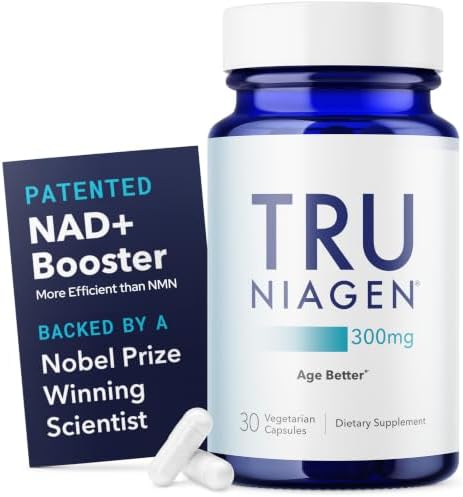
For a straightforward, single-precursor approach, Tru Niagen provides 300 mg of nicotinamide riboside chloride per capsule; it is a simple fit if you want to avoid a multi-ingredient stack.
- HEAD-TO-HEAD VS NMN: In a head-to-head clinical study at the same dose, Tru Niagen increased blood NAD+ 161% vs. 69% for NMN. (Berven et al. (2026). iScience (Cell Press). University of Bergen, Norway. Crossover design, n=6, 1,200mg/day for 8 days.)
- CLINICALLY SHOWN TO INCREASE NAD+: NAD+ supports cellular energy and healthy aging. Niagen is clinically shown to increase NAD+ levels by up to 150% in 3 weeks (1,000mg).
For athletes or anyone who specifically values sport-certification screening, Thorne NiaCel 400 combines nicotinamide riboside hydrogen malate with betaine and is NSF Certified for Sport.
- Cellular Energy: Helps your body optimize daily vitality at every age by supporting cellular repair, healthy metabolism, and a normal sleep-wake cycle*
- Healthy Aging: Provides nicotinamide riboside to promote ideal levels of NAD+, an important coenzyme found in every cell and supports cellular repair and energy production*

What NAD+ Does—and What Supplements Can Actually Prove
Nicotinamide adenine dinucleotide, or NAD+, is a coenzyme involved in cellular energy metabolism, redox reactions, and the activity of enzymes involved in DNA repair and cell signaling. NAD+ biology is important, but that does not mean every product that raises NAD+ has been proven to improve healthspan or longevity.
Human trials are most consistent on one point: oral NAD+ precursors can change NAD-related biomarkers. An eight-week randomized trial of nicotinamide riboside found dose-dependent increases in whole-blood NAD+ at 100, 300, and 1,000 mg per day. A broader 2026 review of NAD-related interventions likewise found that biomarker changes are much better established than durable clinical benefits. See the NR trial and the 2026 systematic review.
NR vs. NMN
NR and NMN both feed into pathways the body can use to make NAD+. NR has a longer history of human supplementation research, while NMN now has a growing number of randomized trials. A 2026 systematic review and meta-analysis covering 15 NMN trials found favorable short-term tolerability but no clear broad metabolic benefit across outcomes such as body weight, fasting glucose, HbA1c, lipids, or systolic blood pressure. Another meta-analysis found that NMN increased blood NAD levels without establishing broad improvements in glucose or lipid metabolism.
That makes the buying decision simpler: choose a transparent precursor product because you want a researched way to raise NAD-related markers—not because a label promises anti-aging, cognitive enhancement, fat loss, or guaranteed energy. For context, see the 2026 NMN safety meta-analysis and a meta-analysis of metabolic outcomes.
What about direct oral NAD+?
Older explanations often say oral NAD+ is simply too large or unstable to be useful. That is now too categorical. A 2026 early-phase randomized trial of a specially formulated oral NAD+ product reported short-term increases in intracellular whole-blood NAD. The study does not prove that ordinary NAD+ capsules or liquids work the same way, and it does not establish long-term clinical benefit, but it shows that formulation matters and that this area is still developing. See the early-phase oral NAD+ trial.
How We Ranked These NAD+ Supplements
We gave the most weight to factors that can be checked: exact ingredient form, clear serving information, current Amazon identity and availability, a usable product image, and credible quality controls. We also separated evidence for the ingredient from marketing claims about the finished product.
- Ingredient evidence: preference for NR or other NAD-related ingredients with human trials.
- Transparent labeling: exact ingredient form and amount rather than a hidden proprietary blend.
- Quality controls: third-party testing, recognized certification, or clearly described batch testing.
- Practical use: a dose and format that are easy to understand and follow.
- Claim restraint: no extra credit for dramatic anti-aging or disease-treatment language.

1. Tru Niagen 300 mg — Best Straightforward NR Pick
Tru Niagen is the easiest recommendation here for readers who want a simple NR-only approach. The current Amazon listing identifies the product as a 300 mg capsule using Niagen nicotinamide riboside chloride, with 30 capsules per bottle. The listing also states that batches are third-party tested for potency, safety, and purity.
The main advantage is simplicity. You are buying a clearly identified NR ingredient rather than a large “longevity blend,” so it is easier to know what you are taking and to compare the dose with human NR research. The limitation is equally important: evidence that NR raises NAD+ does not automatically mean this bottle will improve exercise performance, cognition, skin, or lifespan.
Best fit: someone who wants a simple daily NR product with a well-defined ingredient and does not need a sport-specific certification. You can view Tru Niagen on Amazon.
- HEAD-TO-HEAD VS NMN: In a head-to-head clinical study at the same dose, Tru Niagen increased blood NAD+ 161% vs. 69% for NMN. (Berven et al. (2026). iScience (Cell Press). University of Bergen, Norway. Crossover design, n=6, 1,200mg/day for 8 days.)
- CLINICALLY SHOWN TO INCREASE NAD+: NAD+ supports cellular energy and healthy aging. Niagen is clinically shown to increase NAD+ levels by up to 150% in 3 weeks (1,000mg).
- THE NR IN THE RESEARCH: The ingredient researchers use most for NR studies is Niagen, used in over 75% of published clinical studies on nicotinamide riboside.
- EVERY BATCH THIRD-PARTY TESTED: If it says Niagen, it's Niagen. Every batch of Tru Niagen is third-party tested. Buy from Tru Niagen's official Amazon store for authentic Niagen.
2. Thorne NiaCel 400 — Best for Sport-Certified Screening
Thorne NiaCel 400 is the more specialized pick. The verified Amazon listing identifies one capsule as containing 415 mg of nicotinamide riboside hydrogen malate plus 85 mg of betaine anhydrous. Thorne also lists the product as NSF Certified for Sport, which is useful for competitive athletes who care about screening for substances banned by major sports organizations.
That certification is the practical reason to choose NiaCel over a simpler NR product. The trade-off is that it is not an NR-only formula, and its nicotinamide riboside form is different from the Niagen NR chloride used in many published supplementation studies. Treat the label as a product specification, not proof that the product will deliver the marketing outcomes listed on the bottle.
Best fit: athletes and active adults who value NSF Certified for Sport and are comfortable with a combined NR-and-betaine formula. You can view Thorne NiaCel 400 on Amazon.
- Cellular Energy: Helps your body optimize daily vitality at every age by supporting cellular repair, healthy metabolism, and a normal sleep-wake cycle*
- Healthy Aging: Provides nicotinamide riboside to promote ideal levels of NAD+, an important coenzyme found in every cell and supports cellular repair and energy production*
- Athletic Peformance: Supports exercise efficiency to help meet your fitness goals; NSF Certified for Sport*
- NSF Certified for Sport: Tested for compliance with label claims and to ensure the absence of nearly 300 substances banned by many major athletic organizations
Why We Did Not Rank an NMN Product Here
NMN is scientifically interesting, and short-term human research has expanded quickly. However, a product roundup should separate “promising ingredient” from “currently verified product.” In this update, the strongest combination of direct Amazon verification, usable listing images, current purchasability, and clearly supported product details was stronger for the two NR products above.
There is also a regulatory wrinkle. FDA has historically listed NMN in its dietary supplement ingredient directory with prior new-dietary-ingredient correspondence, and FDA’s current notification table shows a beta-NMN notification submitted in late 2025 with a response date in January 2026. That does not by itself tell consumers that every NMN supplement is approved, equivalent, or clinically validated. If you choose NMN, verify the exact product, label, testing documentation, and current U.S. regulatory status rather than relying on the ingredient name alone.
What Human Studies Say About Benefits
The strongest evidence is biochemical, not transformational. NR and NMN can raise NAD-related metabolites. Clinical effects are much less consistent. A review of human NR studies concluded that supplementation generally produces few clinically meaningful effects despite encouraging biomarker changes. NMN meta-analyses have likewise found increases in NAD-related measures without broad, reliable improvements in glucose control, lipids, body weight, or other major outcomes.
That does not mean NAD+ precursors are useless. It means expectations should match the evidence. A supplement may change a biomarker without producing a noticeable change in how you feel.
Energy and exercise
NAD+ is central to energy metabolism, but taking an NAD+ precursor is not the same as taking a stimulant. Some small trials report signals related to exercise or physical performance, while others show little or no meaningful benefit. If your training, sleep, calorie intake, or protein intake is poor, a precursor is unlikely to compensate for those basics.
Healthy aging and longevity
The biology is compelling, but human longevity data do not exist at the level needed to claim that NR or NMN extends life. Animal and mechanistic studies can help explain pathways, but they should not be converted into promises about lifespan in people.
Brain, skin, and recovery
These areas remain interesting but unsettled. Human studies are still too small, short, or inconsistent to rank a product on claims such as sharper focus, younger-looking skin, or faster recovery. Those claims should be treated as unproven unless supported by product-specific clinical data.
How to Choose a NAD+ Supplement
Start with the ingredient, not the front-label promise. If you want the most straightforward evidence trail, NR is currently easier to evaluate because the ingredient form, dose, and human trial history are relatively clear. NMN also raises NAD-related markers in human studies, but product quality and regulatory details deserve extra attention.
- Check the exact form. “NAD booster” is not an ingredient. Look for NR, NMN, NADH, or NAD+ and the amount per serving.
- Prefer transparent amounts. Avoid blends that hide the dose behind a proprietary formula.
- Look for meaningful testing. Third-party testing or sport certification can reduce uncertainty about identity and contamination, but it does not prove health benefits.
- Ignore dramatic outcome claims. “Supports NAD+ levels” is different from “reverses aging” or “repairs DNA.”
- Use one change at a time. Starting several longevity supplements together makes it harder to identify side effects or know what is doing anything.
Dosing and Timing: Keep the Label and the Evidence Separate
Clinical studies have used a wide range of doses. The 2019 NR trial tested 100, 300, and 1,000 mg per day for eight weeks. The 2026 NMN safety meta-analysis included studies from 250 to 2,000 mg per day for 14 days to 24 weeks. Those ranges describe research protocols; they do not establish one ideal dose for every healthy adult.
For the products ranked here, the clearest approach is to follow the current label unless your clinician recommends otherwise. Tru Niagen’s verified Amazon listing is a 300 mg, one-capsule product. Thorne’s current product information lists one capsule daily on its own site, while the Amazon listing includes directions of one capsule one to two times daily or as recommended by a healthcare practitioner. When a label and retailer page differ, follow the bottle you actually receive and the manufacturer’s current directions.
Safety and Who Should Be Cautious
Short-term trials of NR and NMN have generally reported good tolerability, but long-term safety data are still limited. The 2026 NMN meta-analysis found no clear increase in overall or serious adverse events across the included trials and no significant rise in ALT or AST, but most studies were relatively short.
If you are pregnant or breastfeeding, are receiving cancer treatment, have significant liver or kidney disease, or take prescription medication for a major medical condition, discuss NAD-related supplements with the clinician managing your care. Stop and seek advice if a new supplement causes persistent gastrointestinal symptoms, rash, severe headache, dizziness, or another concerning reaction.
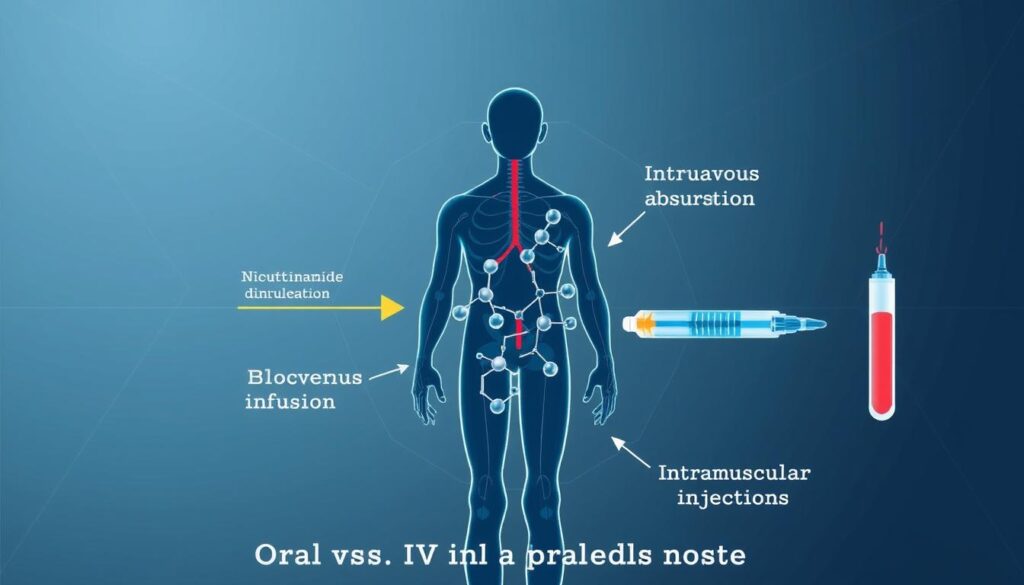
Oral Supplements vs. IV NAD+
IV NAD+ is heavily marketed in wellness clinics, but the evidence base is much thinner than the marketing suggests. FDA has also warned compounders that food-grade NAD+ is not suitable for sterile drug compounding without appropriate processing because of contamination and endotoxin risks. That warning is about sterile preparation quality, not proof that all NAD+ infusions are unsafe.
For most people interested in NAD biology, an oral precursor with transparent labeling is the simpler and better-studied starting point. IV or injectable products add cost, invasiveness, and medical-procedure risks without established superiority for healthy-aging outcomes.
Lifestyle Still Matters More Than the Stack
NAD+ sits inside a much bigger metabolic system. Regular exercise, adequate sleep, enough calories and protein for your activity level, and a varied diet all influence energy metabolism and recovery. Foods containing niacin and tryptophan also provide building blocks the body can use in NAD-related pathways.
That is why the most sensible use of a supplement is as an optional add-on, not the foundation. If your main goal is more energy, better workouts, or healthy aging, first fix the parts of your routine with the strongest evidence and the largest likely effect.
Final Verdict
Tru Niagen is the best overall pick in this roundup for a simple, well-defined NR supplement. Its current Amazon listing clearly identifies 300 mg of Niagen nicotinamide riboside chloride per capsule and describes third-party testing. Thorne NiaCel 400 is the better fit for athletes who specifically value NSF Certified for Sport and do not mind an NR-plus-betaine formula.
Neither product should be treated as a proven anti-aging therapy. The evidence is strongest for raising NAD-related biomarkers, while effects on energy, cognition, metabolic health, recovery, skin, and longevity remain much less certain. Buy for the evidence that exists, not the promise you hope will be true.
FAQ
What is the best NAD+ supplement to take?
For a simple NR product, Tru Niagen is the strongest verified pick in this roundup. If sport certification matters, Thorne NiaCel 400 is a better fit. The right choice depends on ingredient preference, certification needs, and tolerance—not on a universal “best” claim.
Is NR better than NMN?
Not clearly. Both can raise NAD-related biomarkers. NR has a longer human supplementation history, while NMN research is expanding quickly. Neither has convincing evidence that it extends human lifespan.
Does NAD+ supplementation increase energy?
It can influence NAD-related biology, but improved day-to-day energy is not a guaranteed clinical effect. Trials have been inconsistent on performance and symptom outcomes.
Can I take NAD+ supplements every day?
Many trials have used daily dosing for weeks or months, and short-term tolerability is generally favorable. Long-term safety remains less certain, so follow the product label and discuss ongoing use with a clinician if you have medical conditions or take prescription drugs.
Should I combine NR or NMN with resveratrol?
There is a mechanistic rationale for combining NAD+ precursors with polyphenols, but human evidence that the combination produces superior clinical outcomes is limited. A simpler single-ingredient approach is easier to evaluate.
Is IV NAD+ better than capsules?
There is not strong evidence that IV NAD+ produces superior long-term outcomes for healthy people. Oral precursors are more practical and have a larger human trial base.




Don’t Miss These Picks