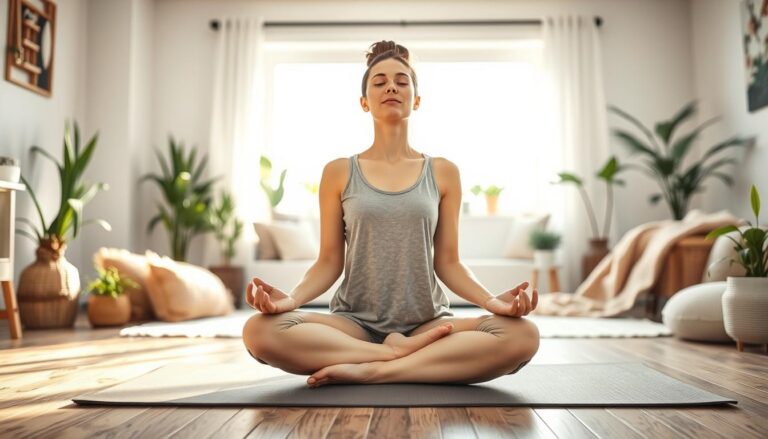


Can gentle movement really unlock stored feelings in the body, or is that just a wellness myth? This article takes an evidence-based tour of whether light mobility work can help people process tension, reduce stress, and support healing after trauma.
The practice we examine is physical yet whole-body. Research links mindful movement and breath-led poses with lower PTSD symptoms and improved relaxation. Experts note improvements in flexibility, reduced muscular tension, better circulation, and a shift toward the parasympathetic state.
We’ll balance stories with science. You’ll get clear explanations of mechanisms, safety guidance, and simple starting poses such as Child’s Pose and Cat‑Cow. This guide shows how yoga and low‑intensity mobility can complement—not replace—therapy or medication.
Key Takeaways
- Evidence exists: Mindful movement can ease PTSD symptoms and support calm.
- Whole‑body effects: Expect better circulation, muscle ease, and relaxation.
- Complementary role: Use movement alongside professional care, not instead of it.
- Simple start: Breath-led, low‑intensity poses are accessible and safe when done carefully.
- Watch reactions: Emotional shifts are common; pause and seek support if needed.
What We Mean by Stretching for Emotional Release
Gentle movement can act like a subtle dialog between mind and bodily sensation. This section defines how simple poses and breath work help people notice what the body is holding.
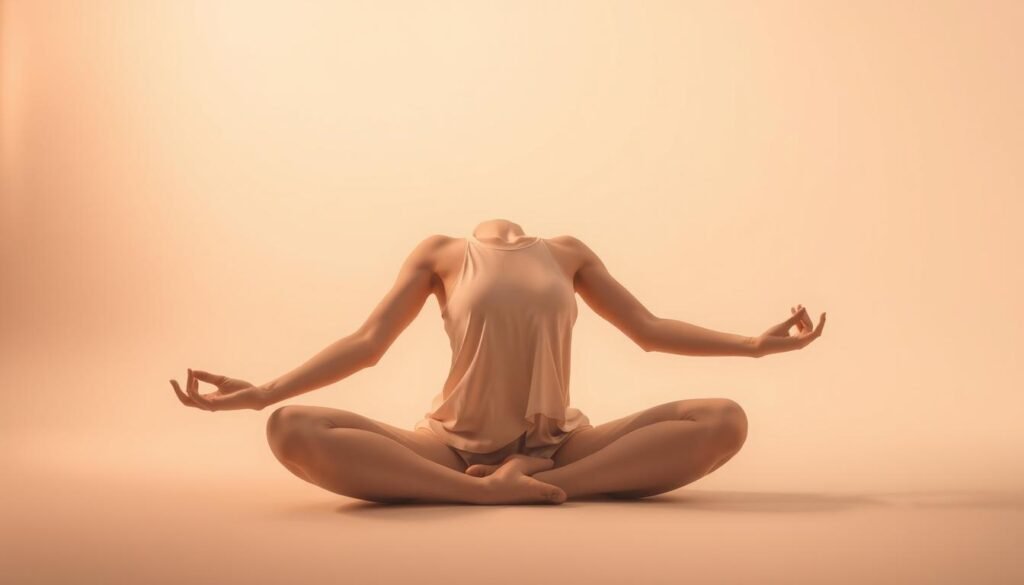
From flexibility to feelings: redefining practice beyond muscles
In this guide, “stretching for emotional release” means using gentle movement, breath, and awareness to notice and ease what the body is holding.
It’s less about extreme flexibility and more about tuning in to sensations and emotions that arise.
Mind‑body connection and why emotions show up in the body
Interoception — noticing internal signals — links breath, posture, and memory. Small shifts in hip or chest position can evoke warmth, tears, or a deep sigh.
- Role of yoga and mobility: short, repeatable sequences open room for awareness without strain.
- Stretches vs sessions: a few poses help briefly; consistent breath-led sessions build steadier change.
- Normal reactions: sensations may surface as the nervous system downshifts — observe and breathe.
| Focus | Typical Outcome | Practice Tip |
|---|---|---|
| Single stretches | Quick ease in a muscle | Hold 20–30 sec, notice sensation |
| Breath-led sessions | Greater mind-body connection | Repeat 10–20 minutes, soft cues |
| Mobility sequences | Improved circulation and calm | Move slowly, follow exhale |
Is It Woo or Science? What Research Says Right Now
Recent trials explore if slow, breath-led movement can lower stress hormones and ease trauma-related symptoms. Evidence supports mindful, body-centered practices as a useful complement in PTSD care and stress management, though the science is still growing.
Evidence snapshots:
- Systematic reviews report that body- and movement-oriented interventions can support PTSD recovery (van de Kamp et al., 2019).
- Mind‑body approaches like yoga and deep breathing show benefit as self-care tools for trauma and anxiety (Kim et al., 2013).
- Small studies note lower cortisol and improved mood after mindful stretching and breath-led exercises.
What’s plausible vs. proven:
Likely mechanisms include autonomic balancing (more parasympathetic tone), better interoceptive awareness, and improved emotional regulation via gentle breath work. These pathways make sense biologically but need larger, longer trials to confirm exact effects.

| Evidence | Implication | Practical note |
|---|---|---|
| PTSD symptom reduction (reviews) | Mind‑body movement helps as an adjunct | Combine with licensed therapy and meds |
| Lower cortisol in short trials | Supports stress‑response change | Use consistent, low‑intensity sessions |
| Small, varied studies | Promising but limited certainty | Expect modest gains; avoid overpromising |
Safety and scope: Gentle work can ease tension, help mood, improve sleep, and assist people with mild back or hip pain tied to tight psoas. Seek professional assessment for persistent pain or diagnosed trauma. For an accessible primer on how the body holds feeling, see how your body holds emotions.
How Emotional Release Might Work in the Body
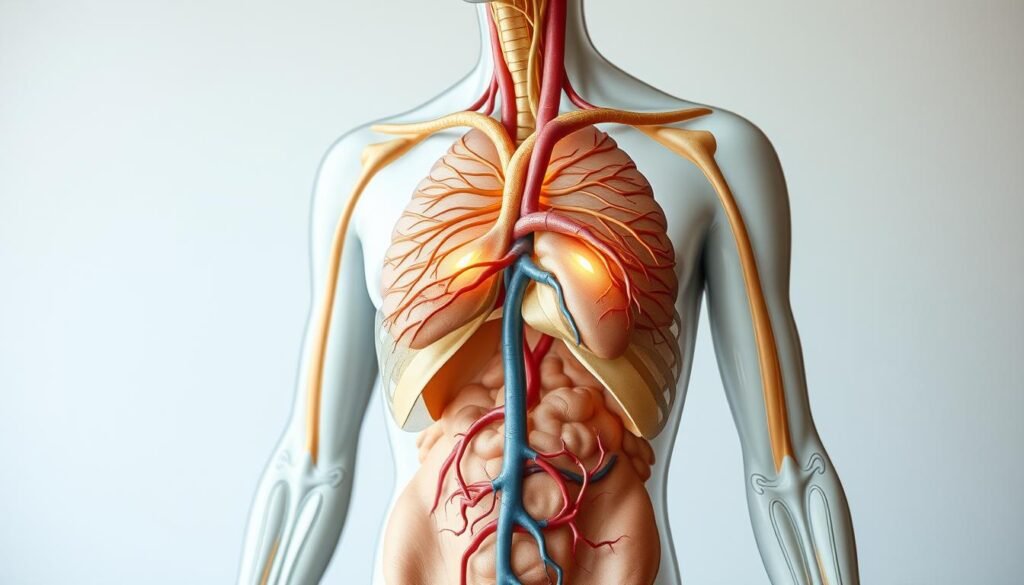
Small, paced actions can change how the nervous system interprets signals from the body. That shift helps move people from high alert into rest, and it makes sensations easier to notice without panic.
What the nervous system does
Sympathetic activation raises heart rate and readies muscles for action. That is the classic fight/flight response.
Parasympathetic recovery calms the system. Slow exhalations and gentle holds can encourage that return to rest.
Where people commonly hold tension
Research maps emotions across the body. Many feel load in the hips, chest, neck, and shoulders. Tight hip flexors often link to lower back discomfort.
Using somatic awareness safely
Scan for warmth, pulling, trembling, or breath changes. Use those cues to dose intensity and stop if panic or shallow breathing appears.
“Slow, breath-led practice can signal safety to the nervous system and reduce reactivity.”
| Region | Common sign | Practical cue |
|---|---|---|
| Hips | stiffness, dragging | gentle hip openers at 50–70% effort |
| Chest | tightness, shallow breath | slow inhales, longer exhales |
| Neck & shoulders | pinch, warmth | soft mobilization, support under head |
| Lower back | dull ache | link to hip mobility and core cueing |
Practical note: Start small, use breath as a guide, and pair work with therapy when trauma is present. See this deep stretching emotional release primer for one practical overview.
Before You Start: Safety, Setup, and Self-Guidance
Do a quick health check and set up a supportive space before you begin. Simple adjustments — props, breath pacing, and grounding — make the session safer and more effective.
How to screen yourself and when to stop
A short self-screen flags red items: recent injury, dizziness, uncontrolled hypertension, or pregnancy. If any apply, consult a clinician first.
Red flags: sharp, shooting pain, numbness, or tingling. Stop immediately if these appear.
When to pause: sudden breathlessness, panic, or overwhelming emotions — reach out to a therapist or health provider before continuing.
Create a supportive space and pace your breath
Use a mat, blocks, blankets, or a chair to pad sensitive areas like knees and hips. Keep the head supported when needed and avoid forced binds in chest or hip openers.
- Grounding cues: feel your hands and feet on the floor, widen your base, and look around the room before closing your eyes.
- Breath anchors: practice diaphragmatic breathing and try 4-7-8 to calm the nervous system.
- Time and dose: begin with 5–10 minutes, 2–3 times weekly; increase slowly as comfort grows.
“Build safety first: distinguish manageable discomfort from sharp pain or panic and stop if needed.”
Practical checklist and when to seek help
Coordinate with therapy when trauma is present. Movement should complement — not replace — medical care.
See this short primer on how to address bodily tension and emotional load: how to release emotional baggage and.
Stretching for Emotional Release
Begin with two minutes of slow breath and a calm scan to orient body awareness. This simple opening frames the session: notice where the body holds tension, then move with gentle intention.
Follow a short, stepwise sequence that links breathing, awareness, and safe mobility. Keep ranges small and stop for sharp pain or rising panic.

Step-by-step core sequence: breath, body scan, gentle mobility
- Step 1 — Breath & scan (2–3 min): diaphragmatic breath, eyes soft, note areas that call attention.
- Step 2 — Cat-Cow (60–90 sec): move with breath; hands spread for support; small arcs only.
- Step 3 — Child’s Pose (60–120 sec): knees wide or together; rest head on a block; arms where they feel safe.
- Step 4 — Neck Rolls (30–60 sec each way): slow circles; keep shoulders relaxed; avoid end-range compression.
- Step 5 — Forward Fold (30–60 sec): soft knees; arms relaxed; weight even over feet.
- Step 6 — Reclined Knee-to-Chest (30–45 sec each side): unwind the low back; keep ankle relaxed.
- Step 7 — Figure Four/Pigeon (45–90 sec each side): flex top foot; use props; stop before pain.
- Optional — TRE-style shaking (1–3 min): only after hips feel warm; lie or stand and allow light tremor; support head and neck; stop if overwhelmed.
“Close with one minute of easy breathing and a brief scan; thank your body for the practice.”
| Move | Main benefit | Practical cue |
|---|---|---|
| Cat‑Cow | spinal mobility, reduced back stiffness | move with inhale/exhale; small range |
| Child’s Pose | grounding, chest softening | use block under head; widen knees |
| Figure Four / Pigeon | outer hip opening, less hip-related tension | flex top foot; use strap; stop before pain |
| TRE-style tremor | gentle muscular release in legs and hips | only when grounded; keep breath steady |
For more on how hips link to feeling, see the hips-emotions connection.
Targeted Practices for Common Tension Zones
Targeted zones respond best to slow, supported work and steady breath. Use props and gentle position changes to protect the back and invite calm in the body.
Work that focuses on hips, chest, and neck often gives the fastest, most practical relief. Below are concise, safe cues that pair simple exercises with breath and support.

Hips and lower back
Figure Four / Pigeon — 45–90 sec each side. Flex the top foot, support the hip with a cushion, and stop before any sharp pinch.
Lunging hip flexor — 30–60 sec each side. Pad the knees, tuck the pelvis neutral, and engage the glute lightly to protect the lower back.
Reclined knee-to-chest — 30–45 sec each side. Breathe into the low belly and let the lumbar spine soften.
Chest and shoulders
Doorway forearm stretch — 30–45 sec each side. Place the forearm on the frame; step forward slightly and adjust elbow height to avoid numbness.
Kneeling chest opener — 30–60 sec. Forearms on a bench or couch; keep ribs integrated and avoid collapsing the neck.
Slow arm circles — 3–5 reps. Thumbs up, trace a smooth path near the torso with steady breath.
Neck and upper back
Neck circles — 30–45 sec each direction. Make tiny arcs and keep the jaw soft; never push into compression.
Seated side bend — 30–45 sec each side. Sit tall, reach through the top arm, and keep sitting bones grounded.
Mindful positioning: soften shoulders away from ears, align the head over the sternum, and add micro-movements during screen time.
“Move through discomfort, not pain; widen your base or use hands for support and consult a clinician for persistent symptoms.”
Sample Routines You Can Try Today
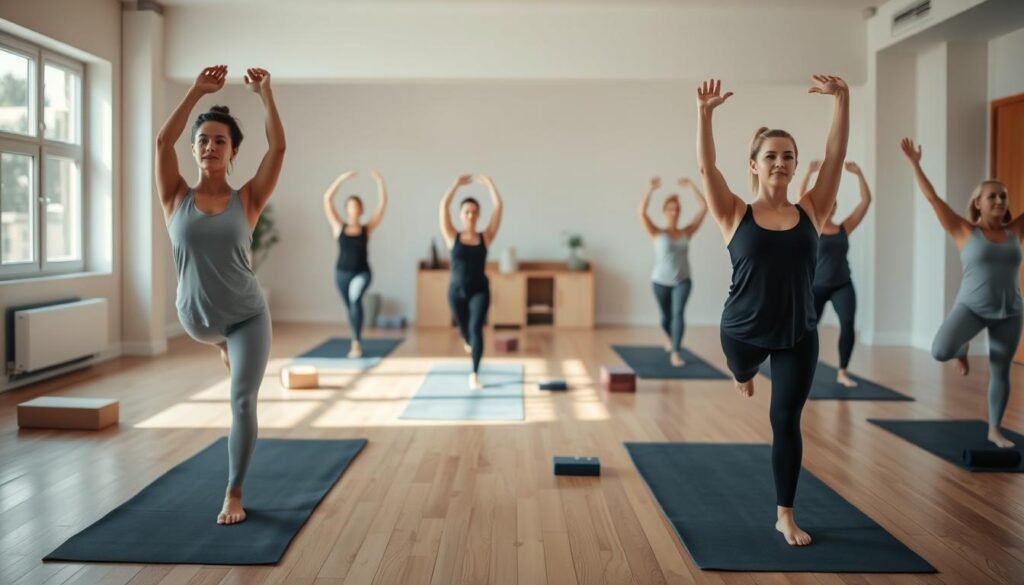
Choose a routine that fits your time and energy. Keep the pace unhurried and let breath set the rhythm. Modify each shape so it feels safe and sustainable and stop if pain or heavy distress appears.
Below are three short, practical flows you can do at home. Each links breath with gentle movement to ease tension and support calm.
Quick de-stress flow (5–8 minutes)
- 60 sec diaphragmatic breathing to settle the nervous system.
- 60–90 sec Cat‑Cow, move small and sync with breath.
- 30 sec each way Neck rolls, keep shoulders soft.
- 45–60 sec Standing forward fold with soft knees; relax hands toward feet.
- Optional: 30 sec slow arm circles to wake shoulders and arms.
Evening wind-down (10–15 minutes)
- 1–2 min Child’s Pose with a cushion under the head to support rest.
- 60–90 sec Figure Four or Butterfly each side to ease hips and lower back.
- 30–45 sec Doorway chest stretch to open the chest and relax the neck.
- 4–7–8 breathing 4–6 cycles, then normal breath for one minute to prepare sleep.
Lower-back‑friendly sequence (10–12 minutes)
- 30–45 sec per side Reclined knee‑to‑chest to unwind the lumbar spine.
- 45–60 sec per side Low lunge hip flexor with padding under the knees; keep pelvis neutral.
- 45–60 sec per side Figure Four with active foot and a cushion under the hip as needed.
- 1–2 min Supine psoas support: bolster under knees, easy breath to soften the front body.
“Move through manageable discomfort, not pain; favor positions with more contact points and use hands to support transitions.”
| Routine | Duration | Main benefit |
|---|---|---|
| Quick de-stress | 5–8 min | Fast nervous-system downshift; less tension in neck and shoulders |
| Evening wind-down | 10–15 min | Improved sleep readiness; eased hips and chest opening |
| Lower-back friendly | 10–12 min | Gentle hip and psoas care; reduced lower back strain |
Conclusion
Pairing breath with mindful motion helps the nervous system settle. Evidence supports these approaches as a useful complement to therapy, not a replacement.
In short: gentle, consistent work can reduce stress, change cortisol patterns, and improve the mind‑body connection. Common tension zones such as the hips and chest respond well to slow, repeatable practices like yoga and light mobility.
Next steps: pick one short routine, aim for 2–3 sessions weekly, and note changes in sleep, mood, or perceived body tension. If you are working through trauma, integrate these tools with a clinician and consider guided options like the trauma releases exercises primer.
FAQ
What do you mean by "stretching for emotional release" — is it just flexibility work?
It’s broader than classic flexibility exercises. This approach blends gentle mobility, breath work, and somatic awareness to help people notice and shift tension patterns in the body that often accompany strong emotions. Think of mobility and mindful breathing paired with body scanning and slow movement to reduce muscle guarding and improve nervous system regulation.
Is there scientific evidence supporting this practice or is it just woo?
There is emerging, mixed evidence. Studies link mindful movement and yoga-based stretches to lower cortisol, improved mood, and reduced PTSD symptoms in some populations. Mechanisms like parasympathetic activation, improved interoception, and reduced muscular tension are plausible, but large-scale randomized trials isolating “emotional release” specifically remain limited. Use it as a complementary strategy rather than a clinical replacement.
How might the nervous system actually change during these practices?
Slow, regulated breathing and gentle movement can shift autonomic balance toward parasympathetic activity — the “rest-and-digest” state. That reduces sympathetic arousal (fight-or-flight), lowers heart rate and blood pressure, and can decrease muscle tension. Somatic practices also improve interoception, helping people interpret internal cues instead of reacting automatically to stress.
Which body areas commonly hold emotional tension and why?
Hips, chest, neck, shoulders, and lower back frequently store habitual tension because they’re involved in posture and protective bracing. Emotional stress can increase muscle tone in these regions, restrict breathing, and alter movement patterns, reinforcing a loop of discomfort and emotional reactivity.
Are specific stretches or poses recommended for emotional relief?
Yes — gentle, supportive poses that emphasize breath and release work best. Examples include Child’s Pose and Forward Fold for calming; Cat–Cow for spinal mobility; neck rolls and seated side bends for upper-body release; and hip-openers like Figure Four or a supported Pigeon variant. Focus on slow movement, breath, and present-moment awareness rather than aggressive range-of-motion.
What about tremor work or TRE-inspired shaking — is that safe and effective?
TRE (Tension & Trauma Releasing Exercises)–inspired tremoring can help some people discharge nervous-system tension, but it’s not right for everyone. Start slowly, use guidance from a certified practitioner if you have trauma history, and stop if symptoms intensify. Keep grounding strategies and pacing in place to ensure safety.
How do I tell the difference between productive discomfort and harmful pain?
Productive discomfort feels like a stretching sensation or gentle release that eases as you breathe; it shouldn’t be sharp, burning, or radiate into limbs with numbness. Stop or modify activity if pain spikes, if you feel dizzy, or if symptoms worsen afterward. When in doubt, consult a physical therapist or physician.
Can these practices replace therapy or medication for anxiety, depression, or PTSD?
No. Somatic exercises and mindful mobility are valuable adjuncts but not substitutes for evidence-based psychotherapy or prescribed medication when those are indicated. Use them alongside clinical care, and inform your mental health provider if you’re integrating these practices.
How do I set up a safe, supportive space at home for this work?
Create a quiet, warm area with a mat, bolster or pillow, and blocks or straps as props. Wear comfortable clothing, keep hydration nearby, and allow 10–20 minutes for focused practice. Prioritize grounding cues — feet on the floor, slow breath, and a gradual progression from simple to deeper movements.
What short routines can I try when stressed or before bed?
For quick stress relief, try a 5–8 minute flow: a gentle body scan, seated Cat–Cow sequence, slow neck mobility, and a supported forward fold with deep diaphragmatic breaths. For evenings, a 10–15 minute wind-down combining reclining knee-to-chest, hip openers, and long exhales helps lower arousal and improve sleep readiness.
Who should avoid these techniques or use extra caution?
People with recent surgeries, uncontrolled hypertension, acute injury, severe joint instability, or active psychiatric crises should consult clinicians before starting. Those with trauma histories may need trauma-informed guidance to avoid overwhelming nervous-system activation.
How often should I practice to notice benefits in mood and pain?
Regular short sessions—10–20 minutes, 3–5 times per week—often produce measurable changes in breath control, mobility, and stress reactivity. Consistency beats intensity: daily micro-practices can be more effective and safer than occasional long sessions.
Which professionals can help me learn safe, evidence-based techniques?
Look for qualified practitioners such as licensed physical therapists, certified yoga therapists, or trauma-informed somatic practitioners. Providers with training in breathwork, TRE, or mindfulness-based stress reduction (MBSR) can offer structured, safe guidance.
Modify or skip movements that exacerbate pain. For lower-back concerns, favor gentle hip mobility, supported reclined stretches, and core-awareness exercises. For knee issues, use props and avoid deep lunges unless cleared by a clinician. A physical therapist can provide personalized regressions and progressions.