


Can a month of focused work really change how your body feels and performs? This guide starts with that bold promise: 30 days of consistent mobility work can boost strength, improve movement quality, and rebuild confidence in your body.
You’ll get clear, science-backed steps and a simple plan you can use today. The bookend of this guide includes definitions, quick science, practical exercises, and a weekly schedule that fits real life. We explain how short mobility sessions differ from standard workouts and how both can support better performance and long-term joint health.
Expect honest timelines: small wins in a week, bigger changes after a month. This introduction previews how the guide pairs approachable coaching with research-backed advice so you can move better, lift smarter, and keep living without pain. For a deeper routine to increase flexibility and strength, try this plan: hyperbolic stretching program.
Key Takeaways
- Thirty days of focused work can yield noticeable strength and movement gains.
- Short mobility sessions complement regular training and aid recovery.
- Improvements often begin within a week and compound over a month.
- Better joint function supports overall health and daily life.
- The guide mixes science with simple exercises and a weekly plan you can follow.
Why Mobility Became My Secret to Getting Stronger in 30 Days
I spent a month teaching my body to move smarter, not harder, and the results surprised me. In 30 days, targeted mobility helped me lift better, recover faster, and move with more control.
The secret wasn’t more weight or longer workouts—it was teaching my body how to access its available range with precision.
Within seven days I felt less stiffness and shorter warm-ups. Movement felt smoother and my warm-up sets required less effort.
By day 30 my squat depth improved, my torso stayed stacked under load, and I hit new personal bests from better leverage, not brute force. When joints align and flexibility pairs with control, the body expresses more power safely.
I kept sessions short: daily micro-practices of five to ten minutes that stacked with regular gym activity. That minimal time delivered compound gains because each small session reinforced correct patterns and improved joint positioning.
This is a mindset shift: think of mobility as skill work for movement. Practice control at end range and you upgrade your ability to stabilize, generate force, and move with purpose in every rep and every day.

What Mobility Really Is—and Why It Matters Today
When you learn to guide motion, everyday tasks and workouts suddenly get easier. It’s not just about stretching farther—it’s about using your muscles to control joints through a full range.
Mobility blends flexibility (passive joint length) and extensibility of muscles and connective tissue so the nervous system can coordinate smooth, usable motion. Slow, controlled moves through full range teach the brain and muscles how to work together.
Mobility vs. Flexibility: Key Differences That Affect Your Results
Flexibility is how far a muscle can be stretched. Active control is the ability to move a joint through that range with precision.
- Flexibility: passive length of tissues.
- Active control: using muscles to guide joint motion and avoid compensations.
- Why it matters: control reduces strain on the spine and other joints, lowering pain and improving form.
How Mobility Supports Daily Life and Athletic Performance
Better joint control helps you sit, lift, run, and play without friction or nagging pain. Small daily sessions change how your body learns movement patterns and saves energy during exercise and activities.
| Area | What Improves | Real-World Example |
|---|---|---|
| Hips | Range and stability | Deeper, safer squats |
| Shoulders | Rotation control | Cleaner presses and less impingement |
| Ankles | Dorsiflexion and balance | Smoother walking and running |

Mobility Training Benefits
Small, focused sessions that guide joints through their full arc change how you move and how you feel. They lower the risk of strains and overuse injuries while improving posture and easing muscle tension that causes back and joint pain in daily life.
How does this happen?
Reduce Injury Risk by Moving Through a Full Range of Motion
Taking joints through full range improves tissue quality and joint nourishment. That makes injuries less likely and movement more efficient.
Enhance Strength, Stability, and Movement Efficiency
Better joint stacking and control boost leverage. You express force with less wasted energy, so performance in lifts or activities improves without extra load.
Improve Posture, Ease Muscle Tension, and Cut Back Pain
Short mobility sessions downshift muscle tone, reduce soreness, and ease chronic tightness from sitting. That helps posture and reduces day‑to‑day pain.
Support Healthy Aging and Cognitive Function
Regular practice preserves independence and may link to better cognitive health as people age. Use low‑intensity sessions as active recovery to maintain tissue elasticity.
| Focus | Main Change | What You Feel |
|---|---|---|
| Joints through full range | Improved function & flexibility | Less stiffness, smoother motion |
| Multidirectional work | Elastic muscle & fascia | Better balance and reduced compensations |
| Low-intensity practice | Enhanced recovery | Less soreness after a workout |

For evidence-backed routines and daily options, see daily mobility exercises that fit real life.
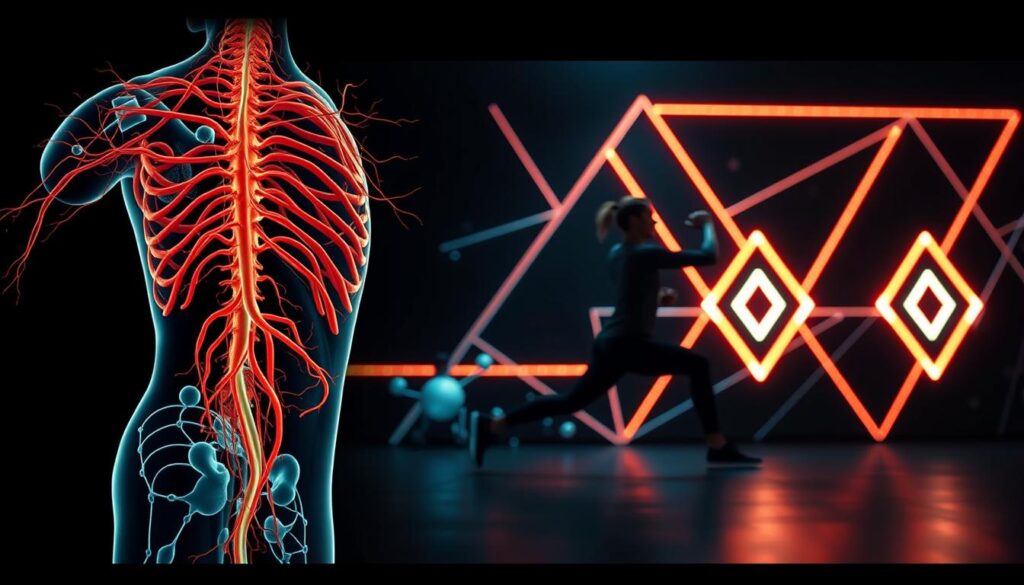
The Science of Movement: CNS, Myofascial System, and Reciprocal Inhibition
Controlled, repeatable motion teaches your nervous system to produce cleaner, safer movement. Your muscles and fascia need multidirectional motion to stay elastic, efficient, and resilient.
Slow, controlled work engages sensors in muscle, fascia, joint capsules, and ligaments. These sensors feed the brain continuous data so motor neurons time contractions correctly.
How does the nervous system learn better movement patterns?
Muscle spindles detect length changes and signal the spinal cord to adjust tension. Over many reps, the brain refines recruitment patterns and reduces unnecessary co‑contraction.
Why muscle and fascia need motion in multiple planes
Multidirectional practice preserves elasticity and the tissue’s ability to store and release energy. That helps range motion and improves overall performance.
How reciprocal inhibition smooths motion
Reciprocal inhibition is your built‑in mechanism for smoother, pain‑free motion: as one group contracts, the opposite relaxes.
“Practice that pairs slow control with varied directions changes how movement feels and how force is expressed.”
- We’ll unpack how sensory receptors feed the central nervous system control.
- You’ll learn how spindles fine‑tune tension and protect tissues.
- See why multidirectional motion guards elasticity and supports better joint positioning.
| System | Main Role | Practical Effect |
|---|---|---|
| Muscle spindles | Sense length change | Right tension at the right time |
| Fascia | Store/release energy | Better efficiency and range motion |
| Reciprocal inhibition | Coordinate opposing groups | Smoother, less painful motion |
Static vs. Dynamic Stretching vs. Mobility: When to Use Each
Use dynamic stretching to prime movements before activity, static stretching to downshift tension after workouts, and mobility to build lasting control. Each has a role, but mobility training is the most comprehensive for joint health and movement quality.
Choosing the right tool at the right time boosts short-term performance and protects tissue long term. Below are simple rules and examples you can apply today.
Dynamic Stretching for Warm-Ups and Movement Prep
Dynamic stretching uses active, sport‑specific motions that mirror the work ahead. Think leg swings, arm circles, and controlled lunges that raise heart rate and rehearse patterns.
Place 6–10 minutes of these drills before a serious set or a cardio session to improve readiness and reduce injury risk.
Static Stretching for Cool-Down and Tension Relief
Static stretching lengthens muscles and helps lower tone after effort. Hold gently for 20–60 seconds per muscle to feel relief without blunting stability.
Do static stretches after a workout or on recovery days to ease tightness and support restful recovery.
Mobility Work for Control, Coordination, and Full ROM
Mobility blends strength, joint control, and coordination through useful ranges. Use short blocks (5–12 minutes) to teach control at end range rather than only chasing flexibility.
Combine bands, bodyweight drills, and slow loaded patterns to reinforce good positions you need in sport and daily life.
“Prime with dynamic moves, calm with static holds, and invest in joint control to get lasting gains.”
- Quick warm-up template: 5–8 minutes dynamic stretching targeting the day’s movements.
- Brief cool-down template: 5 minutes of static stretching for major tight spots.
- Standalone session: Two 8–12 minute mobility blocks during the week focused on weak links.
The Stability-Mobility Model: Train Joints for What They Do Best
When each link in your body does its job, movement gets easier and stronger. Train mobile joints for range and control, and stable joints for support.
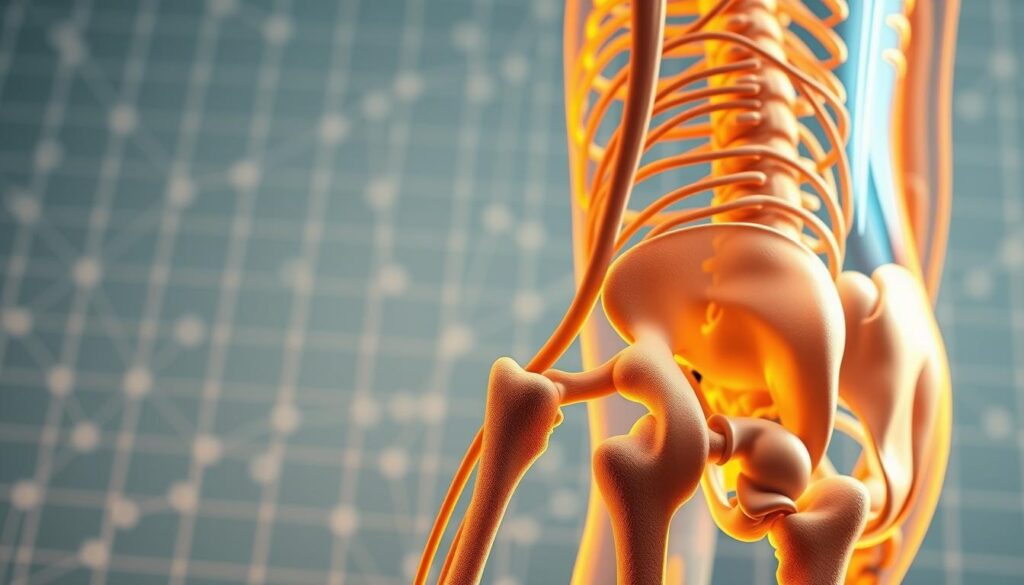
Some joints are built to move; others are built to hold. The ankle, hip, thoracic spine, and shoulder need freedom. The knee, lumbar spine, and scapulothoracic region provide support and protection.
Mobile Joints: ankle, hip, thoracic spine, shoulder
Give these areas soft stiffness and active control. Limited T‑spine rotation often shows up as low‑back or shoulder pain. Simple drills can free rotation and restore healthy range motion.
Stable Joints: knee, lumbar spine, scapulothoracic region
These joints must resist unwanted motion. If calves or hip flexors are tight, the knee and ankle compensate, raising the risk of injuries. Build strength and bracing here to protect the chain.
Targeted strategies to unlock tight, overworked areas
- Ankle dorsiflexion work to improve squat and gait mechanics.
- Hip flexor openers plus glute activation for better hip control.
- T‑spine rotation and extension drills to ease low‑back strain.
- Gentle shoulder capsule progressions to restore safe overhead motion.
Quick tip: Match tight spots to the highest‑return strategy and you’ll lower injury risk and boost performance. For guided options to improve flexibility and stability, see improve flexibility and stability.
Primary Movement Patterns to Improve Mobility and Performance
Bend-and-lift, single-leg, push, pull, and rotation are the building blocks of how your body moves. Training these patterns in multiple planes makes your tissues more resilient and your performance more consistent.
Every useful motion—lifting a bag, stepping up, or turning to reach—falls into a handful of repeatable movement patterns. Work them deliberately and you get better control, less compensatory strain, and more usable range.

What each pattern is and which joints need freedom or support
- Bend-and-lift (squat): hips and ankles need range; lumbar spine needs stability.
- Single‑leg (lunges, step-ups): hip control and ankle balance protect the knee.
- Push (forward, overhead, lateral): shoulder and thoracic spine need mobility; scapula and core need stability.
- Pull (rows, overhead pulls): shoulder girdle and mid‑back need motion; core provides support.
- Rotation (spine and pelvis): thoracic rotation and pelvic control enable safe twisting.
Why multiplanar work builds a resilient body
Moving in many directions preserves elastic fascia and teaches muscles to store and release energy. Pattern-based practice transfers directly to daily activities and sport. It reduces compensations, lowers injury risk, and upgrades movement quality for better long‑term performance.
Mobility in Real Life: From Groceries to Golf Swings
Mobility shows up everywhere—carrying groceries, picking up kids, or rotating in a golf swing. When movement is reflexive, daily life feels smoother and pain is less likely.
Everyday tasks like carrying loads, reaching for shelves, and walking require coordinated work across joints and muscles. Making primary movement patterns reflexive helps the body handle these activities with less effort.
Restricted T‑spine rotation often forces the low back to compensate, which can lead to discomfort and reduced function. Restoring gentle rotation and hip control eases strain on the spine and shoulders.
A few focused drills can reduce back strain and make everyday activities feel effortless.
- Match tasks to patterns: carrying = single‑leg and grip control; reaching = thoracic rotation and shoulder reach.
- Prep quick sequences: two‑ to five‑minute micro blocks for the hips and spine before long sitting or heavy chores.
- Keep movement going: short breaks every hour with simple reach and rotation can cut stiffness during a workday.
- Small wins stack: consistent micro practice makes active life easier and more enjoyable over weeks.
For short, practical drills you can do at home or work, see these daily mobility exercises that fit real life.

Recovery, DOMS, and Active Care: How Mobility Eases Soreness
Gentle, rhythmic drills increase circulation and ease the repair process after intense work. Active mobility boosts blood flow, eases stiffness, and shortens soreness after tough workouts.
What is DOMS? Delayed onset muscle soreness comes from normal microdamage and an immune response that creates inflammation. That inflammation presses on pain receptors and creates discomfort for a few days.
Increase Blood Flow, Reduce Stiffness, and Speed Tissue Repair
Low‑to‑moderate intensity movement raises local blood flow. This helps remove metabolic byproducts and delivers oxygen and nutrients to muscles.
Rhythmic, multiplanar sequences warm tissue, help fascia layers slide, and reduce tightness without adding fatigue.
| Action | Effect | When to Use |
|---|---|---|
| 10–20 min light drill | Increases blood circulation, reduces soreness | Off‑day or after a hard workout |
| Multiplanar swings & slow lunges | Improves fascia glide and range motion | When stiffness limits movement |
| Targeted joint control | Speeds tissue repair, lowers pain signals | Sore areas with no sharp injury pain |
| Hydration + sleep | Supports repair and reduces risk of persistent soreness | Every recovery day |
Active Recovery on Low-Intensity Days
Use low-intensity days to restore range motion and reduce pain signals from DOMS. Try ten minutes of gentle drills, or twenty if you want deeper tissue warming.
“Controlled motion accelerates healing without aggravating sensitive areas.”
Adjust intensity by soreness location and recent workouts. For practical routines you can slot into an off‑day, see these active recovery options.
How Much Mobility Work You Actually Need
Consistency beats marathon sessions: five short sessions per week give better results than one long session. Add two to three longer 15–30 minute blocks weekly when possible to expand range and control faster.
Consistency, not duration, determines how quickly you’ll improve range and control.
Short, Frequent Sessions Beat Occasional Marathons
Do five sessions a week of 5–10 minutes focused on quality. These brief practices reinforce motor patterns without adding fatigue.
Keep them simple: a couple of controlled drills for one or two priority areas. That avoids overwhelm and speeds progress.
Daily Micro-Sessions and Weekly Longer Practices
Pair daily micro work with two longer 15–30 minute blocks each week. Use the longer blocks to push end range and add loaded variations.
Stack short sessions into warm-ups, between sets, or as a morning routine so you don’t extend total workout time much.
- Weekly target: 5×(5–10 min) + 2×(15–30 min).
- Start small: focus on one or two body areas first.
- Pain-aware approach: reduce range and intensity when sore or managing injury.
| Session Type | Duration | Purpose |
|---|---|---|
| Micro-session | 5–10 minutes | Maintain gains, refine control |
| Longer practice | 15–30 minutes | Expand range, add load or complexity |
| Stacked work | 2–6 minutes between sets | Improve movement during workouts |
Quick checklist: quality over quantity, be consistent, pick priorities, modify for pain, and log small wins.
Assess, Track, Progress: Measuring Your Range of Motion
Benchmarking movement with short self-checks helps you convert range into reliable ability. Use the same simple tests weekly to confirm your work is paying off.
Start with clear, repeatable screens. They show whether increased flexibility becomes usable control. Keep notes or film each test for side-by-side comparison.
Simple self-checks for hips, ankles, shoulders, and T‑spine
- Ankle dorsiflexion: knee-over-toe without the heel lifting—note distance and quality.
- 90/90 hip rotation: internal and external frames for hip control and symmetry.
- T‑spine rotation: all‑fours reach back and follow your elbow—watch for torso drive, not arm reach.
- Shoulder overhead reach: hands overhead with ribs stacked—look for stable scapula and smooth motion.
Quality over quantity: focus on control at end range—smooth, stable joints and no compensations beat depth alone.
Track a simple score: 0 (limited), 1 (usable), 2 (clean). Repeat weekly. If progress stalls, follow targeted progressions and breathing cues, or consult a clinician to adjust load. For a formal tracking option, see tracking physiotherapy progress.
Essential Mobility Exercises You Can Do Anywhere
Simple, repeatable movements often unlock more function than long static holds. Use these drills to prep for a workout, unwind after, or reset between tasks.
Start with slow control and steady breathing. Focus on quality over depth so the nervous system learns clean patterns.
Hip circles, 90/90s, and hip flexor openers
Do 8–12 slow hip circles each way, then 6–8 90/90 transitions per side. Finish with 30–40 second hip flexor openers, breathing into each rep to relieve sitting-related stiffness.
Cat‑Cow, T‑spine rotations, and shoulder dislocates
Flow 8–10 cat‑cow reps to mobilize the spine. Add 6–8 T‑spine rotations per side for rotation and extension. Use a band or broom for 8–10 shoulder dislocates to ease chest-related muscle tension.
Ankle rocks, deep squats, and doorway chest openers
Perform 10 ankle rocks and circles per side to build dorsiflexion. Hold a supported deep squat for 30 seconds to integrate ankles, hips, and spine. Finish with 20–30 second doorway chest openers to improve overhead reach.
- Sets & tempo: 1–3 rounds; slow 2–3 second tempo on controlled moves.
- When to use: warm-up, cool-down, or short standalone session.
For a curated set of guided mobility exercises, try short sequences you can do daily to improve mobility and own a full range of safe movements.
Programming Your Week: Warm-Ups, Cool-Downs, and Active Days
Slotting brief control work into your routine makes every workout feel cleaner. A 30-day plan with short daily blocks delivers noticeable gains without overhauling your schedule.
Start by putting short prep drills in warm-ups, tuck targeted work between heavy sets, and finish with brief cool-down resets. This simple layout lowers the risk of injuries and makes your strength work more effective.
Stack Mobility Between Strength Sets for Better Movement
Use contrast pairing: alternate a heavy set with one focused drill that targets the tight joint or pattern you need. This helps reinforce clean positions and reduces compensation during the next set.
Quick rules: keep the drill to 60–90 seconds, pick one joint, and prioritize quality over reps.
Design a 30-Day Mobility Plan for Noticeable Gains
Cycle priority joints across the week and add two longer sessions to push end range. On easy days use low-to-moderate work for recovery and to ease soreness.
- Weekly template: 5 short micro blocks + 2 longer sessions.
- Track each workout in a simple log: what you did, how it felt, and where to focus next.
- Adjust volume when sore or after hard training to protect recovery and sustain progress.
“Small, consistent doses beat sporadic marathons for lasting strength and cleaner movement.”
Tools and Setups: Minimal Gear, Maximum Movement
You can do great mobility work anywhere. Add simple tools only when they make positions safer or more effective.
You don’t need a full home gym to make steady progress—small tools can unlock big changes.
Foam rollers, bands, and blocks—when to reach for them
The goal is better joint control and tissue quality—not a bigger gear closet.
Foam rollers are useful to downshift tone before or after a session. Use short, gentle rolls for tight muscles, then return to active control drills so the body learns the pattern.
Resistance bands help assist hard ranges like shoulder dislocates and hip openers. Reduce assistance as your control improves so the band never does the work for you.
- Use blocks to support end-range positions while you build flexibility and stability.
- Setups for small spaces—living room, office, or hotel room—keep practice consistent.
- Organize a minimal toolkit: roller, one loop band, two blocks covers most exercises.
Tools should help the body learn control, not replace it. Keep sessions short and focused so progress comes from practice, not props.
Conclusion
Small, daily practice changes how you move and what you can do. Better control, healthier joints, and improved performance are within reach for every fitness level.
Keep it simple, stay consistent, and track progress—you’ll feel the difference in workouts and daily life.
Recap: invest a few minutes each day to build usable mobility and protect long‑term health. Focus on quality over quantity and own the end ranges you earn.
Follow the assessment and exercise sections to personalize your next 30‑day plan. Aim for short daily blocks, two longer sessions per week, and smart recovery to lower injury risk and speed recovery.
Final reminder: these small steps compound into real benefits for performance, life, and lasting fitness.
FAQ
What changes did you notice after focusing on mobility for 30 days?
In 30 days I felt stronger, moved with less effort, and lifted more efficiently. Range of motion increased in hips and thoracic spine, muscle tension dropped, and daily tasks like squatting to pick up groceries or reaching overhead felt easier. Improved control at end range translated into better technique in strength work and fewer aches afterward.
Why did mobility work help my strength so quickly?
Better joint motion and coordinated movement patterns let muscles produce force through a fuller range. When ankles, hips, and the spine move freely, you get cleaner mechanics and more stable positions for strength lifts. That combination of improved control, reduced compensations, and less pain often yields faster strength gains than lifting alone.
How is mobility different from flexibility?
Flexibility measures how far a muscle can be stretched; mobility measures how well you control movement across a joint through its full range. Flexibility is passive length; mobility adds strength, coordination, and joint play so you can use that range safely in daily life and sport.
When should I use dynamic stretching, static stretching, or mobility work?
Use dynamic stretching as a warm-up to increase blood flow and movement prep. Save static stretching for cool-downs and targeted tension relief. Mobility work fits both prep and separate sessions—focus on control, end-range strength, and movement patterns rather than only holding long stretches.
Which joints should I prioritize for better overall movement?
Prioritize mobile joints like the ankles, hips, thoracic spine, and shoulders, because they enable safe movement. Train stability in typically stable areas—the knees, lumbar spine, and scapulothoracic region—so forces transfer efficiently. Addressing these priorities reduces compensation and injury risk.
Can mobility work reduce back pain and improve posture?
Yes. Improving thoracic spine mobility and hip extension often eases low-back strain by restoring proper movement distribution. Targeted exercises can decrease muscle tension, open the chest, and support a more upright posture during standing, sitting, and lifting.
How much mobility practice do I need each week?
Short, frequent sessions work best—think daily 5–15 minute micro-sessions plus one or two longer 20–30 minute practices per week. Consistency beats occasional long sessions; frequent exposure helps the nervous system learn new movement patterns and build control.
What are simple self-checks to measure progress?
Track basic tests: deep squat depth and control, single-leg balance and hip hinge quality, overhead reach for shoulder mobility, and ankle dorsiflexion lunge test. Record videos or note improvements in range and pain-free control rather than just flexibility numbers.
Which exercises are most effective when I have limited time or gear?
Choose movements that give high value: 90/90 hip switches, hip flexor openers, ankle rocks, deep squat holds, cat-cow and thoracic rotations, and doorway chest openers. Foam roller, band, or block can enhance these but aren’t required.
How does mobility aid recovery and reduce DOMS?
Gentle mobility increases blood flow, reduces stiffness, and helps tissue repair by promoting nutrient exchange. Active recovery sessions on low-intensity days keep joints lubricated and reduce soreness without adding fatigue.
Will mobility work prevent injuries during heavy lifting?
It lowers risk by improving movement quality, joint control, and distribution of load. That said, injury prevention also needs progressive strength training, good technique, and appropriate recovery. Mobility reduces compensatory patterns that often lead to overuse injuries.
Can mobility training help with aging and daily function?
Absolutely. Regular multidirectional motion preserves joint health, balance, and independence. It supports gait, bending, and rotational tasks common in daily life and can slow functional decline associated with aging.
How should I combine mobility with strength work during a session?
Integrate short mobility drills between strength sets to reinforce movement patterns and reduce stiffness. Use dynamic mobility as part of warm-ups, and finish with static or soft-tissue work if needed. This approach enhances performance without adding much time.
What role does the nervous system and fascia play in improved movement?
The central nervous system learns and automates safer movement patterns through repetition; myofascial tissue gains pliability and glide with multidirectional motion. Techniques that leverage reciprocal inhibition—activating opposing muscles—help the body relax tight areas and move more smoothly.
How do I know if I’m doing mobility work correctly rather than just stretching?
Proper mobility combines end-range control, movement quality, and gradual strength through the range. If you can hold and actively control positions, move that range under load, and transfer improvements to daily activities or lifts, you’re doing it right.




Don’t Miss These Picks