

What if slowing down your routine could raise your steady energy and change how your body recovers? That question pushed me to swap speed and impact for intention and flow.
I spent a week replacing my usual run with a deliberate qigong practice. The core idea is simple: qigong trains Qi—energy—through relaxed focus, breath, posture, and gentle motion. This is not the same as an aerobic exercise that measures pace and distance.
The first days felt odd: less pounding and sweat, more warmth and steady calm. I noticed tingling and a slow, even rise in vitality rather than short bursts of breathless effort.
Focusing on breath and alignment changed my perceived exertion and sped recovery. That shift from external goals to internal markers—easeful posture, steady breath, and smooth flow—frames the rest of this article.
Read on for mechanisms, mental effects, who benefits most, and practical tips to mix both ways into a smarter routine.
Key Takeaways
- Qigong trains internal energy with slow, coordinated motion rather than impact-based effort.
- A week of substitution can reduce pounding while increasing warmth and calm.
- Intention—breath, alignment, focus—changes perceived exertion and recovery.
- Choose internal markers (flow, ease) over external metrics when comparing practices.
- The article breaks down mechanisms, mental effects, and practical integration tips.
From Pavement to Practice: Why I Tested a New Morning Routine
I wanted a simple swap: could calm focus replace cardio intensity without losing morning momentum? The goal was clear—reduce repetitive impact, test stress relief before work, and see if a gentler activity supports steady energy through the morning.
Two quick sentences summary: I traded my run for 20–30 minutes of slow practice to track mood, muscle tightness, and productivity. The experiment tested whether intention, breath, and alignment could shift the start of my day.
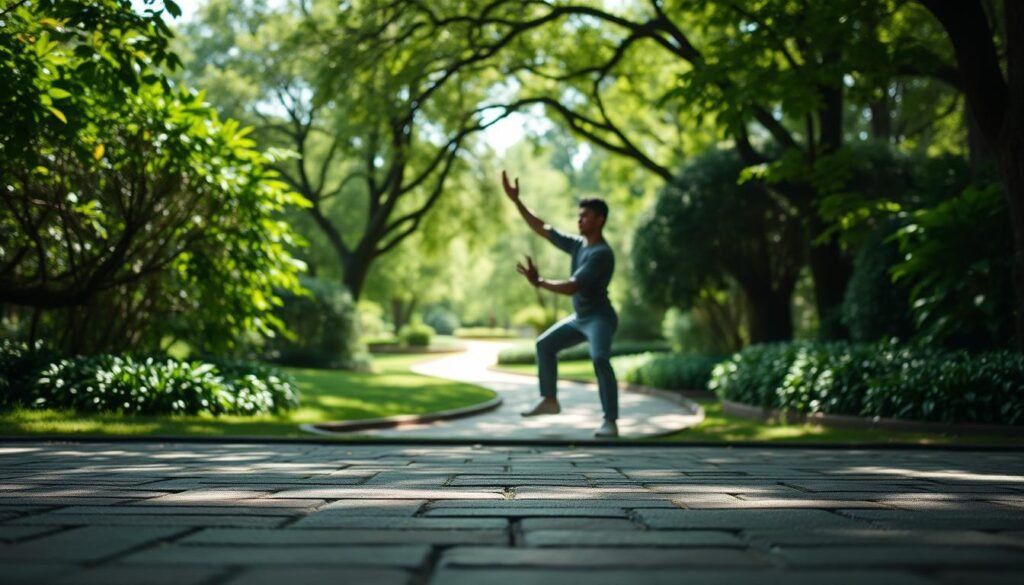
The setup was practical for many people with limited time: short sessions focused on diaphragmatic breathing, relaxed alignment, and coordinated exercises. I used easy, repeatable moves that fit an early schedule and varying motivation.
“The first week felt slower to start, but breath awareness and a quieted mind lasted into work.”
- Evaluation criteria: mood on workdays, clarity, and muscle tightness.
- Early observations: deeper breath, calmer attention, and steadier energy across the morning.
Overall, the change showed that low-impact practice can sustain momentum and improve recovery in ways that feel practical and approachable.
Qigong vs Jogging: What Changes When You Swap Speed for Energy Flow
Swapping speed for attentive motion changes how the body and mind respond. Intent shapes the reaction: one trains aerobic capacity and pace, the other trains internal awareness and steady vitality.

Energy work focuses attention on breath, alignment, and coordinated motion. That orientation lowers external strain and raises subtle circulation. It feels like warmth, tingling, and calm alertness rather than breathless effort.
How intention shifts the body’s response
- Intent matters: one method directs effort toward pace and distance; the other directs attention to energy, breath, and posture.
- Physiological cues: mindful practice brings parasympathetic tone and even warmth; running raises heart rate and heat from aerobic load.
Muscles, posture, and movement patterns
Slow, guided sequences train relaxed length and joint openness. That retrains posture and reduces habitual bracing.
Conversely, repetitive running patterns strengthen specific muscles but can add alignment errors over time. Complementary mobility work helps balance both approaches.
Time, tempo, and the flow state
- Both can spark flow: rhythmic breathing and steady patterns are common triggers.
- Perceived exertion differs: short, manageable sessions feel grounding; high-intensity runs vary with terrain, sleep, and recovery.
“Neither method is inherently superior — they support different adaptations and can enhance each other when combined.”
For practical pointers and a classic moving exercise that trains posture and breath, see this short guide on lifting the sky. These simple ways let people blend mindful motion and aerobic training with clear benefits.
How Each Method Works Inside the Body: Mechanisms, Meridians, and the Heart
When movement emphasizes posture and breath, internal pathways and circulation respond in subtle, lasting ways. This shifts balance, organ function, and the nervous system differently than impact-focused training.

How posture and pathways differ
Opening joints and refining alignment helps keep energy channels unobstructed. This reduces habitual tension and supports smoother movement patterns.
External exercise builds muscle and endurance but can create tight patterns that limit range and balance. Mindful practice counters that by training stabilizers and connective tissue.
Targeting internal organs vs broad cardio gains
Some organ-focused forms use breath, gentle twists, and intent to stimulate the liver, spleen, and lungs.
By contrast, cardio primarily conditions the heart and lungs and raises aerobic capacity across the whole body.
Circulation, vessel elasticity, and heart conditioning
Traditions describe improved vessel elasticity and smoother flow through relaxed motion. Running strengthens the heart muscle via sustained load.
Strength, resilience, and practical blends
- Relaxed power: coordinates breath, mind, and structure to build durable strength in stabilizers.
- Endurance: external work increases leg strength and aerobic capacity through repetitive loading.
“Gentle practice does not mean weak—internal work can produce durable gains while reducing unnecessary strain.”
| Effect | Posture & Pathways | Organ Focus | Cardio & Heart |
|---|---|---|---|
| Primary target | Joint openness, alignment | Specific organs via breath and movement | Heart and lungs, aerobic system |
| Typical outcome | Improved balance and range | Targeted stimulation, reduced tension | Increased VO2, endurance |
| Best use | Recovering mobility and daily balance | Support for circulation and organ comfort | Cardiovascular conditioning |
| How to combine | Short sets before or after runs | Use breathing forms on rest days | Keep steady aerobic sessions 2–4x weekly |
Modern reviews link mindful movement to improved blood pressure, balance, mood, and pain management—complementing, not replacing, cardio conditioning. For a deeper look at clinical findings, see this review of intervention studies.
The Mind on the Move: Meditation, Emotions, and Mental Clarity
When motion follows breath and attention, the mind often settles more quickly than in stillness. This moving form of meditation trains steady focus and builds emotional resilience without long seated sessions.

How moving meditation blends flow and focus
Moving practices quiet thought by directing attention to sensation, posture, and breath. Many people find this more accessible than sitting meditation. A brief, guided flow can carry calm into the workday and sharpen decision-making.
Stress, emotion, and where energy shows up in the body
Emotional energy often appears as tight shoulders, shallow breath, or racing thoughts. Specific sequences use slow arcs and breath to ease those patterns.
- Lung-focused flows can help release grief.
- Soft twists may ease anxious thinking.
- Grounded stances reduce agitation and stabilize mood.
Sleep, mood, and consistent change
Students report better sleep and steadier mood after several weeks of steady practice. Parasympathetic activation from gentle exercise tends to lower night-time arousal and support recovery.
“A small daily window (10–20 minutes) can noticeably increase vitality and focus when done consistently.”
Track sleep, perceived stress, and mood to verify changes over time. For more on mindful movement and mental benefits, see this review of related findings.
| Mental Effect | Typical Sign | Practical Sequence |
|---|---|---|
| Calm focus | Slower breath, clearer thought | Breath-coordinated arm arcs |
| Emotional release | Tension in chest/shoulders | Lung-focused openers and sighs |
| Better sleep | Reduced night-time arousal | Grounding stance and slow exhales |
Who Thrives with Each Practice: Goals, Levels, and Real-World Constraints
Match the method to the outcome you want today. If your aim is cardio conditioning pick higher-impact work; if you need posture, balance, or a nervous-system reset, pick gentle, deliberate movement.
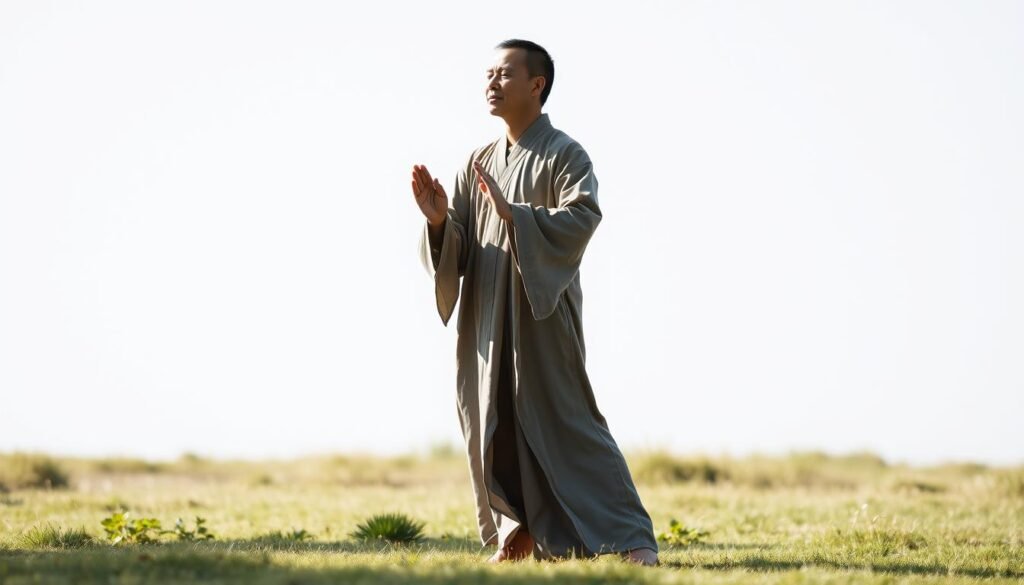
Weight loss, heart health, posture, and balance: choosing by outcome
For weight control and high aerobic load, steady running or similar exercise wins for time-efficient calorie burn. Yet a 200 lb person can burn about 360 kcal per hour with qigong — roughly like a brisk 3.5 mph walk — so it still contributes to a broader plan.
Heart health: high-intensity activity improves VO2 and cardiac fitness. Gentle practices lower stress and support blood pressure and vessel function, making them a useful complement.
Accessibility and time: seated, standing, or lying practice vs high-impact activity
Movements can be done standing, seated, or lying down and need no equipment. That makes them accessible for people with limited mobility, balance concerns, or chronic back pain.
Short micro-sessions before work or as evening wind-downs fit tight schedules. Beginners at any level can start safely, and runners can add brief sequences to reduce overuse and reinforce alignment.
- Pick by goal: cardio for endurance; gentle movement for posture, balance, and steady energy.
- Plan for time: rotate: harder sessions 2–4x weekly, gentle sessions on rest days or as daily micro-practices.
- Trial length: classes often recommend a 3-month window to track measurable changes in blood pressure, sleep, and mood.
| Goal | Best Match | Practical Notes |
|---|---|---|
| Weight management | Cardio + calorie control | Gentle practice adds modest burn (≈360 kcal/hr for 200 lb) and lowers stress |
| Heart fitness | Higher-intensity exercise | Use gentle sessions to aid recovery and blood pressure |
| Posture & balance | Gentle movement | Improves muscle coordination and reduces bracing |
| Accessibility | Seated/lying options | Suitable for varied levels and limited mobility |
Blending the Best: Integrate Qigong Principles into Your Jog
A few mindful cues before and after a run change how the body warms, moves, and recovers. Use breath, alignment, and gentle motion to reduce strain and improve the quality of each training session.
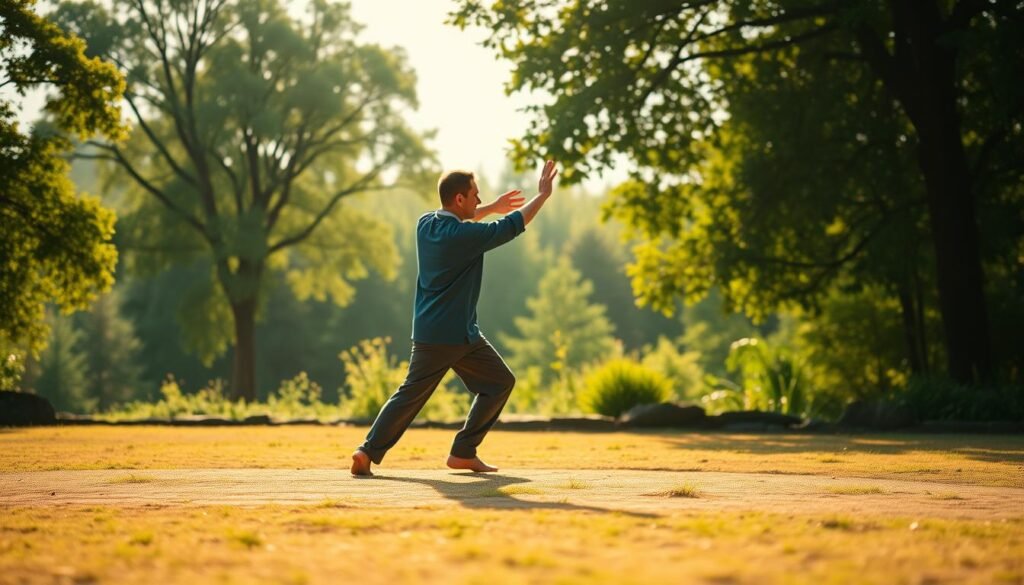
Start small. Begin with a 3–5 minute alignment check: soft knees, ribs stacked over the pelvis, relaxed shoulders, and a long neck. This primes posture and readies the muscles for efficient motion.
Breath, alignment, and mindful motion: a simple warm-up and cool-down flow
Do two minutes of diaphragmatic breathing—slow nasal inhale, relaxed exhale—to steady rhythm before you run. Follow with three gentle exercises: a slow spinal wave, hip circles, and arm swings to open joints and cue elastic recoil.
- During the run: keep attention on even footfall and soft landings. Match breath to cadence and aim for a smooth flow.
- If the mind races: count breaths, loosen the jaw and hands, then return to gentle rhythm to transform effort into mindful work.
- Cool down: end with a 3-minute sequence of shoulder circles, standing side arcs, and slow weight shifts to discharge tension and restore calm.
“On harder training days, extend the cool-down to five minutes to aid recovery and next-day readiness.”
Track changes in perceived exertion, ease in stride, and post-run tightness. Adjust the warm-up and cool-down week by week and consult this short guide on low-intensity movement for more ideas on integrating gentle practice into your routine.
Conclusion
After testing the swap, my mornings felt steadier and less reactive than before. Small, consistent choices—brief practice, aligned posture, and focused breath—compounded into clearer energy and calmer focus over weeks.
Both approaches serve health; they just do it in different ways. Replacing a run with a short qigong set shifted emphasis from pace to internal energy and recovery. Running still wins for aerobic stress and muscular endurance, while gentle practice helps posture, balance, and emotional regulation.
For a practical plan: do 10–20 minutes on recovery days, add a short set around harder sessions, and keep one longer weekly practice to build skill. Track sleep, mood, and performance to tailor your mix. For clinical findings on blood pressure and well-being, see this clinical summary.
FAQ
I replaced my morning jog with a gentle energy practice—what immediate differences can I expect?
Within days you may notice lower perceived exertion, calmer breathing, and improved posture. Energy-focused routines favor slow, coordinated movement and breath, which often reduces muscle soreness and stress hormones while boosting body awareness. Expect less cardiovascular strain but greater kinesthetic sensitivity and a quicker shift into a relaxed, alert state.
How does energy-based movement compare to steady-state cardio for heart health?
Cardiovascular exercise raises heart rate and improves VO2 max, while mindful movement supports heart health more indirectly through stress reduction, lowered blood pressure, and improved autonomic balance. For measurable cardio gains, include moderate aerobic sessions; for vascular flexibility and recovery, add low-intensity, breath-driven practice.
Will gentle, mindful movement build muscle and strength like resistance or running?
Slow, intentional sequences improve postural muscles, joint stability, and functional strength through sustained holds and controlled transitions. They won’t produce the same hypertrophy as heavy resistance training or the muscular endurance adaptations of long-distance running, but they complement those methods by improving alignment and reducing injury risk.
Can someone aiming for weight loss substitute all running with energy-focused practice?
Weight loss results from a calorie deficit and metabolic demand. Low-intensity practices burn fewer calories than running, so replacing all aerobic work may slow weight loss. However, they aid recovery, improve sleep and stress management, and can be paired with higher-intensity sessions or strength training to support sustainable fat loss.
How do these practices affect posture and movement patterns?
Mindful, alignment-centered movement retrains habitual tension patterns and encourages balanced muscle recruitment. Over time you’ll see improved head, shoulder, and pelvic alignment, which reduces chronic pain and supports more efficient motion during walking, running, and daily tasks.
Are there specific exercises that target internal organ function or circulation?
Certain breath and torso-mobilizing sequences stimulate internal organs via the diaphragm’s massage and improved circulation. These practices support digestion and lymphatic flow but should be viewed as complementary to medical care for organ conditions. For circulation, combine these techniques with brisk walking or aerobic training for best results.
How does moving meditation compare to the runner’s “flow” state?
Both can produce focused, immersive states. Running often relies on rhythmic cadence and sustained intensity to create flow, while mindful movement uses intention, breath, and slow transitions to cultivate presence. Each supports mental clarity; choice depends on whether you prefer high-energy immersion or calm attentional focus.
Which practice is better for stress, sleep, and mood regulation?
Low-intensity, breath-centered routines directly reduce sympathetic arousal and promote parasympathetic recovery, which benefits sleep and mood. Aerobic exercise also improves sleep quality and reduces anxiety through different physiological pathways. A combined weekly program typically yields the strongest mental-health outcomes.
Who benefits most from energy-oriented practice versus high-impact cardio?
Energy-focused methods suit people seeking lower-impact routines, improved balance, injury rehabilitation, or better posture and stress management. High-impact cardio suits those prioritizing endurance, VO2 improvements, and faster calorie burn. Many people benefit from a hybrid approach tailored to goals, age, and injury history.
Can I safely combine mindful movement with my current training schedule?
Yes. Use alignment and breath-based sessions as warm-ups, active recovery, or cool-downs. Short daily practices improve mobility and reset nervous-system tone without adding excessive load. For athletes, these sessions enhance performance by improving breathing, posture, and movement efficiency.
How much time should I spend on each approach for balanced results?
Aim for a mix: 150 minutes per week of moderate aerobic activity (or 75 minutes vigorous) plus two strength sessions, and 10–20 minutes daily of mindful movement or mobility work. Adjust based on goals—more cardio for endurance, more focused practice for posture and stress resilience.
Are there safety considerations or contraindications?
Both activities carry risks when done improperly. High-impact cardio can aggravate joints or heart conditions; mindful movement can cause strain if postural principles are ignored. Consult a physician for cardiovascular risk, joint issues, or recent surgeries. Start slowly, prioritize form, and progress under qualified guidance when needed.
What simple breathing and alignment cues can I integrate into a run?
Try diaphragmatic breaths, a slightly lifted chest, relaxed shoulders, and a forward-but-soft gaze. Coordinate breath with stride (e.g., two- or three-step patterns) and briefly slow to a mindful cadence during warm-up and cool-down to reduce impact and improve efficiency.
How long before I notice mental and physical benefits from regular practice?
Many people report improved calm and sleep within one to two weeks. Posture, balance, and pain reduction often emerge after 4–8 weeks of consistent practice. Cardio-related fitness gains depend on intensity and frequency but usually show within 6–12 weeks.
Where can I find reliable instruction to learn safe techniques?
Look for certified instructors affiliated with recognized organizations, university-extension programs, or medical centers offering movement therapy. Reputable sources include academic papers (PubMed), Mayo Clinic guidance, and .edu/.gov resources for exercise safety. Start with short, guided sessions and verify instructor credentials.