

I showed up tired, distracted, and convinced my body only needed shaping. Instead I found a practice that asked me to breathe, feel, and stay present. That small shift became a steady way to calm racing thoughts and reclaim a sense of control.
In today’s busy world, constant pressure can leave you overwhelmed and disconnected. Grounding skills act like an anchor: name what you see, notice textures, or use simple stretches that tie breath to movement. This practice links breath, movement, and focus so each exercise draws attention to the now while easing stress and strengthening the body.
Expect a clear, science-friendly guide that focuses on how this method supports the anxious brain instead of appearance. You’ll get practical steps, a short at-home routine, and reasons why small, consistent sessions change both brain and body.
Key Takeaways
- Breath-led movement helps settle the nervous system and reduce stress.
- Grounding actions make the present moment accessible during spikes of anxiety.
- Short, regular sessions build measurable changes in mind and body.
- Use soothing sequences to wind down and brisk ones to boost calm energy.
- Practical, equipment-free routines work anywhere and reinforce control.
Read a personal account of how this work shifted perspective at how movement changed a fitness view, and find simple, no-equipment tips at smart ways to stay fit without a.
Medical disclaimer: This article is for informational purposes only and does not replace professional medical advice. Consult your healthcare provider before beginning any new exercise or wellness routine.
From Stressed to Centered: Why I Reached for Pilates Over Quick Fixes
This practice gave my brain one clear task — follow the breath and precise alignment — which reduced mental clutter and anchored my attention. It became a simple, repeatable way to interrupt stress and regain calm.
I met tension with slow, precise motion and timed breath. Each repetition asked for alignment, sensory focus, and a steady inhale-exhale pattern. That focus pulled my attention back to the present and softened the urge to reach for fast relief.
Present-moment movement: how mindful exercise quiets an anxious brain
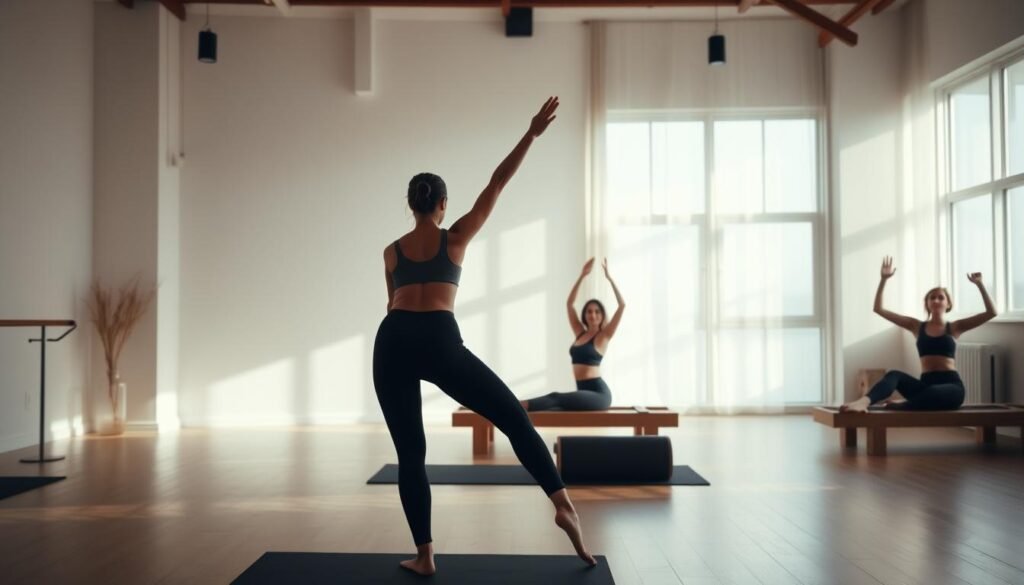
Grounding skills work by shifting attention to touch, alignment, and breath. Tactile contact with the mat acts like a reset button. The body gives immediate feedback; the brain has less room to spiral.
- Quick fixes mask symptoms: mindful practice gives the brain one clear job — follow the cue — and reduces rumination.
- Breath pacing signals safety: matching inhale and exhale to movement calms the nervous system.
- Small wins build control: a clean rep feels like proof you can influence your state, promoting relaxation.
- Short sessions help: a few focused minutes can clear the mind better than scrolling or snacking.
“When I returned to one cue—exhale to lengthen—my racing thoughts slowed and choices felt clearer.”
Curious about the science behind these shifts? Read more about pilates and mental health to see studies linking mindful movement, breath, and reduced stress anxiety.
Medical disclaimer: This article is for informational purposes only and does not replace professional medical advice. Consult your healthcare provider before beginning any new exercise or wellness routine.
Pilates for Anxiety: Science-backed Benefits You Can Feel
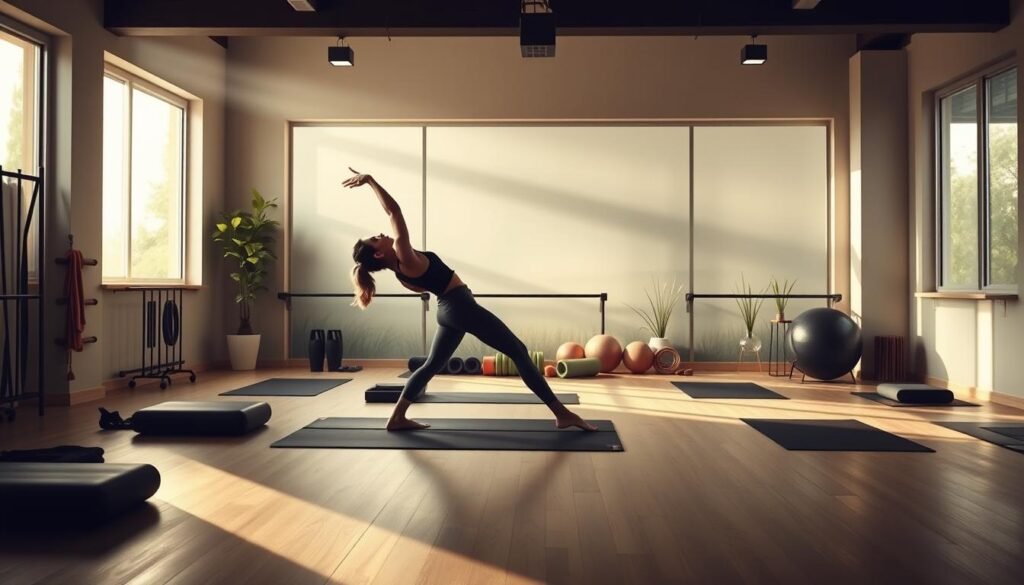
Small, precise sessions deliver clear signals to the brain that lower reactivity and sharpen focus. Backed by research, this work trains attention, strengthens stabilizers, and uses breath to calm the body.
How does focused movement train your brain?
Learning new sequences challenges working memory and attention. This gives the brain a clear job and improves decision-making under pressure.
Can deeper stabilizers support the nervous system?
Yes. Activating inner muscles improves communication across the nervous system, so you feel steadier and more coordinated in daily tasks.
What is mindfulness in motion?
Staying present with breath and cues builds resilience. Over time, this body mind practice supports regular self-care and healthier habits.
- Breath as a tool: slow breathing lowers heart rate and can reduce panic.
- Release tension: lengthening the spine and chest eases muscle guarding.
- Flow and control: precise starts and stops sharpen motor control and calm the mind.
Want deeper reading? See practical mental-health notes at mental health benefits and learn about related somatic work at somatic practice.
“Small, consistent practice gives your nervous system predictable input—and that predictability is powerful.”
Medical disclaimer: This article is for informational purposes only and does not replace professional medical advice. Consult your healthcare provider before beginning any new exercise or wellness routine.
The Grounding Routine That Eased My Anxiety (Step-by-Step Exercises)
This short routine walked me through breath-led cues and simple moves that quiet the mind and steady the body. Use these steps as a compact flow you can do on the floor or a mat. Each move pairs a clear breathing cue with a gentle action to retrain the nervous system.
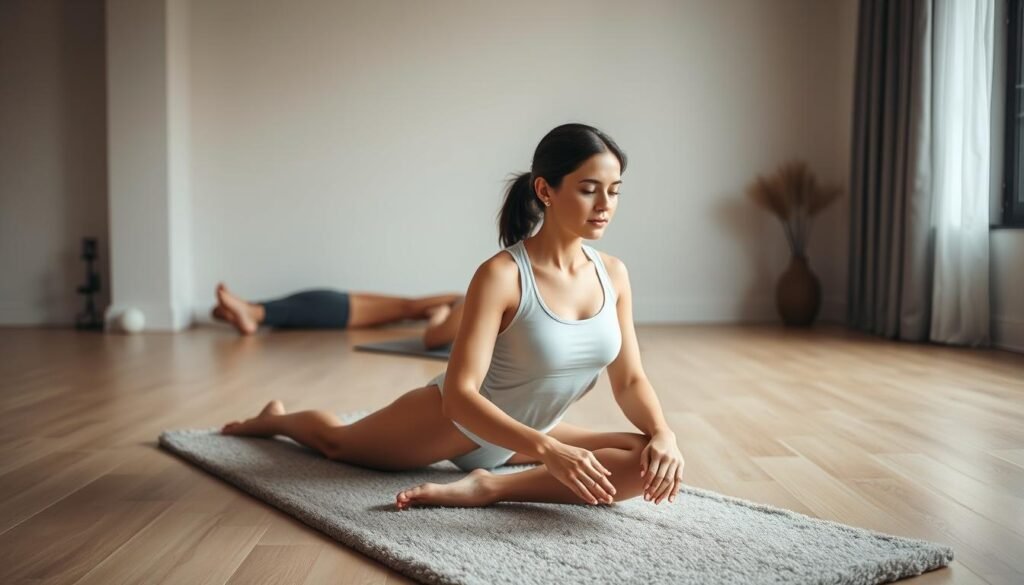
Diaphragmatic breathing: How do I start?
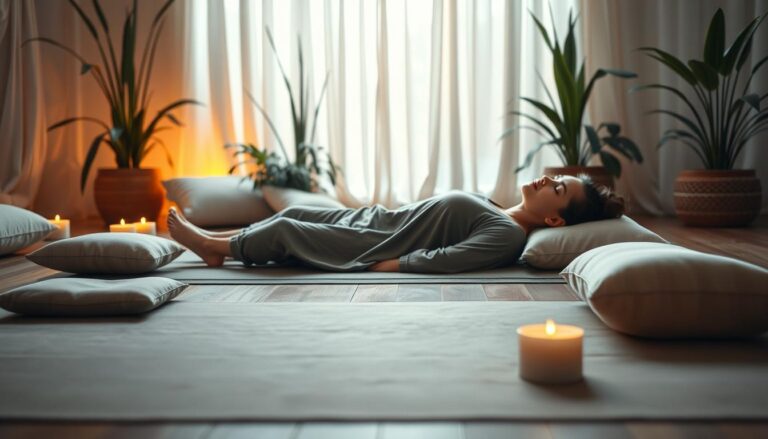
Lie on your back with knees bent, one hand on chest and one on belly. Inhale through the nose to expand the belly; exhale slowly through the mouth. Do 5–10 breaths to reduce stress before moving.
Lateral rib breathing: How do I open the chest?
Place hands at the lower ribs and direct breath sideways into the ribcage. Keep the belly quiet. Repeat 8–10 slow cycles to widen the chest and ease upper back tension.
Quick sequenced moves: What order works best?
- Spine stretch forward: Sit tall, inhale to lengthen, exhale to round the back spine; 5–8 reps.
- Cat-cow: On all fours, inhale to arch, exhale to round; 8–10 cycles.
- Chest expansion: Kneel or stand, inhale to open the chest, exhale to return; 6–8 reps.
Core and mobility: Which exercises build strength and release tension?
Pelvic curl to Bridge: inhale to tilt, exhale to peel the spine up; 6–8 reps. Roll Up: 5–8 controlled reps to link breath and core strength.
Flow and endurance: What finishes the routine?
The One Hundred: tabletop legs, lift head and shoulders, pump arms five inhale/five exhale for up to 10 breaths. One Leg Circle: five each direction per leg to keep hips stable.
| Move | Position | Reps / Timing | Main Benefit |
|---|---|---|---|
| Diaphragmatic breathing | Supine, knees bent | 5–10 breaths | Calms nervous system |
| Pelvic curl / Bridge | Supine, feet hip-width | 6–8 reps | Builds core strength, stabilizes hips |
| Swan / Swan Dive | Prone, elbows bent | 6–8 reps | Thoracic mobility, reduces back tension |
| The One Hundred | Tabletop / lifted head | 10 breaths (100 pumps) | Circulation, stamina |
Panic attack grounding: Feel the floor, use 5-2-7 breathing, gaze gently right then left for ~60 seconds, then do small movements like toe taps or finger curls to settle the body.
Want more variation? See a concise full exercise guide to expand this sequence safely.
Medical disclaimer: This article is for informational purposes only and does not replace professional medical advice. Consult your healthcare provider before beginning any new exercise or wellness routine.
Conclusion
Conclusion — clear, practical benefits you can use today. A steady, breath-led practice quietly shifted my daily reactivity and gave me a clearer head. Practicing three times per week supported steadier posture, calmer breathing, and clearer thinking.
The biggest changes were internal: the work reduced stress and tension in the body and calmed my mind. Slow breathing, precise reps, and short sessions give the nervous system predictable, soothing input.
Keep it simple: 10–15 minutes of focused exercise can ease stress on a busy day. Choose one move you love and repeat it. Track which side feels tight and which breath count soothes fastest.
If symptoms persist, consult a clinician. Pair professional care with mindful movement. For clinical evidence on mental-health improvements linked to this work, see this clinical review.
FAQ
How can this mind-body approach help reduce stress and tension?
By combining focused movement with controlled breathing, this method calms the autonomic nervous system, lowers heart rate, and reduces muscle tension in the neck, shoulders, and chest. Regular practice strengthens deep core and back muscles, improving posture and easing the chronic tightness that feeds anxiety.
What scientific effects does focused movement have on the brain?
Concentrated sequencing and breath work enhance attention and executive function by engaging the prefrontal cortex and improving brain–body communication. Studies show mindful exercise supports decision-making and reduces rumination by shifting focus to present-moment cues like breath, alignment, and rhythm.
Which breathing techniques are most effective for acute panic or high stress?
Diaphragmatic breathing and paced patterns such as 5-2-7 (inhale–hold–exhale) quickly activate the parasympathetic response. Lateral rib breathing adds space to the chest for a grounded, open sensation. Use gentle, timed breaths while feeling the floor or a support to anchor during panic.
Can short daily sessions really make a difference for anxiety?
Yes. Even 10–20 minutes of mindful movement and breath daily improves nervous system regulation over weeks. Short, consistent sessions build resilience, decrease baseline stress hormones, and create positive habit loops that support sleep and mood.
Are there specific exercises that target spinal tension and head/neck stress?
Movements like spine stretch forward, cat-cow sequences, and chest openers reduce head-to-toe tension by lengthening the spine and mobilizing the thoracic area. Gentle back strengthening—pelvic curl/bridge and controlled roll-ups—also stabilizes the neck by improving overall postural support.
Is equipment needed, or can I practice on the floor at home?
No special equipment is required for most grounding routines. Floor-based options—breath work, lateral rib expansion, one-leg circles, and chest openers—are highly effective. A mat, small cushion, or strap can increase comfort and accessibility.
How does core work affect emotional regulation?
Strengthening the deep abdominal and pelvic-floor muscles creates a stable center that supports breath control and movement precision. This physical stability translates to greater confidence and calmer physiology, helping the brain shift away from fight-or-flight responses.
What should I do during a panic attack if movement feels overwhelming?
Keep movements small and sensory-based: press your feet into the floor, notice five things you see, practice 5-2-7 breaths, and gently roll your shoulders. These simple actions reorient attention and dampen sympathetic arousal without demanding large effort.
How quickly will I notice mood or sleep improvements?
Some people feel calmer immediately after a session; consistent benefits for mood and sleep typically appear within two to eight weeks of regular practice. Improvements depend on frequency, session length, stress levels, and sleep hygiene.
Can this practice replace therapy or medication for clinical anxiety?
It’s a valuable adjunctive tool but not a universal replacement. For moderate to severe clinical anxiety, combine movement-based practice with evidence-based psychotherapy and medical guidance. Always consult a healthcare professional before changing medications or treatment plans.
Are there contraindications or common precautions?
Avoid high-intensity or extreme spinal movements if you have recent injuries, acute joint pain, or uncontrolled cardiovascular conditions. Modify supine or prone positions for pregnancy, recent surgeries, or vertigo. When in doubt, consult a licensed physical therapist or physician.
How do flow and control exercises improve body-mind coordination?
Precision-based sequences train timing, alignment, and breath-synchronized movement, improving proprioception and motor control. That heightened somatic awareness reduces automatic stress responses and increases the sense of agency over your body and mind.
Which movements are best for hip and shoulder mobility while reducing anxiety?
One-leg circles and chest expansions open the hips and shoulders while stabilizing the pelvis and scapula. Swan-style extensions and gentle side-lying chest openers promote thoracic mobility, easing posture-related tightness that contributes to anxiety.
How can I structure a short grounding routine at home?
Start with 3–5 minutes of diaphragmatic breathing, add lateral rib breaths, move through slow cat-cow and a spine stretch, include one or two activation exercises (bridges or roll-ups), finish with a chest opener and brief breath practice. Keep sessions steady and intentional.