


Can a few mindful steps reset your day and steady your attention? This guide shows how simple shifts in breath, posture, and awareness turn ordinary movement into a nurturing, science-informed habit.
Learn clear, short methods you can use on sidewalks, office halls, and in small spaces at home. These methods unite body and mind, reduce stress, and help you feel at home in the present moment.
Start where you are: you already walk. With tiny changes—breath-step synchrony, a half-smile, and gentle sensory noting—your usual route becomes a source of calm and focus.
This introduction previews quick-start resets, core mechanics, place-based adaptations, and safety tips. If you want a short companion guide with step-by-step cues, see this mindful walking summary for additional context.
Key Takeaways
- Accessible: small attention shifts make everyday walking a calming ritual.
- Practical: breath-step synchrony and posture link body and mind.
- Flexible: works on city paths, office corridors, or at home.
- Short sessions help: start with minutes and scale up.
- Outcomes: better focus, less stress, and a felt sense of being at home in the present.
Why Walking Meditation Now: Aligning Intent with the Present Moment
Walking meditation channels your intent into this exact moment so you’re not walking on autopilot. By pairing breath, steps, and gentle awareness, you calm the nervous system and reconnect with what’s actually happening now.
Each step, when done with care, reconnects body and mind and reduces reactivity. This simple shift changes how you move through your day and the quality of attention you bring to tasks.
Shift from “get somewhere fast” to “be here fully.” That change transforms a hurry into a way to steady thought, lower arousal, and carry calm into work, errands, or a short break.
“Every step that is taken with mindfulness makes the earth a most beautiful place.”
Brief mindful bouts during high-stress moments help downshift arousal. Even sixty seconds of intent-focused walking can make it easier to respond rather than react.
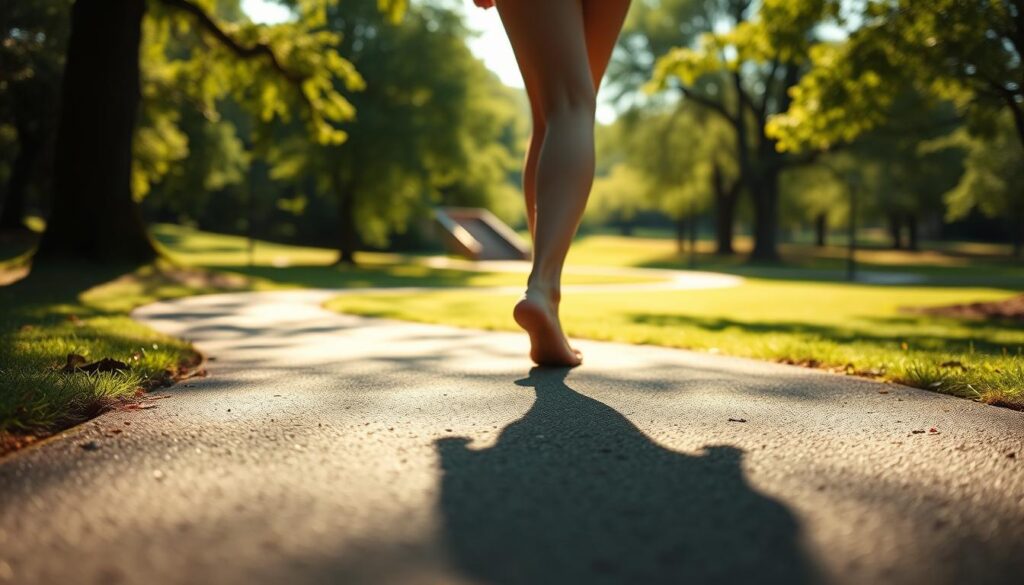
- Mechanism: repeated, gentle steps stabilize attention systems and increase bodily sensation.
- Connection: treating the ground as supportive builds a felt sense of belonging and steadiness.
- Enjoyment: a half-smile softens effort and keeps the way pleasant.
| Situation | What to Do | Immediate Benefit |
|---|---|---|
| Between meetings | Slow your pace and track breath for one minute | Reduced stress, clearer mind |
| Waiting in line | Notice feet, soften shoulders, smile slightly | Grounded presence, less reactivity |
| After bad news | Take a short outdoor loop and feel the ground | Emotional settling, renewed connection |
| Short nature breaks | Match breath to steps and note sounds | Heightened awareness, calmer nervous system |
Quick Start: A Two-Minute Mindful Walking Reset You Can Do Anywhere
Begin with a short, intentional pause to shift out of autopilot and into a focused two-minute reset. One deliberate breath and a handful of easy steps bring clarity, calm, and renewed focus before you return to tasks.

Start by Stopping: One Deep Breath to Set Intention
Take one slow inhale and a full exhale to mark a clean start. Pause your motion, note quietly “now I’m practicing,” and let that cue flip attention without extra effort.
Set a simple frame: two minutes, a short hallway, or one city block. Use a micro-timer if you like.
First Steps: Feel the Feet, Relax the Pace, Arrive Here
Then take 5–10 easy steps with soft attention on the soles. Focus on contact, pressure, and subtle temperature at the feet; when thoughts drift, gently return attention to the sole.
Slow your pace a notch so breath and step match naturally. Keep eyes up and check posture: lengthen the crown, soften shoulders, align ribs over hips. A half-smile and one closing breath finish the reset and carry calm into the next moment.
Core Mechanics: Breathing with Your Steps and Uniting Body and Mind
Match breath to step and you get a simple, reliable route back to the present moment. This alignment calms the nervous system and turns motion into a clear attention anchor.
Let your lungs set the pace. Notice how many steps fit one inhale and one exhale. Start without forcing counts; listen to natural length and follow that rhythm.
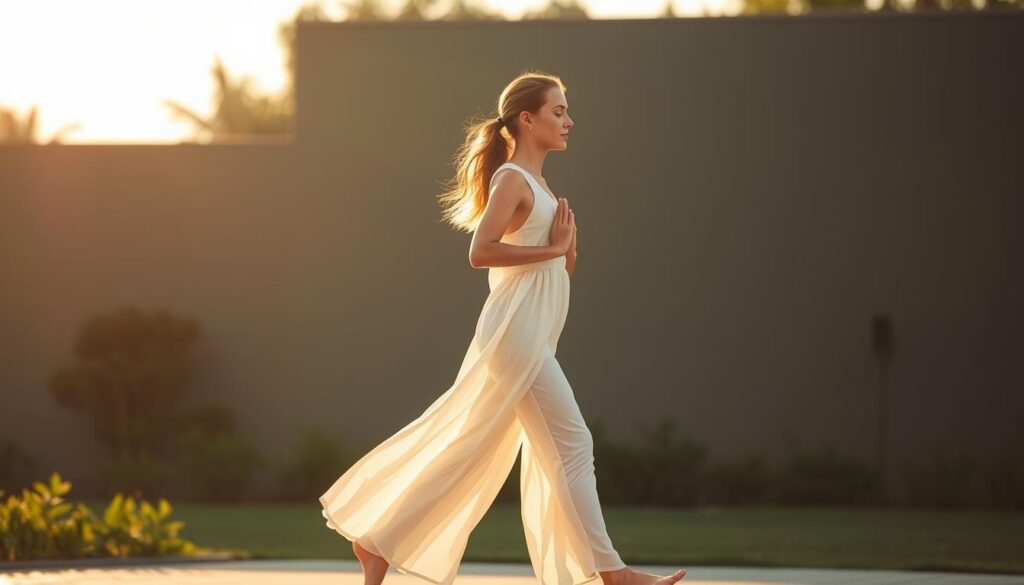
Breath-Step Synchrony: Let Inhalations and Exhalations Set Your Rhythm
Match steps with natural breathing to create a steady rhythm—e.g., three steps in, four steps out—without forcing length.
Try Thich Nhat Hanh’s counting: three in, four out as a guideline. If it feels easy, extend the exhale by one step to deepen calm.
Body-Mind Together: Walking as the Return to Your True Home
When body and mind move together, tension drops and clarity grows; this becomes a reliable way to come home to yourself.
Sync arm swing, hip rotation, and foot roll with the breath-led cadence so the whole body mind system moves as one. Anchor attention on the heel-to-toe transition and the breath wave when awareness drifts.
- Micro-checks: keep eyes up, jaw soft, shoulders easy.
- Emotional clarity: a calm breath-step rhythm helps notice moods early and respond with skill.
- Sustain with a half-smile: subtle ease reduces effort and keeps the connection pleasant.
Walking Meditation Practice: Step‑by‑Step Methods for Daily Life
Use posture, sensory cues, breath counting, and the soles of your feet to make short sessions reliable and portable. These simple methods fit a hallway, a sidewalk, or a small office loop and help steady attention fast.
Start with a quick, honest body check. Notice if you feel light, heavy, tense, or relaxed. Observe gait without trying to fix it. Let the first loop be an exam, not a correction.
Gentle body check and posture: From slouch to open alignment
Lengthen the back of the neck, broaden the collarbones, and stack ribs over pelvis. Let arms hang and soften the jaw. Small alignment gains improve ease and confidence.
Sensory noting in motion: See, hear, smell, and let go
Label briefly—“seeing, hearing, smelling”—then return to the step. Notice weather, temperature, and textures without following stories or thoughts.

Counting steps with the breath: Matching and lengthening with ease
Notice how many steps fit one inhale and one exhale. Keep that count for a few minutes. If it feels natural, extend the exhale by one step to deepen calm.
Anchor on the soles: Grounding attention in each footfall
Feel heel contact, midfoot transfer, and toe‑off. Use foot pressure and surface texture as a returning point when attention wanders. Pair short phrases like “in—out” or “here—now” with steps to reinforce presence.
- Observe arm sway and weight shift; this rhythm supports steadiness.
- Make small micro‑adjusts: drop shoulders on the exhale, soften knees if gait feels jarring.
- In busy places, simplify—focus on soles and breath; add full sensory noting in calmer spots.
- End by printing a quick gratitude on the ground with each final step to deepen the experience.
Adapt Your Walk: City Streets, Nature Paths, Office Halls, and Home
Shift how you move to match the street, the park, the office, or a tiny room—each place invites a slightly different focus. Small adjustments in pace, attention, and sensory cues make short bouts of mindful walking effective anywhere.

Urban focus: block-by-block attention
Set an intention for each block and return attention to the soles when the mind drifts.
Navigating people: keep eyes up, widen awareness, and hold a steady pace. Let your feet be the base while you skillfully share space.
Nature immersion: touch and reverence
Slow down and feel the path underfoot. Touch a tree or notice soil texture to deepen connection with the earth.
Reverence cue: treat the path as sacred—this softens effort and strengthens presence in any place.
At work or at home: short, reusable loops
Use hallway laps or kitchen‑to‑desk trips as 1–3 minute resets. Pair one task with one deliberate walking reset to make it habitual.
Small spaces: compact, powerful turns
Walk 5–7 steps, turn mindfully, and return. Compact loops train attention without drawing notice; many traditions used tiny cells for deep focus.
- Pace adjustments: slow cadence in crowds; let breath lead in open areas.
- Sensory guardrails: in noisy streets, simplify to soles and breath; in quiet parks, widen to sounds and smells.
- Time-friendly frames: one hallway, one staircase, or one room trip can be a complete reset.
- Consistency tip: pick a regular place—office corridor, backyard path, or living room route—to build a dependable routine.
Deepening Presence: Reverence, Gratitude, and the Half‑Smile
Add a soft half‑smile and a quiet “thank you” with each step; gratitude makes presence easier and more enjoyable. Treat the ground as a generous ally and let your eyes relax; this ease sustains attention over longer walks.
A soft, grateful step invites a deeper sense of presence and opens the heart to small moments. Thich Nhat Hanh asks us to see the earth as alive and kind. Let that idea guide a gentle, reverent pace.

Print Gratitude on the Ground with Every Step
Pair each footfall with a short phrase — try “thank you” or “I’m here.” Feel the words move through your feet into the ground. This simple act builds steadiness, joy, and compassion in motion.
Half‑Smile, Soft Eyes: Ease that Sustains Attention
Keep a broad, gentle gaze rather than a narrow stare. Soften the jaw and let the half‑smile steady the mind. Slow your cadence slightly to sense support from the ground.
- Gratitude printing: match a phrase to each step to root attention.
- Soft eyes: a relaxed gaze reduces mental strain and widens awareness.
- Compassion in motion: notice effort, soften around it, then return to the soles.
Staying Safe and Steady: Pacing, Surroundings, and Distractions
A steady, clear mind helps you move safely while staying fully present. Keep your head up and your field of view open; mindful walking is alert and responsive, not zoned out.
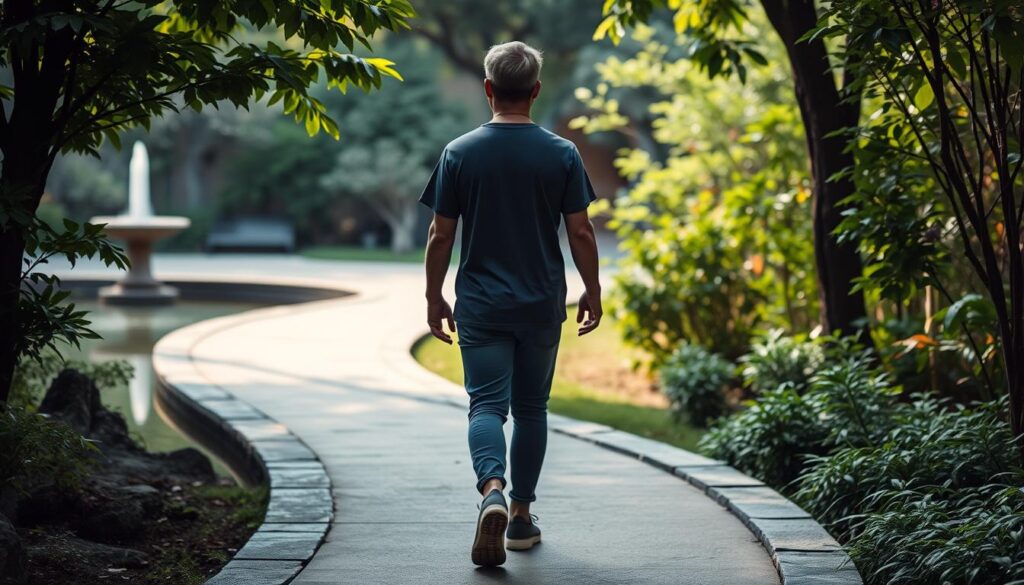
Safety guides good attention. Choose routes where hazards are predictable and let safety shape how long and where you walk.
Awareness without zoning out: Eyes up, mind clear
Keep your eyes up and use a soft focus. A broad gaze lets you track curbs, vehicles, and people while keeping mental effort low.
Scan the surroundings every few steps. This keeps you ready to act and reduces stress when the path changes.
When the mind wanders: Return to rhythm and the sole of the foot
When attention drifts, return to the rhythm of the sole and a steady pace; repeat without judgment. Label a thought briefly as “thinking”, breathe out, and notice foot contact to reset focus.
Use a gentle pace that supports balance. On uneven ground or in crowds, slow slightly and feel the ground under each foot to stabilize posture and calm the nervous system.
- Safety first: watch crossings, curbs, vehicles, and others; let safety decide where you practice.
- Time-bound focus: in busy areas, limit sessions to one block or a short loop to keep attention high.
- People-aware: yield space, make brief eye contact when needed, and weave courtesy into your rhythm.
- Quick reset: one long exhale plus sole awareness can re-center you after any interruption.
Benefits You Can Feel: Calm, Compassion, Connection, and Health
Expect calmer stress responses, steadier focus, and a clearer mind as breath and step rhythms settle your system. Over time, you may feel more compassion and connection—to yourself, to others, and to the ground that supports you.
When breath, count, and a soft half‑smile align, change is tangible. Thich Nhat Hanh called this harmony a route to calm, clarity, and compassion. Groups can amplify that calm and create a shared energy of peace.
- Stress relief: syncing breath and steps downshifts arousal and eases tension in both body and mind.
- Emotional clarity: you spot moods sooner and choose skillful responses rather than react on autopilot.
- Body benefits: gentle, rhythmic movement supports joint mobility, posture, and less perceived muscle tightness.
- Focus gains: anchoring on the soles trains attention that transfers to work, parenting, and exercise.
- Connection and compassion: reverent movement can deepen belonging and soften self‑criticism toward others.
- Sensory integration: noting sensations without the story improves interoception and eases reactivity.
Group effect: sharing intentional steps often multiplies calm and improves the health of everyone present. Try a short shared session and notice the difference in mood and focus.
Make It a Habit: Minutes, Cues, and Ways to Integrate Mindful Walking
Think in minutes, not miles—sprinkle 1–3 minute mindful walking bouts between tasks to build a durable habit. Use cues you already meet—doors, crosswalks, elevators—to trigger attention to the soles and a steady pace.
Micro‑Sessions: Present‑Moment Pauses Between Tasks
Add a 60–120 second reset after emails, before meetings, or between calls. These short reps anchor attention and make change cumulative.
Start with a single block: one focused set of steps, then stop and note how you feel. Over days, add more mini-resets rather than longer, infrequent sessions.
Daily Cues: Doors, Crosswalks, Elevators as Practice Triggers
Use cues you already meet—doors, crosswalks, elevators—to trigger attention to the soles and a steady pace. Pair a repeated place with a mini-session: every time you pass the lobby door or kitchen threshold, walk mindfully until the next clear marker.
When thoughts surge, label “thinking,” then return to the soles within a step or two. Keep the pace comfortable and add a half‑smile so the habit sticks because it feels good, not forced.
- Block-by-block: commit to one block of focused steps, then reset at the corner.
- Workday fit: walk mindfully between rooms or tasks with a relaxed pace.
- Track lightly: note how many micro-sessions you did; aim for consistency over intensity.
Conclusion
Finish by holding the idea that small, repeated steps knit body and mind into a calmer life. A single breath and one clear step can reset attention and lower stress in any place.
Bring this into real time: feel the soles, sync a few steps to your breath, keep eyes soft, and notice small sensations that guide posture and rhythm. Use a doorway, hall, or short street as your cue and repeat often; short bouts add up into lasting ease.
Next step: pick one daily cue today and take a brief mindful walking reset—count a handful of steps, soften into a half‑smile, and let the path under your feet bring you back home to the present.
FAQ
What is the simplest way to begin a mindful walking session anywhere?
Start by stopping for one deep breath to set your intention, then take two slow, deliberate steps paying attention to how your feet connect with the ground. Keep your pace relaxed, eyes soft, and focus on the sensation at the soles of your feet. This short sequence anchors attention quickly and works in a hallway, park, or office.
How do I sync breath with my steps without feeling awkward?
Find a comfortable rhythm where one inhalation matches two or three steps, and one exhalation matches the same number. Adjust the ratio until it feels natural—no forced holding. Let the breath guide the pace rather than the other way around; this gentle coordination calms the nervous system and unites body and mind.
Can I practice mindful walking in a busy city street or crowded place?
Yes. Use a block-by-block focus: choose a short distance and keep attention on sensation in the feet, sounds, and your breathing. Eyes open and soft helps you stay safe while maintaining awareness. Treat interruptions as part of the practice—notice them and return to the rhythm without judgment.
What are quick micro-sessions I can do between tasks at work?
Try a two-minute reset: pause at your desk, take one deep breath, then walk slowly to the door and back while counting steps or syncing breath to steps. Use doors, elevators, or stair landings as cues to practice. These micro-sessions reduce stress and restore focus.
How do I adapt the practice to small indoor spaces?
In compact areas, use seven-step turns or slow, mindful pacing along a short path. Emphasize sensory noting—touch of shoes on floor, weight shifts, and sounds. Short circuits maintain presence without requiring large distances.
What safety tips should I follow during mindful walking?
Keep your eyes up and scan the environment while staying present. Keep a steady, comfortable pace and avoid extreme terrain when you’re practicing focused attention. If you feel dizzy or disoriented, stop, breathe, and return to seated awareness before resuming.
How do I handle a wandering mind without getting frustrated?
Treat wandering as expected and useful data. Gently label the drift (e.g., “thinking”) and come back to the soles of the feet or the breath-step rhythm. Each return strengthens attention; compassion toward yourself is part of the work.
What sensory cues should I use to deepen presence?
Use a simple checklist: feel the feet, notice breath, listen to nearby sound, and observe visual details without story. Smell and temperature can anchor you too. Briefly noting these sensations keeps the practice embodied and immediate.
How long should sessions be to get real benefits?
Benefits appear with brief daily sessions—two to ten minutes—plus longer walks when possible. Regularity matters more than length. Consistent micro-sessions build calm, improved attention, and better stress regulation over time.
Can mindful walking improve physical health as well as mental well-being?
Yes. Combining gentle movement with focused attention supports cardiovascular health, lowers stress markers, and enhances balance and posture. It also promotes somatic awareness that helps prevent tension and injury in daily life.
How do I bring gratitude or compassion into each step?
Intentionally add a brief phrase or image—such as “may I be well” or picturing someone you care about—on each inhale or exhale. A soft half-smile and open gaze can subtly shift tone and embed reverence into ordinary movement.
How do I create a sustainable habit around this practice?
Anchor the routine to existing daily cues—leaving the house, crossing streets, or finishing meetings. Start small, log minutes if helpful, and schedule micro-sessions into your day. Consistency and clear triggers make the practice resilient.
Are there different methods for counting steps and breath?
Yes. Some people count steps forward with the inhalation and backward with exhalation, others match two steps per breath. Experiment with short sequences (4–8 steps) and longer cycles to find what calms your nervous system and keeps attention steady.
What should I do if I have balance or mobility limitations?
Adapt the approach: use shorter strides, hold a handrail, or practice seated mindful stepping—lifting one foot at a time while attending to sensation. Consult a healthcare provider if you have concerns, and prioritize safety while cultivating presence.
How can I measure progress in this type of awareness work?
Track qualitative changes—less reactivity, easier returns from distraction, calmer breathing—and small objective markers like longer uninterrupted attention spans or reduced stress levels. A simple journal noting minutes practiced and effects on mood can reveal trends over weeks.



Don’t Miss These Picks