


Can ten focused minutes each day really replace morning drag with steady energy and clearer thinking?
This short practice blends gentle movement, breathwork, and mindful standing to wake the body and calm the mind.
In just ten minutes you can activate meridians, improve circulation, and ease stiffness. The sequence uses standing meditation for focus, breath-led pauses for calm, and slow flowing movement for mobility. It suits busy people and those seeking low-impact vitality without straining joints.
Expect improved clarity, emotional balance, better posture, and a calmer nervous system that carries through your day. Keep sessions brief and consistent; daily practice compounds benefits more than occasional long workouts.
Prefer guidance? Try a follow-along video to learn the flow and set one clear intention before you start.
Key Takeaways
- Ten minutes can boost energy and reduce stress for the whole day.
- Gentle standing poses and breathwork improve clarity and balance.
- The practice targets stiffness, mental fog, and low energy.
- Short daily sessions deliver better results than sporadic long ones.
- Accessible for most people and safe for joints when done mindfully.
Why a Morning Qigong Routine supercharges energy, clarity, and balance
Starting with slow breath-led movement primes circulation and steadies attention for the day ahead. Short, consistent sessions unlock natural vitality, reduce stress, and improve posture without strain.
Beginning the day with gentle motion tackles common problems: sluggishness, mental fog, and stiffness. These simple practices activate the body’s energy systems and calm the nervous system.

Key benefits: energy flow, mental clarity, stress reduction
Benefits are easy to notice. Regular practice boosts natural energy, sharpens mental clarity, and lowers stress through steady breathing and low-impact movement.
- Energy: gentle ranges of motion and breath increase circulation and oxygen delivery for sustained alertness.
- Mental clarity: mindful movement reduces fog and improves focus within minutes.
- Stress reduction: breath-led pauses calm the nervous system and steady mood.
How gentle movements and breathing activate meridians and mobility
Slow, rhythmic flows open fascia and stimulate meridians in a way that feels like turning up a dimmer on alertness and mood. Light joint releases improve mobility and posture, so you move through the day with less friction.
If you want a guided start, try a clear primer for beginners at qigong for beginners. Notice small gains each day; those micro-improvements compound into lasting health and balance.
Set up your practice: stance, breathing, and mindful awareness
Build a simple, repeatable setup that links posture, breath, and focused intention. This short ritual grounds the body and calms the nervous system so you can start day with steady energy.
Start by planting your feet firmly and using breath to tie the body and mind together.

Find a stable stance and grounding breath
Stand with feet hip-width, knees soft, and your tailbone gently dropped. Keep the ribcage stacked over the pelvis and the head floating tall so posture supports easy breathing and circulation.
Relax shoulders and jaw. Let your arms hang with about 10% tension at the fingertips to keep subtle awareness in the hands.
Take two to three cleansing breaths: inhale through the nose, exhale through the mouth. Place both hands just below the navel on the lower dantien. Breathe into that center and imagine drawing energy up from the soles of the feet and back down for a steady sense of flow and balance.
- Micro-check: scan toes to crown and release any bracing so the stance feels buoyant.
- Weight: aim for even pressure on both feet with toes relaxed and arches lightly lifted.
- Set an intention: choose calm, clarity, or steady energy to anchor your short practice.
When you’re ready to build the sequence, a clear primer on posture and alignment can help — try these guided postures to refine your start.
Morning Qigong Routine: a step-by-step 10-minute sequence
This compact sequence moves from stillness into gentle motion to clear tension and boost usable energy. Follow each step with calm breathing and mindful alignment for steady clarity and balance through the day.
Begin with quiet standing, then add breathing and small movements that target meridians, fascia, and joint mobility. The pattern builds safely so muscles and nervous system wake together.
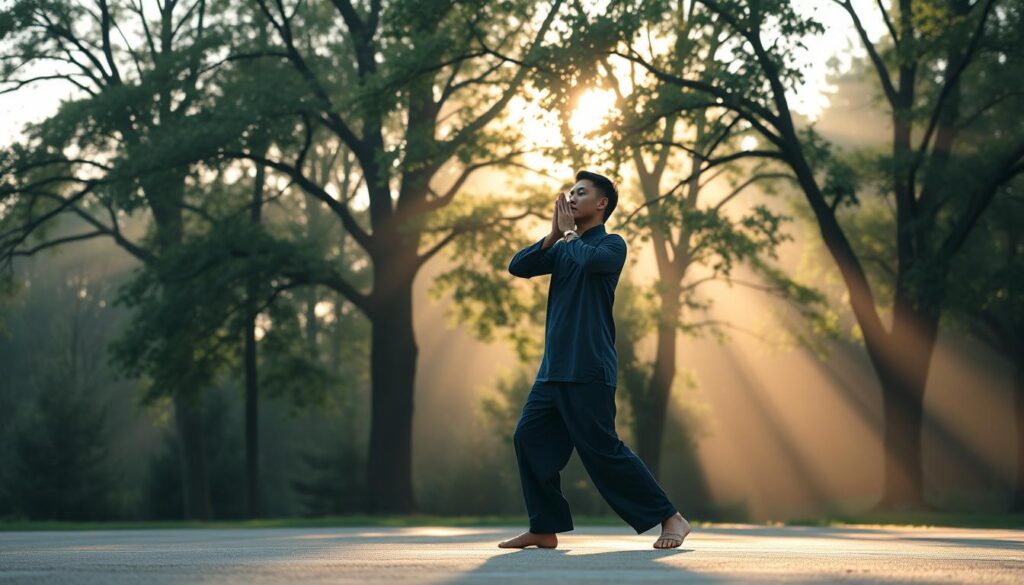
Zhan Zhuang — standing meditation to stabilize mind and body
Stand tall, soften knees, let your hands float at the sides. Breathe quietly to settle attention and ground the body.
Cleansing breath — release tension and reset
Inhale through the nose, exhale with a gentle sigh. Picture stale tension leaving the chest.
Shake it out — bounce to stimulate circulation
Light bounces through knees and ankles; shake arms to free shoulders and loosen muscles.
Horizontal breathing — expand ribs for oxygen and calm
Wrap hands around lower ribs; inhale to widen sideways, exhale to soften for clearer focus.
Rolling the Ball & Opening the Heart
Circle an imaginary sphere at chest height to glide fascia and meridians. Then lift arms wide and raise the chest without arching the low back.
Ba Duan Jin press-up
Feet slightly wider than hips, toes out. Interlace hands, inhale to press overhead, pause, exhale in a half-circle back down.
- 0:00–1:30 Zhan Zhuang — settle posture and feet.
- 1:30–2:30 Cleansing Breath — sigh and release tension.
- 2:30–4:00 Shaking/Bouncing — stimulate circulation and joints.
- 4:00–5:30 Horizontal Breathing — expand ribs for oxygen.
- 5:30–7:00 Rolling the Ball — smooth shoulders and meridian flow.
- 7:00–8:30 Opening the Heart to the Sky — chest opening for emotional balance.
- 8:30–10:00 Ba Duan Jin press-up — inhale up, exhale down with intent.
Coaching cue: keep movements small and pain-free, wrists soft, feet grounded, and let the hands follow breath rather than force range. A quick video can help refine timing and form.
Make it stick: adapt your qigong morning practice for your body and schedule
Scale the sequence to your available minutes and to how your body feels. Small adjustments make the habit sustainable and help transform mornings into a calm, energizing start.
On tight days use a five-minute stack: Zhan Zhuang, a Cleansing Breath, then gentle Shaking. This compact approach preserves benefits when you have limited time.
When you have extra minutes, run the full 10-minute routine to deepen mobility and breathing patterns. Set a timer and pair the practice with a cue, like after brushing teeth, so it becomes automatic.
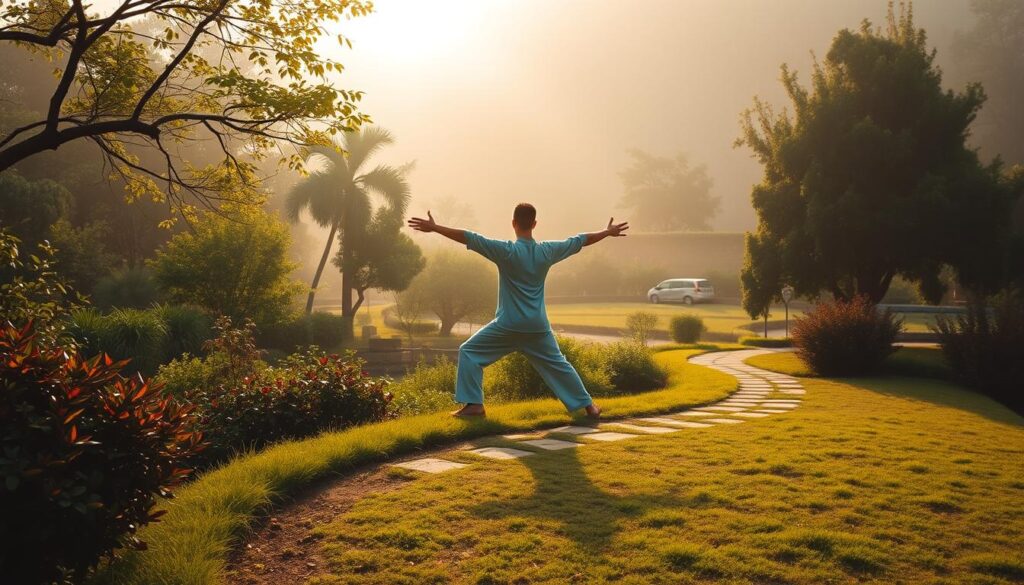
How to modify for stiffness, tight shoulders, and sore feet
For stiffness, keep movements small and spend extra breaths in Horizontal Breathing to soften the ribcage and spine.
If shoulders feel tight, lower arm paths in Opening the Heart and Ba Duan Jin; lead with elbows and stop before discomfort.
Soothe sore feet by practicing barefoot on a soft mat, reducing bounce, and shifting weight gently side to side to keep circulation without irritation.
Mindful finish: short meditation, visualization, and intention
End with 30–60 seconds of quiet meditation. Visualize clear energy moving through the body and name one intention or gratitude to lock in emotional balance.
- Time-smart tip: track energy and clarity in a simple log and adjust minutes as needed.
- Protect joints: keep knees soft and narrow stance if knees or low back are sensitive.
- Learn by seeing: a short video can refine timing and form; follow health guidance if you have medical concerns.
Conclusion
Consistent short practice trains your system for steady energy and clearer thinking each day. In about ten minutes you can reduce tension, open the chest, and steady attention for real-world tasks.
Keep movements small, breathe with intent, and protect joints by staying within comfort on each side.
Stand and center, release with a few shakes, expand the ribs, roll through smooth patterns, open the chest, and finish with breath-coordinated hands overhead. Practice at the same time to build reliable vitality and mental clarity.
Start small and add one exercise at a time. For a practical primer and a short follow-along qi gong morning routine guide, place a mat near light and save a quick video to speed habit formation.
One final breath in, one slow exhale, and a clear purpose—then go use your energy well.
FAQ
What are the main benefits of a 10-minute morning qigong routine?
A short daily practice improves circulation, reduces stiffness, and boosts vitality by combining gentle movement, focused breathing, and mindful awareness. It can increase mental clarity, lower stress, and enhance mobility in joints, feet, and shoulders while activating meridians and balancing energy for a more grounded start to the day.
How does gentle movement and breathing activate meridians and improve mobility?
Slow, coordinated motions paired with diaphragmatic breathing help circulate blood and lymph, relax fascia, and reduce tension in muscles and toes. This stimulates traditional meridian pathways, improves joint range of motion, and supports nervous-system balance, which together promote sustained energy and emotional balance.
What stance and breath should I use at the start of practice?
Stand with feet hip-width, knees soft, and weight evenly distributed. Soften the hips, tuck the tailbone slightly, and lower your focus to the lower dantien. Breathe through the nose with a relaxed diaphragm, using slow inhales and full, long exhales to anchor awareness and stabilize posture.
What is Zhan Zhuang and why include it in this routine?
Zhan Zhuang is a standing meditation that builds structural alignment, balance, and internal awareness. Holding a relaxed, rooted posture for a few minutes calms the mind, reduces tension in the arms and shoulders, and primes the body for movement-based exercises.
How do cleansing breath and horizontal breathing differ, and when do I use them?
Cleansing breath is a deep, intentional exhale to release stored tension and wake up the system; use it early to clear stiffness. Horizontal breathing focuses on expanding the ribs laterally to increase oxygen uptake and soothe the nervous system—use this during gentler movement phases to promote calm and endurance.
What is the purpose of "shake it out" and how should I perform it?
Gentle bouncing or shaking stimulates circulation and lymph flow, loosens fascia and joints, and helps relieve morning stiffness. Keep knees soft, let the arms and shoulders relax, and allow the motion to travel from the feet through the legs and torso for 30–60 seconds.
How does Rolling the Ball support fascia and meridian activation?
Rolling the Ball involves circular arm-and-torso movements that massage connective tissue, improve shoulder mobility, and encourage smooth energy flow along meridian lines. Perform slowly with mindful breath to coordinate movement and intention for optimal effect.
Can this sequence help with chronic stiffness or sore feet?
Yes. Modifying range of motion, using a chair for support, and emphasizing foot and toe mobilization can reduce discomfort. Short, frequent sessions increase circulation to affected areas and gradually restore mobility without overloading muscles.
What is the Ba Duan Jin press-up variation and how do I practice it safely?
This variation integrates an inhalation to lift and an exhalation to lower with mindful intention, engaging core and postural muscles. Move slowly, maintain a neutral spine, and limit depth to avoid strain. Focus on quality of breath and alignment rather than speed or repetitions.
How can I scale the routine if I only have five minutes?
Prioritize grounding breath, a brief Zhan Zhuang hold, and one dynamic sequence such as Rolling the Ball or Opening the Heart to the Sky. Concentrate on full, calm breaths and simplified movements to preserve benefits in less time.
How should I finish the practice to carry benefits through the day?
Close with a short mindful finish—one to two minutes of quiet standing or seated meditation, visualization of energy flowing through meridians, and a clear intention for the day. This links physical sensations to mental focus and emotional balance.
Are there any medical concerns or contraindications?
Qigong is low-impact, but people with acute injuries, recent surgeries, uncontrolled hypertension, or other serious medical conditions should consult a healthcare provider before starting. Modify movements to avoid pain and prioritize gentle, pain-free ranges of motion.
Do I need special equipment or footwear to practice?
No special gear is required. Practice barefoot or in flat shoes to improve proprioception and foot mobility. A yoga mat or supportive surface can help if you prefer softer footing. Optional props include a chair for balance or a light cushion for seated meditation.
How quickly will I notice benefits in energy and mental clarity?
Many people report immediate increases in alertness and reduced stiffness after the first few sessions. Consistent daily practice over weeks deepens improvements in energy regulation, mood, and mobility, especially when combined with good sleep and hydration.



Don’t Miss These Picks