


This guide shows you how to use a 7-day plan to support your hormones with strategic meals and snacks.
We pair science-backed nutrition with approachable steps so you can build a simple, sustainable routine.
Curious: can a week of thoughtful eating change how you feel day to day?
Supporting healthy hormone balance starts with the foods you pick. Each breakfast, snack, and dinner is a chance to manage energy, reduce fatigue, and support stress regulation.
Use a simple plate visual: about 30% vegetables, 20% fruit, 25% protein, and 25% grains, with healthy fats added as toppings. Aim for macros near 45–65% carbohydrates, 10–35% protein, and 20–35% fat to steady appetite and improve metabolism.
Practical ideas like yogurt with berries, grain bowls with salmon, lentil soups, or avocado toast with eggs make this easy to follow at home or on the go. Adjust portions for your needs and lifestyle, and rotate flavors so you stay motivated.
Key Takeaways
- Structured week: A clear 7-day approach helps stabilize energy and mood.
- Plate method: Follow the 30/20/25/25 visual for balanced plates.
- Macros matter: Aim for carbs, protein, and fats in the suggested ranges.
- Practical swaps: Simple recipes and snacks support adherence and variety.
- Personalize it: Tweak portions to match your activity and body needs.
- Learn more: Try a model like the 7-day high-protein plan for sample daily totals and recipes.
Why a Hormone Balancing Meal Plan Works Right Now
What you eat this week can change your energy, appetite, and recovery fast. This section explains the science in practical terms and gives clear steps to act today.
User intent: you want simple, evidence-based ways to improve energy, mood, and weight using food. Below you’ll learn which signals control appetite and how to design meals that support steady glucose and fewer cravings.
User intent and what you’ll learn today
A strategic weekly diet structure stabilizes hunger cues, supports better blood sugar control, and strengthens adherence—so you feel the benefits fast. You’ll learn how macronutrients interact with hormones and the exact steps to apply them today.
The focus is practical: use protein, fiber-rich carbohydrates, and healthy fats to improve energy, mood, and weight management—without rigid rules.
How hormones impact energy, weight, and mood
Chemical messengers like leptin, ghrelin, insulin, and growth signals control appetite, fat distribution, and metabolism. Diets high in added sugar and ultra-processed foods can disrupt reproductive signals and raise PCOS risk. A balanced approach improves insulin sensitivity and lowers inflammation.
“Food is information for the body’s signaling systems — choose it to help, not hinder.”
| Macronutrient | Primary effect | How it helps signals |
|---|---|---|
| Protein | Increases satiety | Boosts satiety hormones and aids recovery |
| Fiber-rich carbs | Slows digestion | Reduces glucose spikes and moderates insulin |
| Healthy fats | Supports hormone production | Influences reproductive signals and fullness |
Practical ways to act: build plates that curb spikes, add seeds or nuts for staying power, and time carbs around activity for focus and training. Personalize portions to your needs so the approach fits busy schedules and reduces diet-related stress over time.
For a deeper primer on how food and signals interact, see this hormone diet guide.
Build Your Plate: Carbs, Protein, and Fats for Hormone Health
Use simple macro targets and a visual plate to guide every meal. Aim for carbs 45–65%, protein 10–35%, and fat 20–35% to support steady energy and recovery. This keeps portions intuitive without tracking apps.
Build plates that steer energy and cravings with the right mix of carbs, protein, and fats.
Macronutrient targets and the visual plate method
Follow a plate of ~30% vegetables, 20% fruit (or extra veggies/grains), 25% protein, and 25% whole grains. Add healthy fats as a finish using extra-virgin olive oil or a drizzle of another oil.
Fiber-rich carbs for steady blood sugar and insulin control
Choose fiber-forward carbohydrates: legumes, vegetables, fruits, and whole grains. Fiber slows digestion and reduces sugar spikes, which helps appetite-related signaling and overall metabolic health.
Protein for satiety, hormone synthesis, and muscle repair
Rotate sources like salmon, chicken, tofu, beans, Greek yogurt, and eggs. Aim for 20–35 g protein per meal to support synthesis, repair, and stable glucose levels.
Healthy fats to reduce inflammation and support hormone production
Prioritize monounsaturated and polyunsaturated fats: avocados, nuts, seeds, walnuts, salmon, and extra-virgin olive oil. A tablespoon or two per meal helps satiety and supplies key nutrients.
| Role | Target | Quick sources |
|---|---|---|
| Carbohydrates | 45–65% of calories | Whole grains, legumes, fruit, vegetables |
| Protein | 10–35% of calories | Chicken, fish, eggs, Greek yogurt, beans |
| Fats | 20–35% of calories | Olive oil, avocado, nuts, seeds, fatty fish |
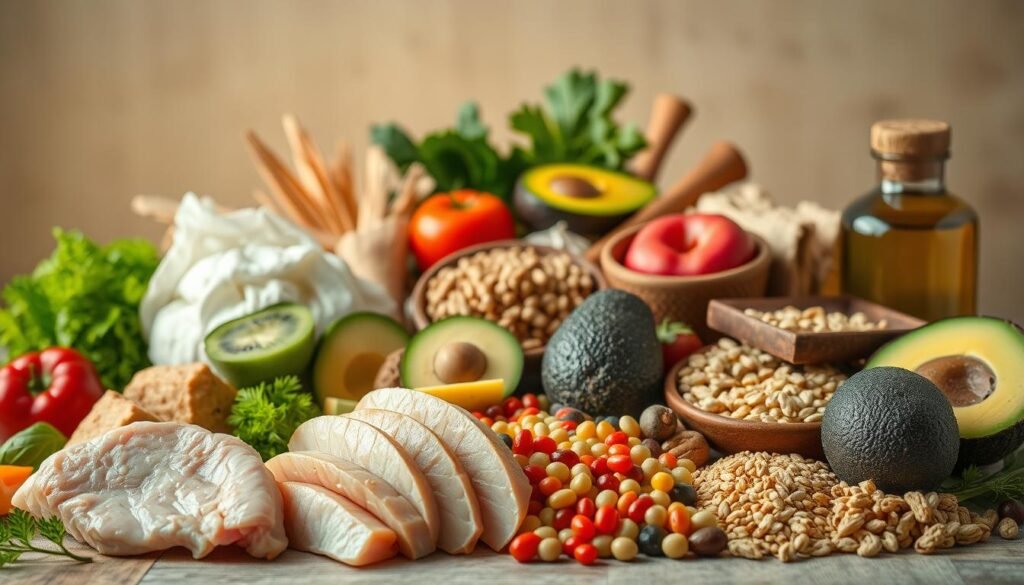
Foods to Emphasize and Foods to Limit for Better Balance
Prioritize whole, minimally processed foods that steady blood sugar and cut inflammation. Start meals with a vegetable or fruit base, add a source of protein, and finish with healthy fats and whole grains.
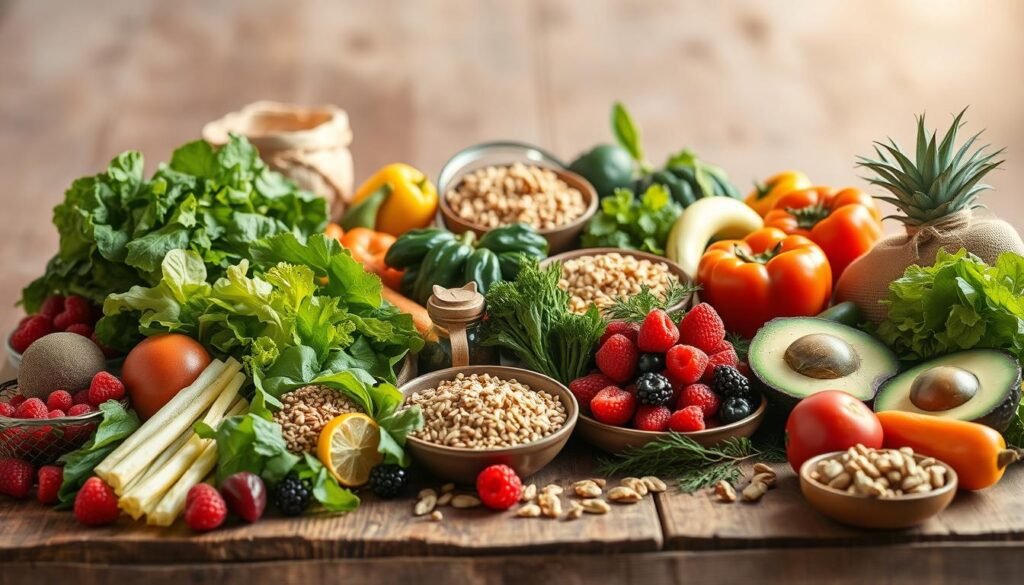
Focus on nutrient-dense picks
Whole grains, legumes, colorful produce, fatty fish, eggs, nuts, and seeds offer fiber, protein, and micronutrients that support metabolic health.
Extra-virgin olive oil and avocado provide monounsaturated fats that may help reduce inflammation and support reproductive signaling.
Limit these common triggers
Avoid added sugar, ultra-processed products, and refined carbohydrates that cause fast blood sugar spikes and cravings.
Cut back on excess caffeine if it affects sleep or causes jitters, and follow U.S. guidance on alcohol to protect protein-based signaling and recovery.
“Anchor each plate with protein and fiber to blunt peaks and improve day-to-day energy.”
- Build most meals around plants, lean protein, healthy fats, and whole grains.
- Limit added sugar, refined carbs, excess caffeine, and alcohol; these products can drive inflammation and swings.
- Stock pantry staples: EVOO, canned salmon/tuna, beans, oats, quinoa, and frozen vegetables for quick, supportive food choices.
For a concise guide on food-focused strategies, see this practical resource to explore evidence-based swaps and examples.
Hormone Balancing Meal Plan
Structuring when and what you eat reduces cravings and keeps blood glucose steadier. Use a simple cadence—3 meals and 2 snacks—to steady blood sugar and appetite.
How to use the 7-day framework: protein, fiber, fat at each meal
Anchor every eating occasion with protein, a source of fiber, and a tablespoon or two of healthy fats. Aim for about 20–35 g protein per meal to support recovery and satiety.
Build each plate: a palm-sized protein, a fist of carbohydrates, non-starchy veggies, and 1–2 tbsp healthy fats to improve balance and fullness.
Daily rhythm: 3 meals, 2 snacks to stabilize blood sugar
Follow three balanced meals plus two snacks to keep hunger steady and reduce peaks in insulin. Typical sample days total ~1,850–1,966 calories with strong protein (~128–142 g), which helps preserve muscle and steady energy.
Hydration: aim for ~9 cups water/day for women and ~13 cups for men; limit sugar-sweetened beverages to protect blood glucose and diet quality.
Sample breakfast, lunch, dinner, and snack ideas
Breakfast: Greek yogurt with berries, chia, hemp, and walnuts or avocado toast topped with eggs.
Lunch/Dinner: grain salads with farro and chickpeas, brown rice bowls with salmon, lentil soup, or tofu stir-fry. Rotate flavors to cut prep time and boost adherence.
Snacks: apple with peanut butter, dates with dark chocolate and nuts, carrots with hummus, or Brazil nuts with blueberries. These combos pair protein and fats to blunt sugar spikes and cravings.
“Repeat favorites, scale portions to your needs, and use this template to save time and protect energy.”
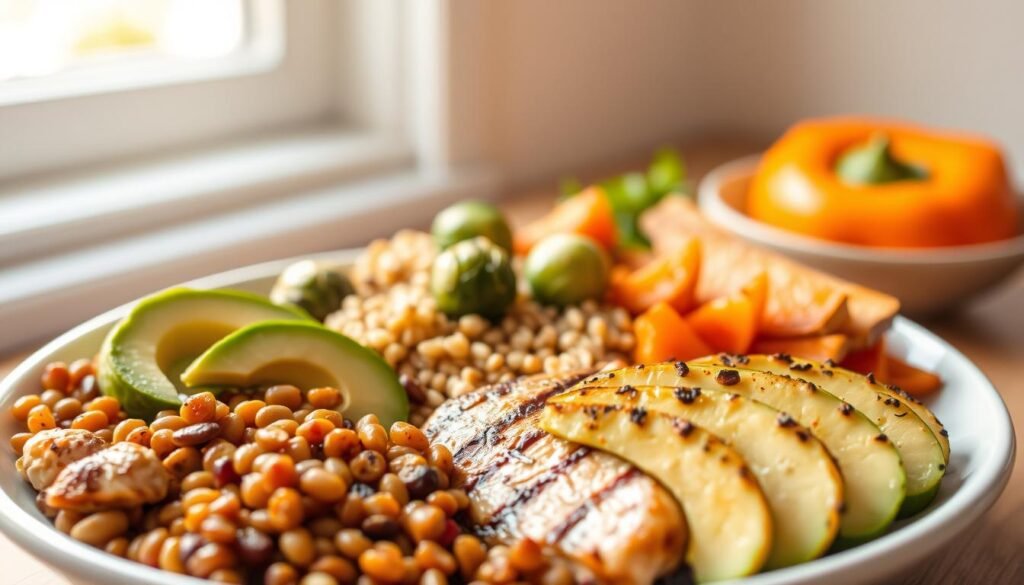
Smart Grocery List and Meal Prep to Reduce Stress
Stocking the right staples reduces daily friction and helps you eat well without thinking twice. Shop once, prep in batches, and you’ll cut decision fatigue so healthy choices stick.
Stock a rainbow of vegetables and a mix of fresh and frozen fruit. Add brown rice, quinoa, farro, lentils, and whole grains for quick bases.
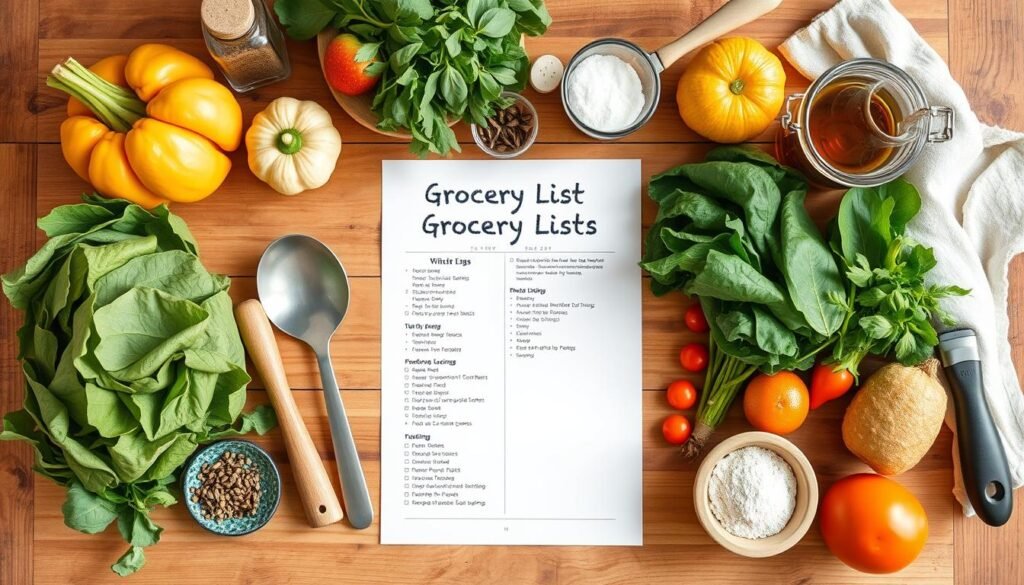
Produce, proteins, whole grains, and healthy fats to stock
Keep leafy greens, sweet potato, bell peppers, and berries. Buy chicken, salmon, canned tuna, tofu, eggs, and Greek yogurt for ready protein.
Batch-cooking, mix-and-match meals, and time-saving tips
- Shop once: targeted list, then cook double portions to save time and reduce stress.
- Stock staples: oats, beans, sourdough, olive oil, vinegars, spices, nuts, and seeds for fast flavor.
- Cook sheets of roasted veg, a pot of grains, and baked fish or tofu to rotate through bowls and salads.
- Mix-and-match foods—grain + veg + protein + sauce—so dinner is ready in minutes.
Keep carbohydrates steady and cut added sugar by leaning on whole produce and intact grains. These choices support hormones and body energy over the week.
“Shop once and prep smart — small frontloaded efforts save daily stress.”
For a printable grocery checklist, see a concise balanced grocery list to simplify your routine.
Connect Foods to Hormones: Practical Ways to Support Insulin, Cortisol, Thyroid, and Sleep
Small food choices across the day can directly nudge your body’s signaling so energy and mood stay steadier. Target specific signals with easy food combos—pair carbs with protein and fats for smoother levels, and add omega-3s and plants to help reduce inflammation and calm stress.

How to steady insulin in practice
Combine carbohydrates with protein and healthy fats to slow absorption and steady blood glucose. Try Greek yogurt with fruit and seeds, or whole-grain toast with nut butter and an egg.
Lower cortisol and inflammation
Eat fatty fish, legumes, colorful produce, and whole grains. These choices supply omega-3s and fiber that help reduce inflammation. Limit late caffeine and alcohol to blunt stress responses.
Support thyroid with key nutrients
Ensure calories and include selenium, iodine, vitamin D, iron, and zinc. Good sources are eggs, dairy, seaweed, lean meats, legumes, and Brazil nuts.
Promote melatonin and better sleep
Choose tryptophan- and magnesium-rich foods like milk, bananas, nuts, seeds, leafy greens, and tart berries. Avoid late caffeine and alcohol to protect nightly rhythms.
- Daily tips: add anti-inflammatory spices (turmeric, ginger), hydrate, and plan snacks that blunt spikes.
- Outcomes: steadier energy, fewer cravings, better training recovery, and more consistent weight control.
Want a related visual? See this pre-workout breakouts infographic for another data-driven view on how supplements and foods affect the body.
Personalize Your Plan: Lifestyle, Preferences, and U.S. Guidelines
Make this approach your own by matching food choices to your schedule, tastes, and medical needs. Tailor the plan to your lifestyle—swap foods you dislike for alternatives with similar nutrients. Hydrate strategically and align alcohol intake with U.S. guidance.
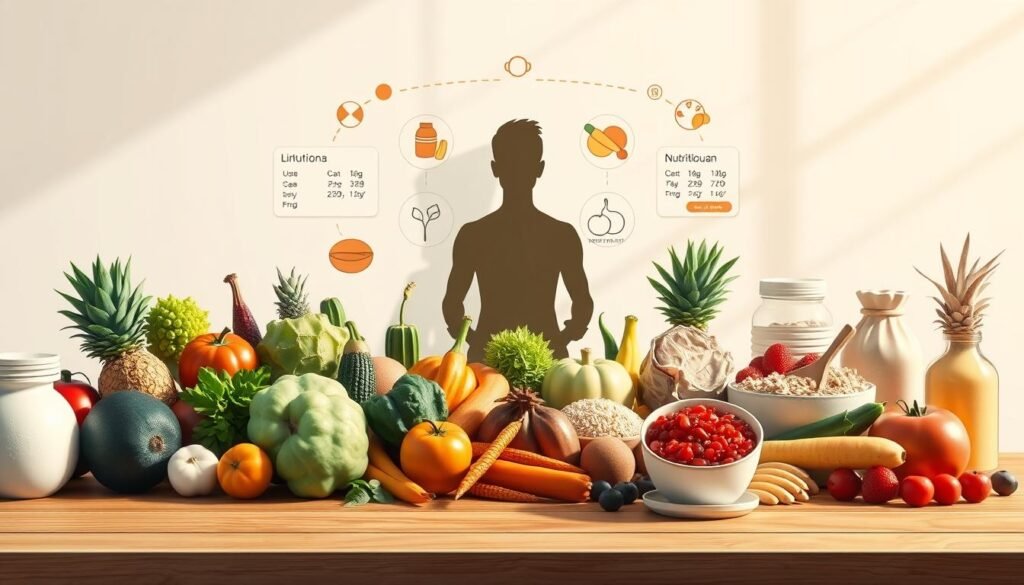
Swap foods you don’t love while meeting nutrient needs
Not a fan of salmon? Choose chicken, tofu, or canned tuna to hit protein and omega-3 needs. If grains bother you, use potatoes, rice, or certified gluten-free options.
Smart swaps keep macros and micronutrients steady while making the routine enjoyable and sustainable.
Hydration and alcohol guidance aligned with U.S. recommendations
Aim for about 9 cups of water daily for women and 13 cups for men. Count calories from beverages and limit sugar-sweetened drinks to protect glucose levels and overall health.
The DGA 2020–2025 advises abstaining or limiting alcohol to up to 2 drinks/day for men and 1 for women. Remember alcoholic products can disrupt sleep and hormonal rhythms.
When to consult a registered dietitian for tailored support
Consider your personal factors, goals, and schedule; a registered dietitian can fine-tune your diet for clinical conditions or performance.
Seek professional advice for PCOS, diabetes, thyroid issues, GI problems, or persistent weight shifts. A pro will optimize macros, micronutrients, and timing to match your unique needs.
- Track response: monitor energy, weight, sleep, and digestion over time.
- Adjust portions: change intake for training days or sedentary days.
- Electrolytes: increase sodium and fluids when working in heat or during high-output sessions.
| Focus | Practical tip | Why it helps |
|---|---|---|
| Food swaps | Replace salmon with chicken or tofu | Maintains protein and nutrient targets |
| Hydration | 9 cups/day women, 13 cups/day men | Supports metabolism and steady glucose levels |
| Alcohol | Limit to DGA guidance (1/women, 2/men) | Reduces sleep disruption and hormonal interference |
| When to get help | Consult a registered dietitian | Personalizes intake for medical or performance needs |
Conclusion
Build your week around simple foods—adequate protein, smart carbohydrates, healthy fats, and fiber—to support hormone and hormones balance. Keep the structure, flex the flavors.
With a sustainable diet and consistent meal rhythm, you support health, steady energy, and long-term weight management.
Small, consistent food choices add up to noticeable improvements in how your body feels each day.
Prioritize minimally processed food, colorful produce, and intact grains to fuel your body and steady blood glucose. Keep macro consistency—protein, carbohydrates, and fats—in the right proportions to improve satiety and reduce excess gain.
Choose nutrient-rich sources like eggs, leafy greens, beans, berries, and olive oil to aid recovery and growth. Pick anti-inflammatory foods to lower background inflammation and speed recovery.
Keep momentum: repeat easy wins, batch-cook, and rotate staples. For a deeper look at customizable approaches, see this custom keto review.
FAQ
What is the goal of a 7-day nutrition plan for balancing hormones naturally?
The goal is to stabilize blood sugar, reduce inflammation, and supply key nutrients that support insulin, cortisol, thyroid function, and sleep regulation. That means meals with protein, fiber-rich carbs, and healthy fats at each eating occasion to improve energy, mood, and weight management.
How often should I eat to keep blood sugar steady?
Aim for three balanced meals and one to two snacks daily. Pair carbohydrates with protein and fats to slow glucose absorption and blunt insulin spikes, which helps prevent energy crashes and reduces cravings.
Which carbohydrates help control insulin and inflammation?
Choose fiber-rich options like whole grains (oats, quinoa, brown rice), legumes, and colorful vegetables. These foods slow digestion, support steady blood sugar, and provide polyphenols that lower inflammation.
How much protein do I need each day for hormone support?
Protein needs vary, but many adults benefit from 20–30 grams per meal to support satiety, muscle repair, and hormone synthesis. Sources include eggs, fish, poultry, legumes, dairy, and plant-based proteins like tofu and tempeh.
What fats should I prioritize to reduce inflammation?
Focus on monounsaturated and omega-3 fats: extra-virgin olive oil, fatty fish (salmon, sardines), walnuts, chia and flax seeds, and avocados. These fats support hormone production and help lower inflammatory markers.
Are there foods I should limit to improve hormonal balance?
Limit added sugars, refined grains, ultra-processed foods, excess caffeine, and alcohol. These items can worsen insulin resistance, increase inflammation, and disrupt sleep and cortisol rhythms.
Can meal prep help with stress and hormone health?
Yes. Batch-cooking proteins, pre-chopping vegetables, and portioning balanced meals and snacks reduce decision fatigue and stress hormones. Having grab-and-go options helps you stick to nutrient-rich choices.
What grocery items should be on my shopping list?
Stock up on leafy greens and colorful produce, whole grains (oats, quinoa), legumes, eggs, fatty fish, lean proteins, nuts and seeds, extra-virgin olive oil, and dairy or fortified alternatives for vitamin D and calcium.
How do I support thyroid health through diet?
Include sources of selenium (brazil nuts, seafood), iodine (iodized salt, dairy in moderation, seaweed sparingly), iron (lean meat, legumes, spinach), and vitamin D (fatty fish, fortified foods, sensible sun exposure). Discuss testing with a clinician before supplements.
Which nutrients help improve sleep and melatonin production?
Tryptophan-containing foods (turkey, eggs, dairy), magnesium-rich choices (nuts, leafy greens), and complex carbs in the evening can support sleep. Avoid late heavy meals, high caffeine, and alcohol near bedtime.
How can someone personalize this framework to dietary preferences or restrictions?
Swap equivalent protein and fiber sources to match preferences—e.g., tofu or tempeh for meat, lentils for beans. Adjust portion sizes to meet calorie needs and follow U.S. Dietary Guidelines for balanced choices. Consider working with a registered dietitian for tailored plans.
When should I see a registered dietitian or healthcare provider?
Consult a registered dietitian or clinician if you have chronic conditions (diabetes, thyroid disease, PCOS), rapid weight changes, persistent fatigue, or medication interactions. Professional guidance ensures safe, effective customization.
Will increasing whole grains cause weight gain or worsen blood sugar?
When chosen and portioned wisely, whole grains improve fiber intake and satiety and support steady blood sugar. Focus on portion control and pair grains with protein and fats to limit post-meal glucose spikes and prevent unwanted weight gain.
Can specific seeds and nuts make a difference for hormones?
Yes. Flax and chia seeds provide omega-3s and fiber, supporting inflammation control and estrogen metabolism. Walnuts and almonds add healthy fats and magnesium, which help insulin sensitivity and stress regulation.
How does alcohol or caffeine affect cortisol and blood sugar?
Excessive alcohol disrupts sleep and raises inflammation; it can also destabilize blood sugar. Caffeine can elevate cortisol and interfere with sleep if consumed late. Moderate intake and timing are key—limit both if you notice sleep or stress issues.