

Ever feel exhausted but unable to relax? Your shoulders stay tense, your thoughts race, and even sitting quietly doesn’t seem to help. When stress builds up, finding a way to settle your mind and body can feel surprisingly difficult.
Pilates may help by combining slow, controlled movements with steady breathing and focused attention. This gentle approach can ease muscle tension, improve body awareness, and give you a manageable way to respond to everyday stress.
But Pilates isn’t a magic nervous system reset. Research suggests it may support psychological well-being, although evidence for treating anxiety and depression remains mixed. The good news? You don’t need expensive equipment or an hour-long workout to get started.
This guide explains how Pilates relates to your stress response, walks you through six beginner-friendly exercises, and shows you how to build a calming routine that fits your life.
Key Takeaways
- Pilates combines movement, breathing, and attention to support relaxation, strength, and body awareness.
- Slow breathing may help your body settle. Research links paced breathing with changes in heart rate and heart rate variability.
- Gentle movements are a good starting point. You don’t need intense exercise to practice mindful movement.
- Five to ten minutes is enough to begin. Choose a manageable routine and build gradually rather than following a strict schedule.
- Equipment is optional. A comfortable surface and household pillows may provide all the support you need.
- Watch your own response. Better sleep, less tension, and feeling calmer after practice can help you judge whether Pilates suits you.
Helpful Products at a Glance
For floor-based Pilates on hard surfaces, the BalanceFrom GoCloud 1-Inch Exercise Mat provides extra cushioning for your back, hips, and knees. Its thick foam may feel less stable during balance exercises, so it is better suited to supported floor movements.
- Extra-Thick Comfort Mat: 71 in. x 24 in. x 1 in. exercise mat cushions spine, hips, knees, and elbows on hard floors; crafted with high-density foam for superior support in yoga and pilates
- Non-Slip Design: Double-sided textured surface prevents shifting and slipping, giving you stability for poses, stretches, and strength training while protecting joints and supporting balance

Why Your Nervous System Can Feel Constantly on Edge
Your nervous system responds to both physical danger and everyday demands. Work deadlines, financial worries, poor sleep, and constant phone notifications can all contribute to feeling stressed.
When something feels threatening, your sympathetic nervous system helps prepare your body for action. Your heart may beat faster, breathing may change, and muscles may tighten. This is commonly called the fight-or-flight response.
Your parasympathetic nervous system supports functions such as digestion and recovery. Both systems are important, but ongoing stress can make it difficult to feel relaxed even when nothing urgent is happening.

Common Signs of Ongoing Stress
Stress affects people differently. You might notice changes in your body, emotions, or daily habits.
- Muscle tension: Tight shoulders, a stiff neck, or frequent jaw clenching.
- Sleep problems: Difficulty falling asleep or feeling rested.
- Emotional changes: Irritability, worrying, or feeling overwhelmed.
- Concentration problems: Trouble focusing or remembering routine tasks.
- Physical discomfort: Headaches, stomach upset, or changes in appetite.
These symptoms aren’t proof of a nervous system disorder. They can have many causes, including medical conditions, medications, and inadequate sleep. Persistent or unexplained symptoms deserve proper evaluation rather than being blamed entirely on stress.
How Pilates May Help Calm Your Nervous System
Pilates focuses on controlled movement, breathing, posture, and body awareness. Instead of moving as quickly as possible, you pay attention to how your body moves and responds.
Three features make gentle Pilates particularly useful as a stress-management activity.
1. Slow Breathing Supports Relaxation
Your breathing and nervous system influence each other. Stress may make breathing faster or shallower, while deliberately slowing your breath can change how your body responds.
A 2022 systematic review and meta-analysis found that voluntary slow breathing increased measures of heart rate variability related to parasympathetic activity. Heart rate variability describes small differences in the time between heartbeats.
These findings support paced breathing as a useful technique, but they don’t prove that a particular Pilates exercise directly switches off the brain’s fear center or permanently increases vagal tone.
2. Controlled Movement Encourages Body Awareness
When you notice your shoulders, breathing, and posture during an exercise, you may become better at recognizing unnecessary tension.
For example, you might discover that you’re holding your breath whenever you concentrate. Learning to breathe comfortably while moving gives you another way to respond when similar tension appears during daily activities.
3. Regular Practice May Improve Well-Being
Physical activity can support mood, sleep, and overall health. Pilates also offers an opportunity to focus on one manageable task instead of several competing demands.
However, claims that every Pilates session lowers cortisol or boosts dopamine and serotonin oversimplify how exercise affects the body.
A 2026 systematic review and meta-analysis of 32 Pilates studies found encouraging results for quality of life and self-esteem. Results for anxiety and depression were less certain, and studies differed considerably in their methods.
The practical takeaway: Pilates is a reasonable activity to try for relaxation and physical conditioning, but individual results vary. It is not a guaranteed treatment for anxiety, trauma, or other health conditions.
A Simple Pilates Calm-Down Method
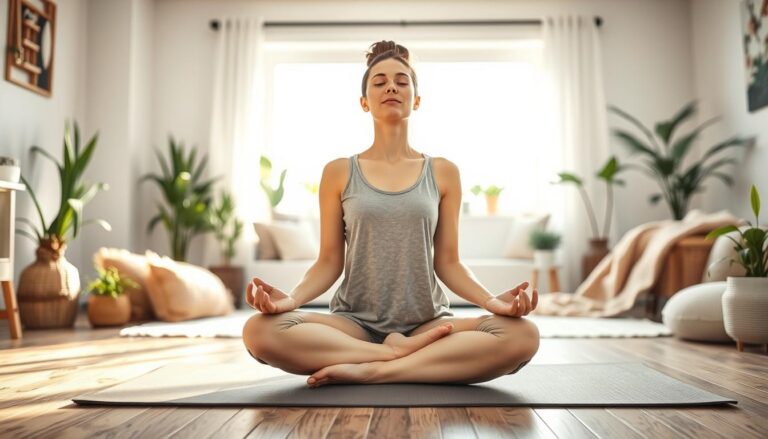
Before beginning the exercises, give yourself a few minutes to settle. There’s no need to create a perfect atmosphere or force yourself to feel peaceful.
Step 1: Prepare a Comfortable Space
- Choose somewhere you can move without obstacles.
- Silence unnecessary notifications.
- Wear clothing that allows easy movement.
- Use a mat, carpet, or comfortable firm surface.
- Keep a pillow or folded towel nearby if you need support.
Set a simple intention, such as relaxing your shoulders or moving without rushing. This gives your attention somewhere useful to go.
Step 2: Check Your Breathing
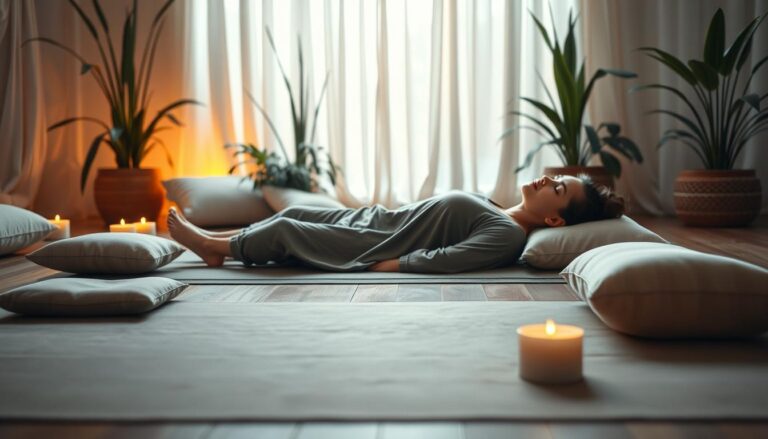
Sit comfortably or lie on your back with your knees bent. Let your shoulders relax and notice your natural breathing for a few moments.
- Inhale gently through your nose for about three counts, if comfortable.
- Exhale smoothly for about four or five counts.
- Keep the breath relaxed rather than taking unusually large breaths.
- Repeat for five comfortable breathing cycles.
These counts are suggestions, not rules. You can breathe through your mouth if nasal breathing is uncomfortable. If paced breathing causes dizziness, tingling, or increasing anxiety, return to normal breathing.

Step 3: Add Gentle Movement
Begin with movements that feel easy to control. Coordinate your breathing naturally with each exercise, but avoid holding your breath or forcing an unfamiliar breathing pattern.
The goal is not to exhaust yourself. Move through a comfortable range, pause when needed, and choose a slower pace if tension increases.
Step 4: Finish with a Body Check-In
After moving, rest in a comfortable position for about one minute. Notice your breathing, shoulders, jaw, and overall energy.
Ask yourself: Do I feel calmer, more comfortable, or about the same? Every session doesn’t need to produce a dramatic change to be worthwhile.
6 Gentle Pilates Exercises for Stress Relief and Strength
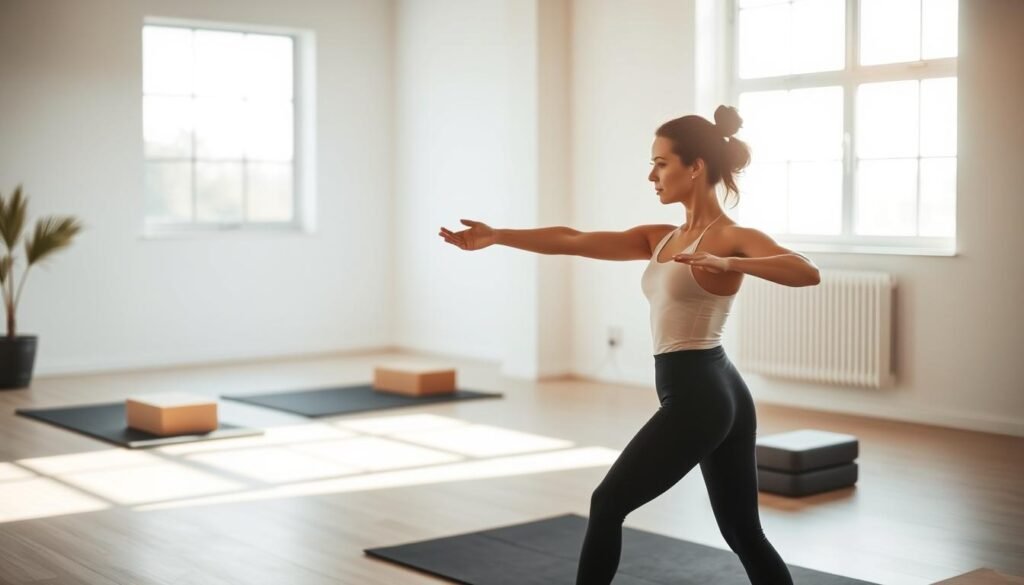
These beginner-friendly movements combine spinal mobility, core control, and relaxed breathing. You can practice them together or choose two or three when time is limited.
Start with around 5–8 comfortable repetitions per movement. Adjust the number based on how you feel. Quality matters more than reaching a particular count.
1. Supported Spinal Breathing: Imprint and Release
This gentle exercise helps you notice movement through your lower back and pelvis while practicing steady breathing.
- Lie on your back with your knees bent and feet resting on the floor.
- Keep your arms relaxed beside your body.
- Exhale and gently tilt your pelvis so your lower back moves slightly toward the mat.
- Inhale and allow your pelvis to return to a comfortable neutral position.
- Repeat slowly without pushing your back forcefully into the floor.
Beginner tip: Place a small pillow beneath your head if it helps keep your neck comfortable. Avoid forcing the motion if you have back pain.
2. Pelvic Clocks for Gentle Hip and Spine Mobility
Pelvic clocks use small movements to explore how your lower back and hips move together.
- Stay on your back with your knees bent.
- Imagine a clock resting flat across your pelvis.
- Gently tilt your pelvis toward 12 o’clock and then toward 6 o’clock.
- Try small movements toward 3 and 9 o’clock.
- Connect the directions into a slow, comfortable circle.
Keep your shoulders relaxed and movements small. You should feel controlled motion rather than a deep stretch or strain.
3. Supine Marching for Core Control
This exercise challenges your abdominal muscles while teaching you to keep your body steady during leg movement.
- Lie on your back with both knees bent and feet flat.
- Exhale gently as you lift one foot a short distance from the floor.
- Keep your pelvis as steady as comfortably possible.
- Lower the foot and repeat with the other leg.
- Continue alternating without holding your breath.
Make it easier: Slide one heel along the floor instead of lifting your foot. This is a useful option if marching strains your back or feels difficult to control.
4. Quadruped Rocking for Shoulder and Hip Mobility
Moving slowly on your hands and knees can improve awareness of weight distribution through your shoulders and hips.
- Start on your hands and knees, with hands approximately beneath shoulders.
- Keep your back in a comfortable position.
- Inhale naturally as you gently rock your hips backward.
- Exhale as you return toward your starting position.
- Repeat using a comfortable movement range.
If your wrists are uncomfortable, try supporting your hands on a stable raised surface or skip the movement. A folded towel under your knees may reduce pressure.
5. Side-Lying Leg Lifts for Hip Strength
Side-lying movements strengthen the muscles around your hips and help you practice controlled leg movement.
- Lie on one side with your head supported comfortably.
- Bend your lower knee slightly for stability.
- Keep your upper leg comfortably straight.
- Lift that leg a short distance without rolling your hips backward.
- Lower slowly, repeat, and switch sides.
You don’t need to lift your leg high. A smaller, well-controlled movement is more useful than forcing extra height.
6. Seated Spine Twist to Finish Gently
A gentle seated rotation can help you notice how your upper body moves without turning the exercise into an intense stretch.
- Sit upright on a stable chair or on the floor.
- Allow your shoulders to relax.
- Inhale comfortably while lengthening through your spine.
- Exhale and rotate your upper body slightly to one side.
- Return to center and repeat on the other side.
Keep your hips relatively still and avoid pulling yourself farther into the twist. If you have spinal problems or rotation causes pain, choose a comfortable alternative.
How to Make Floor Pilates More Comfortable
Floor exercises shouldn’t become a battle against pressure on your knees, hips, or back. A carpeted surface, folded blanket, or supportive pillow may be enough to make the routine comfortable.
If you regularly practice on hard flooring, a dedicated exercise mat is another option. The BalanceFrom GoCloud 1-Inch Exercise Mat measures 71 by 24 inches and offers a thick foam surface for supported movements such as spinal breathing and pelvic clocks.
Its main advantage is cushioning, not any special nervous system benefit. The extra thickness may make balance work less stable, and some people will prefer a thinner, firmer mat. You can skip the purchase if your existing surface feels comfortable and secure.
- Extra-Thick Comfort Mat: 71 in. x 24 in. x 1 in. exercise mat cushions spine, hips, knees, and elbows on hard floors; crafted with high-density foam for superior support in yoga and pilates
- Non-Slip Design: Double-sided textured surface prevents shifting and slipping, giving you stability for poses, stretches, and strength training while protecting joints and supporting balance
- Durable and Easy to Clean: Moisture-resistant technology resists sweat and dirt; simply wipe with soap and water for quick cleaning, keeping your rollout yoga mat fresh after daily workouts
- Lightweight and Portable: Weighs only 2.20 lbs. with included carrier strap for easy transport; fitting for home, studio, or travel use, providing a portable fitness solution for all shapes and sizes
How Often Should You Practice Pilates for Stress Relief?
You don’t have to complete a long workout every day. Begin with a schedule you can maintain without adding pressure to an already busy life.
Here is one flexible way to organize your first few weeks:
- Week 1: Try 5–10 minutes on two or three days, focusing on breathing and two easy movements.
- Week 2: Add another exercise or slightly extend your sessions if the routine feels comfortable.
- Week 3 and beyond: Continue with short sessions or work toward 15–30 minutes according to your energy, goals, and recovery.
These are practical starting suggestions, not scientifically established minimums for improving nervous system regulation. Current Pilates research does not identify one ideal schedule for everyone.
On stressful days, you might only manage a brief breathing check-in and pelvic clocks. On another day, you may enjoy a longer sequence. Both approaches can fit into a sustainable routine.
When Working with a Pilates Instructor Can Help
Many gentle mat exercises can be practiced at home, but a qualified instructor can help you understand technique and choose suitable modifications.
A good instructor pays attention to your breathing, posture, comfort, and ability to control movement. They should also encourage questions rather than pushing you through pain or exhaustion.
When choosing a class, consider the following:
- Experience: Look for training in Pilates instruction and experience working with beginners.
- Adaptability: Ask whether exercises can be modified for pain, limited mobility, or fatigue.
- Pacing: Choose a class that allows breaks and doesn’t pressure you to keep up.
- Communication: Tell your instructor about relevant injuries, symptoms, or movement restrictions.
Reformer Pilates can be enjoyable, but it isn’t necessary for stress management. Gentle mat Pilates is a reasonable starting point for many beginners.
How to Track Progress Without Overthinking It
Progress doesn’t always look like a dramatic improvement after every workout. You may instead notice that your shoulders relax sooner, you feel more comfortable moving, or taking a break becomes easier.
Use a short weekly check-in rather than constantly measuring your nervous system.

Try recording these simple observations:
- Stress: Rate your perceived stress from 1–10 before and after practice.
- Sleep: Note whether you feel rested in the morning.
- Muscle tension: Check your shoulders, neck, jaw, and lower back.
- Daily energy: Notice whether the session leaves you refreshed, unchanged, or unusually tired.
- Consistency: Record which exercises you completed comfortably.
Optional information such as resting heart rate can provide extra context, but a single reading doesn’t measure vagal tone or prove that your nervous system is regulated. Look at broader patterns rather than isolated numbers.
Safety: When to Modify or Stop
Gentle Pilates should feel manageable. Mild muscular effort is normal, but sharp pain, dizziness, or worsening symptoms are reasons to stop and reassess.
- Sharp or increasing pain: Stop the movement rather than pushing through.
- Dizziness or tingling during breathing: Return to natural breathing and avoid forcing slow, deep breaths.
- Worsening anxiety: Try a simpler movement, keep your eyes open, or shift your attention to your surroundings.
- Persistent soreness or exhaustion: Reduce the exercise volume and allow more recovery.
- Existing health conditions or injuries: Ask an appropriate healthcare professional which movements are suitable, especially if your condition affects exercise safety.
Severe or persistent symptoms need more than an exercise adjustment. Seek urgent medical attention for symptoms such as chest pain, fainting, or severe shortness of breath.
If stress, anxiety, or sleep problems continue to affect your daily life, professional support can help identify causes and suitable treatments. Pilates can complement that care without replacing it.
Conclusion: Start Small and Find Your Own Rhythm
Pilates offers a practical way to combine gentle movement, breathing, and body awareness. These skills may help you feel less tense while gradually building strength and confidence.
You don’t need a perfect routine, expensive equipment, or immediate results. Start with supported spinal breathing, pelvic clocks, and one other movement you find comfortable.
Try a short session a few times this week and notice how your body responds. If it helps, continue building the habit. If it doesn’t, adjust your approach rather than forcing yourself through an activity that feels wrong.
Managing stress isn’t about keeping your body calm every minute. It’s about discovering reliable ways to respond, recover, and care for yourself when life gets demanding.
Frequently Asked Questions
Can Pilates actually calm your nervous system?
Pilates may support relaxation through mindful movement, controlled breathing, and physical activity. Studies suggest potential benefits for psychological well-being, but evidence does not establish Pilates as a direct treatment for nervous system disorders.
Is Pilates or yoga better for stress relief?
Both can include gentle movement, breathing, and focused attention. Pilates generally emphasizes controlled movement and core strength, while many yoga styles include longer-held poses and meditation. Neither is clearly superior for everyone. Choose whichever feels comfortable and sustainable.
Can five minutes of Pilates make a difference?
A five-minute session may help you notice tension, move comfortably, or take a break from stressful tasks. It is a useful starting point, although five minutes is not a proven dose for lasting nervous system changes.
Should I practice Pilates in the morning or before bed?
Either can work. Morning practice may help you ease into activity, while gentle evening movements may fit a relaxing bedtime routine. Avoid strenuous sessions close to bedtime if they make you feel more alert.
Do I need to breathe through my nose during Pilates?
No. Nasal breathing is one option, but comfortable breathing matters more than forcing a particular technique. Follow your instructor’s guidance when appropriate, and avoid breath-holding or exaggerated deep breaths.
What if focusing on my breathing makes me more anxious?
You can focus on your feet touching the floor, the movement of your arms, or another comfortable sensation instead. Keep your eyes open, breathe naturally, and stop if distress increases. Breath-focused exercises aren’t relaxing for everyone.
Can Pilates replace therapy or medication for anxiety?
No. Pilates may be a helpful addition to an anxiety-management plan, but research does not support replacing established treatments with Pilates. Discuss changes to prescribed care with your healthcare professional.