


Have you ever finished a Pilates session feeling stronger, calmer, and more aware of your body? That feeling is part of what makes Pilates different from many traditional workouts.
The mind-body connection in Pilates comes from combining controlled movement, steady breathing, proper alignment, and focused attention. Instead of simply counting repetitions, you pay attention to how your muscles work, where your body is positioned, and how each movement feels.
This approach may improve body awareness, coordination, strength, and emotional well-being. You do not need expensive equipment or advanced skills to begin. This guide explains how Pilates connects your mind and body, what research says about its benefits, and how to practice safely at home.
Key Takeaways
- Breathing and movement work together: Coordinating your breath with exercise helps you stay focused and control your movements.
- Body awareness improves with practice: Pilates teaches you to recognize posture, muscle tension, and movement habits.
- Mental health benefits are possible: Regular practice may support stress management, mood, and sleep, although research results vary.
- Core strength supports daily activities: Controlled exercises can develop stability, balance, and coordination.
- Consistency matters more than intensity: Short, comfortable sessions can help beginners develop lasting habits.
Helpful Products at a Glance
For adding optional resistance to controlled hip and leg exercises, the Fit Simplify Resistance Loop Bands, Set of 5, provides different resistance levels. Beginners should start with a comfortable level and maintain proper form.
- High End Exercise Bands. Our 12"³ By 2"³ Heavy Duty Loop Resistance Bands Come In 5 Varying Resistance Levels. This Makes Them Perfect Whether You Are Just Starting To Workout Or A Seasoned Workout Warrior. Our Extra Light And Light Bands Are Great For Beginners, While Our Medium, Heavy And Extra Heavy Exercise Bands Are Targeted For More Intermediate And Advanced Strength Training.
- Great With Any Workout. This Resistance Band Set Can Be Integrated Seamlessly With Various Popular Workout Program. Or Use Them For General Exercise, Stretching, Strength Training, Power Weight Programs. The Included Carry Bag Makes It Easy To Take Your Bands With You And Do Any Workout Away From Home Or Your Home Gym.

What Is the Mind-Body Connection in Pilates?
The mind-body connection means paying attention to how your thoughts, breathing, and physical movements work together. In Pilates, your brain guides a movement while your muscles and joints provide feedback about what your body is doing.
For example, during a slow leg lift, you notice whether your hips remain steady, your shoulders feel relaxed, and your breathing stays comfortable. That awareness helps you adjust the movement instead of relying on momentum.
What Physical Therapists Look for During Pilates
Physical therapists often assess movement quality rather than focusing only on how many repetitions someone completes. They may observe:
- Spinal alignment: Whether the back maintains a comfortable position during movement.
- Core coordination: How the abdominal, back, and pelvic muscles work together.
- Breathing patterns: Whether someone holds their breath or breathes comfortably during effort.
- Compensation: Whether another body part takes over because a movement is difficult.
- Balance and control: Whether movements remain steady throughout their range.
These observations help guide exercise modifications. A movement does not have to look identical for everyone to be effective.
Four Pilates Principles That Connect Mind and Body
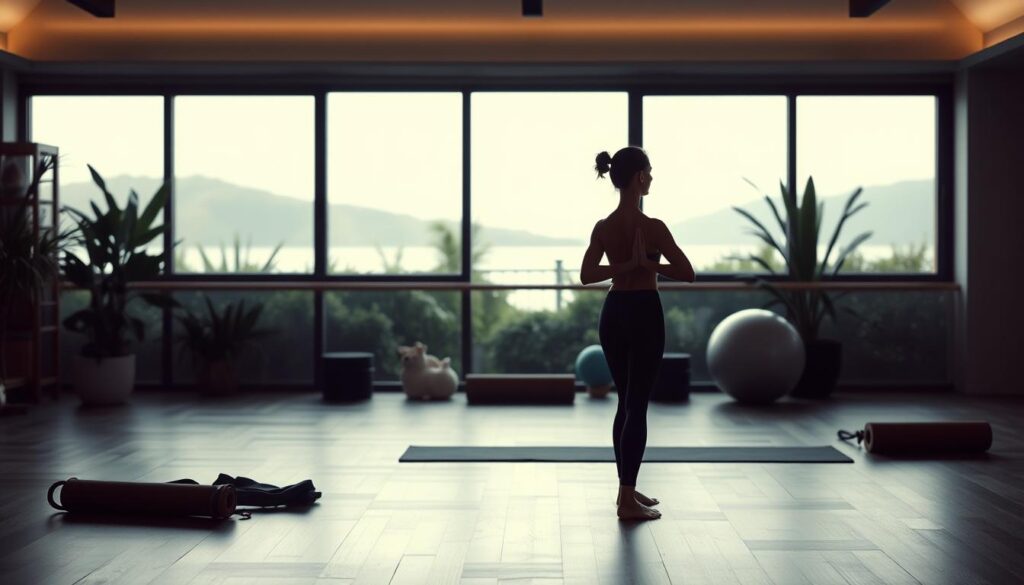
Pilates uses several connected principles, including breathing, concentration, control, precision, centering, and flowing movement. Four of these are especially useful when learning the mind-body connection.
1. Breathing: Supporting Focus and Movement
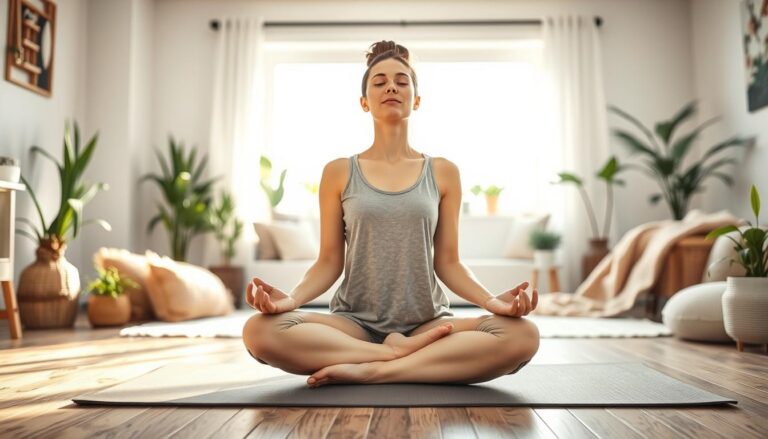
Breathing is more than a background activity during Pilates. Instructors use breathing cues to help you coordinate movements and manage effort.
Two common approaches include:
- Diaphragmatic breathing: The diaphragm moves downward as you inhale, allowing your lower ribs and abdomen to expand naturally.
- Lateral ribcage breathing: You focus on expanding your ribs outward and sideways while keeping the rest of your body relatively steady.
A useful beginner cue is to inhale before moving and exhale during the harder part of an exercise. However, breathing patterns can vary by movement and instructor. Avoid forcing deep breaths or holding your breath unnecessarily.
2. Alignment: Understanding Your Body Position
Good alignment is not about maintaining one perfect posture all day. It means choosing positions that allow comfortable, controlled movement.
During Pilates, try keeping your shoulders relaxed, your neck comfortable, and your ribs and pelvis coordinated. A neutral spine, which follows your back’s natural curves, is helpful for many exercises, although some movements intentionally involve bending or rotating the spine.
3. Concentration: Staying Present
When you concentrate on a movement, you notice details you might otherwise miss. For example, you may realize that one hip lifts before the other or that your shoulders tighten when an exercise becomes difficult.
Recognizing these habits gives you an opportunity to make small adjustments. It can also provide a short break from everyday distractions.
4. Control and Precision: Choosing Quality Over Speed
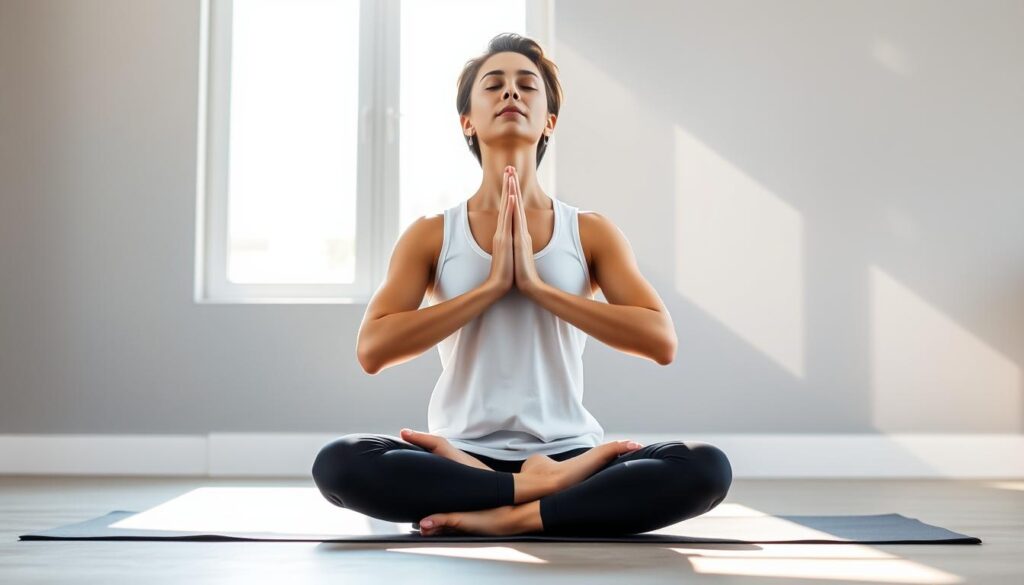
Slow, deliberate movements give you time to coordinate your muscles and notice changes in position. Rather than rushing through repetitions, focus on a comfortable range of motion.
Try these simple habits:
- Begin with movements you can perform without straining.
- Keep breathing comfortably throughout each exercise.
- Reduce the range of motion if your form becomes difficult to maintain.
- Rest when you become tired instead of forcing more repetitions.
These ideas are also discussed in the Pilates Method Alliance’s guide to mental well-being.
How Pilates May Support Mental Health
Pilates combines physical activity with attention and breathing. This combination may support relaxation and emotional well-being, although the benefits are not guaranteed.
Stress Relief and Emotional Balance
Focused exercise can shift your attention away from daily worries and toward what your body is doing. Some people find that steady movement and relaxed breathing help them feel calmer after a session.
Physical activity can also influence chemicals involved in mood regulation. However, it would be too simple to attribute every mental health benefit of Pilates to endorphin release or changes in stress hormones.
Anxiety, Depression, and Social Connection
Pilates may complement other approaches to managing anxiety and depressive symptoms. Group classes can provide structure, social interaction, and a sense of progress.
A 2023 review involving 827 female participants found improvements in depression and anxiety symptoms. However, a broader 2026 research review found that results varied considerably, with stronger support for some well-being outcomes than for consistent improvements in anxiety or depression.
These findings suggest Pilates can be a helpful form of activity, but it should not replace established mental health treatment when that is needed.
Focus, Memory, and Brain Health
Learning new Pilates movements challenges attention, coordination, and body awareness. Your brain must plan movements, respond to feedback, and adjust muscle activity.
These are useful mental tasks, but researchers have not established that Pilates alone prevents cognitive decline or produces lasting improvements in memory. The clearest practical benefit is developing greater awareness while moving.
Can Pilates Improve Sleep?
Some people find that gentle evening exercise helps them relax before bed. Regular Pilates practice may also improve overall sleep quality.
A systematic review of six trials involving 477 participants found improvements in reported sleep quality. However, study results differed substantially, and benefits were not consistent across every population.
For an evening routine, choose familiar, comfortable movements and avoid turning the session into an intense workout immediately before bedtime if that disrupts your sleep.
Physical Benefits: Core Strength, Posture, and Stability
The physical and mental sides of Pilates support one another. Better coordination can make exercises feel more manageable, while increased movement confidence may help you stay engaged.
Building Core Strength and Spinal Control
Your core includes abdominal, back, diaphragm, and pelvic muscles that work together to support movement. Pilates trains these muscles through controlled positions and gradual challenges.
Research suggests Pilates may improve core strength and help some people with chronic lower back pain. A 2023 systematic review found that Pilates can improve core muscle measures, although it is not necessarily better than other exercises performed at similar intensity and frequency.
Stronger muscles do not make your spine injury-proof. Good progress also depends on suitable exercise selection, gradual loading, and adequate recovery.
Mat Pilates vs. Reformer and Cadillac Equipment
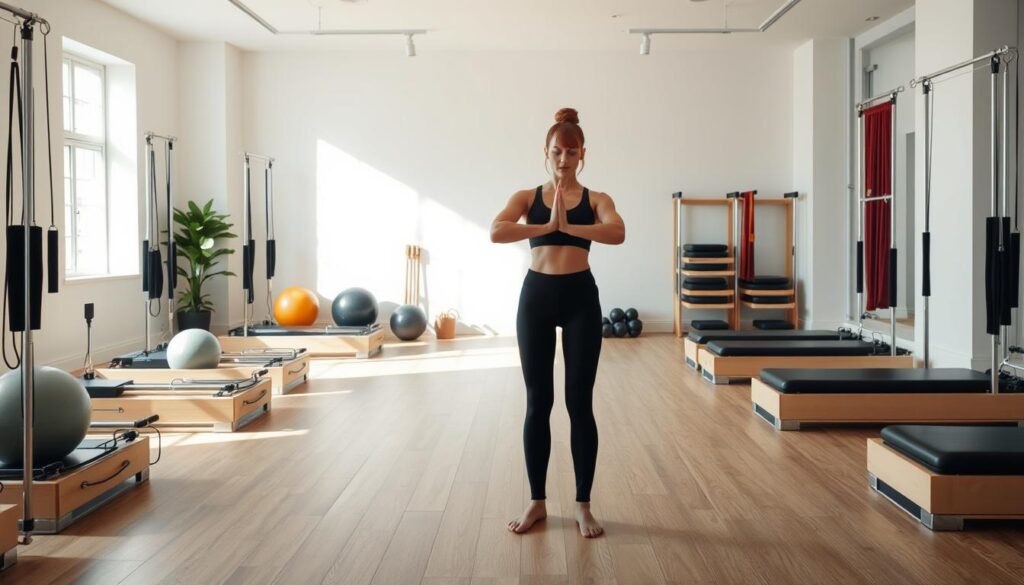
You can build body awareness using different Pilates methods. The main difference is how each approach provides support and resistance.
- Mat Pilates: Uses body weight and floor exercises to develop strength, coordination, and control. It is accessible for home practice.
- Reformer Pilates: Uses a sliding carriage, springs, and straps to provide adjustable resistance and assistance.
- Cadillac Pilates: Uses a raised table, bars, straps, and springs for supported and more complex exercises, generally under trained supervision.
Equipment can offer useful movement options, but it is not automatically more effective than mat Pilates. Your goals, comfort, and instruction quality matter more than using expensive machines.
How to Progress Safely and Use Optional Pilates Props
Beginners should first become comfortable with basic breathing, alignment, and bodyweight movements. Once these feel controlled, you can gradually increase repetitions, range of motion, or resistance.
Simple props can help with comfort or exercise variety. A folded towel may cushion sensitive knees, while a stable chair can provide support during standing movements. You do not need special equipment for most beginner mat exercises.
When Resistance Bands May Be Useful
Resistance bands can add a small challenge to familiar exercises, including side-lying leg lifts, gentle hip movements, and bridges. The goal is to make the muscles work against resistance while keeping the movement steady.
The Fit Simplify Resistance Loop Bands, Set of 5, offers multiple resistance levels and comes with a carrying bag and exercise guide. Its compact loop design is more suitable for certain hip and leg exercises than for movements requiring a long stretching band.
For example, you can position a suitable loop above your knees during a bridge, gently maintaining knee alignment as you lift and lower your hips. Start with light resistance, keep the movement comfortable, and avoid using a band if it causes pain or makes you lose control.
- High End Exercise Bands. Our 12"³ By 2"³ Heavy Duty Loop Resistance Bands Come In 5 Varying Resistance Levels. This Makes Them Perfect Whether You Are Just Starting To Workout Or A Seasoned Workout Warrior. Our Extra Light And Light Bands Are Great For Beginners, While Our Medium, Heavy And Extra Heavy Exercise Bands Are Targeted For More Intermediate And Advanced Strength Training.
- Great With Any Workout. This Resistance Band Set Can Be Integrated Seamlessly With Various Popular Workout Program. Or Use Them For General Exercise, Stretching, Strength Training, Power Weight Programs. The Included Carry Bag Makes It Easy To Take Your Bands With You And Do Any Workout Away From Home Or Your Home Gym.
- Multiple Uses. While These Resistance Bands Are Often Used For Sports And Fitness, Physical Therapists Love These Physical Therapy Bands (Rehab Bands) To Help Them Rehabilitate Their Patients. Our Stretch Bands Work For People Suffering From Leg, Knee And Back Injuries. They Are Also Perfect For Use By Women After Pregnancy And Birth To Keep Their Bodies In Shape.
- Superior Quality. All Of Our Exercise Resistance Bands Are Thoroughly Tested Before We Ship Them Out To You. This Ensures Your Bands Are Easy On Skin And Will Provide You With A Worry Free Experience. The Instruction Booklet Includes Dozens Of Different Illustrated Exercises That Demonstrate How To Use Our Resistance Bands For Legs, Arms, Back, Shoulders, Ankles, Hips And Stomach.
Modifications for Seniors and People With Injuries
Many Pilates exercises can be adapted, but the right modification depends on individual needs. Someone recovering from surgery, dealing with significant pain, or managing balance problems may benefit from a physical therapist’s assessment before starting.
- Choose supported positions if getting onto the floor is difficult.
- Use a smaller movement range when full movements cause discomfort.
- Begin with basic stability exercises before adding resistance.
- Stop an exercise that causes sharp pain, dizziness, numbness, or worsening symptoms.
For additional information about strengthening exercises, see this Pilates core-strengthening guide.
A Simple 12-Minute Mind-Body Pilates Routine at Home
You can begin with a comfortable mat or another firm, non-slip exercise surface. Choose a quiet location where you have enough room to move. This introductory routine requires no special equipment.
Move slowly, keep your breathing natural, and rest whenever necessary. The following timings are suggestions rather than requirements.
- Breathing awareness — 2 minutes: Lie on your back with your knees bent and feet resting on the floor. Breathe gently and notice your ribs expanding. Relax your shoulders and jaw.
- Pelvic tilts — 2 minutes: Keep your knees bent. Slowly tip your pelvis to gently flatten your lower back toward the floor, then return to a comfortable neutral position. Avoid pushing or forcing the movement.
- Controlled knee openings — 3 minutes: With both feet on the floor, slowly let one knee move outward a small distance while keeping your pelvis relatively steady. Return to the starting position and alternate sides.
- Gentle bridges — 3 minutes: Press through your feet and gradually lift your hips a comfortable distance. Exhale as you lift and inhale as you lower. Stop if the movement causes back or hip pain.
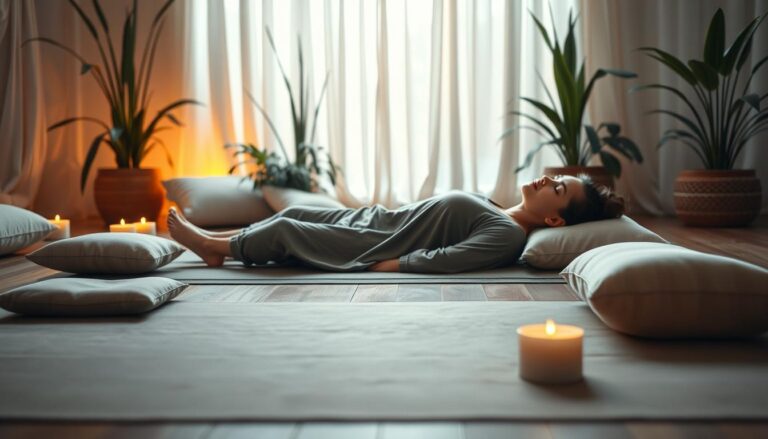
- Relaxation and body scan — 2 minutes: Return to a comfortable resting position. Notice your breathing, shoulders, back, and hips. Allow unnecessary muscle tension to soften.
After the session, consider how your body feels. Were your movements smoother? Did you hold your breath? Which exercise required the most concentration? These observations can guide your next practice.
Studio Pilates vs. Home Practice: Which Is Better?
Both settings can support mind-body awareness. The best choice depends on your experience, learning style, and whether you need individual guidance.
Benefits of Studio Classes
A qualified instructor can demonstrate movements, offer real-time feedback, and suggest modifications. This can be especially valuable when learning unfamiliar exercises or using a reformer.
Group classes may also provide encouragement and a regular schedule, making it easier to maintain the habit.
Benefits of Practicing at Home
Home sessions are convenient and allow you to work at your own pace. A simple routine lasting 10–20 minutes can help maintain consistency between classes.
You can also combine both approaches: learn exercises with an instructor, then repeat appropriate movements independently. The goal is to develop control and confidence rather than complete increasingly difficult exercises as quickly as possible.
For more ideas, explore this guide to mindful Pilates practice.
How Joseph Pilates Shaped Modern Mind-Body Exercise
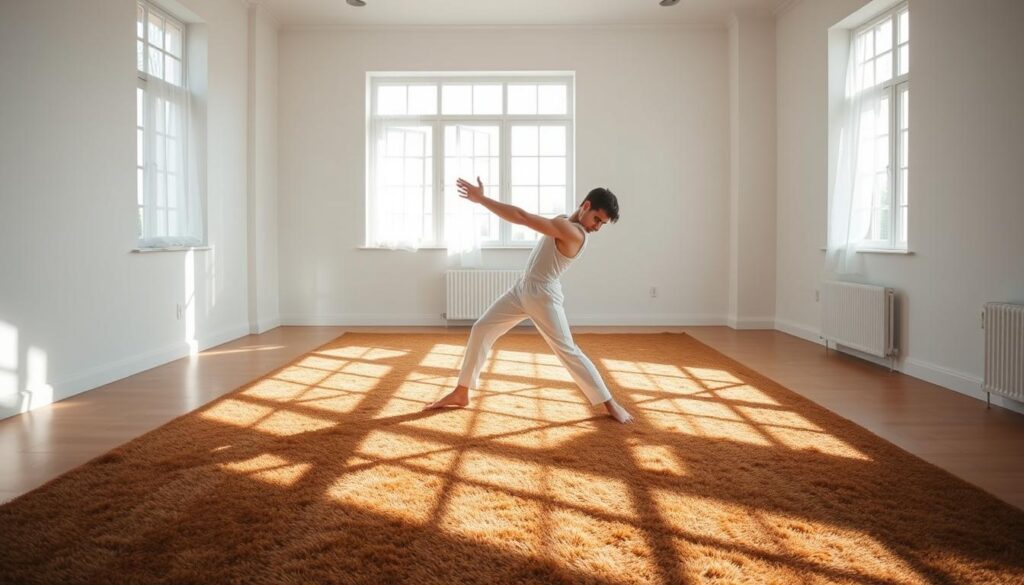
Joseph Pilates developed his exercise method during the early 20th century. While interned in Britain during World War I, he explored exercises that emphasized strength, coordination, and physical control.
He later called his method Contrology. In 1926, he moved to the United States and opened a New York studio with his wife, Clara.
The method eventually expanded from floor exercises to specialized apparatus, including the reformer and Cadillac. Its lasting ideas include:
- Using breathing and concentration during exercise.
- Developing strength through controlled movement.
- Practicing precise movements rather than rushing.
- Adjusting resistance and difficulty as abilities improve.
Modern Pilates builds on these ideas while incorporating current knowledge about exercise, rehabilitation, and individual movement needs. You can read more about the history through PBS American Experience.
Conclusion: Build Awareness One Movement at a Time
The mind-body connection in Pilates is about learning to move with attention, comfortable breathing, and control. These skills may support strength, coordination, stress management, and everyday movement confidence.
You do not need a complicated routine to get started. Try a few basic exercises, pay attention to how your body responds, and gradually build consistency. When possible, work with a qualified instructor to refine your technique.
Progress is not always about doing more. Sometimes it means performing a familiar movement with greater comfort, awareness, and confidence.
Frequently Asked Questions
What does a physical therapist notice first during Pilates?
A physical therapist may first look at overall movement quality, breathing, alignment, balance, and muscle coordination. They also watch for discomfort or movements that suggest an exercise needs modification.
How does Pilates breathing affect the mind and body?
Coordinating breathing with movement helps maintain attention and manage effort. Gentle, steady breathing may also support relaxation, although the response varies from person to person.
Can Pilates help with stress, anxiety, or depression?
Pilates may support mood and stress management as a form of regular physical activity. Some studies report improvements in anxiety and depression symptoms, but the evidence is mixed, and Pilates is not a replacement for appropriate mental health care.
Is mat Pilates as effective as reformer Pilates?
Both can improve strength, coordination, and body awareness. Mat Pilates primarily uses body weight, while reformers provide adjustable spring resistance. Neither method is automatically better for everyone.
Can older adults or people recovering from injuries practice Pilates?
Many exercises can be adapted for different abilities. However, people with recent injuries, surgery, significant pain, or balance difficulties should obtain guidance suited to their situation before attempting challenging movements.
How often should beginners practice Pilates?
Beginners can start with two or three manageable sessions per week, allowing time for recovery. Shorter sessions may also be useful for learning breathing and movement control. Increase activity gradually as comfort and fitness improve.
Do I need Pilates equipment to develop the mind-body connection?
No. Breathing, controlled movements, and body awareness can all be practiced without special equipment. Props such as resistance bands and exercise balls are optional tools for comfort, variety, or progression.


Don’t Miss These Picks