


Do your eyes feel tired, dry, or uncomfortable after a long day on your computer? You may have seen blue light blocking glasses advertised as an easy solution. But do blue light glasses actually work, and which ones are worth buying?
The answer is more complicated than most advertisements suggest. Blue light filtering glasses can change how much blue light reaches your eyes, but research has not shown that they reliably prevent digital eye strain. Frame comfort, an accurate prescription, screen lighting, and regular breaks often matter more.
That doesn’t mean you have to avoid these glasses. If you like wearing them, choosing a comfortable pair with suitable lenses may still make sense. This guide compares practical options for everyday screen use, affordable eyewear, and reading. You’ll also learn what the science says, which features deserve your money, and when ordinary glasses may be the better choice.
Key Takeaways
- Blue light glasses are not proven to prevent digital eye strain. A major review of clinical trials found little evidence of short-term benefits compared with regular lenses.
- Fit matters. Lightweight frames, comfortable nose bridges, and properly sized temples can make glasses easier to wear for hours.
- Anti-reflective coatings are different from blue light filters. They reduce reflections on eyeglass lenses and may make viewing more pleasant.
- Choose lenses for your needs. Clear lenses preserve color accuracy, readers provide magnification, and deeper amber lenses filter more short-wavelength light.
- Start with simple habits. Screen breaks, blinking, lighting adjustments, and the correct prescription are important steps for managing eye discomfort.
Helpful Products at a Glance
Livho High Tech Blue Light Blocking Glasses: A two-color everyday eyewear option for people who want non-prescription frames. The lenses are not a substitute for vision correction.
- Elevate your screen time comfort with these stylish women's/men's eyewear frame blue light blocking glasses, designed to reduce eye strain and protect against harmful UV rays. Stay focused and comfortable with these anti-glare computer glasses featuring a women's eyewear frame, perfect for long hours in front of digital screens .
- Enhance your visual clarity and reduce eye fatigue with these transparent blue-light glasses, featuring a chic women's eyewear frame for added style and functionality .

IBOANN Blue Light Blocking Glasses, 3-Pack: Round-frame glasses for shoppers who want several non-prescription pairs. Check the dimensions if you have a narrow or wide face.
- BLUE LIGHT BLOCKING: Our blue light glasses boast UV400 protection, blocking harmful blue rays from computer screens. Enjoy gaming, reading, or watching TV without straining your eyes or disrupting your sleep with these blue light blocking glasses
- EYE RELIEF: Our bluelight glasses are engineered to reduce blurry vision or strain caused by prolonged screen time. These blue blocker glasses aid in better sleep by preventing blue light from disrupting your natural sleep cycle, helping you fall asleep faster and enjoy a more restful night's sleep

Gaoye 2.0 Reading Glasses, 2-Pack: Rectangle-frame readers with +2.00 magnification and blue light filtering. Suitable only if this strength matches your near-vision needs.

Do Blue Light Blocking Glasses Actually Work?
Before comparing frames, it’s important to understand what blue light glasses can and cannot do.
Blue light is part of the visible light spectrum. Sunlight is our largest natural source, while smartphones, monitors, and LED lights also produce it. Blue light helps regulate your body’s internal clock, which influences when you feel awake or sleepy.
However, blue light from screens has not been shown to damage healthy human eyes during normal use.

What scientific studies tell us
A 2023 Cochrane review examined 17 randomized controlled trials involving 619 participants. Researchers compared blue light filtering glasses with lenses that did not have special blue light filters.
The findings were important:
- Blue light filtering lenses may offer no short-term advantage for computer-related eye strain.
- Research on sleep quality produced mixed results, so a reliable benefit has not been established.
- There was not enough evidence to determine whether these lenses protect against long-term retinal damage.
- More high-quality studies are needed to understand their effects.
The American Academy of Ophthalmology also advises that special blue light blocking eyewear is not necessary for routine computer use.
Why your eyes feel tired after screen time
Digital eye strain is real, but blue light is not considered its main cause. Extended periods of close-up work can place demands on your focusing system, while reduced blinking can leave your eyes dry.
Common contributing factors include:
- Staring at a screen without regular breaks.
- Blinking less often during focused work.
- Incorrect glasses prescriptions or uncorrected vision problems.
- Reflections, poor lighting, or uncomfortable screen brightness.
- Incorrect monitor distance and poor neck posture.
These problems can occur while reading printed documents, too. That’s why buying filtered lenses alone may not solve the discomfort.

Best Blue Light Blocking Glasses for Different Needs
The following options serve different shopping needs rather than representing laboratory-tested winners. Their main differences involve frame style, quantity, and magnification. No pair should be considered a proven treatment for eye strain or sleep problems.
1. Livho High Tech Blue Light Blocking Glasses — Everyday Non-Prescription Option
If you want simple glasses for desk work, gaming, or casual computer use, the Livho High Tech glasses are an option to consider. The Leopard + Clear Pink variation offers two different frame colors, making it useful for someone who likes switching styles.
The product is marketed with blue light filtering and UV protection. Its main practical appeal is everyday non-prescription eyewear, rather than any proven medical effect from its filter.
What makes it worth considering:
- Two frame colors for different outfits or settings.
- Suitable for shoppers who do not need prescription correction.
- Can serve as an optional pair for home or office use.
- A relatively simple alternative to customized prescription eyewear.
What to consider: The frame shape and bridge may not fit everyone. Confirm lens specifications and return conditions before ordering, especially if you are sensitive to reflections or lens tint.
These glasses make more sense as an optional accessory than as an essential purchase for eye protection. You can also work comfortably without blue light filtering by using suitable lighting and regular breaks.
- Elevate your screen time comfort with these stylish women's/men's eyewear frame blue light blocking glasses, designed to reduce eye strain and protect against harmful UV rays. Stay focused and comfortable with these anti-glare computer glasses featuring a women's eyewear frame, perfect for long hours in front of digital screens .
- Enhance your visual clarity and reduce eye fatigue with these transparent blue-light glasses, featuring a chic women's eyewear frame for added style and functionality .
- Protect your eyes from blue light and glare with these women's eyewear frame bluelight blocking glasses, designed for screen protection during work or leisure activities .
- Upgrade your digital experience with these non-prescription anti-blue light glasses, featuring a sleek women's eyewear frame for a fashionable and protective solution against digital eye .
2. IBOANN Blue Light Blocking Glasses, 3-Pack — For Style Variety
Some shoppers want more than one pair without spending extra on separate purchases. The IBOANN three-pack provides round-frame eyewear with different looks, making it practical for keeping one pair at home and another near your workspace.
The round design may appeal to people who prefer softer frame shapes over traditional rectangular glasses. As with most ready-made non-prescription options, comfort depends on how the dimensions match your face.
Reasons to consider this set:
- Three pairs in one purchase.
- Round frames for a different appearance from conventional office glasses.
- Blue light filtering and UV protection are listed product features.
- Useful for people who frequently misplace their non-prescription glasses.
What to consider: Multiple pairs are valuable only if the frames fit. Check their dimensions, and don’t assume that a larger pack provides stronger filtering or better optical quality.
If you already own comfortable glasses or don’t want extra pairs, this set may be unnecessary. A single well-fitting frame can be a more sensible purchase.
- BLUE LIGHT BLOCKING: Our blue light glasses boast UV400 protection, blocking harmful blue rays from computer screens. Enjoy gaming, reading, or watching TV without straining your eyes or disrupting your sleep with these blue light blocking glasses
- EYE RELIEF: Our bluelight glasses are engineered to reduce blurry vision or strain caused by prolonged screen time. These blue blocker glasses aid in better sleep by preventing blue light from disrupting your natural sleep cycle, helping you fall asleep faster and enjoy a more restful night's sleep
- COMFORTABLE: Crafted from durable, lightweight material, our trendy blue-light glasses ensure long-lasting comfort without stressing your nose. The high-transmittance lenses on the glasses for computer eye strain help keep your eyes relaxed
- VALUE PACK: Enjoy three pairs of these anti glare glasses at an excellent price. Perfect as blue light glasses for woman or blue light glasses men, these non-prescription computer glasses can be easily replaced to suit your needs. These uv light glasses are not only functional but also serve as a stylish accessory
3. Gaoye 2.0 Reading Glasses, 2-Pack — For People Who Need Magnification
Reading glasses serve a different purpose from ordinary blue light glasses. They enlarge nearby text, which can help people who need near-vision correction for reading or close work.
The Gaoye two-pack combines blue light filtering with +2.00 magnification and rectangular frames. This makes it a possible option for someone who already uses +2.00 readers and wants an additional set.
What makes this pair different:
- Two reading glasses in one pack.
- +2.00 magnification for appropriate near-vision needs.
- Rectangle-style frames.
- Blue light filtering and UV protection listed as lens features.
Important limitation: +2.00 power is not right for everyone. The strength needed for a book may also differ from what feels comfortable at a computer monitor.
If your prescription includes astigmatism or different corrections for each eye, ordinary ready-made readers may not provide clear vision. An eye-care professional can help determine whether dedicated computer glasses would work better.
Where to Shop for Premium and Prescription Blue Light Glasses
Amazon isn’t the only place to find blue light filtering lenses. If you need prescription correction, a wider selection of sizes, or specific lens coatings, established optical retailers can offer more customization.
Felix Gray: For Specialized Screen-Eyewear Designs
Felix Gray focuses on eyewear marketed for digital-device use. Its collections include different frame styles and lens options for people interested in that approach.
Consider the overall frame dimensions, prescription availability, and coating information rather than assuming that specialized blue light technology provides stronger clinical benefits.
EyeBuyDirect: For Lens Customization
EyeBuyDirect offers blue light filtering choices alongside prescription lenses. Its EBDBlue lens options include different coatings, with some versions offering additional anti-reflective treatments.
This flexibility can be useful when you need vision correction first and want to decide whether filtering is worth adding.
Warby Parker: For Prescription Frames and Lens Options
Warby Parker offers single-vision, progressive, blue light filtering, and anti-fatigue lens options.
Anti-fatigue lenses and blue light filters are not the same thing. Anti-fatigue designs provide a small amount of near-vision support, while blue light lenses mainly change light transmission. Ask an eye-care professional which, if either, matches your needs.
Look Optic and GlassesUSA: For Readers and Broader Frame Selection
Look Optic is another retailer to explore if you’re interested in reading glasses with contemporary frame styles. GlassesUSA offers a wider optical-shopping route for people comparing prescription options and frame brands.
Before choosing either, check the exact lens choices, frame measurements, warranty, and current return rules. Do not assume that every frame supports the same lens treatments.
How to Choose the Right Fit Without Headaches
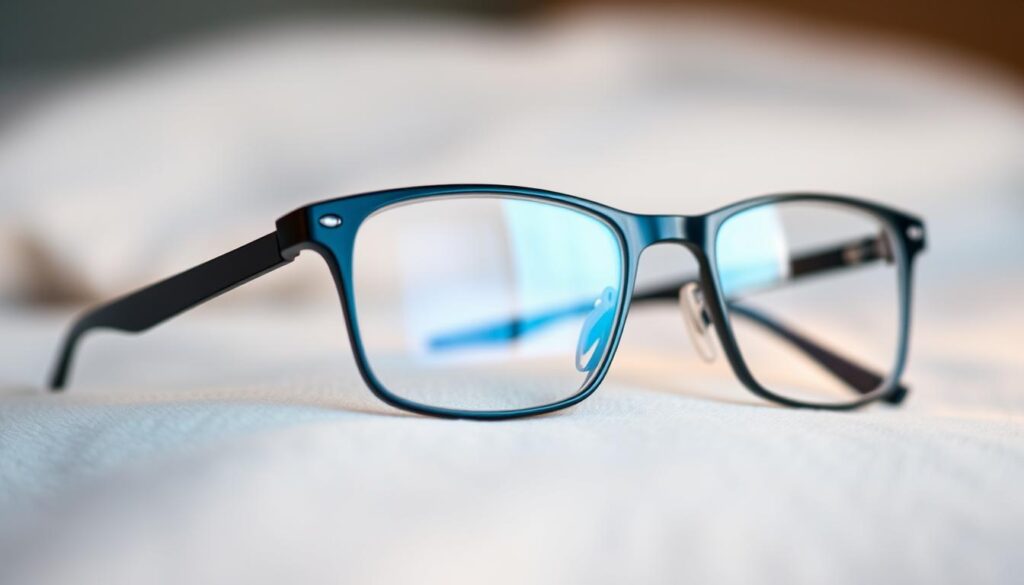
Even excellent lenses can feel uncomfortable in the wrong frame. A tight temple can press behind your ears, while a loose bridge can cause glasses to slide whenever you look down.
Start by checking the three measurements often printed inside an eyeglass arm:
- Lens width: The horizontal width of one lens, measured in millimeters.
- Bridge width: The space between the lenses that rests across your nose.
- Temple length: The length of the arms extending toward and behind your ears.
If you already own comfortable glasses, use their measurements as a starting point. For example, a frame marked 52-18-140 generally has a 52 mm lens width, 18 mm bridge, and 140 mm temple length.
Comfort features worth checking
- Adjustable nose pads: Helpful when fixed bridges sit too low or leave pressure marks.
- Spring hinges: Allow some outward movement at the temples.
- Lightweight frames: May reduce pressure during extended wear.
- Proper frame width: Prevents squeezing without allowing excessive slipping.
Try your glasses during normal activities, including typing, looking down, and turning your head. If they cause pressure or headaches, a frame adjustment may help. Persistent or worsening headaches deserve an eye examination rather than another blue light filter.
Lens Features That Matter More Than Marketing
Eyewear descriptions often combine blue light blocking, anti-glare, UV protection, and scratch resistance as though they all do the same job. They don’t.
Anti-reflective coatings
An anti-reflective (AR) coating reduces reflections from the front and back surfaces of your lenses. This can make the lenses look clearer and reduce distracting reflections, especially when lights are behind you.
However, AR coatings do not eliminate reflections directly on a computer monitor. For that problem, adjusting room lighting or using a matte screen filter may be more useful.
Polycarbonate and high-index lenses
Polycarbonate lenses are lightweight and impact resistant. They are commonly used for everyday prescription glasses and can include additional coatings.
High-index plastic is another choice, particularly when stronger prescriptions would otherwise make lenses thick. The most suitable material depends on your prescription, frame size, and budget.
UV protection versus blue light filtering
UV protection is important when selecting glasses for outdoor use. Blue light filtering is a separate feature that changes how much visible short-wavelength light passes through the lenses.
Do not confuse the two or assume that blue light filtering glasses replace proper UV-protective sunglasses.
Other useful coatings
- Scratch-resistant: Helps lenses withstand ordinary wear, although no lens is completely scratchproof.
- Hydrophobic: Makes water less likely to cling to the lens surface.
- Oleophobic: Helps resist fingerprints and oily smudges.
Choose the features that match your daily needs. You don’t need every premium coating to get a comfortable pair.
Clear vs. Amber Blue Light Glasses: Which Should You Choose?
Lens tint influences both appearance and how colors look through your glasses. It also affects the amount and range of light filtered, although the exact effect depends on the lens design.
Clear or nearly clear lenses for daytime work
Near-clear lenses are useful when color accuracy matters, such as during photo editing, graphic design, or video meetings. Some have a subtle yellow tint, but they generally change colors less than darker lenses.
They are not proven to relieve computer eye strain simply because they filter blue light.
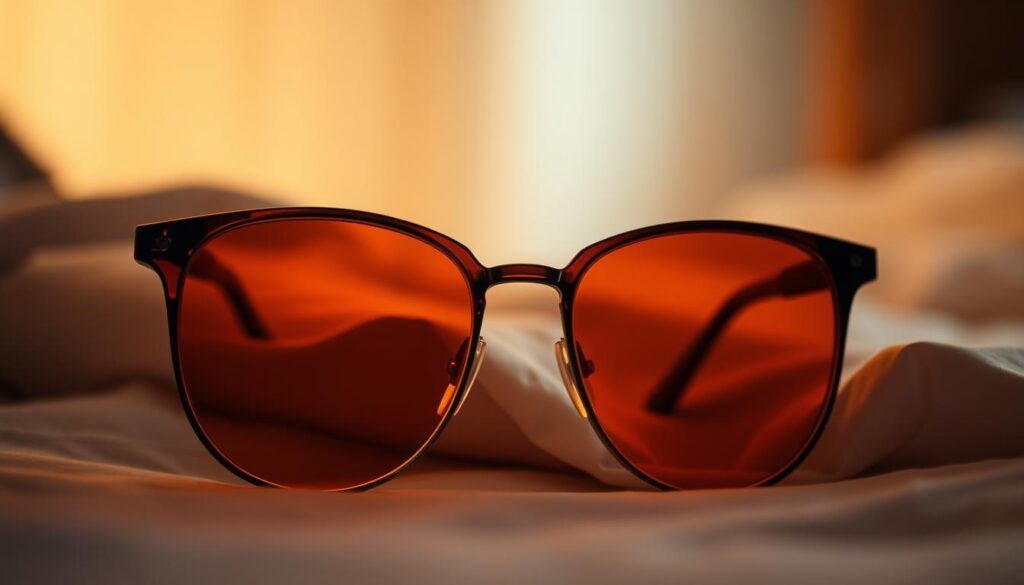
Deeper amber or orange lenses for evening use
Orange and amber lenses can filter more short-wavelength light than many clear options. This may interest people who want to reduce evening blue light exposure.
However, research has not established that wearing these glasses consistently improves sleep. Reducing screen time and keeping lights dim before bedtime are sensible first steps.
A practical comparison:
- Clear lenses: Better suited to everyday activities requiring natural-looking colors.
- Light amber lenses: A middle ground for people comfortable with a slight color shift.
- Deep orange lenses: Stronger visible color changes; potentially useful for limiting evening blue light, but not a guaranteed sleep solution.
Deeply tinted lenses can interfere with color judgment and may not be suitable for driving or other tasks that require accurate color recognition.
Frame Materials: Acetate, TR-90, and Titanium
Frame material affects weight, flexibility, durability, and appearance. Choose something that feels comfortable rather than assuming the most expensive material will always fit best.
- Acetate: A sturdy plastic-based material available in many colors and patterns. It can provide a substantial feel but varies in weight.
- TR-90: A flexible, lightweight plastic often found in casual eyewear.
- Titanium: Strong and lightweight, although usually more expensive.
- Stainless steel: A durable metal option, often used in thinner frame designs.
Face shape can help you explore styles, but comfort is more important than following a strict fashion rule. Round, square, rectangular, and aviator frames can all work if their measurements suit your face.
Budget vs. Premium Blue Light Glasses: Is Paying More Worth It?
A higher price doesn’t automatically mean stronger blue light filtering or better eye protection.
Premium eyewear may justify its price through improved adjustments, specialized prescription lenses, frame finishing, coating choices, and after-sales service. Budget glasses can still be reasonable for occasional non-prescription wear.
Before spending more, ask yourself:
- Do I need prescription correction or magnification?
- Is the frame comfortable for several hours?
- Will an AR coating solve a reflection problem I’m actually experiencing?
- Do I need extra features such as thinner lenses or adjustable nose pads?
- Can I return the glasses if they don’t fit?
If your current glasses already provide clear vision and feel comfortable, buying another pair only for blue light filtering may offer little practical value.
Prescription Glasses, Computer Lenses, and Reading Magnification
Not every screen-related vision problem can be solved with ready-made glasses. Sometimes the issue is simply that your current prescription is not suited to the distance of your monitor.
Single-vision computer glasses
These lenses can be prescribed for a specific working distance. They may be helpful when your usual distance glasses don’t provide clear, comfortable vision at your desk.
Progressive lenses
Progressives provide different focusing powers within one lens. If you frequently tilt your head to see your monitor clearly, ask whether your intermediate viewing zone is suitable for computer work.
Reading glasses
Readers magnify nearby objects, but your ideal reading strength may not match your screen distance. Buying stronger readers without checking your needs can create additional discomfort.
For prescription glasses, accurate pupillary distance (PD), correct lens power, and suitable fitting height may be more important than blue light filtering. Seek an eye examination if you experience recurring blurry vision, double vision, persistent headaches, or eye discomfort that does not improve with breaks.
Returns, Warranties, and HSA/FSA Eligibility
Buying eyewear online involves some guesswork. A clear return policy protects you if the frames feel uncomfortable or the lenses don’t meet your expectations.
Check these details before ordering:
- Returns: How long do you have, and are worn or prescription glasses eligible?
- Shipping: Who pays for return postage?
- Warranty: Are defects in hinges, frames, and lens coatings covered?
- Prescription remakes: Can the retailer correct a lens-ordering error?
- Final-sale restrictions: Are personalized or discounted orders excluded?
In the United States, HSA and FSA funds generally may be used for prescription eyeglasses needed for vision correction. Non-prescription blue light glasses bought only for convenience may not qualify.
Check your plan’s requirements and the IRS guidance on medical expenses before relying on tax-advantaged funds for a purchase.
7 Ways to Reduce Digital Eye Strain Without Buying Glasses
You can make several useful changes without purchasing specialized eyewear. These habits address common causes of screen-related discomfort.
- Use the 20-20-20 rule. Every 20 minutes, look at something approximately 20 feet away for at least 20 seconds. This gives your eyes a break from sustained close focusing.
- Blink regularly. Focused screen work may reduce how often you blink, making dryness more noticeable. Try several complete, gentle blinks during breaks.
- Adjust monitor distance. Start with the screen roughly an arm’s length away, or around 20–26 inches, and adjust for comfortable viewing.
- Position the monitor correctly. Keep the screen slightly below eye level so you can view it without lifting your chin.
- Match brightness to your surroundings. Avoid an extremely bright screen in a dark room or a screen too dim to read comfortably.
- Reduce reflections. Reposition lamps, adjust windows, or try a matte screen filter if distracting reflections remain.
- Address dry eyes. Take regular breaks, avoid direct air from fans, and ask an eye-care professional whether lubricating eye drops would help.
The American Academy of Ophthalmology’s computer-use guidance recommends many of these approaches.
For evening screen use, also try lowering brightness, enabling night mode, and avoiding devices shortly before bedtime. These changes may help you reduce unwanted late-night light exposure without buying a separate pair of glasses.
Common Blue Light Glasses Myths and Buying Mistakes
Myth 1: All screen blue light damages your eyes
Current evidence does not show that the small amount of blue light from normal computer use damages healthy human retinas. Claims about preventing eye disease should not be accepted without strong clinical evidence.
Myth 2: Blue light test cards prove a lens works
Included test cards and simple flashlight demonstrations cannot reliably establish how much light a lens blocks across the visible spectrum. Technical transmission measurements are more informative.
Myth 3: Darker lenses are always better
A deeper tint can filter more short-wavelength light, but it also changes color perception. That trade-off may be undesirable for ordinary daytime work.
Myth 4: Expensive glasses automatically prevent headaches
Headaches have many possible causes, including tight frames, incorrect prescriptions, and prolonged close-up work. A premium frame is not a guaranteed solution.
How to Clean and Care for Blue Light Glasses
Good maintenance helps preserve lens clarity and frame comfort, whether your glasses are inexpensive or premium.
- Rinse away dust: Use lukewarm water before wiping gritty lenses.
- Choose lens-safe cleaners: Follow the manufacturer’s instructions or use a mild cleaner suitable for coated eyewear.
- Use microfiber: A clean microfiber cloth is gentler than paper towels or shirt fabric.
- Store them safely: Keep glasses in a protective case when they’re not being worn.
- Avoid extreme heat: Hot dashboards and direct heat can damage some frames and coatings.
- Check the hinges: Have loose or crooked frames adjusted instead of forcing them back into shape.
If an anti-reflective coating begins peeling, cracking, or developing a cloudy appearance, contact the retailer about repair or warranty options.
Frequently Asked Questions
Are blue light blocking glasses worth buying in 2026?
They may be worth considering if you like their appearance, find a comfortable frame, or want a particular tint. However, research does not show a reliable advantage for preventing digital eye strain compared with regular lenses. Don’t spend extra expecting guaranteed medical benefits.
Do blue light glasses help with headaches?
There is no strong evidence that filtering blue light alone prevents ordinary screen-related headaches. Correcting vision problems, improving screen setup, and taking breaks may be more useful. Persistent headaches should be evaluated by a healthcare professional.
Can blue light glasses improve sleep?
Blue light affects the body’s sleep-wake system, and stronger amber lenses can reduce exposure to some wavelengths. However, studies of blue light filtering glasses have produced mixed sleep results. Reducing evening screen use and dimming lights are reasonable first steps.
Are blue light glasses necessary for computer work?
No. The American Academy of Ophthalmology does not recommend special blue light blocking glasses as necessary protection for ordinary computer use. Comfortable viewing conditions and proper vision correction are more important.
Can I wear blue light blocking glasses all day?
Many clear or lightly tinted non-prescription glasses can be worn during ordinary activities if they fit properly and do not interfere with vision. Strongly tinted lenses can distort colors and may not be appropriate for certain tasks.
Are prescription blue light glasses better than non-prescription ones?
Prescription glasses are better when you actually need vision correction. Their benefit comes primarily from the correct prescription, not necessarily from the blue light filter. Ask your optician about AR coatings and computer-distance lenses before paying for optional filtering.
Do blue light glasses need an anti-reflective coating?
No, but an AR coating can be helpful if reflections on your eyeglass lenses bother you. Blue light filtering and anti-reflective treatment perform different functions, so check whether both are included in the lens package.
How long does it take to notice a difference?
There is no established time frame for medical benefits from blue light filtering lenses. You may immediately notice a change in tint or reflections, but reduced eye strain or improved sleep should not be assumed. If discomfort continues, investigate other causes.
Final Verdict: Which Blue Light Glasses Should You Choose?
The best glasses are the ones that fit comfortably, provide clear vision, and suit your actual needs. Blue light filtering can be an optional feature, but it should not be the main reason to overlook fit, prescription accuracy, or lens quality.
For everyday non-prescription eyewear, the Livho option provides two frame colors. If you prefer several round-frame pairs, consider the IBOANN three-pack. If you already use +2.00 reading glasses, the Gaoye readers offer a magnified option with blue light filtering.
For prescription correction, explore optical retailers such as EyeBuyDirect or Warby Parker and compare lens choices carefully. And before buying anything new, try improving your screen lighting, taking regular breaks, and checking whether your existing prescription still works for your daily tasks.
Bottom line: You don’t need blue light blocking glasses to protect healthy eyes from normal screen use. Buy them for a genuine preference or practical eyewear need—not because marketing claims make them sound essential.


Don’t Miss These Picks