


Ever wonder how one expert turns science-backed nutrition into a simple, repeatable daily routine? This walkthrough shows a real-world day that balances whole food choices, gentle lifestyle habits, and practical recipe swaps you can use immediately.
Expect clear guidance on how to structure each meal, pair nutrients for steady energy, and fold in habits like sleep, hydration, and stress reduction.
This approach values flexibility over restriction — seasonal, minimally processed food sits at the center, while personalization helps match your activity, recovery, and goals.
We’ll translate evidence-based ideas into simple steps: from estimating needs to batch prep and recipe picks like citrus-olive oil salmon, quinoa-greens bowl, and turmeric chia yogurt.
By the end you’ll see how small tweaks lead to steadier energy, fewer cravings, and easier consistency—without all-or-nothing rules.
Key Takeaways
- Focus on whole, seasonal food and mindful eating for steady energy.
- Pair carbs, protein, and healthy fats to support digestion and mood.
- Simple habits—sleep, hydration, stress management—boost results.
- Recipes and batch prep make consistency realistic for busy lives.
- Personalize portions and patterns to match activity and recovery needs.
Inside a Holistic Nutritionist’s Day: Foundations, Flow, and Food Rituals
Simple daily rituals support digestion, steady energy, and hormonal balance.These small habits make healthy choices easier over time and reduce decision fatigue.
Morning starts with water or an herbal infusion to rehydrate and gently wake digestion. A short breathwork or journaling check-in lowers stress and helps appetite cues land where they belong.
Plan your meals around your schedule, not a strict clock; consistent timing supports steady energy and appetite. Pair brief movement—walks, mobility, or stretching—with work breaks to boost insulin sensitivity and lymph flow.
Practice mindful eating: notice aromas and textures, chew well, and pause between bites to aid digestion. Build plates using a simple formula: complex carbs + lean protein + healthy fat + color to make balanced choices automatic.
- Align caffeine and snack timing to avoid crashes; choose protein- and fiber-forward snacks.
- Wind down with dim lights, minimal screens, and calming tea to prime sleep and recovery.
Keep rituals simple and repeatable—consistency beats perfection. Reflect briefly each evening: which meals and practices supported your focus and comfort? Repeat what worked to strengthen habits and maintain long-term health.
For a structured starting point, see a practical guide to creating a balanced nutrition approach and affordable tweaks for daily routines in this biohacking on a budget read.
What Makes a Balanced Holistic Diet Plan Work
A practical approach blends seasonal, minimally processed foods with habits that support recovery and steady energy. This combination improves absorption, lowers inflammation, and helps digestion feel more consistent.

Define the approach: think food plus lifestyle. Choosing seasonal produce, quality proteins, and supportive routines creates a realistic path for long-term change.
Whole, minimally processed foods and seasonal choices
Favor nutrient-dense foods and cut back on processed foods to reduce inflammation and support mood. Include whole grains, legumes, and colorful plants for fiber and steady blood sugar.
Mindfulness and lifestyle alignment beyond calorie counting
Use mindful eating to guide portions and satisfaction instead of rigid targets. Small habits—sleep, hydration, and stress checks—amplify the benefits of better food choices.
Personalization for energy, mood, and recovery goals
Adjust carbohydrate, protein, and fat ratios to match activity and stress load. Set simple goals (for example, two colors per plate or protein at breakfast) and reflect weekly on what boosted focus or mood.
- Keep it flexible: build enjoyment and social life into the strategy so it lasts.
- Short reflection: note which choices improved energy and repeat them.
Macronutrients, Quality, and Timing for Stable Energy
Timing and quality of macronutrients shape energy, focus, and digestion more than strict rules do. Choose slow-burning carbohydrates, lean sources of protein, and healthy fats to support steady energy across the day.

Complex carbohydrates to sustain steady fuel
Complex carbs from whole grains, root vegetables, and legumes provide slow-burning energy and fiber. They support gut health and mood by slowing glucose release.
Lean proteins for repair and satiety
Include proteins like fish, eggs, poultry, or plant options to supply amino acids for tissue repair and neurotransmitter production. Protein at each eating occasion helps curb cravings and stabilizes blood sugar.
Healthy fats to support absorption and hormones
Fats from extra virgin olive oil, avocado, nuts, and seeds aid brain and heart health. Pair fats with vitamin-rich foods (leafy greens, eggs, salmon) to improve uptake of A, D, E, and K.
Nutrient pairings and timing
Pairing matters: combine carbs + protein to slow glucose spikes, and time denser carbs around activity for performance and recovery. Watch digestion and adjust portions to match appetite and activity.
| Macro | Role for energy & digestion | Real-food examples |
|---|---|---|
| Complex carbohydrates | Slow glucose release; fiber supports digestion and mood | Quinoa, oats, sweet potatoes, lentils |
| Lean proteins | Repair tissue, support neurotransmitters, increase satiety | Wild fish, eggs, poultry, tofu |
| Healthy fats | Hormone balance, brain support, vitamin absorption | Extra virgin olive oil, avocado, nuts, seeds |
| Practical tip | Balance portions by activity and monitor digestion | Time carbs pre/post workout; add herbs like turmeric for antioxidants |
For a practical, balanced approach to structuring meals and timing, see this balanced approach and learn specific, science-backed adjustments at science-backed adjustments.
Micronutrients That Move the Needle
Eating a wide range of colorful fruits and vegetables gives broad coverage of vitamins, minerals, and phytonutrients. Small choices—like adding berries or a leafy side—support brain, digestion, and overall health.

Why color diversity matters
Orange produce often supports eye and skin function. Leafy greens help blood building and mild detox pathways.
Blue and purple foods align with memory and stress resilience. Aim for at least two to three colors per eating occasion.
Trace elements that support thyroid, mood, and metabolism
Magnesium, zinc, and selenium play distinct roles: magnesium aids sleep and muscle calm; zinc supports mood and immunity; selenium helps thyroid and detox. Include nuts, seeds, seafood, and eggs regularly.
Gentle ways to cook for nutrient retention
Choose steaming, light sautéing, or slow roasting to keep vitamin C, folate, and polyphenols intact. Avoid frequent charring or deep frying to maintain quality and nutrient density.
- Rotate produce weekly to diversify nutrients and keep food interesting.
- Pair vegetables with healthy fats (olive oil, tahini) to boost absorption of fat-soluble vitamins.
- If digestion is sensitive, lightly cook vegetables to ease tolerance.
| Focus | Examples | Practical tip |
|---|---|---|
| Color diversity | Bell peppers, berries, kale | 2–3 colors per plate for antioxidants |
| Trace minerals | Spinach (magnesium), oysters/legumes (zinc), Brazil nuts (selenium) | Rotate sources weekly; small portions count |
| Cooking method | Steaming, light sauté, slow roast | Preserve vitamins; add a drizzle of olive oil |
| Daily habit | Herbs, citrus, turmeric | Add fresh herbs and a squeeze of lemon for flavor and micronutrients |
Make a quick color check before you eat: if the plate looks beige, add greens or berries. For simple swaps and recipes that keep nutrient quality high, see this helpful guide on easy food swaps.
Lifestyle Practices That Elevate Your Plate
Small, consistent routines enhance digestion, steady energy, and overall wellness. When sleep, stress checks, hydration, and movement work together, the body uses nutrients more efficiently.

Begin with mindful eating. Sit quietly for a few minutes, remove screens, and notice hunger and fullness cues. This builds gratitude, improves digestion, and helps prevent overeating.
Practical stress and sleep habits that support digestion
Sleep 7–9 hours to stabilize appetite hormones and sustain daytime energy. Use brief resets—box breathing, a short yoga flow, or journaling—to lower stress and reduce snack-driven cravings.
Hydration and movement to complement better choices
Hydrate evenly throughout the day; herbal teas and mineral water support cellular balance and toxin clearance. Move daily—walk after meals to aid digestion and do light resistance work to improve insulin sensitivity and body composition.
- Eat without screens for a few minutes to honour hunger and fullness cues.
- Check hunger before and after eating to naturally right-size portions.
- Keep a calm pace: chew well, set utensils down, and notice taste shifts.
- Plan timing: match water and meals to your schedule—consistency beats perfection.
- Track wins: log small habits (a mindful lunch, an evening walk) to build momentum.
Personalize these practices to your body’s needs and daily demands. For practical ideas on building balanced approaches that fit a busy life, see a simple guide to making a balanced approach and affordable tools to support daily tweaks.
balanced approach · affordable biohacking tools
Holistic Nutritionist Meal Plan: Step-by-Step and Sample Day
Build a weekly rhythm that trims decision fatigue and keeps your fridge stocked with purposeful, ready-to-eat choices. This short, practical guide shows how to assess needs, map a simple plan, and use batch prep so everyday meals feel easy and reliable.
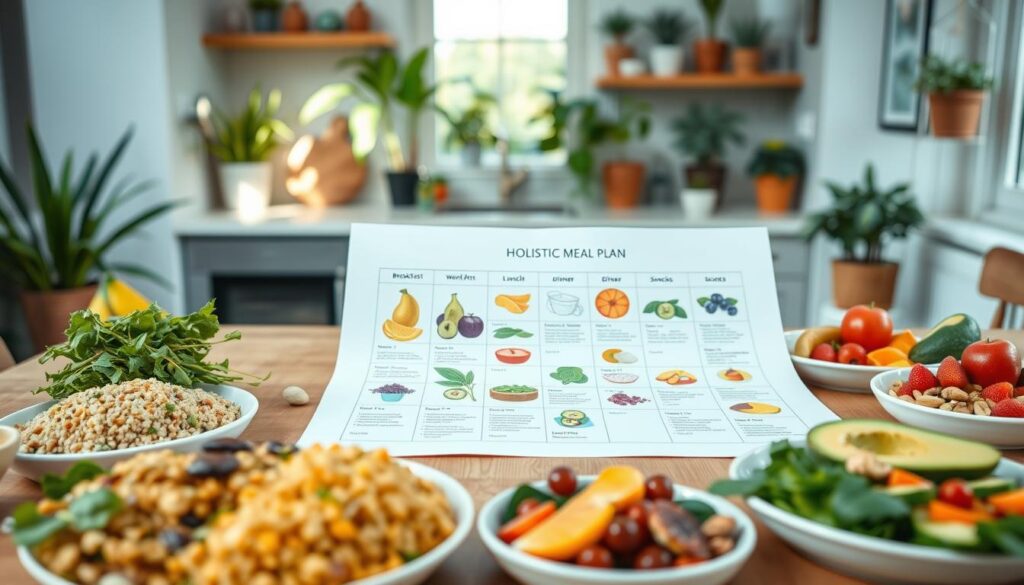
Assess, plan, shop: setting targets aligned to your needs
Start by noting activity level, schedule, and any medical guidance. Set 1–2 clear goals, like protein at breakfast or two colors per meal.
Spend 15 minutes to map 3–4 anchor meals and build a focused shopping list: produce, lean proteins, healthy fats, and pantry grains.
Breakfast blueprint
Water or tea + protein + slow carbs + healthy fat. Example: Greek yogurt with berries, chia, and a few nuts for satiety and steady energy.
Lunch, dinner, and snacks
Lunch/dinner: lean protein + two vegetables + whole grains or legumes + olive oil or tahini. Think salmon with roasted veg and quinoa.
- Snacks: apple with almond butter; hummus and carrots; cottage cheese with berries.
Go-to recipes & batch prep
Keep three favorites: citrus-olive oil salmon, quinoa-greens bowl, turmeric chia yogurt. Batch cook quinoa and proteins, roast a tray of vegetables, and pre-portion greens and nuts for grab-and-go convenience.
Weight, Metabolism, and Sustainable Change in the United States
Practical math and modest habits beat extremes for lasting results. Use an evidence-based method to set energy targets and protect muscle while you lose weight.
A reliable first step is estimating BMR with the Mifflin‑St Jeor equation, then multiplying by an activity factor (sedentary 1.2, moderately active 1.55, up to 1.9). This gives TDEE — your daily energy budget.

Calorie awareness with TDEE, not extremes
Create modest deficits of 250–500 kcal for steady weight loss and avoid dropping below BMR. Keep intake high enough to protect mood, recovery, and metabolism.
Protein ranges by activity level to support body composition
Match protein to activity: about 0.36 g/lb for sedentary people, 0.5–0.7 g/lb for active exercisers, and 0.7–1.0 g/lb for athletes. Higher protein helps retain muscle during loss.
The 80/20 approach for long-term adherence
Most days should be nutrient-forward, with room for flexibility. Aim for roughly 80% whole foods and 20% enjoyment to stay consistent with diet and social life.
- Track progress with energy levels, sleep, training, and waist measurements — not just the scale.
- Adjust weekly if energy dips or recovery suffers.
- If you have diabetes or thyroid issues, seek professional guidance for tailored targets.
Smart Shopping, Batch Prep, and Tracking Without Obsession
Smart shopping and a short prep block cut decision fatigue and make healthy eating practical on busy days. Plan weekly menus, set one 30-minute prep session, and use simple label rules to raise nutrient quality across your groceries.

Seasonal lists and label literacy for nutrient density
Create a seasonal shopping list first to keep costs down and nutrients high.
Read labels for fiber, protein, and low added sugars. Pick products with shorter ingredient lists and avoid highly processed foods when possible.
Batch-cook grains and proteins; pre-portion produce
Batch-cook quinoa, brown rice, or lentils and roast a tray of vegetables. Bake chicken or tofu for 2–3 quick dinners.
Pre-portion berries, carrots, and nuts into single-serve containers so snacks and lunch packing become instant.
- Build a seasonal shopping list and include pantry staples: olive oil, legumes, whole grains, frozen vegetables.
- Organize the fridge with “use first” bins to cut waste and encourage colorful plates.
- Keep fast add-ons like canned beans, tinned fish, pre-washed greens, and frozen vegetables for busy nights.
- Set a weekly 30-minute prep block.
- Batch-cook 2 grains and 1–2 proteins.
- Pre-portion produce and store in clear containers for visibility.
| Task | Why it helps | Examples | Time |
|---|---|---|---|
| Seasonal shopping list | Lower cost, higher nutrient density | Stone fruits in summer, squash in fall | 15–20 min weekly |
| Label checks | Boost fiber/protein, reduce added sugars | Choose high-fiber bread, low-sugar yogurt | Label scan during shopping |
| Batch cooking | Speeds assembly and reduces evening stress | Quinoa, roasted veggies, baked salmon | 30–60 min weekly |
| Fridge organization | Cut waste, encourage balanced choices | “Use first” bin; clear containers | 5–10 min after shopping |
Track intake for 1–2 weeks to learn portions and patterns, then shift to mindful awareness if tracking feels excessive. For a printable shopping template and a solid nutrient list, see this nutrient-dense grocery list.
When to Seek Professional Guidance and How to Evaluate Evidence
Complex medical needs or competitive training call for personalized oversight rather than one-size-fits-all advice. Find an expert who matches your goals and can translate evidence into safe, practical choices.
Medical conditions and personalized oversight
If you have diabetes, heart disease, kidney issues, GI disorders, pregnancy, or food allergies, consult a registered dietitian (RDN) for medical nutrition therapy.
Medication interactions and performance targets also need tailored support. Ask an RDN about outcome measures that matter — lipids, A1C, body composition, or endurance — not just the scale.
How to spot solid research versus sensational claims
Prioritize systematic reviews and meta-analyses. Check study size, duration, funding, and whether results apply to your age, sex, and activity.
Red flags include tiny human studies, animal-only data, miracle promises, or diets that demonize whole food groups without reason.
Quick checklist
- Seek an RDN when health or medication complicates nutrition choices.
- Use the evidence hierarchy: reviews > randomized trials > small studies.
- Watch for conflicts of interest and unrealistic weight or brain benefit claims.
- Prefer guidance that teaches skills (label reading, meal building) so you can adapt.
| What to check | Why it matters | Practical sign |
|---|---|---|
| Study type | Quality and reliability | Systematic review or meta-analysis preferred |
| Population | Generalizability | Matches your age, sex, or activity level |
| Funding & COI | Bias risk | Independent funding; disclosed conflicts |
| Claims | Realistic outcomes | Human trials with adequate size/duration |
For help finding a qualified clinician, see how registered dietitians support healthy eating and medical oversight at registered dietitian support.
Conclusion
Wrap your day with simple, evidence-backed habits that make nutritious eating automatic.Small, consistent choices—whole foods, balanced plates, and a few rituals—add up to steady energy, better sleep, and improved digestion.
Recap the blueprint: build plates from complex carbs, lean proteins, healthy fats, and colorful produce. Use gentle cooking and smart pairings to get more nutrients from your foods.
Personalize as needed: tweak portions, protein ranges, and timing to match activity and appetite. Keep systems light: weekly shopping, a short batch-prep session, and mindful tracking when useful.
Focus on outcomes: watch mood, focus, training, and recovery as real signs of progress beyond weight. Use the 80/20 approach to balance quality with enjoyment.
Start small: upgrade one meal today—often breakfast—then expand. For more context on a whole-person approach, see this holistic approach, and learn how timing choices affect your body with this intermittent fasting effects.
Takeaway: pick one habit—hydrate on waking, add protein at breakfast, or include two colors per plate—and build momentum from there.
FAQ
What does a typical day look like for a holistic nutrition professional and which go-to recipes do they favor?
A typical day blends structured meals, movement, and recovery. Mornings often start with hydration, a protein-rich breakfast (eggs or Greek yogurt with berries), and short movement; lunch and dinner focus on a balanced plate of lean protein, whole grains like quinoa or brown rice, and plenty of vegetables. Favorite recipes include citrus-olive oil salmon, a quinoa-and-greens bowl, and turmeric chia yogurt—simple, nutrient-dense dishes that are quick to batch-cook and reheat.
How do whole, minimally processed foods and seasonal choices improve wellbeing?
Choosing whole and seasonal foods boosts nutrient density and variety while reducing intake of additives found in processed items. Seasonal produce tends to be fresher, more affordable, and higher in antioxidants and fiber, which support digestion, stable energy, and overall immune function.
Why is mindfulness and lifestyle alignment more effective than strict calorie counting?
Mindful eating trains you to recognize hunger and fullness cues, improving satiety and reducing overeating. Pairing mindful choices with consistent sleep, movement, and stress management leads to sustainable behavior change—more so than rigid calorie targets that can feel restrictive and ignore individual needs.
How is a personalized approach tailored to energy, mood, and recovery goals?
Personalization starts with assessing activity level, sleep, stress, medical history, and taste preferences. Protein timing for recovery, carbohydrate choices for sustained energy, and micro- and macronutrient adjustments for mood (e.g., omega-3s, B vitamins) help align a program with real-world goals rather than one-size-fits-all rules.
Which carbohydrates, proteins, and fats support steady energy throughout the day?
Favor complex carbs such as whole grains, root vegetables, and legumes for gradual glucose release. Lean proteins—fish, eggs, poultry, and plant proteins—support muscle and satiety. Healthy fats like extra-virgin olive oil, avocado, nuts, and seeds slow digestion and help absorb fat-soluble vitamins, all of which together stabilize blood sugar and energy.
What nutrient pairings help improve absorption and keep blood sugar steady?
Pairing iron-rich plant foods (spinach, lentils) with vitamin C sources (citrus, bell peppers) enhances iron uptake. Combining carbs with protein and fat—such as brown rice with salmon and avocado—reduces glucose spikes and prolongs fullness.
Which micronutrients most influence mood, thyroid function, and metabolism?
Key micronutrients include iodine and selenium for thyroid health, B vitamins and magnesium for energy and mood regulation, vitamin D for immune and mood support, and trace minerals like zinc for metabolic processes. Eating a colorful variety of fruits and vegetables helps cover many of these needs.
How do gentle cooking methods preserve vitamins and minerals?
Steaming, sautéing briefly, roasting at moderate temperatures, and eating some produce raw reduce nutrient loss. Overboiling and prolonged high heat can leach water-soluble vitamins, so shorter cooking times and using cooking water in soups or sauces helps retain nutrients.
What lifestyle habits most effectively support nutritional changes?
Prioritize consistent sleep, regular physical activity, stress reduction practices (breathwork, short walks), and adequate hydration. These habits amplify the benefits of nutrient-rich eating by improving digestion, recovery, and appetite regulation.
How should someone structure breakfast, lunch, and dinner for steady energy and recovery?
Breakfast: include protein, a slow carb, and hydration (e.g., scrambled eggs, oats, and water). Lunch and dinner: follow a balanced-plate formula—vegetables fill half the plate, a palm-sized protein portion, and a fist-sized whole grain or starchy vegetable. Include healthy fat and fiber at each meal to prolong fullness and support recovery.
What are practical snack options that support satiety and nutrient density?
Choose fiber- and protein-forward snacks like apple slices with almond butter, Greek yogurt with chia seeds, hummus with veggie sticks, or a small handful of nuts and a piece of fruit. These combine carbohydrates, protein, and fat for steady energy between meals.
How does one balance calorie awareness (TDEE) with sustainable habits for weight goals?
Use Total Daily Energy Expenditure (TDEE) as an informed baseline rather than a strict rule. Aim for moderate calorie adjustments, prioritize protein to preserve lean mass, and adopt an 80/20 approach—consistent healthy choices most days, flexibility for social and cultural foods—so changes stick long term.
What shopping and batch-prep strategies make healthy eating realistic for busy life?
Create seasonal shopping lists, read labels for minimal ingredients, and batch-cook grains and proteins on a weekend. Pre-portion produce and use clear containers to make grab-and-go meals. This reduces decision fatigue and keeps nutrient-dense options available throughout the week.
When should someone consult a healthcare professional or dietitian?
Seek professional guidance for medical conditions (autoimmune disease, thyroid disorders, diabetes), unexplained symptoms, significant weight changes, or when considering major dietary changes or supplements. Registered dietitians and medical providers can run appropriate tests and tailor evidence-based interventions.
How can readers evaluate nutrition research and avoid sensational claims?
Look for randomized controlled trials, systematic reviews, and sources from NIH, Mayo Clinic, or peer-reviewed journals. Be cautious with single-study headlines, celebrity endorsements, or products promising rapid fixes. Good evidence is reproducible and transparent about limitations.




Don’t Miss These Picks