

Feeling stressed, restless, or disconnected after a busy day? A 10-minute grounding yoga flow can help you slow down, notice your body, and reconnect with the present moment. You don’t need advanced poses, expensive equipment, or an hour of free time to get started.
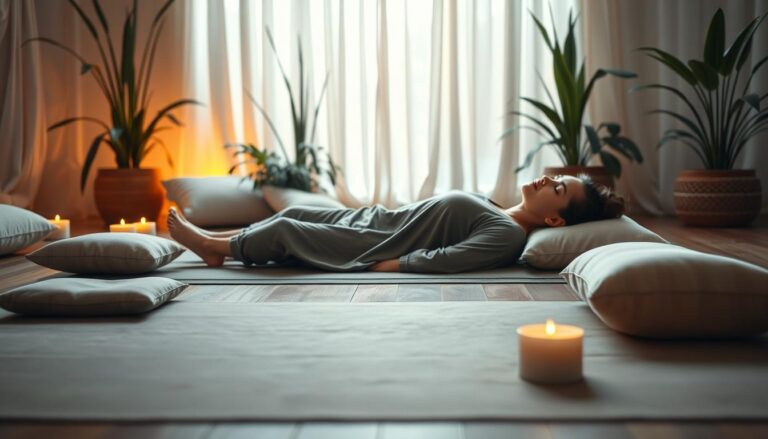
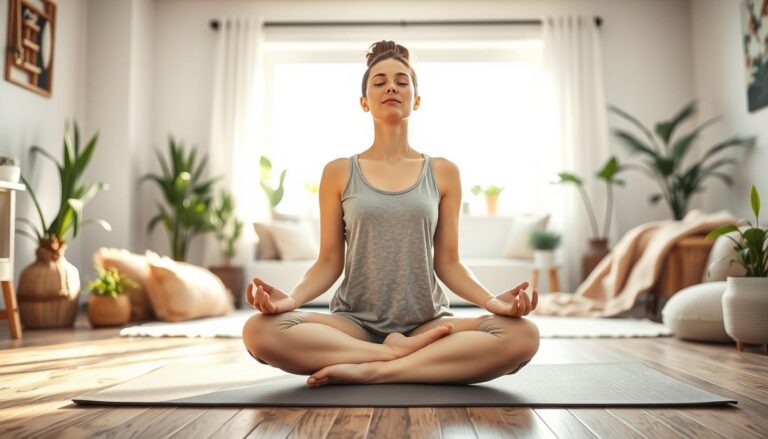
This gentle routine combines easy stretches, controlled movements, and mindful breathing. You’ll begin lying on your back in Shavasana, move through simple exercises for your hips, legs, and spine, and finish sitting quietly in Sukhasana.
Yoga may help reduce stress and improve general well-being, although results vary. The goal isn’t to force relaxation in ten minutes. It’s to create a short, repeatable practice that leaves you feeling more comfortable and aware of your body.
Key Takeaways
- Ten minutes can be worthwhile: Short yoga sessions give you a practical way to pause, move, and practice mindful breathing.
- Start gently: Begin with Shavasana and knee hugs before moving into light core and spinal exercises.
- Use comfortable breathing: Dirga and Sama Vritti are simple techniques that can help you focus and relax.
- Props are optional: A non-slip mat, cushion, yoga strap, or block can make some positions more comfortable.
- Adjust every pose: Reduce the movement or choose an easier variation whenever you feel discomfort.
Helpful Products at a Glance
For floor comfort: The Gaiam Premium 6mm Yoga Mat provides a cushioned surface for lying down and kneeling, although people who prefer a firmer surface may want less padding.
- ALIGNMENT YOGA MAT: 6mm thick premium yoga mat offers an alignment system that is printed on the mat to help keep you in position on all poses
- STICKY NON-SLIP TEXTURE: Yoga mat features a textured sticky non-slip surface for excellent traction and superior grip

For seated stretches: The Gaiam 8-Foot Yoga Strap helps you reach your feet without pulling your back into an uncomfortable position. A long towel can serve a similar purpose.
- YOGA STRAP: An essential yoga accessory and prop to help you deepen stretches and improve flexibility while allowing your shoulders to relax for proper alignment - if you feel tight, grab a strap and don’t risk injury by over-extending
- STRETCH STRAP: Use the strap to reach limbs more easily on challenging positions and to hold poses and stretches for longer - take your practice to the next level by using a yoga strap to deepen and extend stretches to gain more flexibility

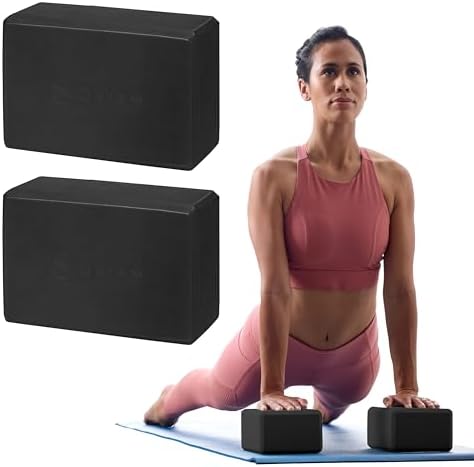
For extra support: The Gaiam EVA Foam Yoga Block offers a raised surface for your hand or support beneath a bent knee. A firm household cushion may work for some positions instead.
- Yoga Blocks for Stability Plus Balance - The Gaiam Essentials yoga blocks help provide the stability and balance needed in your practice to help with optimal alignment, deeper poses and increased strength. We have a variety of colors to match your style.
- Durable Supportive Foam - These lightweight and supportive foam blocks are constructed of a durable foam with a non-slip surface and beveled edges for easy gripping. These blocks are denser than standard EVA blocks.
Why a 10-Minute Grounding Yoga Practice Can Help
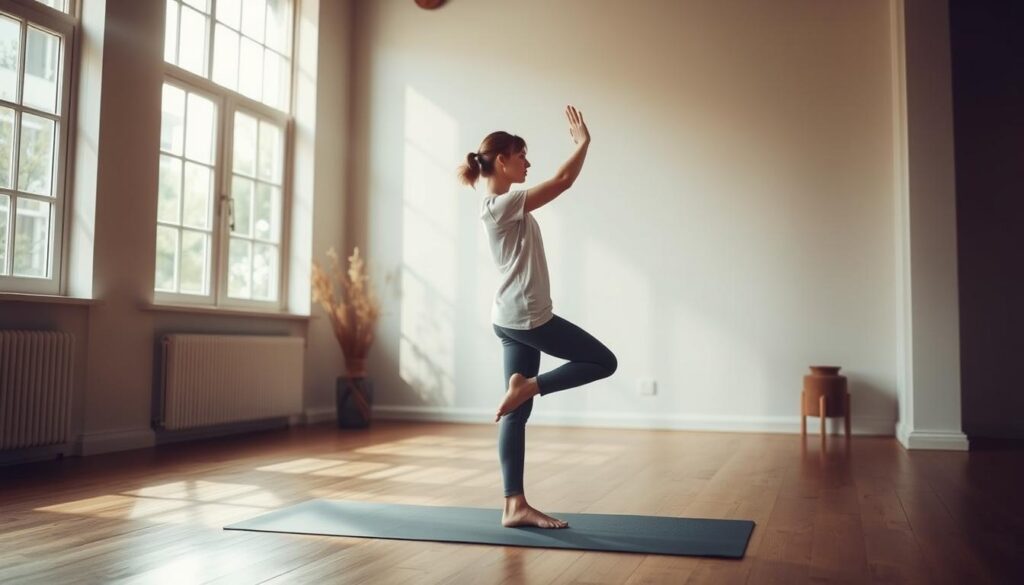
When you’re stressed, your breathing may become faster, your shoulders may tighten, and your attention may jump between worries. Grounding yoga brings your attention back to things you can notice right now: your breathing, your movements, and the surface supporting your body.
The combination of gentle movement and focused breathing gives you a break from constant mental activity. You can practice without trying to empty your mind or perform every pose perfectly.
Research supports yoga as a possible tool for stress management. According to the National Center for Complementary and Integrative Health, yoga may support stress relief, emotional well-being, sleep, and balance. However, studies often examine longer or repeated programs, so they cannot guarantee specific results from this ten-minute routine.
Why consistency matters more than perfection
A short routine is often easier to repeat than a long workout. You can practice before work, during an afternoon break, or before bed without rearranging your entire schedule.
Repeating familiar movements also reduces the need to remember complicated instructions. As you become comfortable with the sequence, you can spend more attention on your breathing and how your body feels.
For another short practice, explore this seven-move, ten-minute yoga sequence.
What Does Grounding Mean in Yoga?
Grounding means bringing your attention back to the present through physical sensations. You might notice your feet pressing into the floor, your back resting against the mat, or the movement of your ribs as you breathe.
Traditional yoga also connects grounding with the earth element (Prithvi or Bhumi), which symbolizes stability, support, and strength. In some yoga traditions, these qualities are associated with the root chakra, or Muladhara, located near the base of the spine.
You can use the image of roots growing into the earth as a mental focus. However, chakra activation and energy moving through the body are traditional or symbolic ideas, not established medical explanations for yoga’s effects.

Three simple ways to feel grounded
- Notice physical contact: Pay attention to your feet, hands, hips, or back touching a stable surface.
- Follow your breath: Observe each inhale and exhale without trying to force a particular feeling.
- Move with awareness: Stretch slowly enough to notice changes in muscle tension, balance, and comfort.
These cues can also be useful in everyday activities. For example, standing tall with both feet on the floor and taking three comfortable breaths can become a quick pause during a stressful day.
If you’re interested in another body-awareness approach, read our guide to somatic therapy and mind-body awareness.
Prepare Your Space Before Starting
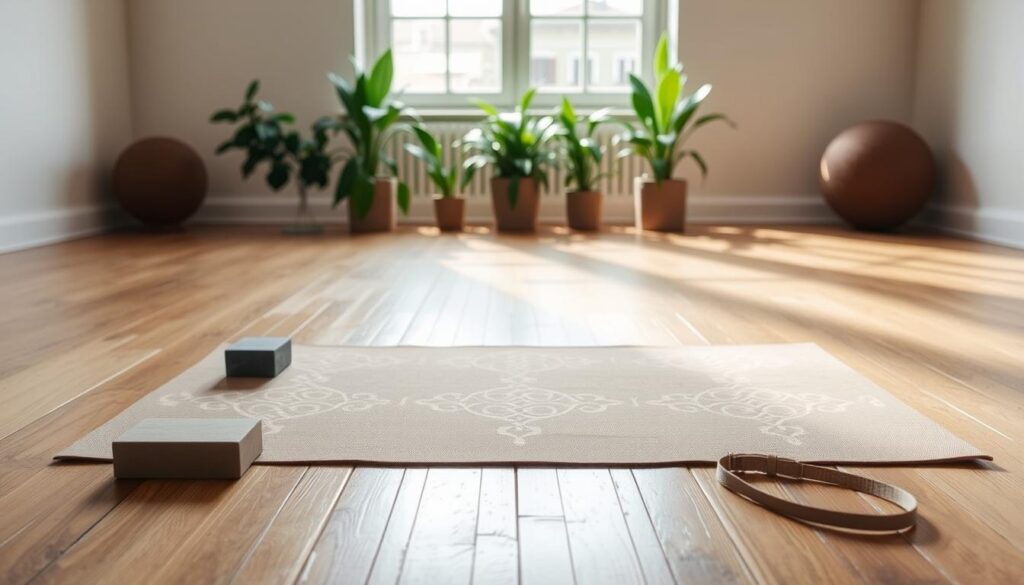
You only need enough room to lie down with your arms comfortably beside you. Choose a clean, quiet area where you can move without hitting furniture or slipping.
Keep a folded blanket or firm cushion nearby for support. If you enjoy a calming atmosphere, natural light, a plant, or soft background sounds can help make your space inviting. Candles and fragrances are optional; avoid strong scents if they trigger headaches or breathing discomfort.
Choose a comfortable surface
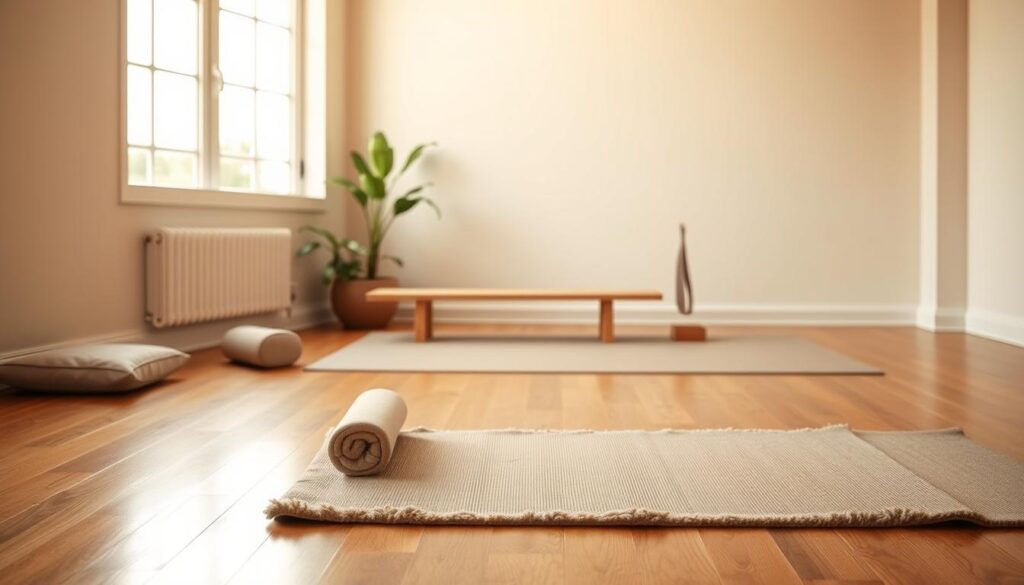
Because much of this flow takes place on your back or knees, the surface beneath you matters. A mat should stay reasonably flat and provide enough grip that your hands and feet don’t slide during movement.
The Gaiam Premium 6mm Yoga Mat is one option for this type of floor practice. Its textured surface is designed for traction, while the 6mm thickness adds cushioning beneath your knees and back. It may feel softer than some people prefer for standing balance work.
You can skip buying a new mat if your existing surface is stable, clean, and comfortable. A folded blanket can add cushioning for certain poses, but it should not slide around beneath your hands or feet.
- ALIGNMENT YOGA MAT: 6mm thick premium yoga mat offers an alignment system that is printed on the mat to help keep you in position on all poses
- STICKY NON-SLIP TEXTURE: Yoga mat features a textured sticky non-slip surface for excellent traction and superior grip
- NON TOXIC & 6P FREE PVC yoga mat is a healthier choice for you and the planet and free of DEHP, DBP, BBP, DINP, DIDP and DNOP (Note: For best results unroll and air out your mat for 2 3 days before use a harmless odor may be present when unwrapped)
- FREE YOGA CLASS: Yoga mat purchase includes a free bonus downloadable yoga workout to help get you started
Your Step-by-Step 10-Minute Grounding Yoga Flow
This routine starts with relaxed movements and gradually introduces light muscle work before returning to stillness. Each step takes about one minute, including the transition into the next position.
Move at your own pace rather than rushing to finish every repetition. If a movement feels difficult, spend the remaining time breathing comfortably or resting in an easier position.
- Minute 1 — Arrive in Shavasana: Lie on your back with arms relaxed and palms facing upward. Take three comfortable breaths. Notice where your head, shoulders, hips, and heels meet the mat. If comfortable, gently stretch your arms overhead before relaxing them again.
- Minute 2 — Hug your knees in Apanasana: Bring one knee toward your chest, then the other. Hold behind your thighs or around your shins without pulling hard. Rock gently from side to side, then make small knee circles if they feel comfortable.
- Minute 3 — Gentle core activation: Keep one knee bent while slowly extending the opposite leg along the mat. Switch sides for two or three repetitions each. For more effort, lift the extended foot slightly or perform a small nose-to-knee curl without pulling your neck.
- Minute 4 — Leg mobility and a gentle twist: With your back supported, raise one bent leg and slowly circle the ankle. Switch legs. If comfortable, try a few slow bicycle motions. Then bring your knees toward one side for a gentle spinal twist, return to center, and repeat on the other side. Avoid forcing your legs toward the floor.
- Minute 5 — Cat-Cow: Roll onto your side and move carefully onto your hands and knees. Place hands beneath shoulders and knees beneath hips. Inhale while gently lifting your chest into Cow Pose. Exhale as you round your back into Cat Pose. Repeat slowly without pushing into pain.
- Minute 6 — Sit tall in Dandasana: Move into a seated position with your legs extended. Keep your knees slightly bent if your hamstrings feel tight. Sit on a folded blanket if your lower back rounds uncomfortably. Lengthen through your spine, relax your shoulders, and gently flex your feet.
- Minute 7 — Supported Paschimottanasana: From sitting, hinge forward slightly at your hips while keeping your back comfortable. Rest your hands on your legs or use a strap around your feet. You don’t need to touch your toes. Take several easy breaths before sitting upright again.
- Minute 8 — Gentle seated spinal twist: Bend one knee and turn your upper body slightly toward that side. Keep your spine tall and avoid using your arms to force the twist. Hold for two or three breaths, then switch sides. This is an easier alternative to a deep Ardha Matsyendrasana.
- Minute 9 — Sukhasana and shoulder release: Sit cross-legged or choose another comfortable seated position. Gently turn your head from side to side, shrug your shoulders, and make a few slow shoulder circles. Avoid large, forceful neck rotations.
- Minute 10 — Breathe and close: Rest your hands on your knees or bring your palms together in Namaskar Mudra. Breathe comfortably and notice the contact between your body and the floor. Finish by slowly opening your eyes and observing how you feel.
Beginner option: Skip the more demanding leg exercises and spend extra time with knee hugs, Cat-Cow, or seated breathing. This keeps the practice focused on gentle movement rather than muscle fatigue.
Make Seated Forward Folds More Comfortable
Paschimottanasana can feel difficult when your hamstrings are tight. Instead of rounding your entire back to reach your feet, slightly bend your knees and tip forward from your hips. A small, comfortable stretch is enough.
A yoga strap gives your hands somewhere to hold without reaching beyond your comfortable range. Place it around the balls of your feet and hold an end in each hand. Keep the tension light and avoid using the strap to pull yourself deeper into the pose.
The Gaiam 8-Foot Yoga Strap in Black has an adjustable metal D-ring buckle and is designed for stretching exercises. Its longer length may help when your feet are difficult to reach, although it isn’t necessary for this routine.
A long towel can work instead. Whichever you use, keep the material secure, avoid wrapping it tightly around your body, and release the stretch if you feel sharp or shooting pain.
- YOGA STRAP: An essential yoga accessory and prop to help you deepen stretches and improve flexibility while allowing your shoulders to relax for proper alignment - if you feel tight, grab a strap and don’t risk injury by over-extending
- STRETCH STRAP: Use the strap to reach limbs more easily on challenging positions and to hold poses and stretches for longer - take your practice to the next level by using a yoga strap to deepen and extend stretches to gain more flexibility
- ADJUSTABLE METAL D-RING BUCKLE: Features an easy-release double ring metal cinch buckle that allows you to shorten the strap and to make a secure loop band that is secure and will not budge so that you can concentrate on your stretching without slipping
- DURABLE FABRIC BLEND: Straps are constructed of a durable high-quality fabric blend of polyester that will not fray or break and is made to last you for years to come - easily rolls up and fits in your yoga mat bag or tote
Two Breathing Techniques for Grounding
Your breathing can be the simplest part of the routine to practice anywhere. You don’t need special equipment or complicated counting. The important part is keeping your breath comfortable and unforced.
Slow breathing and focused attention are commonly used in relaxation techniques. The NCCIH’s overview of stress explains that slow, deep breathing may help reduce some stress-related responses, although the size and consistency of benefits vary.
1. Dirga Pranayama: Three-part breathing
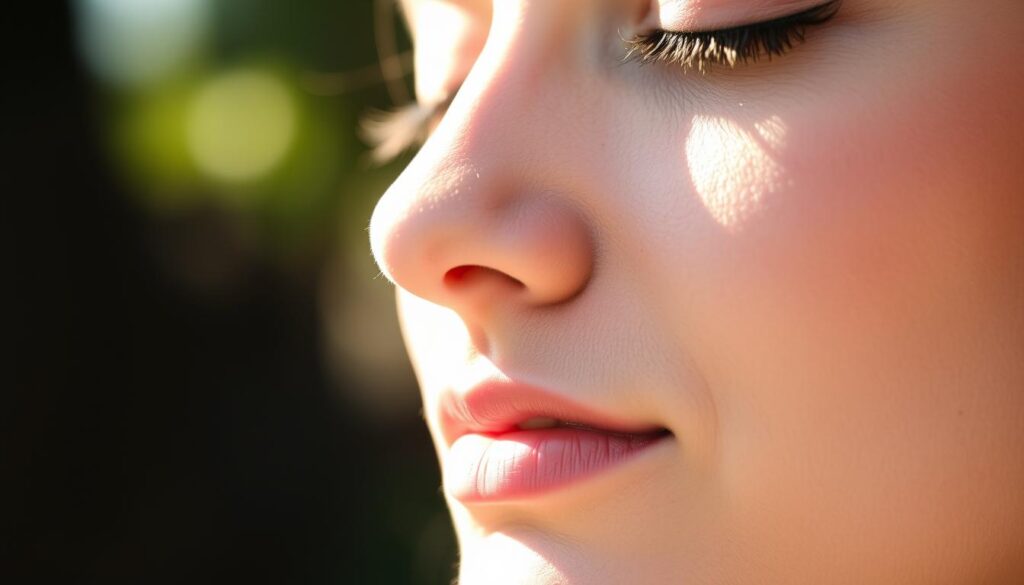
Dirga is often called three-part breath. It encourages you to notice the movement of your belly, ribs, and upper chest as you breathe.
- Sit comfortably or lie on your back.
- Place one hand on your belly and the other on your chest.
- Inhale gently, noticing your belly and ribs expand, followed by a small movement in your upper chest.
- Exhale slowly and allow your chest, ribs, and belly to relax.
- Repeat for three to five comfortable breaths.
Don’t try to fill your lungs to their maximum capacity. If deep breathing feels uncomfortable, return to your normal breathing rhythm.
2. Sama Vritti: Equal breathing
Sama Vritti uses an even rhythm for inhaling and exhaling. For example, breathe in for four comfortable counts and breathe out for four counts.
If four counts feel too long, try three counts in and three counts out. Continue for four to six rounds while keeping your shoulders relaxed. You can breathe through your nose if comfortable or adjust the method to suit your breathing needs.
Neither technique requires breath-holding. Stop or return to normal breathing if you feel dizzy, short of breath, or more anxious. Some people find that simply observing natural breathing feels better than controlling it.
Safe Modifications for Knees, Hips, Back, and Wrists
A grounding practice should feel supportive, not like a flexibility test. Your range of motion may change from day to day, and a comfortable variation is more useful than forcing the deepest version of a pose.
Small changes in your position can reduce pressure on sensitive areas. Try these adjustments when a movement feels uncomfortable.
- Sensitive knees: Place a folded blanket under your knees during Cat-Cow. For seated poses, change your leg position or sit in a chair.
- Tight hips: Elevate your hips on a firm cushion in Sukhasana. Let your knees rest comfortably rather than pressing them downward.
- Lower-back discomfort: Keep both knees bent during core exercises and skip straight-leg lowers if your back arches or hurts.
- Wrist sensitivity: Reduce the time spent on your hands, try comfortable forearm support, or replace Tabletop with gentle seated spinal movements.
- Balance concerns: Use a chair or wall for optional standing poses instead of trying to steady yourself without support.

When a yoga block can help
In seated stretches, a block can offer a higher place to rest your hand. You can also place suitable support beneath a bent knee in a comfortable seated pose when the leg doesn’t easily reach the floor.
The Gaiam EVA Foam Yoga Block has a supportive foam construction and beveled edges. It can be useful for gentle positioning, but it shouldn’t be treated as a way to force your body deeper into a stretch.
Keep the block stable on the floor before placing weight on it. For a softer option beneath a knee, use a folded towel or cushion. A block isn’t required to complete the ten-minute flow.
- Yoga Blocks for Stability Plus Balance - The Gaiam Essentials yoga blocks help provide the stability and balance needed in your practice to help with optimal alignment, deeper poses and increased strength. We have a variety of colors to match your style.
- Durable Supportive Foam - These lightweight and supportive foam blocks are constructed of a durable foam with a non-slip surface and beveled edges for easy gripping. These blocks are denser than standard EVA blocks.
- Extend and Deepen Stretches - Blocks make for the ideal yoga prop and companion as they are an important tool in your practice to help extend, support, and deepen your stretches while also working to increase your range of motion.
- Modify and Align - Use under your hands, feet, or seat during meditation to ensure the proper alignment needed for support and modifying poses to suit your level of flexibility. Our yoga blocks are a great compliment to your meditation accessories.
When to pause or get individual guidance
Stop a movement if it causes sharp pain, numbness, dizziness, or worsening symptoms. Don’t force your joints into positions that feel unstable. People who are pregnant, recovering from surgery, managing significant back or joint conditions, or dealing with balance problems may need individual modifications.
If you’re new to yoga or have a condition that limits your movement, learning the poses with a qualified instructor may help you practice more safely. The NCCIH’s yoga safety guidance also recommends extra care for older adults and people with existing health conditions.
How to Take Grounding Off the Mat
You don’t have to wait for your next yoga session to practice grounding. A few seconds of focused attention can help you notice tension and reconnect with what’s happening around you.
Try these everyday habits when you need a short pause:
- Standing reset: Stand with both feet on the floor, soften your knees, and take three comfortable breaths.
- Mindful walking: Walk at an easy pace and notice how each foot meets the ground.
- Nature pause: Spend a minute outdoors noticing natural sounds, colors, and the air around you.
- Before eating: Put your phone aside, take a breath, and pay attention to the first few bites.
- Desk break: Relax your jaw, lower your shoulders, and gently move your neck without forcing it.
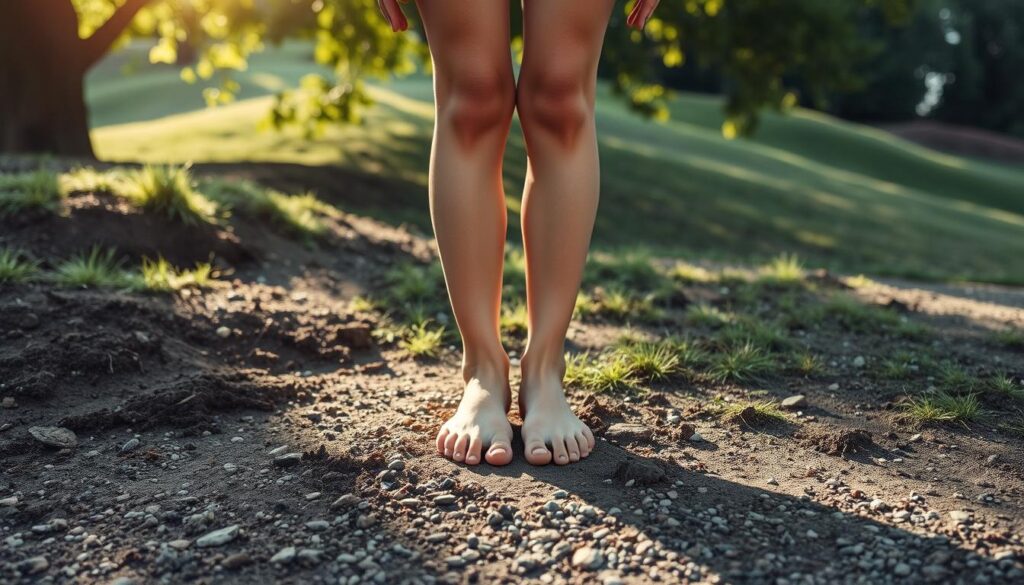
If you enjoy standing barefoot on grass, choose a clean, safe surface free from sharp objects. Shoes are perfectly fine, too. The useful grounding exercise is noticing your physical surroundings; direct skin contact with the earth has not been established as necessary for stress relief.
Choose one small habit that fits naturally into your day. Practicing at a familiar time, such as after waking up or before your evening shower, may make it easier to remember.
If ten minutes feels too long on a busy day, a shorter breathing or movement break is still an option. You can return to the complete flow whenever your schedule allows.
Frequently Asked Questions
Can ten minutes of yoga really help with stress?
Ten minutes can provide an opportunity for gentle movement, focused breathing, and relaxation. Some people notice an immediate sense of calm, while others need more practice. Research on yoga suggests possible stress-management benefits, but it doesn’t guarantee that every short session will produce a measurable change.
Is this grounding yoga flow suitable for beginners?
Yes, the basic routine includes beginner-friendly movements and easier variations. Skip challenging leg exercises, keep stretches gentle, and rest when needed. People with injuries or medical conditions may need personalized guidance.
Do I need a yoga mat, strap, or bolster?
No. A stable, comfortable surface is the main requirement. A mat can add traction and cushioning, a strap can help with seated stretches, and a cushion can support the hips. Use household alternatives when they provide safe, comfortable support.
Should I practice grounding yoga in the morning or evening?
Either time can work. Morning sessions may provide a calm start to the day, while evening sessions can create a quiet transition before bed. Choose a time you’re likely to maintain consistently.
Can grounding yoga help with anxiety?
Yoga and breathing exercises may help some people manage stress and anxiety symptoms. However, research has not established yoga as a replacement for effective treatment of anxiety disorders. Choose gentle practices that feel comfortable rather than forcing relaxation.
Conclusion: Make Ten Minutes Your Daily Reset
A grounding yoga flow doesn’t need to be complicated. Begin with a few quiet breaths, move gently through your hips and spine, and finish by noticing how your body feels.
The most helpful routine is one you can repeat comfortably. Use a cushion or other support when needed, skip movements that cause discomfort, and focus on steady breathing instead of perfect poses.
Try this ten-minute sequence at a convenient time over the next several days. Notice which movements help you feel comfortable and which need adjusting. With a simple, flexible routine, you can make mindful movement a regular part of your day.