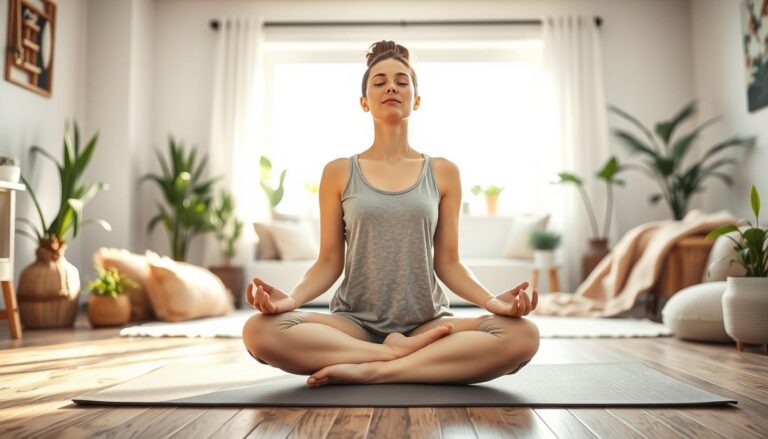


Can paying attention to your breathing while walking, stretching, or lifting weights help you feel less stressed and move with better control? Research suggests it can. But the science behind mindful movement is more interesting than simply lowering a stress hormone.
Mindful movement combines physical activity with attention to your breath, posture, and body sensations. Practices such as yoga, tai chi, walking meditation, and mindful strength training may help reduce stress and improve body awareness. Some research also shows changes in cortisol, although results vary.
You don’t need special equipment, complicated routines, or an hour of free time to begin. This guide explains what the research actually shows, how mindful movement relates to strength, and how to practice it safely in everyday life.
Key Takeaways
- Stress relief: Mindful movement may ease stress, anxiety, and negative emotions by combining attention with physical activity.
- Cortisol regulation: Research on mindfulness and mind-body practices shows possible cortisol reductions, but results are not guaranteed.
- Better body awareness: Paying attention to movement helps you notice posture, effort, tension, and fatigue.
- Strength development: Mindfulness can support controlled exercise, but building muscle still requires suitable resistance and gradual progression.
- Easy to begin: Walking, stretching, yoga, and simple strength exercises can all become mindful practices, even in short sessions.
Helpful Products at a Glance
For gentle floor stretching and yoga, the Gaiam Thick Yoga Mat provides extra cushioning, although its soft surface may feel less stable during balance poses.
- Extra-Thick Cushioning for Joint Comfort : Made with 10mm (2/5") high-density NBR foam, this mat delivers plush cushioning that helps reduce pressure on knees, hips, and joints—ideal for beginners, low-impact yoga, Pilates, stretching, floor exercises, and home workouts on hard surfaces.
- Comfort-Focused Surface for Controlled Movement : Textured foam surface helps reduce slipping on most hard floors during dry workouts and everyday exercise. The softer, cushioned feel prioritizes comfort and shock absorption over firmness, making it a great choice for floor-based and low-impact routines.

For beginners adding resistance to controlled strength exercises, the THERABAND Non-Latex Resistance Bands Set offers three resistance levels without requiring heavy weights.
- BEGINNER-FRIENDLY STRENGTH TRAINING TOOL: Designed for safe, low-impact resistance workouts at home or on-the-go, THERABAND latex resistance bands are ideal for beginners improving flexibility, toning muscles, or recovering after injury
- COLOR-CODED FOR EASY PROGRESS TRACKING: Each band measures 5 feet long x 4 inches wide; includes Yellow (3–4.3 lbs), Red (3.7–5.5 lbs), and Green (4.6–6.7 lbs) bands with clearly marked levels that help guide gradual strength gains and tailored routines

What Is Mindful Movement?
Mindful movement means paying attention to what your body is doing while you move. Instead of exercising while thinking about your next task, you notice your breathing, muscles, balance, and surroundings.
The goal isn’t perfect concentration. Your attention will naturally wander. Each time you gently return it to your movement, you’re practicing mindfulness.
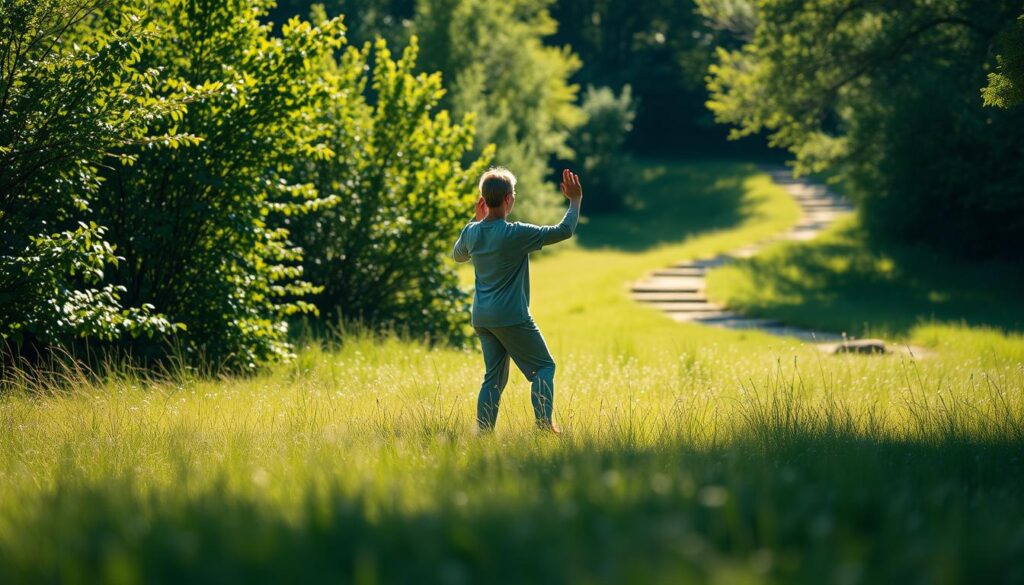
Three Main Parts of Mindful Movement
- Breath awareness: Notice the natural rhythm of your breathing as your body moves.
- Body awareness: Pay attention to muscle effort, joint position, balance, and areas of tension.
- Present-moment attention: Focus on what you’re doing without judging every movement as good or bad.
For example, during a squat, you might notice pressure through your feet, movement at your knees and hips, and the effort of standing back up. During walking, you might focus on your footsteps and breathing.
Slower movement can make these details easier to notice, especially for beginners. However, mindful movement doesn’t always have to be slow. You can bring awareness to running, cycling, and strength training, too.
The Science Behind Mindful Movement and Cortisol
Cortisol is a hormone produced by your adrenal glands. It helps regulate energy, blood sugar, inflammation, and your response to challenges.
Cortisol isn’t a harmful hormone that needs to stay low. Your body naturally releases different amounts throughout the day. Levels are generally higher around waking and change with sleep, illness, emotional stress, and exercise.
The concern is not every temporary increase. Long-lasting stress can affect several body systems, and researchers are studying whether mindfulness practices help regulate these responses.

How Breathing and Attention May Change Your Stress Response
When you’re anxious, you may breathe faster, tighten your shoulders, or clench your jaw without noticing. Mindful movement helps you recognize these reactions and respond more gently.
Comfortable, slower breathing may support the parasympathetic nervous system, which plays an important role in rest and recovery. Gentle movement can also provide a useful focus when your thoughts feel overwhelming.
These effects may help reduce feelings of stress. However, a calmer feeling does not automatically mean your cortisol has fallen. Researchers must measure the hormone directly to establish that.
What Studies Actually Show About Cortisol
A 2024 systematic review and meta-analysis examined 58 studies involving 3,508 participants. Stress-management interventions showed an overall beneficial effect on cortisol measurements, with mindfulness and relaxation approaches showing particularly promising results.
A separate 2026 meta-analysis examined 39 mindfulness-based stress reduction studies involving 2,059 participants. Researchers found lower cortisol compared with control conditions, although the size of the effect varied across studies.
These results support mindfulness as a possible stress-management tool. They do not prove that every mindful walk or yoga session lowers cortisol, or that combining mindfulness with exercise always produces a greater hormonal benefit.
More importantly, a reduction in perceived stress is not the same as a percentage reduction in cortisol. Claims that mindful movement reliably lowers stress hormones by 33% are too specific for the available evidence.
What Research Says About Mood, Body Awareness, and Strength
Research suggests mindful movement may improve how people feel and how well they notice their bodies. Evidence for directly increasing muscle strength or preventing exercise injuries is less certain.
Better Mood and Less Negative Emotion
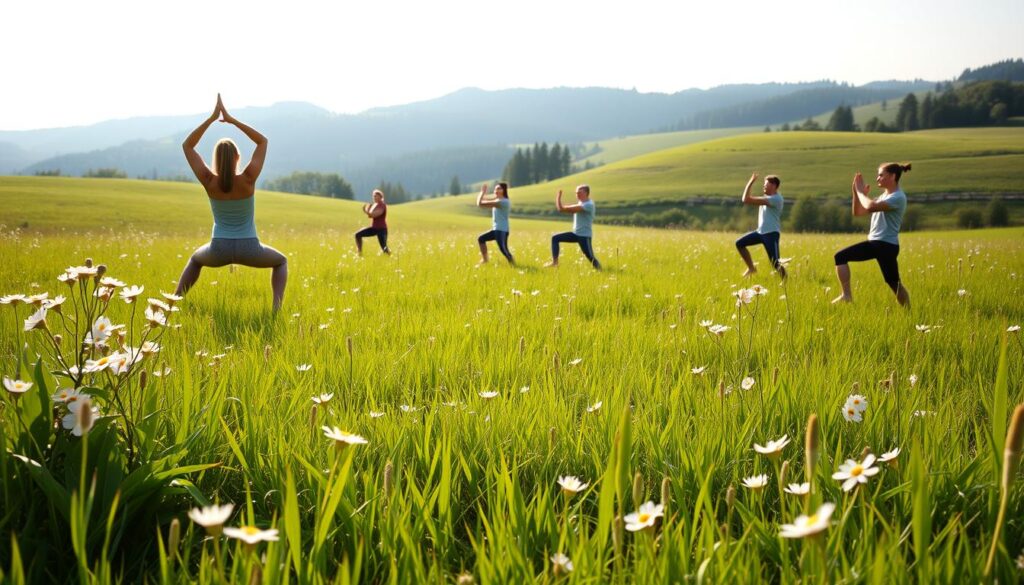
In a 2018 experience-sampling study, Yang and Conroy found that college students reported less negative emotion while moving mindfully than while sitting. This was an observational finding, so it doesn’t prove mindful movement alone caused the difference.
A later eight-week mindful movement program involving 38 university students found improvements in positive mental health and several measures of body awareness. The 2024 study did not include a control group, which limits how confidently the changes can be linked to the program.
Improved Awareness of Body Signals
One especially useful finding involves interoception, meaning your ability to notice internal body sensations, such as breathing, muscle tension, or a racing heartbeat.
Greater awareness may help you recognize when you’re pushing too hard, becoming tense, or need to adjust a movement. This can make exercise feel more controlled and manageable.
Does Combining Mindfulness and Exercise Work Better?
A 2026 review of randomized trials found that programs combining mindfulness and physical activity may reduce stress-related outcomes compared with general or inactive control groups.
However, researchers could not establish that combined programs consistently work better than well-designed mindfulness-only or exercise-only programs.
For strength training, mindfulness is best viewed as a supporting skill. It may help you pay attention to technique and effort, while muscle and strength gains still depend mainly on appropriate training, recovery, and progressive overload.
Mindful Movement vs. Yoga: What’s the Difference?
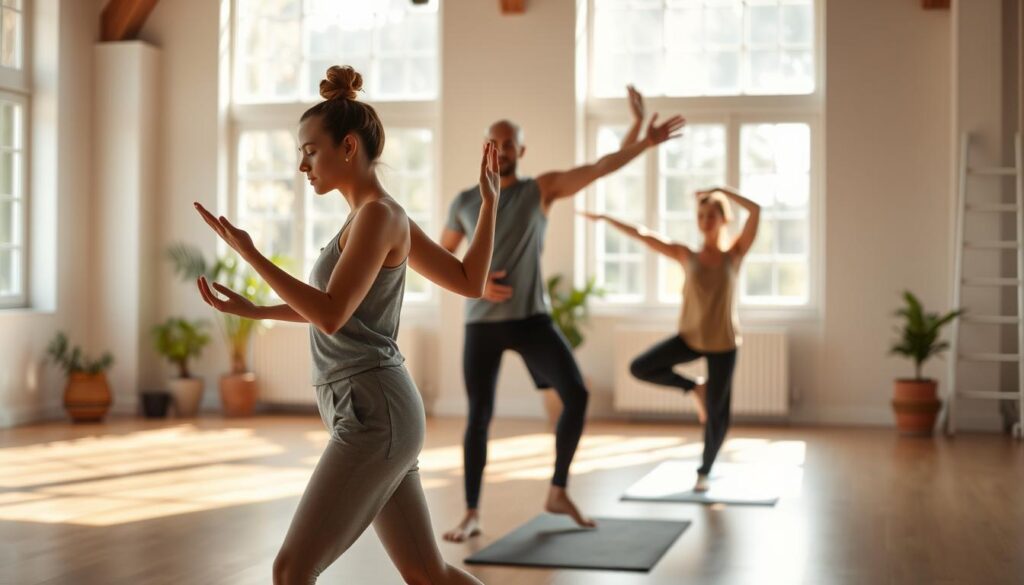
Yoga is one popular way to practice mindful movement, but the two terms aren’t interchangeable. Mindful movement is a broader approach that can be applied to many physical activities.
| Feature | Yoga | Mindful Movement |
|---|---|---|
| Activities | Yoga poses, breathing, and sometimes meditation | Walking, yoga, tai chi, stretching, lifting, and more |
| Main focus | Varies by yoga style and class | Present-moment awareness during movement |
| Speed | Slow to vigorous | Slow, moderate, or fast |
| Equipment | Often a mat or optional props | Depends on the activity |
Gentle hatha or restorative yoga often provides time to notice breathing and body position. Faster yoga classes may emphasize physical fitness, although they can still include mindfulness.
If you prefer walking or lifting weights, you don’t need to start yoga to experience the practice. Choose an activity that fits your needs and bring attention to it.
How to Practice Mindful Breathing During Movement
You can begin with just two minutes. The following routine works while standing, seated, or preparing for exercise.
- Choose a comfortable position. Relax your shoulders and allow your body to settle.
- Notice your breathing. Feel the air moving in and out without trying to control every breath.
- Pick one attention anchor. Focus on your feet, hands, posture, or breathing.
- Begin a simple movement. Try shoulder rolls, gentle marching, or slowly standing from a chair.
- Return when attention wanders. Notice the distraction and gently focus on your next movement.
- Check how you feel. After two minutes, notice any change in breathing, tension, or mood.
You can breathe in as you prepare and breathe out during a comfortable movement. However, you don’t need to match every step or repetition to one complete breath.
Avoid forcing deep breaths or holding your breath unnecessarily. If you become dizzy or uncomfortable, return to normal breathing and pause.
Mindful Walking and Running: Turn Everyday Steps Into Practice
Walking is one of the easiest places to begin because it requires little preparation. Your footsteps provide a natural point of focus.

A Simple Five-Minute Mindful Walking Routine
- Minute 1: Walk naturally and notice your breathing and posture.
- Minute 2: Pay attention to how each foot meets and leaves the ground.
- Minute 3: Notice your arms, shoulders, and jaw. Release unnecessary tension.
- Minute 4: Bring awareness to sounds, light, and the path ahead.
- Minute 5: Return attention to your whole-body walking rhythm.
If comfortable, try breathing in for about three steps and out for three or four. Adjust the rhythm whenever necessary. There is no need to force a particular breathing pattern.
During running, use short awareness checks rather than concentrating intensely on every foot strike. Notice your effort, breathing, and posture while keeping your attention on traffic, terrain, and other people.
For more ideas, explore this guide to running and meditation.
Yoga, Tai Chi, and Qigong for Mindful Movement
Yoga, tai chi, and qigong use movement and attention in different ways. Each can offer a manageable practice for people who prefer more structure than ordinary walking.
Gentle Yoga for Flexibility and Awareness
Try five to ten minutes of easy yoga poses, such as cat-cow, a supported forward fold, or a comfortable resting position. Focus on how each position feels instead of trying to stretch farther.
Hold comfortable positions for a few natural breaths. When changing poses, notice how your weight shifts and which muscles are working. Stop before a stretch becomes painful.
When a Cushioned Yoga Mat May Help
Floor-based movements can feel uncomfortable on hard surfaces, especially when resting on your knees or sitting for several minutes. A folded blanket or towel can provide basic cushioning without requiring a purchase.
For people who practice floor stretching regularly, the Gaiam Thick Yoga Mat with Carrying Strap is another option. Its 10 mm NBR foam provides a soft surface for yoga, Pilates, and gentle mobility work. The extra cushioning may feel comfortable during kneeling exercises, but it can be less steady for challenging standing balances.
- Extra-Thick Cushioning for Joint Comfort : Made with 10mm (2/5") high-density NBR foam, this mat delivers plush cushioning that helps reduce pressure on knees, hips, and joints—ideal for beginners, low-impact yoga, Pilates, stretching, floor exercises, and home workouts on hard surfaces.
- Comfort-Focused Surface for Controlled Movement : Textured foam surface helps reduce slipping on most hard floors during dry workouts and everyday exercise. The softer, cushioned feel prioritizes comfort and shock absorption over firmness, making it a great choice for floor-based and low-impact routines.
- Soft Foam Feel with Easy Care : Crafted from low-odor NBR foam that’s easy to maintain—simply wipe clean with a damp cloth. Initial foam odor may be present when first opened and typically fades after airing out for 24–48 hours.
- Versatile for Home Fitness & Recovery : Popular for yoga, Pilates, stretching, physical therapy, core workouts, and general home fitness. The extra-thick foam provides comfort on wood, tile, or concrete floors and is well-suited for regular bodyweight use.
Choose a firm, level surface and make sure your mat stays flat. If standing balance is your main goal, a thinner, firmer mat or stable bare floor may suit you better.
Tai Chi and Qigong for Gentle Coordination
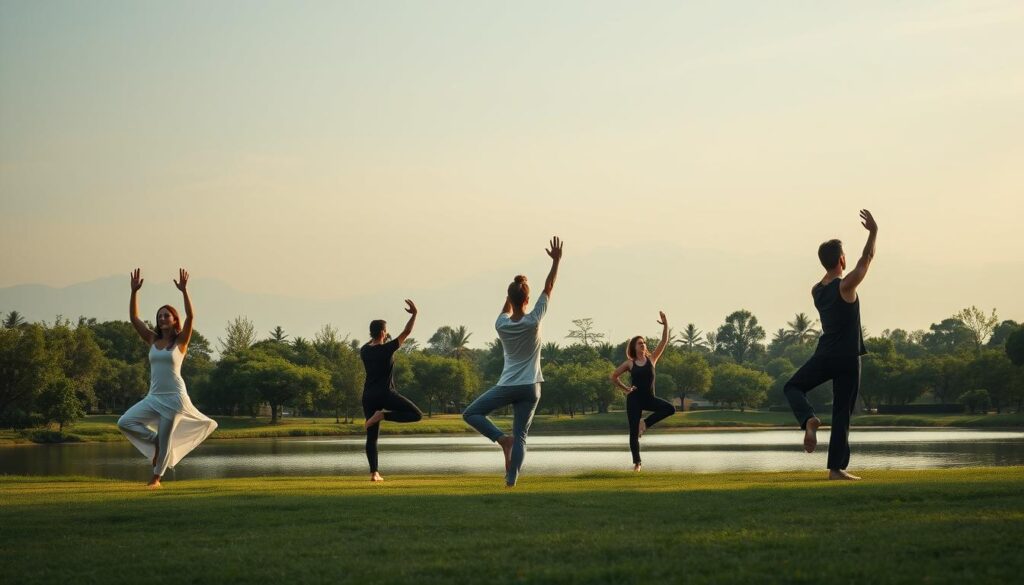
Tai chi uses controlled weight shifts, coordinated steps, and flowing arm movements. The practice can challenge balance and coordination without requiring fast movements.
Qigong often combines repeated gentle movements with breathing and focused attention. For example, you might slowly raise your arms while breathing comfortably and lower them while relaxing your shoulders.
Start with five to fifteen minutes and gradually increase the time if you enjoy it. Beginners can use a stable chair nearby for support. A qualified instructor can help with balance and movement technique.
A Gentle Mindful Stretching Routine for Recovery
Mindful stretching can help you notice tight areas and move through a comfortable range of motion. It may ease feelings of stiffness, although stretching alone doesn’t guarantee faster muscle recovery.
Try this short sequence after a light warm-up or during a movement break.
| Movement | How to Practice | Suggested Amount |
|---|---|---|
| Seated spinal movement | Gently arch and round your back while breathing naturally. | 6–8 slow repetitions |
| Seated forward fold | Hinge slightly from the hips without pulling yourself downward. | 20–30 seconds |
| Shoulder stretch | Bring one arm across your chest and support it gently. | 20–30 seconds per side |
| Seated figure-four stretch | Cross one ankle over the opposite thigh if comfortable. | 20–30 seconds per side |
| Ankle mobility | Slowly point and flex your feet, then make gentle circles. | 8–10 repetitions each way |
While stretching, notice where you feel mild tension and whether that feeling changes. Keep breathing comfortably and avoid bouncing, forcing a position, or stretching through sharp pain.
A seated version can work well when getting down to the floor is difficult. You can also explore this stretching guide for more background.
Mindful Strength Training: Better Attention During Weightlifting
Mindfulness can be useful during strength training because it encourages you to notice effort, breathing, balance, and movement quality. That information can help guide your exercise choices.
Still, paying attention does not replace progressive overload. To become stronger, your muscles need appropriate resistance and enough recovery. Mindfulness supports how you train rather than acting as a separate muscle-building shortcut.
Try Mindful Squats
- Stand with your feet at a comfortable width.
- Notice your weight pressing through the floor.
- Take a comfortable breath and gently brace your trunk.
- Bend at your hips and knees to a depth you can control.
- Stand up smoothly, breathing out during the effort when appropriate.
- Pause and check how your hips, knees, back, and breathing feel.
Start with bodyweight squats or sit-to-stands. Use a chair for support if needed. Once the movement feels comfortable, you can gradually increase repetitions or resistance.
Using Resistance Bands for Mindful Strength Work
Resistance bands are a practical way to add a pulling or pushing challenge without a large collection of weights. During a band row, for example, you can notice your shoulder blades moving, your elbows bending, and the effort needed to return the band slowly.
The THERABAND Non-Latex Resistance Bands Set includes three flat bands with different resistance levels: yellow, red, and green. The 5-foot bands can be used for controlled rows, arm exercises, and other suitable beginner movements. They do not have built-in handles, so a secure grip and appropriate setup matter.
- BEGINNER-FRIENDLY STRENGTH TRAINING TOOL: Designed for safe, low-impact resistance workouts at home or on-the-go, THERABAND latex resistance bands are ideal for beginners improving flexibility, toning muscles, or recovering after injury
- COLOR-CODED FOR EASY PROGRESS TRACKING: Each band measures 5 feet long x 4 inches wide; includes Yellow (3–4.3 lbs), Red (3.7–5.5 lbs), and Green (4.6–6.7 lbs) bands with clearly marked levels that help guide gradual strength gains and tailored routines
- PORTABLE & VERSATILE WORKOUT SET: Lightweight flat bands fit in gym bags, purses, or desk drawers; perfect for Pilates, yoga, physical therapy, stretching, or fitness training anywhere
- TARGETS KEY MUSCLE GROUPS: Engages upper and lower body through resistance moves like squats, rows, and arm raises and supports posture correction and enhanced range of motion without heavy weights
Choose resistance that allows smooth, controlled repetitions. Inspect bands for damage before use, avoid stretching them toward your face, and use secure attachment points when an exercise requires one.
If you already own dumbbells or prefer bodyweight training, you don’t need another tool. The same mindful attention works with push-ups, squats, and familiar weightlifting exercises.
How to Apply Mindfulness During HIIT
High-intensity interval training can make breathing and technique harder to monitor. Rather than trying to stay relaxed throughout a demanding workout, use brief checks before and after each interval.
- Before an interval: Check your posture and prepare for the movement.
- During exercise: Keep technique controlled and notice unusual strain.
- During recovery: Allow your breathing to settle naturally.
- Before continuing: Reduce speed or difficulty when fatigue affects your form.
Intense exercise can temporarily increase cortisol as part of a normal physical response. This does not mean the workout is harmful or that mindfulness has failed.
Mindful Movement for Anxiety, Trauma, and ADHD
Sitting quietly isn’t comfortable for everyone. Some people feel more restless or distressed when they try to meditate without moving.
For these individuals, gentle activity can offer a more concrete focus. Paying attention to footsteps, arm movements, or contact with a chair may feel easier than concentrating on thoughts or breathing alone.
Practical Ways to Begin
- For anxiety: Try gentle walking while noticing your feet and surroundings.
- For attention difficulties: Use predictable, short movement sequences with one simple cue at a time.
- For trauma sensitivity: Keep your eyes open if preferred, stay aware of the room, and choose movements that feel comfortable and under your control.
If focusing on your body brings up distressing sensations or memories, shift attention to external sounds or objects, or stop the practice. You do not need to push through discomfort to make progress.
Mindful movement may be a helpful addition to care, but it is not an established replacement for treatment of anxiety disorders, PTSD, or ADHD. Research involving different mental health conditions remains uneven, and individual responses vary.
Adapting Mindful Movement During Illness or Recovery
Mindful movement can sometimes be adapted to sitting or lying down, but medical recovery requires more than simply choosing gentle exercises.
After surgery, during hospitalization, or while managing a significant medical condition, the appropriate movements depend on your diagnosis, restrictions, balance, and recovery stage.
Chair-Based Options
When seated exercise is appropriate, simple activities may include shoulder rolls, wrist movements, gentle ankle pumps, and comfortable breathing. Use a stable chair, keep your movements small, and avoid positions that produce pain or dizziness.
Bed-Based and Post-Surgery Movement
Some patients may be encouraged to perform ankle pumps or other approved movements while resting in bed. Others may need temporary limits on twisting, bending, lifting, or certain positions.
Do not automatically use knee drops, spinal twists, child’s pose, or legs-up-the-wall after surgery or during hospitalization. Ask the treating clinician or physical therapist which movements are appropriate and when to begin them.
A practical approach is to pair attention with movements already included in your recovery plan. Notice breathing, comfort, and effort while following the prescribed range and number of repetitions.
Build a Weekly Mindful Movement Routine
You don’t need a fixed 20–45-minute session to benefit from mindful attention. Begin with a few minutes and gradually build a routine that suits your health, schedule, and exercise goals.
The following example balances calm movement, mobility, and strength without treating mindfulness as a separate workout requirement.
| Day | Suggested Activity | Mindfulness Focus |
|---|---|---|
| Monday | 15–20-minute walk | Footsteps and breathing |
| Tuesday | 20–30-minute strength workout | Posture, effort, and controlled repetitions |
| Wednesday | 10–15-minute gentle yoga or stretching | Comfortable movement and body sensations |
| Thursday | 20-minute walk or easy run | Breathing rhythm and surroundings |
| Friday | 20–30-minute strength workout | Balance, technique, and fatigue |
| Saturday | 10–20-minute tai chi or qigong session | Weight shifts and smooth transitions |
| Sunday | Rest or gentle mobility | Relaxation and recovery |
This is a starting example, not a required program. You can practice awareness during an existing workout without adding extra exercise time.
For general physical health, the CDC recommends that most adults aim for at least 150 minutes of moderate-intensity aerobic activity weekly, along with muscle-strengthening activities on at least two days. Mindful movement can be part of reaching these goals, depending on the activity and intensity.
Try keeping a brief record of your sessions. Note the activity, approximate time, how you felt, and anything you noticed about your movement. Over several weeks, use those observations to adjust your routine.
If you want more equipment-free exercise ideas, see these 10 free ways to stay fit without a gym.
Common Mistakes to Avoid
Mindful movement should make exercise more manageable, not turn it into another task you must perform perfectly.
- Forcing slow breathing: Let breathing respond naturally to your activity instead of following an uncomfortable rhythm.
- Ignoring pain: Awareness does not mean continuing through sharp or worsening discomfort.
- Using excessive resistance: Choose loads that allow controlled technique rather than struggling to complete every repetition.
- Expecting immediate cortisol changes: Feeling calmer is useful, but it isn’t proof of a specific hormone reduction.
- Overmonitoring your body: Constantly checking every sensation can become stressful. Shift between body awareness and your surroundings.
- Trying to be perfectly mindful: Losing focus is normal. Returning your attention is part of the practice.
Choose movements that fit your abilities. Stop exercising if you experience chest pain, fainting, severe breathlessness, or other alarming symptoms, and seek appropriate medical care.
Frequently Asked Questions
Does mindful movement really lower cortisol?
Some research on mindfulness and mind-body exercise suggests beneficial changes in cortisol. However, studies vary in their methods and results. A mindful movement session cannot be assumed to lower cortisol by a fixed amount.
Can mindful movement build muscle and strength?
Mindfulness alone doesn’t build muscle. Strength gains come from appropriate resistance training and recovery. Paying attention to your movement may help you manage effort and maintain controlled technique during that training.
Is mindful movement better than ordinary exercise?
Not necessarily. Both can support physical and mental health. Current research does not consistently show that adding mindfulness produces greater benefits than every well-designed exercise program.
How long should beginners practice?
Start with two to five minutes if that feels manageable. You can gradually increase to 10–20 minutes or incorporate brief attention checks into longer walks, yoga sessions, or workouts. There is no proven universal minimum session length.
Can mindful movement improve sleep?
Some studies of yoga and related mind-body practices report improvements in sleep quality. Gentle evening movement may help certain people unwind, but results vary, and intense exercise or uncomfortable movements close to bedtime may not suit everyone.
Do I need special equipment?
No. Walking, chair movements, bodyweight exercises, and simple stretches require little or no equipment. A mat or resistance bands may add convenience for particular exercises, but neither is essential for mindfulness.
Conclusion
The science of mindful movement offers a promising connection between physical activity, attention, and stress management. Research supports possible improvements in mood, body awareness, and certain stress measures, including cortisol. However, the hormonal effects vary, and mindful movement is not a shortcut to greater strength or guaranteed injury prevention.
Its most practical advantage is that you can use it during activities you already do. Start with a five-minute walk, a few gentle stretches, or one controlled strength-training set. Notice your breathing, posture, and effort without trying to control every sensation.
Over time, you may discover that moving with greater awareness makes exercise more comfortable, focused, and enjoyable. That is a worthwhile goal, even without measuring a single stress hormone.