

What if your next walk could help you feel calmer and more focused? You don’t need a quiet meditation room, special equipment, or an hour of free time. Walking meditation turns ordinary steps into a simple practice of paying attention to your body, breathing, and surroundings.
You can practice while walking through a park, moving between office meetings, or taking a few steps across your living room. The idea is to notice what you’re doing instead of letting your mind run on autopilot. Even a two-minute session can be a useful opportunity to slow down and reconnect with the present moment.
This guide explains how to practice walking meditation step by step, match your breathing with your movements, adapt the practice to different places, and build a routine that fits your day.
Key Takeaways
- Walking meditation is simple: Pay attention to your steps, breathing, and surroundings while walking naturally.
- Start with two minutes: Short sessions are an easy way to learn the practice without adding another demanding task to your day.
- Practice almost anywhere: Parks, sidewalks, office hallways, and small indoor spaces can all work when conditions are safe.
- Keep breathing comfortable: Matching steps to breathing is optional. Never force your breathing or sacrifice balance.
- Benefits are promising: Regular mindful walking may support stress management, body awareness, and emotional well-being, although results vary.
Helpful Products at a Glance
For people who regularly walk outdoors in low light, the Noxgear Tracer2 reflective vest provides rechargeable lighting and reflective material. It’s an optional visibility aid, not something you need for meditation or a substitute for choosing safe, well-lit routes.
- [ALL THE COLORS IN ONE] Change between 8 super bright solid colors - Green, Red, Blue, Pink, Yellow, Blue & Pink (mixed), Pink & Green (mixed) and Blue & Red (mixed) AND 8 eye-catching multicolor flashing modes – Our special illumination modes are based on visual science to give visibility to you and warning to motorists. Modes are easily selectable at the press of a button, easy to access if you're walking, running, playing ultimate frisbee, riding a horse, or even riding a motorcycle.
- [TRUE 360 DEGREE ILLUMINATION, REFLECTIVITY, & FLUORESCENCE] Unlike other reflective running vests and hi viz cycling gear, our flexible fiber optic cables, and 3M reflector chest belts actively keep you safe by alerting distracted drivers and traffic before their headlights are on you. The unique X shape of the led lights guarantees a larger visibility area, illuminating both sides of the body and making you visible from over a quarter mile in any direction

What Is Walking Meditation, and How Does It Work?
Walking meditation is a form of mindfulness that combines movement with present-moment awareness. Instead of thinking only about where you’re going, you notice the simple experience of walking: your feet touching the ground, your body shifting weight, and your breathing.
Unlike seated meditation, you don’t have to remain still. Your steps become an anchor for attention. When your mind wanders toward unfinished work, worries, or plans, you gently bring it back to the movement of your feet.
The practice is closely associated with Buddhist traditions, including the teachings of Thich Nhat Hanh. However, you don’t need to follow a particular spiritual tradition to try it. You can approach walking meditation as a practical exercise in awareness.
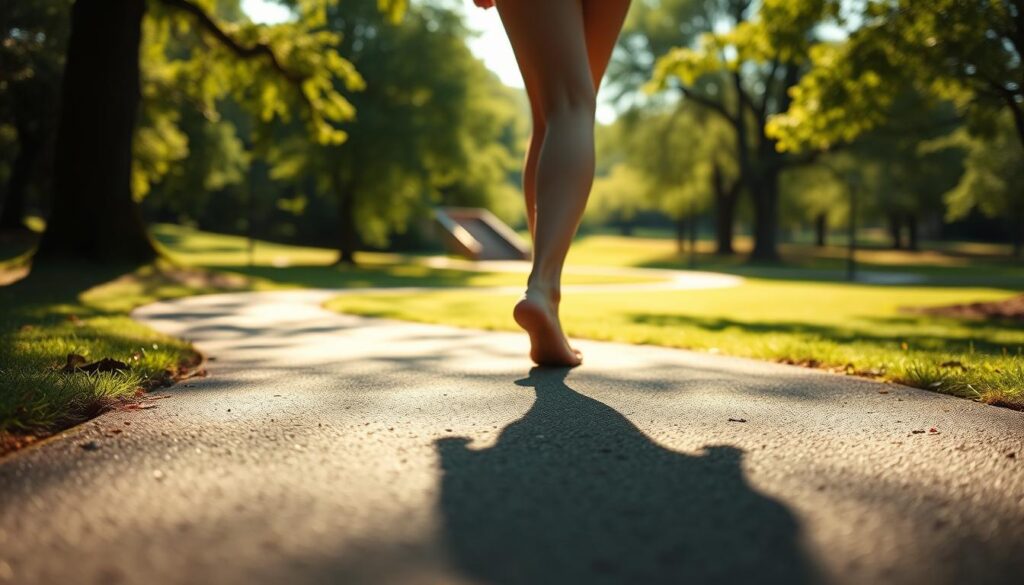
The main difference between ordinary walking and walking meditation is your attention. During an ordinary walk, you might spend the entire time planning dinner or replaying a conversation. During mindful walking, you notice those thoughts without getting caught up in them and return to what’s happening around you.
You can also explore this guided walking meditation from Mindful for additional practice cues.
How to Start Walking Meditation in Just Two Minutes
You don’t need to master breathing techniques or learn complicated movements. Start somewhere familiar, with enough clear space to walk safely. Then follow these six steps.
- Pause and set an intention. Stand comfortably and take one relaxed breath. Remind yourself that you’re practicing awareness rather than trying to reach a destination quickly.
- Check your posture. Keep your head upright, shoulders relaxed, and arms comfortable. Look ahead rather than staring at your feet.
- Take five to ten natural steps. Notice one foot lifting, moving forward, and touching the ground. Then observe the same movement with the other foot.
- Feel the contact beneath your feet. Pay attention to pressure, weight shifts, and the surface you’re walking on. You don’t need to change your normal walking pattern.
- Notice your breathing. Breathe comfortably while walking. If counting feels helpful, observe how many steps happen during each inhale and exhale.
- Finish with a gentle pause. After about two minutes, stop somewhere safe. Notice your breathing, posture, and mood before returning to your usual activities.
Don’t worry if your attention wanders several times. That is a normal part of meditation. Each time you notice a distraction and return to your steps, you’re practicing the skill you came to develop.
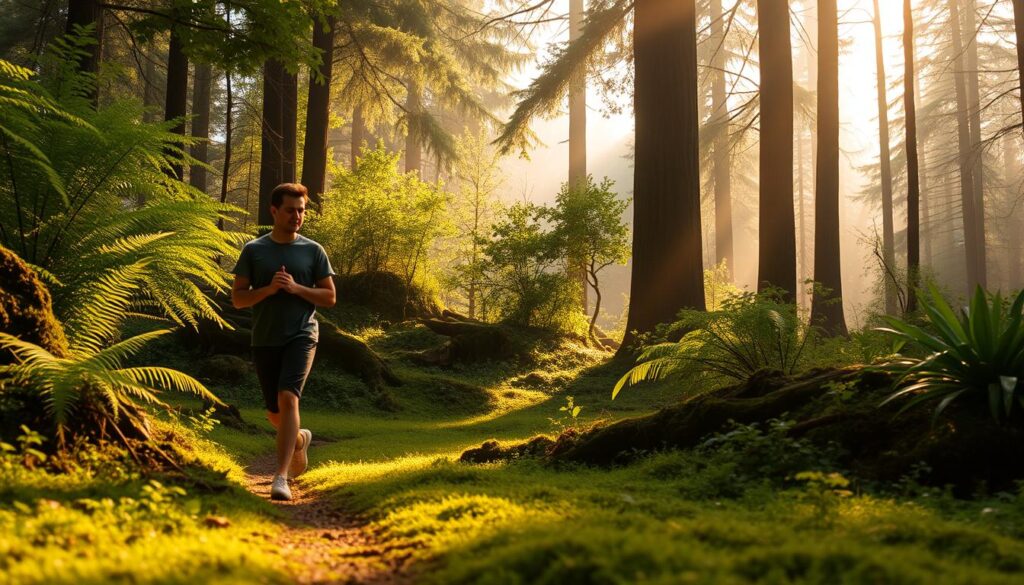
Core Walking Meditation Techniques: Breath, Posture, and Awareness
Once the basic steps feel familiar, you can explore a few techniques to make the practice more engaging. You don’t need to use every method during the same walk. Choose whichever helps you stay comfortably aware.
1. Match Your Breathing with Your Steps
Breath-step coordination gives your mind a simple rhythm to follow. Start by observing your natural breathing without changing it. You might notice that you inhale for three steps and exhale for four.
If that rhythm feels comfortable, continue using it. You can experiment with two steps in and three steps out, or another easy pattern. There is no required breathing ratio. Avoid holding your breath or extending an exhale until it becomes uncomfortable.
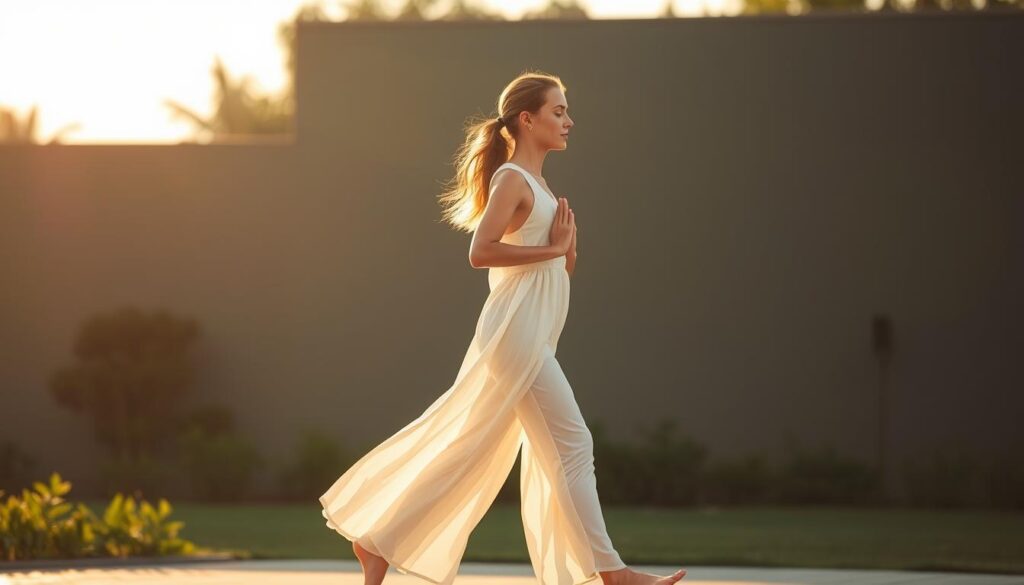
2. Use Your Feet as an Attention Anchor
Your feet give you something concrete to notice whenever thoughts pull you away. Pay attention to how each foot contacts the ground, how weight moves across it, and how the other leg swings forward.
You might silently repeat simple words such as “here” and “now” with alternating steps. If your feet feel uncomfortable or your attention becomes too narrow, switch to noticing your whole body moving.
3. Notice Your Senses Without Getting Distracted
Sensory noting means recognizing something you see, hear, or feel without analyzing it. For example, notice birds singing, the warmth of sunlight, or a cool breeze against your skin.
- Seeing: Notice colors, trees, buildings, or changing light.
- Hearing: Recognize nearby sounds without judging them.
- Feeling: Observe your clothing, footsteps, and the air around you.
- Smelling: Notice fresh air, flowers, or other ordinary scents.
After recognizing a sensation, bring your attention back to walking. In busy areas, keep your awareness broad enough to notice traffic and other people.
How to Practice Walking Meditation in Different Places
One advantage of mindful walking is its flexibility. The basic method stays the same, but your surroundings determine how slowly you can move and where you should direct your attention.
On City Streets and Sidewalks
Choose a familiar, reasonably quiet route. Walk at a natural pace and notice your feet while keeping your eyes up. Use a single block or another clear landmark as your practice distance.
When approaching intersections, crowded sidewalks, or uneven pavement, give your surroundings your full attention. Mindfulness includes recognizing hazards, not ignoring them.

In Parks and Natural Spaces
A quiet park can make it easier to notice natural sensations. Listen to birds, observe leaves moving, or feel the ground beneath your shoes. You can slow down when the path is clear and comfortable.
For a gratitude-based practice, silently say “thank you” as you walk. You might appreciate the shade of a tree, the fresh air, or simply having a few peaceful minutes outdoors.

At Work or Between Daily Tasks
You can turn an ordinary trip down an office hallway into a short mindfulness session. As you leave your desk, relax your shoulders and notice several steps before entering the next room.
Try practicing after finishing a difficult email, before a meeting, or during a regular work break. There’s no need to walk unusually slowly or draw attention to yourself.
Inside a Small Room
Limited space isn’t a problem if you have a clear, safe path. Walk five to seven steps, pause, turn carefully, and return. Notice the sensation of shifting direction rather than rushing through the turn.
Remove loose rugs, cords, or other tripping hazards. If continuous walking isn’t comfortable, seated mindful stepping can offer another way to focus on movement.
Deepening Your Practice with Gratitude and a Half-Smile
Walking meditation doesn’t always have to involve counting or concentrating on physical sensations. You can also use it to practice kindness and appreciation.
Thich Nhat Hanh’s approach to mindful walking often emphasizes peaceful steps and feeling connected to the Earth. You can explore this idea by thinking of the ground as something supporting you rather than a surface you must hurry across.

Try a quiet phrase such as “I’m here,” “thank you,” or “may I be well.” Repeat it gently with your steps. If smiling feels natural, allow a small half-smile without forcing your expression.
These are optional practices, not requirements. If you’re feeling sad, frustrated, or anxious, you don’t have to pretend to be happy. You can simply acknowledge your feelings and continue walking with kindness toward yourself.
What Are the Benefits of Walking Meditation?
Walking meditation combines two activities that have been studied for their health effects: physical movement and mindfulness. Research suggests potential benefits, but it’s important to separate encouraging results from guaranteed outcomes.
A 2025 systematic review of walking meditation studies found promising improvements in areas such as balance, body awareness, stress, and certain physical health measures. However, the studies used different methods, some involved small groups, and many had a risk of bias. The findings do not prove that every person will experience these benefits.
Potential Mental and Emotional Benefits
- Stress management: Paying attention to movement may provide a break from repetitive worries and help some people feel more settled.
- Greater self-awareness: Noticing breathing, tension, and mood may help you recognize how you’re feeling.
- Attention practice: Repeatedly returning attention to your steps gives you a structured way to practice staying present.
- Emotional connection: Gratitude and self-compassion exercises may make the experience more meaningful.
The National Center for Complementary and Integrative Health notes that mindfulness approaches may help with stress and anxiety, while also emphasizing limits in the available evidence. Results from broader meditation programs should not automatically be treated as proof of the effects of a two-minute walking session.
Potential Physical Benefits
Walking involves gentle movement that can help you stay active. Depending on your pace, duration, and physical abilities, regular walking can support mobility and general fitness.
However, very slow walking meditation is not always intense enough to replace aerobic exercise. The CDC recommends at least 150 minutes of moderate-intensity activity each week for most adults, along with muscle-strengthening activity. Brisk walking can help meet the aerobic recommendation, while short, slow meditation walks may provide less physical conditioning.
Walking Meditation Safety: Stay Aware of Your Surroundings
Being present means noticing what’s happening around you. Never become so focused on your breathing or footsteps that you overlook vehicles, obstacles, other pedestrians, or changes in the ground.
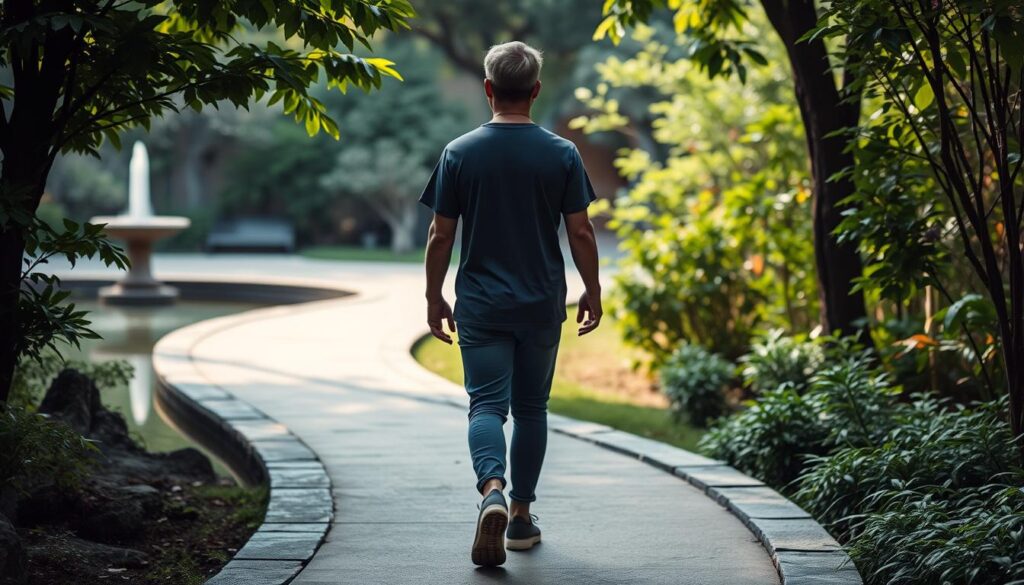
Choose a stable surface and wear footwear that fits comfortably and suits the terrain. Keep your eyes open, walk at a pace you can control, and avoid complicated breathing counts while navigating busy or uneven places.
If you regularly walk around sunrise, sunset, or other low-light periods, visibility becomes another concern. A well-lit route, bright clothing, and reflective materials can help other road users notice you, although none removes the dangers of poor visibility or traffic.
An Optional Visibility Aid for Low-Light Walks
The Noxgear Tracer2 reflective vest is designed for outdoor activities where being seen matters. Its rechargeable lights and reflective materials make it a possible option for people who walk regularly in dim conditions. The Medium-Large version offers an adjustable fit, but you’ll need to check the manufacturer’s sizing guidance before choosing it.
It isn’t meditation equipment, and it won’t improve your breathing or concentration. If you only practice indoors or in daylight, you can skip it. Even when wearing visibility gear, choose safe routes and remain alert.
- [ALL THE COLORS IN ONE] Change between 8 super bright solid colors - Green, Red, Blue, Pink, Yellow, Blue & Pink (mixed), Pink & Green (mixed) and Blue & Red (mixed) AND 8 eye-catching multicolor flashing modes – Our special illumination modes are based on visual science to give visibility to you and warning to motorists. Modes are easily selectable at the press of a button, easy to access if you're walking, running, playing ultimate frisbee, riding a horse, or even riding a motorcycle.
- [TRUE 360 DEGREE ILLUMINATION, REFLECTIVITY, & FLUORESCENCE] Unlike other reflective running vests and hi viz cycling gear, our flexible fiber optic cables, and 3M reflector chest belts actively keep you safe by alerting distracted drivers and traffic before their headlights are on you. The unique X shape of the led lights guarantees a larger visibility area, illuminating both sides of the body and making you visible from over a quarter mile in any direction
- [LIGHTWEIGHT, BREATHABLE, & EXTREMELY COMFORTABLE] If it’s for a short jog in the morning with the kids, walking your dogs in the evening, or an all night solo ride, at only 6.5 oz – you’ll forget you’re wearing it. Using High Quality Sports Mesh and elastic makes the Tracer2 Sweat Resistant, Chafe-free, comfy to wear. The slim, minimalist design ensures minimal fabric-to-body contact, less sweat-trapping, and helps it not interfere with your HRM (heart rate monitor)
- [HIGHLY ADJUSTABLE - WEAR IT ANYTIME OF YEAR] Expand it to fit over your cold weather coat or jacket or adjust it down to fit more snug on t-shirts or singlets during those hot summer night activities. Experience a perfect fit and zero bounce, no matter the season or clothes, Spring, Summer, Fall, or Winter, the Tracer2 will go as long as you do, even rain and snow won't slow you down with the waterproof design
When to Pause or Modify Your Practice
Mindful walking should feel manageable, not physically or emotionally overwhelming. Adjust the practice whenever needed.
- Dizziness or discomfort: Stop walking and sit somewhere safe. Seek medical attention for severe, persistent, or concerning symptoms.
- Balance or mobility limitations: Choose a stable route, use your usual mobility aid, or try seated mindful movements. Ask a healthcare professional about safe adaptations when appropriate.
- Overwhelming emotions: Return attention to your surroundings or stop the meditation if focusing inward makes you feel worse.
- Busy crossings or stairways: Put navigating safely first. Resume your meditation when you reach a suitable area.
You don’t have to maintain a perfect rhythm. A comfortable, ordinary walking pace with occasional moments of awareness is better than forcing a technique that makes movement unsafe.
How to Make Walking Meditation a Daily Habit
Consistency becomes easier when meditation is connected to something you already do. Instead of adding a long new activity to your schedule, begin with one short walking session each day.
Use Everyday Activities as Reminders
Choose a familiar situation that happens regularly, such as leaving your desk, walking to the kitchen, or going outside for fresh air.
- Morning: Practice two minutes of mindful walking after getting ready.
- Workday: Notice your steps during a short hallway break.
- Afternoon: Take a brief outdoor walk when you need a change of pace.
- Evening: Use a calm, safely lit indoor route to unwind.
Increase Your Practice Gradually
Begin with one or two minutes. Once that feels natural, try five minutes or include mindful awareness during part of a longer walk. You can alternate between ordinary walking and focused attention rather than concentrating continuously.
Progress doesn’t mean reaching a particular number of steps or keeping your mind perfectly clear. Look for changes such as noticing distractions sooner, returning attention more easily, or making time for the practice without feeling pressured.
If tracking helps, write down how long you practiced and how you felt afterward. Avoid treating every session as a test of whether meditation worked.
Frequently Asked Questions
Can beginners practice walking meditation without experience?
Yes. Start with a safe, familiar path and pay attention to your feet for a few steps. You don’t need prior meditation experience, special equipment, or a complicated breathing method.
How long should walking meditation last?
Two to five minutes is a practical starting point. You can gradually extend sessions if you enjoy them. Research on structured walking meditation often involves longer programs, so brief sessions should not be expected to produce the same measured results.
Should I walk slowly or at my normal speed?
Either can work. Slower walking may make it easier to notice individual movements in a quiet setting. On public sidewalks, a normal, safe pace is often more practical.
What if my mind keeps wandering?
Notice that you’ve become distracted and gently return to your steps, breathing, or surroundings. Wandering thoughts are normal. There’s no need to criticize yourself or restart the session.
Can I practice walking meditation with other people?
Yes. You can walk quietly with a friend or group while maintaining awareness of your movement and surroundings. Agree on a comfortable pace and keep communicating whenever safety requires it.
Can walking meditation replace regular exercise?
Not necessarily. A short, slow meditation walk can support mindfulness and add movement to your day, but it may not provide the intensity or duration needed for cardiovascular fitness. Longer walks at a brisk pace can serve both purposes when you’re able to maintain awareness safely.
What if standing or walking is difficult for me?
You can adapt the practice by noticing movement while using your normal mobility aid, or by trying seated mindful stepping. Focus on comfortable sensations and avoid any movement that increases pain or instability.
Conclusion: Start with Your Next Few Steps
Walking meditation doesn’t require a peaceful forest, perfect posture, or complete silence. It begins when you pay attention to something you’re already doing.
Start with a comfortable breath, feel your feet moving, and notice the world around you. When your thoughts wander, return without judgment. Over time, these small moments can become a familiar part of your routine.
Try this today: Choose one safe, everyday walking route and spend two minutes paying attention to your steps. You don’t have to change your destination. Just change how you experience the journey.