


Can the gentle sounds of singing bowls, gongs, and chimes actually help you sleep better? Or are sound baths another wellness trend with more promises than proof?
Sound baths may help you relax, reduce feelings of stress, and prepare your mind for sleep. However, research has not yet shown that sound baths themselves reliably treat insomnia or improve deep sleep. That difference matters if you’re hoping to get more restful nights.
The good news? You don’t need an expensive studio session or special instruments to try one. A quiet room, a free recording, and 15–20 minutes may be enough to see whether this relaxing practice works for you.
Here’s what sound baths involve, what the science actually says, and how to build a simple bedtime routine without falling for exaggerated healing claims.
Key Takeaways
- Sound baths encourage relaxation: Gentle, sustained tones can help some people settle racing thoughts and feel less tense before bed.
- Sleep evidence is still limited: Research on music listening is promising, but findings do not prove that sound baths cure insomnia or change sleep stages.
- Start with free recordings: Try 10–20 minutes at a comfortable volume before buying instruments or booking a session.
- Your environment matters: Dim lighting, comfortable bedding, slow breathing, and a consistent bedtime routine can support relaxation.
- Keep expectations realistic: Sound baths are an optional bedtime tool, not a replacement for proven insomnia treatment.
Helpful Products at a Glance
For hands-on sound meditation: The Silent Mind Tibetan Singing Bowl Set includes a bowl, cushion, and mallet for creating gentle tones yourself. It requires practice and isn’t necessary if you prefer recordings.
For a darker listening environment: The MZOO Luxury Sleep Mask has contoured eye cups and an adjustable strap. It may help when bedroom light is distracting, although comfort depends on fit.
- Low - Rebound Memory Foam, Soft and Comfortable.
- Zero Eye Pressure: The Deepest 13mm arc-shaped widened eye cups provide makeup-safe space and allow natural blinking

What Is a Sound Bath?
A sound bath is a relaxing listening experience where instruments create overlapping tones, gentle rhythms, and long-lasting vibrations. Unlike a traditional music performance, the goal isn’t to follow a melody. Instead, you focus on the sounds and allow your attention to settle.
Most participants sit or lie comfortably while a practitioner plays instruments around the room. Sessions may last 20–60 minutes, although shorter home recordings can fit into a bedtime routine.
Where did sound baths come from?
Modern sound baths draw inspiration from several musical, spiritual, and meditation traditions. Chanting, bells, and drums have played important roles in cultural and religious practices for centuries.
However, today’s studio-style sound baths are modern wellness experiences. They shouldn’t be confused with one single ancient treatment or a scientifically established form of medical therapy.
Common sound bath instruments
- Crystal singing bowls: Create clear, sustained tones when struck or rubbed around the rim.
- Metal singing bowls: Produce layered, ringing sounds that change with the playing technique.
- Gongs: Create broad, rolling sounds that can become surprisingly loud.
- Chimes: Add lighter, higher-pitched notes between longer tones.
- Tuning forks: Produce specific pitches, often used during shorter or more focused listening exercises.
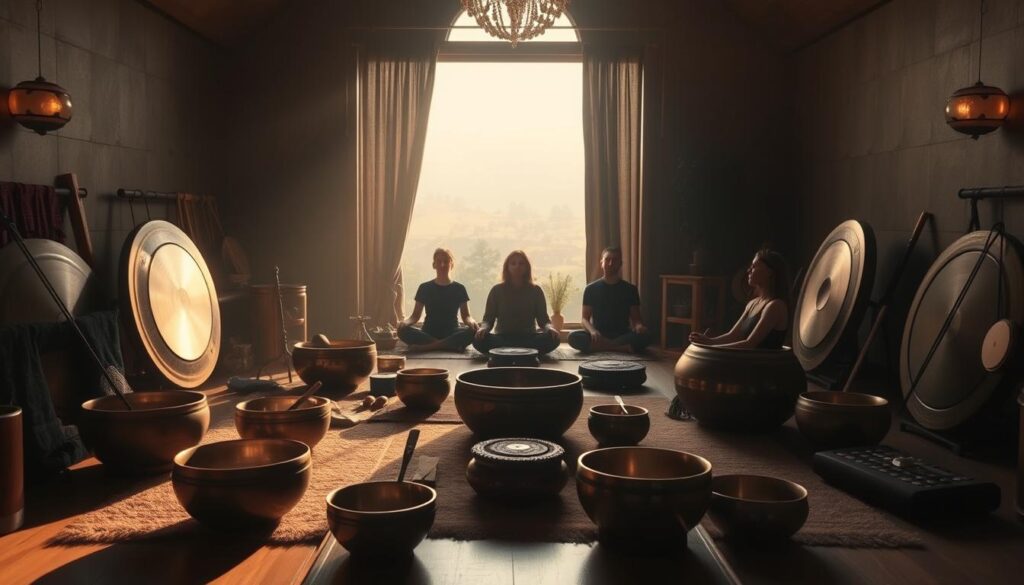
You may feel that certain tones are soothing or notice vibrations when sitting close to an instrument. These are normal listening experiences, but they don’t establish that sound waves are healing tissues, balancing energy, or directly changing your brain chemistry.
Do Sound Baths Really Help You Sleep? What the Science Says
There’s a reasonable explanation for why some people enjoy sound baths before bedtime: focusing on calming sounds can make it easier to shift attention away from everyday worries.
But feeling relaxed and treating a sleep disorder are not the same thing. Here’s where the evidence stands.
1. Research suggests sound meditation may reduce tension
A 2017 observational study followed 62 adults who attended a singing bowl meditation session. Afterward, participants reported lower levels of tension, anger, fatigue, and depressed mood.
Those findings are interesting, but the study had important limits. It did not use a randomized comparison group, and it did not establish that participants slept better afterward.
It’s possible that the quiet setting, time spent resting, expectations, or other parts of the experience contributed to the reported benefits.
2. Music listening has stronger sleep research
According to the National Center for Complementary and Integrative Health (NCCIH), a 2022 review of 13 studies involving 1,007 adults found that listening to recorded music may improve people’s ratings of their sleep quality.
However, the review did not find convincing evidence that music reduced the overall severity of insomnia. Evidence for falling asleep faster or sleeping longer was less certain.
And there’s another important limitation: studies of music listening cannot automatically prove the benefits of singing bowls, gongs, or other sound bath instruments.
3. Special frequencies are not proven sleep shortcuts
Some recordings advertise delta waves, theta frequencies, or binaural beats as a direct route to deep sleep.
Binaural beats work by playing slightly different tones into each ear, creating the perception of an additional beat. They usually require stereo headphones.
Although some studies have reported benefits, a systematic review of brainwave entrainment research found inconsistent results. Later research has also been limited by small studies and differences in testing methods.
There’s no reliable reason to assume that a track labeled “delta sleep” will force your brain into deep sleep. Choose sounds you genuinely enjoy rather than paying extra for claims about special healing frequencies.
How Sound Baths May Help Your Mind and Body Relax
Even without a proven effect on sleep stages, a relaxing sound bath can become a useful part of your evening.
Less attention on racing thoughts
If you regularly replay conversations or worry about tomorrow, following a gentle sound may give your attention somewhere else to go.
You don’t have to empty your mind. Simply notice when your thoughts wander and return your attention to the sound.
A chance to release physical tension
Resting comfortably while listening may help you notice a clenched jaw, tight shoulders, or shallow breathing. You can then consciously relax those areas.
This isn’t evidence that a particular frequency releases stored trauma or heals muscles. It’s a simple relaxation exercise that may make bedtime more comfortable.
A familiar signal that bedtime is approaching
Repeating a quiet activity before bed can create a predictable routine. Over time, the same recording may become a familiar part of winding down.
Consistency may help establish the habit, but there is no proven number of sound bath sessions needed to improve sleep.
How to Try Your First Sound Bath at Home
You can begin tonight without purchasing anything. Your phone or an existing speaker, a comfortable place to rest, and a quiet recording are enough.
A simple 20-minute beginner routine
- Prepare your space (2 minutes): Dim the lights, lower distracting noise, and choose a comfortable chair, bed, or mat.
- Choose your recording: Start with 10–15 minutes of gentle singing bowls or a guided sound meditation. Avoid sudden gongs or loud changes in volume.
- Settle your breathing (2 minutes): Breathe slowly and comfortably. Let your shoulders relax without forcing unusually deep breaths.
- Listen without trying too hard (10–15 minutes): Notice how each sound begins, changes, and fades. Return your attention whenever your thoughts drift.
- Finish with quiet (1–2 minutes): Allow the recording to fade out, or stop it gently. Rest in silence before moving on.
- Notice how you feel: Ask yourself whether you’re calmer, sleepier, or more comfortable. There’s no need to force a particular reaction.
Beginner tip: Keep the volume low enough that the sounds feel comfortable throughout. Loud or startling audio can work against your goal of winding down.
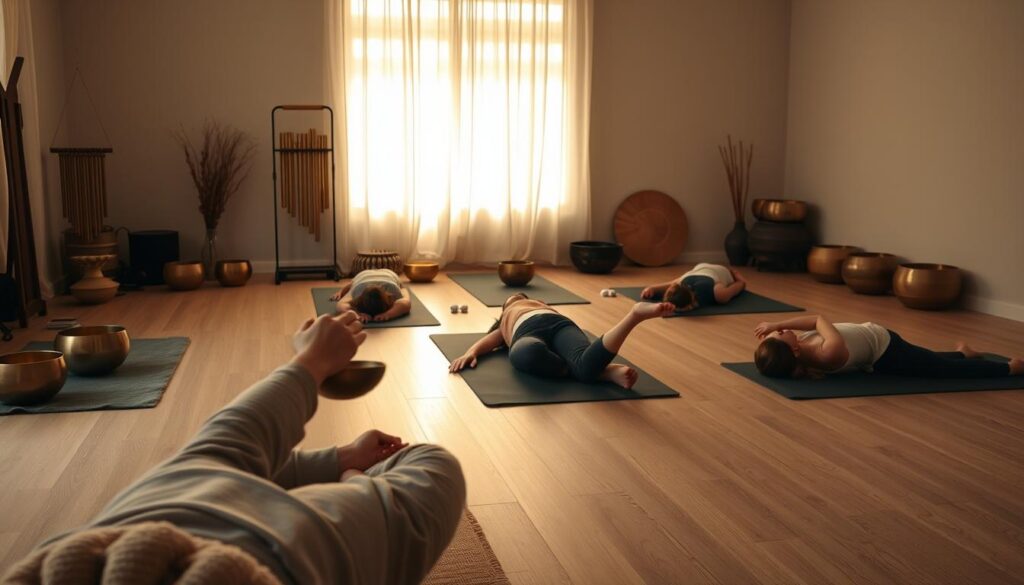
Want to create the sounds yourself?
Recorded sessions are easier for most beginners because they don’t require learning an instrument. However, some people enjoy the hands-on attention involved in playing a singing bowl.
If that’s your preference, the Silent Mind Tibetan Singing Bowl Set is a practical example. It includes a metal singing bowl, cushion, and mallet, allowing you to experiment with gentle strikes and sustained tones.
Place the bowl on its cushion, strike it lightly, and let the note fade before repeating. Practice during your wind-down time rather than trying to play while falling asleep. A single bowl won’t reproduce the layered sound of a studio session, but it can support a simple mindfulness exercise.
If you only want to listen, skip the equipment. A free recording can serve the same basic purpose of giving your attention a calming sound.
Sound Bath Techniques Worth Trying Before Bed
Sound baths don’t require complicated methods. The following techniques can help make your listening time more comfortable and focused.
1. Pair the sound with gentle breathing
Try breathing in for about four seconds and out for about six seconds, as long as that feels natural. Repeat for a few breaths while listening to a steady tone.
Don’t hold your breath or force yourself to match a strict count. If you feel dizzy or uncomfortable, return to normal breathing.
2. Try guided imagery
Imagine a peaceful place, such as a quiet beach, a forest trail, or a familiar comfortable room.
Notice simple details: the temperature, the colors, and the feeling of being somewhere safe. Let the sound play in the background rather than trying to follow every note.
3. Use single-tone listening
Choose a recording with long, gentle tones. Follow one note from its beginning until it fades away.
This works well if complicated music keeps you mentally alert. You can use crystal bowls, metal singing bowls, or other soft sustained sounds.
4. Experiment carefully with binaural beats
If you’re curious about binaural beats, choose a gentle recording and use stereo headphones at a comfortable volume for a short session.
They’re optional, and their sleep benefits remain uncertain. Stop if the audio causes headaches, discomfort, or greater alertness. You don’t need binaural beats to enjoy an ordinary sound bath.
How to Build Sound Baths Into Your Bedtime Routine
The easiest routine is one you’ll actually repeat. Start about 20–30 minutes before your planned bedtime rather than scheduling a long session that becomes another chore.
Try this simple sequence:
- Before listening: Lower the lights, finish distracting activities, and make your bedroom comfortably cool.
- During listening: Play a 10–20 minute recording at low volume while sitting or lying comfortably.
- After listening: Turn off the audio and allow a short quiet transition toward sleep.
- The next morning: Note whether you fell asleep comfortably and how rested you feel.
Make your room comfortable without spending much
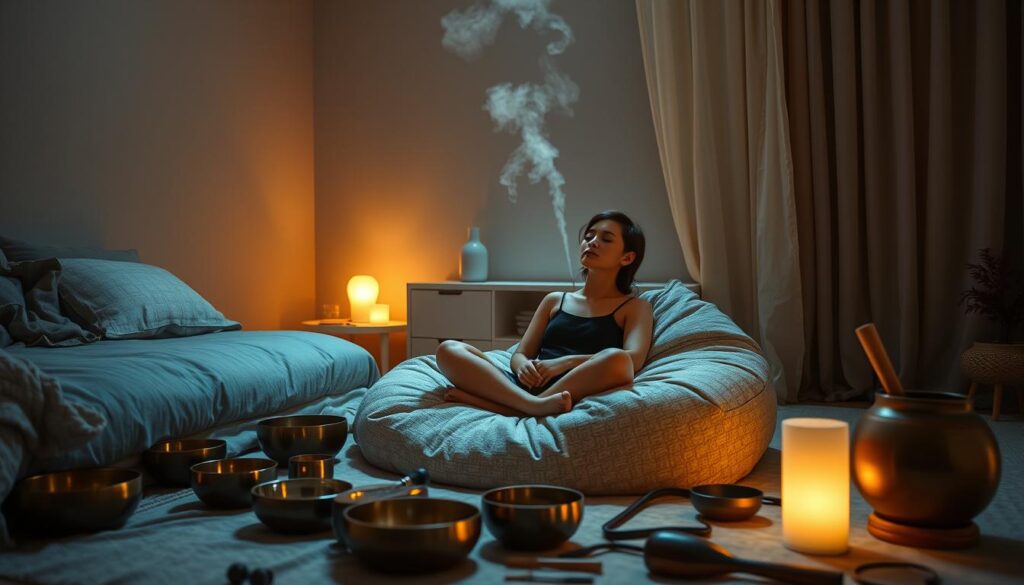
A good listening environment doesn’t need candles, incense, crystals, or expensive sound equipment. In fact, additional scents and decorations may become distractions for some people.
Start with an existing pillow, blanket, or mat. Close the curtains to reduce light, silence unnecessary phone alerts, and keep any speaker away from your ears.
If outside light still bothers you, an eye mask is another option. The MZOO Luxury Sleep Mask uses contoured eye cups, soft memory foam, and an adjustable strap. Its design aims to reduce contact with the eyelids while blocking light.
It may suit people who practice in a bright bedroom or need darkness during daytime rest. However, it won’t improve the therapeutic effect of a sound bath, and foam masks can feel warm or uncomfortable for some sleepers. If your room is already dark, you may not need one.
- Low - Rebound Memory Foam, Soft and Comfortable.
- Zero Eye Pressure: The Deepest 13mm arc-shaped widened eye cups provide makeup-safe space and allow natural blinking
- Great for Side Sleepers: Upgraded 15°-curved thin sides ensure smooth transitions with no uncomfortable bulge, minimizing temple pressure for all sleeping positions
- 100% Light Blocking: Patented contoured eye cups seal completely around each eye. Deep 22mm nose padding blocks all light leakage
The aim is comfort, not creating a picture-perfect meditation room. Remove anything that makes your bedtime routine more complicated.
Live Sound Baths vs. Recordings: Which Should You Choose?
Both options can provide an enjoyable relaxation experience. The main differences are convenience, cost, control, and atmosphere—not proven medical effectiveness.
| Option | Advantages | Limitations |
|---|---|---|
| Home recording | Usually free or inexpensive; easy to repeat; control the volume and timing. | Less personal guidance; audio quality varies. |
| Live group session | Immersive instrument sounds; guided setting; shared experience. | Costs more; fixed schedule; potentially louder sounds. |
| Playing your own bowl | Interactive mindfulness activity; control over each note. | Requires equipment and practice; less convenient while resting. |
For better bedtime convenience, recordings are the simplest starting point. You can use a bedside speaker to avoid sleeping in headphones, especially if you move around during the night.
If you prefer the atmosphere of a live session, look for a practitioner who explains the instruments, likely volume, session length, and whether breaks are allowed. Also remember that sound bath facilitation is not the same as licensed music therapy.
Safety Tips: When Sound Baths Might Not Be Relaxing
Gentle listening is generally low risk, but sound baths don’t feel pleasant to everyone. Gongs and higher-pitched instruments may be uncomfortable, especially at close range.
Consider these precautions:
- Hearing sensitivity or tinnitus: Avoid loud instruments and recordings that make symptoms worse. People with sound sensitivity may prefer very quiet audio or silence.
- Migraines or sound-triggered symptoms: Start with soft, predictable sounds and stop if discomfort develops.
- Trauma-related distress or anxiety: Some sounds or guided experiences may bring up difficult feelings. Keep control over the volume, setting, and ability to leave.
- Sound-triggered seizures: If you have a history of seizures triggered by particular sounds or rhythms, discuss unfamiliar sound-based techniques with your clinician first.
- Headphones: Keep the volume comfortable and avoid long exposure to loud audio. A quiet speaker may be more comfortable at bedtime.
The NCCIH’s sleep guidance notes that music-based practices can be upsetting for some listeners and that high-volume listening may damage hearing.
There’s also no need to tolerate an uncomfortable session because someone claims the sound is releasing negative energy or producing a healing response. You can stop whenever you want.
What If Sound Baths Don’t Improve Your Sleep?
Not everyone relaxes to repetitive tones. Some people find them distracting, irritating, or simply uninteresting. That doesn’t mean you’re practicing incorrectly.
If a sound bath isn’t helping, try a quiet bedtime routine, gentle stretching, reading, or another relaxing activity you enjoy. Keep a regular wake-up time and reduce bright light and stimulating activities close to bed.
If you’re struggling with ongoing insomnia, don’t rely on sound baths alone. According to the National Heart, Lung, and Blood Institute, cognitive behavioral therapy for insomnia (CBT-I) is usually the first recommended treatment for long-term insomnia.
CBT-I helps change thoughts and behaviors that interfere with sleep. A healthcare professional can also check for issues such as sleep apnea, medication effects, or other causes of poor sleep, especially if you have frequent sleep problems or daytime impairment.
Conclusion: Are Sound Baths Worth Trying for Sleep?
Sound baths are more than just spiritual noise for people who genuinely find them relaxing. But they aren’t a scientifically proven cure for insomnia.
Research suggests that calming sound and music listening can support relaxation and may improve perceived sleep quality. Whether singing bowls, gongs, or special frequencies provide additional sleep benefits is much less certain.
Start with a free 15-minute recording, keep the volume gentle, and repeat it as part of your bedtime routine for a week or two. Pay attention to how you feel rather than expecting a dramatic change after one session.
If it helps you unwind, keep it. If not, there are other ways to relax before bed. The best bedtime routine is one that feels comfortable, supports healthy sleep habits, and doesn’t add pressure to fall asleep.
Frequently Asked Questions
Can a sound bath make you fall asleep faster?
Possibly, especially if stress or racing thoughts make it difficult to settle at night. However, direct evidence that sound baths consistently shorten the time needed to fall asleep is limited. Results vary from person to person.
Is it okay to fall asleep during a sound bath?
Yes, if you’re resting in a comfortable, safe position. Use a recording with a sleep timer or automatic shutoff so the audio doesn’t continue unexpectedly throughout the night.
How often should you listen to sound baths?
You can try short sessions several evenings per week or nightly if you enjoy them. There is no established ideal frequency. Consistency can help you assess whether the practice fits your routine, but more sessions do not necessarily mean better sleep.
Are crystal singing bowls better than metal singing bowls?
Neither has been proven better for sleep. Crystal bowls often produce clear, sustained tones, while metal bowls can create more complex ringing sounds. Your preference, comfort, and volume matter more than the instrument’s material.
Do you need headphones for a sound bath?
No. Regular sound bath recordings can be played through a speaker. Stereo headphones are generally needed for recordings designed around binaural beats, but those are not required for sound meditation.
Can you do a sound bath without spiritual beliefs?
Absolutely. You can approach it as a simple mindfulness or listening exercise. You don’t have to believe in energy healing, chakras, or special frequencies to enjoy soothing sounds.
What should you look for in a sound bath recording?
Choose one with clear audio, a comfortable volume, few sudden loud sounds, and a length that suits your schedule. If guided narration helps you relax, choose that. If you prefer quiet attention, an instrumental recording may work better.



Don’t Miss These Picks