


Can the way you train help or hinder hormonal health? This question matters if you want a routine that supports sleep, mood, metabolism, and reproductive function without adding hidden stress.
Hormonal health reflects how chemical messengers coordinate metabolism, mood, and reproduction. Research shows strength sessions, HIIT, and steady aerobic activity can improve insulin action and boost muscle enzymes tied to sex steroid activity—often independent of weight change.
We’ll show which types of exercise support balance and which can tip into chronic stress. You’ll get clear signs of “too much,” a practical way to mix aerobic days with strength days, and how CDC activity targets fit a busy schedule.
Expect science translated into action: simple checklists, weekly planning ideas, and when to consult a clinician for conditions like PCOS or thyroid issues. This guide helps women train confidently while protecting long-term health.
Key Takeaways
- Different forms of exercise shape hormone signaling; choose a smarter routine, not just a harder one.
- Strength, HIIT, and aerobic work can improve insulin action and metabolic markers, even without weight loss.
- Watch for stress signs that mean you should scale back or add recovery windows.
- Use CDC activity goals as a practical framework: mix aerobic time with two strength days weekly.
- If you have conditions like PCOS or thyroid issues, pair movement with nutrition and check with your clinician.
Understand the link between exercise and hormones before you train
Physical activity rewires hormone signaling at the tissue level, not just on lab reports. Getting the right type and dose of activity protects daily energy, mood, appetite, and long‑term performance.
Why this matters: Exercise alters how the body makes, delivers, and responds to chemical messengers. Moderate sessions raise blood flow to working muscle, which improves delivery of hormones and nutrients and sharpens receptor responsiveness.
How activity changes production and sensitivity
Acute training can boost growth signals and transient hormone production. Over time, consistent routines increase enzyme activity tied to sex steroid synthesis and improve how tissues respond at given levels.
Movement also helps glucose enter muscle independently of insulin, which raises insulin sensitivity and steadies afternoon energy dips. But high stress from excessive intensity without recovery can disrupt balance and blunt gains.
- Takeaway: Match session type to recovery and life stress to protect hormonal health. For more depth, see exercise and hormones.
Key hormones and how exercise shifts them
Different training styles shift hormone patterns; some cause quick surges, while routine movement lowers baseline stress over weeks. This section explains how common session types change cortisol, insulin, growth signals, sex steroids, and mood chemicals so you can plan training with recovery in mind.

Cortisol: short spikes versus chronic elevation
Cortisol rises with intense effort and settles with adequate recovery; the problem isn’t the spike, it’s stacking spikes without rest. Expect a normal, short rise during high-intensity sessions. Moderate work over time tends to lower baseline cortisol levels.
If you feel persistent fatigue, poor sleep, or stalled progress, that pattern can signal chronic elevation and too much load.
Insulin sensitivity and blood sugar control
Cardio, strength, and HIIT all improve insulin sensitivity. Steady aerobic work helps glucose control, while resistance training increases muscle glucose storage. HIIT is a time-efficient way to boost sensitivity when paired with recovery.
Growth hormone, IGF-1, and repair
Resistance and interval work trigger growth hormone release that supports muscle repair. Sleep amplifies GH and IGF-1 signals, so strength plus solid rest improves composition and recovery.
Testosterone, estrogen, and sex steroid trends
Repeated resistance training tends to support favorable shifts in testosterone and estrogen production. But overtraining or low energy intake can depress sex hormones and disrupt cycles.
Endorphins and mood
Aerobic sessions and gentle daily movement raise endorphins and lift mood. Consistent patterns of low-intensity work build mental resilience and steady energy.
“Look at hormone responses across weeks, not single workouts; patterns, not points, tell the story.”
For deeper testing ideas, consider four‑point cortisol panels and an exercise quiz to match training to your physiology: four‑point cortisol panels, exercise for your hormone type.
Spot the signs your routine is causing hormonal imbalance
Small, recurring symptoms can be the first clue that exercise load is tipping your hormone balance. Notice clusters of change rather than single odd days. Early recognition lets you act before cycles, bone health, or performance decline.

Symptoms tied to overtraining, RED-S, and menstrual changes
Overtraining and under-recovery often show up as cumulative symptoms: disrupted cycles, low energy, poor sleep, and stubborn soreness. If these stack, it’s time to adjust.
- RED‑S is more than missed periods: it is low energy availability that harms bone, hormones, and performance.
- Watch for persistent fatigue, higher perceived stress, irritability, falling performance, worse sleep, or frequent colds.
- In women, longer cycles, missed periods, or stronger PMS can flag trouble.
- Weight shifts, stalled strength gains, and odd muscle soreness suggest energy deficits and high cortisol.
When to reduce intensity, increase recovery, and consult
Practical recalibration: cut high-intensity days, add restorative sessions, and extend rest for 2–4 weeks while tracking symptoms.
“If amenorrhea, marked anxiety, or persistent symptoms continue despite recovery, seek medical evaluation.”
RED‑S raises risk of bone loss and stress fractures. If suspected, lower load and prioritize intake, and contact a clinician for testing and guidance.
Workouts and Hormonal Imbalance: build a hormone-smart workout plan
Anchor your week with two muscle-strengthening days and layer in 150 minutes of moderate cardio (or 75 minutes vigorous). Plan recovery like you plan workouts—your best hormone-smart gains happen when intensity and rest trade places through the week.
Design your training week to trigger progress without stacking biological stress. Start with two full-body resistance sessions to build strength training adaptations and preserve bone and muscle.

Balancing strength training, aerobic exercise, and HIIT across the week
Sample split: two days of full-body resistance, one to two days of moderate aerobic exercise like brisk walking or cycling, one interval day for short high-effort work, and one to two active recovery days. This mix keeps stress manageable and results steady.
How to apply CDC guidance for muscle-strengthening and physical activity
The CDC recommends 150 minutes of moderate-intensity or 75 minutes of vigorous aerobic activity weekly, plus two muscle-strengthening days. If you have chronic disease, increase activity safely with clinician input. For planning tips on hormone-smart exercise, see this guide.
Intensity, volume, and rest: finding your recovery sweet spot
Use RPE to gauge effort: keep hard days truly hard and easy days truly easy. Short on time? Stack 10–20 minute strength circuits or interval blocks to hit activity targets without overshooting stress.
“Cycle in deload weeks every 4–6 weeks, lowering volume 20–40% to consolidate gains and protect recovery.”
- Pair higher-intensity sessions away from peak life stress to avoid compounding cortisol load.
- Track readiness—sleep, mood, and soreness—to tweak the routine before problems start.
- Need phase-specific tweaks? Learn how to match training to your menstrual phase.
Train with your menstrual cycle: adjust intensity and recovery
Front-load progress in the follicular/ovulatory window when recovery and performance often feel strongest. Shift to more aerobic and mobility work in late luteal and early menstrual days.
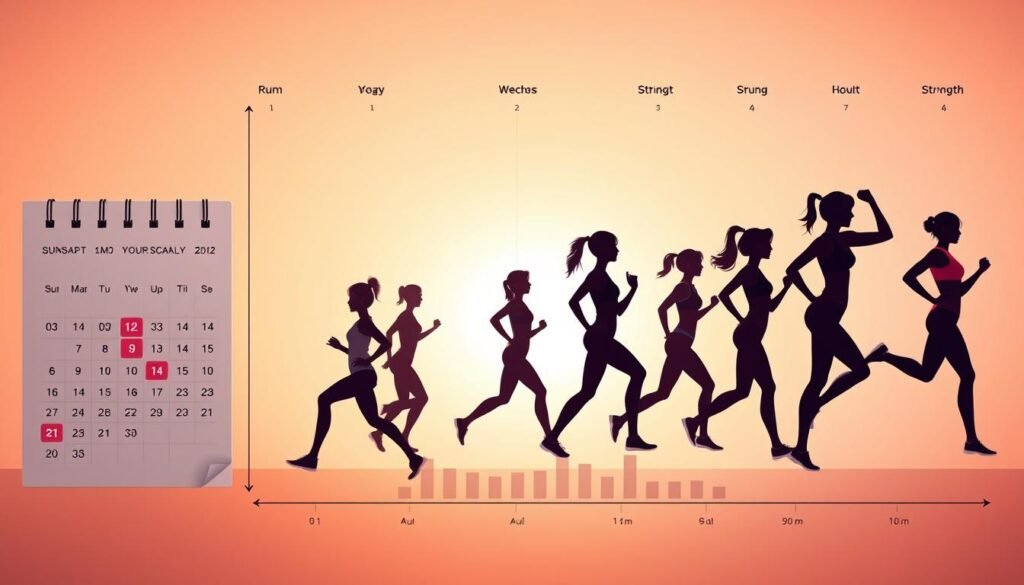
Follicular and ovulation phases: capitalize on strength and progression
In the early to mid follicular window women often report higher energy and better mood. Use that period for progressive overload on compound lifts. Small weekly increases in load or volume can produce greater strength gains.
At ovulation, maintain top sets with longer rests. Watch joint laxity—prioritize clean technique to protect tissue while keeping intensity high.
Luteal and menstrual phases: taper intensity, emphasize aerobic and mobility
During the luteal phase, dial back maximal effort work. Swap one or two hard days for steady aerobic sessions like brisk walking or cycling and add mobility to aid recovery.
On menstrual days consider an optional taper to low-intensity movement. Prioritize sleep and fueling to support recovery and hormone production.
Fasted training, cortisol, and kisspeptin: when to avoid training unfueled
Avoid frequent fasted high-intensity sessions—morning cortisol is already high and kisspeptin may drop, which can undermine ovulation and downstream hormone production.
Fuel before long or heavy sessions; a small carb-plus-protein snack helps stabilize energy and blunt undue cortisol rises. If anxiety or poor sleep follows repeated HIIT, reduce session frequency and lengthen recovery.
“Phase-aware training focuses progress into high-energy windows and reserves gentle, restorative movement for lower-energy days.”
- Follicular focus: progressive overload on compound lifts; expect slight DOMS early and enhance recovery.
- Ovulation: maintain strength with top sets; prioritize form and joint care.
- Luteal & menstrual: lower peak intensity, favor aerobic work and mobility; fuel important.
| Phase | Training emphasis | Fueling tip | Recovery cue |
|---|---|---|---|
| Early Follicular | Progressive strength, modest volume increases | Pre-session carb+protein snack | Extra sleep, active recovery next day |
| Ovulation | Heavy singles/top sets, longer rests | Balanced meal 1–2 hrs before | Listen for joint soreness; scale as needed |
| Luteal | Steady-state aerobic, mobility | Smaller, frequent meals to sustain energy | Increase low-intensity movement |
| Menstrual | Low-intensity or optional taper | Prioritize iron-rich, balanced meals | Focus on sleep and gentle mobility |
For a practical plan that maps sessions to each phase, see this phase-specific training guide.
Adapt your routine through perimenopause, menopause, and beyond
As estrogen falls, training choices matter more for preserving strength and bone than ever before. Make resistance the base of your plan, then add targeted high-intensity bursts to help metabolism and insulin sensitivity.
Make resistance training the foundation to protect bone density and muscle mass as hormones shift. Then sprinkle in brief HIIT to support insulin sensitivity and metabolism.
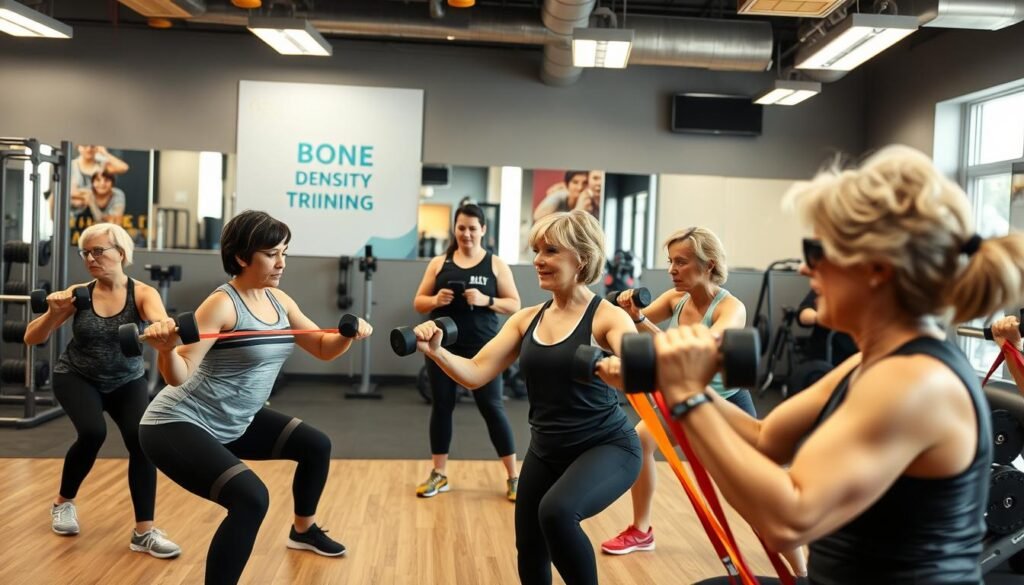
Prioritizing resistance training for bone density and muscle mass
Focus on progressive overload with big compound lifts to protect bone density and muscle mass. Aim for 2–3 full-body resistance sessions weekly that cover squat, hinge, push, and pull patterns.
Include impact moves or weighted carries as tolerated to load bone. Increase load or reps slowly, and lengthen recovery windows as needed to respect changing recovery.
Using HIIT strategically for insulin sensitivity and metabolism
Use 1–2 short HIIT sessions per week (6–10 rounds of 20–30 seconds hard with long rests). These brief anaerobic bursts improve insulin sensitivity and support metabolism without stacking stress.
Prioritize protein and sleep to preserve lean mass. If mood or sleep worsens, shorten session length rather than lower intensity.
“Make strength the non-negotiable; use short, smart intensity to protect metabolic health.”
- Program: 2–3 strength sessions weekly—squat, hinge, push, pull; add progressive overload.
- Impact: Weighted carries or light jumps to stimulate bone.
- HIIT: 1–2 short interval sessions to boost insulin sensitivity.
- Recovery: Prioritize protein, rest, and trend-focused tracking of weight and waist.
| Goal | Weekly Prescription | Key Actions | Recovery Cue |
|---|---|---|---|
| Preserve bone density | 2–3 resistance sessions | Weighted carries, impact, progressive overload | 48–72 hrs between heavy sessions |
| Maintain muscle mass | 2–3 strength sessions | Compound lifts, add load or reps gradually | Prioritize protein and sleep |
| Improve insulin sensitivity | 1–2 short HIIT sessions | 6–10 x 20–30s efforts with long rests | Space from heavy strength days |
| Monitor health | Weekly tracking | Weight/waist trends, mood, sleep | Shorten sessions if sleep/mood fall |
For practical exercise options that protect joints and function, see this short guide to functional movements at functional exercises for pain-free living. For data on metabolism and age-related change, review relevant research at NIH PubMed Central.
Fuel, recovery, and timing to protect hormone health
What you eat before and after exercise has an outsized effect on hormone production and recovery. Small timing changes protect energy, support muscle repair, and reduce stress signals that impair reproductive and metabolic health.

Pre- and post-session nutrition to support production and repair
A small carb-plus-protein meal before and after hard sessions supports hormone production, stable energy, and muscle repair. Fed training usually produces better hormonal responses than fasted training for active women.
Pre-workout: pair easy carbs with protein (banana + Greek yogurt) 30–90 minutes before intense exercise. Post-workout: aim for protein and carbs within 1–2 hours to refill glycogen and support muscle synthesis.
Protein, healthy fats, and electrolytes across the cycle
Prioritize protein across meals and include healthy fats like olive oil and avocado to support sex hormone levels and lean mass. Protein needs rise with age and training to offset muscle and bone loss.
Electrolytes help fluid balance, especially in the luteal phase when body temperature and fluid shifts increase. Drink salty snacks or an electrolyte beverage during hot days or heavy sweat.
Sleep, active recovery, and stress management
Sleep is a performance enhancer—growth hormone pulses at night, and stress management keeps cortisol in check so you can adapt. Protecting sleep duration and quality improves recovery, mood, and metabolism.
Use active recovery days, breathwork, and light movement to lower stress without losing fitness gains.
Supplements that may help and when to use them
Consider creatine (3–5 g/day) for performance and mood support, especially with lower estrogen. Beta-alanine (study-supported dosing) can aid intense efforts and may ease menopausal symptoms. BCAAs around hard sessions can reduce soreness and help blunt excessive cortisol when recovery lags.
“If chronic calorie restriction or persistent high stress is present, focus on restoring intake and sleep before chasing supplements.”
- Daily habits: steady protein, healthy fats, electrolytes as needed, and consistent sleep.
- Practical tip: fed sessions outperform fasted sessions for hormone-friendly adaptation in most active women.
- Further reading: review research on exercise and hormones for context and dosing guidance.
Test, track, and personalize your plan
You can’t optimize what you don’t measure. Start with objective tests and a simple journal to match training to recovery and reduce risk of setbacks.

Which labs matter first?
You need a baseline: a comprehensive female hormone panel plus a 4‑point cortisol profile clarifies recovery capacity and training tolerance.
Also discuss thyroid panels and iron status with your clinician before big shifts in training. Low iron impairs performance in menstruating women and can alter cycle patterns.
Deeper testing to guide nutrition and care
Consider microbiome testing if symptoms persist—gut health affects hormones and conditions like PCOS. Add micronutrient checks (vitamin D, magnesium, zinc) to target supplementation when blood markers are low.
Track subjective signs to refine the plan
Pair labs with a simple weekly log: record workouts, sleep, energy, mood, soreness, and cycle status. Use trends, not single days, to tweak intensity or recovery blocks.
- Bold summary: You can’t optimize what you don’t measure. A comprehensive female hormone panel with 4‑point cortisol clarifies recovery capacity and training tolerance.
- Bold summary: Pair labs with a simple journal—track symptoms, sleep, mood, and performance to see what actually works over time.
- Reassess labs and trends quarterly and integrate medical care for conditions like PCOS or thyroid dysfunction.
- Use blood markers alongside subjective data to lower load when trends show accumulating stress.
“Objective testing plus consistent journaling turns trial-and-error into predictable progress.”
For testing options, consider a reputable DUTCH or clinic panel via a clinician; for cycle-based training guidance see cycle syncing resources and for a detailed cortisol panel look at this provider: DUTCH Complete.
Conclusion
Regular exercise supports insulin action, preserves muscle and growth signals, and helps steady energy when you pair it with smart recovery and nutrition.
Train smarter by matching intensity to recovery, fueling well, and tracking how your body responds. That protects hormones and builds lasting strength and health.
Keep strength work as your anchor, add short intervals and steady aerobic time as recovery allows, and use sleep quality, mood, and steady energy to adjust weekly. Protect fueling around hard sessions—this is where growth and adaptation happen.
Reassess labs and trends periodically. If stress or symptoms rise, scale back, seek support, and rebuild slowly. Your next step: pick one change—add a rest day, fuel pre-session, or shorten a HIIT bout—and note how you feel over two weeks.
FAQ
Is my training affecting hormonal balance and should I be concerned?
Yes — exercise changes hormone production and signaling, which can be positive or harmful depending on intensity, volume, recovery, and nutrition. Short bouts of high effort trigger helpful spikes in growth hormone, endorphins, and insulin sensitivity. But chronic high-volume or poorly recovered training can raise resting cortisol, disrupt menstrual cycles, reduce libido, and impair sleep. Match load to your recovery capacity, prioritize nutrition and sleep, and monitor symptoms like persistent fatigue, mood shifts, or missed periods.
How does physical activity change cortisol and when does it become a problem?
Acute exercise raises cortisol as part of a normal stress response to fuel energy and repair. This is healthy when followed by recovery and adequate sleep. Problems arise with repeated high-intensity sessions, insufficient rest, or training in a fasted state — these situations can keep cortisol elevated and blunt recovery, leading to fatigue, sleep issues, and impaired performance. Reduce intensity, add rest days, or increase carbs around training when you see chronic symptoms.
Which types of movement most reliably improve insulin sensitivity?
Aerobic exercise, resistance training, and well-designed HIIT all improve insulin sensitivity through different mechanisms. Resistance training increases muscle mass, a key glucose sink. Moderate-intensity cardio improves mitochondrial function, and HIIT efficiently enhances glucose uptake. Combining two to three strength sessions per week with regular aerobic activity aligns with CDC guidance and offers strong metabolic benefits.
Can strength training boost growth hormone and muscle repair?
Yes — resistance work and high-intensity intervals stimulate growth hormone and IGF-1, supporting muscle repair and hypertrophy. The hormonal response is magnified by lifting heavy loads, training near failure, and ensuring post-workout protein and carbohydrate to support synthesis. Adequate sleep is also essential because much growth hormone release happens overnight.
Will lifting weights increase testosterone or disrupt estrogen in women?
Resistance training can transiently raise testosterone and support better body composition, bone density, and mood without causing harmful hormonal shifts in most women. However, extreme training with inadequate energy intake can lower estrogen and disrupt menstrual function (functional hypothalamic amenorrhea or RED-S). Keep energy balance and recovery in check to avoid negative endocrine effects.
What signs suggest my routine is pushing me toward overtraining or RED-S?
Look for persistent fatigue, declining performance, frequent injury or illness, mood disturbances, low libido, irregular or absent menstrual cycles, and unexplained weight loss. Lab signs may include low resting cortisol variability, low estrogen, or suppressed thyroid markers. If these appear, reduce training load, increase calorie and carbohydrate intake, and see a clinician for evaluation and testing.
How should I structure weekly sessions to be “hormone-smart”?
Aim for a blend: two to three resistance sessions for muscle and bone health, two to four aerobic or low-intensity steady-state sessions for metabolic health, and one or two shorter HIIT sessions if you tolerate intensity well. Schedule harder sessions with easy or active-recovery days between, and include at least one full rest day per week. Tailor volume and intensity to life stress, sleep, and menstrual phase.
How can I adjust training across my menstrual cycle for better performance and recovery?
In the follicular and ovulatory phases, many people tolerate higher intensity and progressive overload well — prioritize strength and heavy lifting then. In the luteal and menstrual phases, reduce absolute intensity and volume, favor aerobic work, mobility, and recovery. Track symptoms and adjust day-to-day; some prefer light aerobic or restorative sessions during menses. Avoid prolonged fasted high-intensity sessions during vulnerable phases.
What should women prioritize during perimenopause and menopause?
Prioritize regular resistance training to preserve muscle mass and bone density, plus targeted HIIT for metabolic health and insulin sensitivity. Address sleep, manage hot flashes, and ensure sufficient protein, calcium, vitamin D, and overall energy. Consider consulting an endocrinologist or gynecologist to discuss hormone therapy options when appropriate.
What nutrition and recovery tactics protect hormone health around workouts?
Consume balanced pre- and post-workout meals with protein and carbs to support muscle repair and steady blood sugar. Include healthy fats and electrolytes for overall endocrine function. Prioritize 7–9 hours of sleep, use active recovery and mobility, and manage stress with breathing, meditation, or low-intensity activity. Supplements like creatine, beta-alanine, and BCAAs may help performance and recovery, but discuss with a clinician first.
When should I get tested and which tests are most useful?
Test if you have persistent symptoms (missed periods, low energy, weight changes, mood shifts). Useful assessments include female hormone panels (including estradiol, progesterone, luteinizing hormone), a 4-point cortisol profile, thyroid function, ferritin/iron studies, and key micronutrients. Working with a clinician or sports dietitian helps interpret results and personalize training and nutrition.
Can monitoring and journaling help fine-tune my plan?
Absolutely. Track training load, sleep, mood, appetite, cycle symptoms, and performance metrics. Over weeks, journaling highlights patterns tied to intensity, nutrition, or life stress. Use that data to reduce problematic sessions, increase recovery, or time heavy training to phases where you tolerate load best.
Are fasted workouts safe with respect to cortisol and reproductive hormones?
Short, low-to-moderate intensity fasted sessions can be fine for many people, but prolonged or high-intensity training without fuel raises cortisol and can impair recovery and reproductive signaling over time. If you notice sleep disruption, fatigue, or cycle changes, avoid training fasted and prioritize preworkout carbs and postworkout protein.
How do thyroid function and iron status interact with exercise and hormones?
Low thyroid or iron deficiency reduces energy, endurance, and recovery, and can mimic or worsen hormone-related symptoms. Athletes — especially menstruating people — commonly have low ferritin. Check thyroid panels and iron stores if performance or recovery falters, and treat deficiencies under medical supervision to restore training capacity and hormonal balance.
Seek evaluation for prolonged menstrual irregularity, unexplained fatigue, weight loss, depression or anxiety, low resting heart rate variability, or if conservative changes (more calories, rest, sleep) don’t help within a few weeks. A clinician can run targeted testing, rule out medical causes, and coordinate care with a sports dietitian or physiologist.




Don’t Miss These Picks