


Could a few minutes of guided tones really shift a restless mind into real sleep? I asked that same question before my first session. Insomnia affects millions and can harm focus, increase accident risk, and raise long‑term disease odds. I wanted a practical, evidence‑informed test.
In one word: grounding. Gentle vibrations from bowls, gongs, and chimes eased the racing thoughts and lowered my tension. The practice borrows from Tibetan and shamanic roots but now pairs with modern ideas about brain waves and nervous system downshifts.
This introduction shows what to expect: how sessions work on the mind and body, simple ways to try a short recording at home, and safety tips to protect hearing. For a deeper look at therapy benefits and mechanisms, see this sound therapy overview.
Key Takeaways
- Immersive tones can induce deep relaxation and reduce stress before bed.
- Short, regular sessions may help improve sleep quality and ease falling asleep.
- Instruments like bowls and gongs produce vibrations that calm the nervous system.
- Keep volume moderate and avoid sessions if you have sound sensitivity without guidance.
- Beginners can start with 10–20 minute recordings or guided evening sessions.
Why I Turned to Sound Healing for Sleepless Nights
The restless nights and repeated wakeups made me seek a gentle, drug-free way to calm my nervous system and improve sleep.
The practice helped create mental space and steady relaxation before bed.
My problem was simple: good routines stopped working and racing thoughts kept stealing night sleep. I wanted a non-pharmacological option that wouldn’t leave me groggy the next day.
I chose sound healing because immersive tones engage attention without force. The layered sounds from bowls, gongs, and chimes pull focus away from worry and reduce stress. That creates a quiet mental space where sleep can begin.
Physiology matters: steady, rhythmic tones can signal safety to the body. This eases hyperarousal, helps align natural rhythms, and supports healthier sleep patterns.
Local evening sessions were a practical hook. They offered structure after work and a clear transition into a conducive sleep state. After a few sessions I felt calmer before bed, ruminated less, and could reach deep relaxation more often.
The approach is scalable: short pre-sleep practices work on busy nights and pair well with other relaxation tools. I kept an intention—“soften stress and welcome rest”—and tracked how quickly I fell asleep and how refreshed I felt on waking.

| Element | How it helps | Practical tip |
|---|---|---|
| Immersive tones | Shifts attention, reduces rumination | Attend a 20‑minute evening session |
| Rhythmic frequencies | Signals safety, calms nervous system | Use recordings with steady patterns |
| Short daily practice | Builds consistency and habit | Try 10 minutes before bed and log results |
Want more context on acoustic approaches as sleep therapy? See this acoustic healing overview to explore mechanisms and studies.
How Sound Baths Work to Improve Sleep Quality
Gentle tones can nudge the brain out of high‑alert thinking and toward the calm cycles that support sleep. This happens through measurable shifts in brain activity and a downshift of the nervous system that readies the body for rest.
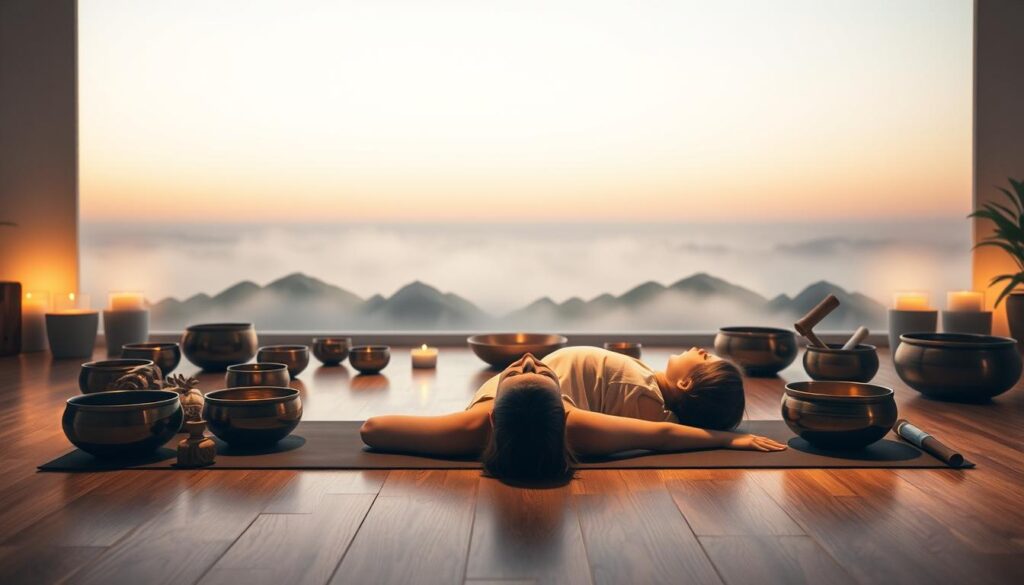
Shifting brainwaves from busy beta to calmer alpha and theta
Exposure to specific soothing sounds can move the mind from active beta into alpha and theta states. These calmer waves ease intrusive thoughts and make falling asleep easier.
Brainwave entrainment occurs when steady tones encourage the body‑mind to synchronize with relaxing frequencies. Start with 10–15 minutes of crystal singing or nature audio to prime this shift.
Calming the nervous system and restoring natural rhythms
Nature‑inspired audio — like flowing water or soft rain — and instruments such as crystal singing bowls produce resonant frequencies that lower arousal.
- Vibrations and layered overtones create an anchor for attention and reduce rumination.
- Slower, sustained tones help downshift sympathetic drive and support parasympathetic activation.
- Regular pre‑bed exposure can reinforce natural rhythms and improve sleep quality over time.
Practical tip: Keep volume gentle and note whether you fall asleep faster or wake less often — those are clear signs of better sleep and promoting deep relaxation. For a guided option with crystal singing bowls, see this crystal singing bowl healing.
Sound Bath for Insomnia: Setting Up an Effective Home or Group Session
Small changes to your room and routine make a brief session more likely to trigger deep relaxation and restful sleep. These steps focus on practical setup and simple instrument choices so you can test what helps your body unwind.
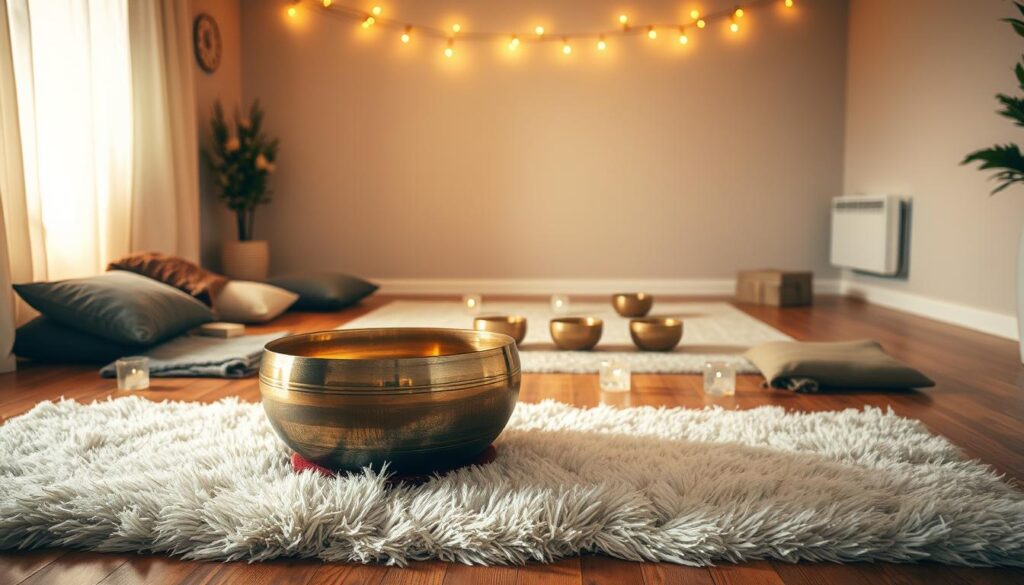
Creating a sleep-conducive environment
Darken lights, lower temperature slightly, and remove screens 60–90 minutes before bed. A short digital detox reduces stimulation and makes the practice more effective.
Use mild aromatherapy — a light lavender or chamomile diffusion pairs well with tones without overpowering. Keep seating or a mat cozy with a pillow and blanket.
Choosing instruments
Start simple: crystal singing bowls or chimes give clear frequencies and are easy to control. Add gongs, rainsticks, or ocean drums to extend texture and lower-frequency vibrations.
Alchemy crystal bowls offer deep resonance; one bowl can be enough to begin a home routine.
Solo at home vs. group setting
At home you gain privacy and flexibility; test volume and timing and track how the sounds create calm. In a group, expect a stronger immersive experience and shared energy.
- Set an intention.
- Begin softly and layer tones slowly.
- Keep volume moderate and end by fading to silence.
Want evidence-based tips? Try this guide to sound therapy for insomnia or read a practical product review like the Cozy Frog weighted blanket review to pair tactile comfort with your session.
Techniques That Promote Deep Relaxation and Better Sleep
A few focused steps—breath, tones, and imagery—can prime your physiology for deeper rest. These tools work together to move the mind and body toward calmer brainwaves and better sleep.

Delta wave entrainment to encourage deep, restful sleep
Select low, sustained tones such as gongs or deep bowls to nudge brain activity toward delta waves. Start with 10–20 minutes of steady low frequencies to support promoting deep relaxation and restful sleep.
Using binaural beats and nature layering
Wear headphones and begin with alpha/theta tracks to ease descent, then shift lower if helpful. Layer ocean or rain tracks under soft bowls to reinforce calm and improve sleep quality after a stressful day.
Breathwork to reduce stress and prepare the body‑mind
Try nasal breathing at 4–6 breaths per minute to engage the nervous system’s calming branch. A short progressive body scan helps align the body mind and release tension before tones start.
Guided visualization to create calm and mental space
Visualize a simple scene—dusk waves or a quiet meadow—while tracking breath and noticing vibrations. This builds mental space, reduces rumination, and eases the transition to night sleep.
- Session design: 5 minutes breath, 10–20 minutes tones, 1–2 minutes silence.
- Intensity control: Keep volume gentle; prioritize comfort over loudness to avoid arousal spikes.
- Track results: Note time to fall asleep, awakenings, and morning energy; adjust instruments, frequencies, or length as needed.
- Consistency: Repeat nightly or 4–5 nights weekly to improve sleep and promote steady recovery.
Benefits of sound baths offer additional context on combining these techniques safely and effectively.
Benefits You Can Feel: Reducing Stress, Improving Sleep, and My Session Takeaways
What surprised me most was how quickly my body shifted from busy to calm after a session. Regular practice eased evening tension and helped me wake feeling more refreshed.
What this looks like in real life: slower breathing, looser shoulders, and a warmer sense of comfort that signals the nervous system is settling.

From reducing anxiety to improving sleep quality and duration
Short, consistent sessions lowered perceived stress and smoothed sleep continuity. Instruments like alchemy crystal bowls, rainsticks, and ocean drums create resonant tones that mask noises and encourage a conducive sleep space.
The immersive experience: vibrations, frequencies, and a deep sense of calm
Gentle vibrations and layered frequencies produce a focused, immersive experience that quiets rumination and promotes deep relaxation. Small supports—digital detox, dim lighting, and a light lavender scent—made home sessions feel restorative.
- Practical takeaway: set an intention, start soft, end in silence.
- Progressive gains: noticeable benefits often appear after two to three weeks of regular practice.
- Safety note: if you are sound-sensitive, try shorter or guided group sessions.
Curious about evidence and typical session design? Read more about what a sound bath does to reduce stress and support sleep.
Conclusion
Consistency matters: short, repeatable pre‑bed sessions can quiet the mind and prepare the body for rest. Used regularly, gentle tones and a simple routine often improve sleep and steady sleep quality.
Consistency—short sessions most evenings—felt like the key that unlocked quieter nights.
Mechanism recap: certain sounds and singing bowls help shift brainwaves and drop cognitive noise. That creates calmer states that ease falling asleep and reduce night wakings.
How to start: set an intention, dim lights, pick one or two bowls or soft nature tracks, keep volume low, and end in silence. Alternate home practice with occasional group baths to explore a variety instruments and textures.
Track sleep for several weeks and adjust. Prioritize comfort and hearing safety, and read a clinical review for more evidence: sound meditation study.
FAQ
What did you notice immediately after trying a sound bath for sleep issues?
I felt a quick drop in mental chatter and physical tension within a single session. Gentle vibrations from crystal singing bowls and chimes shifted my focus away from anxious thoughts, producing calm that made falling asleep easier that night. Small, consistent sessions tend to produce the clearest changes.
Why choose sound healing instead of or alongside other sleep strategies?
Sound healing offers a low-effort, nonpharmacological way to reduce stress and prepare the nervous system for sleep. Used alongside sleep hygiene—consistent schedule, reduced screens, and a cool, dark room—it can amplify benefits by promoting relaxation and easing the transition into restorative sleep stages.
How do these sessions actually help the brain move from alertness to rest?
Certain tones and rhythmic patterns encourage brainwave shifts from busy beta frequencies into calmer alpha and theta states. This entrainment helps slow thought loops and primes the brain for deeper delta sleep later on, supporting better overall sleep architecture.
Can sound-based sessions calm the nervous system and restore sleep rhythms?
Yes. Focused vibrations and steady tonal patterns stimulate the parasympathetic response, lowering heart rate and reducing cortisol. Over time, that helps reinforce the body’s natural circadian cues and makes it easier to fall and stay asleep.
How do I set up an effective session at home to support sleep?
Create a sleep-conducive environment: dim lights, remove screens, use subtle aromatherapy like lavender, and set a comfortable temperature. Use pillows, blankets, and a mat. Keep sessions short (20–40 minutes) at bedtime or as a wind-down practice an hour before sleep.
Which instruments are best for promoting deep relaxation and sleep?
Crystal singing bowls, alchemy crystal bowls, gongs, chimes, rainsticks, and ocean drums each offer distinct frequencies and textures. Crystal bowls and gentle chimes are especially effective for inducing calm because their sustained tones encourage steady brainwave shifts.
What differences can I expect between a solo home session and a group setting?
Solo sessions give control over volume, duration, and instrument mix—ideal for personal preferences and bedtime routines. Group settings add shared energy and amplified vibrations that some people find more immersive and emotionally shifting, which can accelerate relaxation for certain participants.
How does delta wave entrainment support deeper sleep?
Delta-range stimulation encourages the brain to enter slow-wave sleep, the phase associated with deepest restorative processes. Carefully designed tones or rhythms—often layered with low-frequency bowls—can nudge the brain toward these restorative states, improving sleep depth and recovery.
Are binaural beats and nature sounds useful for improving sleep patterns?
Yes. Binaural beats delivered through headphones can gently guide brainwave activity, while nature sounds provide comforting, predictable patterns that reduce arousal. Combining both with low-frequency instruments often yields the best results for steady relaxation.
Which breathwork techniques pair well with an audio session to reduce stress?
Simple, paced breathing—like 4–6 second inhale and 6–8 second exhale—activates the parasympathetic system quickly. Box breathing and diaphragmatic breaths lower heart rate and deepen relaxation, making the audio experience more effective for sleep preparation.
Can guided visualization during a session help me sleep better?
Guided imagery creates a soothing mental narrative that distracts from intrusive thoughts and fosters a sense of calm. When combined with resonant tones, visualization helps anchor attention, supports relaxation, and smooths the transition into sleep.
What measurable benefits do people typically report after regular sessions?
Many participants report reduced anxiety, quicker sleep onset, longer uninterrupted sleep, and improved subjective sleep quality. Repeated practice often amplifies these effects by retraining physiological responses to evening routines.
How do vibrations and frequencies translate into a feeling of deep calm?
Vibrations create embodied sensory feedback that grounds attention in the body instead of the mind. Specific frequencies interact with nervous system rhythms, producing a tangible sense of release and spaciousness that supports relaxation and restful sleep.



Don’t Miss These Picks