


Can one small cover really make the difference between restless tossing and a full night of restorative sleep? This guide tests real-world wear to answer that question for side sleepers and anyone sensitive to light.
We rank each mask by how well it blocks light with minimal pressure and how comfortably it stays on your head and face all night. Our focus is practical: thin profiles, silk next to skin, sliding buckles, and designs that avoid pressing into the eye or deforming at the nose bridge.
Long-term testing (8+ years daily use) and comparative trials inform the picks. We call out where a design gives true darkness versus where it forces tight clamping — a red flag for comfort and skin health.
Want a quick second opinion? See an independent editorial roundup from Wirecutter for more model comparisons: best sleep masks review.
Key Takeaways
- Light blocking matters, but not at the cost of pressure.
- Side sleepers need thinner builds and clever nose seals to avoid leaks.
- Silk over foam can balance softness and structure for better fit.
- Sliding buckles beat noisy velcro for silent, precise adjustment.
- Hygiene matters: dirty covers can irritate eyes and skin.
Why light blockage and comfort matter for side sleepers right now
Even dim ambient glow can lower melatonin and fragment REM, so a reliable mask matters more than you might think. Side sleepers need designs that keep a seal under pillow pressure while staying cool and gentle on skin.

How ambient light impacts melatonin and REM
Light at night does more than wake you — it changes biology. Even a thin beam at the nose bridge can reduce melatonin and interrupt deep sleep cycles.
This matters if you live near streetlamps or use devices before bed. A good sleep mask that blocks light reliably helps you fall asleep faster and wake less often.
Side-sleeping challenges: deformation, pressure points, and heat
When you lie on your side, a bulky mask can deform against the pillow and admit light at the nose. That forces tighter straps and creates forehead or cheek pressure.
Thinner profiles, dual straps, raised eyecups, and silk face linings reduce pressure, stay put, and feel cooler through the night.
For model comparisons and buying tips, find more model comparisons that focus on fit and blackout performance.
How we picked and tested: blackout, pressure, straps, and materials
We tested each mask against real movement and pillow pressure to measure blackout and comfort. Results focused on nose bridge seals, eyelid clearance, strap stability, and fabric breathability.
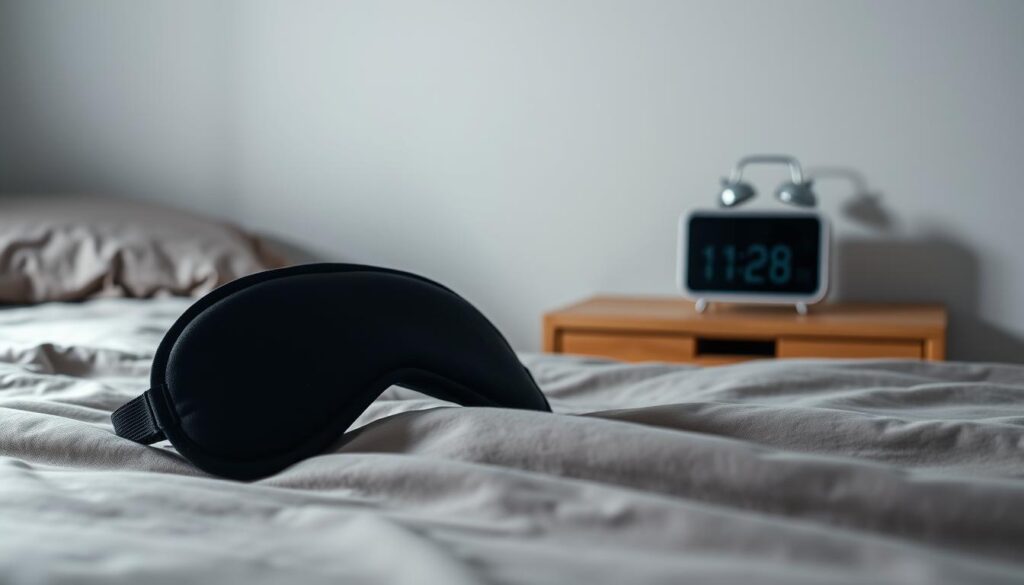
Blackout performance: nose bridge, side gaps, and movement
We checked for light leaks at the nose and side edges while lying on the back and the side. Masks that only block light when tightened scored lower.
Hybrid silk plus molded foam filled tiny gaps best under side pressure, reducing the need for clamp-like straps. High-tech models like the Manta Pro gave near-perfect blackout but could press an eye if shifted.
Comfort metrics: thinner profiles, cool fabrics, and eyelid clearance
Comfort tests measured heat buildup, eyelid clearance, and how a mask deforms under pillow load. Silk felt cooler and gentler on the face than synthetics.
Molded foam gave eye space but sometimes trapped heat or lost shape against a pillow.
Strap systems tested: sliding buckles vs. velcro vs. dual straps
Thin dual straps with sliding buckles stayed put and adjusted quietly. Velcro lost points for noise and snag risk, while single wide bands often rode up.
Materials and breathability: silk, foam, and tech fabrics
- Silk: cooler on skin, less irritation.
- Foam: structure and deep eyecups, can heat up.
- Tech fabric: durable blackout but varies in comfort.
Editor’s ranking: the Top Sleep Masks for 2025
We evaluated each model for blackout, strap behavior, and how it feels on the face and head. These picks favor masks that block light without forcing tight straps or leaving pressure marks on skin.

Best overall: Alaska Bear Silk Contoured (hybrid silk + molded foam)
Why it wins: A hybrid build uses silk against skin and molded foam for structure. It blocks light well with little pressure. The thin sliding strap adjusts quietly. Expect a small nose leak only when side-pressed and occasional riding up.
Best lightweight silk: Alaska Bear Two-Strap Silk
This pouch is feather-light and breathes. Dual sliding straps keep the fit stable. Thin silk can filter a little light, but most rooms stay dark enough. The nose flap needs careful alignment.
Best budget foam contour: Bedtime Bliss
Deep eyecups and solid geometry on a tight budget. Good nose coverage, but the velcro strap is loud and can snag. Claims OEKO-TEX materials for comfort.
Best for deep eye space: Bucky 40 Blinks
Wide profile with roomy eye cups that protect the eyes under pillow pressure. Stability can suffer due to its larger footprint; expect moderate nose leak in some side positions.
Best high-tech blackout (for back sleepers): Manta Pro
Perforated foam, Tactel nylon, and adjustable eyecups give near-perfect blackout. Ideal for back use — side shifts can create unwanted eye pressure if cups move.
“Choose the design that matches your position: thinner, cooler builds for side sleepers; deeper cups for back sleepers.”
Pick details: why each mask won its spot
Each pick earns its spot by solving a specific fit or blackout problem we saw in real nights. Below are concise reasons why these models work for different positions, face shapes, and sensitivity levels.
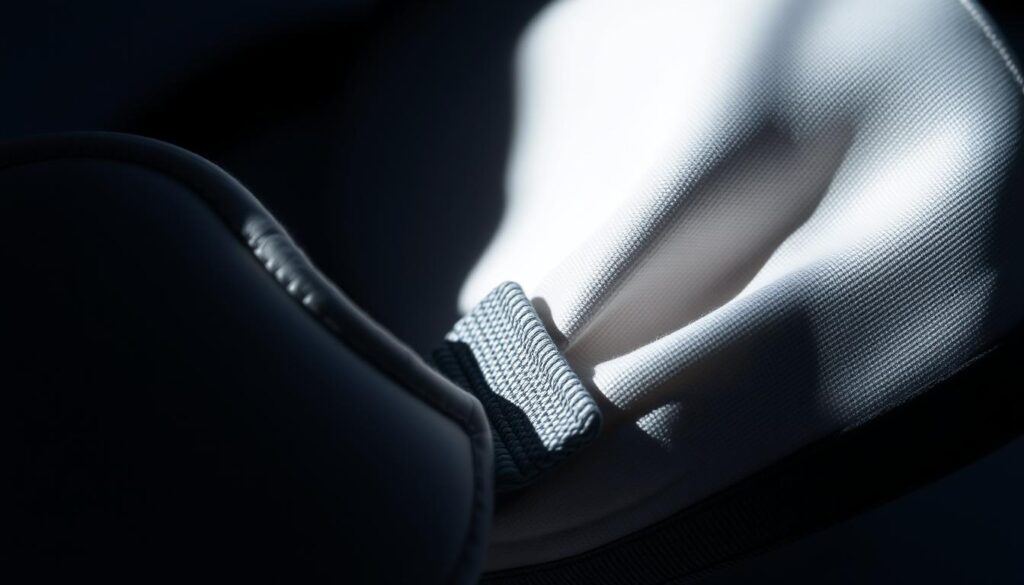
Alaska Bear Silk Contoured — hybrid comfort that still blocks light
Why it stands out: silk-clad molded foam smooths micro-gaps while maintaining eyelid clearance. The smaller face footprint reduces side pressure and usually blocks light without tightening the strap.
Watchouts: the single sliding strap can ride up if loosened too far, and a tiny nose leak may appear under heavy side load.
Alaska Bear Two-Strap Silk — breathable, cool, and stays put
Why it stands out: dual silent sliders stabilize the mask with minimal head pressure. Ultra-thin silk keeps the face cool and reduces irritation overnight.
Watchouts: thin silk can partially filter light in very bright rooms and the nose flap needs careful placement.
Bedtime Bliss — OEKO-TEX-claimed materials and solid geometry
Why it stands out: deep foam cups let the eyes blink freely and give strong structure for a budget price. Decent nose coverage helps block light when shape holds.
Watchouts: velcro is noisy and can snag, and long-term use may cause outer fabric delamination.
Bucky — wide, deep cups with some shift tradeoffs
Why it stands out: extra-deep cups prevent eyelash contact even under pillow pressure. Good choice if you need roomy eye space.
Watchouts: the wider body can shift more during side sleeping, and the velcro closure adds noise during adjustment.
Manta Pro — perfect blackout, but risky for side sleepers
Why it stands out: near-perfect blackout from perforated foam and Tactel nylon, with adjustable eye cups for precise fit.
Watchouts: cups can drift and press on eye corners when you sleep on your side — best for back sleepers who want total darkness.
| Model | Material | Strap | Best for | Main tradeoff |
|---|---|---|---|---|
| Alaska Bear Silk Contoured | Silk + molded foam | Single sliding | Side sleepers seeking balance | Tiny nose leak under heavy side load |
| Alaska Bear Two-Strap Silk | Ultra-thin silk | Dual sliding | Hot sleepers and fidgeters | Partial light filtering in bright rooms |
| Bedtime Bliss | Molded foam | Velcro | Budget buyers needing eyelid clearance | Noisy velcro; potential delaminate |
| Bucky 40 Blinks | Foam with fabric cover | Velcro | Those needing deep eye cups | Wide profile shifts during side sleep |
| Manta Pro | Perforated foam + Tactel | Adjustable cups + strap | Back sleepers seeking blackout | Cup pressure for side sleepers |
Materials cheat sheet: silk vs. foam vs. “tech” fabrics
Materials shape fit, heat, and how well a mask blocks light. Pick the fabric that matches your skin sensitivity and sleeping position for best results.
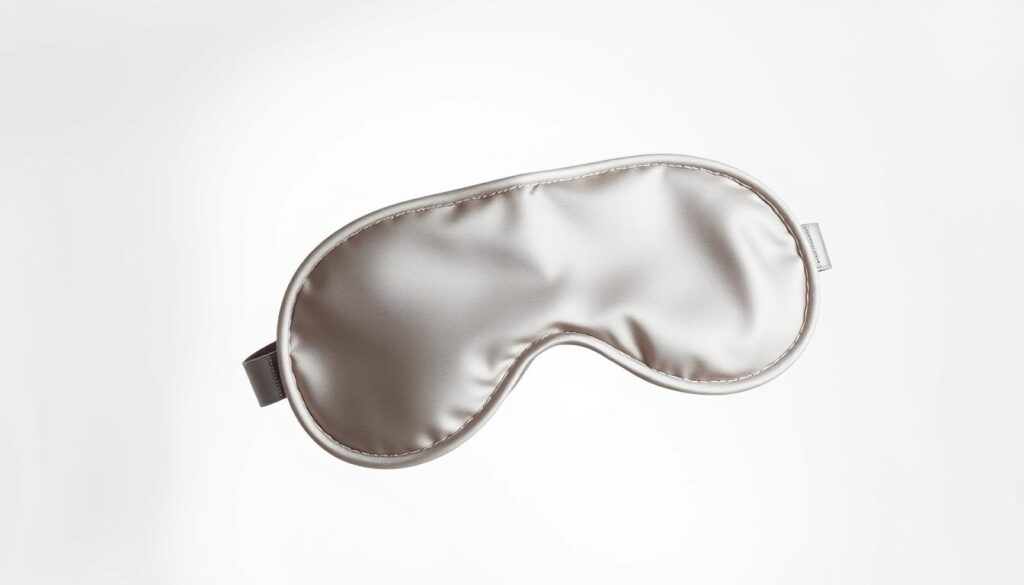
Silk masks: cool to the skin, low bulk, small light trade-offs
Silk against skin feels cooler and reduces friction, so irritation drops for sensitive faces.
Pros: lightweight, breathable, and kinder to the skin during long wear.
Cons: very thin silk weaves can let a sliver of light through, though most bedrooms remain dark enough.
Molded foam: structure and eyelid clearance with heat tradeoffs
Foam builds provide deep eyecups that protect the eye and keep lashes clear.
They add structure and maintain space around the eyes, but tight, dense foam can trap warmth and deform under side pressure.
Tech fabrics and hybrids: airflow versus perfect seals
Perforated foam, mesh, and Tactel blends aim for airflow while keeping a seal. They help, but even a well-made seal can collect heat around the eye area.
Hybrid approach — silk lining over molded foam — often delivers the best balance: cool skin contact plus reliable blackout and gap-filling for side sleepers.
- If you run hot: prioritize thin silk touching skin and avoid bulky multi-layer builds.
- Need eyelid clearance: choose foam cups but watch for heat and pressure.
- Want both: consider a hybrid silk-over-foam option for comfort and seal.
For related bedding choices that help overall temperature regulation, see our guide to cooling sheets.
Straps and closures: sliding buckles beat velcro for quiet adjustments
Quiet, adjustable closures make the difference between a mask that stays put and one you wake to refit. Choose sliders for silent fine-tuning and dual bands for stability that spares your ears.
Single vs. dual straps: stability, ear comfort, and staying in place
Sliding buckles allow you to fine-tune fit without noise, preserving sleep for you and anyone nearby. They glide smoothly and avoid the hook damage velcro can cause to linens.
Velcro often introduces noise and can pill pillowcases. Exposed hooks may snag hair or fabric, which shortens the life of both your mask and bedding.
Two thin straps spread pressure across the back of the head. That reduces hotspots and keeps the mask in the right place when you roll to your side.
- Sliding buckles let you fine-tune without waking yourself.
- Velcro may be loud and can damage linens; covered hooks are safer if you must choose it.
- Dual straps sit away from the ears and reduce pressure on temples.
- Soft elastic with smooth sliders cuts friction on the skin and limits movement.
| Strap type | Noise | Best for | Notes |
|---|---|---|---|
| Single sliding strap | Low | Minimalists; smaller heads | Can ride up on loose adjustment; gentle on head |
| Dual sliding straps | Low | Side sleepers and sensitive ears | Distributes force; keeps mask in place longer |
| Velcro-covered | Medium (if exposed hooks) | Adjustable, budget options | Choose designs that fully cover hooks to avoid snagging |
| Exposed velcro | High | Avoid | Can damage linens and trap hair; noisy at night |
Shape and eyecups: getting the nose bridge and eyelid space right
A mask’s shape determines whether you get true darkness or a steady drip of light at the nose. Match cup depth and nose design to your sleeping position to reduce leaks and pressure.
Raised eyecups let your eyes open and blink without eyelashes rubbing the fabric.
How raised eyecups protect eyelids without added pressure
Deep, structured cups create real clearance for the eyes, so lashes and eyelids avoid contact during the night.
But very deep cups add bulk. On your side the pillow can press them and shift the mask.
Look for a slimmer side profile that still keeps clearance—this balances eyelid comfort with low movement.
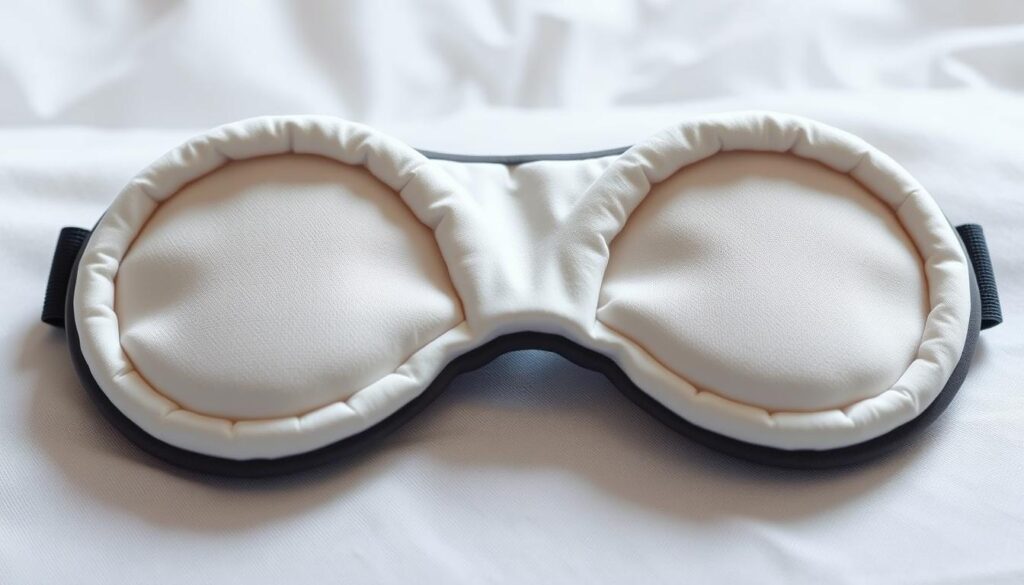
Why nose flaps and cutouts matter for blocking central light
Nose deformation is the main cause of leaks when you sleep on your side. High cutouts can channel a beam of light right down the center.
Flexible nose flaps and well-placed cutouts improve the seal, but they must sit correctly each time you don the sleep mask.
- Eyecup depth: protect eyelids and avoid lash contact without creating bulky side pressure.
- Even spacing: masks that sit evenly around eyes lower hotspot pressure on the face and head.
- Nose sealing: cutouts that ride high often produce a central light leak under side load.
- Hybrid builds: silk over foam fills micro-gaps at the nose bridge and keeps light out under mild pressure.
- Quick fix: if light appears, tweak the nose area first—small adjustments often restore a full block light seal.
In short, comfort and blackout meet at the nose bridge and around eyes. Get that match right and you will prevent most leaks while keeping pressure low.
Alternatives and honorable mentions for different sleepers
Different routines call for different designs — here are three solid alternatives that cover travel, luxury, and tech. Each pick offers a clear tradeoff between comfort, blackout, and special features so you can match one to your nightly habit.
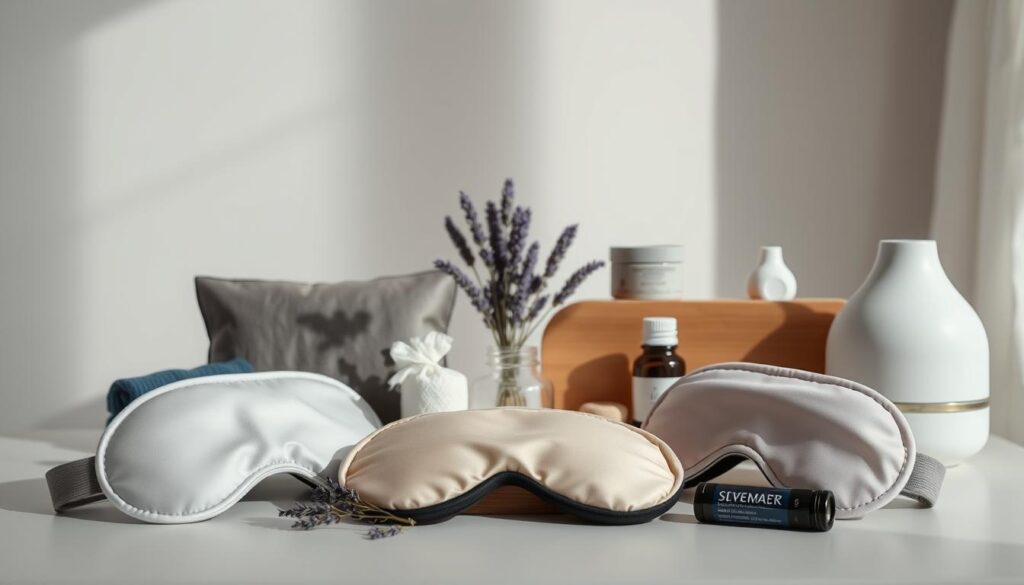
Therabody SleepMask: vibration-assisted relaxation with blackout
This mask blends gentle vibration modes with built-in blackout ridges. The tiny motors help calm facial tension and the smooth PVC/knit material feels clinical yet soft.
Battery life is long — roughly 240 hours per charge — and the ridged interior blocks light even if you tilt your head down.
100% mulberry silk shapes to the face with no hard parts, offering a classic lightweight experience. It provides partial blackout while staying cool and nearly weightless on the eyes.
For anyone who dislikes bulky cups, this material-first design favors comfort over absolute darkness.
Matador Blackout: packable travel pick with bamboo liner
Matador focuses on portability: nylon outer, bamboo liner, and a pocket that folds the mask into itself. It works well on planes and recliners where your head sits upright.
In bed the mask can slip unless tightened precisely — tighten too much and head comfort drops.
- Therabody: vibration + reliable blackout; best for wind-down routines.
- Dream Recovery: silk comfort; best for those who favor light weight and cool fabric.
- Matador: travel-ready; best for carry-on minimalists and upright rest.
| Model | Main feature | Material | Best use | Main tradeoff |
|---|---|---|---|---|
| Therabody SleepMask | Vibration-assisted relaxation | PVC/knit with soft ridges | Evening wind-down at home | Tech weight; pricier than basic masks |
| Dream Recovery Silk | Premium silk comfort | 100% mulberry silk | Light, cool overnight wear | Partial blackout vs. foam cups |
| Matador Blackout | Ultra-packable blackout | Nylon outer, bamboo liner | Travel and recliners | May slip in bed if not tightened |
Care, hygiene, and longevity: getting more hours from your mask
Simple washing and storage habits add real hours to a mask’s usable life. Small routines protect skin, preserve seals against light, and keep straps working night after night.
Hand-wash silk regularly with mild detergent and air-dry to protect the fabric and sensitive skin. Many synthetic covers say they are machine-washable; when you use a machine, pick a delicate bag and cool settings to limit wear.
Clean contact points on the face and head often. Oils and makeup build up fast and can irritate skin or reduce the mask’s ability to seal out light.
Inspect straps and buckles monthly and replace the mask when elasticity fades. Avoid exposed velcro hooks — cover them in storage to stop pilling on linens.
- Rotate two masks so each fully dries between uses.
- Store flat or in a breathable pouch to avoid creases or foam deformation.
- If outer fabric peels from foam, test gentle re-gluing, but replace if light leaks grow.
“Treat your sleep mask like a daily garment: small care habits add meaningful hours of consistent performance.”
| Care action | Frequency | Why it matters |
|---|---|---|
| Hand-wash silk | Weekly | Preserves smooth fabric and protects skin |
| Machine wash (delicate bag) | Biweekly | Limits wear on material and straps |
| Inspect straps / cover velcro | Monthly | Maintains fit through the night and protects linens |
Quick comparison tips: match a mask to your sleep position and skin
Match your mask to how you sleep and how your skin reacts; the right fit solves most nighttime light leaks. Start by prioritizing position, then choose material and strap style to finish the fit.
Side sleepers: what to pick and why?
Pick a thinner profile with dual sliding straps so the mask stays in place without pressing on ears or temples.
Look for soft, flexible nose coverage that seals under pillow pressure without tight clamp force. Silk against skin cuts friction and helps regulate warmth.
Hybrid silk over foam can fill small gaps at the nose without adding bulk, keeping light out while protecting sensitive skin.
Back sleepers: how to aim for full blackout
Choose deeper eye cups and structured seals for a reliable blackout at the nose bridge. Models with repositionable cups excel when you lie flat.
Foam cups add eyelid clearance but can trap heat; high-tech materials balance airflow and seal. If you rarely roll to your side, prioritize blackout performance over slimness.
- Combination sleepers: favor masks that block light across positions and use sliding buckles to tweak fit fast.
- Sensitive eyes: ensure eyelid clearance and avoid designs that risk ridge pressure near the eye surface.
- Travelers: carry a light silk packable mask and keep deeper cups for home nights.
“Match your mask to your position first; then fine-tune material, cup depth, and strap style for comfort and blackout.”
| Sleeper position | Recommended design | Key material | Main benefit |
|---|---|---|---|
| Side | Thin profile, dual sliders, soft nose | Silk or silk-over-foam | Stays put; resists nose deformation |
| Back | Deep cups, structured seal | Foam or tech foam + Tactel | Maximum blackout at nose bridge |
| Combination / Travel | Adjustable sliders, moderate cup depth | Light silk or packable hybrid | Versatile fit across positions |
Conclusion
Practical tests show clear trade-offs: darkness, pressure, and how a mask fits your head and face dictate real comfort. Pick the design that blocks light without clamping the nose and that stays in place through position changes.
Our long-term results favor the Alaska Bear Silk Contoured as the best all-rounder for side sleeping. The Alaska Bear Two-Strap Silk gives the lightest, coolest feel. Bedtime Bliss is the budget foam option, and Manta Pro delivers near-total darkness for back sleepers.
Focus on sliding buckles and dual straps if you move at night; avoid exposed velcro if you care about linens and noise. Try more than one mask if you can — the right one should block light in your bed and position without leaving pressure marks.
For an independent roundup and more model comparisons, see a curated list of the best sleep masks to help narrow choices.
FAQ
Which mask style blocks the most light for side sleepers without pressing on the eyes?
For side sleepers, contoured masks with molded eyecups and a soft nose bridge—like hybrid silk plus foam designs—tend to block light effectively while avoiding direct eyelid pressure. Look for masks that advertise raised eye cavities and a flexible nose flap; these features prevent gaps along the nose and keep foam or fabric off the eyelids so you get blackout without soreness.
How do eyecups compare with flat masks for eyelid comfort and REM sleep?
Eyecups create space around the eyes, reducing eyelid contact and pressure. That helps prevent twitching, preserves natural eyelid movement during REM, and reduces tear-film disruption. Flat masks can press on lids and eyelashes, which may interrupt REM or cause morning marks—so choose molded cups if you value eyelid clearance and deeper uninterrupted sleep.
Are silk masks better for temperature regulation than foam?
Silk is smoother and tends to feel cooler against skin because it wicks moisture mildly and has lower thermal mass. Molded foam offers structure and better eyelid clearance but can trap heat. If you run hot, pick silk or mixed fabrics with breathable panels; if you need space around the eyes, a hybrid (silk face layer with breathable foam cups) balances both needs.
What strap system stays put for side sleepers without hurting ears?
Dual straps or a split-strap system with sliding buckles generally provides the most stability and keeps pressure off the ears. Velcro can be noisy and may shift; single straps are simpler but can let the mask rotate on the head. For side sleepers, choose a dual-strap mask that lets you adjust tension independently to keep the seal without pinching the ear or head.
How should I care for a silk mask versus a foam mask?
Silk masks usually require gentle hand washing with mild detergent and air drying to preserve fibers. Foam masks may be spot-cleaned or have removable fabric covers that are machine-washable—always follow the manufacturer label. Regular cleaning every one to two weeks prevents oil and bacteria buildup and extends the life of the mask.
Can a mask be fully blackout and still comfortable for side sleeping?
Yes—some masks achieve near-total blackout with careful design: contoured eyecups, a flexible nose bridge, and soft yet structured materials. However, extreme blackout designs that press flat against the face can be uncomfortable for side sleepers. The best compromise uses molded cups and soft seals to block light while reducing lateral pressure.
Do headband-style masks affect hair or skin more than traditional face masks?
Headband-style options distribute pressure across the scalp and can be gentler on facial skin, reducing creasing and irritation. However, they may interact with hair (slippage or flattening) differently depending on material. Silk-lined straps are less likely to tangle hair and reduce friction compared with synthetic bands.
Which materials are safest for sensitive skin and night-time acne-prone faces?
Natural silk and OEKO-TEX–certified fabrics are good choices for sensitive or acne-prone skin because they reduce friction and are less likely to contain irritant dyes or chemicals. Removable, washable covers also help by allowing frequent cleaning to remove oils and bacteria that worsen acne.
How do I prevent light leaks around the nose when sleeping on my side?
Look for masks with a shaped nose flap, molded bridge, or a flexible, contoured seal that conforms to your nose without pressing. Adjustable nose pieces, soft fabric gussets, and masks with slightly longer nose coverage help maintain a blackout seal even when your face compresses against a pillow.
Are velcro closures worse than sliding buckles for noise and durability?
Velcro can be louder when adjusted and may wear faster or snag hair and fabrics. Sliding buckles are quieter, allow finer adjustments, and often last longer. For sleepers who wake easily, a quiet buckle system is usually preferable.
How much should I expect to pay for a durable, comfortable mask that blocks light well?
Price ranges vary: budget foam contoured masks can start low, while premium silk or hybrid designs with dual straps and molded cups cost more. Expect to invest more for materials like 100% mulberry silk, engineered foam eyecups, and refined strap systems—these features increase comfort, longevity, and blackout performance.
Which masks are best for travel and packability without losing shape?
Packable masks that use soft, foldable fabrics—such as silk or thin tech fabrics with removable covers—travel well. Avoid rigid molded foam if you need to compress the mask into luggage. Some brands include a protective case to keep shape while packed.
Do raised eyecups interfere with side sleeping stability or cause shifting?
Deep eyecups can shift if the mask lacks adequate lateral stability. That’s why the strap design matters: dual straps and secure sliding buckles hold a cupped mask in place during side movement. Choose a mask with a low-profile cup depth if you need minimal lateral bulk, or a well-supported deeper cup if eyelid clearance is a priority.
Are there masks designed specifically for people who wear masks with hair or headwear (headphones, turbans)?
Yes—some masks use low-profile straps, split straps, or side-release systems that reduce interference with headphones or headwear. Look for models that advertise thin straps or an alternative anchor point to avoid pressure where headphones sit.
How often should I replace a foam or silk mask?
Replace masks when materials lose shape, straps stretch, or hygiene becomes an issue—typically every 12–24 months depending on use and care. Foam that compresses and silk that frays or discolors are signs it’s time for a new mask.
Can a mask help with migraine or photophobia?
High-quality blackout masks can reduce light-triggered discomfort by minimizing ambient light exposure, which can help some people with photophobia or light-sensitive migraines. Pairing a gentle, nonpressing design with cooling materials may increase comfort during attacks, but consult a clinician for chronic migraine management.
What should I look for if I sleep hot and also sleep on my side?
Choose breathable fabrics (silk or technically woven panels), thinner foam profiles, and masks with moisture-wicking liners. Dual-strap systems keep the seal without wrapping tightly, and a hybrid mask with a silk face layer over ventilated foam cups balances airflow with eyelid clearance.
Are there masks that combine blackout with relaxation tech like vibration or sound?
A few models add gentle vibration or integrated audio for relaxation, but these often increase bulk and can affect fit for side sleepers. If you want tech features, prioritize a model designed to maintain the seal with added components or use a separate compact device that doesn’t alter mask shape.
How do I match mask fit to my face shape?
Measure nose-to-eye distance and cheekbone width where the mask will sit. Opt for masks with adjustable straps and a forgiving nose flap if you have a narrow or wide bridge. Reviews and manufacturer dimensions help—choose a model that offers trial periods or easy returns to ensure the right fit.
Can eyecup masks cause dry eyes or irritation overnight?
Properly designed eyecups should not cause dry eyes if they don’t press on the eyelids or interrupt natural blinking. If you wake with dryness, try a mask with larger eyelid clearance, a looser strap setting, or consult an eye care professional to rule out underlying dry-eye conditions.
What are simple tests to check blackout performance before buying?
Try the mask on in a bright room and move your head side-to-side and lie on your side on a pillow. Check for gaps at the nose and edges. If possible, test in low light to see whether any light bleeds through seams. Many retailers offer trial periods—use them to test real-world blackout and comfort during side sleeping.


Don’t Miss These Picks