Functional Training for Everyday Strength—Not Just the Gym

Learn Functional Training for Everyday Life with our expert guide. Discover exercises to boost strength and improve daily functionality.

Can a short, simple routine really make grocery bags, stairs, and reaching overhead feel effortless? That question frames this guide.

Table of Contents show

Most programs focus on muscles. This one trains movements. We target the big movement patterns—squat, hinge, lunge, push, pull, carry, and core—so your body moves better during daily activities.

By Emily Carter, certified health and wellness writer – Fact-checked and reviewed by our editorial team.

This approach builds practical strength and reduces injury risk with lower intensity work than heavy bodybuilding or high-intensity sport regimens. You can start at home with minimal gear and scale up as you gain confidence.

We blend science-backed cues and clear progressions so you know how to pick weight, reps, and the best way to structure a workout that shows up in real life. If you need ideas for no-gym options, see this guide on working out free at home: at-home workout options.

Key Takeaways

  • Movement matters: Train patterns, not just muscles.
  • Minimal equipment can build meaningful strength for daily tasks.
  • Clear progressions help you start safely and improve steadily.
  • Focus on squat, hinge, lunge, push, pull, carry, and core.
  • Prioritize joint alignment and back-friendly bracing to reduce risk.

Why Functional Training Matters Right Now for Daily Activities

Small, purposeful workouts teach your body to handle real tasks like lifting a box or getting up from the floor. They build strength that shows up in the things you do each day.

This approach links exercise to real movement. Practice squat, hinge, lunge, push, pull, and carry patterns and your body learns to repeat those actions under load.

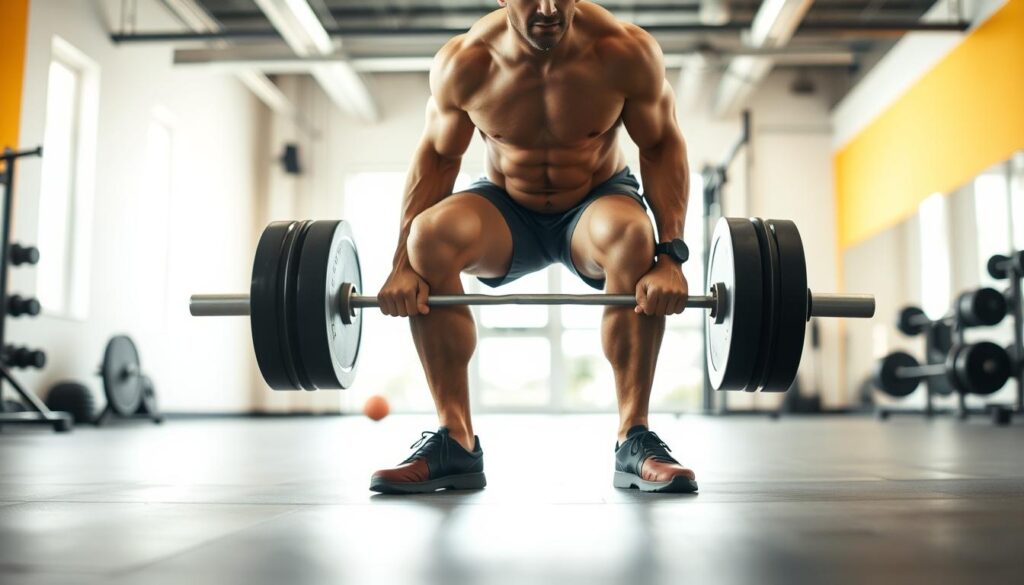
A muscular person performing a functional, compound exercise like a deadlift in a bright, airy gym. The foreground shows the person's powerful, engaged core and leg muscles as they lift a heavy barbell from the floor. The middle ground captures the person's determined facial expression and natural, fluid movement. The background is blurred, emphasizing the focus and effort of the exercise. Warm, directional lighting highlights the subject's physique and the textures of their clothing and the gym equipment. The overall scene conveys a sense of everyday strength, discipline, and the practical benefits of functional training.

From floors to stairs: translating movements to real life

Getting off the floor, climbing stairs, or reaching a high shelf relies on leg and core power. Work on those patterns slowly and with control.

Do five to six exercises, three to four days per week. Use bodyweight, a band, or dumbbells to match your starting level.

Key benefits: strength, balance, mobility, and lower injury risk

Benefits accumulate fast: better balance, improved joint mobility, and more confidence during common tasks. Expert views suggest any added strength helps, but movement-specific work gives the biggest transfer.

Benefit Why it helps Daily example
Strength Supports lifting and carrying loads Carrying groceries without strain
Balance & Mobility Reduces stumbles and improves range Steady on stairs and curbs
Lower injury risk Safer mechanics under load Getting up from the floor with control

Functional Training for Everyday Life: What It Is and How It Works

Good movement practice builds usable power that translates to stairs, groceries, and playtime with less effort. This method trains whole-body actions so strength becomes practical, not just aesthetic.

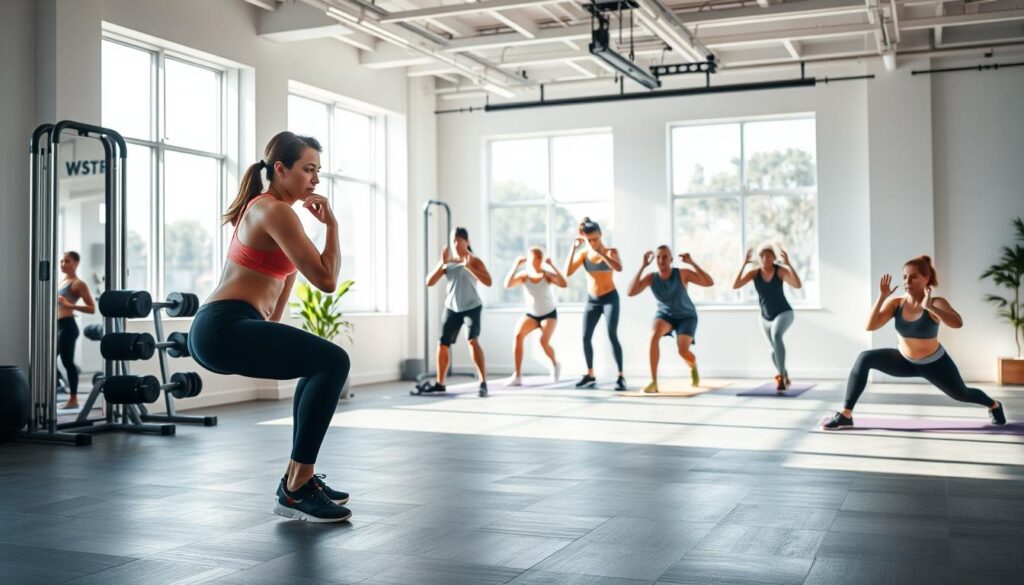
A functional training studio setting with a well-lit, airy atmosphere. In the foreground, a person performs a dynamic squat with perfect form, their body in motion against a backdrop of sleek, modern fitness equipment. In the middle ground, individuals engage in a variety of functional movements such as lunges, push-ups, and core exercises, their expressions focused and determined. The background features minimalist decor, clean lines, and large windows that allow natural light to pour in, creating a sense of openness and tranquility. The overall scene conveys the essence of functional training as a holistic approach to everyday strength and wellness.

How does this differ from classic lifting? Traditional strength training often isolates single muscles to raise maximal force or size. That has clear value, but it may not mirror how you move in daily tasks.

Functional vs traditional strength training

Functional work emphasizes multi-joint patterns—squat, hinge, lunge, push, and pull—that match real movements. These moves recruit several muscle groups at once and train the nervous system to coordinate them.

Traditional strength training still boosts raw strength and can raise your ceiling. The difference is intent: one targets movement quality and transfer, the other targets peak force in a specific muscle.

Multi-joint compound moves over isolation when life demands it

Multi-joint exercises are time-efficient. One compound move trains legs, core, back, and arms together under weight, so the body learns to produce force as a system.

  • Practical: carry-over to chores and uneven surfaces.
  • Efficient: fewer exercises needed to improve overall fitness.
  • Progressive: easy to add weight or reps as you gain strength.

Blend both approaches as you progress: use targeted lifts to build raw power, then apply that power with movement-focused circuits. For a useful primer, see this concise guide on adult functional fitness: functional fitness for adults.

Assess Your Starting Point Safely: Levels, 1-Rep Max, and Readiness

Begin with a short readiness check and a practical 1RM estimate to guide safe progress. These steps help you choose the right weight and reps while protecting joints and energy.

What is 1RM? One-repetition maximum is the heaviest load you can lift once for a given lift. It’s a useful benchmark to set training loads that transfer to daily tasks.

A well-lit gym interior, the focus on a weight-laden barbell resting on a sturdy squat rack. The lifter, dressed in athletic attire, stands ready, hands gripping the bar in preparation for a maximal effort. Sweat glistens on their brow as they take a deep breath, their expression one of intense concentration. The background is blurred, drawing the viewer's attention to the lifter and the weighted bar, symbolizing the assessment of their strength potential. Soft, directional lighting casts shadows that accentuate the lifter's muscular form, conveying the idea of functional strength and readiness. The overall atmosphere is one of focused intensity, capturing the essence of determining one's one-rep max in a safe and controlled environment.

How to use 1RM and readiness checks

Start with simple movement screens to establish your starting level. Use conservative loads so your first sessions build confidence, not fatigue.

  • Estimate 1RM with a submax set you can do 6–10 times and use a standard formula to approximate your max.
  • Set working sets at about 50–70% of estimated 1RM for most functional patterns.
  • Track reps in reserve so you self-regulate effort and protect muscle and tendon health.
Check Why it matters Practical cue
Readiness screen Identifies mobility or pain limits Move slowly; stop if sharp pain
Submax test Gives a safe 1RM estimate Pick a weight for 6–10 solid reps
Weekly check-in Shows transfer to daily tasks Are groceries easier to carry?

When in doubt, use conservative weight and add small increases in time, reps, or load each week. For guidance on estimating 1RM safely, see this concise guide: one-rep max—how to calculate and use.

Master the Big Movement Patterns You Use Every Day

Mastering a handful of strong moves translates directly to easier chores and safer lifting. Focus on quality over load and you’ll see better balance, less pain, and more confidence on stairs and while carrying groceries.

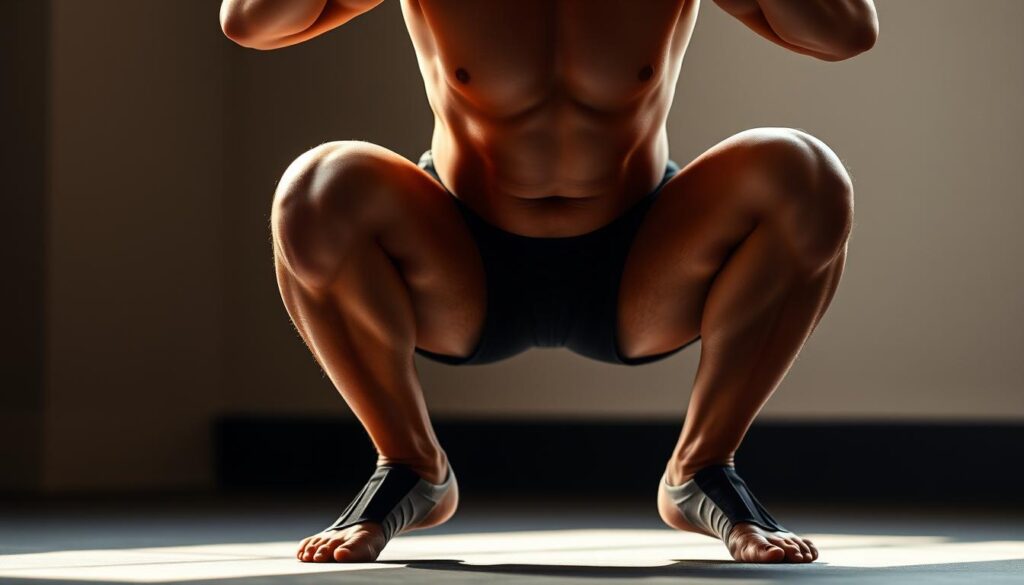
A person performing a deep squat with proper form, chest upright, knees tracking over toes, hips sinking back, weight evenly distributed through the heels. Lighting is natural, slightly diffused, with warm tones that highlight the muscular contours of the body. The background is blurred, putting the focus on the squat movement itself. The model is wearing minimal, form-fitting athletic attire to showcase the biomechanics of the exercise. The overall mood is one of functional strength and everyday capability, emphasizing the utility of this fundamental human movement pattern.

Squat and sit-to-stand

Squat practice trains multi-joint coordination used when rising from a chair or picking items up. Keep feet grounded, knees tracking, and chest tall. Progress to a squat with an overhead press to add full-body demand.

Hip hinge and deadlift

The hip hinge shifts force to the hips and glutes so the back stays neutral. Deadlifts strengthen hamstrings and back; try a deadlift-to-row combo to challenge control and posture.

Lunge and step patterns

Lunges and lateral step-ups build single-leg stability for stairs and floor transfers. Align knees with toes and feel pressure through the whole foot to protect joints.

Push, pull, carry, and core

Rows and presses support reaching and opening doors. Loaded carries boost grip, shoulders, and core for grocery tasks. Planks and side planks resist rotation and improve posture.

“Movement quality drives lasting strength; repeatable, clean reps matter more than heavy loads.”

Movement Main muscles Daily task
Squat Quads, glutes, core Sitting, standing, picking items
Hip hinge / Deadlift Glutes, hamstrings, back Lifting from low surfaces
Lunge / Step-up Legs, hips, glutes Stairs and floor transfers
Carry / Press / Row Shoulders, core, back Groceries, shelves, doors

How to Do the Foundational Exercises with Strong Form

Learn the exact body positions that protect your spine and boost each lift. Simple, reliable cues make practice safe and transferable to daily tasks.

Lower body essentials: squats, deadlifts, lunges, lateral step-ups

Stand shoulder-width for a proper squat, brace your core, and sit the hips back slowly. Keep chest proud, track knees over toes, and drive through the feet. Start bodyweight; add light dumbbells once the position stays consistent for all reps.

Hinge at the hips for deadlifts with a flat back and the weight close to the legs. Stop if the back rounds. For lunges, use a long step, lower until both knees near 90°, and press through the whole front foot.

Lateral step-ups train side-to-side stability. Place the entire foot on the box, drive through midfoot and heel, keep hips level, and step down with control.

Upper body builders: rows, incline chest press, shoulder press, front raises

Hinge or use a bench for rows; pull elbows toward the ribs and control the eccentric. An incline chest press at 45° is a friendly push alternative—keep wrists neutral and lower until arms pass parallel.

Press overhead with ribs down and glutes tight. Use thumbs-up for front raises to protect the shoulders. Keep shoulder blades stable and avoid shrugging during pressing work.

Core and stability: planks, side planks, single-leg balance lifts

Align ears-shoulders-hips-ankles in planks and press the floor away with hands or forearms. Breathe and keep a braced core to protect the back during floor transfers.

Side planks and single-leg lifts build lateral control and transfer to safer bending, stepping, and carrying. Add balance challenges only when basic positions feel solid.

Program cue: Leave one to two reps in reserve on working sets to build skill, strength training progress, and reduce injury risk.

Exercise Key position cue Progression Risk to watch
Squat Chest proud, hips back, weight through feet Bodyweight → light dumbbells → loaded squat Allowing knees to collapse inward
Deadlift Hinge at hips, flat back, weight close to legs Hip-hinge drill → kettlebell → barbell Rounding the back under load
Lunge / Step-up Knee tracks over toes, drive through front foot Reverse lunge → weighted lunge → step-up height/weight Short stride that stresses knee
Plank / Side plank Neutral spine, braced core, steady breath Forearm plank → weighted plank → single-leg plank Low back sagging to the floor

Want a simple protocol to tie these positions together? Check this concise primer: foundational fitness protocol.

Progressions, Regressions, and Options for Every Fitness Level

Start light, prioritize clean positions, and add challenge in small steps. Progress safely by moving from bodyweight, to bands, to dumbbells as form improves.

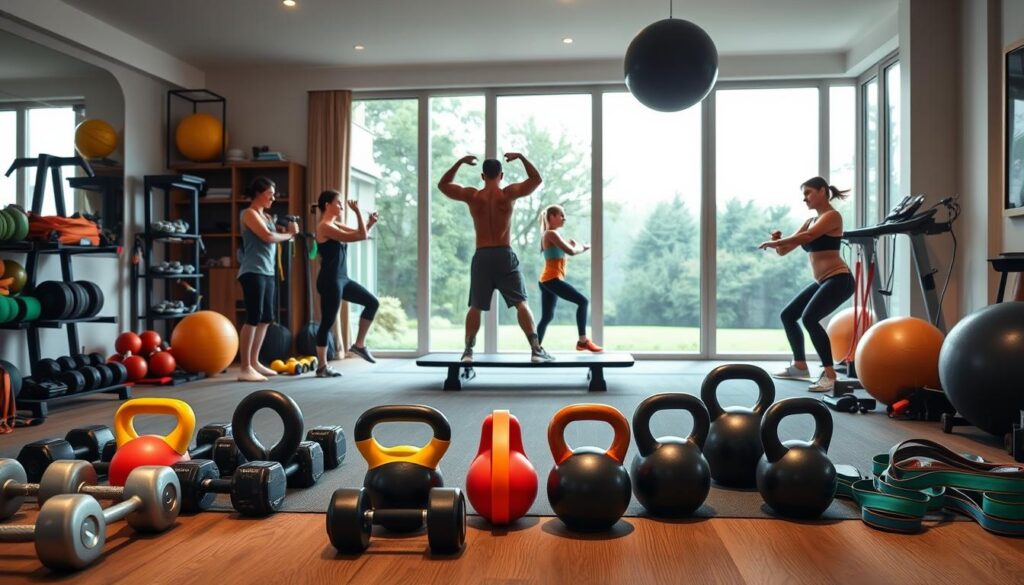
A well-equipped home gym with an array of dumbbells, kettlebells, resistance bands, and exercise balls. The foreground showcases a progression of strength-building exercises, from beginner to advanced, with people demonstrating proper form. The middle ground features a balance board and other versatile training tools, highlighting options for developing stability and balance. The background depicts a serene, natural setting with large windows, bringing the outdoors in and creating a calming, motivating atmosphere. The lighting is soft and diffused, creating a warm, inviting ambiance. The composition emphasizes the interconnectedness of strength, stability, and flexibility for everyday functional fitness.

How to scale load and difficulty

Begin with bodyweight to learn the position and movement patterns. Use bands next to add tension without heavy weight. Move to dumbbells when each rep stays crisp.

Ways to challenge control without heavy loads

Tempo: slow the eccentric (3 seconds) to increase time under tension and teach control with fewer reps.

Range of motion: add heel-elevated squats or deeper hinges gradually to target muscle and protect the hips and back.

Single-leg work and smart regressions

Unilateral exercises—single-leg deadlifts, split squats, step-ups—improve balance and expose asymmetries. Regress by shortening range or using support like a box or wall.

Option When to use Progression
Bodyweight New learners; pain or mobility limits Band → light dumbbells
Tempo work Short on time; focus on control 3s eccentric → normal tempo with weight
Unilateral Balance or side-to-side gap Assisted → single-leg → added weight

Keep progress small: add ~5% weight, one set, or a couple reps at a time. Rotate variations to avoid overuse and leave a rep in reserve so quality wins over quantity.

Want a wide library of specific moves to apply these steps? See this guide: A–Z workouts.

Build a Weekly Functional Routine for Real-Life Results

A clear weekly routine links practice to real tasks like carrying groceries or climbing stairs. Keep sessions short, focused, and repeatable so gains translate to daily movement.

A well-equipped home gym with various functional training equipment. In the foreground, a person performing a kettlebell swing, their muscles flexing with controlled power. In the middle ground, neatly arranged dumbbells, resistance bands, and a foam roller. The background showcases large windows overlooking a serene outdoor landscape, bathed in warm, natural lighting. The overall atmosphere exudes a sense of focus, discipline, and the fusion of fitness with everyday strength-building.

At-home plan with minimal equipment

Train three to four days per week with five to six exercises each session. Include a squat or step, a hinge, one push, one pull, a carry, and a core move.

Use a band and a pair of dumbbells for rows, goblet squats, Romanian deadlifts, step-ups, single-leg deadlifts, and planks. Start bodyweight and add weight as form stays smooth.

Gym-based plan for progressive overload

In the gym, apply progressive overload with barbells, machines, and heavier dumbbells. Add incline chest press, shoulder press, loaded carries, and deadlifts to raise your strength ceiling.

Sets, reps, rest, and time-saving supersets

Start with 2–3 sets of 8–12 reps on major movements. Hold carries and planks 20–40 seconds. Rest 60–90 seconds between hard sets.

Sample session: A1 goblet squat, A2 band row; B1 reverse lunge, B2 incline chest press; C1 suitcase carry, C2 plank — perform as supersets to save time and keep quality high.

“Small, steady progress beats sporadic intensity—add little weight, an extra set, or a couple of reps each week.”

Plan Days/week Core focus
At-home 3–4 Mobility, control, light weights
Gym 2–3 Progressive overload, heavier lifts
Shared tips All Rotate exercises every 4–6 weeks; add a short finisher

Want a quick primer on how this approach works? See a useful overview at what is functional training.

Stay Safe and Reduce Injury Risk as You Get Stronger

Prioritizing alignment and control reduces mechanical stress and keeps workouts safe as you get stronger. Small position cues—like where your feet land or how your hands grip—cut injury risk and protect progress.

A minimalist, high-contrast scene depicting the risks of physical injury. In the foreground, a human figure in a dynamic pose, with limbs outstretched, conveying a sense of strain and potential damage. In the middle ground, a grid of ominous warning symbols and danger signs, suggesting the consequences of improper form or overexertion. The background is a muted, monochromatic backdrop, allowing the central elements to stand out sharply. Dramatic lighting casts long shadows, creating a sense of depth and tension. The overall mood is one of caution and awareness, encouraging the viewer to approach strength training with thoughtfulness and care.

Key joint and spine cues

Align joints on every rep: keep your knees tracking in line with toes and avoid inward collapse during lunges.

Brace your core so the spine stays neutral during hinges and deadlifts. Practice planks to build that brace.

Practical safety steps

  • Feet and hips: center weight through the whole foot and keep hips level to reduce joint stress.
  • Hands and shoulders: use grips that keep shoulders down and back when you pull or carry.
  • Surface and space: pick stable ground and clear the floor before sets; adjust stance to your build.
  • If it pinches: shorten range, try a wall squat, or use an incline press until the position is pain-free.
  • Recovery: schedule rest days and rotate patterns so tissues adapt without overuse.

When in doubt, seek a physician or physical therapist to assess movement and tailor progressions. For a deeper guide that helps reduce injury and improve daily performance, see this practical primer to reduce injury risk: reduce injury risk.

About the Author

Emily Carter is a certified health and wellness writer with over 7 years of experience in evidence-based fitness, nutrition, and lifestyle content. As the lead author of Go4HealthnFitness.com, she’s passionate about simplifying science-backed wellness advice for everyday readers. When she’s not writing, you’ll find her strength training, hiking, or exploring natural supplements that actually work.

Editorial Process Note

Our Commitment to Accuracy: This article was medically reviewed for accuracy and fact-checked by our editorial team.

Medical Disclaimer: The information in this article is for informational purposes only and is not intended to be a substitute for professional medical advice, diagnosis, or treatment. Always seek the advice of your physician or other qualified health provider with any questions you may have regarding a medical condition.

Conclusion

End with a plan that converts exercise sessions into lasting movement skill and resilience. Small, steady sessions build usable strength and reduce risk while fitting into a busy day.

Blend two to three focused functional training sessions per week—or three to four mixed sessions with five to six exercises—to grow balance, mobility, and practical strength you feel during daily activities.

Pair movement-based work with targeted strength training so gym gains transfer to chores, stairs, and carries. Prioritize high-quality reps, protect your back and feet, and add tiny progressions each week.

Keep the plan simple, consistent, and safe to support long-term health and fitness. For more ideas on staying active at home, see this guide to stay fit without a gym.

FAQ

What exactly is functional strength and how is it different from regular gym workouts?

Functional strength focuses on movements you use in daily tasks—standing up, lifting groceries, climbing stairs—rather than isolated muscle work. It emphasizes multi-joint, compound patterns (squat, hinge, lunge, push, pull, carry) that build coordinated strength, balance, and mobility to reduce injury risk and improve real-world performance.

Who should start this kind of program and when is it appropriate?

Adults of almost any age who want safer, more capable movement should consider it—beginners, busy professionals, parents, and active older adults alike. Start when you can commit to consistent practice and have cleared any major medical concerns with a clinician. Begin with low impact, bodyweight variations and progress as strength and confidence increase.

How often should I train to see real-life improvements?

Aim for 2–4 sessions per week, mixing strength-focused days with mobility and balance work. Consistency matters more than frequency—short, well-structured sessions (20–45 minutes) deliver measurable gains in strength, endurance, and movement quality over 6–12 weeks.

How do I assess my starting strength safely—do I need a 1RM test?

You don’t need a maximal 1-rep max test for everyday progress. Use submaximal tests (5–10RM), functional movement screens, or simple tasks like timed step-ups and sit-to-stand counts. These give practical load and rep guidance while minimizing injury risk.

What are the most important movement patterns to prioritize?

Prioritize squat/sit-to-stand, hip hinge/deadlift, lunge/step patterns, push and pull actions, and core stability (anti-rotation). These patterns mirror daily activities—lifting from the floor, carrying bags, pushing doors, and maintaining posture—so they deliver the best transfer to real life.

Can I train at home with minimal equipment and still get results?

Yes. Bodyweight work, resistance bands, a set of dumbbells, and a step or bench allow effective progression. Focus on tempo, range of motion, and unilateral variations (single-leg or single-arm) to increase challenge without heavy equipment.

How do I scale exercises if I have knee, hip, or back pain?

Start with pain-free regressions: box squats or partial range, hip-hinge with light load or kettlebell deadlift, supported lunges or step-ups, and core anti-extension work. Prioritize joint alignment, neutral spine, and controlled tempo. Consult a physical therapist for persistent or sharp pain.

What rep and set ranges work best for everyday strength?

Use a mix: 6–12 reps for muscle and strength-building, 12–20 for endurance and movement practice, and 3–6 reps with heavier load for maximal strength if appropriate. Combine sets and rest strategically—2–4 sets per exercise with 30–120 seconds rest depending on intensity.

How do I balance unilateral work and bilateral lifts in a program?

Include both. Bilateral lifts (squats, deadlifts) build base strength and load capacity. Unilateral work (split squats, single-leg deadlifts, single-arm carries) corrects imbalances, improves stability, and better reflects asymmetrical daily tasks like carrying groceries.

Will this approach help prevent falls and reduce injury risk?

Yes. Strengthening legs, hips, core, and improving balance reduces fall risk and enhances resilience to common strains. Programs that include balance drills, progressive loading, and joint-friendly mobility consistently lower injury incidence in active adults.

How can I progress if I don’t have heavier weights available?

Progress by increasing reps, slowing tempo, shortening rest, increasing range of motion, adding unilateral variations, or using bands for variable resistance. Fatigue management and movement quality remain essential as you increase intensity.

What warm-up and mobility work should I include before sessions?

Begin with dynamic mobility for hips, ankles, thoracic spine, and shoulders plus movement-specific activation: glute bridges, banded lateral walks, scapular rows, and bodyweight squats. Five to ten minutes of targeted warm-up improves performance and lowers injury risk.

Are carries and loaded walking really necessary?

Yes. Carries and loaded walks build grip, shoulder stability, core anti-rotation strength, and capacity for sustained loads—skills directly applicable to grocery bags, luggage, and household tasks. They’re time-efficient and offer high transfer to daily activities.

Can I combine this with cardio or sport-specific training?

Absolutely. Pair strength-focused sessions with cardio (walking, cycling, interval runs) and sport drills. Sequence wisely—hard strength work early in the week and higher-intensity cardio or sport sessions on other days—to manage fatigue and recovery.

How quickly will I notice improvements in daily tasks like climbing stairs or lifting children?

Many people notice better balance, less fatigue, and easier daily tasks within 3–6 weeks of consistent practice. Meaningful strength and power gains typically appear around 8–12 weeks with progressive overload and good recovery.

What role does core training play in practical strength?

Core stability provides a stable platform for all movement—reducing back strain during lifts, improving posture, and enhancing balance. Emphasize anti-extension, anti-rotation, and single-leg stability drills rather than only crunch-style exercises.

How do I avoid common technique errors like knees caving or rounding the back?

Use mirror feedback, lighter loads, and deliberate, slow reps to reinforce proper mechanics. Cue hips back for hinge patterns, knees tracking over toes for squats and lunges, and a braced neutral spine during loaded lifts. Videoing sets or working with a coach accelerates learning.

What recovery strategies support consistent gains?

Prioritize sleep, adequate protein intake, hydration, active recovery (walking, mobility sessions), and scheduled rest days. Foam rolling, light stretching, and contrast baths can help, but progressive load management and good sleep are most impactful.

Which muscle groups should I emphasize to make everyday movements easier?

Prioritize the posterior chain (glutes, hamstrings), quads, core stabilizers, upper back and shoulders, and grip muscles. These groups work together to support lifting, carrying, posture, and stair climbing in daily life.

Can older adults benefit from this approach, and how should programs differ?

Yes—older adults gain strength, independence, and reduced fall risk. Programs should emphasize slower progressions, higher focus on balance and mobility, lower-impact variations, and individualized load based on health status and clearance from a clinician.

Emily Carter
Emily Carter

Emily Carter is a certified health and wellness writer with over 7 years of experience in evidence-based fitness, nutrition, and lifestyle content. As the lead author of Go4HealthnFitness.com, she’s passionate about simplifying science-backed wellness advice for everyday readers. When she’s not writing, you’ll find her strength training, hiking, or exploring natural supplements that actually work.

Articles: 424