

Bone broth is often promoted as a natural way to improve your skin, soothe your gut, protect your joints, and even sleep better. But how much collagen and glycine does a cup actually contain, and can those nutrients deliver the promised benefits?
Bone broth contains gelatin, collagen-derived amino acids such as glycine and proline, and varying amounts of protein and minerals. However, its nutritional value changes with the bones, water, and cooking method. Research has not established that drinking bone broth provides the same benefits as the measured doses of collagen or glycine used in clinical studies.
That doesn’t make bone broth worthless. It’s a flavorful cooking liquid that can contribute protein and hydration to your diet. Here’s what the science tells us, how to prepare a good batch, and what you should realistically expect.
Key Takeaways
- Collagen becomes gelatin during cooking. This gives bone broth its rich texture and supplies amino acids, including glycine and proline.
- Nutrition varies considerably. Protein, calories, sodium, and glycine content depend on the recipe and concentration.
- Health claims need perspective. Research on isolated collagen and glycine does not prove that ordinary bone broth improves joints, skin, digestion, or sleep.
- Bone choices matter. Cartilage-rich cuts, feet, skin, and connective tissue usually produce more gelatin than bare marrow bones.
- Preparation and storage are important. Gentle cooking, proper straining, rapid cooling, and safe refrigeration help produce a useful homemade broth.
Helpful Products at a Glance
For making smaller batches without an all-day stovetop simmer, the Instant Pot Duo 6-Quart offers pressure cooking and slow cooking in one appliance. Its capacity limits larger recipes.
For removing small bone fragments and cooked vegetables, the OXO Good Grips 8-Inch Double Rod Strainer offers a sturdy fine-mesh design, although it won’t filter extremely fine sediment.
- Fine mesh helps rinse and strain vegetables, berries, pasta, grains and stock
- Extra-sturdy stainless steel double rod construction

For freezing homemade broth in measured portions, the Souper Cubes 1-Cup Freezer Trays provide reusable silicone molds with lids. Ordinary freezer-safe containers also work.
Why Bone Broth Deserves a Closer Look
People have made stock from animal bones for generations. Chicken soup, beef stock, and slow-cooked pork broth appear in many traditional cuisines. They make use of inexpensive ingredients while adding flavor and body to meals.
Modern interest goes beyond cooking. Bone broth is now marketed for collagen production, gut repair, inflammation, and recovery. The problem is that many claims come from studies of individual nutrients rather than studies testing the finished broth.

A published analysis of bone broth amino acids found substantial differences between preparations. Standardized broths also supplied lower amounts of several collagen-related amino acids than the reference collagen supplement dose used for comparison.
This distinction matters: containing an ingredient associated with a possible benefit does not prove that the food delivers enough of it to produce that benefit.
What Are Collagen and Glycine in Bone Broth?
Collagen, gelatin, and glycine explained
Collagen is a structural protein found in skin, cartilage, tendons, bones, and other connective tissues. It helps these tissues maintain their strength and shape.
When connective tissue cooks in hot water, its collagen structure changes and some of it dissolves into the liquid as gelatin and smaller protein fragments. Gelatin is responsible for the jelly-like texture that some broths develop after refrigeration.
These proteins contain amino acids, which your body uses to build and maintain tissues. Three important ones are:
- Glycine: An amino acid abundant in collagen that also participates in several normal body functions.
- Proline: Helps form and maintain collagen’s structure.
- Hydroxyproline: A modified amino acid especially associated with collagen-rich tissues.
Not all these amino acids float freely in the broth. Many remain attached to gelatin or smaller protein chains. Digestion breaks those proteins down further so the body can absorb and use their components.
Stock vs. broth vs. bone broth
The names overlap, but cooks generally use them in slightly different ways.
- Stock: Usually made with bones and connective tissue, giving it body and a potentially thicker texture.
- Broth: Often made with more meat and vegetables, producing a savory liquid that may be lighter.
- Bone broth: Commonly refers to stock made by cooking bones and connective tissue for several hours.
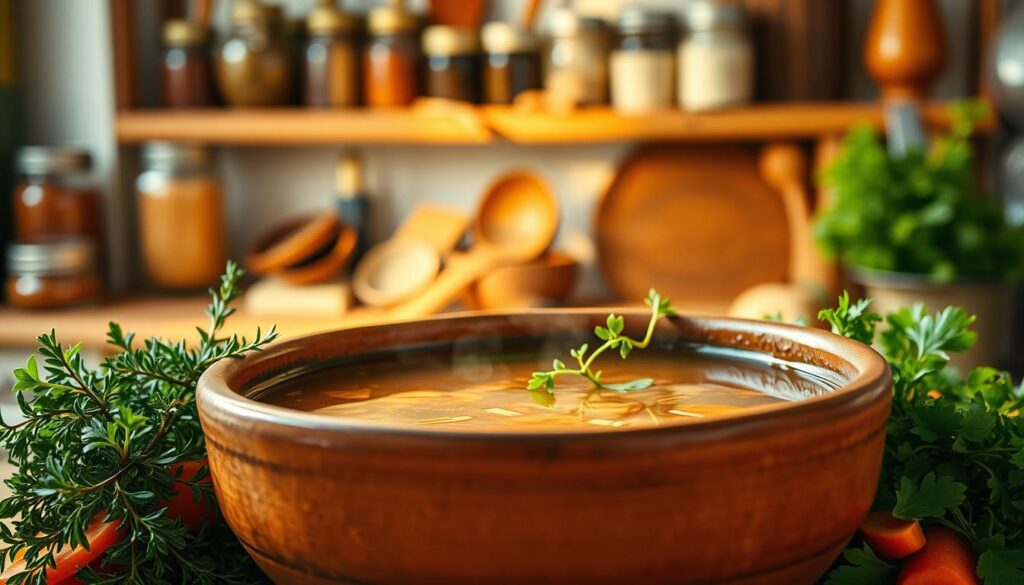
A firm gel after chilling suggests that enough gelatin was extracted to thicken the liquid. However, gel thickness is not a reliable measurement of total protein, glycine, or nutritional quality.
Chicken, beef, or pork: Which bones work best?
Different bones and cuts produce different flavors and textures. The amount of connective tissue is often more important for gelatin than the animal alone.
- Chicken: Carcasses, wings, necks, and feet work well for a relatively light broth. Feet and skin can increase gelatin.
- Beef: Knuckles, joints, and oxtail add connective tissue and rich flavor. Marrow bones contribute flavor and fat but are not automatically the richest source of gelatin.
- Pork: Feet, skin, and joints can produce a particularly thick, gelatin-rich broth.
For a stronger gel, combine meaty bones with cartilage-rich cuts instead of relying on marrow bones alone.
Bone Broth Nutrition: Protein, Glycine, and Minerals
There is no single accurate nutrient profile for every bone broth. A concentrated commercial broth may contain considerably more protein than a lightly simmered homemade stock.
Some packaged products provide around 8–10 grams of protein per cup, but others contain much less. Treat those figures as product examples, not a guaranteed amount from every recipe.
| Nutrient | What to Expect | What It Means |
|---|---|---|
| Calories | Often relatively low; varies with fat and concentration | Useful in soups and lighter meals |
| Protein | Some products provide 8–10 g per cup; others provide less | Contributes to daily protein intake |
| Glycine | Highly variable; rarely listed on nutrition labels | Cannot reliably predict a specific dose |
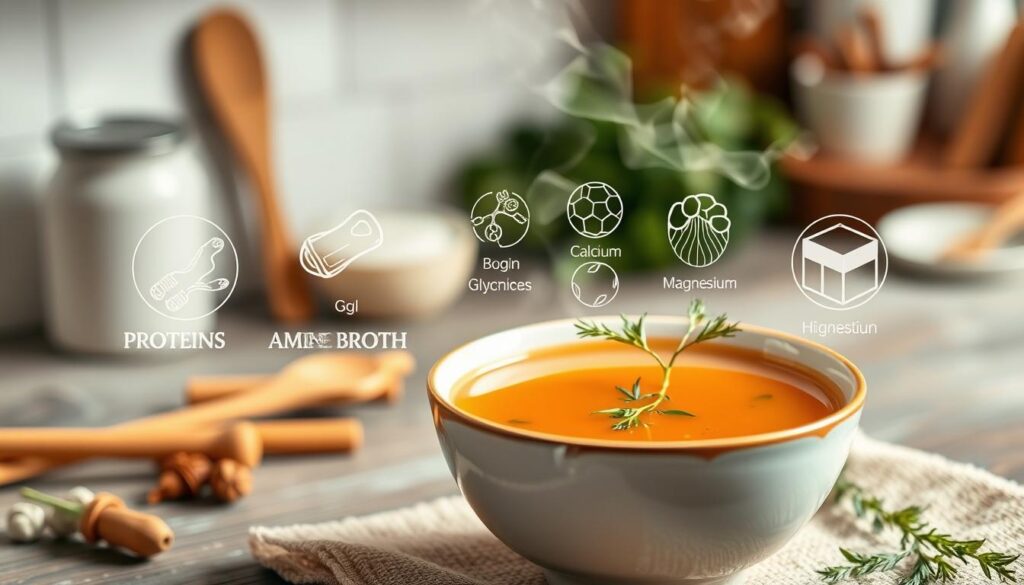
| Calcium and magnesium | Generally small amounts | Not a dependable replacement for mineral-rich foods |
| Sodium | Depends heavily on salt and product formulation | Compare labels when limiting sodium |
Is bone broth a good mineral source?
Despite popular claims, bone broth usually isn’t an especially rich source of calcium or magnesium. A 2017 study investigating mineral extraction found that the tested broths generally supplied less than 5% of recommended daily amounts for these minerals.
Longer cooking and increased acidity can improve extraction, but they do not guarantee a mineral-rich cup. Vegetables, dairy or fortified alternatives, beans, and other foods remain important mineral sources.
Is bone broth protein the same as meat protein?
No. Collagen-derived protein is relatively low in certain essential amino acids and lacks tryptophan. It shouldn’t replace complete protein sources in your diet.
For muscle maintenance and recovery, include foods such as eggs, fish, poultry, dairy, soy, or suitable combinations of plant proteins. Bone broth can contribute to your total intake without serving as the main source.
What Does Science Say About Bone Broth Benefits?
Bone broth provides nutrients, but direct human research on its claimed health benefits remains limited. Findings involving supplements, isolated amino acids, or animals should not automatically be applied to ordinary servings.
Gut health and digestion
Some laboratory and animal research suggests that compounds associated with collagen-rich foods may influence intestinal inflammation or barrier function.
However, there is not enough strong human evidence to conclude that drinking bone broth repairs a damaged intestinal lining or treats conditions such as inflammatory bowel disease.
If you tolerate it well, broth can be a convenient source of fluid and a base for easy-to-eat meals. It should complement, not replace, appropriate treatment for ongoing digestive symptoms.
Joint pain, cartilage, and skin
Collagen supplements have been studied for joint comfort and skin-related outcomes. Some trials report improvements, although study quality and industry funding can complicate interpretation.
Research summarized by Harvard’s Nutrition Source also explains an important limitation: dietary collagen is digested and its components are distributed according to the body’s needs.
Because bone broth provides inconsistent quantities, there’s no convincing evidence that ordinary servings rebuild cartilage, reverse wrinkles, or reliably reduce joint pain.
Glycine and sleep quality
Glycine has attracted attention because it participates in nervous-system signaling and may affect aspects of sleep.
In a small randomized crossover study, participants took 3 grams of glycine before bedtime. Researchers observed improvements in certain next-morning subjective measures.
But this does not establish that bone broth improves sleep. The glycine content of a homemade cup is not standardized, and the study tested an isolated dose rather than broth.
Drinking multiple cups to reach 3 grams is not a reliable or necessary strategy. Concentrated broth may also contribute substantial sodium, depending on the recipe.
Inflammation, fullness, and weight management
Glycine and other amino acids have shown interesting effects in laboratory research. Direct evidence that regular bone broth consumption meaningfully reduces inflammation in humans remains insufficient.
For weight management, broth can help make lower-calorie meals more satisfying when combined with vegetables, beans, lean protein, or whole grains. However, a cup of plain broth does not automatically prevent hunger or cause weight loss.
For another perspective on everyday claims, read our guide to drinking bone broth every morning.
How to Make Gelatin-Rich Bone Broth at Home
Homemade broth gives you control over ingredients, salt, and flavor. You don’t need expensive equipment, special bones, or a precise 24-hour cooking period to make a useful batch.
Ingredients for a basic batch
- 2–4 pounds of chicken, beef, or pork bones, including some joints or connective tissue
- Enough water to cover the bones, approximately 1 gallon for a suitably sized pot
- 1 onion, 1–2 carrots, and 1–2 celery stalks
- Garlic, parsley, thyme, or bay leaf, if desired
- 1–2 tablespoons of vinegar, optional
Vinegar may increase mineral extraction, but it isn’t required for gelatin production. Using too much can make the broth unpleasantly acidic.
Step-by-step cooking instructions
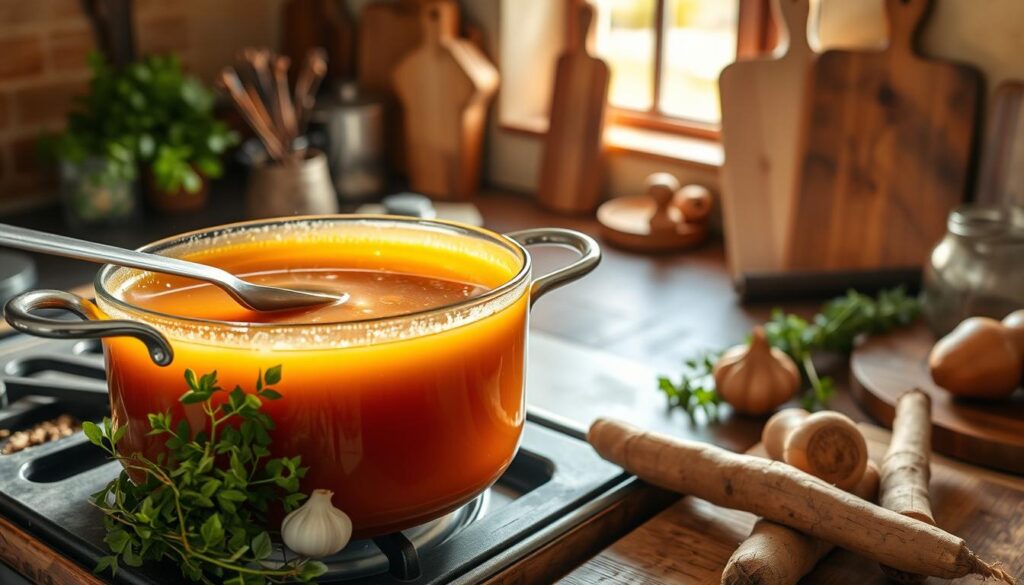
- Prepare the bones. Use bones from a trusted food supplier. Roasting beef bones first can deepen flavor, but it’s optional.
- Fill the pot. Add bones, vegetables, and water. Leave sufficient space below the rim for safe cooking.
- Bring to a boil. Lower the heat to a gentle simmer. Skim surface foam if you prefer a clearer broth.
- Cook gently. Poultry broth may develop good flavor and gelatin within 4–8 hours. Larger beef bones and joints may benefit from 8–24 hours. These are flexible ranges, not guaranteed nutrient-extraction targets.
- Strain and season. Remove bones and solids carefully, then add salt to taste.
- Cool promptly. Divide the finished broth into shallow containers and refrigerate or rapidly chill it within safe food-storage limits.
Can a pressure cooker make bone broth faster?
Yes. Pressure cooking can shorten the process considerably compared with an extended stovetop simmer. Cooking duration still depends on the bones, quantity, and appliance instructions.
The Instant Pot Duo 6-Quart offers pressure cooking and slow cooking, making it a practical option for people who prepare smaller batches. Its stainless steel inner pot is also useful for everyday cooking beyond broth.
Its main limitation is capacity. A full gallon of water plus several pounds of bones will not fit safely. Scale down the recipe, follow the manufacturer’s maximum-fill limits, and use the required pressure-release procedure. If you already own a suitable pressure cooker or stockpot, there’s no need to replace it.
Straining broth without unwanted particles
Once cooking is complete, remove the large bones with tongs or a slotted spoon. Pour the remaining liquid carefully through a strainer into a heat-safe container. Avoid splashing hot broth, and discard the cooked bones rather than eating them.
A regular colander removes large pieces, while fine mesh helps catch smaller vegetables, cartilage pieces, and bone fragments. For exceptionally clear broth, you can strain again through a clean, suitable filter.
The OXO Good Grips 8-Inch Double Rod Strainer provides fine stainless steel mesh, a supportive loop for resting over a bowl, and a non-slip handle. It is a useful kitchen tool beyond broth-making, although a basic fine-mesh strainer you already own will do the same essential job.
- Fine mesh helps rinse and strain vegetables, berries, pasta, grains and stock
- Extra-sturdy stainless steel double rod construction
- Secure loop keeps Strainer stable on pots or bowls
- Handle won’t slip, even when wet
Practical Ways to Use Bone Broth Every Day
You don’t need to drink bone broth plain or establish a daily routine to benefit from its culinary uses. It’s particularly helpful when you want to add savory flavor without relying entirely on oil, butter, or salty seasonings.
- Soups and stews: Use broth as the cooking liquid for vegetables, beans, meat, or noodles.
- Rice and grains: Replace some or all of the water when cooking rice, quinoa, or similar grains.
- Pan sauces: Add a small amount to a skillet after cooking to loosen flavorful browned bits.
- Warm drinks: Sip a mug when you want something savory and hydrating.
- Braises: Use it to keep meats and vegetables moist during slow cooking.
Homemade vs. store-bought broth
Homemade broth allows you to choose the bones, vegetables, and salt. Store-bought products save time and provide a nutrition label, which makes comparing protein and sodium easier.
Look at the protein listed per serving rather than assuming every product marketed as bone broth is protein-rich. Choose lower-sodium varieties when appropriate, particularly if you use broth frequently.
Bone broth concentrates and powders can also be convenient, but compare their ingredients, sodium, and serving sizes. A collagen powder isn’t nutritionally identical to broth, even if both contain collagen-derived amino acids.
Bone Broth Safety: Sourcing, Cooling, and Storage
Proper handling matters as much as choosing good bones. Broth is a perishable food, and a large pot can cool too slowly if left sitting on the stove or counter.
Choose and handle bones safely
Buy bones intended for human consumption from a reputable butcher or grocery store. Keep raw bones refrigerated or frozen until cooking, and clean cutting boards, utensils, and surfaces that contact raw meat.
Some research has examined lead and other metals in bone broth. The amounts in the samples studied generally suggested low risk, but they varied. Buying from a reputable source is sensible food-safety practice, although it doesn’t guarantee a particular trace-metal level.
How long does homemade broth last?
Follow these practical food-safety guidelines:
- Cool quickly: Transfer broth into small, shallow containers or use an ice-water bath. Refrigerate within 2 hours, or within 1 hour when temperatures exceed 90°F.
- Refrigerate: Store at 40°F (4°C) or below and use within 3–4 days.
- Freeze: For soup-like preparations, aim to use frozen portions within 2–3 months for best quality. Longer storage at a constant 0°F (-18°C) can remain safe, although quality may decline.
- Reheat: Heat leftovers thoroughly to 165°F (74°C). Reheat liquid soups and broths to a rolling boil.
- Discard unsafe leftovers: Don’t rely on smell alone to identify harmful bacterial growth.
These recommendations follow FoodSafety.gov storage guidance and USDA leftover-handling advice.
Freeze broth in convenient portions
Freezing smaller portions makes it easier to use broth for a single bowl of soup or a quick pan sauce without thawing an entire batch. Use clean, freezer-safe containers and leave room for the liquid to expand.
For measured portions, the Souper Cubes 1-Cup Silicone Freezer Trays, Aqua 2-Pack have one-cup compartments, measurement markings, and lids. Their flexible silicone makes frozen portions easier to release.
These trays are useful for regular batch cooking, but they’re optional. Standard freezer-safe containers work well too. Cool broth safely before portioning and freezing, and label each batch with its preparation date.
Who should be especially careful?
Bone broth can fit many diets, but a few situations deserve attention:
- Sodium restrictions: People limiting salt for blood pressure, heart failure, kidney disease, or other medical reasons should check sodium content and follow their recommended intake.
- Food allergies: Check the animal source and added ingredients, especially with seafood-based broths or packaged products.
- Specialized diets: Bone broth isn’t suitable for vegetarian or vegan diets, and collagen-rich broth shouldn’t serve as the sole protein source.
- Digestive sensitivity: Fatty, strongly seasoned, or concentrated broth may bother some people. Adjust the recipe or portion according to tolerance.
Frequently Asked Questions
How much glycine is in one cup of bone broth?
There isn’t a dependable universal amount. Glycine levels change with the bones, connective tissue, cooking method, and dilution. Most nutrition labels do not list it separately, so you cannot calculate a reliable dose from protein grams alone.
Does bone broth have to turn into jelly to be nutritious?
No. Gel formation indicates enough gelatin is present to thicken the cooled liquid. A broth that stays liquid may still contain protein and other nutrients. Neither appearance guarantees a particular amino acid concentration.
Does simmering broth longer always make it healthier?
No. Longer cooking can increase the extraction of some compounds, but results depend on the ingredients, temperature, acidity, and water level. It does not guarantee better health benefits, and excessive cooking may produce an unpleasant flavor.
Is bone broth better than collagen supplements?
They serve different purposes. Broth is a versatile food with variable nutrients, while collagen supplements provide a more measured quantity of collagen peptides. Supplement studies do not establish that either option is necessary for healthy people. See our discussion of collagen peptide benefits and limitations.
Can I drink bone broth every day?
Yes, it can be part of a balanced diet if you tolerate it and account for sodium and other dietary needs. However, drinking it daily is not necessary for collagen production, better sleep, or healthy joints. Variety and adequate overall nutrition matter more.
Conclusion: Is Bone Broth Worth Including in Your Diet?
Bone broth is a useful food, but it isn’t a proven treatment. It contains gelatin and collagen-derived amino acids such as glycine, yet their amounts vary too much to promise specific effects on sleep, skin, gut health, or joint pain.
Its strongest everyday advantages are straightforward: it adds flavor, contributes some protein and fluid, and makes use of ingredients that might otherwise go to waste.
If you enjoy it, start with chicken bones or a mix of beef joints and meaty bones, cook gently, and freeze leftovers in practical portions. Pair the broth with vegetables, grains, and complete protein sources for more satisfying meals.
That’s a realistic way to enjoy bone broth: appreciate what it contributes without expecting it to do more than the evidence supports.