

Do blue light glasses actually protect your eyes, or are they another product with bigger promises than scientific proof? If you spend hours looking at a computer or phone, you may have considered buying a pair to prevent headaches, tired eyes, or poor sleep.
Research suggests that blue light glasses offer little to no short-term benefit for digital eye strain compared with regular clear lenses. There is also no convincing evidence that normal screen exposure damages healthy eyes. However, blue light can affect your body’s sleep-wake cycle, especially at night.
So, are these glasses completely useless? Not necessarily. Different lenses serve different purposes, and some people with specific light sensitivities may benefit from specialized tints. This guide explains what the research says, compares clear and orange-tinted lenses, and shows you practical ways to make screen time more comfortable.
Key Takeaways
- Blue light glasses are not essential for screen protection. Research has not shown that everyday screen light damages healthy retinas.
- Eye strain usually has other causes. Reduced blinking, dry eyes, glare, poor posture, and prolonged close-up work are common contributors.
- Sleep benefits remain uncertain. Amber lenses may influence evening light exposure, but studies have not shown consistent improvements in sleep.
- Simple changes can help. Regular breaks, comfortable lighting, proper screen positioning, and artificial tears are practical first steps.
- Specialized lenses have a separate role. Certain tinted glasses may help some people with migraines or unusual light sensitivity.
Helpful Products at a Glance
For dry eyes during screen use: Systane Hydration Preservative-Free Lubricant Eye Drops provide an option for temporary dryness relief. They do not prevent blue light exposure or treat every cause of eye discomfort.
- Hydrating Relief for Dry, Irritated Eyes: Systane HYDRATION Preservative-Free Lubricant Eye Drops provide long-lasting hydration for dry, tired, or irritated eyes, including those with aqueous-deficient dry eye. Helps ease dryness that can be caused by environmental stressors, or prolonged screen use
- Long-Lasting Dry Eye Relief: Combines a Lubricant, HP-Guar and Hyaluronic Acid. This advanced hydration formula is suitable for post surgical patients, aqueous dry eye & moderate dry eye sufferers seeking dependable everyday dry eye relief

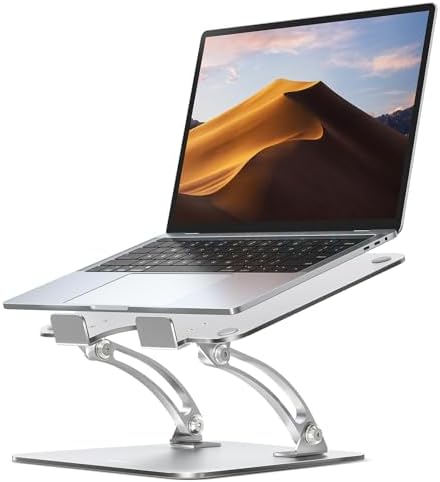
For improving laptop screen positioning: The Nulaxy Adjustable Laptop Stand helps raise and reposition compatible laptops. An external keyboard and mouse may be needed for comfortable typing.
- Ergonomic Posture Correction: Designed to elevate your laptop to the perfect eye level, this adjustable laptop stand significantly reduces neck, shoulder, and spinal fatigue. Transform your desk into a healthier workstation, ideal for long hours of typing, Zoom meetings, or gaming.
- Unshakable Dual-Rod Stability: Unlike single-hinge models, our stand features a highly engineered dual-support rod mechanism. It perfectly distributes weight to ensure a 100% wobble-free typing experience, safely supporting heavy-duty devices up to 22 lbs (10kg).
Why Have Blue Light Glasses Become So Popular?
As computers, smartphones, and tablets became part of everyday life, more people started experiencing tired eyes after long screen sessions. Blue light glasses offered a simple solution that sounded scientific.
Manufacturers commonly promote three possible benefits:
- Reducing eye strain and headaches from digital screens.
- Protecting the eyes from long-term damage caused by blue light.
- Improving sleep after using devices in the evening.
These claims helped make blue light filtering a popular feature in both prescription and nonprescription glasses. A survey of Australian optometrists found that roughly three-quarters of respondents prescribed blue-light-filtering lenses, despite recognizing limitations in the supporting evidence.
But popularity does not establish effectiveness. To understand whether these products are worth buying, we need to examine what blue light does and what clinical studies have actually measured.
What Is Blue Light, and How Does It Affect Your Eyes?
Blue light is part of the visible light spectrum, generally covering wavelengths of about 400–500 nanometers. A nanometer is a tiny unit used to measure light wavelengths.
Sunlight is our largest everyday source of blue light. Smartphones, computer monitors, televisions, and LED bulbs also produce it, although at much lower intensities.
How Blue Light Affects Your Body Clock
Your eyes contain special light-sensitive cells called intrinsically photosensitive retinal ganglion cells, or ipRGCs. These cells contain a pigment called melanopsin and are especially responsive to blue-green light near 480 nanometers.
Unlike the cells primarily responsible for seeing shapes and colors, ipRGCs help tell your brain when it is daytime or nighttime.
This system helps control your circadian rhythm, the internal clock that influences sleep and wakefulness. Bright light in the morning supports daytime alertness, while strong light exposure late in the evening can delay the release of melatonin, a hormone involved in sleep timing.
That does not mean blue light is inherently harmful. It plays an important role in normal body functions. Problems are more likely to involve when, how brightly, and how long you experience light.
For more information about these pathways, see this research review on ipRGCs and circadian regulation.
Can Blue Light From Screens Damage Your Eyes?
Current research has not established that normal exposure to blue light from digital screens causes retinal damage or age-related macular degeneration.
Some laboratory experiments have shown that intense light exposure can damage isolated cells or animal tissues. However, those experiments do not reproduce the conditions of ordinary computer or smartphone use.
The American Academy of Ophthalmology (AAO) explains that everyday screen light has not been demonstrated to harm the eyes and does not recommend special blue-light-blocking eyewear for routine computer use.
Do Blue Light Glasses Work? What the Scientific Evidence Shows
The strongest evidence comes from randomized controlled trials, where researchers compare people wearing blue-light-filtering glasses with people wearing regular lenses.
What the Cochrane Review Found
A major 2023 Cochrane systematic review examined 17 randomized trials involving 619 participants across six countries.
The studies lasted from less than one day to five weeks. Researchers evaluated visual fatigue, vision performance, sleep-related outcomes, and other possible effects.
The findings were not particularly encouraging for everyday blue light glasses:
- Eye strain: Filtered lenses may offer no short-term advantage over regular lenses.
- Visual sharpness: There was probably little or no meaningful difference in best-corrected visual acuity.
- Sleep: Findings were mixed, making it difficult to establish a reliable benefit.
- Retinal protection: The included trials did not directly establish whether these lenses prevent long-term retinal disease.
The studies also had limitations. Many included small groups, short follow-up periods, and lenses that filtered different amounts of light. This limits how confidently the findings apply to every product.
Still, the overall evidence does not support routinely purchasing blue light glasses to prevent computer-related eye fatigue.
Why Eye Strain Happens Without Blue Light Damage
Digital eye strain, sometimes called computer vision syndrome, refers to discomfort associated with prolonged screen use. It may cause dry eyes, blurry vision, headaches, or tired neck and shoulder muscles.
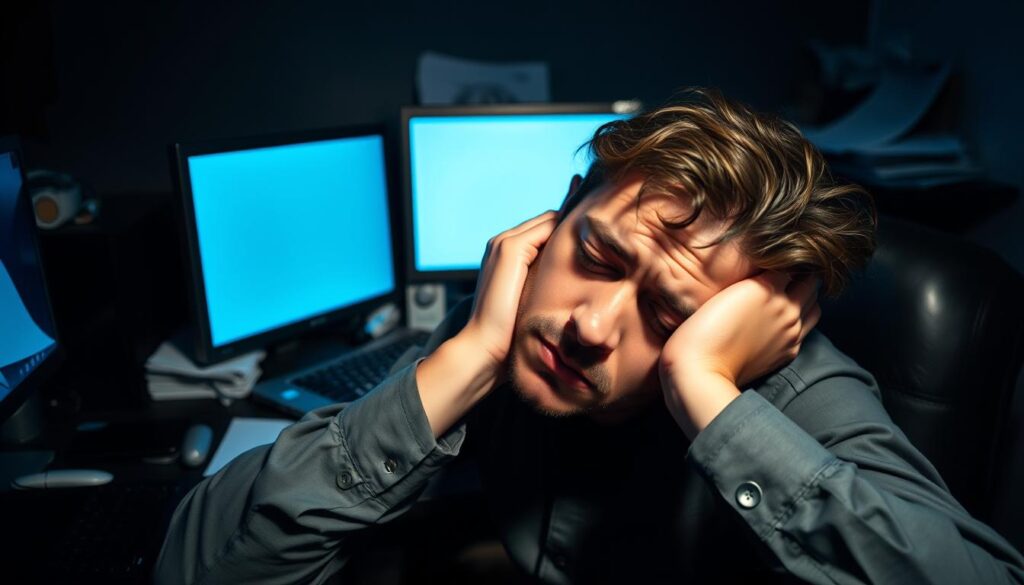
People often blink less frequently while concentrating on digital content. This allows the tear film covering the eye to dry out more quickly. Staring at a nearby object for long periods can also make focusing feel tiring.
Glare, poor screen positioning, uncorrected vision problems, and uncomfortable posture may add to these symptoms.
Blue light filtering does not directly correct these problems. That helps explain why many studies find little difference between specialty lenses and ordinary glasses.
Orange-Tinted vs. Clear Blue Light Glasses: What’s the Difference?
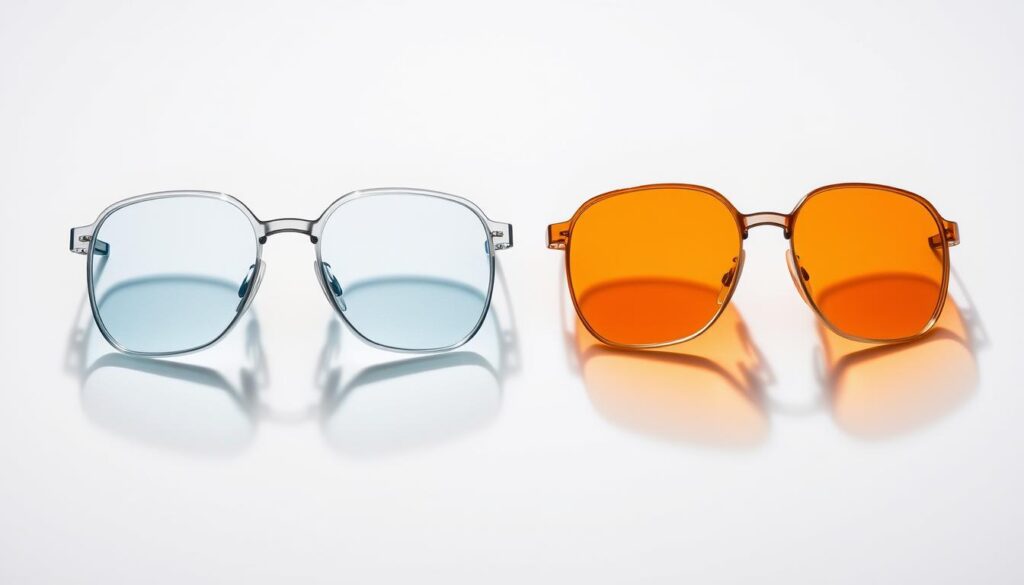
Not all blue light glasses work the same way. Two common types are clear-coated lenses and amber or orange-tinted lenses.
Clear Blue Light Filtering Lenses
Clear lenses use coatings or materials that absorb or reflect part of the shorter-wavelength visible spectrum. The amount filtered varies by product.
They usually preserve natural colors, making them convenient for regular computer work. However, research has not shown that these coatings consistently reduce digital eye strain or protect against retinal disease.
Amber and Orange-Tinted Lenses
Amber or orange lenses can filter substantially more short-wavelength light than many clear coatings. Their stronger filtering may reduce certain light signals involved in nighttime alertness.
The trade-off is noticeable color distortion. They are less suitable for color-sensitive tasks and may interfere with visibility in some lighting conditions.
| Feature | Clear Filter Lenses | Orange-Tinted Lenses |
|---|---|---|
| Blue light filtering | Usually modest; varies by coating | Often stronger |
| Color accuracy | Mostly preserved | Noticeably changed |
| Eye strain evidence | No consistent benefit | No consistent benefit |
| Sleep evidence | Uncertain | Possible benefit in some studies, but inconsistent overall |
| Practical limitation | May add cost without clear benefit | Can reduce color accuracy and low-light visibility |
Which should you choose? Neither type is necessary for routine screen protection. If you prefer tinted lenses for personal comfort, make sure they do not interfere with your work or safety.
Avoid wearing strongly tinted lenses while driving at night or performing tasks where accurate color recognition and visibility are important.
Do Blue Light Glasses Improve Sleep?
There is a genuine connection between evening light exposure and sleep timing. But knowing that blue light influences melatonin does not automatically prove that wearing filtered glasses leads to better sleep.
A systematic review of amber and orange lenses found mixed results, with some small studies suggesting improvements in certain sleep measures.
A later 2025 systematic review and meta-analysis examined three randomized crossover trials involving 49 adults. It found no statistically significant improvements in objectively measured sleep onset, total sleep time, or sleep efficiency.
These findings do not rule out benefits for particular people. However, they show that stronger research is needed before blue light glasses can be recommended as a dependable sleep solution.

What to Do Instead of Relying on Glasses
If evening screen use makes it difficult to unwind, try changing your lighting and bedtime habits first.
- Dim your screens: Lower brightness to a comfortable level in the evening.
- Use warmer display settings: Night Shift and similar modes reduce the amount of blue-enriched light. They are not proven sleep treatments, so brightness still matters.
- Reduce bedtime screen use: Consider putting devices away one to two hours before bed when practical.
- Keep your room dark: Reduce unnecessary light from lamps, televisions, and other devices.
- Maintain a consistent schedule: Try to go to bed and wake up at similar times each day.
- Get daylight in the morning: Natural morning light helps reinforce your body’s normal day-night rhythm.
These habits address your overall light exposure and sleep routine rather than depending on one filter. You can begin with them without buying anything.
How to Reduce Digital Eye Strain Without Blue Light Glasses
If your eyes feel tired after working on a computer, changing how you use your screen is a practical place to start.
1. Follow the 20-20-20 Rule
Every 20 minutes, look at something at least 20 feet away for 20 seconds. This gives your eyes a break from continuous near focusing.
The rule is widely recommended by eye care professionals, although strong clinical evidence for this exact schedule is limited. Treat it as a simple reminder to take regular breaks rather than a guaranteed treatment.
2. Blink More Often and Manage Dryness
When you concentrate on a screen, you may blink less often or fail to close your eyelids completely. Both can leave your eyes feeling dry or irritated.
Try blinking fully several times during short breaks. Avoid having fans or air-conditioning vents blow directly toward your face.
If dryness continues, over-the-counter artificial tears may provide temporary relief. Preservative-free formulations can be useful for people with sensitive eyes or those who need frequent lubrication.
One option is Systane Hydration Preservative-Free Lubricant Eye Drops, a multi-dose artificial tear product intended to relieve dry-eye symptoms. It combines lubricating ingredients, including hyaluronic acid, to help maintain moisture on the eye’s surface.
These drops are intended for lubrication, not blue light protection. Follow the product directions, avoid touching the bottle tip to your eye, and check compatibility before using drops with contact lenses. Persistent dryness, significant redness, pain, or changes in vision deserve an eye examination.
- Hydrating Relief for Dry, Irritated Eyes: Systane HYDRATION Preservative-Free Lubricant Eye Drops provide long-lasting hydration for dry, tired, or irritated eyes, including those with aqueous-deficient dry eye. Helps ease dryness that can be caused by environmental stressors, or prolonged screen use
- Long-Lasting Dry Eye Relief: Combines a Lubricant, HP-Guar and Hyaluronic Acid. This advanced hydration formula is suitable for post surgical patients, aqueous dry eye & moderate dry eye sufferers seeking dependable everyday dry eye relief
- For Eyes Sensitive to Preservatives: Systane Hydration Preservative-Free Eye Drops are formulated to be gentle on eyes sensitive to preservatives and can be used throughout the day as needed for those who spend long hours on computers, mobiles, and laptops. Suitable for use with soft contact lenses, but it is not a rewetting drop
- Easy, Sterile Dosing: The preservative-free multi-dose bottle helps ensure hygienic application and reduces the risk of spillage with its ergonomic design. Instill 1–2 drops as needed throughout your day, whenever needed
3. Adjust Screen Brightness and Reduce Glare
Your screen should be comfortably visible without looking much brighter or darker than its surroundings. Harsh reflections from windows or ceiling lights can make reading more difficult.
Try these changes before purchasing a screen accessory:
- Move your monitor away from direct window reflections.
- Adjust nearby lamps to prevent light from shining into your eyes or screen.
- Increase text size so you do not need to squint.
- Adjust screen contrast for comfortable reading.
- Consider a compatible matte anti-glare screen filter if reflections remain troublesome.
Remember that reducing reflections is different from blocking blue light. A matte filter is useful for managing visible glare, not for preventing unproven screen-related retinal damage.
4. Improve Your Monitor Height and Sitting Position
Screen positioning matters for both visual comfort and posture. A monitor that sits too high or too low can encourage uncomfortable head and neck positions.
Start with these general guidelines:
- Keep your screen roughly an arm’s length away, adjusting for screen size and your vision.
- Place the top of the monitor near or slightly below eye level.
- Look slightly downward toward the center of the display.
- Keep your shoulders relaxed and your feet supported.
- Use an appropriate prescription if you need vision correction for computer work.
Laptop users face an extra challenge because the screen and keyboard are attached. Raising the screen improves its position but can make the built-in keyboard uncomfortable to reach.
If a stable stack of books is not practical, the Nulaxy Adjustable Laptop Stand is an optional desk accessory. Its folding design supports height and angle adjustments, and it is designed for compatible laptops from 10 to 16 inches.
The stand does not treat eye strain directly. Its purpose is to make positioning easier. Pairing a raised laptop with an external keyboard and mouse can help you maintain a more comfortable typing position.
- Ergonomic Posture Correction: Designed to elevate your laptop to the perfect eye level, this adjustable laptop stand significantly reduces neck, shoulder, and spinal fatigue. Transform your desk into a healthier workstation, ideal for long hours of typing, Zoom meetings, or gaming.
- Unshakable Dual-Rod Stability: Unlike single-hinge models, our stand features a highly engineered dual-support rod mechanism. It perfectly distributes weight to ensure a 100% wobble-free typing experience, safely supporting heavy-duty devices up to 22 lbs (10kg).
- Advanced Thermal Cooling Panel: Maximize your device's performance. The unique geometric heat-vent design on the upper panel provides superior airflow compared to standard solid stands. This continuous heat dissipation prevents your laptop from thermal throttling and hardware damage during intensive tasks.
- Universal 10-16” Compatibility: A versatile computer riser that seamlessly fits all 10 to 16-inch laptops. Broadly compatible with MacBook Pro/Air, Dell XPS, HP, Lenovo, ASUS, Chromebook, and large gaming laptops. The anti-slip silicone pads firmly grip your device and protect it from scratches.
5. Check Whether Your Prescription Needs Updating
If text looks blurry or you regularly squint at your screen, an outdated prescription or an uncorrected focusing problem may be contributing to discomfort.
An eye care professional can determine whether regular prescription glasses, computer-distance lenses, or treatment for dry eyes would be more useful than a blue light coating.
Blue Light vs. Sunlight: Which Exposure Matters More?
The amount of blue light produced by a typical screen is much lower than the amount present in natural daylight. That is one reason laboratory findings involving intense exposure should not automatically be applied to normal device use.
Outdoor light exposure is important for regulating your body clock. However, prolonged exposure to the sun also brings risks, particularly from ultraviolet radiation.

When outdoors, use sunglasses with appropriate UV protection and avoid staring directly at the sun. Indoor blue light filtering glasses are not a substitute for UV-protective eyewear.
When Can Specialized Tinted Lenses Actually Help?
Although ordinary blue light glasses have limited evidence for everyday eye strain, some specialized tinted lenses are used for specific visual conditions.
Migraines and Light Sensitivity
People with migraines or photophobia may find certain types of light uncomfortable. Photophobia means unusual sensitivity or discomfort caused by light.
Some specialized lenses, including FL-41 rose-tinted filters, have been studied for light sensitivity. A 2024 study involving people with chronic eye pain and photophobia found changes in light-related discomfort and brain responses while using FL-41 lenses.
However, this was a small study, and benefits may differ between conditions and individuals. Specialized migraine or photophobia lenses should not be treated as equivalent to generic blue light glasses.
Blue Light Filtering Lenses After Cataract Surgery
Some artificial lenses implanted during cataract surgery contain materials designed to absorb short-wavelength light.
A 2018 Cochrane review found insufficient evidence to establish that these blue-light-filtering intraocular lenses prevent age-related macular degeneration.
This is a separate medical decision from buying computer glasses. Lens selection after cataract surgery should be based on an individual’s visual needs and discussion with their eye surgeon.
Are Blue Light Glasses Worth Buying?
For most people, blue light glasses are not a necessary purchase for eye protection or digital eye strain relief. Their marketing claims are stronger than the available clinical evidence.
That does not mean you cannot wear them if you personally find them comfortable. It means you should understand what they can and cannot reasonably be expected to do.
Before spending extra money, consider what is actually bothering you:
- Dry, burning eyes: Try complete blinking, regular breaks, and appropriate lubricating drops.
- Headaches or blurry vision: Check screen position, viewing distance, and your prescription.
- Glare: Improve room lighting or consider a suitable anti-glare screen finish.
- Difficulty sleeping: Reduce evening screen brightness and improve bedtime habits.
- Migraines or unusual light sensitivity: Ask an eye care professional whether a condition-specific tint may help.
Seek prompt medical attention for sudden vision loss, severe eye pain, or a new vision disturbance. These symptoms should not be assumed to result from ordinary screen fatigue.
Frequently Asked Questions
Can blue light glasses prevent permanent eye damage?
There is no convincing evidence that normal digital screen exposure damages healthy retinas, and clinical studies have not established that blue light glasses prevent long-term eye disease. The American Academy of Ophthalmology does not recommend them for routine computer protection.
Do blue light glasses help with headaches?
Research has not shown consistent headache or eye strain relief from ordinary blue light filtering lenses. Headaches during screen use may involve focusing difficulties, glare, dry eyes, posture, or migraine. Persistent headaches deserve evaluation.
Should I pay extra for blue light protection on prescription glasses?
You generally do not need a blue light coating solely for computer-related eye protection. A correct prescription, suitable lens design, and comfortable screen setup may be more important. Discuss your specific visual needs with your eye care professional.
Are blue light glasses useful for children?
There is no established need for children to wear blue light glasses for everyday screen protection. Healthy screen habits, appropriate breaks, outdoor activity, and addressing vision problems are more useful priorities.
Can I wear orange-tinted glasses all day?
Strong orange or amber tints change how colors appear and can affect visibility. They may be inconvenient for daytime work and inappropriate for low-light driving. Choose lenses based on your activity and any advice from your eye care professional.
How long does it take for blue light glasses to improve sleep?
There is no reliable improvement timeline because clinical studies have not demonstrated consistent sleep benefits. If evening light is interfering with your routine, reducing screen brightness and limiting device use before bed are sensible starting points.
Conclusion: Better Screen Habits Matter More Than Blue Light Glasses
Blue light is a normal part of the visible spectrum, and your body uses it to help regulate alertness and sleep timing. But everyday screen exposure has not been shown to damage healthy eyes, and blue light glasses have not consistently outperformed regular lenses for reducing digital eye strain.
Instead of relying on a special coating, start with regular breaks, complete blinking, comfortable screen brightness, and better workspace positioning. Address dryness when needed, and have persistent symptoms checked by an eye care professional.
The best approach is not necessarily another pair of glasses. It is understanding what causes your discomfort and choosing solutions that address it.