


Can a few minutes of focused tapping really ease public speaking nerves or unlock better sleep? Many people doubt quick tools, yet this guide offers clear steps you can try today.
Emotional freedom technique combines modern psychology with light acupressure on nine easy points to calm the nervous system. You’ll learn a short setup, where to tap, and how to rate progress so each practice is measurable and efficient.
This short guide gives fast, evidence-informed routines for public speaking anxiety, sleep, cravings, pain, and general stress. It explains the basic process—identify the issue, rate it 0–10, use a setup phrase, tap each point with a reminder phrase, then retest—so you can use a quick routine before a meeting or at night.
For a step-by-step primer and guided options, see this complete guide that outlines the core points, cadence, and practical tips for mobile practice.
Key Takeaways
- Quick and portable: brief rounds can reduce acute stress and nervousness.
- Easy to learn: nine core points and simple phrases make practice repeatable.
- Evidence-backed: studies show reduced anxiety and lower cortisol in some trials.
- Track progress: rate distress before and after to measure change.
- Safe and noninvasive: free to practice anywhere; mild, short emotional reactions can occur.
Why This How-To Guide Matters Right Now
Many people need quick, self-guided ways to lower stress and anxiety during busy days. This guide gives a simple, learnable method you can use anywhere with early evidence for benefits across common symptoms.
When nerves spike, people need reliable, fast methods to calm the body and mind. Short, repeatable tapping rounds help you regain a sense of control without gear or long sessions.
Early research reports meaningful reductions in anxiety, depression, insomnia, pain, and cravings. Studies with veterans show notable stress drops and, in some cases, loss of full PTSD diagnoses after coaching.
Most trials find the practice safe and noninvasive, though brief emotional surges or tears can occur as a release. If strong feelings emerge, pause, breathe, and seek professional support if needed.
- Trackable: use a 0–10 rating before and after to measure change.
- Flexible: tailor focus to public speaking, sleep, or cravings.
- Complementary: use alongside standard therapy or healthcare.
Want more background? Read this concise eft tapping guide and a practical review of tapping for stress relief to explore research and user experiences.

| Benefit | Reported Effect | Notes |
|---|---|---|
| Anxiety | Reduced scores in multiple reviews | Short sessions show measurable change |
| Sleep | Improved sleep onset and duration | Works well as pre-sleep routine |
| PTSD (veterans) | Significant symptom reduction | Often used alongside therapy |
How EFT Tapping Works and Where to Tap on the Body
EFT applies gentle acupressure with your fingertips while you focus on a specific problem. Tapping on a set of nine points may help calm the stress response and restore a sense of balance in your body.
What it is: This technique blends modern psychology with light acupressure. You use your fingers—no needles or equipment—to stimulate acupoints while naming the issue. That focus plus fingertip stimulation appears to send calming signals to the brain and nervous system.
Meridians, energy balance, and the stress response
Traditional ideas of meridians describe energy flowing through the body. Using a compact set of points offers a simple way to influence that body energy and reduce physiological arousal.
Early studies report cortisol drops and lower anxiety scores after short sessions, along with benefits for pain, insomnia, cravings, and PTSD-related symptoms.
The nine core points and where to find them
- Side of hand (karate chop): along the pinky edge of your hand.
- Eyebrow: at the inner edge of the brow bone.
- Side of eye: on the outer orbital bone—not the temple.
- Under eye: on the cheekbone, under the eye.
- Under nose: in the groove above the upper lip.
- Chin: in the crease just below the lower lip.
- Collarbone: one inch down and one inch out from the breastbone notch.
- Under arm: about four inches below the armpit.
- Top of head: at the crown, the top head point.
Safety notes and research snapshot
Use 2–4 fingertips and tap gently 7–9 times per point. You may tap one side or both. Most people find it noninvasive; brief emotional surges, tingling, or tears can occur as part of release.
If strong emotions persist, pause, breathe, and consider professional support. For a practical primer and guided options, see this complete tapping guide.
| Topic | Typical finding | Practical note |
|---|---|---|
| Anxiety & stress | Reduced scores in multiple reviews | Short rounds can lower immediate arousal |
| Sleep | Improved onset and duration | Works well as a nightly routine |
| Pain & cravings | Mixed but promising results | Often used alongside other care |
The Core EFT Process You’ll Use in Every Tapping Sequence
Every round follows a clear, repeatable flow: pick one issue, rate its intensity, use a setup phrase, tap point-by-point with a short reminder, then retest.
Start simple and measurable. Choose one specific target—one feeling, one physical sensation, or one thought—and give it a 0–10 intensity score. That number is your baseline for change.

Setup phrase and orientation: craft a sentence that names the problem and adds acceptance, for example: “Even though I feel this pressure in my chest, I deeply and completely accept myself.” Repeat that phrase while tapping the side of the hand three times to set intention and calm the nervous system.
- Step 1: Pick one issue and keep language focused on your own feelings or sensations.
- Step 2: Rate intensity 0–10 to track progress.
- Step 3: Say the setup phrase while tapping the hand three times.
- Step 4: Move through the standard points, tapping 7–9 times each with a brief reminder phrase (for example, “this tightness”).
- Step 5: Re-rate intensity and repeat until you reach your target level.
Use a calm, steady pace and comfortable pressure. Keep the wording aligned with what you notice in the moment; small wording shifts often change results. Over time this simple way becomes fast and reliable for lowering emotional intensity and regaining balance.
EFT Tapping Sequences for Common Stressors
Use targeted, brief practices to shift nervous system arousal and help restore calm before a meeting or bedtime. Below are five ready-made rounds you can try, each following the same point order so you learn one reliable flow.

Public speaking nerves: from racing heart to grounded presence
Setup: “Even though my heart races before I speak, I accept myself.”
Reminder phrases: “this racing heart… this tight throat… fear of judgment.” Tap side of hand (3x setup), then eyebrow → side of eye → under eye → under nose → chin → collarbone → under arm → top of head. Re-rate and repeat until calmer.
Sleep problems: easing the mind and body into rest
Setup: “Even though my mind won’t slow down, I accept myself.”
Use slow, steady taps with reminders like “busy mind… tension in my shoulders… worry about tomorrow.” Reports show faster sleep onset for some people; use this as a nightly cue to shift into rest.
- General anxiety: Setup—“Even though I feel this nervous energy in my body, I accept myself.” Reminder—“buzzing chest… knot in my belly… not safe.”
- Physical pain (example): Setup—“Even though this dull ache in my lower back is here, I accept myself.” Reminder—“dull ache… stiffness… frustrating.” Stop if pain worsens and consult a clinician.
- Cravings or overwhelm: Setup—“Even though I crave that snack when stressed, I accept myself.” Reminder—“this urge… mouth watering… I want relief.” Add choice language after a round: “I can let this pass.”
Order to follow: side of hand (setup 3x) → eyebrow → side of eye → under eye → under nose → chin → collarbone → under arm → top of head, then re-rate. Name the clearest sensation (tight chest, dry mouth) to keep phrases tapping specific and effective.
| Stressor | Setup Example | Key Reminder |
|---|---|---|
| Public speaking | “Even though my heart races before I speak, I accept myself.” | racing heart; tight throat; fear of judgment |
| Sleep | “Even though my mind won’t slow down, I accept myself.” | busy mind; shoulder tension; worry |
| Cravings | “Even though I crave that snack when stressed, I accept myself.” | urge; mouth watering; desire for quick relief |
If distress spikes, pause and breathe. For more detailed anxiety-focused practice, see this tapping sequence for anxiety. For related nervous-system benefits, consider pairing grounding walks; research on bilateral stimulation and walking can help explain the effect: neurological benefits of bilateral stimulation.
EFT Tapping Sequences: Quick Reference to Points and Order
Here’s a concise map of the points and the exact order to follow for a consistent, repeatable round. Use this as your pocket guide so each practice stays steady and precise.
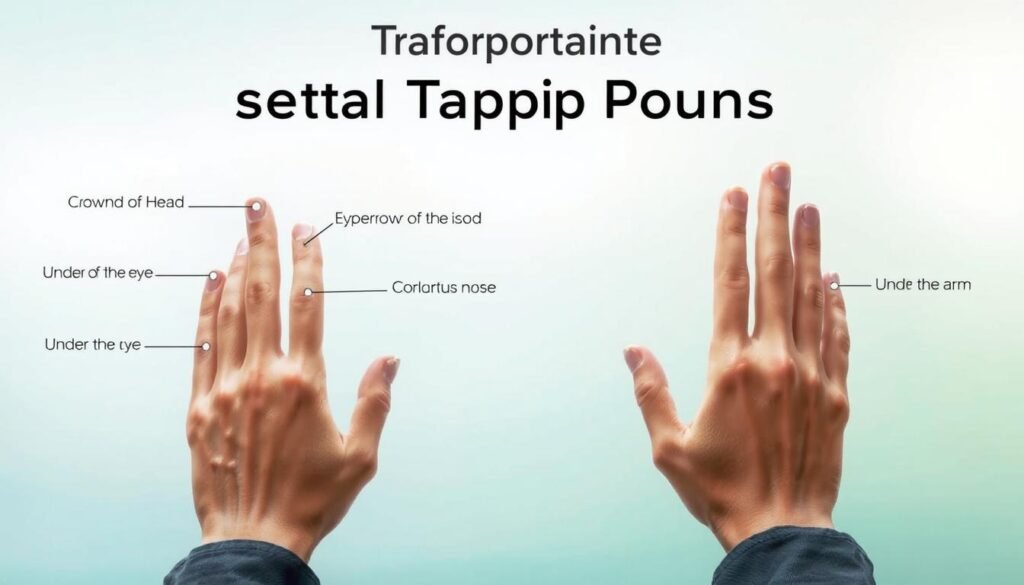
Starting at the side of hand with your setup phrase
Begin on the side of the hand (the karate chop) and say your setup phrase three times while tapping. This aligns focus and acceptance before you move through the side body points.
Moving through eyebrow, side of eye, under eye, under nose, chin, collarbone, under arm, top of head
Follow this order every time:
- Side of hand (setup 3×)
- Eyebrow — inner brow bone
- Side of eye — on the orbital bone (not temple)
- Under eye — on the cheekbone
- Under nose — between nose and upper lip
- Chin — in the crease above the chin
- Collarbone — one inch down and one inch out from the notch
- Under arm — about four inches below the armpit
- Top of head — crown
Use 7–9 taps per point with 2–4 fingers. Tap one or both sides, but stay consistent within a round. Apply light to moderate pressure and keep reminder phrases short so your flow stays smooth.
| Point | Location cue | Practical tip |
|---|---|---|
| Side of hand | Outer edge of palm (karate chop) | Repeat setup phrase 3 times before moving on |
| Side of eye | Outer orbital bone | Check you are on bone, not temple; use gentle pressure |
| Collarbone | One inch down and one inch out from notch | Keep taps steady; breathe slowly between points |
| Under arm | About four inches below armpit | Tap horizontally; choose 2–4 fingers for balance |
Quick self-check: ask, “Am I on bone around the eye points?” and “Am I at the collarbone spot?” If you lose the order, finish the current point and move on. For a full diagram of the nine tapping points, see this tapping points chart. For complementary movement and nervous-system ideas, read about functional training benefits here.
Practice Tips, Frequency, and Tracking Your Progress
Short, consistent sessions work best. Rate your intensity 0–10, do focused rounds, and track notes to see patterns and progress.
Consistent short rounds offer a practical way to shift nervous-system arousal and regain balance quickly.
How often to practice and when to stop
Daily practice builds familiarity. Even 5–10 minutes before bed or a stressful event helps reduce stress and pain.
Start with 1–3 rounds per session. If intensity stays high, extend to 5–7 rounds while you feel steady and present.
Stop when your rating drops to a comfortable level or when your body and thoughts feel calmer.
Which side to tap and how many taps per point
Tap one side or both; choose what feels natural and stay consistent within a round.
Aim for 7–9 taps per point at a relaxed pace so your mind stays connected to the reminder or phrase.
Tracking intensity and noting progress
Use the 0–10 scale before and after each session. Record date, issue, start/end intensity, and which phrases helped most.
Over time, look for patterns in times of day, environments, or phrases that lead to bigger drops in anxiety or pain.

| Focus | Recommended | Why it helps |
|---|---|---|
| Frequency | Daily, 5–10 minutes | Builds habit and nervous-system regulation |
| Rounds | 1–3 to start; 5–7 if needed | Allows deeper shifts when intensity remains high |
| Tracking | 0–10 start/end, brief notes | Shows progress and reveals effective phrases/times |
Conclusion
A brief, repeatable round can move you from tension into clarity in just a few minutes. The nine-point approach gives a simple, body-based way to calm difficult moments and support better balance.
You now have clear scripts and a consistent tapping sequence to address anxiety, pain, sleep trouble, or cravings. Start with one specific issue, rate it 0–10, and run one focused round. Track results so your system learns what helps.
The method is noninvasive and free to practice, and studies report reduced symptoms and lower cortisol for some users. For a full diagram of the nine tapping points and to pair this work with gentle movement, see these gentle somatic exercises. If you live with a stress disorder or intense symptoms, include your clinician in the plan.
FAQ
What are simple sequences I can use for public speaking nerves?
Start with a short, 3–5 minute routine. Use the side-of-hand setup phrase, then tap eyebrow, side of eye, under eye, under nose, chin, collarbone, under arm, and top of head while repeating a reminder phrase like “calm and steady.” Begin by rating your anxiety 0–10, run one to three rounds, then retest. Keep breaths slow and grounded; repeat as needed before and during events.
How can I tap to improve sleep quality?
Use a gentle, evening-focused setup phrase (for example, acknowledging racing thoughts) at the side of the hand. Tap through the core points—eyebrow to top of head—using calming reminder phrases such as “let my mind wind down.” Aim for 5–10 minutes, focusing on slow exhalations and lowering intensity on your 0–10 scale before bed.
What is the basic process I should follow every time I tap?
Identify one clear issue and rate its intensity 0–10. Create a concise setup sentence that names the problem and includes self-acceptance. Tap the prescribed points while saying a short reminder phrase, then reassess intensity and repeat until the score falls. This simple structure makes each round focused and measurable.
Where exactly are the main tapping points on the body?
The common points run from the side of the hand (karate chop) to the eyebrow, side of the eye, under the eye, under the nose, chin, collarbone, under the arm, and the top of the head. Each point is tapped lightly for several repetitions while staying mindful of breath and sensation.
Are there safety concerns or people who should avoid tapping?
Tapping is generally safe, but approach carefully if you have a history of trauma, recent surgery near tapping areas, or unstable mental health. If symptoms are severe (suicidal thoughts, psychosis), seek professional care. Consult a licensed therapist or medical provider for personalized guidance before using tapping as a primary treatment.
How many times should I tap per point and which side should I use?
Aim for about 5–7 light taps per point. You can tap either side of the body; many people use the dominant side or alternate sides across rounds. Consistency matters more than strict side rules—choose a comfortable approach and stick with it during a session.
How often should I practice and when should I stop a session?
Practice daily when addressing ongoing issues; use short, targeted rounds (3–10 minutes). Stop a session when your intensity rating drops meaningfully or you feel emotionally settled. If distress increases or doesn’t improve after several rounds, pause and seek professional support.
Can tapping help with physical pain and cravings?
Yes—many people report reduced pain intensity and weaker cravings after focused rounds. Use a brief setup phrase naming the sensation or urge, then tap through the sequence while monitoring changes on the 0–10 scale. For persistent pain or substance-use issues, combine tapping with medical or behavioral care.
What does research say about this technique’s effectiveness?
Studies suggest tapping can reduce anxiety, stress, and some symptoms of PTSD and pain when used alongside other treatments. Results vary by individual and condition; higher-quality trials show promising but not definitive evidence. Use tapping as a complementary, low-risk tool rather than a sole treatment for serious conditions.
How should I track progress and know if it’s working?
Use the 0–10 intensity scale before and after sessions and keep brief notes on duration, phrases used, and symptom changes. Look for consistent declines in scores, improved sleep, or reduced urge intensity over days or weeks. Small, regular improvements indicate meaningful progress.
What is a good setup phrase for overwhelming emotions or anxiety?
A simple, compassionate setup phrase names the issue and includes acceptance—eg, “Even though I feel overwhelmed, I accept myself and want to feel calmer.” Keep it personal, concise, and honest; the content matters less than naming the feeling and acknowledging self-acceptance.
Can I combine this method with other therapies like CBT or mindfulness?
Absolutely. Many clinicians integrate tapping with cognitive-behavioral techniques, breathing exercises, and mindfulness. The approach can complement talk therapy by lowering physiological arousal, making cognitive work easier and more effective.
How long before I should expect to notice changes?
Some people notice immediate relief after one round; others need repeated sessions over days or weeks. For acute stress, short-term relief is common; chronic issues often require consistent practice and, when appropriate, integration with professional care.