

Feeling exhausted but unable to relax? Struggling to focus at work? Or waking up tired even after a full night in bed? Stress affects people differently, which is why one herbal supplement may not suit everyone.
Adaptogens are herbs, roots, and mushrooms traditionally used to help the body cope with stress. Some, including ashwagandha, rhodiola, and Panax ginseng, have been studied for stress, fatigue, sleep, and mental performance. However, the evidence varies, and no herb works for everyone.
Our simple adaptogen quiz helps you identify your main stress pattern and explore which herbs researchers have studied for similar concerns. You’ll also learn what the science actually supports, how to choose supplements, and when avoiding them may be the safer option.
Key Takeaways
- For stress and poor sleep: Ashwagandha has promising human research, although benefits are usually modest.
- For mental and physical fatigue: Rhodiola is traditionally used for energy, but strong proof of its effectiveness is still lacking.
- For low stamina: Panax ginseng may offer small fatigue benefits in some adults.
- For restless nights: Reishi is traditionally used for wellness, but reliable evidence for treating insomnia is limited.
- Safety comes first: Adaptogens can cause side effects and interact with medications. Start with lifestyle changes and consider supplements only when appropriate.
Helpful Products at a Glance
For stress-related tension: Nutricost KSM-66 Ashwagandha provides a standardized root extract. It also contains black pepper extract, making medication interactions an important consideration.
For fatigue-focused routines: NOW Rhodiola 500 mg provides a standardized extract for adults interested in this traditional herb. Its clinical benefits remain uncertain.
- 3% STANDARDIZED EXTRACT: NOW Rhodiola is standardized to 3% total rosavins and 1% salidroside
- HISTORICAL USE: Rhodiola is indigenous to the Arctic and Alpine regions of Europe, Asia, and America and has long been used as a tonic by many cultures, including the Ancient Greeks

What Are Adaptogens, and How Do They Work?
Adaptogens are natural substances traditionally used to support the body’s response to physical or emotional demands. They have a long history in Ayurveda, traditional Chinese medicine, and other herbal traditions.
Researchers are interested in whether certain plant compounds affect stress-related hormones, brain signaling, and inflammation. But traditional use does not automatically mean an herb has proven medical benefits.

The HPA Axis and Cortisol Explained
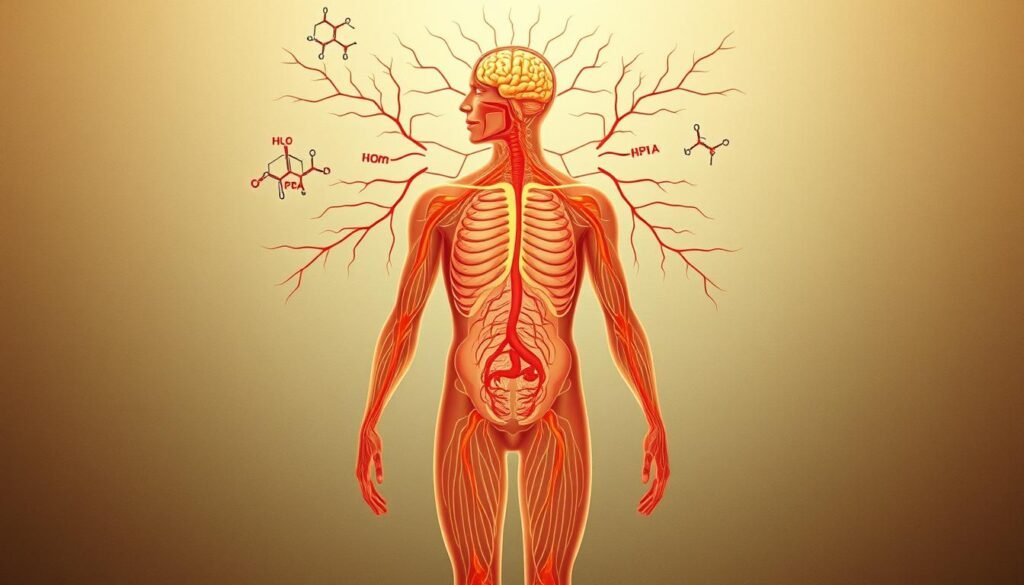
Your hypothalamic-pituitary-adrenal (HPA) axis is a communication system connecting your brain and adrenal glands. When you face stress, it helps control the release of cortisol and other hormones.
Cortisol isn’t harmful by itself. It helps regulate energy, blood sugar, and daily body functions. Problems can arise when stress is prolonged and recovery is poor.
Some studies suggest that particular ashwagandha extracts can lower cortisol levels in stressed adults. However, that doesn’t establish that every adaptogen “balances hormones” or resets an overactive stress response.
Adaptogens are also different from caffeine or prescription sleep medicines. Their proposed effects and the evidence behind them depend on the individual herb, preparation, and reason for use.
For another introduction, see UCLA Health’s guide to adaptogens.
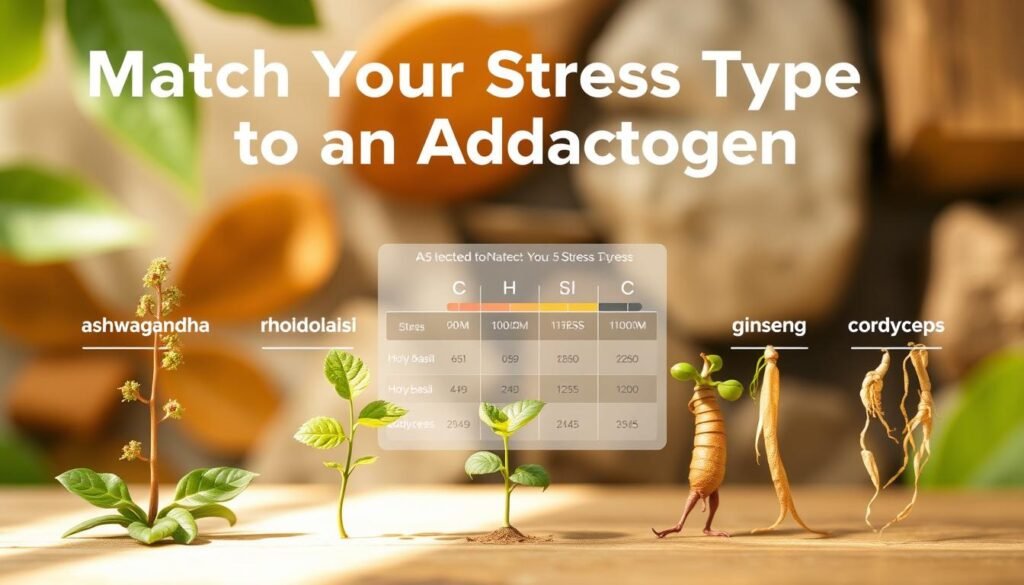
Take the Quiz: Which Adaptogen Matches Your Stress Type?
This five-question quiz helps you recognize your dominant stress pattern. Choose the answer that describes you most often over the past two weeks.
Keep track of your A, B, C, and D answers. You’ll find your results immediately below the questions.
This is a self-reflection quiz, not a clinically validated test. Its results cannot diagnose a condition or determine which supplement is medically suitable for you.
Question 1: How do you usually feel when you wake up?
- A. Tense or worried, even when I’m tired.
- B. Physically or mentally drained.
- C. Unmotivated and slow to get started.
- D. Sleepy because I didn’t rest well.
Question 2: What bothers you most during the day?
- A. Overthinking, tension, or difficulty relaxing.
- B. Fatigue that makes everyday tasks harder.
- C. Low stamina or difficulty staying engaged.
- D. Feeling sleepy or unfocused after a restless night.
Question 3: How does stress affect your evenings?
- A. My mind keeps racing.
- B. I feel completely worn out.
- C. I have little energy left for hobbies or exercise.
- D. I struggle to fall asleep or stay asleep.
Question 4: Which improvement would help you most?
- A. Feeling calmer during stressful situations.
- B. Having enough energy for daily responsibilities.
- C. Improving stamina and mental engagement.
- D. Sleeping more comfortably and waking refreshed.
Question 5: Which statement sounds most familiar?
- A. “I’m exhausted, but I can’t switch off.”
- B. “Even ordinary tasks leave me worn out.”
- C. “I want to do more, but I lack drive.”
- D. “My sleep problems affect my entire day.”
How to Calculate Your Results
- Count how many times you selected each letter.
- Identify the letter with your highest score.
- Read the matching profile below.
- If two letters tie, read both profiles rather than automatically combining supplements.
Your Quiz Results: Four Common Stress Patterns
Mostly A: Wired and Tired — Explore Ashwagandha
You may feel mentally alert but physically exhausted. Racing thoughts, difficulty relaxing, and stress-related sleep problems are common concerns in this pattern.
Ashwagandha (Withania somnifera) has some of the more promising human evidence among herbs marketed for stress. Studies suggest that certain extracts may reduce perceived stress and improve sleep after several weeks.
According to the NIH Office of Dietary Supplements, several trials lasting six to eight weeks reported improvements in stress-related symptoms. Sleep benefits were generally small, and results varied by preparation.
One product example is Nutricost KSM-66 Ashwagandha Root Extract, containing 600 mg of standardized KSM-66 root extract per capsule. It also includes BioPerine, a black pepper extract, so people taking medications should have its full ingredient list reviewed before use.
This product is not necessary for everyone experiencing tension. Regular sleep habits, reducing excessive caffeine, and addressing the sources of stress are sensible starting points. Ashwagandha also has important liver, thyroid, pregnancy, and medication-related precautions.
Mostly B: Burned Out and Fatigued — Explore Rhodiola
Your biggest concern may be mental or physical fatigue. Work, daily responsibilities, or prolonged pressure leave you struggling to maintain energy.
Rhodiola rosea has traditionally been used for fatigue and endurance. Some small studies have reported improvements, but research methods and extract formulations differ considerably.
The National Center for Complementary and Integrative Health (NCCIH) states that there is not enough reliable evidence to establish rhodiola’s effectiveness for any health-related purpose.
For adults considering this herb after reviewing its safety, NOW Rhodiola 500 mg is one straightforward extract option. It contains Rhodiola rosea root extract standardized to 3% rosavins and 1% salidroside, supplied in vegetarian capsules.
Those percentages help identify the preparation; they do not guarantee improved energy. Rhodiola can cause insomnia, headaches, or dizziness and may interact with medications, including losartan. Persistent exhaustion also deserves evaluation for causes such as anemia, thyroid problems, or sleep disorders.
- 3% STANDARDIZED EXTRACT: NOW Rhodiola is standardized to 3% total rosavins and 1% salidroside
- HISTORICAL USE: Rhodiola is indigenous to the Arctic and Alpine regions of Europe, Asia, and America and has long been used as a tonic by many cultures, including the Ancient Greeks
- ADAPTOGENIC HERB*: Rhodiola is generally known as an adaptogen, a term which refers to any agent possessing the ability to support the body’s natural capacity to adapt to life’s changing conditions
- GMP Quality Assured: NPA A-rated GMP certification means that every aspect of the NOW manufacturing process has been examined, including our laboratory/testing methods (for stability, potency, and product formulation)
Mostly C: Low Drive and Stamina — Explore Panax Ginseng
You may be less concerned about feeling anxious and more frustrated by low stamina, difficulty concentrating, or reduced motivation.
Panax ginseng, also called Asian ginseng, has a long history of traditional use. A review discussed by NCCIH found that ginseng alone might provide a small benefit for general fatigue, although studies disagree.
Some research also suggests modest improvements in certain thinking skills among middle-aged adults. However, ginseng has not consistently improved athletic performance and is not a proven treatment for low motivation.
It may cause insomnia and affect blood sugar or blood clotting. Consider medical evaluation before trying it, particularly when low energy is unexplained or you take diabetes medication or blood thinners.
Mostly D: Restless Nights — Focus on Sleep First
Your main concern is difficulty falling asleep, repeated nighttime awakenings, or waking without feeling rested.
Reishi mushroom (Ganoderma lucidum) is traditionally used for general wellness and immune support. However, reliable human evidence that it improves insomnia is limited. It should not be treated as a proven sleep aid.
Ashwagandha has better human evidence for some stress-related sleep problems, but it isn’t suitable for everyone. Before choosing a supplement, examine caffeine intake, bedtime consistency, medications, and possible sleep conditions.
If poor sleep continues, especially with loud snoring, breathing pauses, or severe daytime sleepiness, seek an assessment rather than relying on herbs.
Other Adaptogenic Herbs Worth Understanding
Not every concern fits the four main profiles. Several other traditional herbs are often discussed for focus, stamina, and general well-being.
- Bacopa monnieri: Studied mainly for memory and certain thinking skills. Any benefits may require weeks of use, and it is not an established treatment for stress-related burnout.
- Holy basil (Tulsi): Traditionally used for stress and wellness. Small human studies are encouraging, but stronger research is needed.
- Eleuthero: Sometimes called Siberian ginseng, although it is not true Panax ginseng. Evidence for endurance and fatigue remains limited.
- Schisandra chinensis: A berry used in Chinese medicine. Claims about liver protection, mental clarity, and stress resilience are not firmly established in human research.
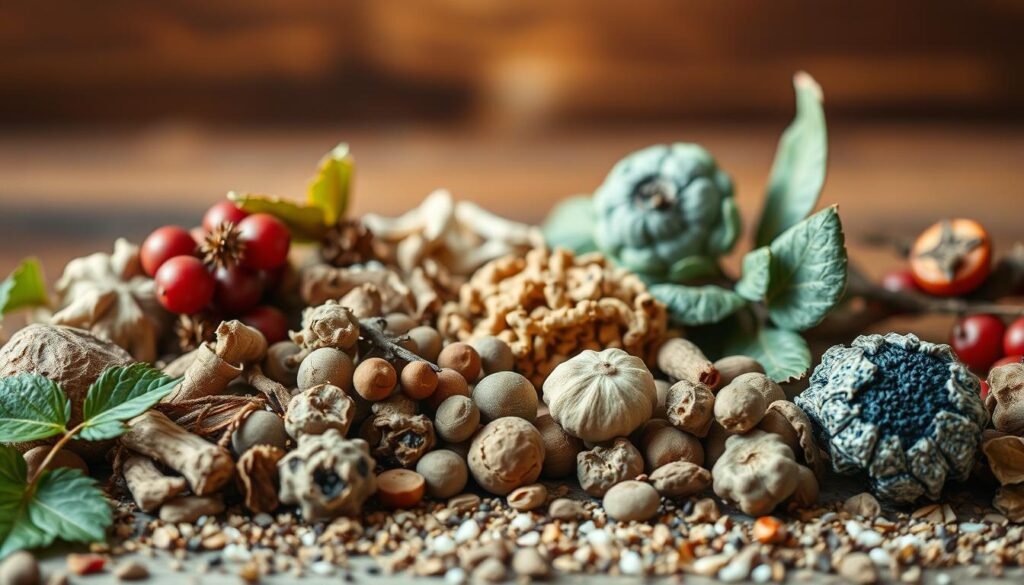
These herbs are not interchangeable. Their active compounds, research findings, and safety concerns differ. Choosing more than one does not automatically produce better results.
What Does the Research Actually Support?
Adaptogen research includes laboratory studies, animal experiments, and clinical trials involving people. Results from cells or animals cannot prove that an herb improves human health.
Human studies provide more useful information, but many trials are small, short, or use specific extracts that differ from ordinary supplements.

- Ashwagandha: Promising short-term results for perceived stress and sleep, but long-term safety remains uncertain.
- Rhodiola: Early fatigue findings are interesting, yet evidence quality is insufficient for firm conclusions.
- Panax ginseng: Possible small benefits for fatigue and selected cognitive tasks, with inconsistent results.
- Reishi, tulsi, and schisandra: Interesting traditional uses and early research, but limited proof for the specific stress and sleep benefits often advertised.
These differences matter. A supplement can have promising results without being proven effective, and evidence for an herb does not establish that every product containing it works the same way.
Capsules, Tinctures, or Tea: Which Form Makes Sense?
Once you understand the evidence and safety concerns, the next question is how a preparation differs from others.
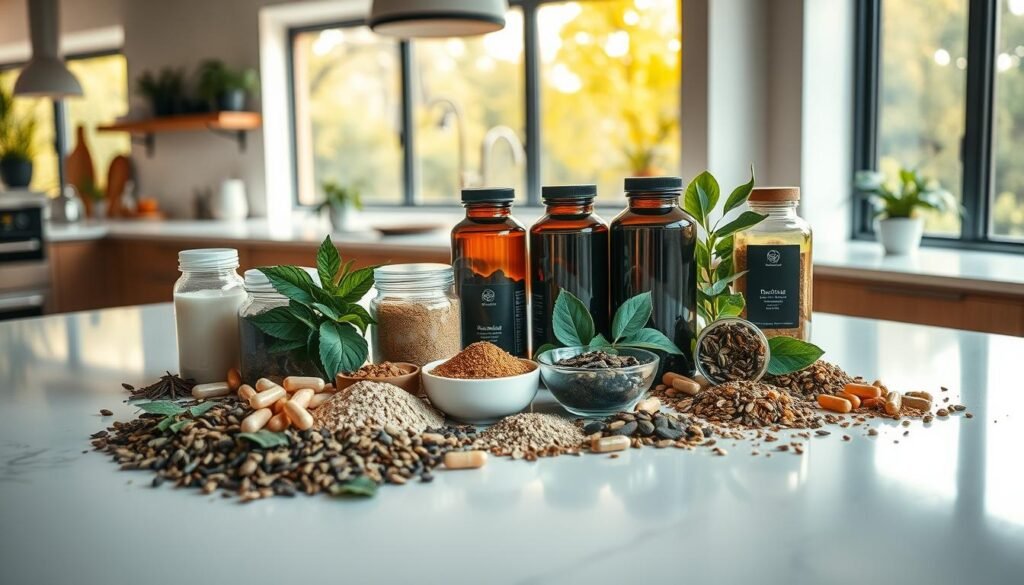
Capsules usually make labeled amounts easier to measure. Liquid tinctures allow flexible measuring but can vary in concentration. Teas and powders are convenient for traditional preparations, although they may contain different amounts of active compounds than concentrated extracts.
What to Check Before Buying
- Botanical name: Look for the exact plant species, such as Rhodiola rosea rather than simply “rhodiola.”
- Plant part: Root, leaf, and fruit extracts may differ.
- Extract information: Check the amount per serving and whether active compounds are standardized.
- Independent testing: Look for credible quality testing and ask whether a certificate of analysis is available.
- Extra ingredients: Watch for caffeine, black pepper extract, allergens, or additional herbs.
Standardization is useful for comparing labels, but a percentage of withanolides, rosavins, or ginsenosides does not guarantee safety or clinical effectiveness.
What About Dosage and Timing?
There is no single evidence-based dose that works for every adaptogen. For example, some ashwagandha trials studied 300–600 mg of particular extracts daily, but those amounts cannot automatically be applied to every formulation.
Rhodiola and ginseng may be better avoided near bedtime if they cause sleep problems. The idea that every calming herb must be taken at night is also too simple; timing depends on the specific product and individual response.
Use the manufacturer’s directions only after confirming the product is appropriate for you. Avoid increasing doses just because you haven’t noticed an effect.
Are Adaptogens Safe? Important Warnings
Natural products can still have strong biological effects. Safety depends on the herb, extract, health conditions, medications, and length of use.
- Pregnancy and breastfeeding: Avoid ashwagandha during pregnancy and breastfeeding. Safety data for many other adaptogens are also inadequate.
- Thyroid or autoimmune disorders: Ashwagandha may affect thyroid function and is not recommended for some people with these conditions.
- Diabetes or blood pressure medications: Ashwagandha and ginseng may affect blood sugar or interact with treatment. Rhodiola has a reported interaction with losartan.
- Blood thinners or immune-suppressing medicines: Some herbal products may interfere with clotting or immune-related treatment.
- Liver problems: Rare cases of liver injury have been linked to ashwagandha. Stop use and seek prompt care if jaundice, dark urine, or unusual severe symptoms appear.
- Upcoming surgery: Tell your surgical team about all supplements because some may interfere with medicines or recovery.
People with bipolar disorder, significant anxiety, insomnia, or other ongoing conditions should also review herbal supplements with their healthcare professional.
Importantly, persistent fatigue, unusual thirst, frequent urination, ongoing anxiety, or major sleep changes should not simply be labeled a “stress type.” These symptoms can have causes that need proper evaluation.
Should You Combine Adaptogens?
You might see recommendations to take rhodiola in the morning and ashwagandha at night. However, there is not enough reliable evidence that this combination is more effective or safer than using either ingredient alone.
Combining herbs also makes it difficult to identify which ingredient causes a side effect. If a clinician agrees that a supplement is appropriate, evaluating one product at a time is generally easier than beginning with a multi-herb stack.
Alternating products does not necessarily prevent interactions, either. More ingredients should never be mistaken for more benefit.
A Simple Stress-Management Plan You Can Start Today
You don’t need to purchase a supplement to begin improving your daily routine. These habits have broader health benefits and can be used whether or not herbal products are suitable.
- Track your symptoms. For one week, record sleep hours, stress levels, energy, and caffeine intake. Look for patterns rather than judging a single difficult day.
- Build a sleep routine. Keep regular sleep and wake times, create a relaxing wind-down period, and reduce late-day caffeine.
- Move regularly. Try a 15–20-minute walk or another manageable activity. Gradually add strength exercises as your fitness allows.
- Use gentle breathing exercises. Try slow, comfortable breathing or box breathing when you feel tense. Stop if you become dizzy.
- Review your progress. If symptoms continue or interfere with daily life, discuss them with a healthcare professional instead of repeatedly changing supplements.
A balanced diet, sufficient sleep, social support, and manageable workloads can help address the underlying pressures that herbs alone cannot resolve.
Frequently Asked Questions
What is the best adaptogen for stress and anxiety?
Ashwagandha has promising research for perceived stress, although evidence for treating anxiety disorders is less clear. It is not appropriate for everyone, especially during pregnancy or with certain health conditions and medications.
Which adaptogen may help with fatigue?
Rhodiola and Panax ginseng have both been studied. Ginseng may offer a small benefit for general fatigue, while rhodiola’s evidence remains too uncertain for a firm recommendation. Unexplained or persistent fatigue should be medically evaluated.
How quickly do adaptogens work?
Results depend on the herb and outcome being measured. Many ashwagandha stress and sleep studies lasted six to eight weeks. There is no guaranteed timeline, and taking an herb longer does not ensure better results.
Can I take adaptogens every day?
Daily use has been studied for some herbs over limited periods, but that does not establish long-term safety. Ashwagandha’s safety beyond roughly three months remains uncertain. Follow product-specific advice from a qualified healthcare professional.
Can adaptogens replace sleep medicine or anxiety treatment?
No. Herbal supplements have not been shown to replace proven treatment for insomnia, anxiety disorders, depression, or other medical conditions. Speak with your clinician before making changes to prescribed treatment.
Does choosing a standardized extract guarantee better results?
No. Standardized extracts provide more information about the ingredient’s composition, but effectiveness depends on the exact preparation, dose, study population, and other factors. Independent quality testing is another useful consideration.
What if my quiz results are tied?
Review both stress patterns and decide which symptom affects your daily life most. A tied score does not mean you need two supplements. If symptoms overlap or are persistent, identifying their cause matters more than selecting multiple herbs.
Conclusion: Choose Based on Your Needs, Not the Hype
The right adaptogen isn’t necessarily the most popular one. It depends on your main concern, the quality of the evidence, and whether the herb is safe for your situation.
Ashwagandha has encouraging short-term research for stress and sleep. Rhodiola and Panax ginseng have been explored for fatigue, while evidence for many other adaptogens remains limited.
Use your quiz result as a starting point for understanding your symptoms, not as a prescription. Build healthy habits first, check potential interactions before trying supplements, and seek appropriate care when symptoms persist.
Good stress management is less about finding one miracle herb and more about understanding what your body needs to recover.