


A short morning breathing routine may help some people feel calmer, more settled, or more focused, but it should not be treated as a cure for “brain fog” or a guaranteed replacement for caffeine. The strongest practical reason to try breathwork is simpler: it gives you a structured way to slow down, notice your breathing, and start the day without immediately reaching for stimulation.
You do not need special equipment. The beginner-friendly routine below uses comfortable diaphragmatic and paced breathing rather than forcing breath holds or rapid breathing. Stronger techniques such as Kapalbhati are kept separate because they involve more intense respiratory effort and are not necessary for a useful 10-minute practice.
Key Takeaways
- A gentle 10-minute breathing routine can be a practical morning reset, but 10 minutes is not a proven threshold for benefit.
- Beginners are better served by comfortable diaphragmatic and slow paced breathing than by forceful breathing or prolonged breath holds.
- Brief structured breathing practices have shown effects on mood and physiological arousal in controlled research, but results vary by technique and study design.
- Breathwork is not physiologically equivalent to caffeine and should not be presented as a treatment for persistent fatigue or cognitive symptoms.
- Dizziness, tingling, breathlessness, or lightheadedness can occur when breathing becomes too fast or deep. Stop and return to normal breathing rather than pushing through.
What Morning Breathwork Can Realistically Do
Breathwork is best understood as a self-regulation practice rather than a quick medical treatment. In a randomized trial of brief structured breathing practices, participants practiced several five-minute breathing exercises daily for a month. Some of the breathing groups showed improvements in mood and measures related to physiological arousal, with exhale-focused cyclic sighing performing particularly well on some outcomes.
That is useful evidence, but it does not prove that one 10-minute session will sharpen cognition, eliminate fatigue, or replace coffee. Breathing studies use different techniques, durations, populations, and outcome measures, so it is more accurate to think in terms of possible changes in calm, respiratory pace, and subjective focus rather than guaranteed mental or physical effects.
If you usually drink coffee, you can experiment with doing the breathing routine first and deciding afterward whether you still want caffeine. That is a personal habit choice, not evidence that breathwork and caffeine work in the same way.
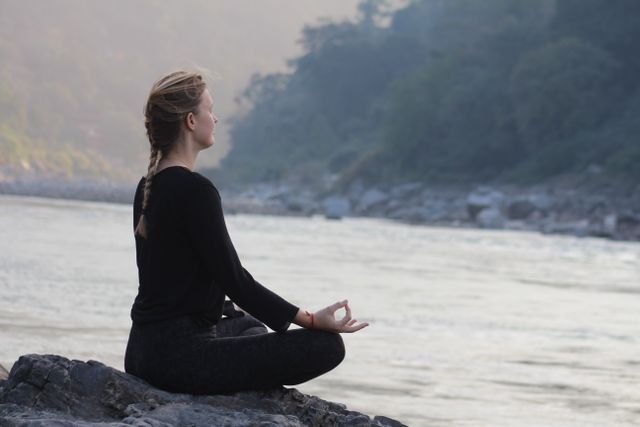
The 10-Minute Morning Breathwork Routine
Sit upright in a chair, on a cushion, or on the edge of your bed. Keep your shoulders relaxed and your jaw loose. If you prefer standing, keep your knees soft and your posture comfortable. You can use a phone timer, watch timer, clock, or simple counting method.
Minutes 0–3: Gentle Diaphragmatic Breathing
Place one hand lightly on your abdomen and the other on your upper chest. Breathe in comfortably through your nose and allow your abdomen to expand without forcing a very large breath. Exhale slowly and naturally.
The goal is not to pull in as much air as possible. Aim for quiet, comfortable breathing with less unnecessary upper-chest effort. If you feel that you are “gulping” air, reduce the depth of each breath.

Minutes 3–6: Slow, Even-Paced Breathing
Continue breathing gently and make the inhale and exhale smooth and unhurried. You might count three or four seconds in and three or four seconds out if that feels comfortable, but the exact number is not important.
Do not chase an artificially slow rate if it creates air hunger or tension. The rhythm should feel sustainable rather than like a performance target.
Minutes 6–8: Optional Box-Breathing Variation
If breath holds feel comfortable, you can try a mild box pattern: inhale gently, pause briefly, exhale gently, then pause again. You do not need to force the classic four-second hold pattern.
If holding your breath makes you tense, dizzy, or uncomfortable, skip the pauses and continue with smooth continuous breathing. Breath retention is optional, not a requirement for a successful session.
Minutes 8–10: Quiet Breathing and Check-In
Return to natural, relaxed breathing. Let go of the counting and notice how you feel compared with the start of the session.
You can rate three simple markers from 1 to 5: calm, mental clarity, and energy. Treat the check-in as a way to notice your own response rather than proof that the technique is producing a medical effect.
Beginner Modification: A Gentler 10-Minute Version
If breathwork is new to you, there is no need to rotate through multiple pranayama methods. A simpler routine is often easier to perform correctly and gives you a clearer sense of how your body responds.
- Minutes 0–5: comfortable diaphragmatic breathing.
- Minutes 5–8: slow, even breathing without holds.
- Minutes 8–10: natural breathing and a brief check-in.
This version avoids prolonged retention and rapid forceful breathing. If you eventually experiment with other techniques, add only one at a time so you can tell whether it feels helpful or uncomfortable.
Morning Breathwork Decision and Safety Guide
| Technique | Relative Intensity | Breath Hold or Forceful Breathing? | Beginner Fit | Practical Guidance |
|---|---|---|---|---|
| Diaphragmatic breathing | Low | No | Good starting point | Keep breaths comfortable rather than very deep. |
| Slow paced breathing | Low | No | Generally beginner-friendly | Use a relaxed rhythm that does not create air hunger. |
| Box breathing | Low to moderate | Yes, intentional pauses | Optional | Shorten or remove holds if they cause discomfort. |
| Alternate nostril breathing | Low to moderate | Not necessarily | Optional | Use it as a technique variation, not as a proven “brain-balancing” method. |
| Ujjayi | Low to moderate | No, if practiced gently | Optional | Keep the throat sound soft and avoid straining. |
| Kapalbhati | Higher | Rapid, forceful exhalations | Not needed for beginners | Keep it separate from the default routine and avoid pushing through symptoms. |
How the Main Techniques Differ
Diaphragmatic Breathing
Diaphragmatic breathing emphasizes comfortable movement of the diaphragm and abdomen rather than exaggerated upper-chest breathing. It is a useful base technique because it can be practiced without rapid breathing or deliberate retention.
Box Breathing
Box breathing typically includes an inhale, hold, exhale, and second hold. That makes it different from ordinary relaxed breathing. Some people find the structure useful for attention, while others find the pauses uncomfortable. There is no reason to force the holds if they make you feel worse.
Alternate Nostril Breathing
Alternate nostril breathing involves manually changing which nostril you breathe through. It has been studied for outcomes including blood pressure and attention, but it should not be described as scientifically proven to “balance” the left and right sides of the brain. A systematic review of alternate-nostril breathing and blood pressure confirms that the technique has been formally researched, but individual results should still be described conservatively.
There is also emerging controlled research on attention and mood after nostril-regulated breathing, including a randomized crossover study in adults. That is more useful than relying on traditional brain-balancing explanations, but it is not strong enough to promise sharper cognition for everyone.

Ujjayi
Ujjayi uses a slight narrowing at the throat to create a soft, audible breath. It can be included as an optional yoga technique if it feels comfortable, but current evidence does not justify claiming that it reliably increases energy, improves brain function, or produces a unique morning-alertness effect.
Kapalbhati
Kapalbhati is materially different from the gentler techniques above because it uses rapid, active exhalations followed by passive inhalations. A systematic review of Kapalbhati research identified only a small number of qualifying randomized trials and noted that some proposed mechanisms remain hypothetical.
For that reason, Kapalbhati does not belong in a default beginner routine. Claims that it detoxifies the body, improves digestion, clears the sinuses, or reliably increases mental clarity should not be treated as established outcomes.
What the Evidence Says About Stress, Focus, and Blood Pressure
The most defensible conclusion is that structured breathing can influence subjective mood and physiological arousal in some settings, but the size and reliability of those effects depend on the technique, population, and length of practice.
Blood-pressure research illustrates why careful wording matters. A 2026 meta-analysis of pranayama in people with hypertension found reductions in heart rate and possible blood-pressure benefits across the included trials. However, the authors also called for larger and more standardized studies.
Other evidence is less encouraging. A systematic review of device- and nondevice-guided slow breathing found no significant reduction in systolic or diastolic blood pressure compared with usual care in the analyzed hypertensive populations, with substantial variation among studies.
That means breathwork should not be marketed as a reliable blood-pressure treatment, and a short morning routine should never replace prescribed medication or clinical care.
Why More or Deeper Breathing Is Not Always Better
One of the biggest problems with oversimplified breathing advice is the idea that deliberately taking deeper or faster breaths automatically sends more oxygen to the brain. In healthy people, that is not a useful way to think about breathing practice.
According to MedlinePlus guidance on hyperventilation, rapid or excessively deep breathing can reduce carbon dioxide in the blood and lead to symptoms such as dizziness, weakness, tingling, breathlessness, palpitations, or difficulty thinking clearly.
Cleveland Clinic’s explanation of hyperventilation similarly notes that overbreathing can lower arterial carbon dioxide and contribute to narrowing of blood vessels supplying the brain. That is one reason lightheadedness during breathwork should not be interpreted as proof that “more oxygen is reaching the brain.”
Who Should Be More Cautious
There is not enough high-quality evidence to support a rigid universal list of who must avoid every breathing technique. However, stronger methods deserve more caution than ordinary relaxed breathing.
People who are pregnant or who have important cardiovascular, uncontrolled blood-pressure, neurological, eye-pressure, abdominal, recent surgical, respiratory, or related medical concerns should seek individualized clinical guidance before using forceful breathing or prolonged breath retention.
If you already have a medical condition, keep in mind that gentle breathing for relaxation and intensive pranayama are not necessarily the same activity. Technique, breathing speed, abdominal effort, and breath-hold duration all matter.
What to Do If You Feel Dizzy or Unwell
Stop the exercise if you develop marked dizziness, lightheadedness, faintness, chest pain, significant shortness of breath, unusual palpitations, or a strong sense that something is wrong.
Return to comfortable normal breathing rather than trying to “breathe through” the symptom. If you were using breath holds, remove them. If you were breathing rapidly or forcefully, stop that technique entirely.
New, severe, persistent, or unexplained symptoms should not automatically be blamed on breathwork. Rapid breathing can also occur with medical problems, so seek appropriate medical care when symptoms are concerning or do not settle.
How to Build the Habit Without Special Equipment
You do not need a dedicated breathing device. A normal phone timer, watch timer, clock, or simple breath counting is enough.
Pick one repeatable cue such as after brushing your teeth, after opening the curtains, or before checking messages. Keep the practice simple enough that you can repeat it without setting up a special environment.

A short tracking system can also be useful. Before and after the routine, rate calm, clarity, and energy from 1 to 5. After a week or two, look for patterns rather than expecting a dramatic day-one change.
If lying down makes you sleepy, practice seated or standing. If sitting upright feels uncomfortable, support your back or use a chair. Comfort and consistency are more important than copying a particular yoga posture.
When “Brain Fog” Needs More Than Breathwork
“Brain fog” is a vague description, not a diagnosis. Occasional morning sluggishness may simply reflect poor sleep, stress, disrupted routine, or other temporary factors. Persistent or worsening cognitive difficulty deserves a broader look.
Consider medical evaluation if morning mental fog comes with excessive daytime sleepiness, recurrent faintness, major breathlessness, chest symptoms, repeated unexplained dizziness, or other symptoms that interfere with daily life. Breathwork may be a useful wellness practice, but it should not become a way to postpone assessment of an ongoing problem.
FAQ
Can breathwork replace coffee?
Not in any proven physiological sense. Breathwork and caffeine act differently, and current evidence does not support presenting a breathing routine as a universal substitute. You can try the routine before coffee and see whether you still want caffeine afterward, but treat that as a personal preference rather than a medical effect.
What is the best breathing technique for beginners?
Comfortable diaphragmatic or slow paced breathing without prolonged holds is a sensible place to start. It is simpler and less intense than rapid forceful methods.
What if box breathing makes me dizzy?
Stop the holds and return to comfortable continuous breathing. Dizziness can occur when breathing patterns disrupt normal carbon-dioxide balance, especially if you are breathing too deeply or quickly.
Does breathwork lower blood pressure?
Some studies and meta-analyses report modest reductions in certain people with hypertension, while other reviews find inconsistent or nonsignificant effects. Breathwork should therefore be considered a possible supportive practice, not a replacement for hypertension treatment.
Do I need Kapalbhati, alternate nostril breathing, or Ujjayi for a complete routine?
No. A useful morning routine can consist entirely of gentle diaphragmatic and paced breathing. Stronger or more specialized techniques are optional.
How long should I practice?
There is no proven universal threshold. Two, five, or ten minutes can all be reasonable practical choices if the breathing stays comfortable. Consistency and tolerability matter more than chasing a specific number.
Final Takeaway
A morning breathing routine does not need to be complicated. Start with gentle diaphragmatic breathing, add slow paced breathing if it feels comfortable, and treat breath holds or forceful methods as optional rather than essential.
The most useful goal is not to “hack” oxygen levels or force yourself into an energized state. It is to create a repeatable practice that helps you settle, pay attention to how you feel, and start the morning without turning ordinary fatigue or persistent cognitive symptoms into something breathwork is expected to cure.