
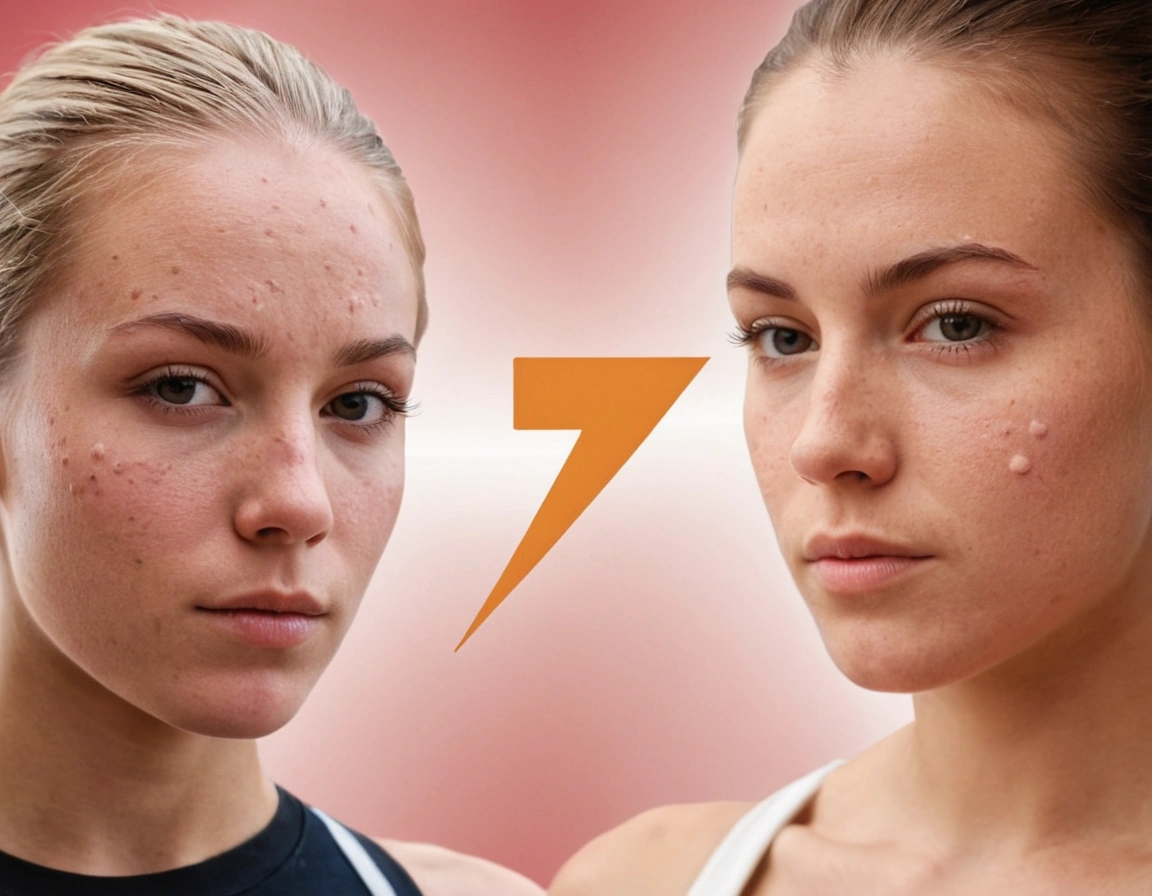

Pre-workout may be worth investigating if your breakouts started soon after you began a new formula, changed brands, increased your serving size, or added another supplement. But that timing alone does not prove the pre-workout is responsible.
The biggest mistake is treating “pre-workout” as a single exposure. One formula may contain caffeine, vitamin B12, sweeteners, carbohydrate powders, creatine, beta-alanine, citrulline, and several other ingredients. Another may contain only a few of those. The evidence linking these ingredients with acne is not equally strong.
Vitamin B12 has a more specific research signal than many commonly blamed pre-workout ingredients. High-glycemic dietary patterns also have meaningful acne research behind them, although that evidence cannot automatically be applied to a small amount of carbohydrate in a particular supplement. By comparison, direct evidence that caffeine, common artificial sweeteners, or creatine independently cause acne is much weaker or uncertain.
The most useful approach is therefore not to label your entire pre-workout as the culprit. Check the timing, inspect the exact ingredient panel, consider workout-related causes, and change one variable at a time.
First, Check Whether Your Pre-Workout Actually Lines Up With the Breakouts
Before focusing on individual ingredients, look at the sequence of events. Acne has many possible contributors, so a supplement becomes more interesting when there is a reasonably clear timing relationship.
- Did the breakouts begin after starting a new pre-workout?
- Did they worsen after increasing the serving size or frequency?
- Did the formula change even though the brand name stayed the same?
- Did you also change your diet, skincare, training schedule, clothing, or other supplements?
- Are the breakouts mostly on areas exposed to tight clothing, straps, helmets, benches, or other gym equipment?
If several things changed at the same time, blaming one ingredient becomes much harder. That is why a useful investigation starts with your own timeline rather than a list of ingredients that are popular to blame online.
Pre-Workout Ingredients and Acne: What the Evidence Actually Shows
| Suspected factor | Evidence level | What it means in practice |
|---|---|---|
| Vitamin B12 supplementation | More specific, but still limited | Worth checking when a formula contains supplemental B12, especially if the timing is suspicious. It is not a universal acne trigger. |
| High-glycemic intake | Meaningful dietary-pattern evidence | Total diet matters more than assuming every gram of maltodextrin or dextrose in a supplement causes acne. |
| Caffeine | Limited direct acne evidence | May still be worth testing in an individual case, but caffeine should not be presented as an established acne cause. |
| Artificial sweeteners | Uncertain | There is not persuasive acne-specific evidence to treat common sweeteners as major proven triggers. |
| Creatine | No established direct acne link | Do not assume creatine is responsible simply because it appears in the same formula. |
| Friction, heat, sweat retention, occlusion | Recognized dermatologic factor | Gym-related skin irritation or acne mechanica may explain breakouts that seem connected with training. |
Vitamin B12: A More Specific Acne Signal, but Context Matters
Vitamin B12 deserves more attention than many ingredients that are casually blamed for supplement-related acne because there is specific research examining a possible connection.
One study on vitamin B12 and acne-related skin bacteria found that B12 supplementation could affect the activity of Cutibacterium acnes in ways relevant to acne biology. That makes B12 a plausible variable to examine when a supplement contains it.
But the study does not show that ordinary dietary B12, every B12 supplement, or every pre-workout containing B12 will cause acne. Exposure, dose, individual susceptibility, and the rest of the formula still matter.
If your new pre-workout added a substantial supplemental B12 dose and the breakout timing fits, comparing the old and new labels may be more informative than assuming caffeine or creatine is responsible first.
High-Glycemic Carbohydrates: Better Evidence for Diet-Acne Links
Dietary glycemic load has stronger acne research behind it than many individual ingredients discussed in relation to pre-workout supplements. The American Academy of Dermatology summarizes diet and acne evidence suggesting that lower-glycemic eating patterns may be associated with fewer breakouts in some people, although study findings are not completely uniform.
That evidence is useful, but it should not be stretched too far. A dietary pattern involving frequent high-glycemic foods is not the same exposure as a particular amount of maltodextrin or dextrose in one serving of pre-workout.
If your supplement contains rapidly absorbed carbohydrate ingredients, consider them in the context of your total diet rather than treating their presence on the label as proof of causation.
Caffeine: Plausible Indirect Effects, Limited Direct Acne Evidence
Caffeine is often blamed for breakouts because it can affect alertness, sleep, and how some people respond to stress. Those pathways may matter to an individual’s skin, especially if a strong stimulant formula disrupts sleep or changes other habits.
What is missing is strong direct evidence showing that caffeine itself routinely causes acne or specifically produces cystic or jawline acne.
That distinction matters. If you suspect caffeine, it is reasonable to test it as one variable. It is not reasonable to assume that a certain caffeine dose will cause acne or that staying below a particular milligram threshold will protect your skin.
Artificial Sweeteners: Much More Uncertain Than They Are Often Made to Sound
Sucralose, aspartame, and acesulfame potassium often appear on lists of alleged acne triggers, but the direct acne evidence is not strong enough to rank them among the most established causes of pre-workout-related breakouts.
Mechanistic arguments involving insulin responses, gut bacteria, or inflammation do not automatically prove that a normally consumed sweetener causes acne in humans. Those are separate questions.
If your formula change also introduced a new sweetener, you can still note that difference during troubleshooting. Just treat it as an uncertain variable rather than a proven culprit.
Creatine: No Established Direct Link to Acne
Creatine is frequently blamed because it is included in many sports supplements, but being present in a multi-ingredient formula does not establish that it caused the breakout.
The broader creatine safety evidence does not support the claim that normal creatine supplementation is known to dehydrate the skin and thereby cause acne. That proposed mechanism should not be treated as established.
At the same time, the available evidence is not an acne-specific guarantee that creatine can never coincide with a skin change in any individual. A more accurate conclusion is that no established direct creatine-acne link was identified in the evidence used here.
If you take plain creatine separately from your pre-workout, changing the whole routine at once can make it harder to know what mattered.
Beta-Alanine, Citrulline, and Other Common Ingredients
Beta-alanine and citrulline are common performance ingredients, but they do not have the same acne-specific evidence signal as supplemental B12 or the broader research surrounding dietary glycemic load.
Unless there is a clear reason to suspect one of them, there is little value in automatically eliminating every performance ingredient in your formula. The more variables you change at once, the less useful your experiment becomes.
Your Breakouts May Be Workout-Related Rather Than Supplement-Related
A breakout that appears during the same period you started pre-workout can still have a different explanation.
The American Academy of Dermatology describes acne mechanica from friction and sports equipment. Friction, pressure, heat, trapped sweat, and occlusion from clothing or equipment can aggravate acne-prone skin.
That makes location especially useful. Breakouts under a helmet strap, sports bra, tight shirt, backpack strap, lifting belt, or other repeatedly rubbed area may point toward a mechanical contributor. Facial breakouts may also be affected by touching the face during training, shared surfaces, or changes in skincare habits.
This does not mean sweat itself should be blamed as the sole cause of acne. The more useful question is whether your training environment creates friction, heat, occlusion, or prolonged moisture in the areas where breakouts are appearing.
A Practical 5-Step Pre-Workout Acne Troubleshooting Plan
1. Build a Simple Timeline
Write down when you started the supplement, when the breakout appeared, whether you changed the serving size, and what else changed around the same time.
2. Compare the Exact Ingredient Labels
If you switched formulas, compare the old and new labels side by side. Look for meaningful differences such as added B12, caffeine amount, carbohydrate ingredients, sweeteners, or entirely new compounds.
“Pre-workout” is too broad a category to troubleshoot without looking at the actual formula.
3. Rank the Most Plausible Variables
Start with factors that have either a stronger evidence signal or a strong timing relationship in your own case. Do not give every ingredient equal suspicion simply because it appears on the label.
4. Change One Variable at a Time
If practical, remove or reduce one suspected exposure instead of changing your pre-workout, skincare routine, diet, detergent, caffeine intake, and training clothes simultaneously.
Changing several things at once may improve the situation, but you will have learned very little about what actually mattered.
5. Reassess the Whole Picture
If breakouts continue, revisit other possibilities: friction, occlusive clothing, diet changes, sleep disruption, skincare products, other supplements, medications, stress, and your baseline tendency toward acne.
Stopping one supplement does not guarantee improvement when several factors are contributing.
If You Decide to Switch Pre-Workouts, What Should You Look For?
You do not need to buy another supplement just because you suspect your current pre-workout. Temporarily pausing it may be the simplest way to reduce variables.
If you still want to use pre-workout while testing one specific factor, choose the new formula based on the variable you are trying to remove. For example, if caffeine is the main variable you want to investigate, a caffeine-free formula is easier to interpret than switching to another product that simply contains a different caffeine dose.

LEGION Pulse Caffeine-Free Pre-Workout is one example of that approach. The verified Fruit Punch formula is caffeine-free and uses disclosed amounts of several performance ingredients, including citrulline, beta-alanine, betaine, and alpha-GPC. Its role here is not to provide an acne benefit; it simply removes caffeine while allowing someone to retain a multi-ingredient pre-workout routine.
That tradeoff matters. Removing caffeine does not remove every possible variable. The formula still contains several active and non-active ingredients, so it is less useful if your goal is to isolate multiple ingredients at once. It also will not provide the stimulant effect that many people expect from pre-workout.
If temporarily stopping pre-workout entirely is easy for you, that may produce a cleaner comparison than immediately substituting another multi-ingredient formula. A replacement makes more sense when you specifically want to keep a pre-workout routine while changing one clearly defined variable.
- Get a naturally sweetened and flavored stim free pre workout with clinically effective doses of 4 ingredients that increase strength and stamina and reduce fatigue without any jitters or post-workout crash.
- 45 peer-reviewed scientific studies support Pulse’s combination of ingredients and doses. That’s 436 pages of scientific research that shows our non stim preworkout works the way we say it does.
- Best caffeine free pre workout with no artificial sweeteners, flavors, food dyes, fillers, or other unnecessary junk. While these types of chemicals in a stimulant free pre workout may not be as dangerous as some people claim, studies suggest that regular consumption of them may indeed be harmful to our health.
- Clean non stim pre workout with a transparent label that shows exactly what’s in every serving of our caffeine free pre workout powder and what’s not (no proprietary blends or hidden ingredients).
If that use case fits your troubleshooting plan, you can view the current Amazon listing. A stimulant-free formula should still be treated as a formulation choice, not as a treatment or guarantee against breakouts.
When Breakouts Need More Than a Supplement Change
A supplement experiment is most useful when acne is mild enough to monitor and there is a clear reason to investigate a recent change.
Persistent, painful, cystic, worsening, or scarring acne deserves professional evaluation rather than repeated supplement swapping. The same applies when breakouts are causing significant distress or when you are unsure whether the spots are actually acne.
A clinician or dermatologist can also help when several factors overlap, which is common with acne. In that situation, repeatedly eliminating foods and supplements without a clear plan may create more confusion than useful information.
Frequently Asked Questions
Does stopping pre-workout guarantee that my acne will improve?
No. Acne is multifactorial, so stopping one supplement may make no difference if the main contributors are unrelated or if several factors are involved.
Does vitamin B12 cause acne?
Supplemental B12 has a more specific acne-related research signal than many other pre-workout ingredients, but that does not mean B12 causes acne in everyone. Dose, exposure, individual susceptibility, and timing all matter.
Does creatine cause acne?
No established direct creatine-acne link was identified in the evidence used here. The common claim that creatine causes acne by dehydrating the skin is also not supported by the creatine safety literature cited above.
Can workout sweat cause acne?
Sweat alone is too simple an explanation. Friction, pressure, heat, prolonged moisture, and occlusive clothing or equipment can contribute to acne mechanica, especially when breakouts occur where equipment repeatedly contacts the skin.
Should I switch to a stimulant-free pre-workout?
Only if removing caffeine is the specific variable you want to test and you still want to use a pre-workout. Switching formulas does not prove that caffeine caused the breakout, and a stimulant-free product still contains other ingredients.
How can I compare two pre-workouts if I suspect one is causing breakouts?
Compare the ingredient panels and identify what actually changed. Pay particular attention to added supplemental B12, caffeine, carbohydrate ingredients, sweeteners, and other new compounds, then change as few variables as possible.
When should I see a dermatologist?
Professional evaluation is appropriate for acne that is persistent, painful, cystic, scarring, worsening, difficult to control, or unclear in diagnosis.
What to Take Away
Pre-workout can be worth investigating when breakouts clearly follow a supplement change, but the label matters more than the category name. Vitamin B12 has a more specific research signal, high-glycemic dietary patterns have meaningful acne evidence, and caffeine or artificial sweeteners remain much less certain as direct causes. Creatine also should not be blamed on the basis of the unsupported dehydration theory.
The most useful decision rule is simple: check the timing, inspect the exact formula, rank the most plausible variables, change one thing at a time, and keep workout-related friction and other acne factors in the picture. If the acne is severe, persistent, painful, or scarring, supplement troubleshooting should not replace professional care.




Don’t Miss These Picks