


What if spending just a few minutes appreciating the good things in your life could change how you handle stress? It sounds simple, but research suggests that practicing gratitude may influence how your brain processes emotions and responds to positive experiences.
In one study involving nearly 300 adults seeking counseling, people who wrote gratitude letters reported better mental health several weeks later. A related brain-imaging study also found differences in activity within a region involved in learning and decision-making.
These findings are promising, but they do not mean gratitude can permanently rewire your brain or cure anxiety and depression. This guide explains what neuroscience actually tells us about gratitude, where the evidence remains limited, and how to build a simple practice into your everyday life.
Key Takeaways
- Gratitude engages brain systems involved in learning and decision-making. Imaging studies have found changes in how the medial prefrontal cortex responds during gratitude-related tasks.
- Small mental health benefits are supported by research. Gratitude exercises may improve mood, well-being, and some symptoms of anxiety or depression.
- Writing gratitude letters can help. One counseling study found benefits at four and twelve weeks after participants completed their writing exercises.
- Physical benefits are less certain. Some studies suggest better sleep, but claims about cortisol, dopamine, and long-term physical health need stronger evidence.
- You can start for free. A notebook, phone note, thoughtful thank-you, or weekly letter is enough to begin.
Helpful Products at a Glance
For people who prefer ready-made daily prompts, the Intelligent Change Five Minute Journal offers a structured alternative to a blank notebook. It is optional, and its guided format has not been shown to outperform free journaling.
- FEEL HAPPIER & LESS STRESSED in just 5 minutes a day. Overthinking or stuck in negative thought loops? This gratitude journal for women and men breaks the cycle - helping you feel more present, calm, and grounded starting with just one page a day.
- BUILD A POSITIVE MINDSET with science-backed journaling. This daily gratitude journal uses research-backed prompts to help you feel calmer, more focused, and inspired - turning gratitude into a sustainable daily habit for a more intentional life.

What Is Gratitude, and Why Does It Matter?
Gratitude means recognizing something valuable in your life and appreciating the people, experiences, or circumstances that helped make it possible. It can involve a major event, such as receiving support during an illness, or something ordinary, like a friend checking in after a difficult day.
Psychologist Robert Emmons, known for his research on gratitude, has studied how consciously noticing positive experiences relates to emotional well-being. Gratitude is more than feeling happy. It involves recognizing what matters to you and appreciating its value.

Gratitude may be especially useful during stressful periods because it encourages you to notice sources of support that problems can temporarily push out of view. It does not erase those problems or require you to feel positive all the time.
In fact, a 2025 meta-analysis published in PNAS examined 145 research papers involving 24,804 participants across 28 countries. The researchers found that gratitude interventions produced small overall improvements in well-being. Results varied across studies, so individual experiences will differ.
How Gratitude Affects the Brain: What Neuroscience Shows
When you think about someone who helped you, your brain does more than recall a pleasant memory. It may also evaluate that person’s actions, their meaning, and how you want to respond.
Researchers use functional magnetic resonance imaging (fMRI) to study these processes. This technology measures changes in blood oxygen levels associated with brain activity. It can show which regions respond during a task, but it cannot directly prove that new neural connections have formed.
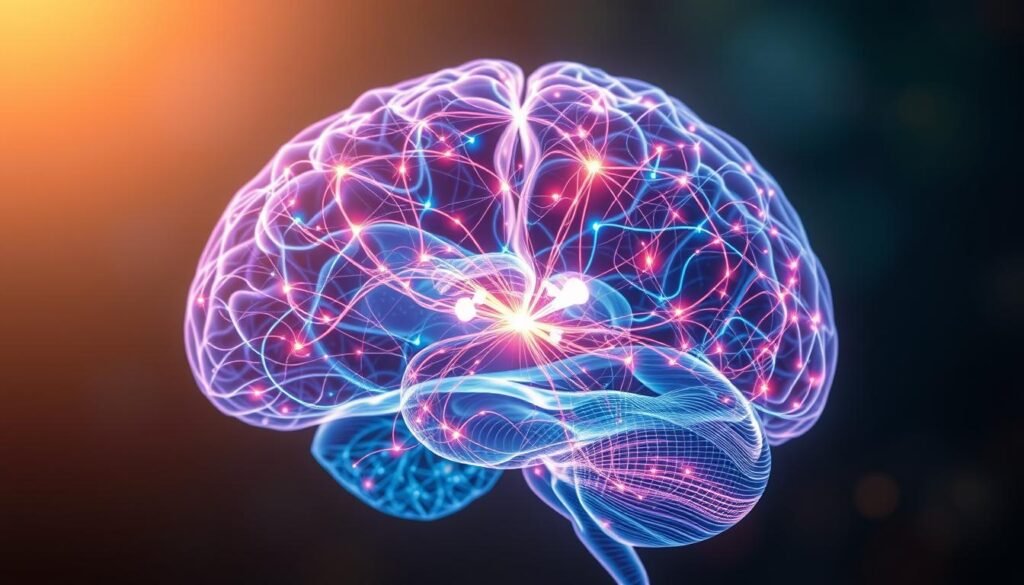
1. Medial Prefrontal Cortex: Learning and Decision-Making
The medial prefrontal cortex is located toward the front and middle of your brain. It helps process information about yourself, other people, and the value of different choices.
In a 2016 neuroimaging study, people who had written gratitude letters showed greater activity related to feelings of gratitude in this region approximately three months after the writing intervention began.
This suggests that gratitude writing may influence how the brain responds to appreciation over time. However, the study was relatively small, and the findings do not establish permanent changes in brain structure or better decision-making in everyday situations.
2. Anterior Cingulate Cortex: Emotions and Social Understanding
The anterior cingulate cortex helps with attention, evaluating choices, and processing emotionally meaningful information. It works with other brain regions involved in social behavior.
Some neuroscience research connects gratitude with broader networks involved in evaluating social experiences. However, scientists have not established that gratitude exercises reliably strengthen the anterior cingulate cortex or directly increase empathy.
3. Hippocampus and Amygdala: Memory and Emotional Responses
The hippocampus helps form and retrieve memories. The amygdala helps the brain respond to emotionally important events, including possible threats.
Remembering a supportive experience involves memory and emotion, so both systems may contribute to how gratitude feels. Still, there is limited direct evidence that a gratitude journal strengthens hippocampal connections or consistently lowers amygdala reactivity.
4. Dopamine, Serotonin, and Cortisol: What We Know
Dopamine plays a role in motivation and reward, while serotonin contributes to several functions related to mood. Cortisol is a hormone involved in the body’s stress response.
Although popular articles often claim gratitude boosts dopamine and serotonin while lowering cortisol, these specific effects have not been consistently demonstrated in human gratitude-intervention studies.
For example, a randomized study involving 119 young women found improvements in optimism, reported sleep quality, and diastolic blood pressure after a two-week gratitude intervention. However, the researchers did not find the expected relationships with cortisol.
The hypothalamus and autonomic nervous system help regulate bodily functions such as sleep and stress responses. Their general roles are well established, but direct claims that gratitude retrains these systems remain uncertain.
How Gratitude May Improve Your Emotional Well-Being
Gratitude may help by changing what receives your attention. During a stressful day, it is easy to replay an upsetting conversation while overlooking the support you received afterward.
Taking a moment to appreciate that support offers another way to look at the day. The problem still exists, but it is no longer the only thing you are thinking about.

Less Rumination and More Emotional Balance
Rumination means repeatedly dwelling on upsetting thoughts without reaching a useful solution. Gratitude exercises may help some people redirect attention toward supportive relationships and meaningful experiences.
Researchers studying gratitude letters found that participants who used fewer negative emotion words tended to report better mental health later. This was a statistical relationship, not proof that avoiding negative language caused the improvement.
The goal is not to suppress sadness, anger, or disappointment. Healthy gratitude leaves room for difficult feelings while recognizing that positive experiences can exist alongside them.
Resilience and Stronger Relationships
Resilience involves adapting to stress and recovering from setbacks. Gratitude may support this process by helping you notice people, resources, and experiences that make challenges easier to manage.
Expressing appreciation can also encourage social connection. A sincere thank-you tells another person that their effort mattered. However, gratitude alone cannot repair an unhealthy relationship or replace practical support.
What Scientific Studies Actually Found About Gratitude
Research offers useful evidence, but study designs, participants, and outcomes differ. Looking at those differences helps explain why gratitude works better for some people than others.

The Three-Week Gratitude Letter Experiment
In a randomized trial published in Psychotherapy Research, nearly 300 adults, mostly university students beginning counseling, were assigned to three groups. All received counseling, but their additional writing activities differed:
- Gratitude group: Wrote one letter of appreciation each week for three weeks.
- Negative-experience group: Wrote about their deepest thoughts and feelings concerning difficult experiences.
- Comparison group: Received counseling without an added writing activity.
The gratitude group reported better mental health than the other groups at four and twelve weeks after completing the writing exercises. The groups did not show the same difference immediately after the intervention.
Interestingly, only 23% of gratitude-letter writers sent their letters. Participants who kept them private also benefited, suggesting that writing itself can be worthwhile.
These findings involved people receiving counseling. They do not mean gratitude writing alone provides the same benefits as therapy.
Brain Activity Three Months Later
In related research, a smaller group completed an fMRI task involving receiving money and deciding whether to pass some of it to charity. Researchers also measured how grateful participants felt.
People who had written gratitude letters showed greater gratitude-related responses in the medial prefrontal cortex than those who had not completed the writing intervention.
That is an encouraging finding about how the brain processes appreciation. However, it does not prove that three weeks of writing permanently rewires the brain or that the observed activity caused better mental health.
What Larger Reviews Tell Us
The 2025 meta-analysis found small average improvements in well-being, rather than dramatic changes. A separate 2023 systematic review and meta-analysis of 64 randomized trials reported improvements in mental health and some anxiety and depression measures, although certainty was low for several outcomes.
Physical health evidence is less consistent. A 2020 systematic review found improvements in self-reported sleep quality in five of eight studies examining that outcome. Evidence for blood pressure, physical symptoms, and other health measures was limited or mixed.
Overall, gratitude appears to be a useful, low-cost well-being practice. It is not an established treatment for physical illness, and researchers still need stronger evidence about lasting biological effects.
How to Practice Gratitude: Five Simple Habits
You do not need long meditation sessions, special equipment, or perfect concentration to begin. Choose a practice you can repeat without turning it into another stressful obligation.
Specific memories tend to give you more to reflect on than general statements. Instead of writing only “I’m grateful for my family,” consider what someone did, how it helped, and why it mattered.

1. Start a Three-Minute Gratitude Journal
Take a few minutes each morning or evening to write about specific positive experiences. You can begin with one meaningful moment and gradually add more when it feels natural.
- Choose one to three things you appreciated today.
- Describe what happened. Include a small detail that makes the memory specific.
- Explain why it mattered. Think about its effect on your day or relationship.
- Finish without judging yourself. A short, honest entry is enough.
A regular notebook, phone note, or sheet of paper works perfectly well. The practice comes from reflection, not from buying a particular journal.
If you find blank pages intimidating, Intelligent Change’s The Five Minute Journal provides undated pages with guided morning and evening prompts. Its structure can help people who want a ready-made routine, although it also includes affirmations and daily planning questions beyond gratitude. It is a convenience tool rather than a proven mental health treatment.
- FEEL HAPPIER & LESS STRESSED in just 5 minutes a day. Overthinking or stuck in negative thought loops? This gratitude journal for women and men breaks the cycle - helping you feel more present, calm, and grounded starting with just one page a day.
- BUILD A POSITIVE MINDSET with science-backed journaling. This daily gratitude journal uses research-backed prompts to help you feel calmer, more focused, and inspired - turning gratitude into a sustainable daily habit for a more intentional life.
- GUIDED & BEGINNER FRIENDLY - no experience needed. Not sure where to start with journaling? Effortless prompts remove the guesswork, making this self care journal easy, rewarding, and simple to stick with every day.
- PREMIUM QUALITY you'll love using every day. Linen hardcover, sustainably sourced paper, and a timeless minimalist design - this wellness journal isn't just beautiful, it's built to last. Aesthetic, durable, and made for daily use.
Choose whichever format feels easiest to maintain. If daily writing becomes repetitive or tiring, try a few times per week instead.
2. Write a Weekly Gratitude Letter
Think of someone who helped you, supported you, or made a meaningful difference in your life. Write a short letter explaining what they did and why you appreciate it.
Try this once a week for three weeks, following the general structure used in the counseling research. You can send the letter, read it aloud, or keep it private. There is no need to force contact with someone if doing so would be uncomfortable or unsafe.
3. Express Thanks in Everyday Conversations
When someone helps you, go beyond a quick “thanks” when appropriate. Name the action and explain its impact.
For example: “Thank you for checking on me yesterday. I was having a difficult afternoon, and your message helped me feel supported.”
This makes your appreciation specific and gives the other person a clearer understanding of what their effort meant.
4. Use Visual Reminders
Simple reminders can make gratitude easier to remember, particularly when your schedule is busy. Try one of these options:
- Gratitude jar: Add a short note about something meaningful whenever you remember.
- Phone reminder: Set a gentle reminder to reflect on one good moment.
- Sticky note: Place a question such as “Who helped me today?” near your desk.
- Family reflection: Share one appreciated moment during dinner or another regular gathering.
These are habit-building tools, not treatments. Their main purpose is to make remembering the practice easier.
5. Try a Short Gratitude Meditation
Find a comfortable place and spend two or three minutes thinking about someone or something you genuinely appreciate. Notice the memory and any feelings that arise without trying to manufacture happiness.
If your thoughts wander, gently return to the memory. If the exercise feels unpleasant, stop or switch to something more comfortable.
A Simple Three-Week Gratitude Routine
You can combine these habits into a manageable routine without spending much time each day.
- Week 1 — Notice: Write down one to three specific positive moments on most days. Focus on building a comfortable habit.
- Week 2 — Appreciate: Continue your reflections and thank someone for a specific act of kindness or support.
- Week 3 — Reflect: Write a gratitude letter and look back at your earlier notes. Notice which experiences feel most meaningful.
At the end of three weeks, decide whether the practice feels useful enough to continue. You can change the frequency, switch from writing to verbal reflection, or stop if it does not help.
Remember that the counseling study found differences in mental health several weeks after the writing exercises ended, not an immediate transformation. There is no established three-week deadline for seeing benefits.
How to Tell Whether Gratitude Is Helping You
You do not need a brain scan or specialized device to evaluate your experience. A simple weekly reflection can help you recognize changes without making the habit complicated.
Consider these questions:
- Do I notice supportive people or positive experiences more often?
- Am I finding it easier to recover emotionally after an ordinary setback?
- Has my general mood changed over the past few weeks?
- Does this practice help me connect with others, or does it feel forced?
- Am I maintaining the routine comfortably without pressure?
You can also rate your mood from 1 to 10 each evening and review the overall trend after several weeks. However, mood naturally changes for many reasons, so improvements cannot automatically be credited to gratitude.
Can Gratitude Practice Have Downsides?
Gratitude exercises are generally low risk, but they do not feel helpful to everyone. Someone coping with grief, difficult relationships, or ongoing stress may find certain prompts upsetting.
Forced positivity can also become a problem when gratitude is used to dismiss real difficulties. You should not feel obligated to appreciate harmful treatment or pretend that serious problems do not exist.
Keep these boundaries in mind:
- Allow yourself to experience sadness, frustration, or anger when appropriate.
- Skip prompts that bring up distressing memories.
- Do not compare your progress with someone else’s.
- Use gratitude alongside practical coping skills and appropriate mental health care, rather than replacing them.
If anxiety, depression, or emotional distress is interfering with everyday life, a licensed mental health professional can help you explore suitable treatment and supportive habits.
Frequently Asked Questions
Does gratitude actually rewire your brain?
Brain-imaging research suggests that gratitude writing may change how certain brain regions respond to gratitude-related experiences. However, studies have not established that brief exercises permanently change neural connections. “Rewiring” is a simplified description of a complex process.
How long does it take for gratitude to affect the brain?
There is no proven timeline. One study found differences in brain responses around three months after a gratitude-writing intervention began. Mental health improvements may develop over weeks, but results vary.
Does gratitude increase dopamine and serotonin?
There is not enough direct human evidence to conclude that gratitude journaling reliably increases dopamine or serotonin levels. Researchers are still exploring the biological processes behind its psychological benefits.
Is gratitude journaling better than writing about negative experiences?
In one trial involving adults receiving counseling, gratitude-letter writing produced better mental health outcomes than the comparison writing activity. That does not mean expressing negative emotions is unhealthy. Different writing practices serve different purposes.
Can gratitude help with anxiety or depression?
Some controlled studies and research reviews suggest modest improvements in mental health symptoms. Gratitude may be a useful addition to treatment, but it cannot replace psychotherapy, medication when indicated, or other appropriate care.
Do I need to practice gratitude every day?
No. Research has examined daily, weekly, and other schedules. Consistency can help you establish a habit, but there is no proven requirement to write every day. Choose a schedule you can manage comfortably.
Conclusion: Small Moments of Appreciation Can Matter
The neuroscience of gratitude offers an encouraging lesson: deliberately noticing and appreciating positive experiences may influence how we process social information and support emotional well-being.
Brain-imaging studies show interesting responses in the medial prefrontal cortex, while larger research reviews suggest small average improvements in mood and well-being. These findings are meaningful, even though stronger evidence is needed to understand long-term changes in the brain and body.
Start with one genuine moment of appreciation today. Write down what happened, why it mattered, and who was involved. Repeat when it feels useful, and allow the habit to develop naturally.
You do not need to feel grateful for everything. Sometimes, recognizing one good thing during a difficult day is enough to make the exercise worthwhile.