


Fertility awareness methods (FAMs) use changes in cervical mucus, basal body temperature (BBT), and/or cycle timing to estimate which days pregnancy is more likely. They can be used to help plan a pregnancy or to avoid pregnancy without hormones, but they require consistent tracking and clear rules.
The most important point is that FAM is not one single method. The Standard Days Method, cervical mucus methods, BBT methods, and symptothermal methods each use different rules. If avoiding pregnancy is a high priority, choose one evidence-based method, learn its rules well, and use abstinence or a barrier method on days your method identifies as fertile or uncertain.
This guide explains the main signs, how to begin charting, what can interfere with readings, and when condoms or professional guidance make sense.
Key Takeaways
- FAMs identify fertile days using cycle timing, cervical secretions, temperature changes, or a combination of signs.
- BBT usually confirms that ovulation has already occurred; it does not reliably predict ovulation by itself.
- Standard Days is designed for cycles that are consistently 26–32 days long and treats days 8–19 as fertile.
- FAMs do not protect against sexually transmitted infections (STIs); condoms can add STI protection and pregnancy protection.
- Illness, disrupted sleep, postpartum changes, some medications, and irregular bleeding can make fertility signs harder to interpret.
Helpful Products at a Glance
For consistent morning temperature charting, a dedicated basal thermometer can make small BBT changes easier to record, but it does not interpret FAM rules for you.
- Accurate Basal Thermometer for Ovulation Tracking. Easy@Home BBT for ovulation is a must-have for easily detecting your fertile window and tracking your ovulation day. The Premom app can chart your reading inputs and draw your BBT shift digitally by entering your basal body temperature manually. The basal thermometer does it all with ease whether you are trying to conceive (TTC), avoid pregnancy naturally, or just want to know your body better, the basal thermometer does it all with ease
- 1/100th Degree Precision: This 2-decimal digital thermometer provides precision at ±0.05℃ or ±0.10℉. Designed for oral use, it is suitable for women’s fertility tracking and fever monitoring in adults, infants, babies, and children. Please note: This thermometer is intended for oral use only and is not designed for underarm or rectal use. It includes a plastic storage case for easy portability and daily use.

For barrier protection on fertile or uncertain days, a standard latex condom is a practical option; choose a non-latex alternative if either partner has a latex allergy.
- One 36 ct value pack box of condoms, Trojan ENZ Latex Condoms are lubricated condoms for increased comfort and sensitivity
- Classic latex condoms with a reservoir end for extra safety and a straight-walled shape for a secure, snug fit to prevent slipping

How Fertility Awareness Works
The menstrual cycle begins on the first day of menstrual bleeding and ends the day before the next period starts. Ovulation does not always happen on day 14. Its timing can vary from cycle to cycle, which is why symptom-based FAMs look for changing body signs rather than relying on a date alone.
Three observations are especially common: cervical mucus, basal body temperature, and cycle-day patterns. Some methods use one sign; symptothermal methods combine more than one. The American College of Obstetricians and Gynecologists (ACOG) describes Standard Days, cervical mucus, BBT, and symptothermal approaches as distinct fertility-awareness methods.
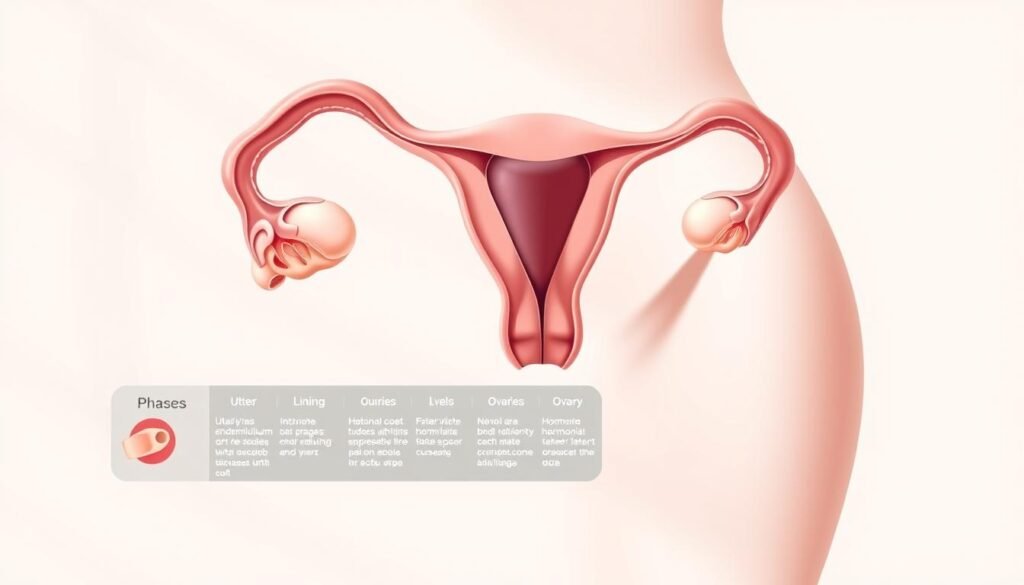
The fertile window
An egg is usually capable of being fertilized for about 12–24 hours after ovulation, while sperm can survive for several days in the reproductive tract. That is why pregnancy can occur from sex in the days before ovulation as well as around ovulation itself.
Cervical mucus often becomes wetter, clearer, more slippery, and more stretchy as ovulation approaches. After ovulation, it usually becomes thicker or less noticeable. BBT behaves differently: progesterone causes a small temperature rise after ovulation, so a sustained shift is mainly useful for confirming that ovulation has likely passed.
For more background on fertility biomarkers, see this peer-reviewed review of cycle tracking and biomarkers.
How to Start Tracking Step by Step
1. Choose a method before choosing an app
Start with a defined method rather than mixing rules from several systems. If pregnancy prevention matters, this is especially important because a calendar rule, a mucus rule, and a symptothermal rule may define the beginning and end of the fertile window differently.
A trained instructor can be useful if your cycles are irregular, you are postpartum or breastfeeding, you recently stopped hormonal contraception, or you want to use FAM as your primary birth-control method.
2. Take your basal body temperature consistently
Take your BBT immediately after waking, before getting out of bed, eating, drinking, or becoming active. Try to measure at roughly the same time and after a similar amount of sleep. Record the result every day and note anything that may have disturbed it, such as fever, alcohol, unusually poor sleep, or travel.
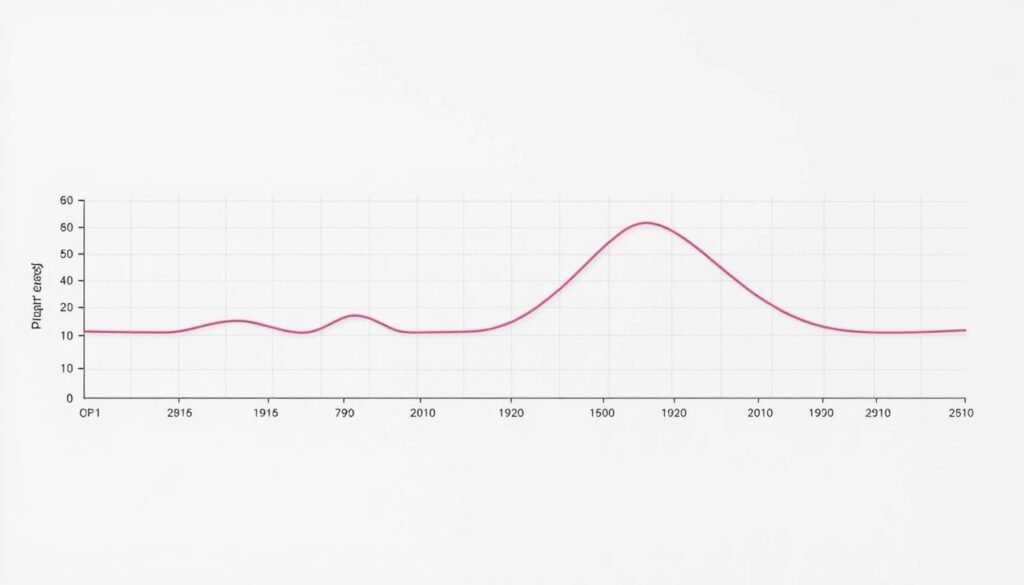
ACOG notes that BBT commonly rises by about 0.5–1°F around ovulation and stays higher until the end of the cycle. The key is the pattern, not one isolated reading. BBT alone cannot tell you in advance exactly when ovulation will happen.
A regular fever thermometer may not display enough detail for convenient charting. A dedicated basal thermometer is designed to record small temperature differences, which can make a morning routine easier to repeat. You can log readings on paper or in an app, but the charting tool should support the rules of the FAM you are actually using.
The Easy@Home EBT-018 is a straightforward option for daily BBT tracking. Its role is measurement and record-keeping; it does not replace method-specific interpretation, and an app prediction should not override your FAM rules when pregnancy avoidance is the goal.
- Accurate Basal Thermometer for Ovulation Tracking. Easy@Home BBT for ovulation is a must-have for easily detecting your fertile window and tracking your ovulation day. The Premom app can chart your reading inputs and draw your BBT shift digitally by entering your basal body temperature manually. The basal thermometer does it all with ease whether you are trying to conceive (TTC), avoid pregnancy naturally, or just want to know your body better, the basal thermometer does it all with ease
- 1/100th Degree Precision: This 2-decimal digital thermometer provides precision at ±0.05℃ or ±0.10℉. Designed for oral use, it is suitable for women’s fertility tracking and fever monitoring in adults, infants, babies, and children. Please note: This thermometer is intended for oral use only and is not designed for underarm or rectal use. It includes a plastic storage case for easy portability and daily use.
- How to Use Digital Ovulation Thermometer: Please place the BBT thermometer under your tongue. For the most accurate result, take it right before you wake up in the morning or before doing any activities. When""℉"" or ""℃"" starts flashing with ""Lo"" on display, the fertility thermometer is then ready to use. The digital BBT only takes around 1 min to read the results. NOTE: ""Lo"" does not mean the battery low
- Memory Recall: Easy@Home basal thermometer for ovulation tracking has a flexible & waterproof tip. It has a gentle confirmation beep when testing is complete. Store the last measured temperature in memory. No need to worry about waking up your sleeping partner beside you either. Easy to clean by using alcohol or a damp cloth. Turn the fertility thermometer off when finished. NOTE: Pressing the ON/OFF button down for 2 seconds will switch the unit between ℉ and ℃
3. Track cervical mucus every day
Observe cervical secretions throughout the day as your chosen method teaches. Near fertile days, mucus may become wetter, clearer, slippery, or stretchy. After ovulation it often becomes drier or thicker. Douching, vaginal products, intercourse, infections, breastfeeding, and some medications can make mucus harder to interpret.
Do not assume that one “egg-white” observation proves ovulation. Cervical mucus is most useful when interpreted with the specific rules of a validated mucus or symptothermal method.
4. Use calendar rules only when they fit your cycles
The Standard Days Method is intended for people whose cycles are consistently 26–32 days long. It considers days 8–19 potentially fertile. If you are using it to avoid pregnancy, those are days to avoid unprotected sex. The CDC reports that about 13 out of 100 Standard Days users become pregnant during the first year with typical use.
The older calendar or “rhythm” method uses past cycle lengths to estimate fertile days, but it is not the same as Standard Days. If your cycles change often, calendar-only estimates become less dependable. ACOG provides a useful overview of fertility awareness-based methods.
5. If you use a symptothermal method, follow its complete rule set
Symptothermal methods combine temperature with cervical mucus and sometimes other observations. More data can help, but the benefit comes from following a defined protocol—not from casually combining whichever signs look reassuring that month.
Rules for when the fertile window closes can differ between methods. Instead of relying on a universal “72-hour rule,” follow the exact temperature and mucus rules taught by your chosen system. If signs conflict or are disturbed, treat the day conservatively until your method gives a clear interpretation.
How Effective Are Fertility Awareness Methods?
Effectiveness varies widely by the specific method and by how consistently its rules are followed. The CDC lists typical-use failure rates across fertility awareness-based methods at about 2% to 23% in the first year. In other words, the range is too broad to treat “FAM” as one effectiveness number.
Missed observations, uncertain mucus, illness, changing sleep schedules, postpartum cycles, and unprotected sex on fertile days can all increase pregnancy risk. Training and partner cooperation can make consistent use easier, but no charting method can guarantee pregnancy prevention.
If avoiding pregnancy would be medically or personally difficult, discuss whether a more effective contraceptive method—or a backup method alongside fertility awareness—better fits your situation.
Breastfeeding and the Lactational Amenorrhea Method (LAM)
LAM is a specific temporary contraceptive method, not simply “breastfeeding as birth control.” According to CDC guidance, all three conditions must be met: your periods have not returned, you are fully or nearly fully breastfeeding, and you are less than six months postpartum.
The CDC further describes frequent feeding as intervals generally not exceeding four hours during the day or six hours at night. Once any LAM condition is no longer met, switch to another contraceptive approach rather than assuming breastfeeding will continue to suppress ovulation.
When to Use Condoms or Other Barrier Methods
FAMs do not protect against STIs. The CDC notes that consistent and correct use of external latex condoms reduces the risk of STIs, including HIV. Condoms can also be used on fertile or uncertain days when you want additional pregnancy protection.
If you are learning a new FAM, your signs are unclear, or your cycle is being affected by illness, travel, medication, breastfeeding, or irregular bleeding, a barrier method can provide a practical backup. For STI prevention, use condoms based on exposure risk—not only on fertile days.
Latex condoms are not appropriate for people with a latex allergy. Also remember that condoms reduce but do not eliminate STI risk, because some infections can spread through skin-to-skin contact outside the area covered.
Trojan ENZ is a standard lubricated latex condom option that fits this backup role. It is not a substitute for learning your fertility method, and anyone with latex sensitivity should choose an appropriate non-latex condom instead.
- One 36 ct value pack box of condoms, Trojan ENZ Latex Condoms are lubricated condoms for increased comfort and sensitivity
- Classic latex condoms with a reservoir end for extra safety and a straight-walled shape for a secure, snug fit to prevent slipping
- Each condom is designed with silky-smooth lubricant for increased comfort and sensitivity to ensure a fun, pleasurable experience both for both partners
- Trojan condoms for men are made from premium latex and triple-tested to ensure reliable, quality contraceptives that reduce risk of unintended pregnancy and STIs
When FAM Can Be Harder to Use
Fertility-awareness methods can be more difficult when the signs themselves are changing or hard to interpret. Examples include irregular vaginal bleeding, abnormal discharge, breastfeeding, perimenopause, recent childbirth, recent hormonal-contraceptive use, fever, shift work, and medicines that affect cycle regularity or fertility signs.
That does not automatically mean FAM is impossible. It may mean you need a method designed for that situation, temporary barrier protection, or guidance from a clinician or trained fertility-awareness instructor. Seek medical evaluation for unusual bleeding, persistent abnormal discharge, severe pelvic pain, or other symptoms that need diagnosis rather than chart interpretation.
Conclusion
Fertility awareness works best as a learned method, not as a collection of app predictions. Start by choosing a defined system, then build a repeatable routine for BBT, cervical mucus, and any other signs that method requires.
Use conservative rules when observations are disturbed, and remember that temperature usually confirms ovulation after the fact rather than predicting it. If avoiding pregnancy, use abstinence or a barrier method during the fertile window defined by your method. If STI protection is needed, condoms matter regardless of where you are in your cycle.
With consistent charting, clear rules, and the right level of support, fertility awareness can become a practical way to understand cycle patterns and make more informed reproductive-health decisions.
FAQ
How long does it take to learn fertility awareness?
Many people need several cycles before they feel confident reading their patterns. Learning time varies by method and by how regular your signs are. If pregnancy prevention is important, use the conservative rules of your chosen method while you are learning.
Can BBT predict ovulation?
Not reliably by itself. A sustained BBT rise is mainly a retrospective sign that ovulation likely occurred. Cervical mucus or other method-specific signs are used to identify fertility before the temperature shift.
Can I use an app instead of learning FAM rules?
An app can store data and display patterns, but prediction algorithms are not automatically the same as an evidence-based FAM. If you are avoiding pregnancy, choose an app that lets you record the signs your method requires and do not let an automated prediction override your method’s rules.
Can I use Standard Days if my cycles vary?
Standard Days is designed for cycles that stay within 26–32 days. If your cycles frequently fall outside that range, a calendar-only approach is a poorer fit and another method may be more appropriate.
Do fertility awareness methods protect against STIs?
No. Cycle tracking does not reduce STI exposure. Condoms can reduce STI risk when used consistently and correctly, and they can also serve as a barrier method on fertile or uncertain days.
Can illness, medication, travel, or poor sleep affect my chart?
Yes. Fever and sleep disruption can affect temperature, while medications, vaginal products, infections, breastfeeding, and other changes can alter fertility signs. Mark disturbances on your chart and follow your method’s conservative rules until the pattern is clear again.
Can FAM help when trying to conceive?
Yes. Tracking cervical mucus, cycle timing, and post-ovulation temperature shifts can help identify when conception is more likely and can provide useful cycle information to discuss with a clinician if pregnancy is not occurring as expected.