

Can red light therapy help you fall asleep faster, wake up refreshed, and enjoy more restful nights? Early research suggests it might help some people, but the benefits are not as certain as social media often makes them sound.
The good news is that you don’t need an expensive therapy panel to improve your sleep environment. Bright light in the morning, dim lighting in the evening, and a consistent bedtime are practical ways to support your body’s natural sleep-wake cycle.
This guide explains how red light affects sleep, what studies actually show, how to choose between different light devices, and how to test a simple 14-day routine without making unnecessary purchases.
Key Takeaways
- Red light may support sleep quality, but research is still limited. It has not been proven to increase deep sleep consistently.
- Dim red or amber lighting is useful at night because it generally affects melatonin less than bright, blue-rich lighting.
- Morning daylight helps regulate your body clock. Consistent exposure can make it easier to maintain a regular sleep schedule.
- Red light therapy panels and ordinary red lamps are different. They have different purposes, brightness levels, and safety considerations.
- Try a 14-day routine before buying equipment. Track your sleep, reduce evening brightness, and seek medical guidance for persistent problems.
Why Light Matters for Better Sleep
Your body has an internal clock called the circadian rhythm. It helps control when you feel awake, when you become sleepy, and when your body releases certain hormones.
Light is one of its strongest signals. Special cells in your eyes detect light and send information to a small part of your brain that helps coordinate your daily rhythm.
- Morning: Bright light helps signal that the day has started and supports alertness.
- Daytime: Regular light exposure reinforces your natural sleep-wake schedule.
- Evening: Lower light levels allow melatonin, a hormone involved in sleep timing, to rise naturally.
- Night: A dark, quiet bedroom helps protect sleep from unnecessary interruptions.
Modern habits can interfere with this pattern. Bright overhead lights, late-night screen use, and irregular sleep schedules may send the wrong timing signals to your brain.
According to the National Heart, Lung, and Blood Institute, managing light exposure is an important part of treating certain circadian rhythm disorders.

Why Blue Light and Red Light Affect Sleep Differently
Blue-rich light is especially effective at stimulating the eye’s circadian light-sensing system. That’s useful during the day, but excessive exposure late at night can delay melatonin release and shift your sleep schedule.
Dim red and amber lighting generally stimulate this system less. That makes them reasonable choices when you need enough light to move around, read, or prepare for bed.
However, red light is not automatically harmless at any brightness. Very bright light can still affect sleep, regardless of its color. Keeping evening lighting dim is more important than turning your entire bedroom red.
What Is Red Light Therapy? Understanding Photobiomodulation
Red light therapy, also called photobiomodulation (PBM), uses specific wavelengths of red or near-infrared light to influence biological processes in the body.
Researchers are studying how these wavelengths interact with cells, including structures called mitochondria that help produce cellular energy. Possible applications include tissue recovery and other health conditions, but many claimed benefits remain under investigation.
For sleep, it’s important to distinguish three different lighting approaches.
1. Dim Red or Amber Bedroom Lighting
This involves ordinary lamps or bulbs that produce gentle, warm-colored light. Their main purpose is to provide visibility while limiting bright, blue-rich exposure before bedtime.
Best use: Evening reading, relaxation, and moving safely around your bedroom.
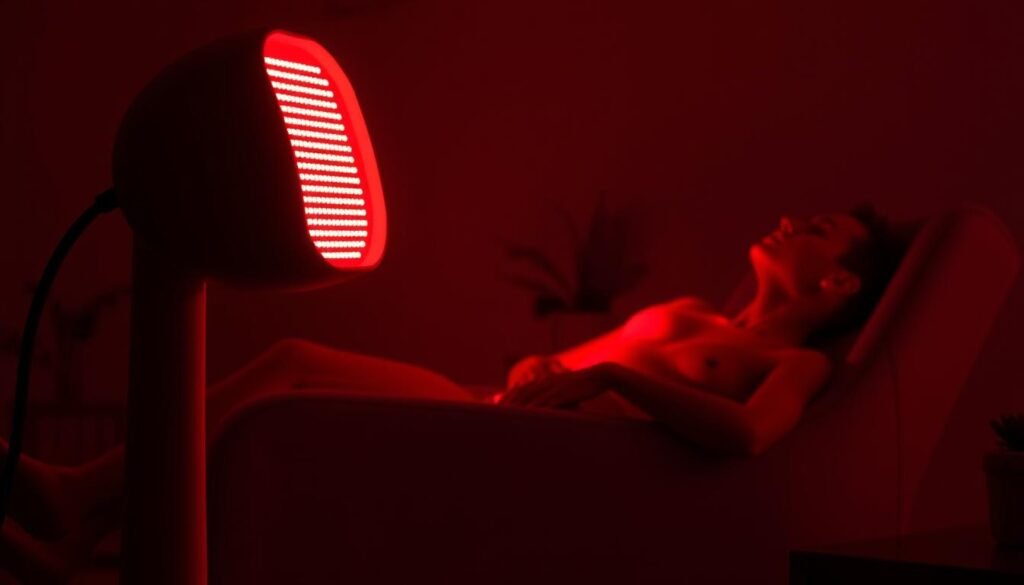
2. Red Light Therapy Panels
These devices typically use concentrated red wavelengths, often around 630–660 nanometers (nm), sometimes combined with near-infrared light around 810–850 nm.
They are designed for targeted exposure rather than simply lighting a room. Their biological effects depend on the wavelength, intensity, distance, duration, and area exposed.
Best use: Specific photobiomodulation applications. Sleep-related benefits remain uncertain, and these panels are not necessary for a healthy bedtime routine.
3. Bright White Light Therapy Boxes
These devices provide intense white light, often up to 10,000 lux at a specified distance. They are used to influence circadian timing and may help with conditions such as seasonal affective disorder and certain delayed sleep schedules.
Best use: Morning circadian light exposure when natural daylight is insufficient or when recommended by a clinician.
Remember that lux measures visible illumination, while therapy-panel irradiance is usually measured in milliwatts per square centimeter (mW/cm²). These measurements are not interchangeable.
Does Red Light Therapy Really Improve Sleep? What Research Shows
Scientists have found encouraging results in some red light studies. However, that doesn’t mean every home device improves sleep, raises melatonin, or increases deep sleep.
The 2012 Study of Female Basketball Players
A small 2012 controlled study examined 20 female basketball players. The treatment group received 30 minutes of red light exposure each night for 14 days.
Researchers reported improved sleep-quality scores, higher measured melatonin levels, and better endurance performance compared with the control group.
These results are interesting, but the study was small and involved a specific athletic population. Its findings cannot automatically be applied to everyone with insomnia.
What a Larger Research Review Found
A 2026 systematic review and meta-analysis examined five randomized trials involving 240 participants.
The combined results suggested a modest improvement in self-reported sleep quality with photobiomodulation compared with sham treatment. However, the researchers emphasized that the evidence remains limited, with uncertainty about the best treatment settings and long-term safety.
This is an important distinction: an improvement in reported sleep quality does not necessarily mean a device increases deep sleep or treats an underlying sleep disorder.
Can Red Light Reduce Morning Grogginess?
A 2019 study involving 30 adults explored whether controlled red light exposure could reduce sleep inertia, the temporary grogginess people sometimes feel after waking.
Some performance measures improved under red light conditions. However, the study examined short-term waking performance rather than proving that ordinary nighttime red lamps improve sleep.
Overall, bright-light therapy has a stronger established role in adjusting circadian timing. Red light therapy for improving sleep quality remains an emerging area of research.
How to Use Red Light for Sleep: A Practical Evening Routine
You can create a more sleep-friendly lighting environment without purchasing a therapy panel. Start with a predictable bedtime and gradually reduce light exposure as the evening progresses.
Step 1: Dim Your Lights 60–90 Minutes Before Bed
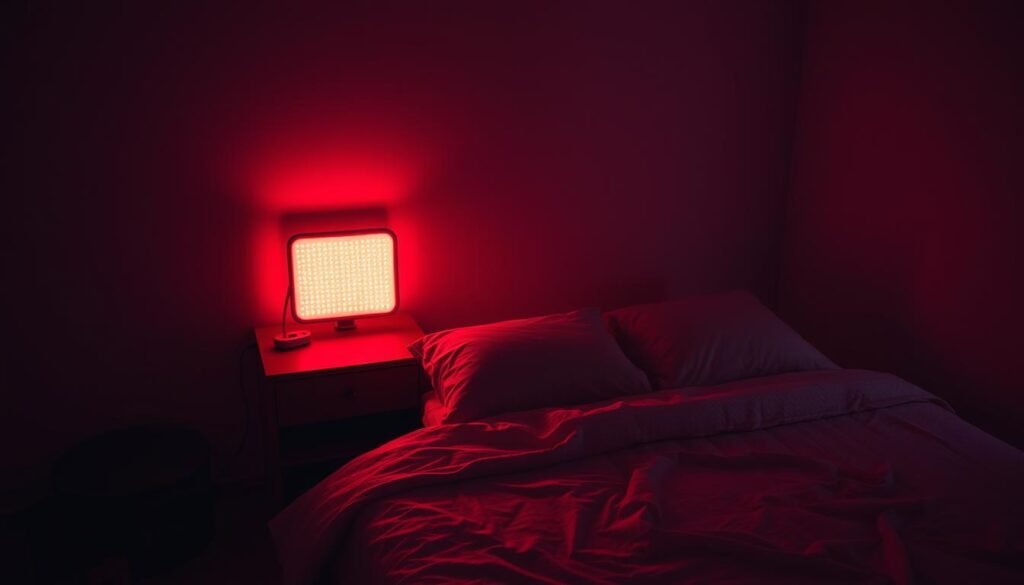
Switch off bright ceiling fixtures and choose softer lighting. A dim red or amber bedside lamp can work, but a low-brightness warm-white lamp is also a reasonable option.
Keep the light comfortable enough for safe movement without flooding the room with brightness.
Step 2: Reduce Bright Screens
Try to limit unnecessary phone, television, and laptop use during the last hour before bed.
If you need your phone, lower its brightness, enable night mode, and avoid stimulating activities. Night-mode settings can reduce blue-rich output, but they do not remove every possible sleep disruption from screen use.
Step 3: Add a Calm Bedtime Activity
Use the lower-light period for an activity that helps you relax:
- Read a printed book.
- Practice slow, comfortable breathing.
- Do gentle stretching.
- Listen to calming music.
- Prepare your bedroom for sleep.
The goal is to build a repeatable routine rather than rely on a particular wavelength to make you sleepy.
Step 4: Consider a Red Light Therapy Session Only If Appropriate
If you already own a red light therapy panel and want to explore its possible sleep benefits, follow the manufacturer’s instructions for distance, duration, and eye protection.
Some research has used 30-minute sessions, but there is no established universal PBM dose for improving sleep. A study’s settings should not be copied automatically onto a device with different power or wavelengths.
Avoid shining intense LEDs into your eyes. If a panel feels stimulating or uncomfortable, don’t make it part of your bedtime routine.
Step 5: Turn Off the Lights When You Sleep
Red light may be less disruptive than blue-rich light, but sleeping in darkness is still preferable.
Turn off lamps and therapy panels when you go to bed. Use blackout curtains or an eye mask if outside lights enter your bedroom.
Morning Light: The Other Half of Better Sleep
Evening light control is only part of the picture. Morning light can help your body recognize when the day begins, making it easier to keep your sleep schedule consistent.
Start With Natural Daylight
Try going outdoors within the first hour after waking. A 15–30-minute walk or another comfortable period outside can be a practical starting habit, although the amount of exposure needed varies with the weather, season, location, and individual.
Don’t stare at the sun. You can benefit from ordinary outdoor daylight while walking, sitting, or doing other morning activities.

When a 10,000-Lux Light Box May Help
If outdoor light is limited, a UV-filtered bright-light box may be useful for particular circadian problems.
Some clinical routines use approximately 20–30 minutes of morning exposure at 10,000 lux. However, the correct timing and duration depend on your condition and the device’s rated distance.
Follow the manufacturer’s instructions and obtain medical guidance when using bright-light therapy to treat a sleep or mood disorder.
For most people simply building better habits, morning daylight remains an excellent place to start.
What About Shift Workers and Jet Lag?
Timing becomes more complicated when you work nights, travel across time zones, or sleep outside typical nighttime hours.
Morning light is not always the correct choice. Some situations require light later in the day and carefully planned darkness at other times.
The NIH explains that different circadian disorders require different light schedules. Seek a personalized plan rather than applying the same morning routine to every sleep pattern.
Choosing a Red Light Lamp or Therapy Device
Before spending money, decide what you’re trying to achieve. A comfortable bedtime environment and a therapeutic PBM session are different goals.
Which Type of Device Fits Your Needs?
- Dim red or amber bulb: A simple option for evening lighting. Look for comfortable brightness, suitable bulb compatibility, and easy switching or dimming.
- Red light therapy panel: Consider only if you have a specific PBM goal. Look for clear wavelengths, irradiance at a stated distance, treatment instructions, and eye-safety information.
- 10,000-lux light box: Designed for bright-light exposure rather than evening relaxation. Check UV filtering, tested brightness distance, adjustability, and intended use.
- Sunrise alarm light: Gradually increases light before waking. It may make getting up more comfortable, but it is not automatically equivalent to a clinical 10,000-lux light box.
Important Safety Features to Check
- UV exposure: Choose UV-free or properly UV-filtered devices for sleep-related light therapy.
- Clear instructions: Follow the recommended distance, session time, and eye-protection guidance.
- Brightness control: Adjustable intensity is useful for maintaining comfortable evening lighting.
- Technical transparency: PBM devices should identify their wavelengths and output measurements.
- Regulatory claims: FDA clearance, when applicable, relates to specific intended uses. It does not automatically establish that a device treats insomnia.
Don’t confuse a higher wattage or brighter glow with better sleep results. A stronger panel may be less suitable for nighttime relaxation than an inexpensive, dim bedside lamp.
For a related example of home red-light use, see our 30-day red light therapy article.
Who May Benefit, and Who Should Be Careful?
People whose sleep problems involve irregular light exposure, late bedtimes, or limited morning daylight may benefit from improving their daily lighting habits.
However, specific health conditions require extra care.
- Chronic insomnia: Lighting changes may support healthy routines, but cognitive behavioral therapy for insomnia (CBT-I) is the recommended first-line treatment for adults with chronic insomnia.
- Delayed sleep schedules: Properly timed morning bright light and reduced evening brightness may help shift sleep timing earlier.
- Sleep apnea: Red light cannot correct breathing interruptions. Continue prescribed treatments such as CPAP.
- Bipolar disorder: Bright-light treatment can affect mood and may trigger hypomania or mania in susceptible people. Use it only with appropriate clinical supervision.
- Migraines, eye conditions, or photosensitizing medications: Discuss therapeutic light exposure with a clinician before starting.
- Children and pregnant people: Routine dim bedroom lighting is different from therapeutic PBM exposure. Safety evidence for therapeutic sessions in these groups is limited, so seek appropriate medical guidance.
Stop an exposure session if you develop eye discomfort, headache, nausea, skin irritation, or unusual mood changes.
If sleep problems persist, or you experience loud snoring, breathing pauses, or severe daytime sleepiness, seek an assessment instead of relying on lighting adjustments alone.
Your 14-Day Sleep and Lighting Experiment
You don’t need a collection of gadgets to understand whether a lighting routine helps you. Start with changes you can maintain every day.
Days 1–3: Establish Your Starting Point
Record your usual bedtime, wake time, approximate time needed to fall asleep, nighttime awakenings, and morning energy. Keep other habits as consistent as possible.
Days 4–14: Follow the Same Daily Plan
- Wake at a consistent time. Avoid large differences between weekdays and weekends.
- Get morning daylight. Spend some comfortable time outdoors when possible.
- Maintain daytime activity. Exercise regularly and avoid caffeine too close to bedtime.
- Dim evening lights. Switch to gentle, warm lighting about 60–90 minutes before bed.
- Prepare for sleep. Reduce screens, follow a relaxing routine, and keep your bedroom dark overnight.
If you’re separately evaluating a PBM device, avoid changing several things at once. Otherwise, you won’t know whether any improvement came from the device, your new sleep schedule, or reduced evening brightness.
How to Evaluate Your Results
Use a short daily sleep log and compare your later entries with your initial baseline.
- Are you falling asleep more easily?
- Are you waking up less often?
- Are you getting enough total sleep?
- Do you feel more rested in the morning?
- Is the routine realistic enough to continue?
Sleep trackers can provide estimates, but consumer devices cannot reliably prove that red light has increased your deep sleep. Two weeks is a useful habit check, not a definitive medical test or proof of treatment effectiveness.
Frequently Asked Questions
Does red light increase melatonin?
Some small studies found higher melatonin measurements after red light exposure, but results do not establish that ordinary red lamps reliably increase melatonin. The more dependable principle is that dim evening lighting generally interferes less with normal melatonin timing than bright, blue-rich light.
Can I leave a red light on all night?
A dark bedroom is generally better. Use a dim red or amber night-light only if you need visibility for safety, and keep it away from your direct line of sight. Don’t sleep with an intense therapy panel running.
How long should I use red light therapy before bed?
There is no established session length that works for everyone. Some studies have used 30-minute exposures, but different devices deliver very different doses. Follow equipment instructions rather than assuming a research protocol applies to your panel.
Is red light better than blue-light-blocking glasses?
They serve different purposes. Dim red lighting changes your environment, while blue-light-blocking glasses reduce certain wavelengths reaching your eyes. Evidence that glasses alone consistently improve sleep is mixed. Reducing overall evening brightness is a useful starting point.
Can red light therapy cure insomnia or anxiety?
No. Research does not establish red light therapy as a cure for insomnia or anxiety disorders. If difficulty sleeping is frequent or long-lasting, ask about CBT-I and assessment for possible underlying causes. The NIH identifies CBT-I as the standard first treatment for adults with chronic insomnia.
Is a red light therapy panel worth buying just for sleep?
For most people, probably not as a first step. A dim bedside lamp, morning daylight, regular sleep hours, and a dark bedroom offer a more practical starting plan. Consider expensive PBM equipment only when you understand its intended use, limitations, and safety requirements.
Conclusion: Better Sleep Starts With Better Light Timing
Red light therapy for sleep is promising, but it isn’t a proven shortcut to deeper or more restorative sleep. The strongest everyday strategy is simpler: expose yourself to useful daylight during waking hours, reduce bright lighting before bed, and maintain a consistent sleep schedule.
Start with the 14-day routine and pay attention to how you actually feel, rather than focusing only on device specifications or sleep-tracker scores.
If you enjoy a dim red or amber light while winding down, it can be part of that routine. Just remember that a calm bedroom, regular habits, and appropriate treatment for existing sleep problems matter more than the color of a lamp.