The 5 Foods a Holistic Nutritionist Wants You to Stop Eating Right Now

A holistic nutritionist reveals 5 common foods that may harm your health more than you think. Discover what to cut back on now—and smarter swaps to boost energy and wellness.

Surprising fact: people who drink sugar-sweetened beverages raise their blood pressure and long-term heart risk more than many expect.

Table of Contents show

This short guide points at five high-impact culprits backed by current research and simple swaps you can use today.

By Emily Carter, certified health and wellness writer – Fact-checked and reviewed by our editorial team.

UC Davis and the American Heart Association steer us toward more vegetables, whole grains, and plant oils while cutting added sugar and excess sodium. That guidance shapes the list below.

We focus on practical change, not perfection. Small swaps lower long-term risk and help daily energy and focus.

Preview: sugary drinks; processed and cured meats; items high in trans fats; high-mercury seafood; and refined or “health halo” products that add extra sugar and empty calories. Each upcoming section gives clear criteria, science-backed takeaways, and grocery-ready examples.

Why this matters: these products push up sodium and added sugar, displace nutrient-dense choices, and raise metabolic strain. A holistic approach blends smart swaps, label reading, and meal planning to make better choices the easy choice.

Key Takeaways

  • Cutting sugar-laden drinks can lower blood pressure and daily calorie load.
  • Avoid processed cured meats; they add sodium and raise cardiac risk.
  • Skip trans-fat-prone products and tropical oils to protect cholesterol.
  • Choose low-mercury seafood and real fruit over syrup-packed options.
  • Small, consistent swaps yield measurable benefits for heart and metabolic health.

Why cutting certain foods now supports heart and metabolic health

Small, focused changes lower strain on the cardiovascular system within weeks. They improve blood pressure, energy, and lipid numbers without a strict overhaul.

What the American Heart Association says about added sugars, sodium, and saturated fat

The american heart association and UC Davis summarize the same pattern: eat more vegetables, whole grains, legumes, nuts, and use liquid plant oils. Limit added sugars, sodium, and saturated fat.

How small daily changes lower risk for high blood pressure and heart disease

  • Sodium: higher intake pulls fluid into the bloodstream and raises pressure on the heart and vessels.
  • Added sugars: frequent spikes drive insulin demand and visceral fat, increasing long-term risk.
  • Saturated fat: replacing it with unsaturated oils lowers LDL and cuts heart disease risk.

Simple habits compound: swap sweet drinks for water, use low-salt stock, and choose olive or avocado oil over tropical oils. These changes help with weight control and steady improvements in blood pressure and lipids.

A close-up view of a person's arm, featuring a digital blood pressure monitor displaying elevated readings. The scene is set against a soft, muted background, conveying a sense of concern and importance. The lighting is warm and natural, highlighting the details of the monitor and the delicate skin texture. The composition emphasizes the monitor, drawing the viewer's attention to the critical information it provides. The overall mood is one of contemplation and the need for action, reflecting the article's message about the importance of heart and metabolic health.

Foods to Avoid for Health: The five biggest culprits

We picked five everyday items that most often drive added sugar, excess sodium, and harmful fats — and that displace nutrient-rich choices in a typical American diet.

How we chose them: selection weighed strong research links to cardiometabolic disease, contribution to excess sugar/sodium or saturated and trans fats, and how often these items appear in real diets.

Key criteria included whether an item lowers overall nutrient density or pushes out protein and fiber. We prioritized things that raise measurable risk for heart disease and metabolic disease.

Included categories: sugar-sweetened drinks; processed and cured meats; products with partially hydrogenated oils or shortening; high-mercury seafood; and refined or “health halo” packaged items with added sugar and little fiber.

Practical note: some oils and tropical fats reliably worsen LDL and HDL. Large predatory fish can undercut omega-3 benefits because of mercury. Packaged items often hide sugar and offer few real nutrients.

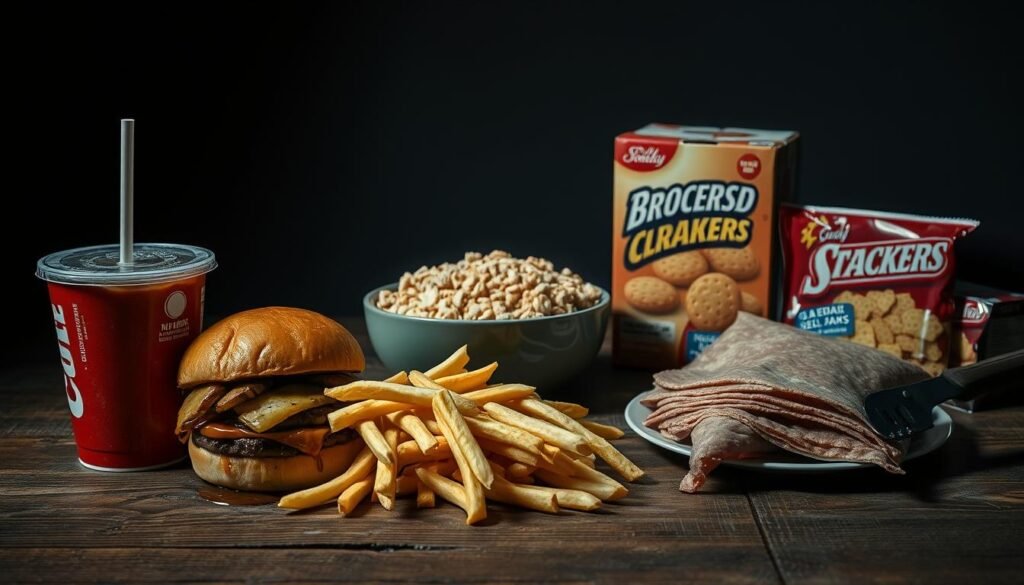
A dimly lit still life scene showcasing five unhealthy foods arranged on a rustic wooden table. In the foreground, a greasy fast-food burger, fries, and a large soft drink cup with a thick straw. The middle ground features a bowl of sugary breakfast cereal, and a plate of processed deli meats. In the background, a box of heavily salted crackers and a package of pre-packaged snack cakes. The overall scene is muted in tone, with dramatic side lighting casting shadows that emphasize the unhealthy, indulgent nature of the items. The composition draws the viewer's eye to the central cluster of fast food, creating a sense of guilt and unease.

  • Evidence-based: categories match AHA-aligned guidance and UC Davis principles.
  • Nutrient focus: we favor swaps that keep calories but add protein and fiber.
  • Next up: each culprit section will show label cues and simple swaps you can use immediately.

Sugar-laden drinks that spike blood sugar and strain your heart


Liquid calories often sneak in as quick sugar hits that raise glucose and add little satiety. Cutting or swapping these drinks lowers added sugar, steadies energy, and eases strain on the cardiovascular system.


Regular soda, sweet tea, and juice cocktails with added sugar

Regular soda and sweet tea deliver concentrated sugar, no fiber, and often acidity (dark colas add phosphoric acid). These drinks add calories while leaving you hungry, which raises total daily intake and long-term cardiometabolic risk.

Energy drinks: caffeine overload, anxiety, and blood pressure concerns

Energy drinks can combine high sugar with large caffeine doses and artificial additives. That mix may raise heart rate, increase blood pressure, provoke anxiety, and disrupt sleep.

Limit these products, especially if you have high blood pressure or sensitivity to stimulants.

Smarter sips: water, unsweetened tea, and lower-sugar options

Smart swaps work: chilled water, unsweetened iced tea with mint or citrus, and sparkling water cut added sugar and keep hydration steady.

Measured 100% juice or diluted portions can fit, but remember that “juice cocktail” signals added sugar—choose 100% juice and watch servings.

  • Label cue: “juice cocktail” means added sugar; “100% juice” still counts toward daily sugar—keep portions small.
  • Quick tip: try lower-sugar sodas like OLIPOP or mix a splash of 100% juice with water to reduce calories.
  • Why it matters: frequent glucose spikes from sugary drinks worsen insulin sensitivity and raise long-term heart and metabolic risk. See research on how daily sugary drinks affect risk here: sugary drinks and heart risk.

Takeaway: swap one sweet beverage a day for water or unsweetened tea. Small changes cut added sugar and calories while supporting steadier energy and lower strain on the heart.

Processed and cured meats that drive up sodium and disease risk

Regular intake of cured and packaged deli slices raises daily salt and saturated fat, increasing long-term risk for heart disease and high blood pressure. These products often contain preservatives that can add to inflammatory pathways.

Cured items like salami and ham pack concentrated sodium and common preservatives such as sodium nitrite. That salt adds up fast—often before you even reach for a shaker.

A high-resolution, photo-realistic image of an assortment of processed and cured meats, including salami, pepperoni, bacon, and sausages, arranged on a rustic wooden table or cutting board. The meats should appear freshly sliced, with visible textures and subtle variations in color. The lighting should be warm and natural, casting soft shadows to create depth and a sense of depth. The background should be slightly blurred, allowing the meats to be the focal point of the image. The overall mood should convey the unhealthy and potentially harmful nature of these processed meat products.

Why it matters: high salt intake from deli cuts promotes water retention and higher blood pressure. Many cured products also contain notable amounts of saturated fat, which raises LDL cholesterol and harms heart health.

Nitrites and nitrates help preserve color and prevent spoilage, but they can form inflammatory compounds under certain conditions. Frequent exposure links with an increased risk of chronic disease.

  • Smart swaps: skinless chicken or turkey, canned salmon or sardines, hard-cooked eggs, or hummus make better sandwich bases.
  • Cook extra lean meat or beans at once for grab-and-go lunches to bypass deli counters.
  • Watch portion and frequency—reducing servings lowers cumulative exposure and measurable risk.

Takeaway: choose minimally processed protein and keep cured slices as an occasional treat. Small shifts cut sodium and improve lipid profiles over time.

Trans-fat-prone products and tropical oils to rethink

Some pantry staples and premade items contain industrial trans fats or tropical fats that raise LDL, lower HDL, and increase long-term risk heart disease.

Some common baking staples hide harsh industrial fats that quietly worsen blood lipids.

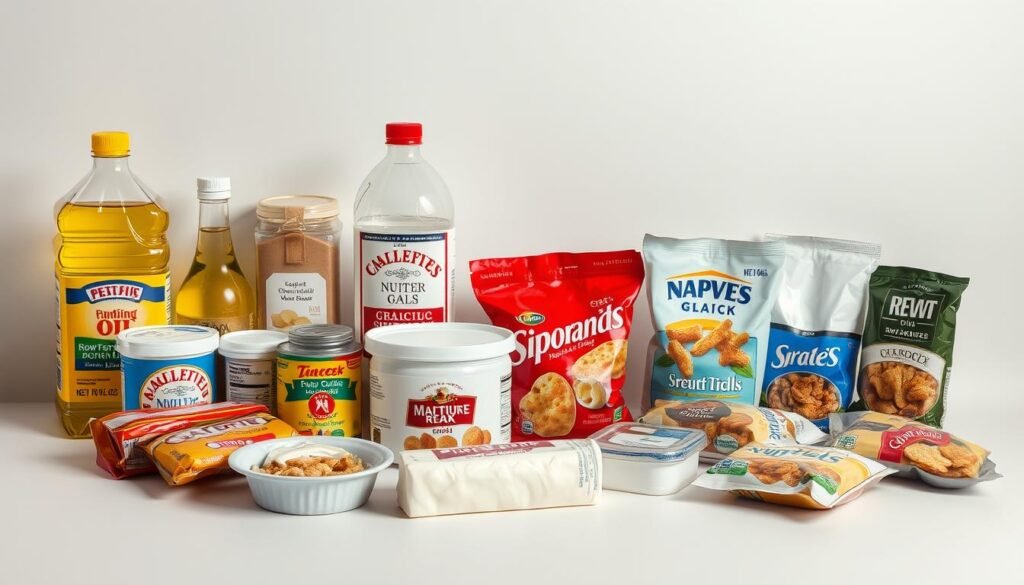
A still life image of assorted trans-fat-prone products, including hydrogenated vegetable oils, margarine, shortening, and pre-packaged snacks. The items are arranged on a plain, neutral-colored surface, capturing the essence of the "Trans-fat-prone products and tropical oils to rethink" section. Soft, even lighting from above illuminates the scene, casting subtle shadows to enhance the details. The camera angle is slightly elevated, providing a clear view of the various products. The overall mood is one of clinical objectivity, inviting the viewer to thoughtfully consider the contents of these commonly used food items.

Which items usually contain harmful fats?

Vegetable shortening, premade doughs, and some non-dairy creamers often use partially hydrogenated oils. These PHOs are a main source of trans fat in processed products.

How trans fats and tropical oils harm the body

Partially hydrogenated oils and trans fats worsen LDL/HDL ratios and promote inflammatory changes in the blood and lipid metabolism.

Tropical oils like coconut and palm are high in saturated fat, which can raise LDL when used frequently.

  • Label tip: skip items listing “partially hydrogenated”—that keeps trans fat intake near zero.
  • Swap: use liquid plant oils such as avocado, canola, or walnut for cooking and dressings.
  • Baking hack: replace shortening with measured butter or a neutral liquid oil suited to the recipe.

Practical note: choosing liquid oils often improves satiety and can reduce total calories from overusing solid fats.

For background on how industrial trans fats became common and why removing them matters, see this short analysis: the history of trans fats.

Takeaway: scan ingredient lists, skip “hydrogenated” entries, and favor liquid plant oils recommended by the american heart association to protect heart health and blood lipids.

High-mercury seafood choices to skip for safer omega-3s

Large predatory fish like tilefish and swordfish can concentrate mercury, raising exposure and an increased risk of harm. Choose smaller, low-mercury options that deliver EPA/DHA without that trade-off.

Avoid high-mercury species such as tilefish and other large, long-lived fish. Mercury bioaccumulates: bigger predators eat many smaller fish and store more heavy metals. That increases exposure and can raise neurological and cardiac risk when eaten often.

A table of high-mercury seafood items such as tuna, swordfish, shark, and king mackerel arranged against a somber backdrop. Dramatic lighting casts dramatic shadows, emphasizing the toxic nature of these choices. The seafood is presented in a clinical, almost menacing way, conveying the health risks associated with excessive mercury consumption. The overall mood is one of caution and concern, warning the viewer to exercise restraint when it comes to these high-mercury options. A shallow depth of field focuses attention on the seafood, while the background remains softly blurred, keeping the emphasis on the potentially harmful items.

Why pick SMASH fish and how they help

SMASH — salmon, mackerel, anchovies, sardines, herring — supply concentrated omega-3s and quality protein with low mercury. These options support heart rhythm, lower triglycerides, and add key nutrients without the increased risk tied to large predators.

  • Practical swaps: canned sardines on whole-grain toast, salmon bowls with beans and greens, anchovies added sparingly to sauces for umami.
  • Rotate choices: varying seafood diversifies vitamins and minerals while keeping contaminant exposure low.
  • Why it matters: selecting SMASH allows you to gain omega-3 benefits for heart and overall health without the added mercury burden.

Takeaway: limit big predatory fish and favor SMASH picks for safer omega-3 intake. Small changes like these protect long-term wellness and preserve the nutrient benefits of seafood.

Refined and “health halo” foods that hide added sugars and low fiber

Many packaged “wellness” items trade real nutrition for marketing language. These products often add sugar and have little fiber, which raises blood sugar swings and lowers satiety.

Spotting the gap between promise and content helps you make smarter swaps.

Which packaged choices cause problems?

Flavored yogurt and many granola bars often list syrups or concentrated fruit juice high on the ingredient list. Those ingredients drive added sugars and raise total calories without much protein or fiber.

Packaged donuts are refined carbs and are often fried in palm oil. That adds unhealthy fats and can worsen LDL and HDL profiles. The AHA warns that such fats raise LDL and lower HDL.

A close-up view of a glass jar filled with a variety of sugary white granules, crystalline structures, and powdery substances, representing the hidden added sugars found in processed and "health halo" foods. The jar is set against a simple, neutral background, with soft, warm lighting highlighting the textures and shapes of the different sugar types. The overall composition conveys a sense of the deceptive nature of these refined and processed foods, which appear innocent but contain high levels of hidden sweeteners.

Practical swaps and label tips

  • Breakfast fixes: plain Greek yogurt with fresh fruit and cinnamon, or no-added-sugar muesli instead of sweet granola.
  • Whole-grain upgrades: choose whole-wheat bread, wholemeal pasta, and brown or wild rice to add fiber and improve fullness.
  • Snack smart: pick lower-sugar bars (JUNKLESS is one lower-sugar option) or whole-food snacks that list whole grain first and keep sugars modest per serving.
  • Label cue: watch for syrups, concentrated juice, or palm oil in the ingredients; they signal added sugar or fats that add calories with little benefit.

“Refined ‘health halo’ products often pack added sugars with little fiber, driving blood sugar swings and poor satiety.”

Takeaway: small swaps—plain yogurt, whole-grain bread, and no-added-sugar muesli—cut added sugars and boost fiber. Over time, steady fiber intake supports healthier blood sugar and lowers risk of heart disease.

8 so-called health foods

Fruit done right: avoid heavy syrups and choose whole or 100% juice

Pick whole fruit or cans labeled “packed in water” or “100% juice” to keep natural sweetness and cut added sugar.

Canned fruit labeled “light” or “heavy syrup” adds concentrated sugar and extra calories. Fruit is naturally sweet, so added syrup is unnecessary.

A vibrant arrangement of fresh, whole fruits set against a clean, minimalist backdrop. In the foreground, an assortment of ripe, juicy berries - plump raspberries, blueberries, and blackberries. In the middle ground, slices of crisp, golden apples and pears, drizzled with a hint of honey. The background features a soft, diffused light, illuminating the natural textures and colors of the produce. The overall mood is one of health, simplicity, and a celebration of nature's bounty. The image conveys the message of choosing whole, unprocessed fruits over heavy syrups or concentrates, in line with a holistic, nutritious approach to eating.

How to read the can and use fruit well

Choose whole fruit or canned fruit packed in water or 100% juice and skip items listed in heavy or light syrup. Check the ingredient list—”packed in water” or “100% juice” is the clear cue.

  • Label language: “heavy syrup” and “light syrup” both add sugar; prefer water or 100% juice.
  • Nutrient note: fruit supplies vitamins, minerals, and phytonutrients without added syrup.
  • Practical swaps: stir canned pears in 100% juice into oatmeal or add peaches packed in water to cottage cheese.
  • Portion tip: even 100% juice adds natural sugar—favor whole fruits for fiber and fullness.

“Choose canned options packed in water or 100% juice and let natural sweetness guide your portions.”

Takeaway: small label checks keep added sugar low while preserving nutrients and satiety.

Smart, satisfying swaps a nutritionist recommends

Small, repeatable swaps deliver big wins for daily energy and long-term diet quality.

Make practical changes you’ll keep. Swap a ham sandwich for skinless chicken or turkey, canned salmon, sardines, a hard-boiled egg, or hummus. These choices cut sodium and preservatives while keeping quality protein for fullness and recovery.

Instead of jam on bread, try sliced banana, mashed avocado, or a thin smear of nut butter. That adds fiber and healthy fat, lowers added sugar, and helps reach five-a-day fruit and veg goals.

Ditch coconut oil in baking and cooking. Use liquid plant oils—avocado, canola, or walnut—to align with heart-friendly fat patterns.

  • Snack: a small handful of unsalted nuts or fresh fruit beats a daily candy bar.
  • Dairy: plain Greek yogurt plus fruit controls sugar while keeping protein.
  • Bread: choose whole-wheat or true wholemeal to boost fiber.

“Make swaps you’ll actually keep: lean chicken or turkey, fish, eggs, or hummus; banana or avocado on toast; liquid plant oils over coconut oil.”

Takeaway: build a repeatable routine of simple swaps. They cut processed meat and added sugar while keeping flavor, satiety, and steady energy.

Label-reading tactics to cut added sugar, sodium, and unhealthy fats

Read labels with intent. A quick scan shows added sugars, salt, and processed fats so you can choose better at every meal.

What to spot on the pack

Prioritize the Nutrition Facts label and ingredient list: look for the term added sugars, note milligrams of sodium, and avoid “partially hydrogenated” in oils. In processed meats, watch for “sodium nitrite.”

Practical swaps and shopping hacks

Stock cubes and pots often carry high salt. Choose reduced- or low-salt stock and boost flavor with herbs, citrus, chili, or black pepper.

Pick whole-grain bread and no-added-sugar muesli. These choices add more fiber per serving and help steady blood sugar and portion intake.

  • Train your eye: “added sugars,” “sodium nitrite,” and “partially hydrogenated” are red flags.
  • Compare brands: small differences in milligrams of sodium change daily intake.
  • Pack smart: favor snacks with short ingredient lists and recognizable foods.

Want a quick primer? Read the FDA guide on how to read the Nutrition Facts for clear, practical steps.

“Short label checks add up: lower added sugar and sodium, skip hydrogenated fats, and choose whole grains to protect blood pressure and overall nutrition.”

A day-in-the-life menu that puts these changes into practice

This sample day shows swaps that raise protein and fiber, trim added sugar and salt, and keep calories steady. Use whole grains, legumes, fish, nuts, and liquid plant oils to make each meal practical and nourishing.

Breakfast

Plain Greek yogurt with berries and no-added-sugar muesli. Or whole-wheat toast with banana and a thin smear of nut butter. Coffee with a splash of milk or unsweetened.

Morning snack

A small handful of unsalted nuts and a piece of fruit. Or raw veggies with hummus to add fiber and protein without excess calories.

Midday and afternoon

Lunch: whole-grain bread sandwich with chicken, leafy greens, tomato, and mustard. Add a side salad dressed with olive or avocado oil and lemon. Season with herbs instead of extra salt.

Afternoon: choose sparkling water with citrus instead of juice. If you want a bar, pick a lower-sugar choice with whole grains.

Dinner and hydration

Dinner: salmon or sardines with quinoa and sautéed spinach. Or lentil curry made with low-salt stock over brown rice. Focus on portion size and include protein at every meal to support satiety and steady energy.

  • Keep water handy and sip throughout the day; unsweetened tea is fine if you want flavor.
  • Use herbs, spices, and citrus to cut added salt while adding taste.
  • Swap white rice or pasta for whole-wheat versions; trade ham or processed meats for chicken, fish, egg, or hummus.

Practical note: small, repeatable swaps preserve flavor and lower long-term risk. For quick snack ideas and practical lists, see this meal-friendly snack guide.

“Focus on protein and fiber at each meal, keep water handy, and season with herbs to limit salt.”

About the Author

Emily Carter is a certified health and wellness writer with over 7 years of experience in evidence-based fitness, nutrition, and lifestyle content. As the lead author of Go4HealthnFitness.com, she’s passionate about simplifying science-backed wellness advice for everyday readers. When she’s not writing, you’ll find her strength training, hiking, or exploring natural supplements that actually work.

Editorial Process Note

Our Commitment to Accuracy: This article was medically reviewed for accuracy and fact-checked by our editorial team.

Medical Disclaimer: The information in this article is for informational purposes only and is not intended to be a substitute for professional medical advice, diagnosis, or treatment. Always seek the advice of your physician or other qualified health provider with any questions you may have regarding a medical condition.

Conclusion

Simple label checks and one reliable swap each week make nutrition changes stick.These shifts reduce exposure to sugar, processed meats, trans fats, and high-mercury fish while supporting long-term heart protection.

Key takeaway: cutting a handful of high-impact items lowers your risk of heart disease and metabolic disease. Focus on repeatable swaps and quick label reads. Small moves protect your heart without feeling deprived.

Start small: try one change today and add another midweek. Over time, tiny things stack and improve weight, energy, and overall nutrition.

Confidence note: informed, consistent choices are powerful tools for long-term well-being. Use the sample menu and shopping tips in this guide as a practical roadmap.

FAQ

What five items does a holistic nutritionist most often recommend cutting now?

Most experts point to sugar-sweetened beverages, processed and cured meats, products high in trans fats or tropical saturated fats (like some shortenings and coconut oil in excess), high-mercury large fish, and refined or “health-halo” packaged foods that hide added sugars and little fiber. These choices are prioritized because they raise added sugar, sodium, saturated fat, and calorie intake while lowering overall nutrient density.

How does removing these things help heart and metabolic health?

Cutting these items lowers intake of added sugars, sodium, and saturated and trans fats—key drivers of high blood pressure, elevated LDL cholesterol, insulin resistance, and weight gain. Small daily swaps reduce strain on the heart, improve blood-glucose control, and lower long-term risk for heart disease and type 2 diabetes.

What does the American Heart Association recommend about added sugar, sodium, and saturated fat?

The American Heart Association advises limiting added sugars (ideally keeping added sugar to no more than about 6–9 teaspoons per day depending on calorie needs), capping sodium at 2,300 mg or lower for many people, and replacing saturated fats with unsaturated plant oils to reduce heart disease risk. Reading labels and choosing whole foods helps meet these targets.

Can small daily changes really lower my blood pressure and heart disease risk?

Yes. Simple swaps—like replacing soda with water, choosing grilled chicken over processed deli meats, and using liquid plant oils instead of partially hydrogenated products—can measurably reduce blood pressure, LDL cholesterol, and inflammation over weeks to months. Cumulative changes add up.

Why are sugar-laden drinks particularly harmful?

Beverages like regular soda, sweet tea, and many fruit-flavored drinks deliver rapid doses of added sugar and calories without fiber, causing blood-sugar spikes and promoting excess calorie intake. Over time they increase risk for obesity, type 2 diabetes, and cardiovascular strain.

Are energy drinks especially risky?

Many energy drinks combine high sugar with large amounts of caffeine and stimulants. That mix can increase heart rate, raise blood pressure, trigger anxiety or sleep disruption, and pose risks for people with cardiovascular conditions—so limit or avoid them.

What are smarter drink alternatives?

Choose water as the primary beverage. Unsweetened tea, sparkling water, or diluted 100% fruit juice (kept to small portions) are better choices. For electrolytes after heavy exercise, opt for low-sodium sports drinks or homemade mixes rather than sugary commercial options.

Which processed and cured meats should I skip and why?

Salami, ham, bacon, many deli slices, and sausage are high in sodium and often contain nitrites or preservatives linked to higher heart disease and certain cancer risks. Regular intake correlates with increased risk in large observational studies, so reserve them as occasional treats.

What products commonly contain harmful trans fats or problematic tropical oils?

Older-style vegetable shortenings, some premade doughs, packaged baked goods, and certain non-dairy creamers can contain partially hydrogenated oils (trans fats). Excessive use of coconut oil or palm oil increases saturated fat intake. Choose products listing no hydrogenated oils and favor liquid plant oils.

How do trans fats affect cholesterol?

Trans fats raise LDL (“bad”) cholesterol and lower HDL (“good”) cholesterol, a double hit that accelerates atherosclerosis and increases cardiovascular risk. Many countries have restricted industrial trans fats, but vigilance on labels remains important.

Which fish should I avoid because of mercury, and what are safer omega-3 options?

High-mercury choices to limit include tilefish (from the Gulf of Mexico), shark, swordfish, and king mackerel. Safer, omega-3–rich picks include salmon, mackerel (Atlantic), anchovies, sardines, and herring—often abbreviated as SMASH or similar lists—providing heart-protective EPA/DHA with lower mercury.

What refined or “health-halo” foods hide added sugars and low fiber?

Some flavored yogurts, many granola bars, fruit-flavored snacks, and packaged baked goods may appear healthy but contain significant added sugars and little fiber. White bread, refined pasta, and instant rice are low in fiber compared with whole-grain swaps and can worsen blood-sugar control.

How should I choose canned fruit or juice?

Avoid canned fruit packed in heavy syrup. Choose fruit canned in water, natural juice, or better yet, fresh or frozen whole fruit. If drinking juice, pick 100% fruit juice and limit portions—whole fruit provides fiber that slows sugar absorption.

What are practical swaps to make meals more nutritious and satisfying?

Replace processed ham or salami sandwiches with grilled lean chicken, fatty fish, eggs, or hummus-based options. Swap jam on toast for banana or mashed avocado with nut butter. Trade coconut oil or butter in cooking for liquid plant oils like avocado, canola, or walnut to improve fat quality.

What label-reading tactics help cut added sugar, sodium, and unhealthy fats?

Look for “added sugars” on the ingredient list and check grams on the nutrition facts panel. Avoid items listing “partially hydrogenated oils” or high sodium per serving. Choose low-sodium broths and whole-grain products with minimal ingredient lists and higher fiber content.

Can you give a simple day menu that follows these recommendations?

A day might start with plain Greek yogurt topped with fresh berries and a sprinkle of nuts, lunch of whole-grain wrap with grilled salmon or chicken and plenty of vegetables, an afternoon snack of fruit and a handful of almonds, and dinner of baked fish or legumes with a side of steamed greens and quinoa. Water and unsweetened tea are primary drinks.

How fast will I see health benefits after making these changes?

Some improvements—like lower blood pressure, reduced blood sugar spikes, and weight stabilization—can appear within weeks. Longer-term reductions in heart disease risk accumulate over months and years. Consistency with nutritious choices matters most.

Emily Carter
Emily Carter

Emily Carter is a certified health and wellness writer with over 7 years of experience in evidence-based fitness, nutrition, and lifestyle content. As the lead author of Go4HealthnFitness.com, she’s passionate about simplifying science-backed wellness advice for everyday readers. When she’s not writing, you’ll find her strength training, hiking, or exploring natural supplements that actually work.

Articles: 429