


Can lying quietly while someone holds their hands over your body really help with chronic pain and stress? Reiki promises a gentle, relaxing experience, but its healing claims raise important questions.
Reiki may help some people feel calmer or more comfortable for a short time, but there is not enough reliable evidence to show that it treats chronic pain or other medical conditions. That distinction matters when you’re deciding whether a session is worth your time and money.
In this guide, we’ll explore what a Reiki session actually feels like, what research says about its benefits, how much it costs, and how to choose a practitioner. You’ll also learn how to measure your own response without mistaking temporary relaxation for medical treatment.
Key Takeaways
- Reiki uses gentle touch or hovering hands. You remain fully clothed, and there is no deep massage or physical manipulation.
- Some people report feeling relaxed. However, research has not established Reiki as an effective treatment for chronic pain.
- The proposed healing energy is unproven. Scientists have not found evidence that the energy field described by Reiki practitioners exists.
- Sessions vary in length and cost. Compare local prices, practitioner experience, and accessibility before booking.
- Start small and track your response. Reiki should complement appropriate medical care, not replace it.
What Does a Reiki Session Actually Feel Like?
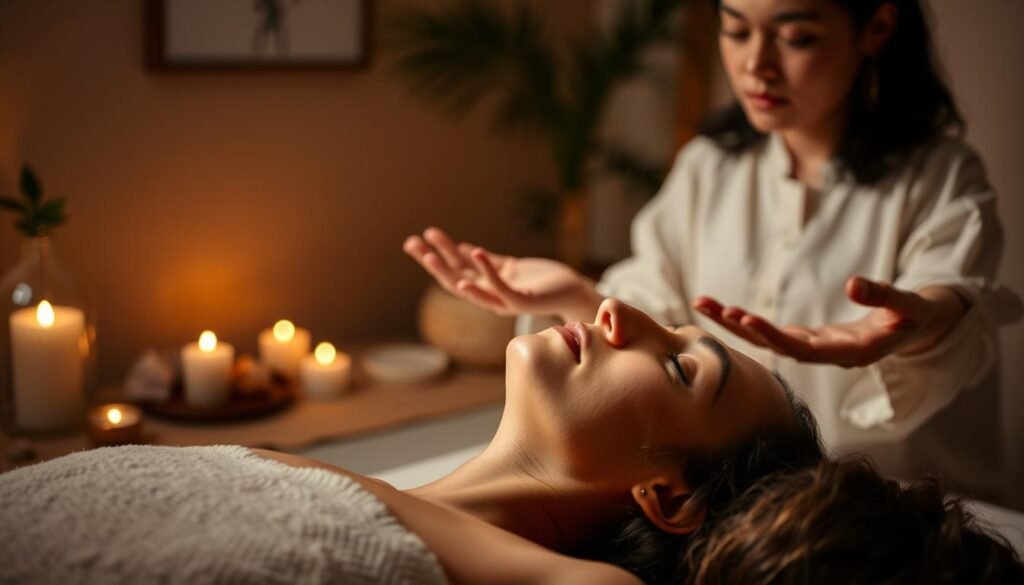
Imagine entering a quiet room with soft lighting, gentle music, and a comfortable massage table. The practitioner asks about your concerns, explains the process, and invites you to lie down or sit in a chair.
Unlike massage, Reiki involves little or no pressure. The practitioner places their hands lightly on your body or holds them a few inches above it. You can request a completely hands-off session.
Common sensations during Reiki
People describe different experiences, and none is required for a successful session. Commonly reported sensations include:
- Warmth or tingling: A feeling of warmth near the practitioner’s hands, although many people notice nothing unusual.
- Deep relaxation: Slower breathing, less mental chatter, or a sense of peacefulness.
- Sleepiness: Some people become drowsy or briefly fall asleep.
- Emotional responses: Quiet reflection, unexpected feelings, or simply a neutral experience.
- No noticeable change: Some people leave feeling much as they did before.
Warmth, tingling, or calmness does not prove that healing energy is moving through the body. Touch, attention, expectations, and a peaceful environment can all shape what someone experiences.
For someone living with chronic pain, even a comfortable period of rest may feel valuable. The important question is whether that comfort lasts and makes everyday activities easier.
What Is Reiki, and How Is It Supposed to Work?
Reiki is a Japanese complementary practice developed by Mikao Usui in the early 20th century. Hawayo Takata later helped introduce it to Western audiences.
The word Reiki combines ideas commonly translated as universal and life-force energy. Practitioners believe they can direct this energy through their hands to encourage balance and healing.
That explanation reflects Reiki tradition, not an established biological process. According to the National Center for Complementary and Integrative Health (NCCIH), scientific evidence does not support the existence of Reiki’s proposed energy field.
Reiki is generally not considered a religion. People with different spiritual beliefs, including no religious beliefs, can participate.
Does Reiki Really Help Chronic Pain and Stress?
Research offers a mixed picture. Some studies suggest improvements in anxiety or self-reported discomfort, but the findings are not strong enough to establish Reiki as an effective medical treatment.
What research says about chronic pain
Some small studies have reported lower pain ratings after Reiki sessions. However, researchers face several problems:
- Many studies include relatively few participants.
- It can be difficult to separate Reiki’s specific effects from rest, attention, and expectations.
- Pain scores often depend on personal reports rather than objective measurements.
- Studies use different session lengths, methods, and comparison groups.
The NCCIH’s chronic pain review concludes that there is not enough high-quality research to determine whether Reiki relieves pain.
One NCCIH-funded study involving people with fibromyalgia found no improvement in pain or other measured outcomes. This is an important reminder that positive experiences do not always translate into proven clinical benefits.
What about stress and anxiety?
The results are somewhat more encouraging for anxiety, although important questions remain.
A 2024 systematic review and meta-analysis examined 13 controlled studies involving 824 adults. Researchers found an overall reduction in anxiety scores associated with Reiki, but results differed across patient groups and treatment schedules.
These findings deserve further study. They do not prove that Reiki works through energy transfer, that benefits last, or that everyone will respond similarly.
Why relaxation itself matters
Stress can increase muscle tension, disturb sleep, and make persistent pain harder to manage. A quiet, comfortable experience may temporarily ease some of that tension.
The NCCIH explains that certain relaxation techniques can encourage slower breathing and a calmer physical state.
However, evidence about breathing exercises or other relaxation methods should not automatically be treated as proof that Reiki produces the same effects.
What Happens During a Reiki Treatment?
Knowing the process can make your first appointment less intimidating. Although methods differ, most sessions follow three stages.
1. Before the session
The practitioner usually asks about your goals, physical comfort, and preferences. Tell them about painful areas, recent injuries, difficulty lying flat, and whether you prefer touch or no touch.
You should be able to remain fully clothed, ask questions, and request a different position without pressure.
2. During the treatment
A practitioner moves through several hand positions near areas such as the head, shoulders, torso, arms, and legs. Each position may last a few minutes.
The treatment itself often lasts around 30–60 minutes, while longer appointments may allow additional time for discussion and settling in.
There should be no forceful stretching, joint manipulation, or painful pressure. If any contact feels uncomfortable, ask the practitioner to move their hands or stop.
3. After the session
Take a moment to sit up, drink water if you want, and notice how you feel. No special detoxification routine is necessary.
Consider three simple questions:
- Do I feel calmer than before the session?
- Has my pain or physical comfort changed?
- Did the experience help me rest, move, or function better afterward?
Some practitioners offer distance Reiki without physical contact. People may find the scheduled quiet time relaxing, but there is no convincing scientific evidence that healing energy can be transmitted remotely.
How to Tell Whether Reiki Is Worth Continuing
Rather than purchasing a large treatment package immediately, consider trying one appointment and evaluating the experience.
Use a simple tracking system to distinguish short-term comfort from lasting changes.
| What to track | What to record |
|---|---|
| Pain | Rate from 0–10 before and after the session |
| Stress | Rate from 0–10 at the same times |
| Sleep | Note sleep quality that night |
| Daily activity | Record any meaningful change in comfort or function |
Use the same scale each time. Note medication changes, unusual activity, or poor sleep that might explain symptom differences.
If you find the first session comfortable and affordable, you might try another two or three visits spaced one or two weeks apart. There is no scientifically established number of Reiki sessions needed for chronic pain or stress relief.
Stop spending money on additional sessions if you are not noticing benefits that matter to you.
Practical Ways to Extend Relaxation Between Sessions
You do not need specialized Reiki equipment to create a comfortable space for relaxation at home.
Consider a short routine that supports your existing care plan:
- Choose a comfortable position. Sit in a supportive chair or lie down with ordinary pillows under your knees if that feels better.
- Reduce distractions. Silence notifications and choose a quieter room.
- Breathe comfortably for five minutes. Let your breathing slow naturally without forcing deep breaths.
- Notice physical tension. Relax your shoulders, jaw, and hands without forcing movement.
- Return to normal activity gently. Follow any movement guidance provided by your healthcare professional.
This is a general relaxation routine, not a substitute for Reiki or medical treatment. Simple habits may be more practical than paying for frequent appointments.
For another approach to understanding stress-related body sensations, read our guide to somatic therapy and body awareness.
Is Reiki Safe for People With Chronic Health Conditions?
Reiki is generally considered low-risk because it does not require medication, needles, or forceful manipulation. The NCCIH reports no demonstrated harmful effects from Reiki itself.
However, physical comfort, consent, and medical decision-making still matter.
- Recent surgery or injury: Avoid pressure on painful areas, wounds, or healing tissue. Ask for positioning changes when needed.
- Pregnancy: Choose a comfortable position and discuss any medical restrictions with your pregnancy care team.
- Severe pain or limited mobility: Request a chair, additional support, or a shorter session.
- Touch sensitivity or trauma history: Explain your boundaries and request a hands-off approach if preferred.
- Ongoing medical treatment: Continue prescribed medication, physical therapy, and recommended follow-up appointments.
Do not use Reiki to delay evaluation of worsening pain, new weakness, numbness, or other concerning symptoms.
Also be cautious of anyone who claims they can cure chronic diseases, remove toxins, or replace essential medical treatment through energy healing.
How to Find a Trustworthy Reiki Practitioner
In the United States, Reiki does not have one nationwide medical licensing system. Training standards vary, and the title “Reiki master” is not a medical qualification.
Many training programs use levels such as first degree, second degree, and master. These describe training within a Reiki tradition, not proven clinical expertise.

Before booking, ask:
- Where did you train, and how many practical training hours did you complete?
- Do you have experience accommodating people with chronic pain?
- Can the treatment be completely hands-off?
- Can I sit rather than lie on a massage table?
- How long does an appointment last, and what is the full cost?
- What happens if I need to stop or cancel?
- Do you encourage clients to continue their regular medical care?
A trustworthy practitioner should answer clearly, respect personal boundaries, protect your privacy, and avoid promising a cure.
Hospital integrative care programs may also provide information about complementary services. For an additional clinical perspective, see the Cleveland Clinic’s Reiki overview.
How Much Does Reiki Cost in the United States?
Prices vary by location, provider, and appointment length. As a rough planning estimate, private appointments may cost around $25–$100 or more, while community programs sometimes offer lower-cost or donation-based sessions.
Ask about the full price before booking. Also check whether the fee covers the intake conversation, the actual treatment, and follow-up time.
Health insurance often does not cover standalone Reiki sessions. Coverage is plan-specific, so contact your insurer directly before assuming reimbursement. Do not assume a session qualifies for HSA or FSA reimbursement.
A single affordable appointment is a more sensible starting point than an expensive prepaid package, especially when your response is uncertain.
Reiki vs. Massage, Meditation, and Physical Therapy
These approaches may all be used for comfort, but they work differently and have different levels of supporting evidence.
- Reiki: Uses light touch or hovering hands based on an energy-healing tradition. Its medical effectiveness remains unproven.
- Massage therapy: Applies physical pressure or movement to soft tissues. Some forms may help certain pain conditions, although results vary.
- Meditation and breathing exercises: Develop attention and relaxation skills that can often be practiced independently.
- Physical therapy: Uses assessment, targeted exercise, and rehabilitation to improve movement and function.
For ongoing pain, choose treatments based on the cause of your symptoms and your clinician’s recommendations. Reiki may be an optional relaxation experience, but it does not replace rehabilitation or medical care.
Frequently Asked Questions
Can Reiki permanently cure chronic pain?
No reliable scientific evidence shows that Reiki cures chronic pain or treats its underlying causes. Some people report temporary comfort, but lasting medical benefits have not been established.
Do you have to believe in Reiki for it to work?
You do not need a particular religious or spiritual belief to attend a session. Expectations may influence how relaxing an experience feels, but belief does not establish the proposed energy mechanism.
Can Reiki make pain or stress worse?
Reiki itself has not been shown to cause harmful physical effects. However, uncomfortable positioning, unwanted touch, or distress during a session can make the experience unpleasant. Speak up or stop whenever necessary.
How often should I book Reiki sessions?
There is no evidence-based treatment schedule. Start with one appointment, assess your response, and consider another only if the experience provides meaningful value.
Can I combine Reiki with medication or physical therapy?
Generally, Reiki can be used alongside conventional care. Tell your healthcare team about any complementary practices you use and continue your prescribed treatments.
Final Verdict: Is Reiki Worth Trying for Pain and Stress?
Reiki may be worth considering as a personal relaxation experience, but not as a proven treatment for chronic pain. A peaceful session might offer temporary comfort, yet the research does not confirm Reiki’s proposed energy-healing mechanism or reliable medical benefits.
If you’re curious, choose a practitioner who respects your boundaries, begin with one reasonably priced session, and track how you feel afterward. Compare the experience with simpler options such as comfortable rest, breathing exercises, or mindfulness.
The most useful question is not whether you felt mysterious energy. It’s whether the experience offered meaningful comfort without taking time, money, or attention away from healthcare that you need.