
Your natural sleep-wake preference can influence when you feel most alert, when concentration comes more easily, and when your energy starts to fall. Paying attention to those patterns can help you place demanding work, meals, movement, and rest more intentionally across the day.
This guide offers practical ways to identify your general chronotype and experiment with scheduling key activities around your stronger and weaker periods.
The idea is simple: your internal biological clock and natural rhythms help shape patterns of alertness, sleepiness, body temperature, hormone release, and other daily processes. Genetics, age, light exposure, and lifestyle all contribute to individual differences in timing.
For practical examples, we use the popular four-animal chronotype framework—Lions, Bears, Wolves, and Dolphins. It is useful as an easy scheduling model, but it is not the standard scientific classification of chronotype. Sleep research more commonly measures morningness and eveningness on a spectrum using tools such as the MEQ and MCTQ.
Expect evidence-based tips, sample day plans, quick ways to estimate your timing preference, and common pitfalls to avoid. Treat the schedules as starting points rather than rigid biological rules, then adjust them around your actual sleep, energy, work, and family demands.
Key Takeaways
- Chronotype describes your tendency toward earlier or later sleep, wake, and activity timing rather than a fixed hourly schedule.
- The Lion, Bear, Wolf, and Dolphin labels are a popular practical framework; validated research tools generally measure morningness and eveningness on a spectrum.
- Track your own alertness and sleep patterns before assigning demanding work to specific hours.
- Consistent sleep timing, appropriate light exposure, regular meals, and protected focus periods may make your routine easier to sustain.
- Use chronotype schedules as flexible templates rather than forcing your day into exact times that do not fit your life.
Helpful Products at a Glance
For people who want a gentler, light-based cue built into a consistent morning routine, the JALL Wake Up Light Sunrise Alarm Clock gradually brightens before the alarm; it is optional and does not replace outdoor morning light.
- 【Full-Screen Sunrise Simulation for Heavy Sleepers】 This sunrise alarm clock mimics natural dawn, glowing from dark to full brightness within 10-60 minutes before your alarm. Its front full-screen panel delivers superior light coverage to gently wake deep sleepers without jarring jolts.
- 【Dual Alarms, Snooze & Auto-Sync】 Easily set separate Everyday, Weekday, or Weekend routines for your family. Features a custom 5-20 min snooze. Syncs automatically with your phone via Bluetooth for precision timekeeping—no tedious manual resetting.

Why syncing your day to your chronotype can support productivity
Your alertness is not identical at every hour of the day. Circadian timing and sleep pressure contribute to predictable changes in wakefulness, although the exact pattern differs from person to person. Paying attention to those changes can help you reserve demanding tasks for periods when concentration feels easier.
Instead of assuming that everyone should do deep work at the same time, start with a three-day audit. Note when you feel “on,” “flat,” and “fading.” Block stronger periods for demanding thinking and move routine, collaborative, or lower-stakes work into weaker periods when practical.
Manager tip: protect important focus blocks on shared calendars and move nonessential meetings away from an employee’s strongest concentration periods when the work environment allows it.
The goal is not to discover a biologically perfect hour. It is to build a repeatable schedule that matches your actual pattern well enough to reduce unnecessary friction and interruptions.
Chronotype vs. circadian rhythm: your internal clock explained
Your body keeps a built-in timetable that helps explain why some hours feel sharp and others drag. Your chronotype describes your tendency toward earlier or later sleep and activity timing, while your circadian rhythm refers to biological processes that follow an approximately 24-hour cycle.
How they differ in plain terms
Your chronotype describes where you tend to fall on the early-to-late timing spectrum. Circadian rhythms are the underlying biological cycles that help coordinate sleep and wakefulness, body temperature, hormone release, metabolism, and other functions.
Genes and age: why timing changes
Genetics contribute to morningness and eveningness, but they are not the only influence. Age, light exposure, work schedules, habits, and environmental cues can all affect sleep timing. Teenagers and young adults often trend later, while timing commonly shifts earlier again with age.
Social jetlag: when work fights biology
Social jetlag describes a mismatch between biological timing and socially required sleep-wake schedules. Large or persistent mismatches can contribute to insufficient or irregular sleep. To explore the science in more detail, see this review of biological rhythms and chronotype.
| Concept | What it describes | Practical tip |
|---|---|---|
| Chronotype | Preference toward earlier or later activity and sleep | Track when demanding work feels easiest |
| Circadian rhythm | Approximately 24-hour biological timing processes | Use consistent sleep timing and appropriately timed light |
| Social jetlag | Mismatch between biological and social schedules | Keep sleep timing reasonably consistent and protect recovery |
Light is one of the strongest environmental signals for the circadian system. Getting daylight after waking is a simple no-purchase option. If waking before sunrise, living in a dark climate, or keeping a very early schedule makes that difficult, some people prefer a gradual-light alarm as an additional routine cue.
The JALL Wake Up Light Sunrise Alarm Clock combines a gradually brightening wake light with dual alarms and selectable sounds. Its main practical role here is consistency: it can begin the wake-up routine before an audible alarm. It should be viewed as a convenience rather than a replacement for daylight exposure or sufficient sleep.
- 【Full-Screen Sunrise Simulation for Heavy Sleepers】 This sunrise alarm clock mimics natural dawn, glowing from dark to full brightness within 10-60 minutes before your alarm. Its front full-screen panel delivers superior light coverage to gently wake deep sleepers without jarring jolts.
- 【Dual Alarms, Snooze & Auto-Sync】 Easily set separate Everyday, Weekday, or Weekend routines for your family. Features a custom 5-20 min snooze. Syncs automatically with your phone via Bluetooth for precision timekeeping—no tedious manual resetting.
- 【25 Natural Sleep Sounds & FM Radio】 Fall asleep to 25 natural sounds and white noises with a flexible 10-480 min sleep timer. Supports an L0 screen blackout mode for total darkness. Features a built-in 76-108 MHz FM radio with auto-scan to easily set radio stations as your alarm tone.
- 【Atmosphere Lights & 5W Bluetooth Speaker】 Experience 17 lighting effects (8 solid colors & 9 dynamic RGBs) with an immersive music-rhythm mode that flashes to the beat. The premium 5W speaker streams crisp, rich audio from your phone, upgrading the poor audio and rigid lighting common in older models.
Find your type: the four sleep chronotypes and how to spot yours
Notice when focus comes naturally, then compare those observations with a validated chronotype questionnaire. Knowing whether you generally lean earlier or later can help you place demanding work at more practical times and protect recovery.
Start with simple notes: wake time, bedtime, strongest work period, and when your energy tends to fall. Track several workdays plus days when you can follow a more natural schedule.
Use reputable tools: the Morningness-Eveningness Questionnaire (MEQ) and Munich Chronotype Questionnaire (MCTQ) are commonly used research approaches. Dr. Michael Breus’s animal-based quiz offers a simpler popular framework, but the Lion, Bear, Wolf, and Dolphin categories should not be treated as four clinically established biological types. The Sleep Foundation’s chronotype overview explains this distinction.
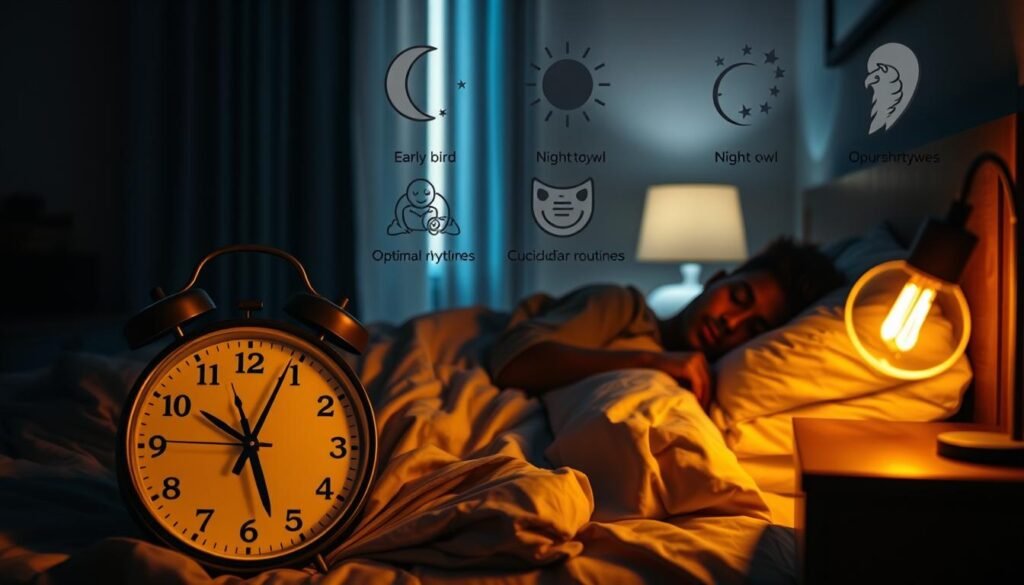
Lions, Bears, Wolves, Dolphins: quick traits
- Lions: used to represent people who naturally prefer earlier mornings and earlier bedtimes.
- Bears: used to represent schedules that broadly follow the daylight and conventional workday pattern.
- Wolves: used to represent people who naturally prefer later sleep and activity timing.
- Dolphins: used in Breus’s framework for people described as lighter or more easily disrupted sleepers.
Practical tip: use the animal labels as planning shortcuts, then let your actual sleep diary and energy pattern determine the hours you choose.
| Type | General tendency in this framework | Possible work fit |
|---|---|---|
| Lion | Earlier | Put demanding work earlier if your tracking supports it |
| Bear | Middle of the conventional day | Protect a late-morning or midday focus block |
| Wolf | Later | Move difficult or creative work later when possible |
| Dolphin | Variable or lighter sleep pattern | Use your clearest observed period for precision work |
Chronotype Sleep Productivity: align eating, working, and sleeping for better results
Match your schedule to your observed daily energy curve rather than forcing an exact universal timetable. Use simple blocks to place analytical work during stronger periods, lighter work during weaker periods, and a protected wind-down before bed.
Meal timing and chronotype are also related, but research does not establish a single ideal meal schedule for each animal category. Studies more consistently show that later chronotypes tend to eat later, while researchers are still working to determine the best individualized meal-timing recommendations.
Before and during your peak: schedule analytical, high-focus tasks
Mark your strongest block and place one or two demanding tasks there. A self-identified Lion might find that this occurs in the morning, while a later type may perform better in the afternoon. Treat any clock times below as templates to test rather than proven biological cutoffs.
- Pre-load materials before the focus block so you can begin without avoidable setup work.
- Choose meals that leave you comfortably fueled rather than relying on a rigid chronotype-specific food formula.
- Protect one important focus block on your calendar when your work situation allows it.
During your trough: use lighter or collaborative work
When concentration predictably drops, move routine administration, reviews, meetings, or lower-stakes collaboration into that period when practical. Brief movement or daylight breaks can also provide a useful reset.
- Keep unnecessary meetings concise.
- Use lighter admin or review work as buffers around demanding focus periods.
Wind-down routines to protect consistent sleep and recovery
Build a repeatable evening sequence to cue the transition toward sleep: lower the lights, reduce stimulating work, and choose calming activities such as reading or gentle stretching. Consistent sleep and wake times are more important than following a precise animal-type bedtime.
Review the prior week periodically. Adjust your schedule and meeting placement based on what actually happened rather than trying to conform perfectly to a template. For more background, see this chronotype resource.
Your optimal schedule if you’re a Lion
If the Lion description matches your naturally earlier schedule, test placing your hardest thinking toward the beginning of your workday. As energy falls, shift toward routine duties and protect an earlier evening wind-down.

Early morning to late morning: deep work and decision-making
6–9 a.m. template: if you naturally wake early and feel clear-headed at this time, try high-priority decisions, analytical writing, or strategy. Turn off nonessential notifications and protect uninterrupted work.
9 a.m.–12 p.m. template: continue focused work while concentration remains strong. Batch related tasks if that makes it easier to maintain momentum.
Early afternoon: admin, meetings, recovery breaks
12–2 p.m.: use lunch and a short walk as a transition, then move toward email or quick check-ins if your concentration typically begins to fall.
2–4 p.m.: consider administration, planning, and lower-intensity work if your own tracking shows an afternoon decline.
Evening: boundaries to avoid late-night sleep sabotage
Stop work at a reasonably consistent time. Lower light levels, detach from work when practical, and follow a repeatable routine that makes enough time for sleep.
Boundary cue: calendar status messages or scheduled notifications can help prevent routine requests from expanding into your intended recovery period.
| Block | Possible focus | Practical tip |
|---|---|---|
| 6–9 a.m. | Decisions, writing | Mute unnecessary notifications |
| 9 a.m.–12 p.m. | Extended focus | Batch related tasks |
| 12–4 p.m. | Admin, meetings, recovery | Use brief movement breaks |
| Evening | Wind-down and rest | Keep a consistent stopping routine |
Your optimal schedule if you’re a Bear
If the Bear template resembles your natural rhythm, a late-morning to early-afternoon focus period may be a useful place to start. Test the schedule against your own energy rather than assuming the exact hours will fit everyone.
Late morning–early afternoon: test a 10 a.m.–2 p.m. focus window
8–10 a.m.: warm up with stand-ups, inbox triage, and preparation if you do not feel ready for demanding work immediately after waking.
10 a.m.–12 p.m.: try a protected deep-work block. Turn off unnecessary notifications and batch analytical tasks when possible.
12–1 p.m.: choose a balanced lunch that works for you and consider a brief outdoor walk before returning to work.

Early afternoon slump: strategic breaks and lighter tasks
2–4 p.m.: if you notice a recurring dip, move collaboration, reviews, or lower-stakes tasks here. Short movement breaks can provide a useful reset during long periods of sitting.
Evening: keep a consistent wind-down and give yourself enough opportunity for sleep so the next day’s schedule is not built on accumulated sleep loss.
For a practical primer on this popular animal-based pattern, see this bear chronotype guide.
Your optimal schedule if you’re a Wolf
If you naturally prefer later sleep and activity timing, forcing your hardest work into the earliest hours may be unnecessarily difficult. When your obligations allow it, test moving demanding work later while maintaining a cutoff that still leaves enough time for sleep.

Late morning start: light admin and low-stakes tasks
If your concentration develops slowly after waking, begin with simpler tasks such as inbox triage, planning, and short calls instead of automatically scheduling demanding analysis first.
Afternoon–late evening: test your later focus window
Try reserving part of the afternoon for demanding or creative work and compare the results with your morning performance. If your schedule allows evening creative work, keep it contained so that work does not continuously delay sleep.
- For 9–5 roles: cluster routine meetings earlier when possible and protect part of the afternoon for focused work.
Sleep hygiene for night owls living in a 9–5 world
Use daylight after waking when possible, maintain a reasonably stable wake time, and avoid letting a later chronotype become an excuse for chronic sleep restriction. Caffeine can remain active for hours, so people sensitive to it may need an earlier cutoff.
The CDC recommends consistent sleep and wake times, a quiet and cool bedroom, avoiding large meals and alcohol before bed, and avoiding caffeine in the afternoon or evening. See the CDC’s sleep guidance for more detail.
For another practical interpretation of the animal framework, see the wolf profile.
Your optimal schedule if you’re a Dolphin
The Dolphin label is used in the four-animal framework for people described as lighter or more easily disrupted sleepers. It is not a scientifically established chronotype category with a proven universal productivity window, so use your own tracking to identify when precision work feels easiest.

Late morning–early afternoon focus
If you repeatedly find that late morning is your clearest period, protect part of it for analysis, debugging, writing, audits, or other detail-heavy tasks. Turn off nonessential alerts and use focused work intervals that match your attention span.
Afterward, wrap up documentation or handoffs and move toward collaboration or lighter review when concentration starts to decline.
Evening routines to curb rumination
Wind down deliberately: lower the lights, step away from unfinished work, and choose calmer activities. If stimulating media makes it harder for you to settle down, reduce it before bed.
- Sleep environment: keep the room comfortable, dark, and quiet.
- Time-boxing: give perfection-prone tasks a clear stopping point so work does not expand indefinitely into the night.
| Window | Possible use | Action |
|---|---|---|
| 9 a.m.–1 p.m. | Potential focus block | Test analysis or detail-heavy work here if tracking supports it |
| 1–3 p.m. | Wrap-up and handoffs | Summarize findings, update documents, hold short meetings |
| Evening | Calm wind-down | Lower stimulation and protect adequate sleep time |
Performance note: if perfectionism regularly stretches tasks beyond their value, use defined stopping points and clear completion criteria rather than continually extending the work session.
Design your day: sample chronotype schedules for the workweek
Use simple, repeatable blocks that map your stronger hours to the right tasks. The times below are starting templates, not biologically guaranteed peak periods.
Quick plan: choose the template that most closely resembles your current rhythm, place one focus block on your calendar, and test it before making larger changes.
Time-block templates
- Lion: test early focus; move admin and planning later; protect an earlier wind-down.
- Bear: ramp up in the morning; test a late-morning focus block; use the afternoon for lighter work if energy dips.
- Wolf: use the morning for lighter work when necessary; test afternoon focus; set a firm evening cutoff.
- Dolphin: identify your clearest period through tracking; use it for precision work and keep the evening low-stimulation.
Meal, movement, and break strategies
Meals: prioritize a nutritionally balanced pattern and reasonably consistent meal timing that fits your waking day. Research links chronotype with differences in eating time, but there is not enough evidence to prescribe one exact breakfast, lunch, or dinner hour for each animal type.
A review of chronotype and eating patterns found that evening types generally eat later and emphasized that more research is needed before individualized meal-timing guidelines can be established.
Breaks: use brief movement, daylight, or a change of environment when prolonged sitting or concentration starts to drag. The ideal interval varies by task and person, so choose a break rhythm you can sustain without repeatedly interrupting productive focus.
Remote vs. office: tailor the environment
Remote: manage light and noise, protect your strongest observed work period, and use status messages when you need uninterrupted focus.
Office: reserve suitable spaces for concentrated work, communicate focus blocks clearly, and place flexible meetings outside those blocks where possible. For more scheduling ideas, try this chronotype schedule guide.
Common pitfalls and how to fix them
One common mistake is treating a chronotype template as a precise biological prescription. Chronotype exists on a continuum, and work schedules, sleep debt, age, family obligations, light exposure, and individual variation all affect how a day actually feels.
Quick fix: protect your strongest observed periods for demanding tasks when possible and use lower-energy periods for routine work. Keep a simple, repeatable evening routine that supports consistent sleep.
Fighting your type and sacrificing sleep
If early obligations are non-negotiable, focus first on getting enough sleep and maintaining a consistent routine rather than trying to force yourself into an idealized chronotype.
Morning daylight, reasonably stable wake times, and a predictable wind-down can make the schedule easier to manage. Make timing changes gradually rather than abruptly shifting bedtime by hours.
Overbooking peaks and ignoring troughs
Stacking avoidable meetings into the period when you reliably concentrate best can make demanding work harder to complete. Where you have control over your schedule, move lower-priority meetings and administrative tasks elsewhere.
- Use weaker periods intentionally: plan administration, routine reviews, or lower-stakes collaboration there.
- Fix chaotic evenings: choose a few repeatable actions such as lowering lights, ending work, and reading.
- Stop trying to become a morning person simply because it sounds productive: test modest changes against your own sleep and performance.
For additional tactics that coordinate focused work and recovery, see how to synchronize deep work and rest.
Conclusion
You do not need to rebuild your entire life around a chronotype label. Start by observing when you naturally feel alert, when concentration falls, and how your sleep changes across workdays and less structured days.
Tools such as the MEQ and MCTQ provide more research-grounded ways to estimate morningness and eveningness, while the Lion, Bear, Wolf, and Dolphin framework can serve as an easy planning shorthand.
Use your internal timing as one input among many. Protect sufficient sleep, place one important task in a reliably strong period, keep meals and wake times reasonably regular, and adjust your routine based on what actually improves your day.
Pick the closest template, test it for several workdays, and adjust the hours instead of forcing yourself to match the label. The useful schedule is the one that works with your responsibilities while still protecting sleep and recovery.
FAQ
What’s the difference between a chronotype and my circadian rhythm?
Your circadian rhythms are approximately 24-hour biological cycles involved in processes such as sleep-wake timing, body temperature, and hormone release. Chronotype describes your tendency toward earlier or later sleep and activity timing relative to those rhythms.
How can I find my type without paying for a test?
You can use established tools such as the Morningness-Eveningness Questionnaire (MEQ) or Munich Chronotype Questionnaire (MCTQ) when freely available through appropriate sources. You can also track your sleep-wake times and periods of alertness across workdays and less restricted days. The four-animal quiz is another popular option, but it should be viewed as a practical framework rather than the scientific standard for classifying chronotype.
When should I schedule my most demanding tasks based on my type?
Schedule demanding work during the period in which you repeatedly observe your strongest concentration and alertness. Earlier chronotypes may prefer mornings, while later chronotypes may find afternoon work easier. Test the timing rather than relying on an exact clock window from a generic template.
What should I do during energy troughs to stay productive?
Use predictable lower-energy periods for lower-stakes activities such as administration, routine reviews, brief meetings, or recovery breaks. A short walk, daylight exposure, or change of environment can also help break up prolonged periods of sitting or mental effort.
How does meal timing affect my daily energy curve?
Meal timing interacts with circadian biology, and research consistently finds that later chronotypes tend to eat later. However, evidence is not strong enough to prescribe precise meal hours for each chronotype. Favor a balanced dietary pattern and reasonably consistent eating schedule that fits your waking day.
Can I change my type if my job requires different hours?
Your preferred timing can shift to some extent through changes in sleep schedule, light exposure, routines, and other environmental cues, but individual chronotype also has biological and genetic influences. Gradual adjustments are generally more practical than trying to force a complete switch from a strongly late schedule to a strongly early one.
Social jetlag refers to a mismatch between your biological sleep timing and the schedule imposed by work, school, or social obligations. Keeping weekday and weekend schedules from drifting too far apart, getting adequate sleep, using appropriately timed daylight, and seeking flexible hours when realistic can help reduce the mismatch.
How should night owls handle a traditional 9–5 job?
Protect later parts of the workday for demanding tasks when possible, use the morning for lighter work if concentration is slow to develop, maintain a stable wake routine, and prioritize enough sleep. Flexible start times can help when an employer allows them, but chronic sleep restriction is not a useful chronotype strategy.
What practical wind-down steps can help light sleepers?
Use a short, consistent pre-bed routine, lower light and stimulation, keep the bedroom quiet and comfortably cool, and separate unfinished work from bedtime when possible. If screens or late work make it harder for you to settle down, move them earlier rather than relying on the Dolphin label itself to explain the problem.
Are there health risks if I constantly fight my natural timing?
Persistent circadian misalignment and insufficient sleep are associated with poorer health and performance outcomes. The relationship is complex, however, and a chronotype label by itself does not determine whether someone will develop a health problem. Protecting adequate, consistent sleep is more important than perfectly matching an animal-based schedule.
How do I design a weekly schedule that fits my energy pattern?
Track alertness over several days, identify one or two reliably strong work periods, and reserve those periods for tasks that require the most concentration. Put flexible meetings, administration, and lower-stakes work into weaker periods when possible. Add consistent sleep, meals, movement, and recovery around those blocks.
Can exercise improve my daily energy timing?
Regular physical activity supports overall sleep and health, and exercise timing can interact with circadian timing. Rather than assuming one workout hour is best for every chronotype, choose a time you can maintain that does not repeatedly interfere with your sleep.
How should parents or shift workers manage schedules for kids or changing shifts?
Keep sleep routines as predictable as circumstances allow and use light, darkness, meal timing, and the sleep environment to support the intended schedule. Shift work creates challenges that go beyond the four-animal chronotype framework, so workers with persistent sleepiness or difficulty adapting may benefit from individualized occupational or sleep-health guidance.
What should I do if I have insomnia or irregular sleep despite scheduling by type?
Chronotype scheduling is not a treatment for insomnia. Persistent trouble falling asleep, staying asleep, waking too early, or functioning because of poor sleep deserves proper assessment. Cognitive behavioral therapy for insomnia (CBT-I) is an established treatment approach, and a clinician or sleep specialist can help determine whether another sleep or health condition is contributing.