

What if the best daily plan isn’t what the clock says but what your biology already prefers?
Your chronotype is your body’s preferred timing for rest, meals, and bursts of focus. It shapes appetite, core temperature, and the hours when energy and concentration peak.
Scientists link this pattern to genes like PER3 and to a wider circadian rhythm. While light and routine can nudge timing, your underlying type stays fairly stable.
Dr. Michael Breus grouped common patterns into four animal types — lion, bear, wolf, and dolphin — and most people fall along a spectrum rather than in strict boxes. Bears are the largest group; wolves, lions, and dolphins are less common.
When your natural timing clashes with work or school, you may suffer from social jetlag — chronic tiredness and dips in productivity. This guide will show evidence-based tools to identify your pattern, sample daily plans, and ways to protect nighttime rest.
Start by taking a quick online quiz to learn your type and build a realistic plan that works with your body: Find your chronotype.
Key Takeaways
- Your body has a natural timing that affects energy, appetite, and performance.
- Four common types—lion, bear, wolf, dolphin—are useful guides, but most people fall between extremes.
- Genetics and circadian rhythms shape timing; routines can help but won’t fully change your type.
- Misalignment with external demands causes social jetlag and lowers productivity and health.
- Practical tools (MEQ, MCTQ, and online quizzes) let you identify your pattern and plan peak work and rest.
- Working with your biology leads to steadier energy, better efficiency, and clearer days.
What Is a Chronotype vs. Circadian Rhythm?
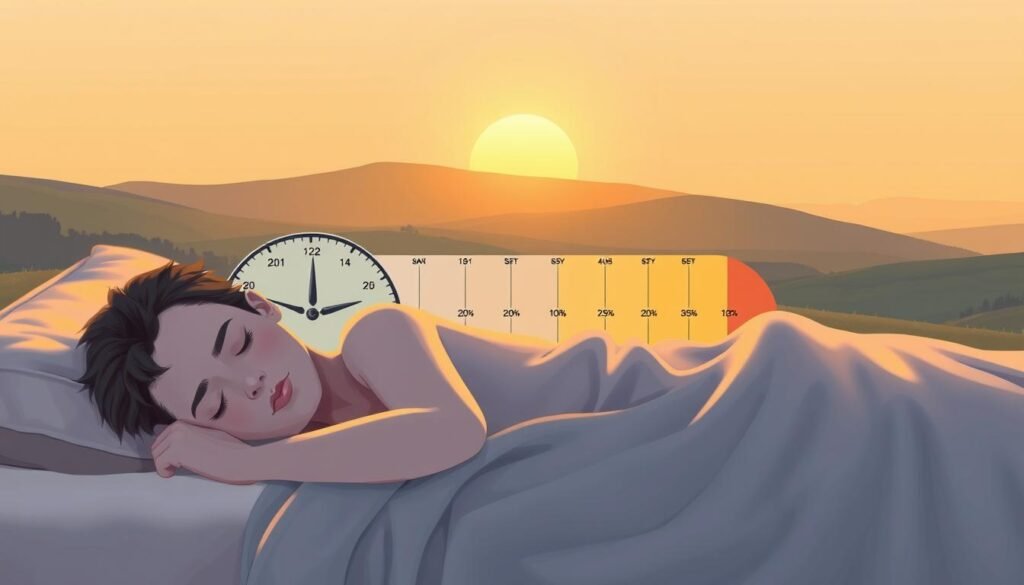
Your internal timing shapes when you feel alert, hungry, and ready to learn each day. One is a personal preference for when you perform best; the other is a 24-hour biological cycle that responds to light and routine.
A chronotype is your natural preference for morning or evening activity and resting hours. It guides when your body feels hungry, focused, or drowsy across the day and night.
The circadian rhythm is the roughly 24-hour cycle that synchronizes hormones, temperature, and alertness to light and behavior. You can nudge that cycle with morning light, steady wake times, and regular meals.
- Measurement: MEQ asks about preferred timing across tasks; MCTQ logs real bed and wake times to map actual behavior.
- Biology & age: Genes like PER3 influence morningness, teens shift later, and many adults move earlier with age.
- Practical note: When work conflicts with your natural timing you get social jetlag, which hurts mood, metabolism, and performance.
| Feature | Personal Preference | Biological Cycle |
|---|---|---|
| Main idea | When you naturally feel alert | 24-hour physiological pattern |
| Measured by | MEQ, MCTQ (behavior vs. preference) | Light exposure, hormone markers |
| Can change? | Shifts with age and genes | Can be nudged by routine |
Next: learn how to find your type today with brief validated questionnaires and simple tracking.
How to Find Your Chronotype Today
You can map your personal energy rhythm with a few trusted tests and a week of logging. Use validated tools to get clear information about preferred times for focus and rest, then verify that picture with real-world data.
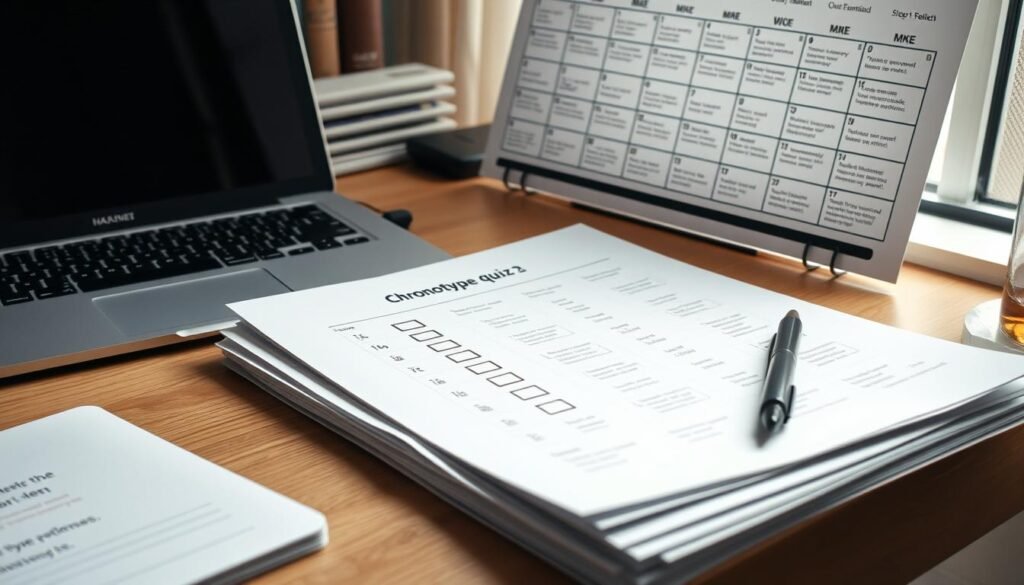
Take the MEQ (Morningness–Eveningness Questionnaire)
The MEQ has 19 standardized items that score preferred timing for daily tasks. It tells whether a person leans morning, intermediate, or evening. Finish the form and total the score to see your type.
Use the MCTQ to map real bed and wake times
The Munich tool records workday and free-day sleep to estimate your mid-sleep. It highlights social jetlag and shows if routines push your natural timing.
Try Dr. Michael Breus’ “Power of When” quiz
Dr. Breus groups people as lion, bear, wolf, or dolphin and offers practical timing tips. Combine that result with MEQ and MCTQ findings for a balanced view.
- Cross-check: if tests conflict, log seven days of bed/wake times, energy dips, caffeine, and exercise.
- Look for patterns: align heavy mental work to your peak time to boost productivity and perceived sleep quality.
- Reassess: after routine changes (light, fixed wake, meal timing) retest to confirm shifts in your cycle.
Why Your Chronotype Matters for Sleep, Health, and Productivity
Your internal timing can shape how you feel across the day and night. Aligning work and rest with natural peaks protects recovery, mood, and focus.
When timing clashes with obligations, social jetlag appears. In practical terms, an alarm forces early wake against a later body clock. Weekday sleep shrinks and weekends become a time-zone shift.
Repeated misalignment links to higher risk for metabolic issues such as weight gain, type 2 diabetes, and cardiovascular problems. Evening-leaning people who cut weekday rest show worse outcomes for mental health too.
Performance and sleep quality effects
Morning types often win in early schedules, while evening people can excel in creative tasks but struggle with early obligations.
Aligned timing improves sleep quality: less fragmentation, shorter time to fall asleep, and better overnight recovery.
- Mitigate: fix a wake time, get bright light within an hour, and dim screens 2–3 hours before bed.
- Tailor: evening people can use staged wake shifts and morning light therapy; early types should protect earlier bedtimes.
- Work smarter: schedule deep work at your peak energy and use low-demand tasks during troughs.
Track one week of bed and wake times, mood, and energy to see gains from small changes. For more information on identifying your type, read what is your chronotype.
The Four Chronotypes Explained: Lion, Bear, Wolf, Dolphin
Most people fit a recognizable pattern of daily highs and lows that map onto four simple profiles. These archetypes make it easier to match meals, workouts, and deep work to the hours when your body runs best.
Here’s a clear, practical run-down of the four types and what each person should prioritize.

- Lion (the early bird): wakes early, peaks mid-morning, and needs an earlier protected bedtime to feel restored.
- Bear (most people): follows the sun, thrives on standard office hours, and shows mid-to-late morning and early afternoon energy peaks.
- Wolf (night owl): hits stride later in the day, finds early starts hard, and benefits from structured late-day sprints plus morning light exposure.
- Dolphin (light or erratic sleeper): struggles with consistent rest, often resembling mild insomnia, and needs strict hygiene and stress tools to protect nightly recovery.
Bears represent roughly half of people; wolves and lions are smaller groups; dolphins are relatively rare. Use these types as guideposts, not labels. Personality research links morningness with greater conscientiousness and eveningness with creative traits, but individual variation matters.
Test your peak hours against actual output, then adjust timing for meals, training, and focused work. For a deeper read on how researchers describe these four profiles, see the four chronotypes.
Chronotype Sleep Schedule: Build Your Ideal Day
Design your ideal day by anchoring a morning ritual, timing deep work, and matching meals to your peak energy. Small, repeatable anchors—wake time, bright morning light, and a calm wind-down—help lock in better rest and steadier daytime focus.
Start by choosing a consistent wake time tied to your type and get bright light within 30–60 minutes. That simple anchor jump-starts hormones that raise alertness and set your internal clock for the day.
Set a fixed wake time and light anchor
- Wake same time daily: protect this anchor even on weekends to avoid social jetlag.
- Morning light: 10–30 minutes of bright exposure helps shift and stabilize your rhythm.
Time deep work for peak energy
Block your calendar so heavy-focus tasks fall in your predicted peak window. Push routine admin to low-energy periods to boost productivity without extra effort.
Align meals, exercise, and caffeine
- Front-load protein earlier for lions; bears benefit from robust midday fuel.
- Wolves and dolphins should avoid heavy late dinners to protect bedtime cycles.
- Stop caffeine 6–8 hours before bed; dolphins may need an earlier cutoff.
- Match workouts to your highs—late-afternoon for lions and bears; early evening for wolves; moderate late-afternoon for dolphins.
Use a bedtime calculator to match sleep cycles
Subtract 90-minute cycles plus settling time from your wake target. Lions and bears often aim for five cycles (~470 minutes); wolves and dolphins for four (~400 minutes).
Examples: Lion up at 6:00 am → ~10:10 pm bed; Bear up at 7:00 am → ~11:10 pm; Wolf up at 7:00 am → ~12:00 am; Dolphin up at 6:30 am → ~11:50 pm.

Build habits in 15–30 minute steps: dim screens 2–3 hours before bed, keep dinners earlier, and tweak your plan weekly until mornings and mid-day energy feel steady.
For evidence on how morning light and fixed wake times shift timing, see how your chronotype affects your day.
Lion Chronotype Daily Schedule and Tips
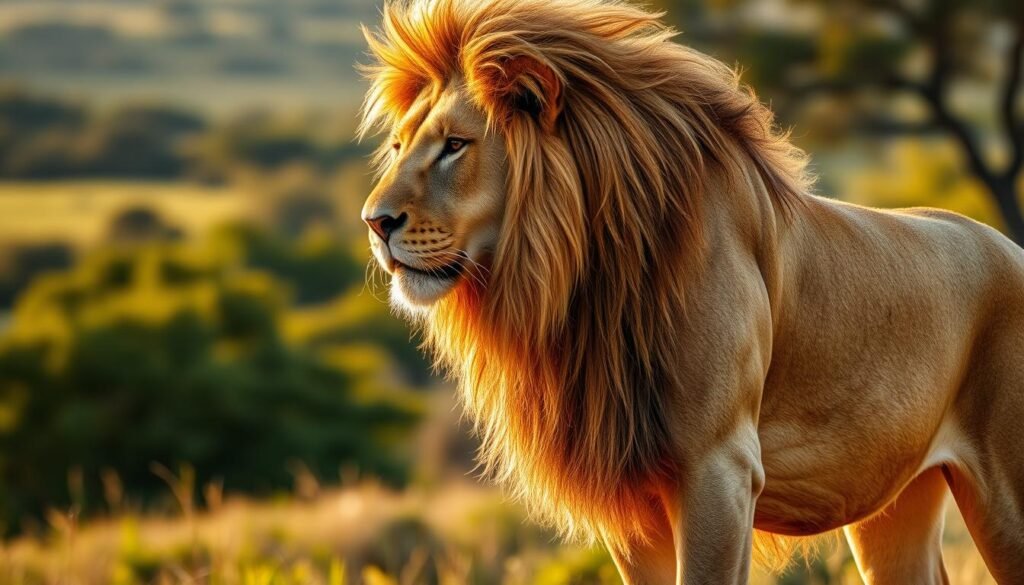
Lions do their best work in the quiet morning hours and benefit from an early, regular bedtime. Small anchors—fixed wake time, bright light, and a protein breakfast—lock in peak focus and steady energy through the first half of the day.
If you are an early bird, your sharpest focus and creative momentum arrive well before noon. Use a 5:30–6:30 am wake window, get bright light, and hydrate right away to sync your internal clock.
Sample lion day: early wake, front-loaded deep work, earlier bedtime
7:00 am–12:00 pm: Block deep tasks and meetings now. Reserve early afternoon for low-demand items.
Work strategy
Schedule priority tasks in the morning peak to protect productivity. If energy dips late afternoon, use a short break or light walk.
Exercise and meals
Eat a protein-first breakfast within 60–90 minutes of waking and lunch at midday. Train 4:30–6:00 pm for a gentle second wind without delaying bed.
Evening wind-down
Aim for a bio-time bed around 9:30–10:30 pm to capture roughly five 90-minute cycles. Dim lights 2–3 hours before bed and use a calm routine: light stretching, reading, or breathing.
“Keep weekend wake times steady; a single anchor prevents social jetlag and preserves Monday focus.”
| Feature | Typical time | Benefit |
|---|---|---|
| Wake window | 5:30–6:30 am | Morning alertness, steady energy |
| Peak work | 7:00 am–12:00 pm | Higher productivity, clearer focus |
| Bed target | 9:30–10:30 pm | Five sleep cycles, easier recovery |
Bear Chronotype Daily Schedule and Tips
For roughly 50–55% of people, the strongest alertness window lands between 10:00 am and 2:00 pm. Bears tend to follow daylight: steady mornings, a clear late-morning peak, and reliable early-evening wind-down.
This section gives a compact, practical blueprint for aligning work, meals, and rest with that natural pattern.
Sample bear day: follow the sun with late-morning to early-afternoon peaks
Wake near 6:45–7:30 am, get bright light and a short walk to prime energy for a 10:00 am peak. Eat breakfast within 60–90 minutes and plan lunch near noon to keep fuel steady through early afternoon.
Schedule critical meetings or analytical work from 10:00 am–12:00 pm. Protect a creative/strategic block from about 1:00–2:30 pm when many bears retain good focus.
Energy management: meetings mid-morning, creativity early afternoon
- Work blocks: use 10:00–12:00 for high-demand tasks; place routine admin at 3:00–4:00 pm.
- Exercise: aim 5:30–6:30 pm to tap a second wind yet leave time to wind down before bed.
- Bedtime: target ~11:00–11:15 pm with five 90-minute cycles if you wake near 7:00 am.
- Evening habits: dim screens after 9:00 pm, avoid heavy late dinners, and cool the bedroom to aid onset and health.
“Maintain weekend consistency: similar wake and meal times help prevent creeping delays that make Monday harder.”
Track your best hours for focused work and reorganize blocks accordingly. For a practical guide tailored to bears, see this bear chronotype resource.
Wolf and Dolphin Strategies for Night Sleep and Real-Life Schedules
Late-evening workers need routines that let them use peak hours without sacrificing overnight recovery. Light, timing, and simple habits can protect night sleep while keeping evening productivity high.
A clear plan helps night owls and light sleepers manage work demands and health.
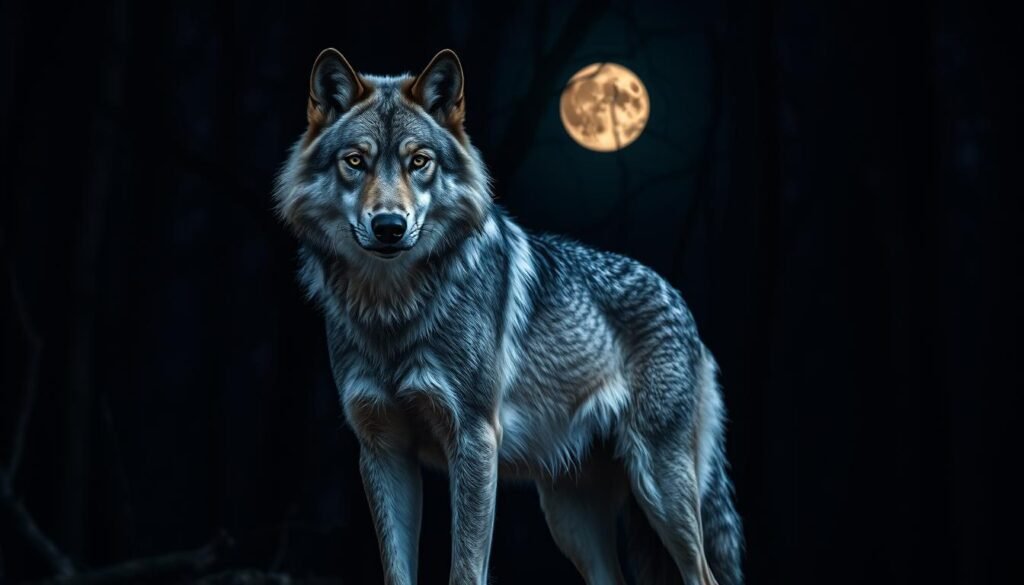
Wolf playbook: late peak hours and structured evening work
Wolves often peak in the late afternoon and again after dinner. Schedule heavy tasks from roughly 4:00–6:00 pm, then add a short creative sprint later if needed.
Aim for lights-down near midnight to protect night sleep. Wake around 7:30 am if possible and use morning bright light to cue alertness.
Wolf alignment tips for 9–5 life
Use 10–20 minutes of outdoor light within an hour of waking and cut caffeine by early afternoon (no later than 2:00 pm).
Shift bed and wake times gradually by 15–30 minutes. Exercise in the early evening (about 6:30–7:30 pm) and cool down with dim lights before bed.
Dolphin playbook: flexible windows and strict hygiene
Dolphins have erratic rest and do best with firm wind-down cues. Block focused work in the late-afternoon window (about 3:00–6:00 pm).
Keep a consistent order and timing for pre-bed activities so the brain learns the sequence that signals a good night.
Dolphin insomnia aids and practical tools
If you can’t fall asleep within 20–30 minutes, get out of bed, do a calm task in low light, and return only when sleepy. This is stimulus control to retrain the bed link.
Try a worry journal 1–2 hours before bed to offload ruminating thoughts. Consider morning light therapy and, when appropriate, low-dose melatonin under clinician guidance.
| Profile | Peak hours | Key habit | Night target |
|---|---|---|---|
| Wolf / wolf chronotype | Late afternoon → evening | Morning light, cut caffeine early | Lights-down ~12:00 am; stable night sleep |
| Dolphin / dolphin chronotype | Late-afternoon boost | Strict wind-down, worry journal | Consistent bed routine; fewer long sleep-onset periods |
“Protect the wake anchor, use light early, and make the bedroom a cue for rest rather than a place for thinking.”
Conclusion
Match your day to your biology and you win better rest, clearer energy, and higher productivity.Use a quick quiz, the MEQ or MCTQ, and one anchor—bright morning light or a steady wake time—to start seeing change within weeks.
Pick one practical tweak this week: move a meeting to your peak, dim screens earlier, or set a firm wake time. Small, repeatable changes compound into measurable gains in health and work performance.
Use validated tools and Dr. Michael Breus’s tips to refine your plan. Reassess monthly, protect evening wind-downs for good night sleep, and schedule major tasks during your best hours. Start tonight: dim lights, set bed time, and give your body a clear signal to recover.
FAQ
What’s the difference between a chronotype and my circadian rhythm?
Your chronotype describes your natural preference for activity and rest times (for example, being an early riser or a night person). Your circadian rhythm is the internal 24-hour biological clock that drives hormones, body temperature, and sleep-wake cycles. Together they shape when you feel alert, hungry, and ready to sleep.
How can I find my type today?
Start with validated tools: the Morningness-Eveningness Questionnaire (MEQ) and the Munich ChronoType Questionnaire (MCTQ) map preferences and real bed/wake times. Dr. Michael Breus’ “Power of When” quiz groups people into lion, bear, wolf, or dolphin types to give practical daily timing tips.
Does knowing my type really improve my health and performance?
Yes. Aligning work, meals, exercise, and light exposure with your natural timing reduces social jetlag, improves sleep quality, supports metabolic and mental health, and boosts daytime productivity.
What are the four common types and how do they differ?
The four types are lion (early and productive in the morning), bear (follow the sun with predictable daytime energy), wolf (late peaks and evening focus), and dolphin (light sleepers who need careful sleep hygiene). Each has distinct peak energy windows and bedtime needs.
How do I build a practical day that matches my type?
Anchor your wake time, use morning light exposure to set your clock, schedule demanding tasks during your peak energy window, align meals and workouts with those peaks, and use a bedtime-calculator approach to plan full sleep cycles that hit your morning target.
What’s a sample plan for a lion-type person?
Wake early with bright light, do deep work in the early morning, take a substantial lunch, exercise in the late afternoon, and wind down earlier than average to protect nighttime hormones and avoid social jetlag.
How should a bear-type structure their day?
Bears do well following daylight. Aim for late-morning to early-afternoon peak tasks, schedule meetings mid-morning, reserve creative work for early afternoon, and keep consistent sleep-wake times to maintain steady energy.
How do wolves manage late-night productivity without harming sleep quality?
Use morning light to shift the clock earlier when needed, enforce a caffeine cutoff, plan focused late-evening work blocks, and bring lights down around midnight to allow melatonin to rise for restorative sleep.
What strategies help dolphins with insomnia-prone nights?
Prioritize stimulus control (bed for sleep only), keep a brief worry journal before bed, use evening dim light and morning bright light, and consider low-dose melatonin or timed light therapy under medical guidance to stabilize patterns.
Can I shift my timing for a 9–5 job if my natural type conflicts with it?
Yes, gradual shifts of 15–30 minutes per day, consistent morning light, strategic caffeine use, and stable wake times help. Combine behavioral changes with workplace planning—schedule demanding tasks when you have the most energy.
Are there quick tips to improve night rest regardless of type?
Yes. Keep consistent bed and wake times, dim evening light, limit screens before bed, avoid late heavy meals and alcohol, and time exercise earlier in the day. Small, consistent habits often yield the biggest gains.
Which quizzes and tools are trusted for mapping my timing?
Use the MEQ for morningness-eveningness assessment, the MCTQ for real-life sleep timing, and Dr. Michael Breus’ Power of When quiz for practical, type-based recommendations. Combine results with tracking (sleep diary or wearable) for the clearest picture.