An Exercise Physiologist Explains How to Match Your Workout to Your Menstrual Phase

Maximize your exercise routine with our guide to Menstrual Phase Workouts. Learn how to tailor your fitness to your cycle.

Can a simple tweak in timing help you train smarter and feel more in control?

Table of Contents show

Cycle syncing is about aligning training and recovery with how your body feels across the menstrual cycle, not following strict rules that ignore symptoms.

By Emily Carter, certified health and wellness writer – Fact-checked and reviewed by our editorial team.

In this short guide, you’ll learn practical, science-backed steps to tune your exercise and recovery to shifts in energy, strength, and mood.

We blend current research with real-world tips: what tends to change across each phase, how to track symptoms, when to push intensity, and when to prioritize rest.

Whether you manage PMS, PCOS, endometriosis, or just notice monthly shifts, this approach helps you keep consistent progress while respecting your body.

For a deeper how-to and a flexible four-week template, check this practical guide: cycle syncing: the hormone-friendly way to plan.

Key Takeaways

  • Track your cycle and symptoms to personalize training and recovery.
  • Research is mixed; personalization beats perfection.
  • Muscle growth can occur any time with consistent exercise and recovery.
  • Honor rest days: short-term rest can protect long-term progress.
  • Use a flexible template and refine it across several cycles.

Why Match Training to Your Cycle Right Now

Matching training to your cycle helps you make clearer choices about when to push and when to rest. This approach reduces stress, keeps progress steady, and makes exercise fit your life.

Cycle syncing blends growing but mixed research with real-world tracking. Reviews show inconsistent performance changes across the menstrual cycle because studies use different methods and historically underrepresent women.

A 2020 meta-analysis found a small dip in performance for some during the period, while a 2024 study reported similar muscle protein synthesis after strength sessions in both the follicular and luteal phases. Those findings mean population-level results are mixed, but individual trends still matter.

Tracking symptoms and energy levels reveals how your body may feel across the month. That clarity helps you use higher-energy windows for strength or skills and lower-energy days for mobility, technique, or rest.

  • Benefits: fewer setbacks, better recovery, and training that supports long-term health.
  • Practical tip: log mood, sleep, and performance for several cycles to spot patterns and tailor your lifestyle and exercise plan.

A serene, sun-dappled meadow with lush, verdant grass and vibrant wildflowers in bloom. In the foreground, a woman sits cross-legged, eyes closed, hands resting on her knees, as she synchronizes her breathing with the rhythmic pulsing of her menstrual cycle. The middle ground features a diverse array of female figures, each in a different yoga pose, their movements harmonizing with the ebb and flow of their hormonal cycles. In the background, a tranquil forest with towering trees and a gently flowing stream, creating a sense of natural harmony and balance. The lighting is soft and warm, with a golden glow that bathes the scene in an aura of serenity and inner reflection.

Understand the Four Phases of the Menstrual Cycle

Hormones rise and fall across four main parts, and those shifts often change energy, recovery, and symptoms. Learn the broad patterns so you can pair them with your own tracking and make smarter daily choices.

Summary: Your cycle includes the menstrual, follicular, ovulation, and luteal stages. Hormone levels shift across each part and can affect strength, mood, and recovery.

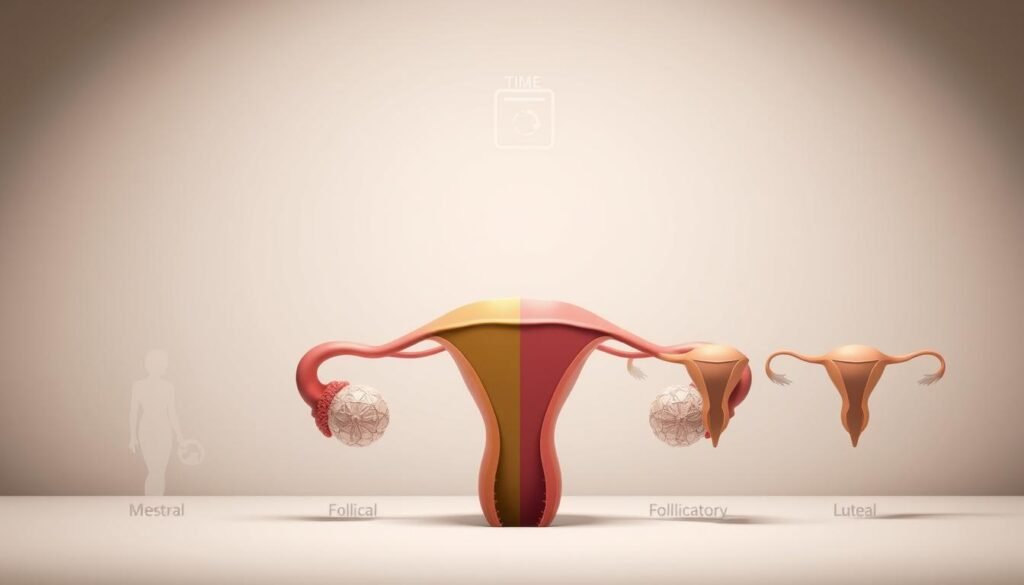
A detailed anatomical illustration showcasing the four distinct phases of the menstrual cycle - menstrual, follicular, ovulatory, and luteal. Rendered in a clean, scientific style with muted colors and delicate linework. The foreground depicts the uterus and ovaries in cross-section, highlighting the cyclical changes in the endometrium and follicle development. The middle ground features simplified silhouettes of the female reproductive system, while the background subtly suggests the passing of time with a minimal calendar or timeline motif. Subtle lighting casts soft shadows to convey depth and volume. The overall tone is educational and informative, suitable for use in a medical or health-oriented article.

  • Menstruation (approx. days 1–5): estrogen and progesterone are low as the uterine lining sheds. You may feel lower energy and prefer gentle movement.
  • Follicular (approx. days 6–14): estrogen climbs toward a late-follicular peak. Many report rising energy, better focus, and improved strength potential.
  • Ovulation (approx. days 15–17): luteinizing hormone surges and FSH peaks; an egg is released. Some studies show a brief testosterone uptick, but findings vary.
  • Luteal (approx. days 18–28): progesterone peaks while estrogen rises then falls. Late in this span, recovery can slow and PMS symptoms may appear.

Key notes: These days are approximations—individual cycles and symptoms vary month to month.

Practical takeaway: Use these broad hormonal patterns alongside symptom logs and tools like basal temperature or apps to personalize your plan. For more on how exercise habits can map to cycle changes, see exploring exercise habits by menstrual cycle.

How to Track Your Cycle and Energy Levels

Make tracking simple and consistent. Small daily notes let you spot real trends in energy, recovery, and symptoms over several cycles. This helps you plan training, rest, and self-care with more confidence.

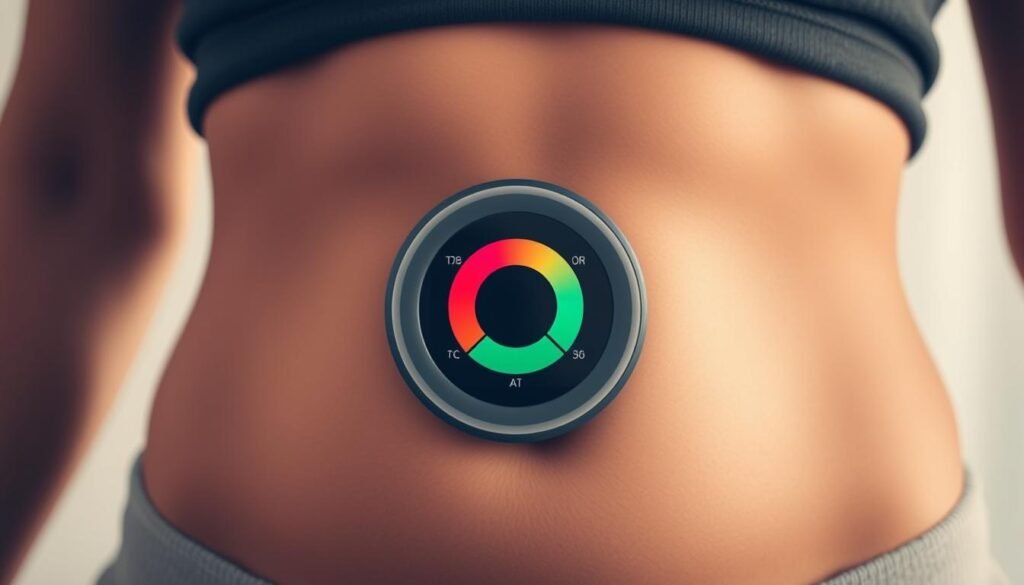
A detailed closeup of a woman's abdomen and lower torso, shot with a warm, soft lighting. In the center, a digital cycle tracking device displays a colorful visualization of her menstrual cycle, with various segments representing different phases. The background is slightly blurred, with a clean, minimal aesthetic to focus attention on the tracking device. The overall mood is one of introspection and self-awareness, conveying the importance of understanding one's own body and energy levels throughout the menstrual cycle.

Tools and methods to try

  • Apps or a calendar: log flow, sleep, mood, and training notes each day.
  • Basal body temperature (BBT): take it at wake to clarify ovulation timing.
  • Wearables: track sleep, heart-rate variability, and recovery trends over time.

What to record each day

  • Mood, motivation, perceived exertion, and energy levels.
  • Sleep hours and quality, cramps, breast tenderness, and any other symptoms.
  • Training details: sets, reps, pace, RPE, soreness, and recovery time.
  • Lifestyle context: travel, stress, diet, and hydration that can mimic cycle changes.

Spotting patterns

Review after 2–3 cycles. Circle the days when sessions felt strong and the days when recovery lagged. Color-code or tag days (green/yellow/blue) for quick scans.

Tool What to log Pros Note
Period app Flow, symptoms, mood Easy, visual trends Good starter option
Spreadsheet/Notebook Daily energy, training metrics Customizable, private Best for detailed analysis
BBT thermometer Wake temperature Clarifies ovulation Requires routine
Wearable Sleep, HRV, recovery Objective trends Combine with self-report

Make it useful, not perfect. Pick one place to log and stick with it. For practical how-to steps on getting started with cycle syncing, see this guide to start cycle syncing.

Menstrual Phase Workouts

Prioritize gentle movement and comfort in the first days of your cycle. Low-impact exercise can reduce stiffness and ease cramps, but true rest is valid when symptoms or heavy flow limit you.

A dimly lit bathroom, warm lighting casting a soft glow. In the foreground, a woman's hand gently resting on her lower abdomen, a look of comfort and understanding on her face. The middle ground reveals a collection of menstrual products - tampons, pads, and a heating pad - symbolizing the routine and care of the menstrual phase. The background showcases a sense of tranquility, with a plush towel and a cozy bathrobe hanging nearby, creating a safe and nurturing environment. The overall atmosphere conveys a sense of self-care, empowerment, and the natural rhythms of the female body.

Quick guide: choose circulation, mobility, and breath-based tools over intensity. Short sessions support consistency without draining recovery.

Low-impact options that help

  • Easy walks to boost circulation and mood.
  • Restorative yoga and gentle Pilates for hip, low-back, and shoulder tension.
  • Mobility sequences and light technique work with very low loads to keep movement patterns sharp.
  • 5–10 minutes of diaphragmatic breathing to downshift pain and stress.

When to rest versus when to move

If you have heavy cramps, dizziness, or marked fatigue, rest without guilt. If symptoms are mild, aim for 15–30 minute sessions at a low RPE and long rest intervals.

Practical tips: warm up with light cardio and dynamic mobility, stay hydrated (it can reduce cramps), and choose snacks with iron + vitamin C to support recovery after a session.

Track how each approach affects your symptoms and sleep. Over time you’ll see which gentle practices help most during your period. For tips on tracking how your cycle affects training, see how tracking your period can help and read common training myths at feeling lost in your workout.

Follicular and Ovulation Phases: Train With Rising Energy

As estrogen rises, many women notice clearer focus and better stamina—use that momentum for endurance and strength gains. Plan harder sessions when you feel strong, and back off quickly if pain or fatigue appears.

Endurance and strength building in the follicular phase

Use this window for technical work, longer efforts, and steady strength progress.

Aim for 2–3 strength training days focused on compound lifts or full-body sessions. Add 1–2 cardio workouts: tempos, intervals, or hill repeats based on goals.

Progress wisely: increase load, sets, or reps by about 2–10% per week while keeping form tight.

High-intensity options around ovulation—and when to adjust

Near ovulation, many tolerate HIIT, sprints, or spin more easily. If you feel great, short high-intensity bouts can boost power and conditioning.

“Listen to your body: if ovulation pain shows up, swap plyometrics for lower-impact power like sled pushes or cycling sprints.”

Always pair intense sessions with longer cooldowns and targeted mobility to protect joints and soft tissue.

Progressive overload while maintaining form

Consistency matters: evidence shows similar muscle protein synthesis across parts of the cycle, so steady overload wins over perfect timing.

Keep at least one lighter day to consolidate gains and protect recovery. Track which intensities feel best so you can fine-tune the next cycle.

  • Quick plan: 2–3 strength days, 1–2 cardio sessions, 1 active recovery day.
  • Modify for pain: lower impact or shorter intervals if discomfort appears.
  • Fuel: eat balanced meals and include a post-session protein source to support adaptation.
Goal Session type Intensity Notes
Strength Compound lifts (full-body or split) Moderate–heavy Focus on form; progressive overload 2–10%
Endurance Tempo runs, hill repeats Moderate Use longer intervals for stamina gains
Power Short sprints or sled pushes High Swap to low-impact options if ovulation pain occurs

Luteal Phase: Managing PMS, Recovery, and Injury Risk

The late luteal phase often brings higher perceived effort, more soreness, and occasional mood shifts for many women. Small training tweaks—moderated intensity, longer rests, and better sleep—can lower injury risk and keep progress steady.

The luteal phase can reduce recovery efficiency after very hard sessions. Some athletes report lower performance late in the cycle, and a 2024 study in female soccer players found higher non-contact injury risk in the late luteal compared with the menstrual period. Individual responses vary, so tailor changes to your data.

A serene, dimly lit bedroom setting with a woman resting on a soft, plush bed. Warm, golden lighting filters through sheer curtains, casting a gentle glow. The woman's face is relaxed, her expression conveying a sense of calmness and introspection. In the background, a vase of fresh flowers and a soothing, neutral-toned painting hang on the wall, creating a peaceful ambiance. The overall scene evokes a sense of comfort and self-care, reflecting the "Luteal Phase: Managing PMS, Recovery, and Injury Risk" theme.

Shifting to moderate intensity and smart deloads

Use RPE to guide training. Aim for moderate effort with controlled lifts and steady cardio. If fatigue is consistent, plan a late-cycle deload: cut volume 20–40% or replace sets with technique and mobility work.

Pacing, longer recoveries, and stress-management

Space hard days further apart and lengthen rest intervals. Add low-load recovery like walking, light cycling, or mobility circuits to keep movement without overload.

  • Warmups: add soft-tissue prep and activation for glutes, mid-back, and core to reduce stiffness and injury risk.
  • Swap high-impact: replace maximal eccentrics or plyos with joint-friendlier options as your period nears.
  • Sleep and stress: wind down earlier, limit late caffeine, prioritize hydration, and use breathing or short mindfulness sessions to lower PMS symptoms.

Track what pacing and recovery windows work best. Over several cycles you’ll learn when to push and when a smart deload protects long-term health and performance.

Nutrition That Supports Each Phase

Eating with your cycle helps support recovery, mood, and steady gains across the month. Small, consistent diet changes can ease symptoms and boost training energy.

Menstrual: iron, vitamin C, omega-3s, hydration

Focus on iron-rich foods paired with vitamin C for better absorption. Choose leafy greens, lentils, or lean red meat, plus citrus or berries. Add omega-3 sources like salmon or flaxseed to help cramps, and keep fluids steady to reduce discomfort.

Follicular and ovulation: fuel for higher intensity and estrogen balance

Lean protein and complex carbs power harder sessions. Include chicken, beans, whole grains, cruciferous vegetables, fermented foods, and healthy fats to support estrogen balance and recovery.

Luteal: complex carbs, fiber, magnesium-rich options

Use carbs and fiber to steady appetite and limit bloating. Oats, sweet potatoes, quinoa, leafy greens, and crucifers help. Snack on pumpkin seeds or nuts for magnesium and fluid balance. Hydration still matters for cognitive clarity and comfort.

Practical quick list:

  • Snack swaps: dark chocolate, fruit, nuts instead of processed sweets.
  • Meal timing: eat balanced meals around training to stabilize energy and support adaptation.
  • Prep: keep a simple grocery list per cycle window so you’re ready when energy dips.

A lush, vibrant illustration depicting the nutrition cycle. In the foreground, a diverse array of whole, nutrient-dense foods - fresh fruits, vegetables, whole grains, lean proteins, and healthy fats. In the middle ground, these ingredients swirl and transform, representing the body's metabolic processes. The background features a soft, ethereal glow, highlighting the energy and vitality that proper nutrition provides. The lighting is warm and natural, with a slight depth of field to draw the viewer's focus. The composition is balanced and visually captivating, conveying the harmonious relationship between nutrition and overall wellbeing.

Goal Top foods Why it helps When to use
Restore iron Leafy greens, lean red meat, lentils + citrus Improves iron absorption and reduces fatigue First days of bleeding
Power sessions Lean protein, whole grains, crucifers Supports strength, estrogen balance, recovery Follicular & ovulation
Manage cravings Oats, sweet potato, pumpkin seeds, leafy greens Stabilizes appetite, reduces bloating Late luteal
Everyday support Fermented foods, healthy fats, hydration Gut health, hormone metabolism, symptom relief All cycle windows

Want more practical pairing tips? Read guidance on nutrition and exercise throughout your menstrual for a deeper look at meal timing and recovery strategies.

Special Considerations: Birth Control, Conditions, and Strength Training

Hormonal contraceptives and certain conditions change how people feel across the month. That means cycle syncing should be flexible—use symptoms and data to guide daily choices.

A woman stands in a meditative pose, her body and mind in sync with the rhythmic cycles of nature. Soft, warm lighting bathes her form, highlighting the subtle shifts in her posture and expression as she navigates the ebb and flow of her hormonal landscape. In the background, a dreamlike collage of anatomical diagrams, charts, and symbolic elements subtly reference the intricate workings of the female body. The overall atmosphere conveys a sense of deep understanding, empowerment, and a reverence for the body's innate wisdom.

Hormonal birth control often flattens ovulation and typical hormonal swings, so strict syncing rules may not apply. Let sleep, appetite, energy, and mood guide training and nutrition instead.

How should birth control change your plan?

  • Summary: If you use hormonal contraception, adapt based on how you feel rather than fixed dates.
  • Birth control can reduce obvious stage changes; track daily cues and prioritize recovery when energy dips.

Adapting for PCOS, endometriosis, and PMDD

  • Prioritize recovery windows and scale intensity on flare-up days.
  • For PMDD/PME, choose mood-supporting movement—gentle cardio, yoga, or short strength circuits with longer rests.
  • Work with a clinician or coach to tailor progressions safely.

Why strength matters across the cycle

Consistent strength training supports lean mass, bone health, and long-term health. Avoid blanket bans like “no heavy lifting late” — research doesn’t back strict limits for all women. Track trends and preemptively deload when symptoms predict poorer recovery.

Practical checklist: sleep, hydration, simple mobility, breathwork, and a support plan. Use cycle syncing as a tool, not a rule, to keep fitness and health sustainable for real life.

cycle syncing research

Evidence Snapshot and a Flexible Weekly Template

Here’s a concise look at the evidence and a flexible four-week template you can tweak to match your energy and training goals. Use data as a guide, not a rule—adapt the plan to your symptoms, sleep, and daily time limits.

What does the research say about performance and recovery?

Short answer: effects across the menstrual cycle are small and mixed, but they matter for some people.

  • Muscle building: studies show similar muscle protein synthesis after strength sessions in both follicular and luteal windows (2006 and 2024 findings).
  • Performance: a 2020 meta-analysis found a slight dip for some during bleeding days, but this is not universal.
  • Recovery risk: small studies note less efficient recovery after hard intervals mid‑luteal, and a 2024 soccer study reported higher late‑luteal injury risk versus bleeding days.

A practical, four-week template you can modify

Use RPE to self-regulate and slide sessions by symptom days. Log outcomes and adjust next cycle.

  • Week 1 (bleeding): 2 low‑impact days, 1 technique strength day, 1 easy cardio, 2 rest days.
  • Week 2 (rising energy): 2 full‑body strength training days, 1 interval, 1 tempo, 1 mobility, 2 easy days.
  • Week 3 (ovulation window): 2 strength days with a heavy top set, 1 HIIT if you feel great, 1 steady cardio, mobility, 2 easy days.
  • Week 4 (luteal): 2 moderate intensity strength days with lower volume, 1–2 low‑moderate cardio, extra mobility, 1–2 rest days.

Quick rules: swap HIIT for tempo if recovery lags, shorten sessions when RPE drifts up, and log which days deliver your best performance. Cycle syncing gives structure—let your data steer final tweaks.

About the Author

Emily Carter is a certified health and wellness writer with over 7 years of experience in evidence-based fitness, nutrition, and lifestyle content. As the lead author of Go4HealthnFitness.com, she’s passionate about simplifying science-backed wellness advice for everyday readers. When she’s not writing, you’ll find her strength training, hiking, or exploring natural supplements that actually work.

Editorial Process Note

Our Commitment to Accuracy: This article was medically reviewed for accuracy and fact-checked by our editorial team.

Medical Disclaimer: The information in this article is for informational purposes only and is not intended to be a substitute for professional medical advice, diagnosis, or treatment. Always seek the advice of your physician or other qualified health provider with any questions you may have regarding a medical condition.

Conclusion

Use cycle syncing as a flexible framework — not a strict rulebook — to support your health and steady progress. Track how your body feels, adjust workouts to match energy levels, and prioritize recovery when symptoms or poor sleep show up.

Small, consistent choices compound over time. Choose the workout that feels doable today. Add yoga, mobility, or easy cardio before a heavy day or when cramps or low mood appear.

Keep strength training in your plan; it builds long-term resilience and bone health. If you use hormonal birth control or manage conditions like PMDD or endometriosis, tailor intensity and rest to your data. Revisit logs monthly and refine what works for your body and goals.

Ready to start? Try the four-week template and use simple tips to stay fit without a gym while you learn your cycle and recovery patterns.

FAQ

What does it mean to match your workout to your menstrual cycle?

Matching exercise to your cycle means adjusting training intensity, volume, and type across the four hormonal stages—menstrual, follicular, ovulation, and luteal—so your program aligns with natural shifts in energy, recovery, strength, and symptoms. The goal is practical: improve consistency, reduce injury risk, and get better results by listening to your body and using simple data from tracking.

Why should I consider syncing training with my cycle right now?

Syncing can make training more sustainable and effective. Many people notice predictable changes in energy, mood, sleep, and performance across their cycle; adjusting workouts can reduce missed sessions, lower symptom burden, and support strength and endurance gains over time. It’s an evidence-informed approach—not a strict rule—especially useful if you want smarter period-aware programming.

What are the four phases and how do hormones change across them?

The four phases are menstrual, follicular, ovulation, and luteal. Estrogen rises in the follicular phase and peaks near ovulation; luteinizing hormone (LH) surges to trigger ovulation. Progesterone rises in the luteal phase. Testosterone may fluctuate modestly. These hormone shifts affect energy, temperature, and recovery—so expect higher energy around mid-cycle and more fatigue or bloating in the luteal and menstrual windows.

How long does each phase last and why does it vary?

Typical timelines: menstrual bleeding ~3–7 days, follicular ~7–21 days, ovulation a brief 24–48 hour window, luteal ~11–17 days. Individual differences—genetics, stress, sleep, contraception, medical conditions, and age—change phase length. Track multiple cycles to find your personal pattern rather than relying on textbook day counts.

What’s the simplest way to track my cycle and energy levels?

Use a combination of a calendar or app (Clue, Flo, Ovia), wearables (heart rate variability, resting HR, sleep), and daily notes. Log mood, sleep quality, energy, cramps, flow, training performance, and recovery. Over 3–6 cycles you’ll spot trends and learn when to push, deload, or prioritize mobility.

What should I record each day to spot patterns?

Track: sleep length/quality, perceived energy, mood, flow or bleeding, cramps or bloating, workout type and perceived exertion, and any medication or supplement changes. Small, consistent entries make patterns visible and useful for training adjustments.

What low-impact movement is best during bleeding or when symptoms are bad?

Gentle walking, restorative yoga, mobility drills, and Pilates are effective. These options maintain circulation, reduce cramping, and support recovery without taxing the nervous system. Focus on breath work and core-friendly positions if cramping is present.

When should I rest completely versus doing light movement during my period?

Rest fully if symptoms are severe—heavy bleeding, debilitating cramps, faintness, or intense fatigue. If symptoms are mild to moderate, low-intensity movement can help reduce pain and improve mood. Let symptom severity and energy guide the decision rather than calendar days alone.

How should I train during the follicular and ovulation windows?

Use rising energy to prioritize endurance work, higher-volume strength sessions, and targeted progressive overload. Around ovulation you can safely include high-intensity intervals and maximal strength efforts if you feel good, but be mindful of any ovulation pain (mittelschmerz) and scale intensity if you experience discomfort.

Are there special injury risks around ovulation or the luteal phase?

Some studies show slightly increased soft-tissue laxity and perceived instability at certain cycle points, though evidence varies. In the luteal phase, higher body temperature and fatigue can affect form and recovery. Prioritize technique, dose intensity, and add recovery strategies to reduce injury risk.

How should I modify training in the luteal phase to manage PMS and recovery?

Shift toward moderate intensity, shorter sessions, and longer rest intervals. Emphasize deload weeks when needed, add active recovery (light cardio, mobility), and use breath work and sleep hygiene to manage stress. Nutritional and hydration tweaks can also help with bloating and energy dips.

What nutrition supports each stage of the cycle?

During bleeding prioritize iron-rich foods and vitamin C to support absorption, plus omega-3s and hydration for inflammation and cramps. In the follicular and ovulation stages fuel for higher-intensity work with adequate carbohydrate and protein and include phytoestrogen-rich and whole-food choices. In the luteal phase favor complex carbs, fiber, magnesium-rich foods, and stable protein to manage cravings, bloating, and sleep.

Does hormonal birth control change how I should sync training?

Yes. Combined hormonal contraception flattens natural hormone fluctuations, so strict cycle-based adjustments may be less relevant. Still track symptoms and side effects—some people on birth control benefit from period-aware pacing based on bleeding or mood changes rather than endogenous hormone shifts.

How do conditions like PCOS or endometriosis affect exercise planning?

These conditions alter symptoms, hormone patterns, and recovery. With PCOS you may experience irregular cycles and variable energy; with endometriosis pain and fatigue can be limiting. Work with a clinician to tailor intensity and recovery, prioritize symptom management, and maintain consistent strength training within tolerance.

Why is consistent strength training recommended across all phases?

Regular resistance work drives muscle protein synthesis, bone health, and long-term performance regardless of cycle stage. Period-aware tweaks help manage short-term variability, but consistency and progressive overload over months deliver the most meaningful results.

What does the research say about performance and recovery across the cycle?

Evidence is mixed but suggests small performance advantages in the follicular/ovulatory window for power and endurance, and slightly increased perceived effort or reduced recovery in the luteal phase. Practical takeaway: individual responses matter—use tracking and small experiments to find what works for you.

Can you provide a simple weekly template I can adapt?

A flexible option: early follicular—lower volume, maintenance strength; mid-follicular to ovulation—increase intensity and volume with hard strength and HIIT; luteal—moderate intensity, shorter sessions, extra recovery; menstrual—low-impact movement or rest depending on symptoms. Tailor days and loads to personal data from 3–6 tracked cycles.

How long should I test this approach before deciding if it helps?

Test for at least three full cycles (3 months). That timeframe reveals reliable patterns and lets you adjust training and nutrition with confidence. Keep consistent logging and be ready to iterate based on symptom changes, lifestyle, and goals.

Emily Carter
Emily Carter

Emily Carter is a certified health and wellness writer with over 7 years of experience in evidence-based fitness, nutrition, and lifestyle content. As the lead author of Go4HealthnFitness.com, she’s passionate about simplifying science-backed wellness advice for everyday readers. When she’s not writing, you’ll find her strength training, hiking, or exploring natural supplements that actually work.

Articles: 429