

Have you ever wondered why hard work in the gym sometimes leaves you weaker, sick, or flat-out exhausted? This guide breaks down how the body adapts to training stress and when that helpful signal flips into damaging noise.
When you dose exercise correctly, hormones coordinate growth, energy, and recovery. Small, regular stress builds fitness. Push too far for too long and the balance shifts: anabolic signals that rebuild muscle fall, while cortisol and other catabolic forces rise.
Watch for stalled progress, chronic fatigue, mood changes, sleep disruption, recurrent colds, or low libido. These are the warning flags that serious athletes and busy pros should not ignore.
We’ll cover periodized plans, rest blocks, sleep tips, basic biomarker tracking, and a simple intensity compass using estimated HRmax (220 – age). For deeper, peer-reviewed context see research on overtraining syndrome, and practical training myths at workout guidance.
Key Takeaways
- Training stress is a tool: used well, it builds fitness; used poorly, it erodes progress.
- Short-term recovery, sleep, and nutrition keep anabolic hormones working for you.
- Persistent fatigue, injuries, or frequent illness are red flags to slow down.
- Track trends not single labs—cortisol, testosterone, CRP, ferritin, and CK tell a clearer story over time.
- Use periodization and HRmax (220 – age) to balance hard days with easy days.
Why Training Stress Can Help—or Hurt—Your Hormones
The body flips a switch during hard sessions: short bursts of stress drive adaptation, but if that switch stays on between workouts the effects turn negative. This short section explains why the hormonal response to activity matters for recovery and long-term performance.
The endocrine stress response: cortisol’s role in exercise
High-intensity training spikes cortisol, the major stress hormone, to free fuel and keep you moving. That surge is useful during a set or sprint.
Problems appear when cortisol stays elevated between sessions. Chronically high cortisol suppresses immunity, promotes muscle breakdown, and slows recovery.

Anabolic vs. catabolic balance: testosterone, growth hormone, and recovery
Anabolic hormones — testosterone, growth hormone, and insulin — rebuild tissue, refill glycogen, and support gains. Strength work and HIIT give brief growth hormone bursts, and deep sleep boosts repair.
Keep an eye on the testosterone:cortisol ratio, persistent soreness, or flat workouts; these signs mean the body is tilting catabolic.
- Practical: periodize hard days with easy ones and check how you feel 24–48 hours after key sessions.
- Goal: restore hormonal balance so training improves strength and performance, not erosion.
For more detailed endocrine context see this endocrine review.
Overtraining and Hormonal Health
When hard workouts pile up without proper rest, the body’s repair systems start to fail. This section explains why persistent training stress shifts helpful adaptation into lasting harm.

What it is and who is at risk
Overtraining happens when the endocrine, immune, and nervous system can’t keep up with repeated high load. Athletes in endurance sports or serious strength programs often stack hard sessions, races, or meets with limited rest. Over weeks this pattern produces stalled progression, recurrent injuries, chronic fatigue, mood shifts, and illness.
How chronic intensity disrupts balance
Sustained high intensity first raises cortisol, then may blunt the stress response over time while sex hormones fall. The nervous system shows sympathetic overdrive or parasympathetic shifts depending on training type. Immune defenses drop, so colds become more common—an early sign your training and recovery mismatch.
If hard sessions feel disproportionally tough for several weeks, or you can’t bounce back within 48–72 hours, downshift. For peer-reviewed context see persistent training stress.
Recognize the Signs: When Hard Work Becomes Overtraining
Small changes in performance often signal that training load has outpaced recovery. Spotting early signs saves weeks of lost gains and reduces injury risk.
Performance clues often arrive first. Watch for plateaus, regression, or workouts that feel unusually hard for several days. A creeping loss of motivation may follow as the body struggles to adapt.
Physical symptoms matter. You may experience persistent muscle soreness, slower recovery between days, and recurring injury. Chronic fatigue or weight shifts are common early warnings.
Mental and sleep changes are telling. Irritability, poor concentration, anxiety, or mood swings often show before bigger problems. Insomnia, frequent waking, or unrefreshed sleep pairs with reduced libido when anabolic drive drops.
Nervous system patterns differ by sport. Endurance athletes may show parasympathetic signs such as low morning heart rate and deep fatigue. Power athletes may present sympathetic signs like agitation or elevated resting heart rate.
- If multiple symptoms persist beyond several days despite lighter training, prioritize a recovery block.
- Frequent colds or sore throats are immune signals that stress has outpaced repair.

| Category | Common signs | Typical pattern | What to do |
|---|---|---|---|
| Performance | Plateaus, regression, loss of motivation | Feels harder for days | Cut intensity for several days |
| Physical | Muscle soreness, slow recovery, recurring injury | Persistent aches | Increase rest, check technique |
| Sleep & Mood | Insomnia, unrefreshed waking, low libido, irritability | Fitful nights, low energy | Prioritize sleep, reduce stress |
Measure What Matters: Biomarkers and Objective Checks
Simple lab checks can reveal whether your program is building resilience or eroding recovery. Track a few key markers over time to turn guesses into data-driven decisions.
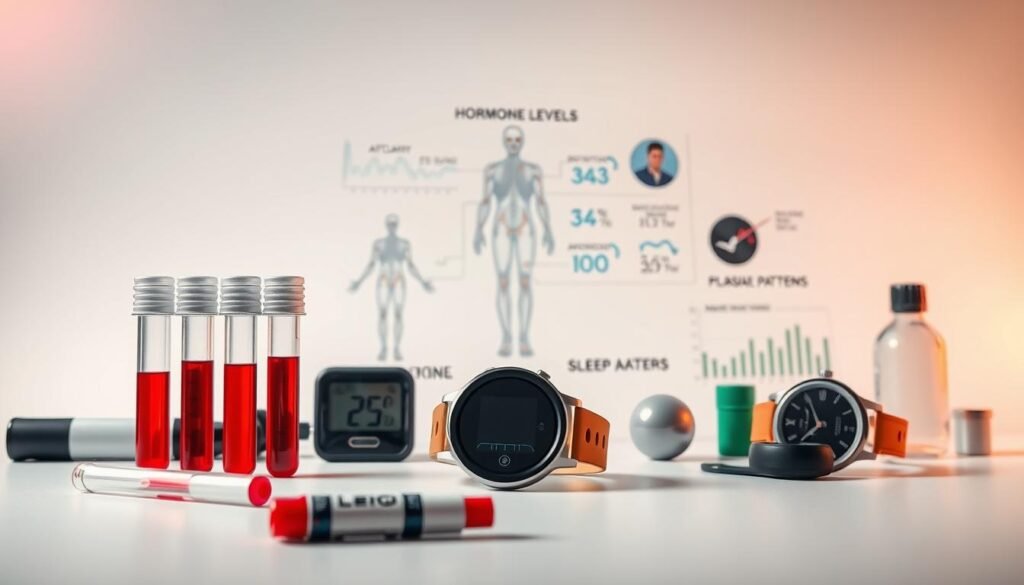
Start with a focused panel: pair cortisol and testosterone to assess catabolic–anabolic balance. Add CRP for inflammation, ferritin and B12 for oxygen and energy, magnesium for nerve and muscle function, and creatine kinase to gauge muscle damage.
Testing on a simple schedule
Use a baseline before a training block, a peak test mid-cycle, and a recovery test 1–2 weeks after. Time-based trends beat single numbers when you want to see how the body adapts.
Reading results in context
A falling testosterone:cortisol ratio, rising CRP, or low ferritin alongside flat workouts suggests the body is struggling. Temporary CK bumps are normal after heavy sessions; persistently high CK with sore muscles signals poor repair and higher injury risk.
Immune and nervous system clues
Repeated colds and white cell shifts often mean training stress is suppressing defenses. Track morning heart rate and HRV alongside labs to link physiological changes to sleep, stress, and exercise impact.
- Act on trends: cut load, add rest, correct iron if ferritin is low, then retest.
- Sports note: endurance athletes should monitor hemoglobin and ferritin due to red-cell loss from repetitive impact.
Designing Training That Protects Hormones
Build a schedule that balances challenge with deliberate recovery. A clear plan helps the body adapt, keeps energy steady, and preserves long-term performance.
Periodization essentials
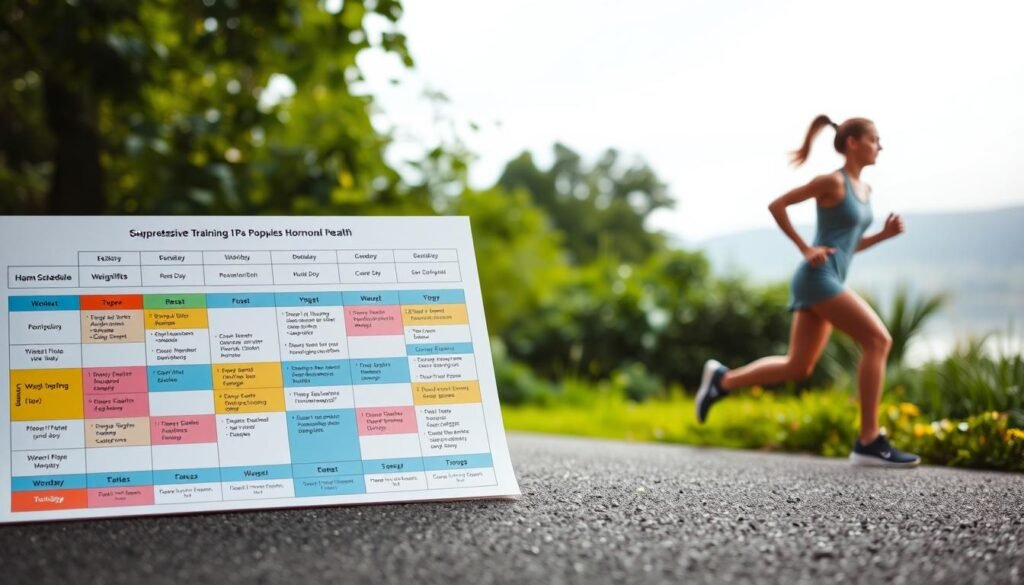
Use blocks with lighter weeks every 3–4 weeks and scheduled cutback cycles. This structure reduces cumulative stress and limits persistent drops in performance.
Plan deloads and post-race rest before a block starts so recovery doesn’t get skipped when motivation is high.
Rest days and active recovery
Protect at least one full rest day each week and one active recovery day. Gentle yoga, walking, or mobility sessions boost circulation without taxing the body.
Mixing intensities
Alternate hard and easy sessions so quality efforts stay rare and effective. Keep most workouts at a sustainable pace and reserve true maximal work for targeted sessions.
Using HR and RPE
Use heart rate and rate of perceived exertion to manage intensity. Aim to keep most sessions comfortably below HRmax (220 – age) and avoid constant redline training.
“Match load to life: trim duration or intensity during high-stress weeks so total stress stays manageable.”
- Track response: check how you feel 24–48 hours after key sessions and add rest if energy or recovery lags.
- Vary modalities: blend strength, aerobic base, and mobility to spread stress across the body and support fitness.
Recovery Stack: Sleep, Nutrition, and Stress Management
Good recovery turns hard sessions into lasting gains by restoring energy and repairing muscle. Stack sleep, targeted nutrition, and daily stress tools so the body adapts instead of accumulating fatigue.
Sleep to boost growth hormone and repair
Make sleep non-negotiable. Deep sleep pulses growth hormone that repairs muscle and restores energy. Aim for consistent 7–9 hours and a wind-down routine that actually sticks.
Fueling recovery: protein, carbs, and key micronutrients
Post-exercise meals matter: center on protein to rebuild muscle and carbs to refill glycogen. Prioritize calories that match training load and include iron, vitamin C, magnesium, B vitamins, zinc to support tissue and immune function.
Lowering cortisol: mindfulness, breathwork, and lifestyle balance
Tame daily stress with short practices. Three to ten minutes of mindful breathing on lighter days lowers cortisol and helps the body shift into rest. Use evenings to reduce stimuli and protect sleep quality.

- Keep an eye on levels: track ferritin and magnesium; correct deficits with diet or guided supplements when needed.
- Plan recovery time: schedule weekly rest days and longer breaks after race or hard blocks so exercise converts to adaptation.
- Layer gentle activities: light yoga, walking, and mobility improve circulation without adding stress.
- Track what works: rate sleep quality and next-day energy; if workouts feel flat, add rest and revise routines.
The stack effect matters: when sleep, nutrition, and stress management move together, recovery accelerates and hormones stabilize. For practical rest guidance see rest and recovery.
Tailoring Your Approach: Different Athletes, Different Needs
Every athlete’s plan should match their sex, age, and event to protect long-term performance. Small adjustments in load and recovery keep fitness rising instead of falling.

Women’s care: menstrual function, estrogen balance, and training phases
Menstrual changes and irregular periods can signal energy shortfalls and estrogen imbalance. If cycles shift, lower intensity, add calories, and prioritize rest days.
Cycle-aware training works well: favor strength and higher-intensity work in the follicular phase and move to skill, mobility, or lower-intensity sessions late luteal when energy drops.
For a practical framework, consider cycle-syncing to align load with physiological shifts.
Men and aging: maintaining testosterone with strength work
Men can protect testosterone levels by prioritizing progressive strength and compound lifts. Heavy, well-paced resistance training supports muscles, bone density, and drive as you age.
Watch for falling strength or libido—these are early signs to add rest days and reassess load.
Endurance athletes: hemoglobin, iron, and VO2 Max impacts
Long-distance sports can lower ferritin and hemoglobin through red-cell damage and GI losses. That drop reduces oxygen delivery and clips VO2 Max.
Monitor ferritin and hemoglobin; correct low levels to restore performance and limit chronic fatigue.
When to scale back: chronic fatigue, nervous system strain, and overtraining syndrome
If chronic fatigue or nervous system strain persists for weeks, treat it as a red light. Dial training down before overtraining syndrome develops.
- Rotate modalities so different tissues share the load.
- Personalize recovery: some bodies need more days between hard sessions; check how you feel 24–72 hours after workouts.
- Track trends: cycle changes, morning heart rate, sleep quality, and session RPE often warn you early.
“Scale back sooner rather than later—short rest prevents long losses.”
Conclusion
Rest is part of progress; planned recovery protects performance and prevents long setbacks.Act early on warning signs to save weeks of lost fitness and accelerate true recovery.
If workouts feel heavy and motivation wanes, a short, planned break often restores progress faster than pushing through. Start with a few days of rest, then move to light activities like walking, yoga, or gentle jogging as tolerated.
True recovery from deep overtraining often needs 4–6 weeks or more. Track sleep, mood, and energy; use labs for cortisol, testosterone, CRP, ferritin, B12, magnesium, CK to guide return-to-training decisions.
Prevention beats cure: monitor training load, act on early symptoms overtraining, prioritize sleep, nourishing food, and low-stress recovery days to keep gains on track.
FAQ
What happens to stress hormones when training volume is too high?
Chronic high training load raises cortisol and can keep it elevated across days, which drives catabolic processes, impairs sleep, and blunts recovery. Over time that persistent stress response can reduce anabolic signaling from testosterone and growth hormone, leaving you fatigued, sore, and less resilient to workouts.
How can I tell the difference between normal soreness and a problem that needs rest?
Normal muscle soreness peaks 24–72 hours after hard work and improves with light movement and sleep. Concerning signs include spreading pain, increasing creatine kinase, persistent weakness, repeated injuries, or soreness that worsens with rest. Those suggest inadequate recovery or excessive training stress and merit scaling back.
Which objective tests help track whether training is harming the body?
Useful markers are morning cortisol (trends), free or total testosterone in men, CRP for inflammation, ferritin for iron stores, vitamin B12 and magnesium for energy/metabolism, and creatine kinase for muscle breakdown. Repeated measurements over weeks are more informative than single tests.
How often should I include full rest days in my program?
Most people benefit from at least one full rest day per week plus 1–2 lighter recovery days in heavy phases. Periodized plans add reduced-load weeks every 3–6 weeks and a deload or recovery block every 6–12 weeks depending on intensity and goals.
What training signs suggest the nervous system is stressed rather than the muscles?
Nervous-system strain shows up as prolonged performance drops, slowed reaction times, poor coordination, elevated resting heart rate, mood changes, poor sleep, and loss of motivation. Those differ from local muscle fatigue, which is typically task-specific and improves with targeted rest.
Can sleep fix hormone disturbance from too much training?
Sleep is essential—deep sleep supports growth hormone release and testosterone restoration. Improving sleep quality can reverse mild hormonal disruption, but severe or chronic stress from training also needs reduced load, nutrition, and stress management to fully recover.
What nutritional steps support recovery and anabolic balance?
Prioritize daily protein (20–40 g per meal), carbs around hard sessions to restore glycogen, and sufficient calories overall. Address iron (ferritin), B12, vitamin D, and magnesium if low. Small, frequent protein with carbs after sessions helps blunt catabolism and support repair.
How should athletes monitor training intensity to protect hormones?
Use heart-rate zones, rate of perceived exertion (RPE), and weekly training load. Keep most sessions at manageable intensities, reserve high-intensity efforts for planned days, and avoid consecutive days of maximal work. Track resting heart rate and HR variability for early warning signs.
Are women affected differently by heavy training loads?
Yes. Intensive training can disrupt menstrual cycles and estrogen balance, signaling low-energy availability or endocrine strain. Monitoring cycle regularity, energy, and bone health is crucial; adjustments to energy intake and recovery often restore normal function.
When should I see a clinician about persistent fatigue or reduced performance?
Seek evaluation when fatigue lasts several weeks despite rest, symptoms include disrupted sleep, loss of libido, unexplained weight change, recurrent infections, or abnormal lab results (low ferritin, abnormal cortisol/testosterone). A clinician can rule out medical causes and advise a recovery plan.
What role does mental stress play in physical recovery and hormones?
Psychological stress amplifies physiological stress, raising cortisol and slowing repair. Practices like mindfulness, breathwork, and structured off-days reduce sympathetic drive and help normalize hormone patterns, improving training tolerance and mood.
How quickly do hormones recover after reducing training load?
Mild disturbances often improve within 1–3 weeks of reduced intensity and improved sleep/nutrition. More severe or chronic dysregulation may take months and require staged return-to-training, targeted labs, and sometimes specialist care for full recovery.
Can light activity be helpful during recovery weeks?
Yes. Active recovery—walking, mobility work, gentle cycling, restorative yoga—boosts circulation, aids clearance of metabolites, supports parasympathetic tone, and preserves movement patterns without adding significant stress.
How do endurance and strength athletes differ in risk and recovery needs?
Endurance athletes face prolonged metabolic stress and higher risk of iron depletion and immune suppression; they need careful caloric and iron management. Strength athletes tolerate high loads but may accumulate CNS fatigue from frequent maximal lifts; they benefit from heavier emphasis on deloads and neuromuscular recovery.
What are simple daily checks I can use to spot trouble early?
Track morning resting heart rate, sleep quality, mood/motivation, appetite, and training RPE. Sudden rises in resting heart rate, poor sleep, low motivation, or unusually high perceived exertion for normal sessions are early red flags to ease off.