


Which eating pattern actually helps you feel better, perform well, and stick with it for life? That question cuts through marketing claims and invites practical answers.
Many people assume labels tell the whole story, but food quality matters more than a brand name. Some ultra-processed products are marketed as healthy even when they are not. Conversely, thoughtful approaches can blend more plants with animal foods, echoing long-term research on ancestral eating that found many traditional patterns were roughly 65% plants and 35% animal foods.
This guide sets an unbiased stage to compare these diets by focusing on real-world nutrition, health outcomes, and simple meal building. It uses clinical insight and studies to cut through greenwashing and give you tools to choose a sustainable way to eat.
Key Takeaways
- Labels don’t guarantee quality—prioritize whole food choices over buzzwords.
- Both approaches can be healthy or unhealthy depending on how you build meals.
- Research shows many ancestral diets were plant-forward, not exclusively meat-based — see this diet ranking and context.
- Practical tips and examples will help match a diet to your goals and lifestyle.
- Find sustainable strategies and tools for real people, including meal ideas and resources like a targeted supplement guide at supercharge your plan.
The present-day debate: why Plant-Based and Paleo dominate diet conversations in the United States
The debate centers on clarity and identity: people want actionable rules amid information overload, and these two approaches offer clear narratives.
Both appeal to values—ancestral roots on one side and plant-forward health on the other—so they gain attention quickly.
Across social feeds and grocery aisles, two major eating approaches dominate headlines and product launches. Influencers and paid campaigns amplify simple messages, which helps sell products fast.
Plant-based grew in popularity after high-profile books and media coverage reframed observational data from the 1980s. Over the years the term widened to mean different things, sometimes equating to vegan, which confuses readers.
Marketing blurs the lines: labels that say plant-based or ancestral-friendly can hide ultra-processed ingredients. Not every product with a healthy tag supports health.
Studies are cited on both sides, yet context matters more than a single paper. Food quality, processing, and overall dietary patterns change outcomes far more than label wars do.
- Why these diets lead: clear rules, strong values, and easy branding.
- Marketing effect: products can mislead; inspect ingredient lists.
- Evidence matters: trust clinical trials and systematic reviews over anecdotes.
Over the years, terms shifted and public meaning drifted. For readers, the smart move is to follow trusted sources and judge diets by whole-food quality, not slogans.

| Driver | Why it matters | What to watch | Practical tip |
|---|---|---|---|
| Social media | Drives trends quickly | Influencer claims | Cross-check with reputable sources |
| Product labeling | Shapes purchase choices | “Healthy” on ultra-processed items | Read ingredient lists |
| Scientific studies | Inform guidelines | Context and study type | Prefer trials and reviews |
| Public language | Changes meaning over years | Terms merge or shift | Clarify definitions before choosing |
Nutritionist Plant-Based vs Paleo: What’s the Difference?
Understanding real food rules helps you judge diets beyond clever labels. Clear definitions make choosing easier and help you build meals that match health goals.
Defining terms: plant-based, vegan diet, and paleo diet
Plant-based describes a flexible approach that centers on plants but can include small amounts of animal foods. A vegan diet excludes all animal-derived products for ethical or environmental reasons.
The paleo diet focuses on unprocessed items: fruits, vegetables, nuts, seeds, eggs, seafood, and meats—ideally grass-fed or wild-caught. It excludes grains, legumes, dairy, refined sugar, and many vegetable oils.

What to eat and what to avoid
- Plant-forward foods: vegetables, fruits, whole grains, legumes, nuts, seeds, tofu, tempeh.
- Paleo staples: seafood, eggs, lean meats, nuts, seeds, tubers, olive or walnut oil.
- Avoid: refined sugar and ultra-processed foods; paleo excludes most grains and legumes; plant-based approaches minimize animal and dairy depending on preference.
Common misconceptions
Not all plant-based products are healthy—many processed snacks are technically plant-derived. Likewise, the paleo pattern can be largely plant-forward; anthropological data often show ~65% plant intake in ancestral diets.
| Focus | Key inclusions | Key exclusions |
|---|---|---|
| Plant-forward | whole grains, legumes, vegetables | minimize animal/dairy as chosen |
| Paleo | meat, fish, nuts, tubers | grains, legumes, dairy |
For a practical breakdown and to compare approaches, use a simple plate: half vegetables, a quarter protein, and a quarter starch or grains (or tubers on paleo).
Health outcomes compared: weight loss, cardiometabolic health, and inflammation
Clinical studies help us compare effects on weight loss, cholesterol, and inflammatory markers. Both patterns can improve body composition when they cut refined foods, but the mechanisms differ.

What trials show about weight and body fat
A meta-analysis reported that paleo diets can reduce body weight. A two-year randomized trial in obese postmenopausal women found sustained weight and fat loss with a Palaeolithic-style plan.
Community trials of whole-food, Plant-Based approaches (BROAD, GEICO) also show significant weight loss and better cardiometabolic markers without strict calorie counting.
Cardiovascular markers and inflammation
Observational research links plant-forward patterns to lower LDL and lower blood pressure. Paleo-style interventions can improve some markers when they prioritize vegetables, seafood, and remove refined items.
Nutrients to watch
- Fiber and microbiome: legumes and whole grains aid glycemic control and satiety.
- Protein: varied plant proteins meet needs; animal sources supply complete protein but favor fish and reduce processed meats.
- Fats: emphasize unsaturated fats from nuts, seeds, olives, and fish; limit saturated and trans fats.
Individual responses vary. Monitor labs (lipids, CRP, A1C) and adjust intake of animals and red meat based on results. Start plant-forward and personalize with evidence-informed choices.
Food quality and processing: why ingredients and sourcing matter more than labels
What matters most is how food is processed and sourced, not the badge on the front of the box. Short ingredient lists and whole ingredients give a clearer picture of nutrient value than marketing claims.

How greenwashing hides sugar and refined carbs
“Plant-based” or “made with whole grains” can be misleading. Many ultra-processed items look healthy but are high in added sugar and refined starches. Check labels: long ingredient lists, added sugar, and unfamiliar additives are red flags.
Picking better proteins and fats
Favor whole plant foods like legumes, intact grains, fruits, vegetables, and nuts over packaged products. For protein upgrades, choose seafood rich in omega-3s, legumes, or tofu/tempeh instead of red or processed meats.
- Fat choices: extra-virgin olive oil, avocado, walnuts, flax or chia.
- Avoid: frequent deep-fried items and highly refined seed oil where possible.
Whole foods deliver more vitamins and minerals than ultra-processed options, and simple cooking—roasting vegetables, simmering legume stews, grilling fish—protects nutrients and flavor.
For context on ancestral patterns and sourcing, see this analysis of ancestral diets.
Sustainability signals: grains, oils, and animal foods in context
Sourcing matters: the climate impact of a food often comes down to where and how it is produced. Simple rules — favor regional plants, choose certified oils, and prefer limited, well-sourced animal foods — help align nutrition with sustainability.
The best evidence shows wide variation across regions. A long-term emissions analysis (1967–2017) flagged Indonesian rice, Brazilian soy, Brazilian beef cattle, Chinese rice, and Brazilian corn among top agricultural emitters. That study makes one point clear: environmental impact is not simply plants = good and animals = bad.
Emissions aren’t one-size-fits-all
Look at production method and place. Grains grown in water-intensive or deforested regions can have high footprints. Likewise, some animal systems raised on degraded land raise concerns, while well-managed, regenerative operations can differ.
Oils and origin matter
Palm oil sustainability depends on origin. Malaysian palm certified by RSPO or MSPO often supports better outcomes. In contrast, production in poorly protected areas has been linked to habitat loss.
- Practical tips: diversify grains and seasonal plants to cut transport and resource intensity.
- Check certifications: prefer RSPO/MSPO for palm and recognized labels for seafood and meat.
- Reduce waste: whole-food meals and fewer ultra-processed items lower embedded resources and emissions.
| Item | Noted high emitters (1967–2017) | Action |
|---|---|---|
| Rice | Indonesia, China | Choose regional varieties and water-smart producers |
| Soy & Corn | Brazil (soy, corn) | Prefer non-deforestation sources and crop rotation |
| Beef | Brazilian beef cattle | Limit intake; favor regenerative or local small-scale producers |
| Palm oil | Varies by origin | Buy RSPO/MSPO-certified or choose alternative oils |
In short, use labels and research to check sources and certifications. Balancing nutrition and sustainability means choosing minimally processed foods, smarter oil choices, diverse grains, and modest amounts of higher-quality animal products when needed.
Which diet fits your goals? Matching lifestyles, health needs, and preferences
Pick the pattern that helps you lose weight, protect heart health, and keep daily energy steady. Choose a plan that fits cooking habits and lab results so you can stick with it long term.
What many clinicians recommend for weight loss and heart outcomes is a plant-forward approach. Fiber from whole grains and legumes improves satiety and lowers blood pressure and cardiovascular risk in trials like BROAD and GEICO. At the same time, a paleo-style plan can support weight control if it centers on vegetables, seafood, and avoids ultra-processed products.
If your focus is weight loss and heart health: why many practitioners lean plant-forward
Fiber, volume, and low saturated fat matter. Whole grains, legumes, fruits, nuts, and vegetables fill plates and slow digestion. That increases fullness and helps control weight without strict calorie counting. Seafood and small amounts of lean protein keep omega-3s and micronutrients in play.
Practical path: a sample plant-forward day and Paleo-friendly swaps without ultra-processing
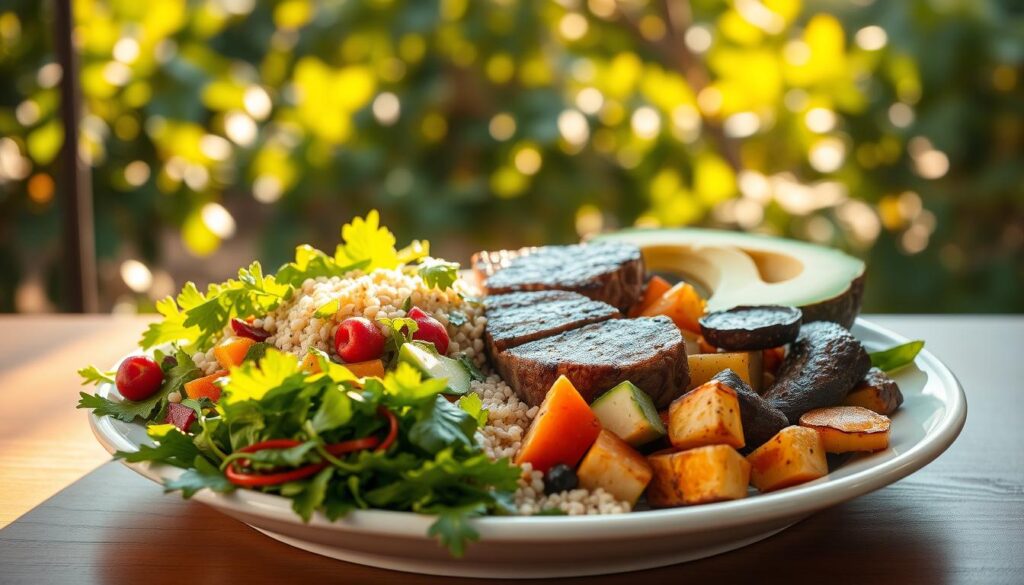
Sample day: breakfast oatmeal with berries and walnuts; lunch lentil-vegetable soup and a big salad; snack apple with peanut butter; dinner tofu stir-fry with brown rice; dessert citrus and herbal tea.
Paleo-friendly swaps: roast sweet potato or winter squash instead of grains; cauliflower “rice” under sautéed vegetables and shrimp; use extra-virgin olive oil and avocado in place of creamy sauces.
- Protein planning: mix legumes, tofu/tempeh, and occasional seafood for plant-forward eaters; choose fish, eggs, and nuts/seeds for paleo-focused plates.
- Plate balance: half vegetables, a quarter protein, a quarter smart carbs (intact whole grains or starchy vegetables), then adjust to activity and weight goals.
- Practical benefits: simpler grocery lists, faster meal prep, and easier choices when dining out.
Track weight trends, energy, digestion, and basic labs to personalize. Minimize ultra-processed items and sugary products — that change brings big health benefits across any diet. For a deeper look at low-carb and ancestral options, see this diet lifestyle resource.
Conclusion
Sustainable eating starts with whole foods, simple rules, and tracking how your body feels and your labs respond. Focus on vegetables, fruits, legumes or seafood, modest meat portions, and cut added sugar and ultra-processed products.
Start with a plant-forward base and add paleo-style swaps if you prefer fewer grains—use whole grains when they support activity and starchy vegetables on grain-free days.
Prioritize seafood and varied plant proteins, limit processed meats, and choose healthy oils. Monitor weight, lipids, and inflammation to personalize intake of animal foods and fats.
Choose responsibly sourced ingredients for lower environmental impact and aim for nutrient density over labels. Try the plan for several weeks, reassess results, and adjust to build a way of eating that you can maintain for life.
FAQ
What’s the core difference between a plant-forward (plant-based) approach and a Paleo-style way of eating?
The main distinction is what each emphasizes and limits. A plant-forward approach centers whole plant foods — vegetables, fruits, whole grains, legumes, nuts, and seeds — while minimizing or eliminating animal products and processed foods. A Paleo-style pattern focuses on foods presumed available to Paleolithic humans: meats, fish, eggs, vegetables, fruits, nuts, and seeds, and usually excludes grains, legumes, and dairy. Both can prioritize whole foods, but their protein and carbohydrate sources differ.
Can a plant-forward diet be unhealthy — and can Paleo be plant-rich?
Yes to both. Highly processed plant-based foods (mock meats, sugary snacks) can be calorie-dense and nutrient-poor. Conversely, many people follow a Paleo pattern that is largely vegetables, fruit, seafood, and nuts and looks plant-forward. Quality matters more than the label: whole foods, minimal added sugar, and limited ultra-processed items produce the best health signals.
Which approach is better for weight loss?
Both can lead to weight loss if they create a calorie deficit and improve diet quality. Trials show modest weight benefits for Paleo in some short-term studies and consistent weight and cardiometabolic improvements for whole-food, plant-focused plans over longer periods. Practical adherence, portion control, and food quality often determine long-term success more than the specific label.
How do these diets compare for heart disease and blood pressure?
Evidence favors diets rich in whole plant foods for long-term cardiovascular risk reduction — lower LDL cholesterol, improved blood pressure, and reduced inflammation. Diets that include lean fish, nuts, and healthy oils (as seen in many plant-forward and balanced Paleo patterns) also offer benefits. Avoiding processed meats, excess saturated fat, and added sugars helps in either approach.
Are there nutrient shortfalls to watch for on each plan?
Yes. On plant-forward plans, watch vitamin B12, iron (absorption), vitamin D, omega-3 EPA/DHA, and sometimes calcium and iodine if dairy or seafood are limited. On Paleo-style plans that remove whole grains and legumes, monitor dietary fiber, folate, and some B vitamins. Both can meet needs with careful food choices, fortified foods, or supplements when indicated.
Should whole grains and legumes be avoided for health reasons?
For most people, whole grains and legumes are beneficial: they provide fiber, micronutrients, and lower cardiometabolic risk in large studies. Some individuals with specific conditions (e.g., celiac disease, certain intolerances) need to avoid them. Excluding grains and legumes is a core Paleo choice, but it’s not required for health for the general population.
How important is food processing and ingredient sourcing?
Very important. Ultra-processed foods — whether plant-based patties or packaged snacks — often add sugar, refined oils, and additives that undermine health. Sourcing matters too: sustainably produced seafood, responsibly raised meats, and minimally processed oils reduce environmental and health trade-offs. Focus first on whole, minimally processed items.
What protein and fat choices are recommended across both patterns?
Emphasize seafood (rich in omega-3s), legumes and tofu (for plant-forward plans), nuts and seeds, and extra-virgin olive oil or other minimally processed oils. Limit processed and red meats. Paleo followers often choose grass-fed or wild-caught options; plant-forward eaters may prioritize legumes, whole soy foods, and mixed plant proteins.
How do environmental and sustainability concerns influence the choice between these diets?
Sustainability varies by food and region. Generally, whole plant foods have lower greenhouse gas emissions per calorie than ruminant meat, but production methods, location, and crop type matter. For example, rice and certain oils have higher footprints in some contexts. Balancing reduced red meat, choosing lower-impact animal proteins (like small fish), and selecting sustainably produced plant foods improves the overall profile.
Can someone combine elements of both plans? What does a practical hybrid day look like?
Absolutely. Many people adopt a plant-forward day that includes high-quality animal protein a few times weekly. A practical hybrid day: oatmeal with berries and walnuts for breakfast, a large mixed-vegetable salad with grilled salmon for lunch, a snack of hummus and raw veggies, and a dinner of roasted vegetables with a lean roast or a legume-based stew. This keeps fiber high, includes omega-3s, and avoids ultra-processed items.
How should I choose between these approaches based on my health goals?
Match the plan to your goals, preferences, and medical needs. For cardiometabolic risk reduction and sustainable weight management, many clinicians recommend a plant-forward style emphasizing whole grains and legumes. If you tolerate grains and legumes poorly or prefer a lower-carb approach, a well-designed Paleo pattern can work. Prioritize nutrient density, reduce processed foods and added sugars, and consult a registered dietitian or clinician for personalized guidance.
Are supplements necessary with either diet?
Not always, but sometimes. Vitamin B12 is commonly recommended for people minimizing animal products. Vitamin D, iodine, and omega-3 supplements may be useful depending on intake and blood tests. Those excluding whole grains and legumes should monitor fiber and micronutrients. Personalized testing and professional guidance help determine needs.
Where can I find reliable information and studies about these diets?
Trust peer-reviewed research and authoritative sources: PubMed, the National Institutes of Health (NIH), the American Heart Association, Mayo Clinic, and university (.edu) or government (.gov) publications. Look for randomized trials, systematic reviews, and meta-analyses rather than single anecdotes or marketing claims.




Don’t Miss These Picks