

Can red light therapy before bed help you fall asleep faster and wake up feeling more refreshed? That was the question behind a two-week evening experiment using low-brightness red light, a consistent bedtime routine, and sleep tracking.
The notes suggested slightly faster sleep onset on some nights, but the results were mixed. There were also evenings when the light seemed to increase alertness rather than encourage relaxation. That matters because red light is not automatically better for sleep than complete darkness.
The available account describes these changes but does not include a complete table of numerical wearable scores. So, it cannot establish exactly how much sleep improved. Here is what the two-week observations suggest, how they compare with published research, and how to evaluate red light safely.
Key Takeaways
- Red light may be less disruptive than blue-rich light, but it can still affect alertness, mood, and sleep.
- The two-week observations were mixed. Some nights suggested quicker sleep onset, while others involved increased alertness or more awakenings.
- Darkness may be better. A controlled study found that sleeping outcomes were generally better with darkness than with pre-bed red light.
- Brightness and timing matter. A dim bedside lamp is different from a powerful red light therapy panel.
- Track your actual sleep. Compare several nights of sleep duration, time to fall asleep, awakenings, and morning energy rather than trusting a single wearable score.
Helpful Products at a Glance
For adjustable red bedside lighting, the Aoife 670nm Red Light Bedside Lamp offers multiple brightness settings and a timer. It is a lighting option, not a proven treatment for insomnia.
- 670nm Gentle Red Light Feature: Built with standard 670nm red light wavelength, delivering soft and mild red glow for indoor bedside use, adopting professional light configuration for daily home lighting decoration
- 4 Lighting Modes & Smooth Dimming: Switch between red light for sleep, warm white, natural white, and cool white. Includes 10 brightness levels and stepless dimming—customize your ideal sleep light red experience, whether winding down at night or waking gently

Why Try Red Light Before Bed?
Evening light helps tell your brain whether it is time to stay awake or prepare for sleep. Bright screens, overhead lights, and other blue-rich sources can interfere with that nighttime signal.
Red light attracted interest because the cells that help regulate our body clock are less sensitive to longer red wavelengths. The idea is simple: replace bright evening lighting with something gentler without giving up all visibility.
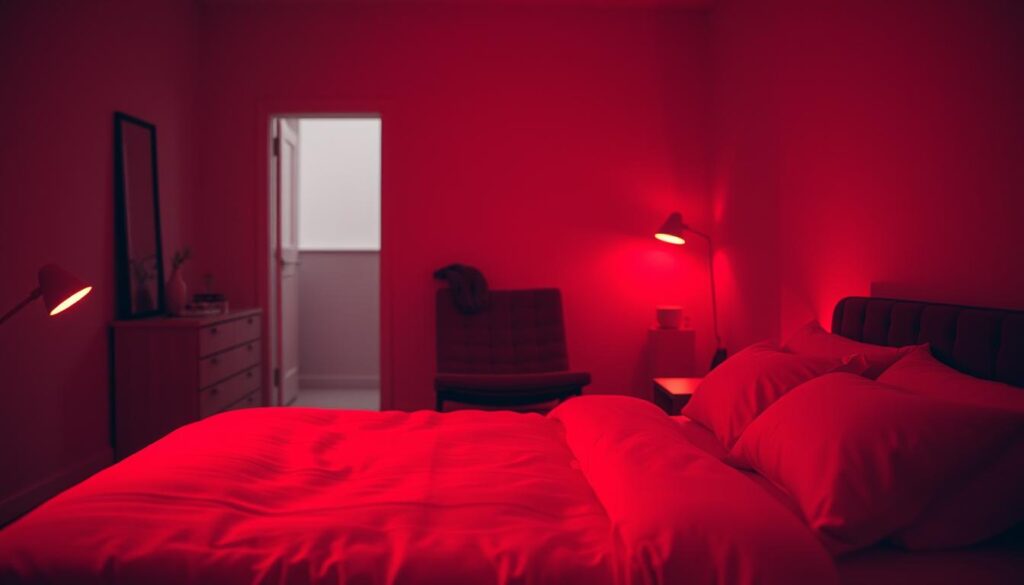
The original two-week routine focused on three questions:
- Falling asleep: Did the time between lights-out and sleep become shorter?
- Staying asleep: Were there fewer awakenings and more consistent sleep periods?
- Morning recovery: Was it easier to feel awake and ready for the day?
These questions are more useful than asking whether red light feels relaxing. Something can feel pleasant without producing a measurable improvement in sleep.
How Red Light and Blue Light Affect Sleep
Your body follows a roughly 24-hour internal clock called the circadian rhythm. Light entering your eyes helps synchronize this clock with day and night.
Special cells in the retina, called intrinsically photosensitive retinal ganglion cells (ipRGCs), are particularly responsive to blue wavelengths near 480 nanometers (nm). Their signals help regulate melatonin, a hormone involved in nighttime timing.
Does red light preserve melatonin?
Visible red light, roughly 620–700 nm, generally produces a weaker circadian response than blue-rich light under comparable conditions. However, its effects depend on the amount of light reaching your eyes, the exposure duration, and your individual sensitivity.
- Blue-rich light: Often produces stronger alerting and melatonin-suppressing effects at night.
- Dim red light: May provide visibility with less circadian stimulation than brighter blue-rich lighting.
- Bright red light: Can still increase alertness and affect sleep, especially close to bedtime.
- Darkness: Removes unnecessary visual light exposure and is generally preferable during sleep.
An expert consensus on healthy light exposure recommends a maximum of 10 lux of melanopic equivalent daylight illuminance during the three hours before bedtime.
That is not the same as ordinary lux. Melanopic illuminance considers how strongly a light stimulates the circadian system. A phone’s basic lux meter app cannot reliably measure this effect, especially for narrow-spectrum red light.
Red Night Lights vs. Red Light Therapy Panels
Not every red-colored lamp delivers therapeutic red light. There are important differences between gentle room lighting and photobiomodulation, a treatment approach that exposes tissues to specific wavelengths of light.
| Device type | Main purpose | Bedtime consideration |
|---|---|---|
| Dim red bedside lamp | Low-brightness room lighting | Useful when some visibility is needed |
| Red therapy panel, often around 660 nm | Targeted exposure to body tissues | May be too intense for comfortable bedtime lighting |
| Near-infrared panel, often around 850 nm | Tissue exposure using largely invisible light | Requires device-specific safety precautions |
A therapy panel’s wavelength alone does not determine a safe sleep routine. Its power, treatment distance, and exposure instructions also matter. Research involving whole-body red light therapy cannot automatically be applied to a small bedside lamp.
For someone mainly interested in reducing harsh evening lighting, a regular dimmable lamp may be more practical than purchasing a high-intensity therapy panel.
My Two-Week Red Light Routine
The described home routine used short evening sessions rather than the brighter, one-hour exposure used in some sleep laboratories. Its main strength was consistency, although several other relaxing habits were used at the same time.
Timing, distance, and room setup
- Schedule the session: Use approximately 20–30 minutes of exposure, beginning about 60–90 minutes before the planned bedtime.
- Keep the light comfortable: Use a low setting, position the lamp away from direct eye level, and follow the manufacturer’s distance guidance.
- Reduce competing light: Turn off overhead lighting and limit bright phone or television screens.
- Wind down: Pair the session with quiet reading, gentle stretching, or slow breathing.
- Turn the light off: Keep the sleeping environment dark rather than leaving the device operating overnight.
The original account mentions checking brightness with a phone app and aiming for approximately 10 conventional lux. That measurement should be treated as an approximate brightness check, not proof of compliance with the 10-melanopic-lux recommendation.
Another limitation is that breathing exercises, reduced screen time, and a consistent bedtime may improve sleep independently. Changes during a home experiment cannot confidently be attributed to the lamp alone.
How Sleep Quality Was Tracked
Sleep scores can be helpful, but knowing what each measurement means is more important than watching one number rise or fall.
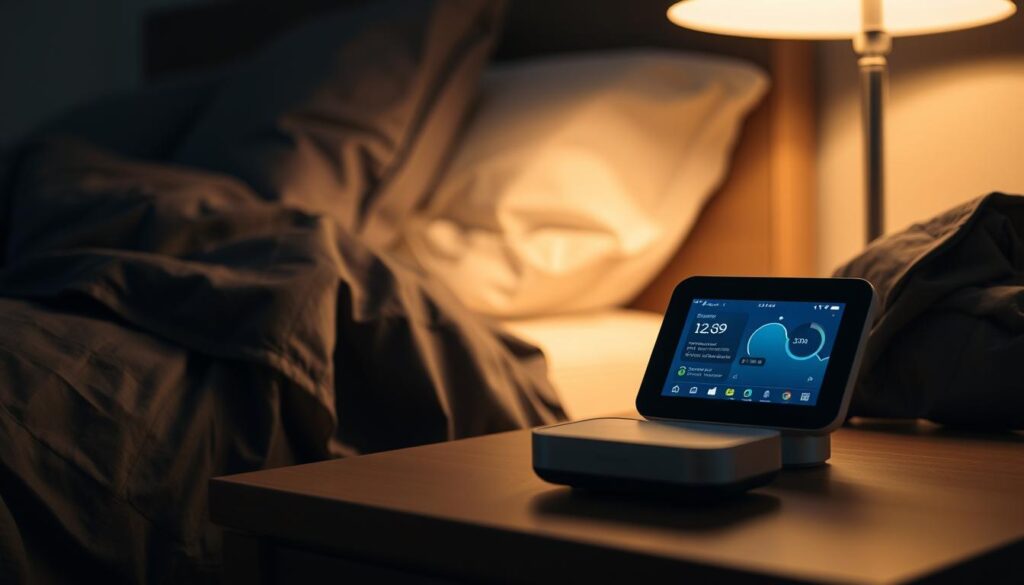
The described approach combined consumer wearable estimates with subjective notes about sleepiness, mood, and morning alertness.
| Sleep metric | What it tells you |
|---|---|
| Sleep onset latency (SOL) | How long it takes to fall asleep |
| Total sleep time (TST) | Estimated minutes actually spent sleeping |
| Sleep efficiency (SE) | Percentage of time in bed spent asleep |
| Wake after sleep onset (WASO) | Time spent awake after initially falling asleep |
| REM and light sleep | Estimated sleep stages, with limited wearable accuracy |
A laboratory sleep study uses brainwave recordings and other measurements to identify sleep stages and brief arousals. Most consumer wearables estimate them using movement, heart rate, or related signals. A wearable cannot reliably identify true EEG-defined microarousals.
It also helps to record caffeine, exercise, stress, alcohol, bedtime, and wake time. Otherwise, an especially good or bad night can easily be mistaken for a light-related effect.
Two-Week Results: What the Sleep Notes Showed
The observations suggested modest changes, not a dramatic improvement. They are best viewed as personal impressions because complete numerical scores and baseline averages were not supplied.
Week 1: Falling asleep sometimes felt easier
During the first week, several nights were described as having shorter sleep onset. The wearable estimates appeared consistent with the impression of falling asleep more easily.
However, some sessions were followed by increased alertness. That mixed response made it difficult to say whether the red light itself was helpful.
Week 2: More consistent nights, but not a proven improvement
The second week was described as somewhat steadier. Earlier, dimmer sessions seemed to coincide with fewer disturbances, while later or brighter evenings were associated with less settled sleep.
Morning alertness also varied. Some mornings felt better, but the improvement was not consistent enough to establish a clear effect.
Week-by-week summary
| Observation | Week 1 | Week 2 |
|---|---|---|
| Falling asleep | Faster on several nights | Possible small improvement |
| Sleep efficiency | Variable | Reported as more stable |
| Awakenings | Occasional disturbances | Reported as fewer on dimmer nights |
| Morning alertness | Inconsistent | Mixed, with some better mornings |
What these results cannot tell us: Without actual before-and-after values, there is no reliable percentage improvement to report. A two-week personal experiment also cannot separate the effect of red light from other changes in evening behavior.
What Published Research Says About Red Light and Sleep
The scientific evidence provides a more useful comparison because researchers can measure sleep directly and control some of the variables affecting the results.
A 2023 clinical study found mixed effects
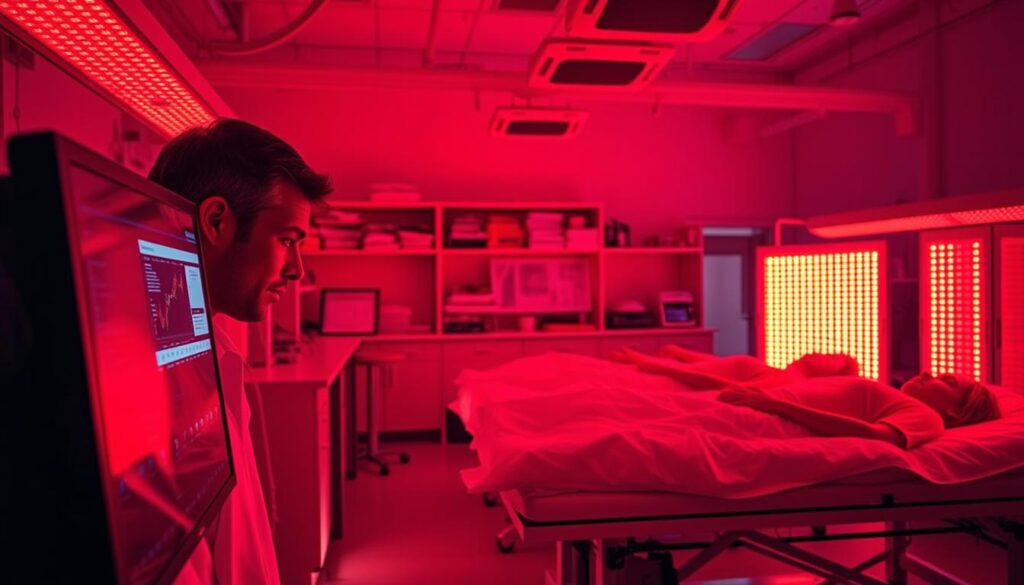
A 2023 study published in Frontiers in Psychiatry included 57 healthy participants and 57 people with insomnia symptoms. Researchers compared one hour of red light, white light, or darkness before bedtime, then measured sleep using polysomnography.
Among healthy participants, red light was associated with faster sleep onset than white light. But compared with darkness, red light produced shorter total sleep time, lower sleep efficiency, and more signs of sleep fragmentation.
The healthy-group results included these measurements:
| Sleep metric | Red light | Darkness |
|---|---|---|
| Sleep onset latency, median | 4.5 minutes | 4.5 minutes |
| Total sleep time, mean | 386.3 minutes | 446.2 minutes |
| Sleep efficiency, median | 88.5% | 93.7% |
These are published laboratory group measurements, not scores from the two-week home experiment.
For participants with insomnia, red light improved certain sleep measures compared with white light. However, darkness generally performed better, and red light was linked to increased anxiety or negative emotions in some participants.
Importantly, these were group comparisons from a short laboratory intervention. They do not prove that every person will respond in the same way.
What about the two-week athlete study?
A 2012 study involving 20 female basketball players compared 30 minutes of nightly whole-body red light exposure for 14 days against a placebo condition.
The researchers reported improvements in questionnaire-based sleep quality, serum melatonin, and endurance performance in the red light group.
Those findings are encouraging but limited. The study was small, involved trained athletes, and used whole-body irradiation rather than ordinary bedside lighting. It cannot establish that a red night lamp will improve sleep for the general population.
How to Try Red Light Before Bed More Safely
If you want to experiment with evening lighting, start by reducing overall brightness. There is no established red light dose proven to treat insomnia, so a cautious routine is more sensible than attempting to copy a powerful therapy device’s exposure.
Choose lighting you can control
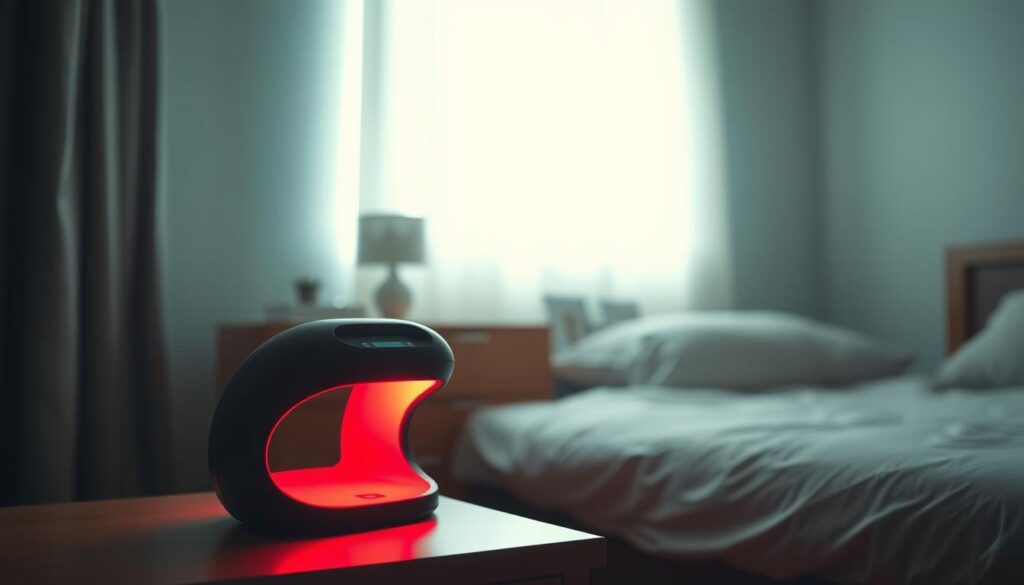
A practical bedside lamp should let you lower the brightness, direct the light away from your eyes, and switch it off easily. A timer is convenient if you often forget to turn lights off.
One option is the Aoife 670nm Red Light Bedside Lamp. Its listed features include a red light mode, 10 brightness levels, touch and remote controls, and a selectable timer. These controls make it suitable for experimenting with low-brightness evening lighting.
It also includes white-light modes, so those should not be confused with its red setting. The manufacturer’s listed 670nm wavelength is not independent evidence that the lamp improves sleep, and its lowest setting is not a verified melanopic exposure level.
You can also skip buying a new device. Dimming an existing warm lamp, reducing screen brightness, and keeping the bedroom dark may be enough for a comfortable wind-down routine.
- 670nm Gentle Red Light Feature: Built with standard 670nm red light wavelength, delivering soft and mild red glow for indoor bedside use, adopting professional light configuration for daily home lighting decoration
- 4 Lighting Modes & Smooth Dimming: Switch between red light for sleep, warm white, natural white, and cool white. Includes 10 brightness levels and stepless dimming—customize your ideal sleep light red experience, whether winding down at night or waking gently
- Smart Control & Auto-Off Timer: Dual control via touch or remote. Tap the lamp to set a 30-minute timer, or use the remote to select 15, 30, or 60 minutes. Easy to operate for daily indoor lighting and convenient bedside use
- Flexible & Dual-Use Design: Use upright as a bedside lamp or hang on the wall to create soft ambient lighting. Perfect for bedroom, meditation corner, nursery and more indoor spaces for daily lighting use
A practical 14-day tracking plan
For a more meaningful comparison, keep the rest of your evening routine as consistent as possible.
- Start with a baseline: Track seven nights without changing your usual lighting. Record bedtime, sleep onset, total sleep, and morning energy.
- Use dim lighting: If trying red light, use a comfortable low setting during a short wind-down period, rather than shining an intense panel toward your face.
- Keep a consistent schedule: Aim for similar bedtimes and wake times throughout the comparison.
- Record each morning: Note how refreshed you feel on a simple 1–5 scale, alongside the wearable’s estimates.
- Compare averages: Examine several nights together, and check whether perceived improvements match actual sleep duration and daytime functioning.
A simple before-and-after comparison still cannot prove cause and effect. But it may reveal whether a lighting change is comfortable, practical, and worth keeping.
When Red Light Causes Problems
Red light is not necessarily calming for everyone. Increased alertness, mood changes, headaches, or disrupted sleep are reasons to reconsider the routine.
- Feeling wired afterward? Lower room brightness, move the session earlier, or stop using the light.
- Waking up more often? Keep the bedroom dark during sleep and review caffeine, stress, and other possible causes.
- Experiencing eye discomfort? Stop exposure. Never stare into bright LEDs or infrared emitters, and follow the device’s eye-safety instructions.
- Taking photosensitizing medication or managing an eye condition? Ask a clinician before using a therapeutic light device.
- Experiencing mood activation or having bipolar disorder? Seek clinical guidance before experimenting with light exposure.
FDA clearance, where applicable, must be checked for the exact device and its stated medical indication. It does not automatically establish that the device is effective for sleep.
If insomnia persists, cognitive behavioral therapy for insomnia (CBT-I) has much stronger evidence. The American Academy of Sleep Medicine recommends CBT-I for adults with chronic insomnia.
Frequently Asked Questions
Is red light therapy before bed proven to improve sleep?
No. Small studies report possible benefits in selected groups, but other research shows poorer sleep continuity compared with darkness. The evidence is not strong enough to recommend red light as a routine insomnia treatment.
What wavelength is best for sleep?
Visible red lighting commonly falls around 620–700 nm, while therapeutic devices may also use near-infrared wavelengths. There is no established single best wavelength for improving sleep. Brightness, timing, and exposure conditions remain important.
Should a red light stay on all night?
Usually not. A dark bedroom is preferable for sleep. If lighting is needed for safe nighttime movement, use the minimum practical brightness rather than continuous strong illumination.
Can I measure light intensity with my phone?
A phone app may offer a rough comparison between brighter and dimmer settings. It cannot reliably measure melanopic illuminance or confirm that a narrow-spectrum light meets circadian lighting recommendations.
How long should I test red light before deciding?
Tracking a baseline week and roughly two weeks of changed lighting can help reveal personal patterns. There is no proven treatment duration, and longer use does not guarantee improvement. Stop earlier if sleep or symptoms worsen.
Can red light replace melatonin or insomnia treatment?
No. It should not replace prescribed medication or established treatment. For ongoing insomnia, CBT-I is a better-supported option, and treatment choices should account for underlying sleep problems.
Final Verdict: Is Red Light Before Bed Worth Trying?
The two-week notes offered a mixed picture. Some evenings appeared to be followed by easier sleep onset and better morning alertness, but there were no complete numerical scores to confirm a meaningful improvement.
The research is similarly cautious. Red light may be less disruptive than blue-rich lighting, yet a controlled study found that darkness produced better sleep outcomes than pre-bed red exposure in important comparisons.
If you enjoy dim red lighting, it may be a reasonable alternative to harsh evening lights. You do not need an expensive therapy panel to test that preference. Keep your sleep schedule consistent, avoid unnecessary brightness, and pay attention to how you actually feel and function during the day.
The most useful goal is not achieving a higher sleep score through red light. It is creating an evening environment that helps you sleep well, consistently and comfortably.