


Curious whether a cup of simmered stock truly delivers the health perks you’ve heard about? This guide cuts through marketing and myths to show what a typical cup actually offers, and what modern studies say about real effects on the body.
We’ll explain how slow simmering turns connective tissue into gelatin and frees amino acids like glycine, which some link to sleep and relaxation.
Expect clear, research-informed answers about calories, modest protein levels per serving, and why mineral content can vary from batch to batch. We also preview practical tips on which bones to choose, how long to simmer, and safe storage for reliable results.
Real talk: many claims around this traditional food outpace the evidence. This article balances tradition with science and gives actionable ways to use broth at home without the hype.
For a deeper comparison of whole-food broth versus isolated supplements, see a detailed review on bone broth vs. collagen and a science-focused primer at the science of collagen and glycine.
Key Takeaways
- Bone-based broth is a low-calorie, modest-protein source with variable minerals.
- Slow simmering converts connective tissue into gelatin and releases amino acids like glycine.
- Real-world servings matter: benefits are modest and depend on recipe and portion size.
- This guide blends tradition with evidence and offers practical cooking and storage tips.
- We’ll cover safe sourcing, preparation, and realistic uses to fit daily routines.
Why Bone Broth Is Backed by Tradition and Scrutinized by Science
Across cultures, people have long turned leftover bones and scraps into nourishing stock for flavor, thrift, and comfort. Modern research asks whether those kitchen practices translate into clear, measurable health effects.
Anthropologists note early humans likely drank liquids steeped with bones and animal parts. Classic dishes—from slow-simmered ramen to rustic soup—show how widespread this idea is.
What we do know: these liquids supply modest protein and amino acids, but exact amounts depend on which bones you use, how long you simmer, and your recipe choices.
High-quality human studies isolating outcomes are scarce. Some people report reduced joint aches or better skin, yet controlled studies give mixed results. Nutrients can support normal body function, but evidence does not prove a cure-all role.
Stock and broth terms vary across kitchens and papers, which adds confusion in media reports and studies. Use these liquids as a flavorful, hydrating base that complements a balanced diet—not as a replacement for other whole foods and proteins.

For practical recipes and a simple starter, see our whole-food broth guide.
Collagen and Glycine in Bone Broth
Slow heat reshapes tough connective tissue into a silky, savory liquid that many cooks prize. This section explains kitchen terms, how proteins change with time and heat, and how animal choices shift amino profiles and flavor.
What cooks mean by stock, broth, and bone broth
Stock leans on bones for body. Broth often starts with meat and skin for a lighter taste. A true bone-based cup blends bones, meat, and tissue for deeper mouthfeel and richer sipping.

How collagen turns to gelatin
Heat unwinds the triple-helix structure of collagen, freeing smaller proteins that form gelatin as the liquid cools.
This gelatin thickens cooled stock and signals higher dissolved protein content. Those dissolved proteins supply key amino acids like glycine and proline, which give broth its rounded mouthfeel.
Chicken, beef, and pork: amino profiles and taste
Chicken cups tend to be lighter and often show higher soluble amino levels per serving. Beef brings deeper flavor and more fat. Pork, especially when feet and skin are used, can become very silky and highly gelatinous.
Choose feet, knuckles, or skin when you want a strong gel set; use more meat for a savory sip. Remember that lab values vary by cut and cook time—home batches won’t match a lab report exactly.
- Tip: For reading on protein origins, see this primer at Harvard’s collagen guide.
- Curious about trends? Read a practical take at this review.
What the Evidence Says About Benefits and Limits
Practical takeaway: broth can support hydration, satiety, and provide modest protein and amino building blocks, but it rarely delivers therapeutic doses used in clinical trials.

Gut and digestion
Gelatin and its amino acids may help the mucosal lining in animal models. Glutamic acid from dissolved proteins can convert to glutamine, which supports intestinal barrier function.
Human trials are limited. Use broth as a gentle, supportive food while relying on proven treatments for gut disease.
Inflammation and immune signals
Some amino compounds show anti-inflammatory effects in lab work. Yet human meta-analyses report mixed outcomes for arginine and related markers.
Bottom line: preclinical promise does not guarantee clinical benefit from a few cups of broth alone.
Joints, weight, muscle, and sleep
Broth supplies small amounts of structural protein, but most supplement studies use higher, consistent doses for joint pain relief.
Soup-based meals often lower calorie intake and boost fullness, which can aid weight goals when paired with a balanced diet.
For sleep, trials used about 3 g of a specific amino to help rest. Typical servings provide ~0.5–1.7 g per cup, so reaching trial levels would take multiple cups.
- Use broth for: hydration, cooking base, and adding modest protein.
- Do not expect: quick fixes for joint pain or dramatic skin changes.
For a closer look at supplement doses versus whole-food servings, see this review on collagen peptide benefits.
How to Make Nutrient-Rich Bone Broth at Home
A simple pot, quality bones, and patient heat unlock a nutrient-rich stock you can use every week. This short guide gives clear proportions, timing options, and flavor tips so you can make a clean, savory batch at home.

Core ingredients and proportions
Start with about 1 gallon of water and 2–4 pounds of mixed bones. Add 1–2 tablespoons of vinegar to help release minerals and protein.
Step-by-step basics
Bring to a boil, then lower heat to a gentle simmer. Cook 12–24 hours for best extraction. A pressure cooker can cut the hours; a slow cooker is hands-off.
Flavor, function, and bone choices
Add onion, celery, carrot, parsley, thyme, and garlic early for depth. Pick marrow bones, knuckles, oxtail, feet, or skin and tissue-rich cuts to boost gelatin and mouthfeel.
- Tip: Skim foam the first hour, keep water topped up, and season after straining.
- Which animal to pick: chicken for light versatility, beef for richness, pork feet for extra gel.
Cool quickly, strain, chill, and store—refrigerate 3–4 days or freeze portions for easy use. For more on evidence and benefits, see bone broth benefits.
Nutrient Profile: Protein, Amino Acids, Minerals, and Variability
Per-cup nutrition is modest but useful: most servings provide low calories with a measurable protein boost and small mineral totals that vary widely by recipe.
Protein and amino ranges — why batches differ
A typical cup contains about 39–41 calories and roughly 8–10 grams of protein. That makes this liquid an easy, low-calorie way to add protein to meals for muscles and recovery.
Why the spread? The type of bones, connective tissue, simmer duration, and how much water you use change dissolved amino acids and total protein per cup.
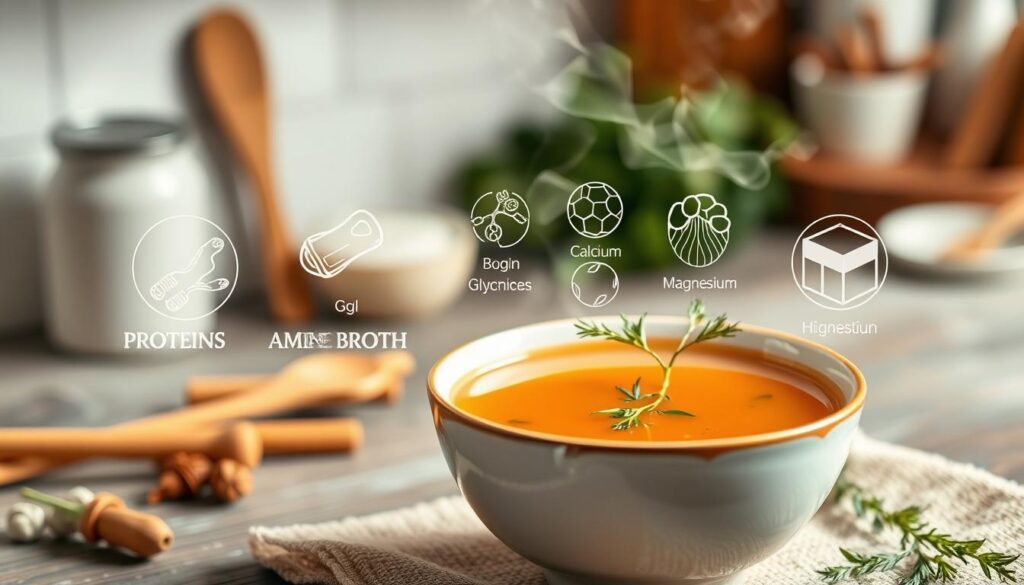
Minerals and electrolytes — what to expect
Minerals such as calcium, magnesium, and phosphorus appear in small amounts—often under 5% of daily value per cup. Sodium and potassium swing dramatically with added salt and reduction.
“Two commercially labeled chicken examples matched calories and protein but differed widely in sodium — read panels before buying.”
| Metric | Typical per cup | Notes |
|---|---|---|
| Calories | 39–41 kcal | Low energy; easy to include in meals |
| Protein | 8–10 g | Supports body protein needs; not a sole source |
| Sodium | ~240–290 mg (varies) | Depends on seasoning and brand |
| Calcium / Minerals | Trace amounts (usually | Pair with mineral-rich foods for balance |
Practical tip: log bones used, hours simmered, and dilution to repeat a favored nutrient profile. Choose beef or chicken for taste; nutrient differences are often subtle compared with texture and flavor.
Smart Ways to Use Broth for Health Goals
Small swaps can add flavor and modest nutrition without extra effort. Use warm stock to boost meals, aid satiety, and support recovery while keeping calories low.

Everyday uses
Sip a warm mug mid-morning or late afternoon for a calm, low-calorie pick-me-up.
- Cook grains: boil rice or quinoa in broth to infuse savory depth and add protein per serving.
- Upgrade meals: use as a base for soups, stews, pan sauces, and braises to support weight and appetite control.
Targeting outcomes
To approach a 3 g bedtime amino dose used in sleep studies, most people need roughly 2–6 cups depending on concentration.
Tip: concentrate homemade liquid by gentle reduction to raise per-cup protein and amino content while watching sodium.
Store-bought vs. homemade
Read labels for sodium, additives, and protein per cup. Consider a protein powder for convenience, but check for sweeteners that may upset digestion.
For gut-focused readers, see a deeper look at broth and intestinal support here.
“Use broth to replace less nutritious cooking liquids and make whole foods taste better.”
Safety, Sourcing, and Storage Essentials
Practical steps keep homemade stock tasty and safe. Follow simple sourcing and storage routines to reduce risk and preserve nutrients.
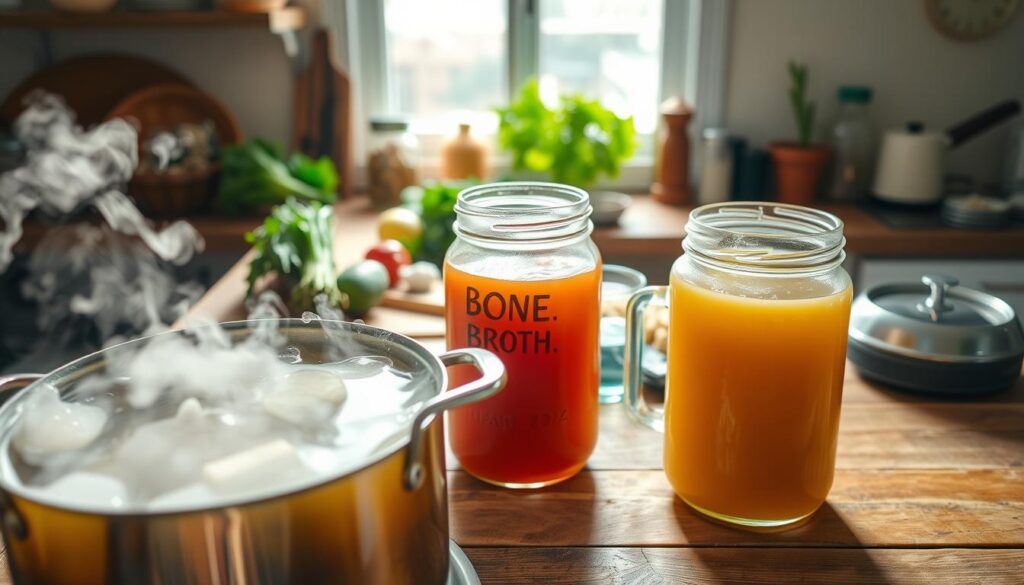
Where to get bones and how to store them
Source smart: ask your butcher or farmers’ market for marrow bones, knuckles, or feet — these cuts are often inexpensive and gel well.
Save carcasses and leftover bones in labeled freezer bags so you can batch-cook later. Note the animal source and date to track rotation and flavor strength.
How to cool, refrigerate, and freeze safely
Practice safe cooling: divide hot stock into shallow containers to chill quickly before refrigeration. This reduces bacterial growth.
Refrigerate for 3–4 days. For longer storage, freeze in portioned containers and thaw in the fridge or by gentle reheating.
Potential risks and how to manage them
Be aware of contaminants: studies show typical lead levels are generally low, but sourcing from reputable suppliers lowers risk.
Watch for bacterial contamination by following cooling rules, sanitizing tools used with raw meat, and discarding broth that smells off.
Note allergies and meds: add-ins like dairy or shellfish can trigger reactions. Minerals and certain amino acids may interact with medications — check with a clinician if concerned.
| Issue | Practical fix | Why it matters |
|---|---|---|
| Sourcing bones | Buy from butcher/farm market; freeze leftover bones | Improves flavor, gel strength, and trace contaminant control |
| Cooling | Use shallow containers; refrigerate within 2 hours | Limits bacterial growth and foodborne illness risk |
| Storage duration | Refrigerate 3–4 days; freeze up to 6 months | Maintains quality and reduces waste |
| Contaminant concerns | Choose reputable sources; vary animals used | Minimizes exposure to unwanted metals or residues |
“Manage risks with clean prep, clear labeling, and thoughtful sourcing to enjoy the benefits while avoiding common pitfalls.”
Quick checklist: label containers with date and animal, cool fast, reheat to a rolling simmer, and consult a healthcare pro if you take interacting medications. With those steps, consuming bone broth can be a safe, practical food choice that supports cooking and modest health goals.
Conclusion
Practical, modest gains beat big promises: use broth as a flavorful, low‑calorie way to add usable protein to meals.Focus on consistent, simple habits—simmer good bones, portion servings, and use the liquid to boost dishes daily.
A practical habit—sipping or cooking with homemade stock—gives steady culinary and nutritional returns without dramatic claims.
Bottom line: a cup supplies roughly 8–10 g of protein plus small amounts of minerals and collagen‑derived amino acids. Expect modest health benefits for satiety, hydration, and meal quality, not miracle fixes for joints or skin.
Next step: pick a mix of bones, simmer a batch this week, portion and freeze. Use a cup daily in soups, grains, or sauces to build a simple habit that supports weight goals and overall diet.
For amino detail, see the amino profile study. For user-focused context, read this infographic review.
FAQ
What exactly is being measured when people talk about collagen and glycine in bone broth?
Researchers typically analyze the amino acid profile and the amount of soluble protein after long simmering. The process converts structural proteins into gelatin and free amino acids — glycine is one of those abundant amino acids. Results vary by animal, cut, cooking time, and extraction method, so a homemade batch can differ substantially from a commercial product.
Are stock, broth, and reduced stock the same thing?
No. Stock is usually made from bones and connective tissue and is simmered longer to extract gelatin and amino acids. Broth often uses meat and cooks a shorter time, yielding lighter flavor but less extracted protein. Reduced stock (or demi‑glace) is concentrated by reducing liquid, which increases flavor and nutrient density per cup but not the total yield.
How does simmering change protein into gelatin and usable amino acids?
Heat and water break down the triple‑helix proteins into smaller peptides and gelatin, a process called hydrolysis. Gelatin dissolves in warm liquid, giving body and mouthfeel, while some amino acids become soluble. Longer, gentle simmering and a bit of acid (like vinegar) improve extraction from connective tissues and marrow.
Which animal bones yield the most amino acids and flavor — chicken, beef, or pork?
Beef and pork bones with lots of cartilage and marrow (knuckles, feet, oxtail, marrow bones) generally give richer gelatin and deeper flavor. Chicken carcasses and feet extract faster and produce a lighter, more delicate profile. Choice depends on desired taste and how concentrated you want nutrients to be.
Can drinking broth help with gut health and digestion?
Broth provides gelatin and amino acids like glutamine, which can support digestive comfort in some people by contributing to mucosal structure. Evidence in humans is limited; broth should be seen as a supportive food rather than a cure. For chronic issues, consult a gastroenterologist or dietitian.
Does consuming broth reduce inflammation because of glycine and other amino acids?
Amino acids such as glycine and arginine have anti‑inflammatory effects in laboratory and animal studies. Human trials are limited and small. Regularly including nutrient‑dense foods like broth may help an overall anti‑inflammatory diet, but it’s not a standalone treatment for inflammatory conditions.
Will sipping broth improve joint pain or rebuild cartilage?
Gelatin and protein provide building blocks that may support joint tissues when combined with a balanced diet and adequate total protein. Clinical evidence shows modest benefits in some studies, but typical serving sizes of broth provide much lower doses than targeted supplements used in trials. Consider using it as part of a broader strategy including exercise and medical advice.
Can broth help with weight loss or muscle maintenance?
Warm, protein‑containing liquids can increase satiety and reduce calorie intake at a meal, which may support weight loss. Broth is low in calories but not a high‑protein source compared with whole meats. For muscle maintenance, prioritize total daily protein from diverse sources and use broth as a hydrating, low‑calorie addition.
How much glycine would you get from a typical cup of homemade broth and is that useful for sleep or cognition?
A single cup often contains a small amount of glycine — usually far less than the 3 grams or more used in sleep studies. Broth can contribute to overall intake but won’t reliably deliver therapeutic doses. Supplements or targeted protein sources are more practical when aiming for specific glycine amounts for sleep or cognitive effects.
What are the key steps to make a nutrient‑rich, safe batch at home?
Use a mix of marrow and joint bones, add a splash of acid, simmer long (several hours for poultry, 12–24+ for beef/pork), skim foam, and strain. Cool quickly, refrigerate within two hours, and remove the fat layer if desired. Pressure cookers speed extraction; slow cookers work too but may extract differently.
Which bones should I choose for maximum gelatin and mineral extraction?
Choose bones rich in cartilage and marrow: knuckles, feet, oxtail, necks, and marrow bones. Roasting bones first deepens flavor but isn’t necessary for extraction. Adding some skin or connective tissue increases gelatin yield.
How variable is the nutrient profile between batches and brands?
Very variable. Protein, amino acid content, and mineral levels change with animal, cut, bone-to-water ratio, simmer time, and manufacturing methods. Store‑bought products may list sodium and calories but often omit detailed amino acid data, so homemade batches tend to be unpredictable.
Is store‑bought broth as good as homemade? What should I watch for on labels?
Store products are convenient and consistent, but check for high sodium, added flavors, or preservatives. Some brands sell concentrated bone broth powders that list protein per serving; compare those if you need higher protein. Homemade gives you control over ingredients and salt.
How should I store broth to keep it safe and extend shelf life?
Cool quickly, refrigerate for up to 4–5 days, or freeze portions for several months. Use airtight containers and leave some headspace before freezing. Thaw in the fridge and heat to a simmer before consuming to ensure safety.
Are there safety concerns like lead, allergens, or bacterial contamination?
Research has raised questions about trace metals in some bone extracts, but routine dietary exposure is typically low. Use high‑quality bones from reputable sources, practice safe cooling and reheating, and avoid if you have specific allergies. If you take medications or have chronic conditions, check with your clinician about interactions or risks.
Can I use broth daily as part of a wellness routine?
Yes, many people include a daily cup for hydration, flavor, and a modest protein boost. Treat it as a nutritious food addition rather than a magic cure. Balance it within a diet rich in whole proteins, vegetables, and healthy fats to meet broader health goals.
What are practical ways to incorporate broth into meals beyond sipping it plain?
Use it as a base for soups, stews, risottos, grains, sauces, and braises. Substitute for water when cooking grains or vegetables to increase flavor and nutrient density without many extra calories.



Don’t Miss These Picks