


A gratitude practice can be simple: notice one specific thing you appreciated, write why it mattered, and repeat the exercise regularly. Research suggests that gratitude interventions can produce small average improvements in wellbeing and some psychological outcomes, but the effect is not guaranteed, and there is no reliable deadline by which you should expect to feel different.
That makes a 30-day challenge most useful as a structured personal experiment rather than a promise of dramatic mood change. Over the next month, you can test a brief routine, make it more specific over time, track how it fits into your life, and decide whether the practice is worth continuing.
Key Takeaways
- Gratitude exercises appear to have a small average positive effect on wellbeing, but individual results vary.
- You do not need a special journal. A notebook, notes app, or planner is enough.
- There is no universal “21-day” habit rule; habit formation can take much longer and differs by person and behavior.
- A missed day does not require restarting the challenge. Resume at the next reasonable opportunity.
- Gratitude should not be used to deny grief, anger, trauma, depression, or other legitimate distress.
- Track your experience informally rather than treating weekly ratings as medical or psychological measurements.
Helpful Products at a Glance
Guided option for readers who want built-in prompts: The Five Minute Journal provides a predetermined morning-and-evening format. It may reduce the effort of deciding what to write, but the commercial journal itself is not necessary for the exercise and should not be expected to produce better health outcomes than an ordinary notebook.
- FEEL HAPPIER & LESS STRESSED in just 5 minutes a day. Overthinking or stuck in negative thought loops? This gratitude journal for women and men breaks the cycle - helping you feel more present, calm, and grounded starting with just one page a day.
- BUILD A POSITIVE MINDSET with science-backed journaling. This daily gratitude journal uses research-backed prompts to help you feel calmer, more focused, and inspired - turning gratitude into a sustainable daily habit for a more intentional life.

What a 30-Day Gratitude Challenge Actually Involves
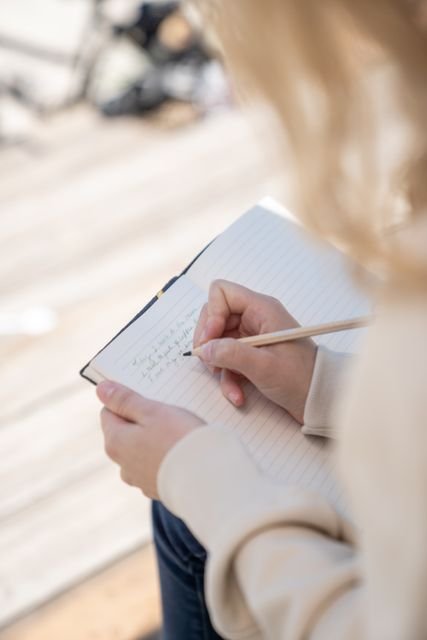
The basic exercise is intentionally small. Once a day, identify something specific that you appreciated and add one sentence about why it mattered. It might be a useful conversation, a meal you enjoyed, help from someone, a problem you solved, a comfortable place to rest, or a small part of the day that felt easier than expected.
The goal is not to convince yourself that everything is good. It is to deliberately notice experiences that might otherwise pass without much attention. You can spend a few minutes writing, speak the reflection aloud, or make a short note on your phone.
Thirty days is long enough to test whether the routine fits your life, but it is not a scientifically established threshold for changing mood or forming a permanent habit. Treat the month as a trial period in which you practice consistently, notice patterns, and adjust the method when needed.
What the Research Says About Gratitude and Wellbeing
A 2025 meta-analysis of gratitude interventions covering 145 papers, 163 samples, and more than 24,000 participants found a small average positive effect on wellbeing. The overall effect was modest, and results varied substantially across studies and countries. That is a useful reality check: gratitude practices can help, but they are not a predictable transformation tool.
A separate systematic review and meta-analysis of randomized gratitude interventions found improvements in several mental-health and positive-emotion measures in some analyses. It also identified important methodological limitations, including high risk of bias in many studies and low or very low certainty for several outcomes. The most defensible conclusion is that gratitude exercises may modestly improve some wellbeing or symptom measures for some people.
The classic Emmons and McCullough gratitude experiments also found benefits on several outcomes, including positive affect, favorable life appraisals, optimism, and some measures of social connection. However, those experiments used different populations and schedules. One daily intervention ran for 13 days, another involved weekly reporting over several weeks, and a 21-day study involved adults with neuromuscular disease.
That distinction matters because older gratitude claims are sometimes bundled together as though one short experiment proved better sleep, lower blood pressure, optimism, stronger immunity, and improved overall health. The evidence does not support that interpretation.
For example, a two-week randomized trial in 119 young women reported improvements in optimism, sleep quality, hedonic wellbeing, and diastolic blood pressure. That is interesting, but it is not enough to say that gratitude reliably lowers blood pressure in the general population. Stronger immunity is also not supported well enough by the verified evidence to make it part of this challenge’s expected benefits.
What You Should Expect — and What You Should Not
Some gratitude studies have detected differences over periods of roughly two to three weeks, while others have used longer interventions. There is no universal “time to work.” You may notice something quickly, gradually, or not at all.
A useful result does not have to mean feeling happier every day. You might instead find that the exercise becomes easier, that you remember more specific positive moments, or that the routine gives you a brief pause to reflect. Those are reasonable observations to track without turning them into medical claims.
Do not expect the practice to treat depression, anxiety, trauma, insomnia, hypertension, or another health condition. Gratitude journaling is a wellbeing exercise, not a substitute for professional assessment or treatment.
Your 30-Day Gratitude Plan
The four phases below are an editorial structure for making the challenge progressively more useful. They are not clinically validated stages, and no specific psychological change is expected to happen on a particular day.
Days 1–7: Make the Habit Easy
For the first week, reduce friction. Pick one recurring cue, such as finishing breakfast, shutting down your laptop, or getting ready for bed. Then write one specific thing you appreciated and one sentence explaining why it mattered.
Keep the standard low enough that you can continue on busy days. A useful entry might be: “A coworker clarified a confusing task, which saved me time.” That is more informative than writing only “I am grateful for work.”
If you get stuck, use simple prompts:
- Who made something easier today?
- What small problem went better than expected?
- What did I enjoy seeing, hearing, tasting, or using?
- What part of the day felt comfortable or safe?
Days 8–14: Add Detail and Meaning
During the second week, make your entries more specific. Instead of simply naming a person, object, or event, explain what happened and why it mattered to you.
You can also rotate prompts so the exercise does not become mechanical. One day might focus on a person, another on a small convenience, another on something you learned, and another on a moment that made the day slightly easier.
This is also a good time for your first progress check. Ask whether the routine feels easy to start, annoying, useful, forgettable, or emotionally uncomfortable. The goal is not to force a positive answer.
Days 15–21: Include People, Challenges, and Perspective
In the third phase, broaden the material you notice. You might write about support you received, a useful conversation, a skill you relied on, or something difficult that you handled better than expected.
Do not force yourself to find a “silver lining” in painful experiences. If a day was genuinely hard, the entry can remain neutral: someone checked in on you, you completed one necessary task, you had a warm meal, or you found ten quiet minutes.
Gratitude works better as an additional perspective than as a rule that you must feel positive.
Days 22–30: Test What Works Best for You
For the final stretch, experiment. Try writing in the morning for a few days and in the evening for a few days. Compare a notebook with a notes app. Try one gratitude walk or a spoken reflection instead of writing.
There is no verified universally superior time of day for this practice. The more useful choice is the time and format you can repeat consistently without turning it into a burden.
At the end of day 30, review the month and ask: Which prompts produced meaningful entries? Which format was easiest to continue? Did the practice feel useful, neutral, or forced? Your answers are more valuable than completing a perfect streak.
How to Make the Habit Stick
The popular idea that a habit becomes automatic in 21 days is too simple. Real-world habit-formation research found substantial variation, with modeled times to high automaticity ranging from 18 to 254 days among participants whose data fit the model.
The practical lesson is to focus on repetition and context instead of counting down to a magic day. Attach the practice to something that already happens regularly, keep your journal or app easy to reach, and reduce the number of decisions required to begin.
Missing one opportunity does not mean the habit is ruined. Resume at the next sensible time instead of restarting the entire 30 days simply to protect a streak.

How to Track Whether It Is Helping
Memory is unreliable, especially when a month contains work changes, poor sleep, family events, illness, travel, and other stressors. A simple tracking system can help you review the challenge more fairly.
Before day one, and again at the end of each week, give yourself informal 1–10 ratings for a few areas such as perceived mood, stress, sleep quality, consistency, and how useful the practice feels.
| Check-In | Mood | Stress | Sleep Quality | Consistency | Usefulness |
|---|---|---|---|---|---|
| Baseline | 1–10 | 1–10 | 1–10 | Not started | 1–10 |
| End of Week 1 | 1–10 | 1–10 | 1–10 | Days completed | 1–10 |
| End of Week 2 | 1–10 | 1–10 | 1–10 | Days completed | 1–10 |
| End of Week 3 | 1–10 | 1–10 | 1–10 | Days completed | 1–10 |
| Day 30 | 1–10 | 1–10 | 1–10 | Days completed | 1–10 |
These numbers are personal reflection tools, not validated clinical scores. A change also does not prove that gratitude caused it. Sleep, relationships, work, health, expectations, and other events may have changed during the same month.
Common Gratitude Practice Mistakes
- Writing the same vague list every day: “Family, health, home” may be true, but specific details usually make reflection more meaningful.
- Forcing positivity: You do not need to reinterpret grief, anger, conflict, or hardship as something good.
- Treating one missed day as failure: Resume the practice instead of abandoning it or restarting.
- Chasing a particular feeling: You do not have to feel calm, inspired, or cheerful after every entry.
- Turning the challenge into another performance task: More words, prettier pages, or longer sessions are not automatically better.
- Assuming the practice must work for everyone: If it repeatedly feels unhelpful or upsetting, change the format or stop.
Gratitude Walks and Other Variations
Writing is not the only way to practice. During a walk, you can deliberately notice a few things you appreciate about your surroundings, your day, or the people in your life. You can also use a voice note, a shared family prompt, or a brief spoken reflection.
A gratitude walk should be viewed as a variation of the reflection exercise, not as a proven way to amplify health effects. Choose it if movement makes reflection easier or if sitting down to journal feels tedious.

When Gratitude Practice May Need a Gentler Approach
Gratitude and distress can exist at the same time. The VA’s National Center for PTSD guidance on traumatic-stress reactions notes that people may experience grief, anger, anxiety, despair, sleep disturbance, and positive reactions such as gratitude after difficult events. It also recognizes that people can feel pressure to appear grateful when they are actually distressed.
If you are dealing with grief, trauma, depression, acute stress, or a major life disruption, do not make the exercise a demand to find something positive about the hardship itself. A gentler entry might focus on support you received, a moment of safety, something practical that helped, or one part of the day that felt slightly more manageable.
If the exercise repeatedly feels shaming, invalidating, or overwhelming, modify it or stop. Persistent or severe depression, anxiety, trauma-related symptoms, suicidal thoughts, or difficulty functioning deserve appropriate professional support rather than reliance on a gratitude routine alone.
Optional Tools That Can Make the Practice Easier
You do not need to buy anything for this challenge. A blank notebook, planner, notes app, or document works perfectly well for recording one specific gratitude entry each day.
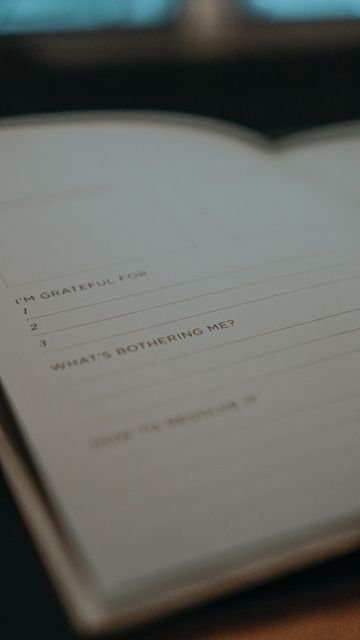
A guided journal can be useful if the main barrier is deciding what to write. The Intelligent Change Five Minute Journal uses a structured, undated format with morning and evening prompts, which may appeal to beginners who prefer a ready-made routine. The tradeoff is flexibility: its preset prompts go beyond the simple exercise in this article and may feel restrictive if you prefer free-form writing.
- FEEL HAPPIER & LESS STRESSED in just 5 minutes a day. Overthinking or stuck in negative thought loops? This gratitude journal for women and men breaks the cycle - helping you feel more present, calm, and grounded starting with just one page a day.
- BUILD A POSITIVE MINDSET with science-backed journaling. This daily gratitude journal uses research-backed prompts to help you feel calmer, more focused, and inspired - turning gratitude into a sustainable daily habit for a more intentional life.
- GUIDED & BEGINNER FRIENDLY - no experience needed. Not sure where to start with journaling? Effortless prompts remove the guesswork, making this self care journal easy, rewarding, and simple to stick with every day.
- PREMIUM QUALITY you'll love using every day. Linen hardcover, sustainably sourced paper, and a timeless minimalist design - this wellness journal isn't just beautiful, it's built to last. Aesthetic, durable, and made for daily use.
Final Takeaway
A 30-day gratitude challenge is best treated as an experiment in attention and routine, not a promise that you will become happier, sleep better, or form a permanent habit by a particular date.
Start small, write something specific, keep the practice easy to resume, and review your experience rather than judging success by a perfect streak. If the exercise helps you notice meaningful parts of your day without dismissing difficult emotions, you may decide it is worth continuing beyond the month.
FAQ
How long does gratitude journaling take to work?
There is no reliable personal deadline. Some controlled studies have reported differences after roughly two or three weeks, while other interventions lasted longer. Meta-analyses suggest average effects are modest, so it is better to judge your own experience over time than to expect a noticeable change by a specific day.
What should I write if I cannot think of anything?
Make the prompt smaller. Write about a useful conversation, a warm meal, a comfortable place, a completed task, a person who helped, or a brief moment that felt easier than the rest of the day. The entry does not need to be profound.
What if I miss a day?
Resume at the next opportunity. Missing one day does not require starting over, and habit research does not support treating a broken streak as failure.
Is morning or evening better?
No universally superior time has been established by the evidence used here. Choose the time that fits your routine and is easiest to repeat consistently.
How do I know whether the challenge helped?
Compare your baseline and weekly notes for perceived mood, stress, sleep quality, consistency, and usefulness. Look for patterns, but do not assume that any change was caused solely by gratitude because other parts of your life may have changed during the month.
Can gratitude journaling improve sleep or physical health?
Some studies have reported improvements in sleep, and one short trial in young women found a reduction in diastolic blood pressure. Those findings are not strong enough to promise better sleep or lower blood pressure for a typical reader. Physical-health effects should be viewed as uncertain and secondary to the better-supported wellbeing research.
Can gratitude practice help during major life stress?
It may be useful for some people, but it should not be used to suppress grief, fear, anger, trauma, or other legitimate reactions. During difficult periods, neutral observations may feel more appropriate than strongly positive prompts. If the practice makes you feel worse or pressures you to minimize serious distress, modify it or stop and seek appropriate support when needed.




Don’t Miss These Picks