

Can the numbers on your ring or watch really change how you feel each morning?
We’ll show how to turn device output into daily decisions, not just dashboard dopamine. Many consumer tools—rings, bands, mats, and headbands—give neat charts, but none match lab-grade polysomnography for stage detail.
That doesn’t make them useless. Focus on what they do well: bed and wake times, rest interruptions, and week-to-week trends. Reviewers of the Oura Ring, Whoop, Fitbit, Eight Sleep Pod, and others note real value in trends and actionable tips, even if stage accuracy varies.
Read on to learn which sensors and features matter, when a ring beats a watch, and how to test changes without chasing perfection. You’ll get a simple plan to build a baseline, run short experiments, and let real-world results guide adjustments.
Key Takeaways
- Consumer trackers give useful trends even if stage accuracy lags lab tests.
- Prioritize consistent bed/wake times and how you feel over nightly scores.
- Choose sensors and comfort that match your goals, not the flashiest features.
- Use short experiments and compare week-long averages, not single nights.
- Account ecosystems, subscriptions, and returns when buying a device.
Why Sleep Tracking Gadgets Matter Right Now
These tools matter because they turn invisible nightly patterns into daily choices you can control. The U.S. market has shifted toward subscriptions and ecosystems—know your true costs before you buy.
Nightly numbers only matter when they nudge a person to change one small habit the next day. Testers report real gains after acting on trends: moving exercise earlier, cooling the room, or dimming lights improved next‑day readiness and recovery.
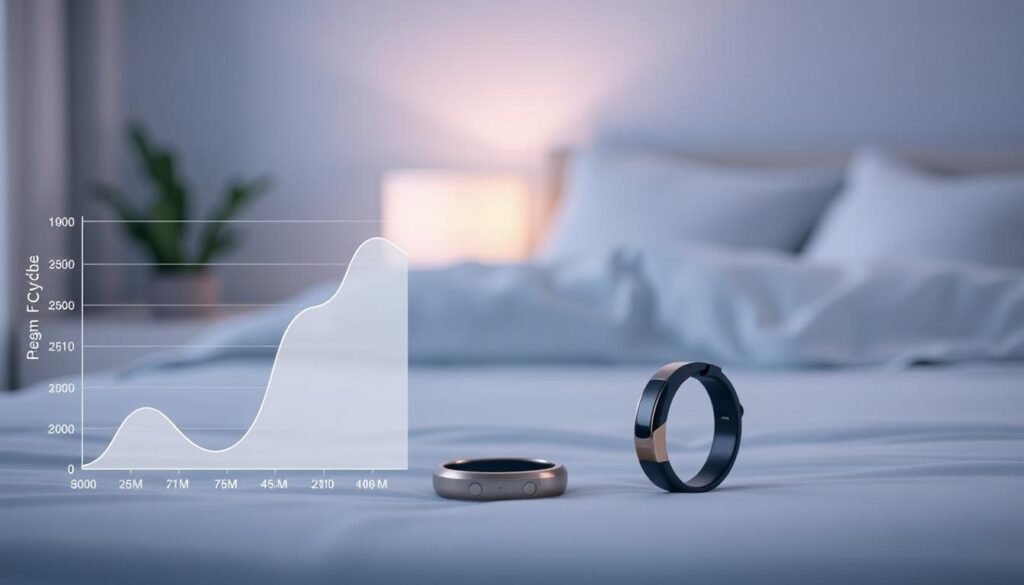
User intent: from curiosity to action
Most people begin out of curiosity. Few see results until they link scores to actions. Make one tweak, measure a week, and repeat.
Commercial landscape in the U.S.: subscriptions, ecosystems, and trials
The commercial reality favors recurring revenue. Whoop is membership‑first. Oura and Fitbit unlock deeper insight with premium plans. Eight Sleep and Elemind hide advanced automations behind paywalls. Ultrahuman Ring AIR bucks the trend with a lifetime subscription.
- Curate your setup: rings often pair with watches for daytime activity and fitness.
- Trials are common but short—mark renewal dates to avoid surprise charges.
- The win is consistent wear and using the data to make one small change each day.
How to Read Sleep Data Like a Pro
Data from a ring or band becomes valuable when you use it to test one small change. Focus on weekly trends and your morning alertness more than any single score. Use the app to tag nights and build context so numbers map to actions.
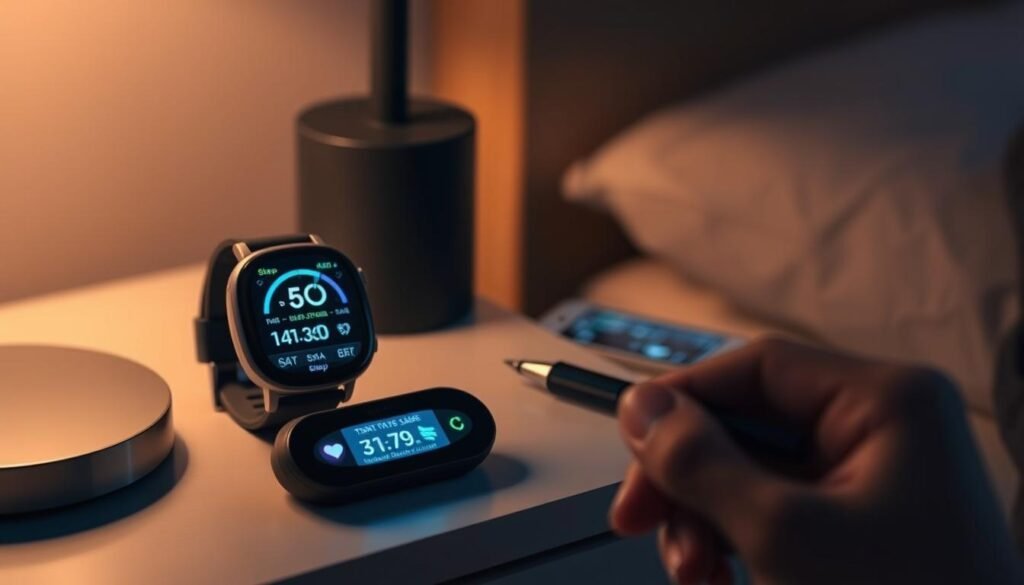
Sleep score vs. how you feel: trend over time beats any single night
Don’t overreact to one rough night or a surprising sleep score—focus on patterns across weeks. One night’s variance is normal; device-to-device and night-to-night differences are common.
Decoding sleep stages accuracy limits
Treat sleep stages as directional, not diagnostic. Consumer stage outputs vary by device and by night.
Weight the basics first: accurate bed/wake detection and alignment with subjective alertness matter more than perfect stage charts.
What “readiness” and “recovery” actually mean
Readiness blends heart rate, heart rate variability, respiration, and recent strain. Oura may take weeks to calibrate; Whoop often stabilizes in a few days.
Turning nightly metrics into next-day decisions
Your best guide is the combination of core metrics, your notes, and how you actually feel on waking.
- If recovery is low, favor light movement, hydration, and steady bedtimes.
- Use app tags for late meals, alcohol, or late intense exercise to link cause and effect.
- Prefer devices that capture heart signals, respiration, and blood oxygen over accelerometer-only models.
| Metric | What it shows | How to act | Device examples |
|---|---|---|---|
| Readiness / Recovery | Blend of HR, HRV, respiration | Reduce intensity; favor easy cardio | Oura, Whoop |
| Sleep score | Composite night quality | Track trends weekly, not nightly | Fitbit, Pixel |
| Sleep stages | Directional REM/light/deep info | Use to adjust wind‑down timing | Ring and watch sensors |
| SpO2 / Respiration | Oxygen and breathing patterns | Watch for sustained drops; consult clinician if persistent | Several modern rings and bands |
Core Metrics That Really Move the Needle
A small cluster of measures drives most practical change: HRV, resting heart rate, respiration, temperature, and SpO2. Combine those with latency, efficiency, and consistent bed and wake times to guide training, stress, and recovery.
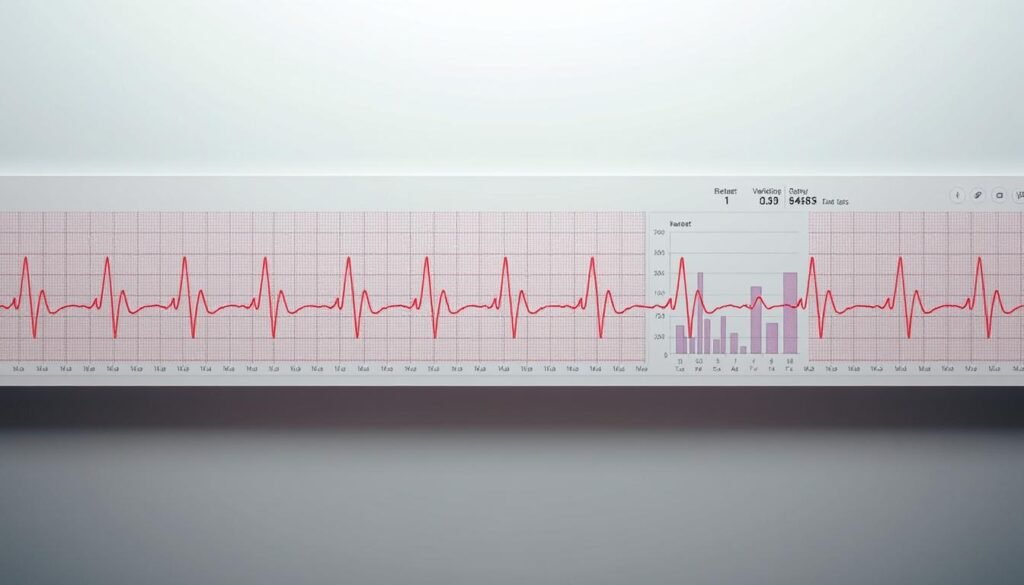
Heart rate variability, resting heart rate, and respiration
Heart rate variability and resting heart rate shift with stress, illness, or heavy load. When variability drops and resting heart rate rises, dial back intensity and favor recovery.
Oura, Whoop, and Ultrahuman surface HRV, heart rate, and respiration to help spot trends. Use a tracker or two to compare week-long averages, not single nights.
Body temperature and SpO2 for illness and cycles
Nightly temperature trends can flag illness or menstrual phases. Oura and Ultrahuman use them for cycle insights after calibration. Combine temperature with SpO2 and respiratory rate to catch early signs.
Latency, efficiency, wake events, and consistency
Latency and efficiency reveal routine quality. Frequent wake events often tie to late meals, alcohol, or overheating rather than a disorder.
Keep bed and wake time consistent. Treat device data as a feedback loop: test one change per week and watch heart, rate, and efficiency move.
| Metric | Why it matters | Action |
|---|---|---|
| HRV / resting heart rate | Shows stress and recovery | Reduce intensity; add rest |
| Respiration / SpO2 | Flags illness or breathing issues | Monitor trends; consult clinician if persistent |
| Latency / Efficiency | Reflects routine and pressure to sleep | Improve wind-down; fix timing |
Rings Roundup: Oura Ring and Ultrahuman Ring AIR
Finger-worn rings read signals close to the arteries, which can boost nighttime accuracy and battery life. Oura adds readiness, chronotype, and cycle insights; Ultrahuman stands out with a lifetime plan and practical coaching.
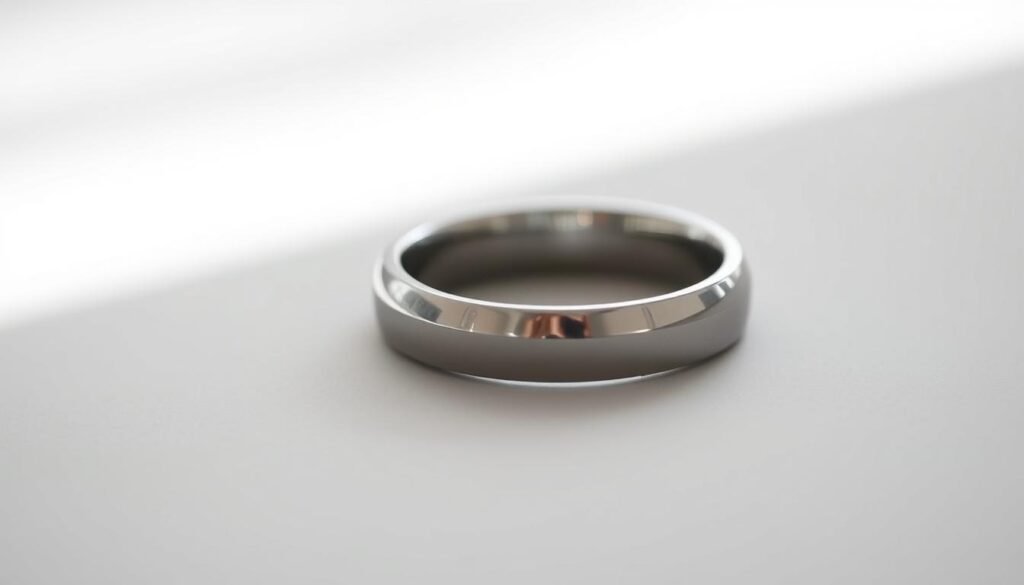
The Oura Ring 3 is widely praised for getting the basics right: reliable bed/wake detection, quiet wake events, and clear trend charts in its app. Expect about 4–5 days per charge. Advanced features require a subscription, but the app offers readiness, stress guides, and menstrual cycle prediction after calibration.
Why finger sensors often outperform wrist options
Rings sit near finger arteries, so pulse signals and temperature readouts face less motion noise. That improves overnight heart and temperature measurements and extends battery life.
Ultrahuman Ring AIR: lifetime plan and real coaching
The Ultrahuman Ring AIR bundles a lifetime subscription with actionable recovery advice tied to heart rate variability and resting heart metrics. Setup is simple, and its guidance is practical, though shipping can take 4–6 days or weeks and workout heart rate may lag.
- Both rings surface HRV, resting heart rate, temperature trends, and SpO2 to help spot overtraining or early illness.
- Pair with a watch for daytime cardio if on-the-wrist heart monitoring matters.
Bands and Straps: Whoop 4.0 for Sport and Recovery
Whoop’s band links daytime load to overnight recovery so you can pace training without guessing. Expect a learning curve in the app, but powerful coaching and remote charging keep data continuous and useful.
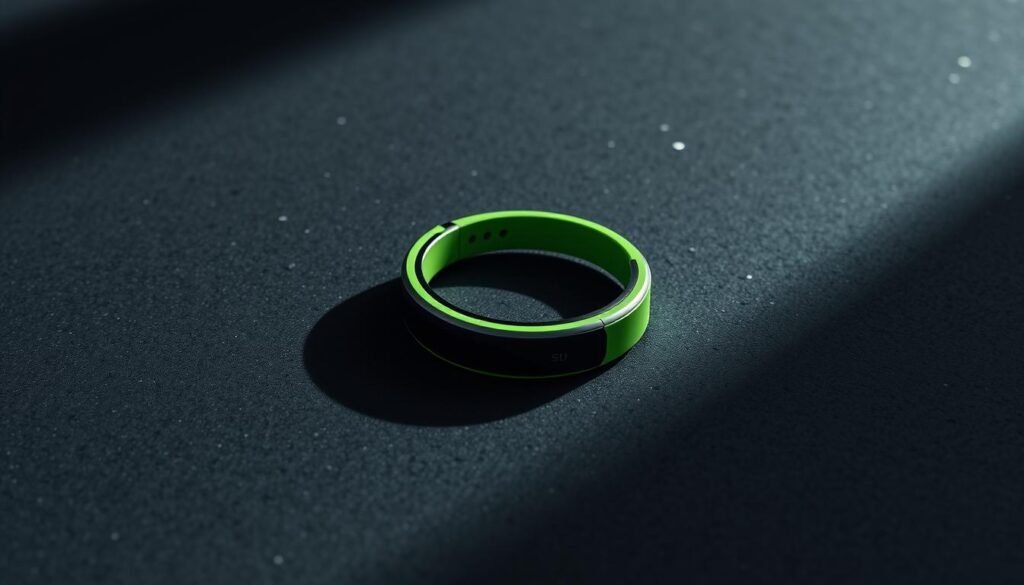
Whoop 4.0 centers on a strain vs. recovery model that blends heart rate, heart rate variability, respiration, SpO2, and skin temperature.
Recovery scores reflect HRV, resting heart rate, and recent load — low scores mean dial back intensity, hydrate, and aim for earlier rest.
Strain vs. recovery: mapping workouts to rest
Whoop maps daytime activity to overnight recovery so you can plan effort and avoid overreaching. Auto-detect logs workouts and everyday movement, which suits athletes who want every effort captured without manual starts.
App learning curve, AI coaching, and remote charging
The app is dense at first, but the AI coach turns complex heart and variability graphs into clear actions for the day.
On‑the‑go charging keeps the tracker on your wrist or band, reducing gaps in night data and preserving long-term trend accuracy.
| Feature | What it measures | Actionable use |
|---|---|---|
| Recovery score | HRV, resting heart rate, respiration | Reduce intensity; prioritize rest |
| Auto activity detection | All-day movement and workouts | Capture strain without manual input |
| Battery & charging | 4–5 day life with remote charger | Charge on‑the‑go to avoid overnight gaps |
| Membership & coaching | AI insights and personalized plans | Weigh subscription cost against daily guidance |
Testers report close alignment with rings for total night time, though the strap can feel sweaty for some users; switch to SportFlex silicone for workouts.
For full details on device operation and membership, see how it works.
Watches: Google Pixel Watch with Fitbit vs. Legacy Fitbit Lines
The Pixel Watch blends Fitbit smarts with a polished on‑wrist experience, but many deeper insights require Fitbit Premium. Expect elegant hardware and helpful glanceable metrics—and more frequent charging than rings or bands.
“A modern watch gives quick access to heart and night metrics, but many insights sit behind a paywall.” That sums the trade‑off clearly.
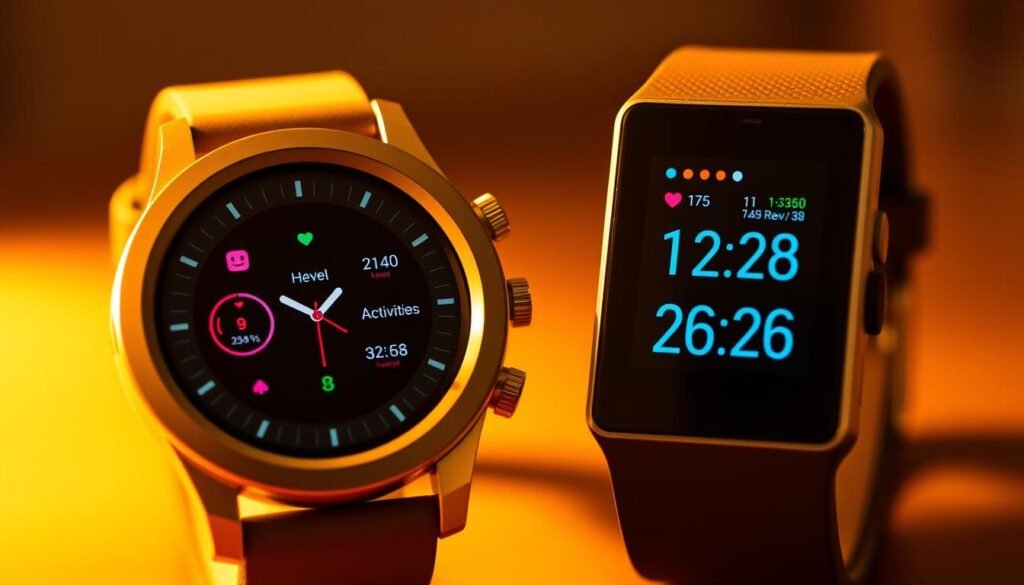
What you get free vs. with Fitbit Premium
You can view basic sleep and activity summaries on the watch and in the Fitbit app without paying. Deeper analytics—advanced sleep analysis, stress reports, and menstrual health detail—move behind a subscription after the trial.
On-wrist metrics viewability, setup friction, and battery tradeoffs
The Pixel Watch gives quick glanceable steps, notifications, and on‑watch heart rate readouts. Setup can feel fragmented: you may need Google and Fitbit accounts and multiple apps to sync everything.
Battery life remains the main compromise. If you want full‑day smartwatch use plus overnight monitoring, plan daily or near‑daily charging. Legacy Versa models traded style for longer uptime and simpler visuals, but recent UI changes and subscription gating mean some relearning is required.
compare Pixel Watch models to decide if the convenience of one device outweighs extra charging and subscription costs.
Non‑Wearables for the Bed: Withings Sleep Mat and Eight Sleep Pod
If you prefer not to wear anything, under‑mattress systems can capture nighttime signals without fuss. Bed‑based devices collect breathing, heart‑related signals, and movement while leaving you free of chargers or rings.
Who benefits? People who forget to put on a device, share a bed with different thermal needs, or simply dislike on‑body wear get the biggest upside.
What the Withings Sleep mat offers
Withings Sleep slips under your mattress and logs breathing, movement, and time in bed. It runs passively, so there’s no on‑body charging and fewer gaps in nightly records.
How the Eight Sleep Pod changes comfort
The Pod adds active temperature control. Dual‑zone heating and cooling adjusts each side of the bed and can autopilot changes across night stages. The Pod also logs HR, HRV, respiration and detects snoring; the newest models can incline to reduce airway collapse.
- Comfort tradeoffs: Fans make some noise, and advanced automations often sit behind a subscription.
- Partner wins: Dual‑zone temperature reduces wake events when partners prefer different bedroom climates.
- When to choose: Pick under‑mattress sensors for simplicity; pick a smart bed system when temperature is the main disruptor.
| Device | Key features | Practical benefit |
|---|---|---|
| Withings Sleep mat | Under‑mattress sensors: breathing, movement, time in bed | No on‑body charging; steady nightly capture |
| Eight Sleep Pod (Pod 4 Ultra) | Dual‑zone temperature control, HR/HRV, respiration, snore detection, incline option | Personalized warmth/cooling; reduces partner conflicts and can help snoring |
| Common tradeoffs | Subscription for automations; fan noise; high upfront cost for smart beds | Balance comfort gains against price and bedroom noise |
For a focused comparison and more on non‑wearable accuracy, see our Withings Sleep mat review. Use under‑mattress trackers when comfort and simplicity matter more than on‑body metrics, and choose a Pod if temperature control is your priority.
Headbands and Smart Masks: Elemind, Muse, and Bía
EEG headbands and smart masks add brain‑sensing and, in some cases, real‑time stimulation to nudge you into rest. Consider them when falling asleep is your main struggle or when you want richer stage insight.
If falling asleep is your main hurdle, devices that read brainwaves can change how fast you nod off. These head‑worn options record EEG signals and can respond with sound cues or guided audio to speed onset and stabilize the night.
How EEG-based stimulation works
Elemind reads real‑time EEG and delivers acoustic stimulation tailored to your brainwaves to help you fall asleep and stay deeper for longer. The band uses foam and spandex for comfort, and the app unlocks full metrics with an optional membership.
Which devices to consider and why
Muse S Athena and Bía Smart Sleep Mask focus on brain activity and light blocking. Muse tracks brain signals and offers guided audio. Bía adds physical shielding from light while logging useful data on stages and movement. These units often give a closer window into sleep stages than wrist-only trackers.
- Comfort varies: some users forget the band, others find head‑worn devices intrusive—test during return windows.
- Travel aid: Elemind and similar tools can help recalibrate time zones when paired with light exposure strategies.
- Complement not replace: Use headwear for targeted periods while keeping your ring or band for long‑term trend data and blood oxygen monitoring.
- Cost and membership: Compare upfront price and subscription terms; features may be gated behind apps.
Sleep Audio Wearables: Where Headphones Fit In
Headphone-style sleep helpers excel at audio comfort but often fall short when you want reliable overnight data. Accelerometer-only devices miss key signals and can misread stillness as rest.
Many models such as the Soundcore Sleep A20 and earlier Kokoon Nightbuds rely mainly on motion sensors. That design can omit REM and classify quiet wakefulness as light rest.
Why accelerometer-only approaches fall short
Without heart or respiration signals, these units reduce staging to coarse light/deep labels. If you remove earbuds mid‑night, the app stops recording and fragments your weekly trends.
- Use for audio: white noise, guided wind‑downs, or comfort at bedtime.
- Not ideal as a primary tracker: movement-only staging lacks physiological depth.
- Be cautious with decisions: avoid making big changes based solely on these charts.
| Device type | Key sensors | Strength | Limit |
|---|---|---|---|
| Sleep earbuds (A20, Nightbuds) | Accelerometer | Comfortable audio, noise masking | Miss REM; breaks if removed |
| Dedicated ring/band | PPG (heart rate), HRV, SpO2 | Consistent heart and rate trends over time | Requires wear and charging |
| Under-mattress sensor | Ballistocardiography, movement | No on-body wear; steady time capture | Less detailed heart metrics |
Sleep Tracking Gadgets: Buying Factors That Actually Matter
Not every feature on a spec sheet moves the needle; pick sensors that answer your real questions. Add up subscriptions, warranty, and returns before you click buy.
Choosing a good device starts with clarity about what you will act on. Focus on core signals, comfort, and the app experience rather than a long spec list.
Sensor suite, accuracy claims, and validation limits
Sensors matter: HR/HRV, respiration, SpO2, and temperature tell you more than motion alone. Withings and Eight Sleep show how non‑wearables capture breathing and bed time without a ring or watch.
Accuracy caveat: True validation needs lab comparison. Treat stages as estimates and watch trends over weeks, not single nights.
Battery life, comfort, and “always on” wearability
Rings and bands often last 4–6 days; watches need more frequent charging. Comfort drives consistent use—test sizing, strap materials, and weight in a trial window.
App UX, insights, and data export
Pick an app with clear charts, actionable guidance, and export options if you’ll share results with a clinician or coach. Cluttered apps bury value.
Subscriptions, total cost of ownership, and return policies
Memberships can eclipse device cost over years. Compare lifetime plans (Ultrahuman), memberships (Whoop), and premium tiers (Oura, Fitbit). Confirm phone compatibility and a solid return window to test the device in your own bed.
From Data to Better Sleep: An Action Framework
Think of your ring or band as a lab assistant that needs time to learn your normal. Get a baseline first, then change one thing at a time. Use HR/HRV and recovery trends—not just a single score—to guide what you do today.
Build your personal baseline in 14–60 days
Wear your device nightly for at least 14 days and up to 60. Oura calibration can take weeks; Whoop often stabilizes recovery in ~3 days, but trends improve with more days.
Test timing, temperature, light, and late exercise
Change one lever per week: earlier dinner, cooler room, dimmer lights, or shift intense activity earlier in the day. Track effects on heart rate, resting rate, latency, and efficiency.
Reduce stress load using recovery and HRV trends
When HRV drops and the recovery score falls, favor low‑intensity movement, hydration, and consistent bedtime. If late HIIT drives down your numbers, swap in mobility evenings.
Use the app to tag alcohol, travel, or illness. Export multi‑week reports and share them if snoring, insomnia, or daytime sleepiness continue. Clinicians can spot patterns that a single night cannot.
- Action: Baseline first, test one change per week.
- Measure: Look for repeatable shifts across several nights, not a single score.
- Goal: Best sleep sustained over weeks, not a perfect night.
Match the Device to Your Lifestyle
Start with your daily routine and body needs, then pick the form you’ll actually use every night. The best device is the one you wear (or sleep on) consistently.
Best for athletes and heavy exercisers
Whoop excels when you need clear strain vs. recovery guidance. Its auto‑detection and remote charging keep data continuous during heavy training.
Pair a band with a ring if you want more accurate night signals. Use recovery cues to scale workouts and avoid overreaching.
Best for data-driven sleepers who hate wearing watches
If on‑wrist tech feels intrusive, choose a ring. Oura Ring gives readiness, chronotype, and cycle insights. Ultrahuman Ring AIR adds lifetime value and straightforward recovery advice.
Rings sit close to arterial signals, so they balance comfort with reliable night metrics.
Best for hot/cold sleepers and snorers
For thermal control and partner conflicts, the Eight Sleep Pod’s dual‑zone heating and snore detection cut wake events. An incline option can ease airway issues.
For a non‑wearable steady read, the Withings Sleep mat logs breathing and movement without on‑body charging.
Best for minimalists and lifetime subscription seekers
Minimal setups win when they reduce app sprawl. The Ultrahuman Ring AIR offers a lifetime plan that lowers long‑term cost. An under‑mattress mat simplifies routines when you prefer passive capture.
If you need full‑day smart features (payments, maps, calls), a watch plus a ring can be the practical, if slightly more charged, combo.
- Action: Pick the form factor you’ll use nightly, then match features to your goals.
- Tip: If you want a focused comparison, check a roundup of the best sleep tracking devices.
| Use case | Recommended device | Key benefit |
|---|---|---|
| Athletes & high activity | Whoop band + optional ring | Strain vs. recovery, auto logs, continuous charge |
| Watch‑averse, data-focused | Oura Ring / Ultrahuman Ring AIR | Comfort, readiness, deep trend charts |
| Hot/cold & snoring | Eight Sleep Pod / Withings mat | Dual‑zone temp, snore detection, passive sensing |
| Minimalists & value seekers | Ultrahuman Ring AIR / Withings mat | Lifetime plan, simple setup, fewer apps |
Conclusion
Focus on the basics: consistent bed and wake routines, weekly trends, and how you feel each morning guide better outcomes.Pick a device you will use every night, test one small change at a time, and let multi‑day trends—not single scores—drive decisions.
Make your device a daily coach: wear it, try one tweak, and judge gains by your daytime energy. This is the quickest route to the best sleep results without overcomplicating life.
Rings such as Oura Ring or Ultrahuman suit many users, while Whoop helps athletes plan training and Eight Sleep solves temperature issues. If you prefer no on‑body wear, a Withings mat gives steady, passive data.
Treat numbers as guidance, not grades. Choose sensors and an ecosystem you can sustain, mind subscription costs, and favor lifetime plans if long‑term value matters.
FAQ
How do I turn Oura or Hatch data into real, actionable changes?
Start by building a 14–60 day baseline for key metrics like HRV, resting heart rate, sleep stages, and body temperature. Look for consistent trends rather than single-night outliers. Use small experiments (shift bedtime 30–60 minutes, lower bedroom temp 1–2°F, avoid late high-intensity workouts) and compare the before/after metrics. Share persistent problems and trend charts with your clinician if issues continue.
Which core metrics should I focus on first?
Prioritize heart rate variability (HRV), resting heart rate, respiratory rate, and body temperature for health signals. Then track latency, sleep efficiency, and wake events for behavioral fixes. SpO2 and nocturnal temperature spikes are useful if you suspect illness or menstrual-cycle changes.
How accurate are sleep stage and readiness scores from rings, watches, and mats?
Staging accuracy varies: EEG is the gold standard, while PPG-based wrist and finger sensors estimate stages well for trends but can misclassify individual epochs. Readiness and recovery scores are composite, useful for trend decisions but not definitive medical diagnoses. Use them as guidance, not absolute truth.
Should athletes choose rings, bands, or watches?
Athletes often prefer bands like Whoop for continuous strain and recovery mapping; they emphasize training load. Rings (Oura, Ultrahuman Ring AIR) excel at overnight biometric fidelity and battery life. Watches (Pixel Watch, Fitbit lines) add daytime activity tracking and GPS—choose based on whether overnight accuracy or on-wrist workout metrics matter more.
Do under‑mattress devices like Withings Sleep Mat or Eight Sleep Pod work for everyone?
Under‑mattress sensors suit people who dislike wearables or need bed-shared metrics. They capture movement, breathing, and temperature automation well but miss peripherally measured HRV and some fine-grain sleep stages. Eight Sleep adds active temperature control which helps people sensitive to thermal comfort.
When is an EEG headband or smart mask worth choosing?
Pick EEG devices (Muse, Elemind, Bía) if you want direct brain-signal feedback or real-time acoustic stimulation to boost slow-wave sleep. They offer higher staging accuracy for sleep and nap research but require comfort tolerance and usually higher price. Combine with peripheral trackers for a fuller picture.
How should I interpret nightly sleep score vs. how I feel in the morning?
Prioritize trends over single nights. A good multi-week trend in sleep score, HRV, and wake events correlates better with daytime functioning than one high or low score. If your score is high but you feel tired, examine consistency, timing, and sleep fragmentation rather than relying solely on the number.
Are subscriptions worth it for better insights?
Subscriptions (Oura, Ultrahuman, Fitbit Premium) add coaching, longer trend analysis, and deeper export options. They help users who want guided experiments and personalized tips. If you’re comfortable interpreting raw metrics, a subscription isn’t always necessary—evaluate features against total cost of ownership.
How do I test changes without confounding results?
Change one variable at a time and run it for at least one full sleep cycle—or ideally a week. Examples: move bedtime 30 minutes earlier for two weeks, then restore baseline. Keep daily routines consistent (caffeine, lighting, exercise timing) to limit noise in HRV and sleep-stage data.
What practical limits should I expect from wrist and ring sensors?
Expect good heart-rate and HRV trend data overnight, strong movement detection, and reasonable SpO2 estimates. Limits include occasional motion artifacts, lower epoch-level staging accuracy vs. EEG, and reduced fidelity when sensors aren’t snug. Finger sensors often outperform wrist PPG for overnight HRV and temperature stability.
Can temperature and SpO2 detect illness or menstrual cycle changes?
Yes. Nighttime body temperature trends and SpO2 dips can signal infection or sleep-disordered breathing; menstrual-phase temperature shifts are also detectable. Use these metrics as early flags and consult a clinician or sleep specialist when changes persist or align with symptoms.
How much does comfort and battery life matter for long-term use?
Hugely. A device you won’t wear nightly gives no data. Rings generally offer long battery life and low friction; watches provide daytime convenience at the cost of larger form factor and shorter charge intervals. Prioritize comfort, charging cadence, and whether you tolerate “always on” wearability.
Are accelerometer-only devices sufficient for sleep insights?
Accelerometer-only trackers capture movement and basic sleep/wake times but miss cardiovascular and respiratory signals (HRV, SpO2, respiratory rate). For clinical questions or deeper recovery insights, choose devices with PPG, temperature, or EEG capabilities.
What features should I check before buying a device?
Check sensor suite (PPG, temperature, SpO2, EEG), validation studies, battery life, fit/comfort, app UX and data export, subscription requirements, and return policy. Also confirm whether the device supports nighttime-only wear or needs daytime use for full features.
Share trends—14–60 day charts of HRV, respiratory rate, SpO2, and fragmented sleep—if you have persistent fatigue, suspected sleep apnea, or unexplained heart-rate changes. Clinicians can use exported reports to guide testing or treatment decisions.