


Curious which animal fits your daily rhythm—and why it matters? Your biological clock shapes when you feel sharp, tired, or hungry. Knowing that pattern can help you plan work, rest, and meals so your day runs smoother.
Experts like Michael Breus popularized the animal categories—bear, lion, wolf, and dolphin—to describe natural patterns. This page introduces a science-informed quiz designed to identify your likely chronotype and give practical tips you can use immediately.
Expect clear, research-backed advice on the best times to do deep work, take breaks, and wind down. The recommendations are flexible, not rigid, and aim to boost daytime energy and long-term health.
Ready to learn a routine that fits your body and schedule? Try the short, mobile-friendly assessment to get tailored guidance and simple changes you can test this week: find your type.
Key Takeaways
- Your internal clock matters: it influences focus, appetite, and mood across the day.
- Animal types simplify science: bear, lion, wolf, and dolphin map common daily patterns.
- Small changes help: tweak bedtimes, work blocks, and meals to match natural peaks.
- Expert-backed guidance: recommendations draw on work by Michael Breus and clinical research.
- Quick and practical: the short quiz is mobile-friendly and gives realistic steps to improve energy.
Start Here: Take the quick quiz to discover your chronotype and best sleep-wake schedule
Answer a few simple items to reveal when your body is naturally most alert. This short, mobile-friendly assessment uses clear questions to match your daily energy to one of four common types.
How the interactive quiz works and what you’ll get
The format is fast and practical. Expect intuitive questions about when you feel most alert and when complex tasks feel easiest. Each item maps to typical daily patterns tied to the four archetypes developed by Dr. Michael Breus.
- Start with clarity: find the best time for focus, workouts, and recovery.
- Get a clear result that names your likely type and offers immediate tips for bedtime, wake time, meals, and work blocks.
- Receive a summary of your optimal sleep-wake window plus practical guidance on light, caffeine, and exercise timing.
- Finish in one sitting, save your result, and try suggested changes tonight or over the next week.
- If you want extra help, community resources and professional support are available to adapt the plan to your routine.
Ready to begin? To try the interactive assessment, take the quick chronotype quiz and get immediate, usable guidance.
What is a chronotype and why it matters for your body clock, energy, and schedule
Your internal timetable explains why energy rises and falls at predictable points each day. It links biology to everyday experience so you can plan work, meals, and rest when you’ll feel best.
Your biological clock, circadian rhythm, and daily hormone timing
A chronotype reflects your innate timing for sleeping, waking, and doing key things during a 24-hour cycle. Your body clock coordinates hormone release and the circadian rhythm that nudges alertness, appetite, and mood.
When cortisol and other signals peak, complex tasks feel easier. When those signals dip, even small chores can feel hard.
The four chronotypes defined by Dr. Michael Breus: bear, lion, wolf, dolphin
Michael Breus popularized four animal profiles—bear, lion, wolf, and dolphin—to give a simple language for timing preferences. The labels help you match activities to natural highs and lows without overcomplicating the science.
- Practical impact: Schedule deep work during peaks and rest or routine tasks during valleys.
- Spectrum: Most people fall between types, but one pattern usually fits best on most days.
- Agency: While genetics influence your pattern, small consistent changes can help you honor your rhythm and still meet real-world demands.
Chronotype Quiz Sleep: who it’s for, how long it takes, and what to expect
In a few minutes you can learn which daily windows suit your best energy and plan your schedule around them. This section explains who should take the tool, what the process looks like, and when to get extra support.
Who this is for and what it does
This experience is designed for adults and provides educational guidance about your chronotype and sleep—not a medical diagnosis or treatment plan. It’s meant to inform your daily schedule and health choices.
Time commitment, sample questions, and privacy
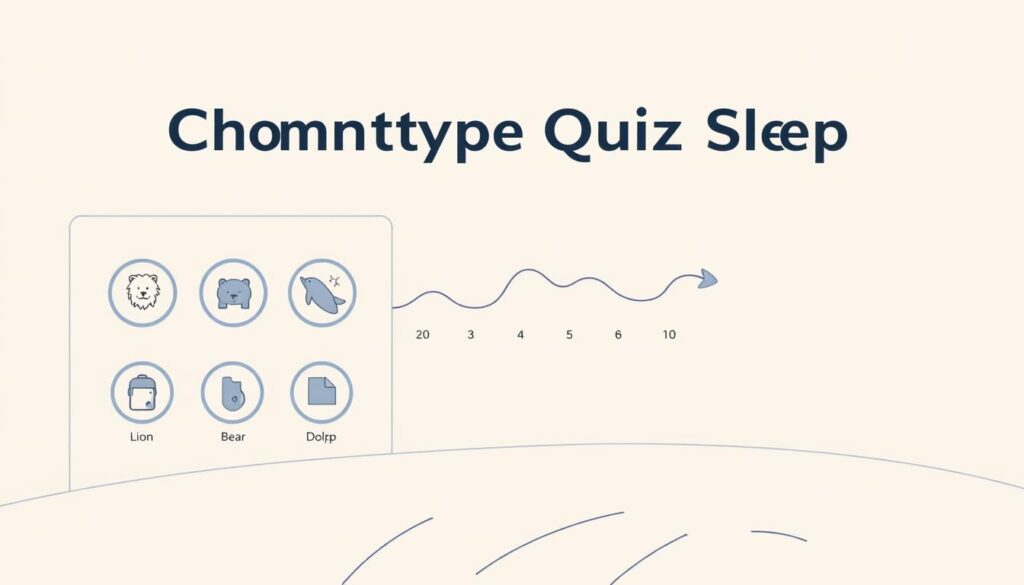
Expect a short time commitment—many tests in this family use 15–20 items and take about three minutes. Typical questions ask when you feel most alert, preferred wake windows, and how consistent your bedtime is.
Question design often draws on validated tools such as the MEQ, rMEQ, MCTQ, and CSM. Privacy practices commonly avoid collecting personally identifiable data and use aggregated responses to improve the tool. Review the privacy notice before you begin.
When to seek professional support
If daytime drowsiness affects safety, or if you or others notice loud snoring, gasping, or breathing pauses at night, consult a sleep professional. For ongoing problems, clinical evaluation can offer targeted care and additional chronotype help that complements lifestyle changes.
- Quick outcome: actionable guidance for bed, wake, and daily schedule anchors.
- Informational: helps you test small changes without replacing medical advice.
- Extra support: follow up with a clinician when symptoms suggest an underlying disorder.
Want to try a commonly used version of this tool? Try the short assessment at Psych Central’s chronotype test to get a quick snapshot and next steps.
Your results explained: lion, bear, wolf, or dolphin — what your type says about your best times
Each result maps common daily highs and lows so you can match tasks to your natural rhythm. Use these quick rules to schedule work, meals, and recovery at the right moments.
This section breaks down what each animal type tells you about prime working blocks and quiet periods.
Lion: early energy peaks, ideal morning focus, and wind-down windows
Lions rise early and hit their best focus in the morning. Schedule deep work and important meetings before noon. Protect an early bedtime to keep mornings strong.
- When: morning peaks
- Tip: reserve late-afternoon for low-stakes tasks
Bear: mid-morning to afternoon productivity aligned with the solar day
Bears follow the sun and do well in mid-morning through early afternoon. Plan key projects and most meetings in that window. A steady evening routine helps keep nights consolidated.
- When: mid-morning to early afternoon
- Tip: align meals and breaks to the daylight cycle
Wolf: late-day alertness, night owl tendencies, and evening performance
Wolves peak later and often feel like a night owl or evening person. Save creative and strategic work for late afternoon and evening. Use gentle wind-down habits near night to avoid overstimulation.
- When: late-day and evening
- Tip: light manage before bed to ease transition
Dolphin: light sleepers with irregular rhythms and strategies to stabilize
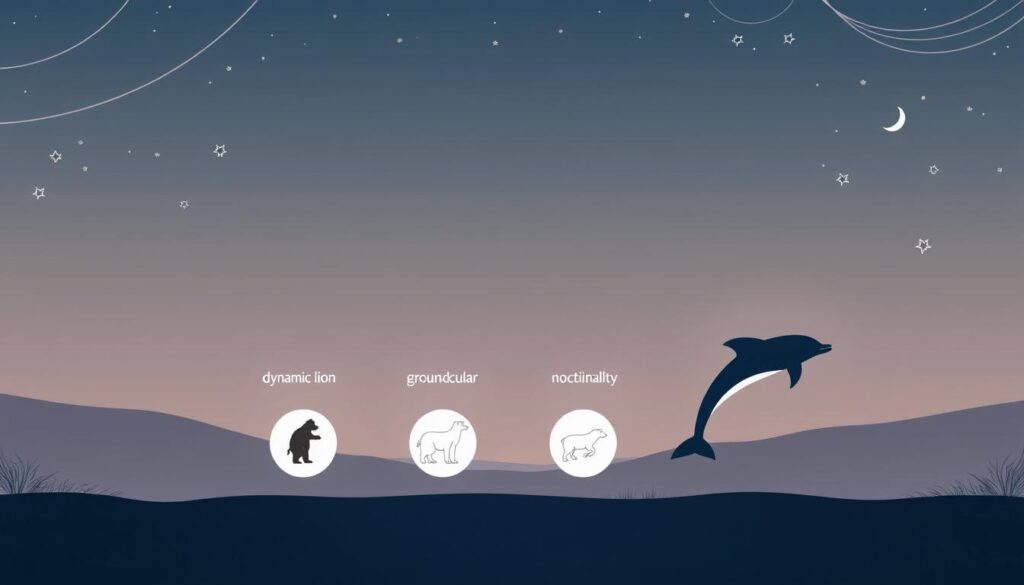
Dolphins tend to have irregular patterns and light sleep. Focus on calming, repeatable pre-bed routines and consistent wake times. Gentle morning light and anchors help stabilize daily timing.
- When: variable; anchor to consistent wake time
- Tip: add structure without forcing rigid schedules
| Type | Peak times | Best tasks | Quick tip |
|---|---|---|---|
| lion | Early morning | Deep focus, decision-making | Early bedtime, morning workouts |
| bear | Mid-morning to early afternoon | Routine work, meetings | Align meals with daylight |
| wolf | Late-day / evening | Creative work, problem solving | Protect evening blocks; wind down before night |
| dolphin | Irregular | Short focused bursts; flexible tasks | Consistent wake, calming pre-bed routine |
All types benefit from consistent wake times, smart light exposure, and mindful caffeine timing. Small shifts—15–30 minutes per week—help adapt your routine when responsibilities clash with a natural pattern.
Personalized tips to align your day with your chronotype and sleep better tonight
Anchor one reliable habit first and build from there. Start by fixing your wake time, then protect a bedtime that gives 7–9 hours. Adjust in 15–30 minute steps until the schedule matches your natural energy.

Plan your sleep, meals, and workouts around natural peaks and valleys
Match activity to when you feel best. Reserve deep work for peak hours and use low-energy windows for admin or recovery. Time major meals so the last big plate lands 2–3 hours before bed to help with uninterrupted sleeping.
Small habit shifts: light exposure, caffeine timing, and bedtime routines
Use light and timing as simple cues. Get bright outdoor light within 30–60 minutes after waking and dim lights 60–90 minutes before bed. Limit caffeine to the first half of the day and stop it about eight hours before bedtime.
Add a repeatable wind-down: stretch, read, or journal. Gentle evening movement should be consistent—morning for early types, midday for mid-day types, later for evening types, and calm, regular sessions for lighter sleepers.
| Action | When | Why it helps | Quick tip |
|---|---|---|---|
| Consistent wake time | Daily | Stabilizes circadian rhythm and energy | Set an alarm and wake within 15 minutes of it |
| Bright morning light | 30–60 min after waking | Reinforces day-night signal to the body | Walk outside or face a bright window |
| Caffeine cutoff | 8 hours before bed | Protects sleep depth and continuity | Swap to herbal tea in afternoon |
| Structured wind-down | 60–90 min before bed | Cues melatonin and reduces arousal | Turn off screens, read, or stretch |
For a practical guide to ideal bedtimes and how to time these tips for your type, see this ideal bedtime guide. Small, consistent habit changes improve energy, health, and nightly recovery over weeks—not overnight.
Conclusion
Let your result guide one small change tonight so your day and night feel more aligned tomorrow. Small, consistent anchors help your body natural clock and make daily focus and restful nights easier.
Your identified chronotype gives a clear map for planning work, workouts, meals, and recovery. Use one tip from your result and test it for a week.
Share peak times with people who rely on your schedule so meetings land when focus is highest. Return to your result after a few weeks and adjust times as needed.
For more background and practical timing ranges, see this guide on how understanding your chronotype helps you sleep. Join a community to get ongoing chronotype help and improve your health over time.
FAQ
What will I learn from the quiz and how long does it take?
The short interactive survey reveals whether your natural pattern best matches a lion, bear, wolf, or dolphin and gives actionable timing suggestions for sleep, meals, and exercise. It typically takes 3–5 minutes to complete and delivers clear, personalized routines you can try right away.
How does the interactive quiz determine my type?
The questionnaire asks about your usual sleep-wake times, peak energy hours, how quickly you wake up, and daytime alertness. Answers map to patterns of the circadian rhythm and behavioral tendencies so the tool can match you with the closest profile and practical timing tips.
What exactly is a chronotype and why does it matter?
A chronotype is your body’s preferred timing for sleep and activity tied to the circadian clock and hormone cycles like melatonin and cortisol. Knowing yours helps you schedule high-focus work, exercise, and meals when you’re naturally most alert, improving performance and wellbeing.
Who created the four-type system used in this quiz?
The four categories—lion, bear, wolf, and dolphin—are based on clinical work popularized by sleep specialist Dr. Michael Breus. They’re a practical framework to translate circadian science into everyday routines.
Is the quiz a medical diagnosis or a replacement for professional advice?
No. The tool is educational and designed for adults seeking lifestyle guidance. It’s not a medical diagnosis. If you have persistent insomnia, excessive daytime sleepiness, or other sleep disorders, consult a licensed sleep clinician or your primary care provider.
Will my results stay the same over time?
Results can shift with life changes—shift work, parenthood, travel across time zones, or major health changes may alter your natural timing. Re-taking the assessment after significant lifestyle shifts is a good way to update your recommendations.
How private is my quiz data and what about sharing results?
The quiz is built with privacy in mind: only essential responses are stored and handled per the site’s privacy policy. You can download or share your personalized plan, but any sensitive medical concerns should remain between you and a healthcare professional.
What practical changes can I expect after I know my type?
Expect simple, evidence-based strategies: adjust light exposure to shift circadian timing, time caffeine and meals to avoid energy crashes, and schedule demanding tasks during peak windows. Even modest shifts—15–30 minutes to bedtime or morning light—can improve sleep quality and daytime performance.
How do the four types differ in daily scheduling and energy peaks?
Lions typically peak early and perform best in the morning; bears sync with the solar day and have steady afternoon productivity; wolves hit energy later and favor evening work; dolphins are light, sensitive sleepers who benefit from structured routines and sleep-stability tactics.
Can lifestyle changes shift a late-night wolf toward an earlier schedule?
Yes—gradual adjustments work best. Daily morning bright light, earlier meals, consistent wake times, and timed exercise can advance your clock. Changes should be incremental (10–30 minutes earlier per week) and paired with good sleep hygiene to be sustainable.
Are there specific tips for people who travel or do shift work?
Use strategic light exposure, melatonin timing when appropriate, and schedule meals to help re-entrain your clock. For shift workers, keeping a consistent sleep window, using blackout curtains, and a wind-down routine before daytime sleep improves adaptation. Consult a clinician for complex schedules.
How should I time caffeine, workouts, and meals according to my type?
Generally, avoid caffeine within 6–8 hours of your target bedtime, place workouts during your natural energy peak (morning for lions, afternoon for bears, evening for wolves), and schedule meals to support alertness—breakfast for early types, a later main meal for evening types. Tailor timings to your assessed pattern.
I’m a dolphin—what practical strategies help stabilize irregular sleep?
Dolphins benefit from strong routines: fixed wake and bed times, gentle morning light exposure, limited late-day caffeine, and relaxation practices before bed. Small, consistent cues help build sleep pressure and reduce nighttime awakenings.
Where can I find scientific sources that support these recommendations?
Recommendations draw on circadian biology and clinical guidance from sources such as PubMed, the National Institutes of Health, and sleep medicine literature. For personalized medical advice, check resources at the American Academy of Sleep Medicine or speak with a licensed sleep specialist.



Don’t Miss These Picks