


Ever notice how stress makes it harder to concentrate, fall asleep, or remember simple things? Your brain and stress hormones work together to produce these reactions. Ashwagandha, an herb used for centuries in traditional Indian medicine, may influence some of those same systems.
Research suggests that certain ashwagandha extracts may reduce perceived stress, lower cortisol levels, and modestly improve sleep. Early studies also suggest possible benefits for memory and attention. However, scientists still do not fully understand how the herb affects the human brain, and not every claimed benefit has strong evidence.
Most stress and sleep studies have lasted 6–12 weeks, often using 250–600 mg of specific extracts daily. Those amounts are research examples, not a universal dosing recommendation. This guide explains the brain science, what the studies actually found, how extracts differ, and the safety risks worth knowing before considering a supplement.
Key Takeaways
- Stress response: Ashwagandha may influence the HPA axis, a brain-body system that helps control cortisol and your response to stress.
- Research findings: Several small human trials suggest improvements in stress and sleep. Evidence for memory, attention, and athletic performance is still developing.
- Timing: Most meaningful stress and sleep findings come from studies lasting 6–8 weeks or longer. Same-day cognitive findings are preliminary.
- Extracts matter: Root-only and root-and-leaf extracts have different chemical profiles. You cannot assume equal effects from equal milligram amounts.
- Safety: Ashwagandha can interact with medications, affect thyroid function, and has been linked to rare liver injuries. Avoid it during pregnancy and breastfeeding.
Helpful Products at a Glance
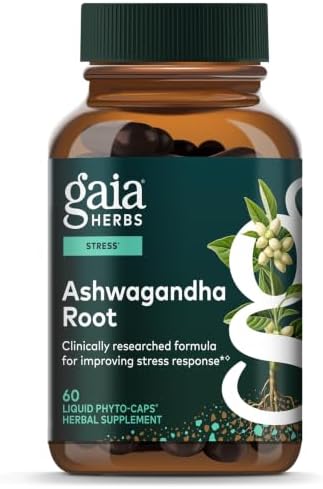
For readers comparing organic ashwagandha root options, Gaia Herbs Ashwagandha Root 350 mg comes in vegan liquid-filled capsules. Its root-based formulation is relevant to research on stress, although its capsule format does not establish superior absorption or effectiveness.
- Clinically studied stress and sleep support: Ashwagandha root was shown to support healthy stress balance and restorative sleep in a clinical study of healthy adults.*
- Adaptogen for cortisol balance: This traditional Ayurvedic herb supports healthy cortisol levels and helps women and men adapt to life's everyday stressors.*
For those comparing a standardized root extract, Nutricost KSM-66 Ashwagandha 600 mg provides a labeled 5% withanolide formulation. It also contains BioPerine, so people taking medications should review that additional ingredient.
What Is Ashwagandha, and Why Is It Linked to Brain Health?
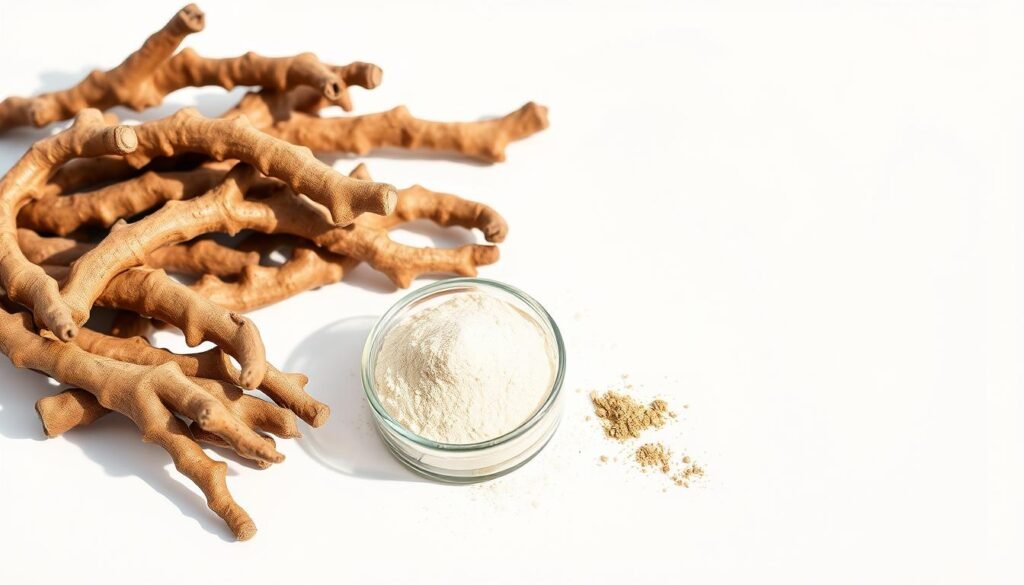
Ashwagandha (Withania somnifera) is a shrub whose roots have been used in Ayurvedic medicine for generations. It is sometimes called Indian ginseng, although it is not related to true ginseng.
The herb contains natural compounds called withanolides, along with alkaloids and other plant chemicals. Researchers are studying how these compounds might affect stress hormones, nerve cells, inflammation, and the body’s response to physical and mental strain.
Ashwagandha is often described as an adaptogen, meaning a substance traditionally believed to help the body respond to stress. That term describes a proposed benefit; it does not mean the supplement automatically balances hormones or treats stress-related disorders.

Root extract vs. root-and-leaf extract
The plant part matters because roots and leaves contain different amounts and mixtures of active compounds.
- Root-only extract: Used in many studies examining stress, sleep, and memory. Some products are standardized to a stated withanolide percentage.
- Root-and-leaf extract: Used in several stress, sleep, and short-term performance studies. Its chemical profile may differ substantially from a root-only extract.
- Leaf-focused preparations: Have less human evidence for stress and cognitive outcomes. They should not be treated as interchangeable with studied root extracts.
Extraction methods also matter. A 300 mg extract concentrated to a higher withanolide percentage is not necessarily equivalent to 300 mg of dried root powder. Higher concentrations are not automatically safer or more effective.
How Ashwagandha May Affect the Brain’s Stress Signals
Stress does not begin and end with feeling worried. It involves messages between your brain, hormones, and nervous system. Three possible pathways help explain why scientists are interested in ashwagandha.
1. The HPA axis and cortisol
The hypothalamic-pituitary-adrenal (HPA) axis is your body’s main stress-response system. Think of it as a communication chain between the brain and adrenal glands.
- The hypothalamus detects a challenge. It sends a chemical message that begins the stress response.
- The pituitary gland passes the message along. It releases a hormone that tells the adrenal glands to respond.
- The adrenal glands release cortisol. This hormone helps your body respond by making energy available and changing how alert you feel.
- Feedback signals help regulate the response. Normally, the system reduces its activity when the immediate challenge passes.
Cortisol is not a harmful hormone by itself. You need it for normal daily functions, including waking up and responding to challenges. Problems can arise when stress is persistent or the system is poorly regulated.
Several randomized trials have found that people taking certain ashwagandha extracts for 6–8 weeks reported less stress and had lower cortisol measurements than people taking a placebo.
A 2024 systematic review and meta-analysis combined nine randomized trials involving 558 participants and found improvements in perceived stress, anxiety scores, and cortisol. However, the studies used different extracts and were generally small.
What this means: Ashwagandha may influence stress-related hormone activity, but researchers have not proved that it resets the HPA axis or produces the same effect in everyone.
2. GABA and communication between nerve cells
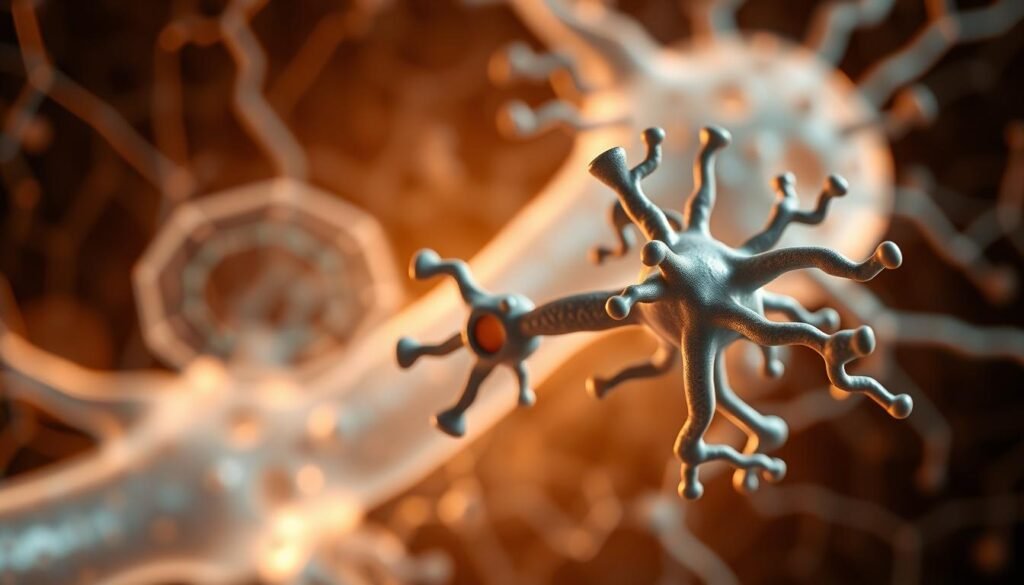
Your brain uses chemical messengers called neurotransmitters to help nerve cells communicate. One important messenger is GABA (gamma-aminobutyric acid), which generally helps reduce excessive nerve-cell activity.
Imagine a car with an accelerator and brakes. Some brain signals increase activity, while others help slow it down. GABA works somewhat like a braking system.
Laboratory and animal studies suggest that certain ashwagandha compounds may influence GABA-related receptors. Researchers have observed effects on GABA-A receptor signaling, including changes in chloride movement across cell membranes.
These findings offer a possible explanation for the herb’s calming effects. However, researchers have not confirmed that ordinary oral ashwagandha supplements directly increase GABA activity in the human brain in the same way.
3. Acetylcholine, inflammation, and antioxidant activity
Acetylcholine is another neurotransmitter involved in attention, learning, and memory. Early laboratory research suggests some ashwagandha extracts may influence cholinergic signaling, including certain nicotinic receptors.
Researchers are also examining how compounds such as withaferin A affect two important cellular pathways:
- Nrf2: Helps cells turn on protective systems that respond to oxidative stress, a type of cellular strain.
- NF-kB: Helps regulate inflammation-related signals, including chemical messengers called cytokines.
Some experiments also involve the PI3K/AKT pathway and antioxidant defenses such as SOD, catalase, and glutathione-related enzymes.
These are useful scientific clues, not proof that taking ashwagandha protects human brain cells from aging, prevents dementia, or reverses inflammation-related cognitive problems. Most direct evidence for these mechanisms comes from laboratory and animal research.
What Human Studies Say About Stress, Sleep, and Memory
The most useful question is not whether ashwagandha affects a laboratory pathway. It is whether people experience meaningful benefits in controlled studies.
Stress and anxiety: promising, but not a guaranteed treatment
Human trials have often used standardized extracts in amounts ranging from roughly 240 to 600 mg daily over several weeks. Many participants reported improvements in stress-related symptoms compared with placebo.
Some studies also found lower cortisol levels, less fatigue, and better feelings of well-being. Still, study quality, participant characteristics, and extract differences limit how widely the findings apply.
The NIH Office of Dietary Supplements describes the stress findings as promising, while the National Center for Complementary and Integrative Health notes that evidence for anxiety remains uncertain.
Sleep: small improvements after several weeks
Ashwagandha may help some people fall asleep sooner, sleep longer, or report better sleep quality.
A review of five clinical trials involving 372 adults found a small overall sleep benefit compared with placebo. Results were generally stronger in people with insomnia, in studies lasting at least eight weeks, and with certain higher-dose extracts.
That does not make ashwagandha a reliable sleeping pill. Benefits vary, and taking it shortly before bed has not been established as the best timing for everyone.
Memory, attention, and executive function
Researchers have explored whether reducing stress or influencing neurotransmitter activity could improve thinking skills.
In one small study involving 13 participants, a single 400 mg liposomal root-and-leaf extract was associated with improvements in selected working-memory and attention tests over several hours. Other test results were mixed.
Longer studies using root extracts have also reported improvements in memory, processing speed, and attention after several weeks.
A 2026 systematic review and meta-analysis of 20 studies involving 1,249 participants reported favorable results for memory, attention, processing speed, and some executive-function measures.
These findings strengthen the reason to study ashwagandha, but they do not establish that it reliably improves everyday concentration, prevents cognitive decline, or treats memory disorders. Study quality and the products used still matter.
What about athletes and mental fatigue?
Exercise places healthy stress on the body, temporarily increasing energy demands, inflammation signals, and oxidative activity. Researchers have studied whether ashwagandha affects endurance, fatigue, and recovery.
Some small trials reported improvements in VO2 max, a measure of how well the body uses oxygen during exercise, and time to exhaustion. However, findings vary, and the evidence is not strong enough to guarantee better athletic performance.
A better approach is to prioritize training, adequate food, hydration, and sleep. Ashwagandha has not been shown to replace these basics. The Banner Health discussion of ashwagandha for athletes offers additional context on potential benefits and risks.
How Long Does Ashwagandha Take to Work?
Different studies measure different outcomes, so there is no single timeline that applies to every person or extract.
- Within hours: A few small experiments have found changes in selected attention or reaction-time tests. Same-day benefits remain uncertain.
- After 4–6 weeks: Some studies report improvements in perceived stress, anxiety-related symptoms, or sleep.
- After 6–8 weeks: Many stress and sleep trials report their main results at this point.
- After 8–12 weeks: Some studies examine sleep and cognitive outcomes over longer short-term periods.
These timelines describe research findings, not guaranteed personal results. Feeling calmer after two days does not prove the supplement caused the change, and having no benefit after several weeks does not mean you need a larger dose.
Ashwagandha Dosage and Timing: What the Research Used
Clinical studies have tested several formulations and doses. Milligrams alone do not tell you how strong an extract is. The plant part, extraction process, and withanolide content all influence what a serving contains.
- 240–300 mg daily: Used in some stress and anxiety studies with particular standardized extracts.
- 500–600 mg daily: Frequently studied for stress and sleep, often over 6–8 weeks or longer.
- Other amounts and specialty formulations: Used in some acute cognition, athletic-performance, or extract-specific trials. Results should not be generalized to ordinary capsules.
Some protocols divide the daily amount into two servings; others use one serving. There is not enough reliable evidence to say that morning dosing improves focus or evening dosing produces better sleep for everyone.
A single 400 mg dose tested in a laboratory should not be treated as an established same-day productivity strategy. Likewise, higher amounts used in research are not instructions to increase a supplement dose.
How to Choose a Quality Ashwagandha Extract
If you and your clinician decide that an ashwagandha supplement is appropriate, product quality deserves careful attention. Supplements are not all chemically identical, even when the front labels make similar claims.
Five things to check before choosing
- Plant part: Look for a clear statement such as root extract or root-and-leaf extract.
- Serving amount: Check milligrams per capsule and per full serving. Two capsules may be required to reach the labeled serving amount.
- Withanolide standardization: Prefer clear percentages or actual amounts rather than vague strength claims.
- Independent testing: Look for credible verification of identity, potency, and contaminant screening. A general manufacturing claim is not the same as independent product certification.
- Added ingredients: Review piperine, vitamins, herbs, sweeteners, and other compounds that may affect suitability or interactions.
Root extract option: Gaia Herbs Ashwagandha Root
For readers who prefer a root-based formula in vegan liquid-filled capsules, Gaia Herbs Ashwagandha Root provides a practical example. Its 60-capsule formulation lists 350 mg of root extract per capsule, with two capsules making up a serving.
Its relevance goes beyond a similar-sounding ingredient label: the NIH describes a small 30-day trial in college students using a Gaia Herbs root extract at two 350 mg capsules daily. Participants reported favorable experiences with managing stress and aspects of well-being, although those findings do not guarantee results from every batch or establish an effect for everyone.
The main tradeoff is that liquid-filled capsules are not proven superior to dry standardized extracts for brain health. Check the current label for withanolide content, additional ingredients, and serving instructions before comparing it with other products.
- Clinically studied stress and sleep support: Ashwagandha root was shown to support healthy stress balance and restorative sleep in a clinical study of healthy adults.*
- Adaptogen for cortisol balance: This traditional Ayurvedic herb supports healthy cortisol levels and helps women and men adapt to life's everyday stressors.*
- Easy-to-take vegan capsules for daily stress support: Adults take 1 capsule twice daily for convenient everyday use.*
- Quality you can trust: Gluten-Free, Dairy-Free, Soy-Free and Vegan, with no artificial sweeteners, colors, or flavors added.* Independently tested by SuppCo for identity and potency against label claims.
Standardized root option: Nutricost KSM-66 Ashwagandha
Someone trying to understand the research on standardized root extracts may find a clearly labeled KSM-66 formulation easier to compare with published study methods. The extract name identifies a particular preparation, but the name alone does not make every finished product clinically proven.
Nutricost KSM-66 Ashwagandha contains 600 mg of standardized root extract per capsule and lists 5% withanolides. It also contains BioPerine, a black pepper extract. That added ingredient may be unsuitable for some people taking medications, and it should not be assumed to improve clinical outcomes simply because it is marketed for absorption.
This is a different formulation choice from Gaia’s liquid-filled root capsules. Neither is automatically the better option for stress, sleep, or memory. Your medical history, ingredient tolerance, and the exact studied formulation matter more than choosing the highest-strength label.
You do not need an ashwagandha supplement to build better stress-management habits. If the expected benefits are small, the risks outweigh them for you, or you prefer not to take supplements, sleep and stress-management strategies remain worthwhile options.
Build a Daily Routine That Supports Your Stress Response
Your HPA axis responds to much more than supplements. Sleep schedules, physical activity, light exposure, and ongoing life stress can all influence how you feel and function.
These habits offer practical benefits whether or not ashwagandha is part of your routine.
- Keep a regular sleep schedule. Aim for a consistent bedtime and wake time. Most adults need at least seven hours of sleep.
- Get daylight after waking. Morning light helps support the body’s normal sleep-wake rhythm.
- Move regularly. A brisk walk, cycling, or another enjoyable activity can improve mood, sleep, and general health.
- Take short breaks during demanding work. A few minutes of walking, stretching, or slow breathing can interrupt long periods of tension.
- Eat balanced meals. Include vegetables, fruit, protein, whole grains, and other nutrient-rich foods to support overall health.
These strategies do not need an added supplement to be useful. They also provide a more reliable foundation than expecting a capsule to correct poor sleep or chronic overload.
Safety: Who Should Avoid Ashwagandha?
Ashwagandha is often well tolerated during short clinical studies, but natural does not mean risk-free. Long-term safety beyond roughly three months has not been established.
People who should avoid it or seek medical guidance
- Pregnant or breastfeeding people: Avoid ashwagandha because adequate safety data are lacking and pregnancy-related concerns have been raised.
- People with thyroid disorders: The herb may change thyroid hormone levels and interfere with treatment.
- People with autoimmune disorders: Possible immune-system effects make unsupervised use inappropriate.
- People with liver disease: Avoid use without specialist guidance because rare but sometimes serious liver injury has been reported.
- People taking medications: Potential interactions include sedatives, anticonvulsants, thyroid hormones, immunosuppressants, diabetes drugs, and blood pressure medications.
- People preparing for surgery: Avoid starting it and discuss any current use with the surgical team.
- Men with hormone-sensitive prostate cancer: Avoid use because of possible hormone-related effects.
Side effects and warning signs
Commonly reported side effects include nausea, stomach discomfort, diarrhea, and drowsiness. More serious reactions are uncommon but possible.
Stop taking the supplement and seek prompt medical evaluation if you develop yellowing of the skin or eyes, dark urine, severe itching, unusual tiredness, or persistent abdominal pain. These may be signs of liver injury.
Because ashwagandha may affect blood sugar and blood pressure, anyone using medication for these conditions should discuss it with their prescribing clinician rather than starting, stopping, or adjusting treatment independently.
For detailed safety and interaction information, consult the NCCIH ashwagandha overview or the WebMD safety profile.
How to Track Whether Ashwagandha Is Helping
It is easy to believe a supplement is working after one good night’s sleep. But stress and sleep naturally change from day to day, making it difficult to separate a true effect from normal variation.
Use a few simple measures before and during any clinician-approved trial.
- Record your starting point. For one week, write down your daily stress level from 1–10, hours slept, and how rested you feel.
- Keep other habits reasonably consistent. Large changes in caffeine, exercise, or bedtime can make comparisons harder.
- Review weekly averages. Look for patterns over several weeks rather than reacting to one unusually good or bad day.
- Track unwanted effects. Record nausea, drowsiness, digestive changes, or other symptoms alongside any perceived benefits.
- Reassess the plan. Discuss whether continued use makes sense instead of automatically increasing the dose or extending treatment.
For concentration, you can also note how easily you complete routine work or study sessions. Reaction-time apps may be interesting, but their scores vary with practice, sleep, and device conditions, so they cannot prove a supplement improved brain function.

Common Myths About Ashwagandha and Brain Health
- Myth: Ashwagandha immediately improves focus. Reality: A few small acute studies are interesting, but they do not establish a dependable same-day focus benefit.
- Myth: Lower cortisol always means better health. Reality: Cortisol is essential. The goal is normal regulation, not keeping hormone levels as low as possible.
- Myth: More withanolides always mean stronger results. Reality: Extract composition, human evidence, and safety matter more than a large concentration printed on the label.
- Myth: Ashwagandha protects the brain from aging. Reality: Laboratory studies suggest possible protective pathways, but clinical evidence does not prove prevention of dementia or other neurodegenerative diseases.
- Myth: Natural supplements are safe for everyone. Reality: Ashwagandha can have side effects, interactions, and uncommon serious risks.
Frequently Asked Questions
Does ashwagandha actually change brain chemistry?
Laboratory studies suggest it may influence GABA-related and cholinergic signaling, as well as inflammation-related pathways. Human trials provide some evidence of stress and sleep benefits, but researchers have not confirmed all the proposed brain mechanisms in people taking typical supplements.
Does ashwagandha lower cortisol?
Several controlled trials found lower cortisol measurements in participants taking specific ashwagandha extracts compared with placebo. Results vary, and lower cortisol does not automatically mean better health.
Can ashwagandha improve memory and concentration?
Some human studies and a 2026 research review report improvements in selected memory and attention tests. However, the evidence is not strong enough to recommend ashwagandha as a treatment for memory problems or cognitive decline.
Should I take ashwagandha in the morning or at night?
There is no well-established best time for everyone. Research has used different schedules, and the specific extract may matter more than the hour taken. Discuss appropriate use and timing with a clinician, particularly if you take medications or experience drowsiness.
Is ashwagandha safe to take every day?
Daily use has been studied for periods of several weeks to roughly three months, often with acceptable short-term tolerability. Long-term safety remains uncertain, and certain people should avoid it entirely.
Can I combine ashwagandha with other supplements?
Combination products may contain ingredients such as magnesium, L-theanine, other herbs, or piperine. Their combined effects and interactions are not necessarily established by studies of ashwagandha alone. Review every ingredient before combining supplements.
Conclusion: What Ashwagandha Can and Cannot Do for Your Brain
Ashwagandha may help some adults manage stress and improve sleep, but its brain-related effects are more complex than supplement marketing suggests. Research points to possible influences on the HPA axis, neurotransmitter signaling, and cellular stress responses. The strongest practical evidence concerns short-term stress and sleep outcomes, while cognitive and athletic benefits still need more research.
If you are considering ashwagandha, first review your health conditions and medications, understand the extract being studied, and weigh the possible benefits against the risks. Focus on meaningful changes in stress, sleep, and daily functioning rather than expecting dramatic improvements in memory or focus.
And whether you use a supplement or not, consistent sleep, regular movement, balanced nutrition, and manageable daily routines remain valuable ways to support your brain and overall well-being.