


What if the first two hours of your day could unlock more energy, focus, and longevity than any single supplement?
Wake naturally, get the right light, move with intent, eat nutrient-dense plant foods, and track meaningful metrics. That five-part framework turns morning choices into a lever you can pull every day to raise performance and health.
This guide maps science-backed habits used by serious practitioners like bryan johnson, who favors early wake times, light therapies, and a time-restricted eating window. You’ll see practical templates from 30 to 90 minutes and simple checklists for movement, nutrition, and tracking.
Ready to rethink how you start your day? Explore the methods, tools, and safety notes that make these steps repeatable and sustainable. For a full case study of real-world practice, check this deep dive on bryan johnson’s morning routine.
Key Takeaways
- Light first: Early light exposure anchors circadian rhythms and boosts alertness.
- Move to prime: Short, intentional movement improves posture and energy for the day.
- Eat strategically: Time-restricted, nutrient-dense meals reduce sugar swings and sustain focus.
- Track what matters: Simple metrics guide safe supplement and training choices.
- Customize for you: Templates let you scale from 30–90 minutes to fit real life.
Why Mornings Matter for Peak Productivity and Longevity
A fixed morning routine reduces decision fatigue and creates psychological safety, helping you start calm and focused. When your first actions are intentional, the rest of the day follows suit—your schedule feels lighter, your mind clearer, and your progress more consistent.
Rituals lower cognitive load by turning essential tasks into automatic habits. That saves mental energy for deep work and better choices later in the day.
How rituals create psychological safety and focus
Psychologists note that repeated practices build a sense of control. This reduces stress signals and stabilizes mood early in the day.
Predictable steps cue your brain to switch from sleep mode to action. Over time, perceived sleep quality and morning clarity improve.
How a fixed sequence sets the tone
A calm first hour deters distraction, protects your prime cognitive block, and helps you choose “self-care first.” That boosts adherence to long-term goals tied to longevity and overall health.
“Start with the small, repeatable wins — they compound into sustained focus and better health over years.”
| Benefit | Effect | Action |
|---|---|---|
| Less decision fatigue | More willpower later | Pre-plan first tasks |
| Stable mood | Better focus | Simple rituals (breath, light) |
| Consistent health habits | Improved longevity markers | Track one metric weekly |
For a concrete playbook used by a high-profile practitioner, see this detailed case study. Use that as inspiration, then simplify to what you can repeat every day.
Understanding Circadian Rhythm: Light, Sleep, and Energy
Light is the single strongest signal your body uses to set its internal clock. Get the right exposure early to sharpen alertness and stabilize sleep timing.

Sunlight, blue light, and red light: when each belongs
Prioritize outdoor sunlight within 30–60 minutes after waking when possible. Natural light beats indoor bulbs for aligning circadian rhythm and boosting daytime focus.
Use blue light in short, timed sessions for alertness or skin-focused therapies. Keep it deliberate and pair it with a breathing practice to avoid later overstimulation.
Use red light as a targeted therapy for skin or scalp support. Do not treat red therapy as a substitute for real sunlight.
Wake time, no alarm, and sleep quality cues
Waking consistently—ideally without an alarm—lets you judge sleep by how you feel and perform. Track sleep quality by your energy and focus across the first hours of the day.
Measure light and temperature early if you can; small data points help refine timing and improve sleep architecture over weeks.
Seasonal adjustments for the United States
In winter, add bright indoor light before sunrise and move outdoors once sun appears. In summer, take advantage of earlier sunlight to get outside quickly.
Align meals, training, and work blocks with your natural peaks. When light and sleep line up, energy levels and cognitive performance follow.
| Goal | Action | Timing |
|---|---|---|
| Anchor circadian rhythm | 30–60 min outdoor sunlight | Within first hour after waking |
| Boost alertness | Short blue light session + breathing | Early morning, time-bound |
| Skin/hair support | Red light therapy, brief | Separate from main sunlight window |
Biohacker Morning Routine
A simple five-part checklist can turn scattered mornings into predictable gains for focus and longevity. Use this framework as a modular playbook: get light, move and breathe, fuel with intention, train, and track.
Each habit compounds. Together they support your day’s focus and long-term health goals. Scale the sequence to 30–45 minutes when pressed, or 90 minutes when you can go deep.
The five-habit framework at a glance
- Habit 1: Anchor circadian rhythm with early light and a calm wake sequence to reduce stress and sharpen focus.
- Habit 2: Move, breathe, and mobilize to prime posture, joints, and the nervous system before heavy cognitive work.
- Habit 3: Fuel intentionally—hydrate, choose energy-stable foods, and consider time-restricted eating to avoid crashes.
- Habit 4: Target training that mixes strength, cardio, and flexibility so exercise helps, not hinders, your morning momentum.
- Habit 5: Track one or two metrics and make small tweaks aligned with your goals; revisit them monthly.
Define one clear outcome per habit (for example, “10 minutes outdoor light,” “5 minutes nasal breathing,” or “protein-forward breakfast”). These micro-goals drive adherence and make the plan repeatable.
“Start with simple, measurable wins—consistency beats intensity for long-term gains.”
| Habit | Core outcome | Time |
|---|---|---|
| Light exposure | 10 min outdoor or bright indoor light | 5–15 minutes |
| Movement & breath | Mobility + 5 min breathwork | 10–20 minutes |
| Smart fueling | Hydrate + protein-forward meal | 5–20 minutes |
| Targeted training | Short strength or cardio block | 15–45 minutes |
| Track & tweak | One metric (sleep, HRV, mood) | 5 minutes weekly check |
For a full case study and a more exhaustive playbook, see this concise profile of a high-profile practitioner’s approach on Bryan Johnson’s protocol.
Habit One: Wake Naturally and Get Morning Light Exposure
A brisk, purposeful dose of light within the first hour of waking resets hormones, sharpens focus, and helps your sleep the next night.
Aim to wake without an alarm clock when possible. If you need one, use a gradual sunrise alarm to cut sleep inertia and stress.
If you wake before sunrise, use bright indoor light or a UV/bright lamp briefly. Transition to real sunlight as soon as it appears to anchor your circadian rhythm.
Spend at least 5–10 minutes outside facing the sky. Brighter conditions need fewer minutes; overcast days may require a longer exposure.
Avoid sunglasses during this first exposure unless advised by a doctor. Keep your phone off until after light exposure to protect your prime mental state.

No alarm vs. gradual alarms: which to choose?
Consistent wake times beat variable ones. Snoozing disrupts signals and harms sleep quality. Pick a wake time you can repeat most days.
UV and natural light: practical steps
Use light therapy devices only as a supplement. Reserve red light for skin or scalp protocols and keep it separate from your main daylight cue.
Minutes that matter: timing your first exposure
Get outside within 30–60 minutes of waking. Track how different minutes of exposure change your alertness; small tweaks can make a noticeable difference.
“Move your first light earlier or boost intensity if mornings lag; shift light earlier in the day if nights feel wired.”
- Tip: Pair light with a short walk to amplify wakefulness and lymphatic flow.
- Track: Note which exposure length improves energy and adjust by minutes, not big jumps.
Habit Two: Movement, Breathwork, and Mobility to Prime the Body
Start with 5–10 minutes of gentle movement to raise circulation and wake the nervous system. Follow with a short cardio or HIIT burst if your training schedule allows, keeping intensity mindful of recovery.
Start your active window with short, intentional movement to wake the body and sharpen the mind. Gentle walking, dynamic leg swings, and scapular retractions warm tissue without draining energy for the rest of the day.
Pair movement with simple breathing. Try nasal breathing or a box-breath sequence for 1–2 minutes to lower stress and prime focus before work.
Short cardio, HIIT bursts, and flexibility basics
Keep cardio brief: a brisk 5–8 minute walk or a 2–4 minute HIIT burst raises heart rate without exhausting you. Use low-friction flexibility work—5–8 controlled stretches—to protect joints and reduce soreness.
Breathing practices to boost focus and calm
Insert 1–2 minutes of nasal-only breathing or slow exhale protocols to ground the nervous system. This simple step improves attention and supports steady energy levels throughout the day.
Posture, stretching, and joint health for long-term productivity
Cycle mobility for ankles, hips, thoracic spine, and shoulders. Use posture primers like hip-extension activation and scapular retraction before long desk periods.
- Keep it consistent: small daily sessions beat occasional long workouts for joint health.
- Stack smart: combine an outdoor walk with light exposure when pressed for time.
- Track feel: log which exercises give the best return so you repeat what works.
“Short, repeatable movement sequences protect long-term health and make high-quality training possible later in the day.”
For a gentle Hatha flow that pairs well with this approach, try the 10-minute hatha sequence to stack flexibility and breath work into a short session.
Habit Three: Smart Fueling — Breakfast Timing, Intermittent Fasting, and Hydration
Front-load nutrients to stabilize cognitive focus and avoid sugar-driven crashes. Consider a time-restricted eating window to align digestion with your circadian peak and sustain energy.
Consider an early time-restricted eating window (for example, ~5 hours) to match digestion with daytime demand and reduce mid-afternoon dips. Bryan Johnson’s protocol often uses an early window (~6–11 am) and emphasizes nutrient density while minimizing processed sugars.
If fasting doesn’t suit you, choose a protein-forward breakfast. Pair lean protein with vegetables and healthy fats to slow digestion and keep energy levels steady. Simple foods like lentils, berries, nuts, and olive oil deliver vitamins without a sugar spike.
Start hydration early. Use mineralized water or added electrolytes if you train or sweat. Proper fluids support blood volume, cognition, and recovery.

Practical rules to apply
- Keep breakfast simple: protein + fiber-rich plants + healthy fats.
- Match calories to activity: training mornings need more early calories; lighter days need less.
- Avoid liquid sugars: juice and sweetened drinks spike sugar and harm focus.
- Track and adjust: monitor sleep, satiety, and energy for several weeks and tweak hours or calories.
“Front-load nutrients to stabilize focus while avoiding sugar spikes and highly processed foods.”
For a practical review of fasting strategies and how they affect women differently, see this intermittent fasting guide.
Habit Four: Targeted Training for Brain and Body Performance
Balance modalities: 2–3 weekly strength sessions, 2–3 cardio sessions (mixing low intensity and HIIT), and daily micro-mobility. This rotation protects the heart, strengthens the body, and preserves flexibility.
Keep morning training focused and efficient; reserve technical or heavy sessions for days with more recovery bandwidth.
Targeted training blends short, purposeful workouts with mobility so your daily performance improves without burnout.
Balancing strength, cardio, and flexibility
Use progressive overload in strength work: add small weekly increases to keep gains steady and safe.
Alternate cardio intensities to support the heart and avoid monotony. Short HIIT bursts fit tight windows.
Include 5–10 minutes of mobility each day to keep flexibility and posture ready for long desk hours.
- When time is limited: choose one primary workout and one accessory. Example: strength + 5-minute intervals or cardio + quick mobility.
- If a heavy session is later: keep the morning movement light and circulation-focused to prep without pre-fatigue.
- Track: log core lifts, resting heart rate, and perceived exertion to guide adjustments.
“Consistent, varied training builds a resilient body and a steady cardiovascular base—small, measurable steps win over sporadic intensity.”
| Goal | Action | Weekly Frequency |
|---|---|---|
| Strength | Progressive overload on core lifts | 2–3 sessions |
| Cardio | Mix low-intensity steady state & HIIT | 2–3 sessions |
| Flexibility & Mobility | Daily 5–10 min micro-mobility | Daily |
| Recovery & Variety | Low-impact options (sled, step-ups) | 1–2 sessions |
Habit Five: Track, Tweak, and Personalize
Track a few daily metrics to turn habits into measurable progress and build a carefully crafted plan that fits your life.
Change one variable at a time, measure for 1–2 weeks, and use trends — not day-to-day noise — to refine your goals and daily routine.

Body metrics to monitor daily
Track a few daily metrics — sleep quality signals, morning bodyweight, resting heart rate, and subjective energy — to guide smart adjustments.
Choose metrics that match your goals: body composition for fat loss, HRV or resting heart rate for recovery, and training logs for performance.
Keep a simple 5-minute log: previous night’s sleep, morning energy, training notes, and mood. Over weeks, patterns reveal what helps longevity and health.
When and how to adjust your routine
Change one thing at a time and measure for at least 1–2 weeks before making another tweak.
Use a weekly review to spot trends. If mornings feel flat, try shifting light earlier, tweak breakfast timing, or lower training intensity.
Note side effects and stop interventions that harm your health — Bryan Johnson, for example, discontinued therapies when adverse effects emerged.
- Set quarterly goals: clear criteria like “10% increase in step-ups” or “consistent 7.5 hours sleep with steady morning alertness.”
- Personalize to context: adjust for commute, family, and seasons so the plan stays sustainable.
- If motivation dips: reduce friction — shorter sessions or swap activities — and focus on consistency when you get started.
“Small, consistent measurements let you make confident changes that improve quality of life and performance over months, not days.”
Case Study: Bryan Johnson’s Carefully Crafted Morning Playbook
Here’s a clear example of how timing, therapies, and tracking form a single, repeatable playbook. Over the years, this approach has prioritized measurable changes and stopped interventions that caused harm.
A key element: bryan johnson wakes naturally between 4:30–6:00 am, checks core temperature (~35.3°C), and uses directed light exposure, including UV before sunrise when needed.
Natural wake time, temperature check, and light therapy
He uses early light to align circadian signals and avoid alarms. A quick temperature check flags recovery and helps tune intensity that day.
Blue light for skin and meditation; iTear and eye care
Five minutes of blue light therapy pairs with breathing and meditation. Eye care includes iTear100 and cataract-prevention drops to protect vision while using light-based therapies.
Red light therapy, hair care, and skincare sequence
A six-minute red light cap targets hair. Skin steps run from cleansing to vitamin C and retinol, then sunscreen before outdoor exposure to guard skin health.
Vegan meals, intermittent fasting, and 2,250-calorie strategy
His diet is vegan and time-restricted to roughly 6–11 am. Daily intake totals about 2,250 calories and relies on nutrient-dense items like a Super Veggie blend and Nutty Pudding.
Comprehensive workouts and posture focus
Most days include 30–90 minutes of training: cardio, HIIT, strength, flexibility, and posture work. He tracks weight and other body metrics daily and iterates based on trends.
“Small, measured changes over years, with careful stopping rules, create a safer path toward lasting health.”
Light and Therapy Stack: Blue, Red Light, and Eye Health
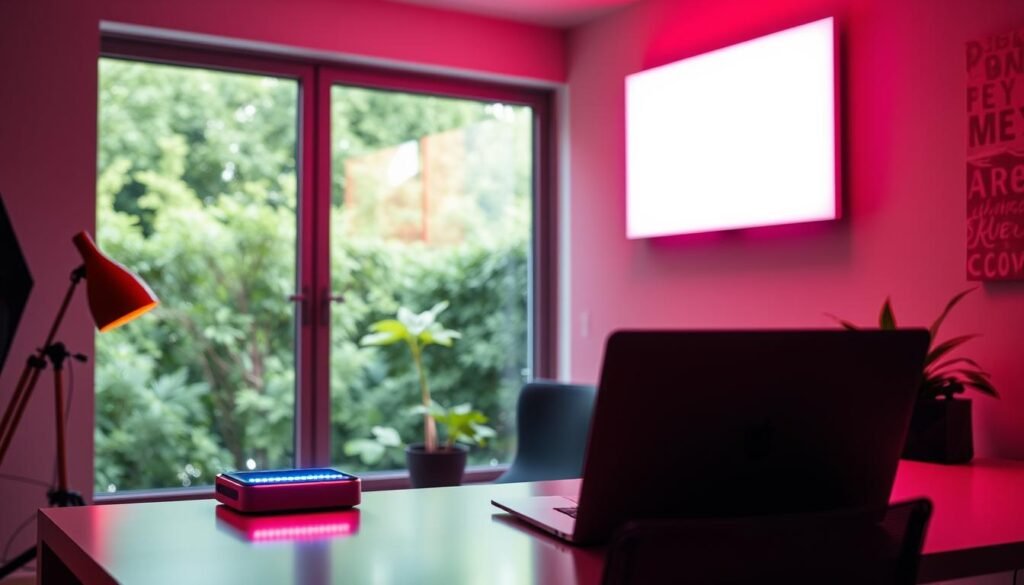
Use short, structured sessions that support skin and hair without replacing real sunlight. Schedule device therapy after your outdoor light window so circadian signals stay clear and strong.
Red light therapy for hair and skin: practical minutes
Keep red light sessions brief and consistent. Aim for about 5–10 minutes per area. A six-minute red light cap for scalp work is realistic and repeatable.
Red light supports collagen and scalp circulation. Track skin response weekly. Stop or reduce if irritation appears.
How to pair blue light with breathing
Use blue light in short blocks of roughly 5 minutes. Pair it with a simple breathing practice to reduce stress and sharpen focus.
Try nasal breathing or a 4–4-4 box breath during the session. This pairing improves alertness without overstimulation.
Eye health and device safety
For eye care, specialized tools like iTear100 or clinician-recommended drops can help when indicated. Always consult an eye professional before adding eye therapies.
Prioritize sunlight first; then add device therapy sparingly, monitor results, and adjust seasonally.
“Short, realistic therapy minutes and deliberate sequencing keep benefits high and risk low.”
- Schedule: sunlight first, device therapy second.
- Track: skin texture, irritation, and hair changes over weeks.
- Adjust: reduce sessions if sleep or alertness suffers.
Designing Your Planned Morning Routine
Your planned morning routine should be modular: a 30–45-minute beginner flow and a 90-minute advanced option built on the same five-habit backbone. Build around your constraints—consistency wins over complexity.
Get started by picking one action for each habit (light, move, fuel, train, track). Expand only once those choices feel automatic.
Beginner template: 30–45 minutes
Core aim: hit the essentials in a short, repeatable window.
- 10 minutes outdoor light exposure
- 10 minutes mobility and breathing
- Quick protein-forward breakfast
- 5-minute metrics review (sleep, energy, plan)
Advanced template: 90 minutes
Core aim: a full stack that adds training, therapies, and fuller fueling.
- 15–20 minutes outdoor light + walk
- 35–45 minutes targeted training block
- 10–15 minutes targeted therapy minutes (red/blue light, scalp work)
- Nutrient-dense meal and 10-minute tracking/planning
Schedule by blocks, not exact clock times. This keeps the plan resilient when life interferes. Stack compatible steps (light + walk, mobility + breathwork) to hit multiple targets efficiently.
If you train later in the day, use mornings for mobility, therapy, and fueling. If mornings are your main training window, keep other steps minimal and protect your first block from screens and notifications.
Reset mini-template for disrupted days: 5 minutes light, 5 minutes movement, 5 minutes breathwork — done. Revisit templates quarterly as seasons, work demands, and goals shift.
| Template | Key components | Typical minutes/hours |
|---|---|---|
| Beginner | Light, mobility, quick fueling, metrics | 30–45 minutes |
| Advanced | Light walk, training, therapies, full meal, tracking | ~90 minutes (1.5 hours) |
| Reset (travel/kids) | Light, movement, breathwork | 15 minutes |
Nutrition and Breakfast for Biohackers: What to Eat and What to Skip
Build breakfast around vegetables, quality protein, and healthy fats to stabilize blood sugar and sharpen focus. Avoid highly processed foods and sugary drinks that spike and crash energy.
Simple swaps beat complicated meals. Aim for a plate that is colorful and fiber-rich—vegetables and berries support gut health and sustained satiety.

Vegetables, berries, protein, and healthy fats
Batch-cook a “Super Veggie” mix (broccoli, cauliflower, lentils, mushrooms, garlic, ginger) for quick assembly. Combine it with olive oil or avocado and a digestible protein source.
Or try a protein-berry-nut bowl like the Nutty Pudding: protein, nuts, blueberries, and blackberries. These foods slow glucose, boost satiety, and support long-term health.
Sugar, highly processed foods, and GI-spiking drinks
Skip added sugar, fried items, and refined starches in the morning. Sugary drinks and empty carbs cause a fast crash that harms focus through the rest of the day.
Keep calories proportional to activity: heavier training days need more volume. Hydrate with mineralized water or tea, and if you drink caffeine, pair it with food to reduce jitters.
- Quick templates: lentils + greens + olive oil; or protein + berries + nuts.
- Prep tip: batch Super Veggie mixes for consistent, fast breakfasts.
- Measure: evaluate digestion, energy, and mood and adjust ingredients for longevity goals.
Supplements, Safety, and Personalization
Start with evidence, not anecdotes. Build a supplement plan around proven deficiencies and clear goals. Work with a clinician and use labs to guide what you add or stop.
Begin with essentials verified by labs: pair iron with vitamin C for absorption when iron indices are low, consider probiotics and fiber for gut support, and address deficiencies first.
Organize dosing by timing — morning, pre-workout, and with meals — to improve adherence and reduce GI issues.
Why testing, tracking, and medical care matter
Track biomarkers (iron indices, lipids, glucose) and re-test at intervals. Bryan Johnson stopped rapamycin when side effects appeared; follow the same rule.
- Work with a clinician: consider interactions with medications and avoid DIY escalation.
- Keep two lists: must-haves (corrected deficiencies) and trial items to test for weeks, not days.
- Watch for side effects: skin changes, lipid shifts, or heart-rate changes require prompt review.
| Focus | Timing | Why it matters |
|---|---|---|
| Iron + vitamin C | With meal or morning | Improves absorption; test ferritin before starting |
| Probiotics & fiber | With meals | Supports gut health and nutrient uptake |
| Performance stack (pre-workout) | Pre-workout | Timing reduces GI load and targets energy |
“Get started slowly — more pills aren’t better. Better-aligned inputs are.”
For practical reading on evidence and care, see this overview. Track outcomes tied to goals like energy, sleep, and recovery so changes over months and years improve your health, not harm it.
Skin, Hair, and Oral Care that Support Daily Performance
Keep skin care simple and consistent: cleanse, vitamin C serum, retinol, and sunscreen when outdoors. Add a ~6-minute red light cap session for scalp support if appropriate.
A simple skin, scalp, and oral plan keeps appearance and systemic health aligned with your daily performance.
Schedule skin steps after your light exposure and movement to avoid bottlenecks. Start with a gentle cleanse, follow with vitamin C for antioxidant support, and use retinoids on a tolerance-adjusted cadence. Apply sunscreen before long outdoor exposure.

Red light cap and scalp care
Massage the scalp lightly during washing to boost circulation. If you use a red light cap, keep sessions brief—about six minutes—and track hair response over months.
Use red light therapy after your outdoor light window so circadian signals stay clear. Note any skin or scalp irritation and reduce frequency if needed.
Cleansing, actives, and realistic timing
Keep minutes realistic; compact steps stick. Monitor irritation from vitamin C and retinoids and lower frequency if redness appears.
On high-UV days add sunscreen or a UV umbrella for longer exposure to protect skin integrity.
Oral care for systemic benefits
Brush, floss, and rinse daily. Add tools like a waterpik and tongue scraper for gum and breath support. Consistent two-a-day oral care matters more than product brands.
If you grind your teeth, consult a clinician about a bruxism device to protect enamel and improve sleep comfort.
“Simple, repeatable care—done in realistic minutes—protects skin, hair, and oral health so your body performs better every day.”
Common Morning Mistakes that Kill Focus and Energy
Small early errors can sap clarity and undo productive hours. Fixable habits—like fragmented sleep and phone-first starts—often explain why energy fades by mid-day.
Start the day with intention. Avoid habits that fragment sleep or inject stress before you get moving. Plan the night before so the morning is for execution, not decisions.
Hitting snooze, checking the phone, and late planning
Ditch the snooze button—fragmenting sleep worsens grogginess. Keep phones off until after your first routine block to protect focus and mood.
Plan the day the night before; morning hours belong to execution, not last-minute planning. Replace the alarm clock jolt with a gradual-wake device or light-based alarm to reduce sleep inertia.
Empty-stomach caffeine and citrus pitfalls
Avoid strong coffee or citrus on an empty stomach. These can irritate the gut and trigger glucose spikes that derail steady energy and cognitive flow.
- Don’t doomscroll: early news hijacks attention and injects stress at the worst possible time.
- Keep the first block short: cap it at a set number of minutes and protect it like a meeting with yourself.
- Simplify, don’t expand: if mornings feel rushed, shorten steps instead of skipping the entire routine—small wins compound.
- Audit sleep: inconsistent bed and wake times or late fluids can harm sleep quality and morning clarity.
- Prep ahead: lay out clothes, breakfast components, and a written plan the night before to cut decision load in the morning.
- Watch sugar: skip high-sugar drinks that cause energy crashes later in the day.
- Use the alarm clock wisely: limit abrupt alarms and favor gradual cues when possible.
“Protect the first block of your day—small structure early keeps focus high and makes the rest of the day easier.”
Conclusion
A clear morning plan compounds: early light, smart movement, stable fueling, targeted training, and simple tracking drive better health and longevity.
Start lean, stay consistent, and evolve the plan as your body and goals change.
Use the templates, avoid common pitfalls, and check metrics seasonally so each day stacks into better years.
Keep intensity sensible: protect joints, prioritize sleep, and let breakfast and hydration stabilize energy—not spike it.
Track light exposure, sleep signals, and performance markers. Learn from examples like bryan johnson, but adapt costs and steps to your life.
Biohacking works best when it is humane: make your plan simple, repeatable, and anchored to sunlight so great days become routine.
FAQ
How soon after waking should I get light exposure?
Aim to get bright natural light within 10–30 minutes of waking whenever possible. Ten to thirty minutes of morning light helps anchor your circadian rhythm, improves alertness, and supports sleep quality that night. If sunlight isn’t available, use a full-spectrum light device for 10–20 minutes near your face while you move gently or have water.
Can red light therapy safely be used every morning?
Yes — short, consistent sessions are generally safe for most adults. Typical protocols use 5–15 minutes per area (face/scalp/chest) at the device manufacturer’s recommended distance. Red and near-infrared light can support skin, hair, and recovery; follow device guidelines and consult a clinician if you have photosensitive conditions or take photosensitizing medications.
Should I wake with no alarm or use a gradual alarm clock?
Natural wake time is ideal for circadian alignment, but gradual alarms that mimic dawn are a practical alternative. If your schedule requires an alarm, choose a sunrise-simulating alarm or progressive tone to reduce sleep inertia. Prioritize consistent wake time within ±30 minutes daily to stabilize rhythm.
Is intermittent fasting recommended for morning energy and performance?
Intermittent fasting (time-restricted feeding) can improve metabolic markers and mental clarity for many people. A common approach is a 12–16 hour fast overnight with the eating window starting late morning. Monitor how you feel: if fasting causes energy drops, low mood, or impaired workouts, adjust meal timing and macronutrients for your goals.
What should an effective short morning workout include?
For a 20–30 minute session, combine mobility, brief cardio, and a few compound strength moves. Example: 5 minutes dynamic mobility, 10 minutes HIIT or brisk cardio, and 10 minutes of squats, push variations, or deadlift patterning. This sequence raises heart rate, primes circulation, and supports long-term function without excessive recovery cost.
How do I pair blue light and red light safely in the same morning?
Use blue-enriched light early in the morning to boost alertness for 15–30 minutes (from office light or a blue-enriched lamp) and apply red/NIR therapy later in the routine for targeted tissue effects. Avoid prolonged uncontrolled blue light exposure close to bedtime to protect sleep onset.
Which breakfast options support steady cognitive performance?
Choose nutrient-dense, low-sugar options with protein, healthy fats, and fiber: eggs with vegetables, Greek yogurt with berries and nuts, or a vegetable-forward omelet + avocado. These choices stabilize blood glucose, reduce mid-morning crashes, and support sustained concentration. Limit sugary cereals and high-GI drinks.
How can I track and personalize my morning practices effectively?
Track simple metrics: sleep duration/quality, resting heart rate, energy levels, mood, and workout performance. Use a journal or an app to note changes when you modify light timing, food, or training. Adjust frequency, intensity, and timing based on trends over 2–6 weeks and consult biomarkers or a clinician for deeper personalization.
What are common mistakes that undermine morning benefits?
Frequent errors include hitting snooze, immediately checking your phone, drinking caffeine on an empty stomach if it causes jitters, and delaying first light exposure. These habits fragment focus, increase stress, and weaken circadian signals. Swap screen time for morning light, movement, and hydration for better outcomes.
How long before workout should I use red light for recovery benefits?
Red light therapy can be used pre- or post-workout. Pre-workout sessions (5–10 minutes) may help warm tissues and improve readiness; post-workout use (5–15 minutes) supports recovery and reduces inflammation. Follow device guidance and keep a consistent schedule to evaluate benefits.
Are there safety concerns with combining supplements and morning light or training?
Yes — some supplements (like certain herbs or photosensitizing drugs) interact with light exposure. Iron and vitamin C pair well for absorption, but high-dose stimulants combined with intense morning training may increase heart strain. Always review supplements with a healthcare professional and consider biomarker testing before long-term use.
How should seasonal changes affect my planned morning schedule in the U.S.?
Shorter winter days require compensatory strategies: longer indoor bright-light therapy sessions in the morning, consistent wake times, and prioritizing daytime outdoor exposure when sunlight is available. In summer, avoid excessive late-evening blue light and limit very early intense training if heat is extreme.
What is a realistic beginner template for a 30–45 minute planned routine?
A practical 30–45 minute sequence: 5 minutes hydrate and sunlight or lightbox, 10 minutes mobility and breathwork, 10–15 minutes bodyweight strength or brisk cardio, 5–10 minutes red light or targeted skin care, and 5–10 minutes protein-rich breakfast or preparation. This balances circadian cues, movement, and nutrition for steady gains.
Can focused breathing practices improve morning focus and heart metrics?
Yes. Short breathing protocols (4–6 minutes of paced diaphragmatic breathing or box breathing) lower sympathetic tone, improve heart-rate variability, and increase mental clarity. Pair breathing with light exposure or a brief mobility set to compound benefits early in the day.



Don’t Miss These Picks