Beyond Tired: The Sneaky Emotional and Physical Symptoms of Deep Burnout

Uncover the surprising Symptoms of Burnout. Dive into our Ultimate Guide for a deeper understanding of burnout and its impact on well-being.

There are days when you push through and days when your body simply won’t cooperate. You may wake drained, go through the motions at work, and wonder why rest doesn’t restore you. This piece meets you there — clear, direct, and evidence-led.

Table of Contents show

Burnout is a real state driven by ongoing stress and overextension. The World Health Organization frames it as an occupational phenomenon that shows up as exhaustion, mental distance from tasks, and lower effectiveness. It also appears outside the workplace, in caregiving and high-demand roles.

By Emily Carter, certified health and wellness writer – Fact-checked and reviewed by our editorial team.

This guide explains what burnout is, why it’s rising now, and the subtle signs you might miss. You’ll get practical ways to spot early warning, science-backed context, and steps to protect your mental health and overall health over time.

Key Takeaways

  • Burnout is caused by chronic stress and can affect both work and life.
  • Look for subtle emotional and physical signs, not just fatigue.
  • WHO describes three core dimensions: exhaustion, distance, and reduced efficacy.
  • Early action can protect your health and mental health and restore energy.
  • We offer clear steps to reflect, reset, and seek help before problems escalate.

What Burnout Really Is and Why It Matters Now

Burnout is not just being busy — it’s a chronic state tied to unmanaged workplace stress with three defining features: exhaustion, cynicism/mental distance, and reduced performance. It matters now because rising long-term pressure at work raises serious health and mental health risk.

How does the WHO define this workplace problem?

The World Health Organization calls it an occupational phenomenon that comes from chronic, unaddressed workplace stress. It shows up as three clear dimensions: deep tiredness, mental distance or cynicism, and lower professional efficacy.

How is this different from everyday stress?

Everyday stress feels urgent and reactive. This experience feels muted, detached, and joyless — a changed sense rather than a short burst of strain.

What wears people down over time?

Repeated high demands, unclear roles, tight deadlines, and low recognition overload the body’s stress response. Over weeks and months, emotional reserves, energy, and drive decline. Left alone, this pattern links to heart problems and depressive conditions, harming overall health wellbeing.

Feature Everyday Stress Job Burnout
Feeling Alert, tense Blunted, detached
Duration Short-term Persistent over time
Function Often recoverable with rest Needs structured change and support
Work drivers Deadlines, spikes Unmanageable load, low control, poor recognition

Takeaway: Naming this condition correctly helps you change load, seek support, and start recovery before long-term harm occurs.

Symptoms of Burnout

Quick summary: The hallmark symptoms are persistent exhaustion, cynicism or mental distance, and falling performance. These early signs often start subtly and build over time, affecting your body, behavior, and mental health.

Core triad explained.

Sustained burnout drains your energy, creates detachment from work, and erodes concentration and output.

A person sitting at a desk, head in hands, with a haggard and weary expression. The room is dimly lit, casting shadows that accentuate the dark circles under their eyes. The desk is cluttered with scattered papers and a laptop, hinting at the overwhelming workload. The background is blurred, emphasizing the individual's isolation and detachment from their surroundings. The scene evokes a sense of emotional and physical exhaustion, capturing the essence of burnout symptoms.

What emotional and cognitive changes show up?

You may feel helpless, negative, or detached. You ’re feeling less joy in life and skeptical about once-meaningful things.

Thought patterns shift toward self-doubt, all-or-nothing thoughts, and worst-case predictions — signs that stress is compounding.

How the body and behavior respond

  • Physical load: constant fatigue, poor sleep, headaches, stomach issues that tax overall health.
  • Behavioral patterns: avoidance, procrastination, or working late to “catch up” at the workplace.
  • Performance impact: slower thinking, more errors, and less creativity on complex tasks.

“Early changes often feel small. Left unchecked, they stack into larger problems that affect mental health and daily life.”

Watch for early signals like persistent Sunday dread or irritability. If you notice overlap with anxiety or depression, track duration and context and seek support. For a concise clinical overview, see burnout signs and help.

Emotional and Mental Red Flags You May Miss

Summary: Emotional changes like negativity, detachment, and helplessness — plus rigid negative thoughts such as self-doubt and worst-case thinking — are early burnout clues. If you don’t feel like yourself and ’re feeling persistently off, treat it as a meaningful warning.

Emotional shifts often start small. You may feel numb, critical, or trapped. Enjoyment in life fades and empathy for people at work thins.

Emotional red flags burnout: a surreal, unsettling scene depicting the psychological toll of burnout. In the foreground, a figure wreathed in smoke-like crimson tendrils, their expression twisted in anguish. The middle ground shows a crumbling, fragmented landscape, cracks and fissures spreading like spiderwebs. The background is a roiling, blood-red sky, heavy with clouds that seem to press down, oppressive and unyielding. Dramatic chiaroscuro lighting casts deep shadows, heightening the sense of unease and distress. The overall atmosphere is one of intense emotional turmoil, a visual metaphor for the hidden mental and physical symptoms of burnout.

What the inner voice reveals

Your thoughts can turn rigid: black-and-white thinking, constant rumination, and assuming the worst. This style of thinking increases stress and hurts problem-solving.

When anxiety and mood shift

Heightened anxiety shows as scanning for threats and taking on too much responsibility. A blunted sense of purpose and a harsh inner critic can mimic clinical depression. Watch how long low mood lasts.

  • Social cues: Withdrawing from friends or skipping feedback accelerates decline.
  • Function cues: Decision fatigue and second-guessing slow progress at work.
  • Quick check: Ask, “When did I last feel like myself? What changed?”

“If mood stays low for weeks or thoughts turn toward self-harm, get professional help immediately.”

For practical recovery steps and prevention, consider this concise guide on burnout prevention and recovery.

Physical and Behavioral Signals Your Body Sends

Your body often gives the earliest alerts when workload and strain have gone too far. Watch for clear physical changes and shifts in how you act; they tell you when to pause and reset.

A weary figure slumped on a desk, with dark circles under their eyes and a furrowed brow. The background is dimly lit, casting long shadows across the room, creating a somber, drained atmosphere. The person's posture suggests physical and mental exhaustion, their hands resting limply on the desk, as if they've lost the energy to continue. Warm, muted tones predominate, giving the scene a sense of heaviness and despair. The lighting is soft and low-key, emphasizing the subject's fatigue and the oppressive nature of the environment.

What physical signs should you watch?

Constant tiredness, headaches, stomach trouble, and restless sleep are common. These complaints reflect cumulative stress and rising somatic load that erodes overall health.

Insomnia or broken sleep makes next-day focus worse and increases errors on complex tasks. More frequent colds or aches suggest immune strain and higher health costs over time.

How behavior shifts when things slide

You may feel driven to work longer hours, skip breaks, or push through holidays to “catch up.” Avoidance, procrastination, and reduced creativity narrow problem-solving and lower work output.

  • Movement as medicine: short walks or gentle activity boost mood and cognitive recovery without adding load.
  • Micro-habits: tech cutoffs and wind-down routines protect sleep and restore energy.
  • Social buffers: ask trusted people for accountability and use available health support.

“If physical signs persist, combine medical review with mental health strategies for lasting relief.”

For additional practical cues and a short checklist, see this quick guide to signs you’re experiencing burnout.

Stress, Burnout, or Depression? How to Tell the Difference

Summary: Stress is urgent and reactive; burnout feels depleted and detached; depression is a medical condition that needs professional treatment. Use changes in recovery and scope to guide next steps.

Which problem you face matters because each needs a different response. Stress often shows as high engagement and short fuse under pressure. It usually eases with pacing and brief recovery.

A person sitting at a desk, head in hands, looking exhausted and overwhelmed. The background is dimly lit, with muted, dreary tones. Shadows cast across the face, emphasizing a sense of heaviness and despair. The office space is cluttered, papers and electronics scattered, conveying the chaos and demands that have led to this state of burnout. The figure is isolated, conveying a sense of loneliness and detachment. Soft, moody lighting from a single desk lamp casts a warm, melancholic glow. The composition is tightly framed, drawing the viewer's attention to the palpable emotional and physical toll of stress and burnout.

Over-engagement versus disengagement

Stress keeps you wired and reactive. You push harder and feel urgent. By contrast, burnout brings helplessness, low motivation, and emotional distance. Performance drops and tasks feel flat.

Why rest helps one but not the other

Time off and load reduction are effective ways to restore energy in burnout tied to a specific domain like the workplace. If mood and function stay poor across time, consider screening for depression. That condition often needs therapy or medication.

Feature Stress Burnout Depression
Engagement Over-engaged, urgent Disengaged, detached Low across life areas
Recovery Improves with rest Improves with reduced load Needs clinical treatment
Key warning Irritability, anxiety Cynicism, lowered output Anhedonia, suicidal thoughts

“If symptoms ease after recovery blocks, it’s likely burnout; if not, seek mental health help promptly.”

Track triggers and recovery in a short journal. Encourage people leaders to support referrals to counseling and Occupational Health. If you see severe mood change or harm risk, get immediate professional help.

The Burnout Pathway: Stages and Types to Watch

Summary: Burnout often follows a 12-stage arc—from proving yourself and over-work to withdrawal and collapse. Four types—overload, under-challenged, neglect, and habitual—clarify patterns and risk. Spotting where you sit on the pathway helps you insert a recovery block before later stages deepen harm.

C, the 12-stage progression runs from high drive and proof-seeking to denial, withdrawal, depersonalization, emptiness, and eventual collapse. Below are the practical markers to watch.

12-step progression in brief

  1. High drive to prove oneself
  2. Work harder, skip rest
  3. Neglecting personal needs
  4. Conflict and irritation
  5. Value shifts and denial
  6. Withdrawal from supports
  7. Behavioral coping changes
  8. Cynical thoughts
  9. Depersonalization
  10. Feeling empty
  11. Despair
  12. Total collapse requiring immediate care

A winding, overgrown pathway leading through a dark, gloomy forest. Thick, tangled branches cast long shadows, creating a sense of constriction and claustrophobia. The ground is littered with fallen leaves and debris, symbolizing the gradual decay of energy and enthusiasm. In the distance, a faint glimmer of light hints at a potential escape, but the path ahead appears treacherous and uncertain. The overall atmosphere conveys a sense of exhaustion, hopelessness, and the gradual sinking into the depths of burnout.

Types and practical cues

Overload = chronic over-work and risk-taking. Under-challenged = boredom and stagnation. Neglect = helplessness and imposter feelings. Habitual = entrenched exhaustion that can mimic mood conditions.

Type Core pattern Key cue
Overload Excess hours, high risk Always saying yes
Under-challenged Low growth, boredom Frequent disengagement
Neglect Ignoring needs, imposter Helplessness, missed self-care
Habitual Chronic low mood, fatigue Persistent hopeless thoughts

“Insert recovery blocks at stage transitions. Small, structured breaks can stop the cascade.”

To review the original 12-stage model and match your pattern, see this concise guide on the 12 stages of burnout. If you often make feel pressured to do all the things, start saying no and delegate to protect your time and mental health.

Root Causes: Workplace Pressures and Personal Risk Factors

Summary: Workplace pressure—from heavy workloads to unfair treatment—drives high stress and elevated risk for long-term decline. Personal demands like caregiving and chronic health conditions raise vulnerability, especially when organizational support is weak.

When job demands exceed control, basic recovery fails. Unmanageable tasks, unclear roles, and nonstop deadlines stack up. That structural load increases day-to-day stress and shortens the time people have to recharge.

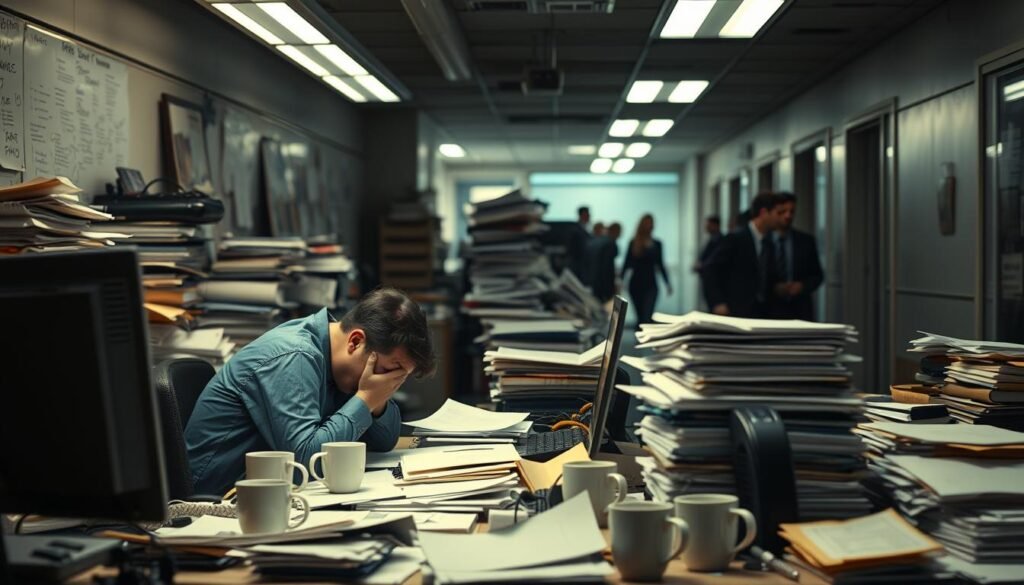
A cluttered office space, dimly lit with harsh fluorescent lighting, conveying a sense of overwhelming pressure and tension. In the foreground, a frazzled employee hunched over a desk, surrounded by a sea of scattered papers, coffee mugs, and a blinking computer screen. The middle ground features a towering pile of files and a phone ringing incessantly, emphasizing the constant demands and multitasking required. In the background, blurred silhouettes of coworkers hurrying through the corridors, suggesting a chaotic, fast-paced work environment. The overall mood is one of mental exhaustion, physical strain, and the relentless strain of workplace pressures.

What workplace drivers matter most?

Workplace drivers include excessive workload, unclear responsibilities, unfair treatment, and bullying. These factors erode trust and push employees toward sustained strain.

How culture and policy raise risk?

Constant deadlines, low control, and poor recognition create toxic norms. Job insecurity and weak organizational support widen the gap between demand and capacity.

Which personal factors amplify danger?

Caregiving roles, frontline people jobs, long-term health issues, early-career status, and full-time students face higher exposure. Targeted fixes include clarifying roles, rebalancing loads, and adding occupational health and mental health supports.

For practical employer-facing resources on workplace burnout, see workplace burnout.

How Burnout Impacts Health, Work, and Life

Summary: Burnout damages overall health and productivity. It increases absence, errors, and turnover while raising odds for mood conditions and cardiometabolic risk.

Long-term overload raises sick days, emergency visits, and job dissatisfaction. Teams lose momentum as presenteeism and chronic absence sap output over time.

A tangle of tangled wires and cables, representing the overwhelming demands and complexities of modern life, cast a shadowy web across a weary, hunched figure. The figure's face is obscured, conveying a sense of exhaustion and disconnection. The lighting is dim, with muted hues of grays and blues, creating an atmosphere of heaviness and melancholy. In the background, a blurred office setting suggests the encroachment of work obligations into personal space, contributing to the overall sense of burnout. The composition emphasizes the feelings of being trapped, overwhelmed, and unable to find relief, reflecting the debilitating physical and emotional impacts of deep burnout.

From job dissatisfaction to absence: productivity and performance costs

Quality and safety fall when cognitive load grows. Mistakes and near-misses rise, especially in high-stakes work settings. Investing in staffing and role clarity reduces lost days and improves retention.

Health consequences: anxiety, depression, heart disease, diabetes risk

Burnout links to higher rates of anxiety, depression, sleep trouble, headaches, GI issues, and persistent exhaustion. Over years, chronic stress raises blood pressure and type 2 diabetes risk, harming the body and life expectancy.

High-risk groups: healthcare, teaching, law enforcement

Clinicians, teachers, and officers report high exposure to chronic strain. Targeted workplace supports—EAPs, peer programs, and coordinated health support—cut escalation and protect team health.

Impact Work Health Solution
Productivity Presenteeism, errors Increased sick leave Staffing, role clarity
Safety Near-misses Impaired judgment Checklists, breaks
Long-term health Chronic absence Cardio and metabolic risk Early health support

“Early intervention saves lives and dollars.”

For clinical evidence linking workplace strain to health outcomes, see this review on staff health outcomes.

Recovering and Building Resilience: Practical Ways to Reduce Stress

Summary: You can reduce stress by restoring sleep, steady nutrition, and gentle activity, then adding mindfulness, short-term therapy, clear boundaries, and repeatable routines. Small, reliable ways build lasting capacity and protect your health.

Recovery starts with small, reliable habits that rebuild physical reserves and mental clarity.

Reset the basics: sleep, nutrition, and sustainable exercise

Protect 7–9 hours of sleep and keep consistent bedtimes. Anchor meals and choose balanced food that steadies blood sugar.

Select gentle activity—short walks or stretching—to restore energy without adding load. Consider a phased plan so exercise supports recovery, not pressure.

Mindfulness and therapy: skills to calm thoughts and rebuild capacity

Mindfulness practice and brief cognitive exercises lower rumination and improve focus. Try two minutes of breath work before work blocks.

Short-term therapy helps you make a plan and use available mental health support. Don’t wait—early care speeds recovery.

Work boundaries and support: HR conversations, role clarity, time off

Clarify priorities with managers and renegotiate capacity. Use HR and occupational health support for formal adjustments and scheduled time off.

Practical changes—batching emails, protected focus blocks, end-of-day wind-downs—reduce background load between work and home.

Routines, self-compassion, and values alignment for long-term change

Stack small recovery things—brief walks, journaling, 3-minute breathing—onto habits you already have. Repeatability beats intensity.

When you ’re feeling behind, choose self-compassion over harsh critique; you may feel steadier and more able to act. Run a weekly values check to make daily progress feel meaningful.

“Small, repeatable changes protect health and let you iterate a plan that fits real life.”

For practical guidance on exercise timing and recovery, see this short note on sustainable exercise guidance and call in care or professional help early when needed.

About the Author

Emily Carter is a certified health and wellness writer with over 7 years of experience in evidence-based fitness, nutrition, and lifestyle content. As the lead author of Go4HealthnFitness.com, she’s passionate about simplifying science-backed wellness advice for everyday readers. When she’s not writing, you’ll find her strength training, hiking, or exploring natural supplements that actually work.

Editorial Process Note

Our Commitment to Accuracy: This article was medically reviewed for accuracy and fact-checked by our editorial team.

Medical Disclaimer: The information in this article is for informational purposes only and is not intended to be a substitute for professional medical advice, diagnosis, or treatment. Always seek the advice of your physician or other qualified health provider with any questions you may have regarding a medical condition.

Conclusion

Burnout is identifiable, common, and reversible with timely action. Prioritize your mental health and overall health. Adjust load, ask for support, and take one small step today to rebuild capacity.

When long-term overload reshapes daily energy, recovery needs both practical habits and system change. Track physical and mental markers, name your feelings, and protect one restorative day each week.

Combine personal routines with workplace wellbeing and role changes. Loop in trusted people and clinical teams for tailored care. For clinical context and evidence on workplace risk, see this review of occupational drivers.

Key takeaway: Spot early signs and symptoms, act with clarity, and choose one concrete change now to restore a sense of control in work and life.

FAQ

What exactly is burnout and how does it differ from regular stress?

Burnout is a state of prolonged emotional and physical depletion caused by chronic work-related pressure. Unlike everyday stress, which is temporary and often energizes problem-solving, burnout features persistent exhaustion, detachment, and reduced effectiveness at work and home. Think of stress as a sprint and burnout as an unfinished marathon that drains your fuel and motivation.

What are the earliest emotional and mental warning signs I should notice?

Early signs include growing cynicism, feelings of being trapped, persistent worry, increased self-doubt, and a sense that you’re not yourself. These subtle shifts often begin as short changes in mood or thought patterns and then intensify, making everyday tasks feel heavier and confidence slide.

Which physical and behavioral signals usually show up first?

Your body often signals trouble through constant fatigue, poor sleep, headaches, digestive upset, and muscle tension. Behaviorally, you might avoid tasks, overwork to try to catch up, withdraw from colleagues, or notice a drop in creativity and productivity.

How can I tell whether I’m burned out, just stressed, or clinically depressed?

Stress tends to involve over-engagement and hyperarousal; burnout features emotional distance and low performance. Depression includes pervasive low mood, loss of interest in most activities, and suicidal thoughts in severe cases. Rest and boundary-setting may relieve burnout, but depression often needs professional treatment like therapy and sometimes medication. If you have persistent hopelessness or self-harm thoughts, seek immediate help.

Can burnout develop gradually, and what are common progression stages?

Yes—burnout often builds slowly through stages: excessive drive and idealism, neglecting personal needs, ignoring warning signs, and eventually emotional and physical collapse. Many people pass through patterns of overload, stagnation, and chronic depletion before noticing the full impact.

Which workplace factors most commonly cause burnout?

Major drivers include unmanageable workloads, unclear roles, low control over tasks, unfair treatment, constant deadlines, and inadequate recognition. Organizational culture and poor leadership amplify risk, especially when staff lack resources or decision-making power.

Are certain people or jobs at higher risk for burnout?

Yes. High-risk groups include healthcare workers, teachers, emergency responders, and caregiving roles. Personal factors also raise risk: perfectionism, chronic health conditions, heavy caregiving responsibilities, and persistent people-facing work without adequate support.

What are the main health consequences of untreated burnout?

Left unaddressed, burnout increases risk for anxiety, depression, sleep disorders, high blood pressure, metabolic issues, and greater long-term risk for cardiovascular disease and diabetes. It also reduces work performance, raises absence rates, and harms relationships.

What practical steps can I take right now to reduce stress and begin recovery?

Start with basics: improve sleep, eat regular nutritious meals, and add sustainable movement. Set clear boundaries—limit after-hours work, schedule breaks, and protect recovery time. Try short daily mindfulness or breathing exercises, talk with a trusted manager or HR about workload, and consider therapy to rebuild coping skills.

How does therapy help with recovery and resilience building?

Therapy offers tools to reframe negative thinking, manage anxiety, improve sleep, and restore motivation. Cognitive-behavioral therapy (CBT), acceptance-based approaches, and stress-management coaching teach practical skills to reduce overwhelm and strengthen long-term coping.

When should I involve my employer or ask for formal accommodations?

Speak with your manager or HR when workloads are consistently unmanageable, role expectations are unclear, or you need time-limited adjustments to prevent decline. Request clear role descriptions, task reprioritization, flexible hours, or temporary reduced duties. Early conversations can prevent escalation.

Are there quick self-help strategies I can use during a workday slump?

Yes. Try a five-minute breathing break, a brief walk outside, micro-breaks every 45–60 minutes, single-tasking instead of multitasking, and a prioritized to-do list that limits nonessential tasks. Small pauses reset energy and improve focus.

How long does recovery from burnout typically take?

Recovery varies widely. Mild-to-moderate cases may improve within weeks to months with consistent lifestyle changes and workplace adjustments. More severe or prolonged cases can take many months and often benefit from ongoing therapy, medical oversight, and significant changes to work conditions.

Can lifestyle habits prevent relapse once I’ve recovered?

Yes—sustained sleep hygiene, regular movement, balanced nutrition, ongoing boundary-setting, and routine self-checks reduce relapse risk. Maintain social support, regular mental health care when needed, and clear communication with employers about realistic workloads.

When should I seek immediate professional help?

Seek urgent help if you experience suicidal thoughts, severe hopelessness, or inability to function at home or work. Also consult a primary care provider if physical symptoms like chest pain or fainting occur. For non-urgent but persistent issues, schedule therapy or a medical evaluation.

Emily Carter
Emily Carter

Emily Carter is a certified health and wellness writer with over 7 years of experience in evidence-based fitness, nutrition, and lifestyle content. As the lead author of Go4HealthnFitness.com, she’s passionate about simplifying science-backed wellness advice for everyday readers. When she’s not writing, you’ll find her strength training, hiking, or exploring natural supplements that actually work.

Articles: 425