


CogniCare Pro is a real multi-ingredient supplement sold through its own direct-sales website, but the bigger question is whether there is enough verified information to judge the formula confidently. Right now, the main limitation is transparency: the accessible product information names several ingredients, yet it does not provide enough dose detail to compare the full formula reliably with amounts used in clinical research.
That matters because research on Bacopa, Huperzine A, or any other individual ingredient does not prove that CogniCare Pro itself produces the same effects. Without a complete dose-transparent Supplement Facts panel or independently verified finished-product clinical evidence, the product is difficult to evaluate beyond its ingredient list and marketing position.
This review focuses on what can actually be established: the disclosed ingredients, what the available evidence means, where important gaps remain, who may want to be cautious, and whether the remaining uncertainty is acceptable for the price.
Key Takeaways
- CogniCare Pro is currently sold through a dedicated direct-sales website, with BuyGoods identified as the retailer.
- The available seller information names Bacopa Monnieri, Rhodiola Root, Huperzia Serrata, L-Tyrosine, Green Coffee Bean, Theobromine, and references plant-sourced phosphatidylserine.
- The accessible product information does not disclose enough exact ingredient amounts to determine whether the formula matches doses used in published research.
- No independently verified finished-product clinical trial was identified for CogniCare Pro.
- A study on one ingredient should not be treated as proof that the complete supplement will produce the same outcome.
- The seller currently advertises a 90-day money-back guarantee, subject to its return terms.
- No verified Amazon.com listing or ASIN was established for CogniCare Pro.
Quick Verdict
CogniCare Pro can be verified as a currently marketed cognitive-support supplement, but there is not enough dose transparency or finished-product evidence to make a confident judgment about how well the formula is likely to work. Readers who prioritize exact amounts, standardized extracts, or direct comparison with clinical research may find the current level of disclosure too limited.
CogniCare Pro Product Snapshot
| Detail | What Is Currently Established |
|---|---|
| Product type | Multi-ingredient dietary supplement marketed for cognitive support |
| Sales channel | Direct-sales website |
| Retailer named by seller | BuyGoods |
| Amazon listing | No verified Amazon.com listing or ASIN established |
| Named ingredients | Bacopa Monnieri, Rhodiola Root, Huperzia Serrata, L-Tyrosine, Green Coffee Bean, Theobromine, plus a separate reference to plant-sourced phosphatidylserine |
| Exact active-ingredient doses | Not sufficiently disclosed in the accessible product information |
| Finished-product clinical evidence | No independently verified clinical trial identified |
| Current guarantee | 90-day money-back guarantee, subject to seller terms |
| Pricing | Bundle-dependent promotional pricing that may change |
The most important line in that table is the dosage one. An ingredient name alone tells you surprisingly little. The amount, extract type, standardization, serving size, and combination with other ingredients all affect how useful a research comparison can be.
What CogniCare Pro Claims vs. What the Evidence Can Actually Tell Us
| Question | What Can Reasonably Be Said | What Remains Unproven |
|---|---|---|
| Does it contain ingredients that have been studied? | Yes. Bacopa and Huperzine A, among others, have appeared in human research. | That does not prove the finished CogniCare Pro formula works. |
| Can its Bacopa be compared with clinical trials? | Only in a general way. | The product’s Bacopa amount and extract standardization were not sufficiently verified. |
| Can the Huperzia component be judged from Huperzine A research? | Only cautiously. | The amount of Huperzine A delivered from Huperzia Serrata is not established. |
| Are the doses clearly evidence-matched? | No reliable conclusion can be made from the accessible information. | Effective or study-comparable dosing has not been established. |
| Is the finished product clinically validated? | No independently verified finished-product clinical study was identified. | Product-level cognitive benefit remains uncertain. |
This distinction is central to evaluating supplements. Ingredient evidence is not finished-product evidence. A familiar ingredient may have promising research behind it, but that research cannot automatically be transferred to a commercial formula when the dose, extract, serving size, or combination is different or undisclosed.
Ingredient and Dosage Analysis
Bacopa Monnieri
Bacopa is the ingredient in CogniCare Pro that currently offers the clearest research context. A systematic review of Bacopa and cognition examined randomized human trials that generally used repeated supplementation for about 12 weeks. Many of the trials used standardized extracts in the approximate range of 300 to 450 mg per day, and findings were more consistent for certain aspects of memory than for broad cognitive enhancement.
That does not tell us whether the Bacopa in CogniCare Pro is likely to have the same effect. The product’s Bacopa amount and extract standardization were not sufficiently established. This is why dose transparency is more useful than simply seeing Bacopa on an ingredient list.
It also sets a realistic expectation: Bacopa research generally involves repeated use over weeks, not an immediate stimulant-like mental boost.
Huperzia Serrata and Huperzine A
The seller names Huperzia Serrata. Huperzine A is a compound associated with this plant, but the amount actually delivered by the product has not been established.
An evidence review of Huperzine A found potentially favorable findings in some studies involving people with dementia or mild cognitive impairment, while also noting important limitations in evidence quality and consistency.
Two cautions follow from that. First, findings in cognitively impaired populations should not automatically be applied to healthy adults seeking better concentration or productivity. Second, without knowing the amount of Huperzine A in CogniCare Pro, it is not possible to make a meaningful dose-to-research comparison.
Specific Huperzine A cycling schedules are also not justified from the information available here.
Rhodiola Root, L-Tyrosine, Green Coffee Bean, and Theobromine
These ingredients appear in the current seller information, but their exact quantities were not sufficiently verified. That limits what can responsibly be concluded about their contribution to the finished formula.
The same issue applies even when an ingredient has been individually studied. Without knowing how much is present, what form is used, and how it fits into the full serving, strong claims about focus, mental energy, stress, or cognitive performance would go beyond what the product information can support.
Phosphatidylserine
The seller separately refers to plant-sourced phosphatidylserine. However, its exact quantity in the current formula was not established. Its presence is therefore easier to describe than to evaluate.
For buyers, this is a useful rule: an ingredient name has limited decision value when the amount is unknown.
Does CogniCare Pro Itself Have Clinical Evidence?
No independently verified clinical trial of the finished CogniCare Pro product was identified in the available product information used for this review.
That does not prove the product is ineffective. It means the evidence cannot support a claim that CogniCare Pro itself has demonstrated cognitive benefits in a controlled clinical trial.
This is an important difference. A supplement can contain ingredients that have been studied individually while still lacking evidence for the exact commercial formula. Changes in dose, standardization, combination, serving size, and user population can all affect how relevant ingredient research is to the finished product.
Safety, Side Effects, and Medication Interactions
The lack of complete dosage information also makes safety harder to assess. Multi-ingredient supplements deserve more caution than a single-ingredient product because the reader must consider the whole combination, not just one familiar botanical.
The FDA notes that dietary supplements can interact with medications. That does not mean CogniCare Pro is known to cause a specific interaction. It does mean people using prescription or over-the-counter medicines should avoid assuming that a multi-ingredient cognitive supplement is automatically compatible with their current regimen.
This is especially relevant when exact amounts of the active ingredients are not clearly available for comparison.
If you take medication, have an ongoing medical condition, are pregnant or breastfeeding, or have previously reacted poorly to cognitive or stimulant-like supplements, professional guidance is more appropriate than trying to judge compatibility from marketing copy alone.
Who May Consider CogniCare Pro?
CogniCare Pro may appeal to someone who specifically wants a multi-ingredient cognitive-support supplement and is comfortable with the fact that the accessible product information does not make every ingredient amount easy to evaluate.
A reasonable buyer would also need to accept that any benefit is uncertain and that ingredient-level research does not guarantee noticeable results from this particular formula.
The product may make more sense for someone who values the convenience of a blended supplement over the ability to inspect each dose individually.
Who May Be Better Off Skipping It?
- Readers who want exact dose transparency: The current accessible information does not provide enough detail for a full dose-by-dose assessment.
- Readers who want standardized extract information: Key details needed to compare several ingredients with research are missing.
- Readers who require finished-product clinical evidence: No independently verified clinical trial of CogniCare Pro itself was identified.
- Readers who prefer Amazon purchasing: No verified Amazon.com listing or ASIN was established.
- People taking medications: A multi-ingredient supplement deserves extra caution because dietary supplements can interact with medicines.
- Anyone expecting an immediate or guaranteed cognitive effect: The available evidence does not support that expectation.
What We Still Don’t Know
The biggest weaknesses in the current product picture are not about whether the ingredient names sound promising. They are about missing details.
- The complete current Supplement Facts panel was not sufficiently established.
- The exact serving size was not verified.
- Exact amounts for the named active ingredients were not established.
- The amount of Huperzine A provided by the Huperzia Serrata component is unknown.
- It is unclear whether the formula uses a proprietary blend.
- No independently verified finished-product efficacy trial was identified.
- Independent purity or contaminant testing documentation was not established strongly enough to support a quality claim.
- Seller testimonials and review-count statements were not sufficient to establish an independent buyer-consensus conclusion.
These gaps do not automatically make the product poor. They simply make it harder to judge. For a supplement marketed around cognitive performance, that uncertainty should be part of the buying decision rather than hidden behind an ingredient list.
Price and Value
The seller uses bundle-dependent promotional pricing, so a fixed price would become outdated quickly. More important than the headline discount is what the buyer receives in return for the cost.
With CogniCare Pro, the value question comes down to transparency. Paying for a multi-ingredient formula is easier to justify when the buyer can see the amount and form of each important ingredient and compare those details with research. That comparison is difficult here because several key doses were not sufficiently established.
The seller’s current 90-day money-back guarantee may reduce some purchase risk, but it does not solve the underlying evidence and labeling questions. Buyers should read the applicable return terms rather than treating the guarantee as evidence that the product works.
Is CogniCare Pro Worth Buying?
Use four questions before deciding:
- Is the formula sufficiently verified? Only partly. Several ingredients can be identified, but the full dose-transparent formula is not clear enough.
- Are the doses disclosed well enough to compare with research? Not for the complete formula.
- Are the safety uncertainties acceptable for you? That depends on your health, medication use, and tolerance for multi-ingredient supplements.
- Does the value justify the uncertainty? That is the key personal decision. Buyers who require precise labeling and product-level evidence may find the uncertainty too high.
CogniCare Pro therefore makes more sense as a product for someone comfortable with a relatively opaque multi-ingredient formula than for a buyer who wants evidence-matched dosing and clear product-level validation.
If You Want a More Transparent Alternative
If your main concern is formula transparency rather than finding another multi-ingredient nootropic, a simpler Bacopa supplement can be easier to evaluate. These products are not equivalent replacements for CogniCare Pro. They have a different formula and a narrower use case.
Himalaya USDA Organic Bacopa Monnieri
Himalaya’s product is a Bacopa-focused supplement rather than a multi-ingredient cognitive stack. Its current Amazon information identifies 750 mg, 60 caplets, USDA Organic positioning, Non-GMO positioning, and vegan positioning.
The main advantage for comparison is simplicity. It is easier to understand what the product centers on than it is with a broader formula containing multiple incompletely disclosed active amounts. That still does not guarantee a cognitive benefit.
- PREMIUM BACOPA: Himalaya Organic Bacopa is a clinically studied herbal supplement made with premium Bacopa powder and concentrated Bacopa extract. Each caplet has 750 mg and is formulated to support memory and cognitive function.*
- BACKED BY CLINICAL STUDIES: Himalaya Organic Bacopa has been evaluated in 3 human clinical trials for its effects on cognitive function. It’s clinically studied to support working memory, learning, mental sharpness, and mental clarity.*

Double Wood Bacopa Monnieri
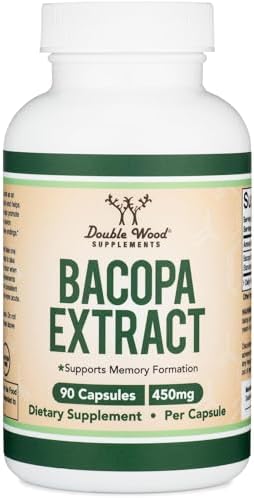
Double Wood provides a more explicit Bacopa specification: 450 mg of Bacopa extract standardized to 20% bacosides, with 90 capsules listed in the current Amazon information.
For someone who wants to compare a commercial Bacopa product with research more easily, the disclosed extract amount and bacoside standardization are useful details. They still should not be interpreted as a promise of better memory, concentration, mood, or cognitive performance.
- BECOME YOUR BEST SELF: Bacopa may help support memory and mood so you can feel your best and think your best
- SUPPORTS MEMORY FORMATION: Bacopa may help support the rate at which the nervous system communicates by supporting the growth of nerve cell endings called dendrites
Alternative does not mean equivalent. Both products above are simpler Bacopa-focused supplements. They do not reproduce CogniCare Pro’s multi-ingredient formulation and should not be expected to work the same way.
Frequently Asked Questions
Is CogniCare Pro available on Amazon?
No verified Amazon.com listing or ASIN was established for CogniCare Pro. The product is currently sold through its own direct-sales website.
Is the CogniCare Pro formula fully disclosed?
Not from the accessible product information used for this review. Several ingredients are named, but exact amounts for important active ingredients were not sufficiently established to perform a complete dose-to-research comparison.
Does CogniCare Pro have clinical evidence?
No independently verified clinical trial of the finished CogniCare Pro product was identified. Some individual ingredients have been studied, but those studies do not establish that the complete formula produces the same results.
How long does Bacopa usually take to work in studies?
Bacopa studies commonly examine repeated supplementation over several weeks. The systematic review cited earlier included trials that generally lasted around 12 weeks. That timing should not be treated as a prediction for CogniCare Pro because its Bacopa dose and standardization were not verified.
Can CogniCare Pro interact with medications?
A specific CogniCare Pro interaction cannot be assumed from the information available. However, dietary supplements can interact with medications, and a multi-ingredient product deserves extra caution if you use prescription or over-the-counter medicines.
Does CogniCare Pro have a money-back guarantee?
The seller currently advertises a 90-day money-back guarantee, subject to the retailer’s return conditions. Those terms should be checked before purchasing because policies can change.
Should Huperzine A be cycled?
This review does not recommend a specific cycling schedule. The amount of Huperzine A delivered by CogniCare Pro has not been established, and the evidence available does not justify a product-specific cycling recommendation.
Are the Bacopa alternatives the same as CogniCare Pro?
No. They are simpler Bacopa-focused supplements. They are included because their product information is easier to interpret, not because they are equivalent to CogniCare Pro’s multi-ingredient formula.
Final Verdict
CogniCare Pro’s main weakness is not that every ingredient lacks research. It is that the available product information does not disclose enough dosage detail to connect that research confidently to the finished formula.
The product exists, several current ingredients can be identified, and the seller offers a stated 90-day guarantee. But there is no independently verified finished-product clinical evidence here, and important dose details remain unclear.
If you are comfortable with that uncertainty and specifically want a multi-ingredient cognitive-support supplement, CogniCare Pro may still be something you choose to investigate further. If you want precise amounts, standardized extracts, simpler safety assessment, and easier comparison with published research, a more transparent formula is the stronger criterion to prioritize.


Don’t Miss These Picks