
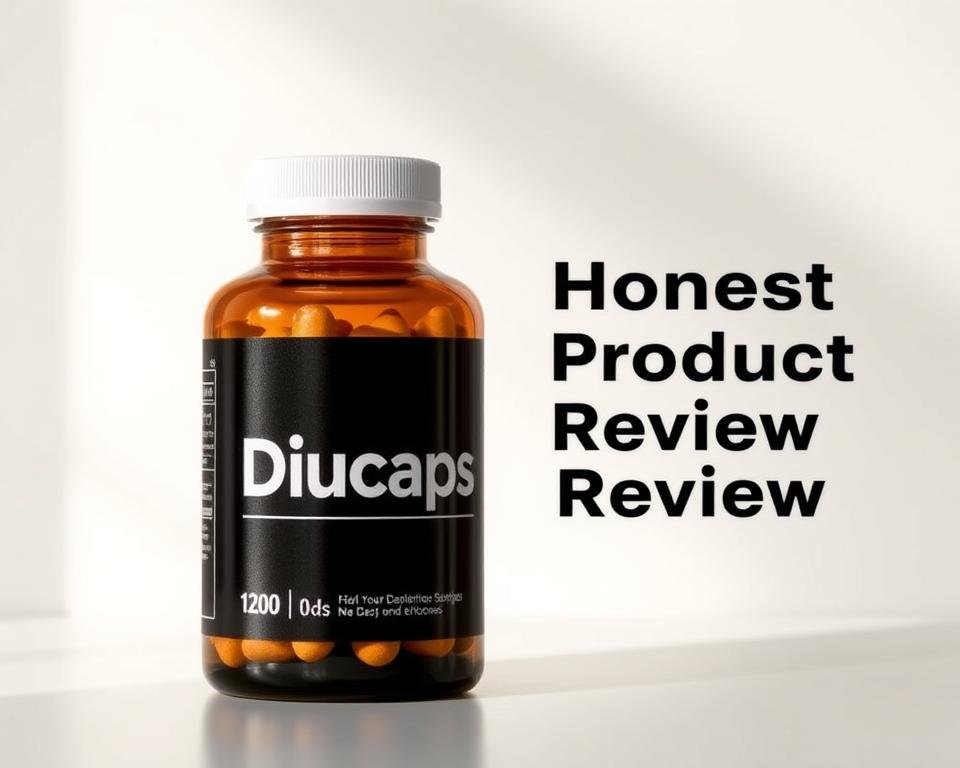

Diucaps has a plausible ingredient story, but the evidence behind the finished product is much weaker than the marketing idea suggests. Its main appetite-related ingredient is L-phenylalanine, an amino acid that has been studied for effects on fullness hormones and short-term food intake. The problem is dose: Diucaps provides 300 mg of L-phenylalanine per capsule, while some of the most relevant human studies tested 5,000 to 10,000 mg.
That gap matters. Research showing an effect from several grams of phenylalanine cannot be treated as proof that a 300 mg capsule will produce the same result. We also did not identify a controlled clinical trial showing that the complete Diucaps formula causes meaningful appetite suppression or sustained weight loss.
So the strongest case for Diucaps is not that it is a proven weight-loss supplement. It is that it offers a simple, non-stimulant formula for buyers who understand that the likely benefit is uncertain and may be modest or nonexistent. Anyone expecting medication-like appetite control, direct fat burning, or predictable weight loss should probably look elsewhere.
What Is Diucaps and What Does It Claim to Do?
Diucaps is a dietary supplement from Legere Pharmaceuticals marketed for appetite management and weight-management settings. Its main active proposition is L-phenylalanine rather than caffeine or another stimulant.
The manufacturer’s suggested use is one capsule with each meal, or as directed by a physician. That makes the product relatively simple to understand: it is intended to be taken around meals with the goal of supporting appetite control rather than increasing energy through stimulant effects.
The distinction between non-stimulant and proven effective is important. Avoiding stimulants may appeal to some buyers, but it does not establish that the product reliably reduces hunger, produces weight loss, or is appropriate for everyone.

What Is Actually in Diucaps?
The current formula lists four main ingredients per capsule:
| Ingredient | Amount per capsule | Why it matters here |
|---|---|---|
| L-Phenylalanine | 300 mg | The main ingredient tied to the appetite-control claim |
| Vitamin C | 100 mg | A nutritional component, not established as the reason Diucaps would reduce appetite |
| Vitamin B6 | 25 mg | Participates in many enzyme reactions but does not prove an appetite or weight-loss effect |
| Pantothenic Acid (Vitamin B5) | 50 mg | A general nutrient rather than direct evidence of weight-loss efficacy |
L-Phenylalanine Dose and Role
L-phenylalanine is the ingredient that deserves most of the attention. Human research has investigated whether larger doses can influence gut hormones related to fullness and change short-term food intake.
The critical issue is how much was studied. In human research on phenylalanine and appetite, investigators tested 5 g and 10 g doses in healthy men. The 10 g dose stimulated cholecystokinin, or CCK, and reduced energy intake in that experiment, while the 5 g dose did not show the same clear effect.
One Diucaps capsule contains 300 mg. That means the 5 g study dose was more than 16 times the amount in one capsule, while the 10 g dose was more than 33 times as large. Even if a person takes Diucaps with several meals, the individual dose still does not closely resemble those experimental doses.
That does not prove 300 mg is ineffective. It does mean the stronger gram-level findings cannot simply be transferred to Diucaps.
What the Added Vitamins Contribute
Vitamin C, B6, and B5 have normal nutritional roles, but their presence should not be treated as evidence that the formula becomes an effective appetite suppressant.
Vitamin B6 deserves particular attention because Diucaps provides 25 mg per capsule. Following the manufacturer’s suggestion of one capsule with each meal could result in a substantial daily supplemental intake. NIH guidance on vitamin B6 provides useful context for B6 intake and the risks associated with excessive long-term supplementation.
The practical takeaway is simple: the added vitamins are part of the formula, but the buying decision should still rest mainly on the evidence for phenylalanine, the dose supplied, and the absence of direct Diucaps outcome data.
Diucaps Claims vs. the Evidence
| Claim or expectation | What human evidence shows | Studied dose | Diucaps dose | Diucaps-specific evidence | Buyer conclusion |
|---|---|---|---|---|---|
| May reduce appetite | Some acute studies suggest phenylalanine can affect fullness-related hormones or food intake, but results are mixed | Commonly 5–10 g in the most relevant trials reviewed | 300 mg per capsule | No controlled finished-product efficacy trial verified | Plausible mechanism, weak dose transferability |
| May reduce cravings | No strong verified evidence here showing Diucaps reliably controls cravings | Not established for this product | 300 mg phenylalanine | Not established | Do not buy specifically for reliable craving control |
| May improve mood-related eating | No controlled evidence verified for this Diucaps claim | Not applicable | Not applicable | Not established | Should not be treated as a mood or emotional-eating product |
| May cause weight loss | Short-term reductions in food intake are not the same as sustained body-weight loss | No relevant Diucaps weight-loss trial verified | 300 mg per capsule | Not established | Meaningful long-term weight loss should not be expected from evidence currently available |
| Non-stimulant appetite support | The formula is marketed without a stimulant as its primary appetite mechanism | Not applicable | Current formula is non-stimulant positioned | Product identity is verified | Useful for buyers avoiding stimulant-based formulas, but not proof of effectiveness or universal safety |
Appetite and Fullness
The appetite evidence is more complicated than a single favorable study suggests.
The study discussed above found that 10 g of phenylalanine could stimulate CCK and reduce energy intake under the study conditions. That gives the ingredient a biologically plausible appetite-related mechanism.
But another human phenylalanine trial in overweight and obese women did not find a straightforward overall reduction in food intake with 5 g or 10 g doses. Some post-hoc subgroup differences appeared, but the overall picture was not one of consistent appetite suppression.
Taken together, these studies suggest that phenylalanine can influence appetite-related physiology under some conditions, but its effects are not reliably demonstrated across populations or doses. That is already a reason for caution before considering the much smaller amount in Diucaps.
Cravings and Mood-Related Eating
Diucaps should not be treated as a solution for emotional eating, mood-related eating, binge eating, or persistent cravings based on the evidence verified here.
Phenylalanine is involved in pathways related to neurotransmitter production, but that biochemical role does not establish that a 300 mg Diucaps capsule improves mood or changes eating behavior in a clinically meaningful way.
If cravings are strongly tied to stress, mood, loss-of-control eating, or another ongoing behavioral concern, relying on a supplement with uncertain evidence is unlikely to address the underlying problem.
Actual Weight Loss
This is where ingredient marketing and outcome evidence often get mixed together.
A supplement could theoretically reduce food intake at one meal without producing meaningful long-term weight loss. Sustained changes in body weight depend on what happens over weeks and months, not simply whether a laboratory study finds a short-term change in appetite hormones or calories consumed.
No controlled trial of the finished Diucaps product demonstrating sustained weight loss was verified. That makes it inappropriate to present Diucaps as a proven weight-loss supplement.
For a buyer, the evidence hierarchy looks like this: phenylalanine has some human appetite research; those results are mixed; relevant doses are much larger than the amount in one Diucaps capsule; and direct Diucaps weight-loss evidence remains unestablished.
Non-Stimulant Positioning
Diucaps may appeal to people who specifically want to avoid stimulant-heavy weight-management supplements. That is a legitimate product distinction.
It should not be confused with a safety guarantee. “Non-stimulant” describes an aspect of the formula, not whether the supplement is suitable for every medical condition, medication regimen, pregnancy, breastfeeding situation, or long-term use pattern.
Has Diucaps Itself Been Clinically Studied?
No controlled clinical trial of the complete Diucaps formula was identified in the verification used for this review.
That is one of the biggest limitations of the product. Ingredient research can tell us whether a mechanism is plausible, but a finished supplement has its own dose, ingredient combination, directions, and real-world use pattern.
Without a direct trial, we cannot confidently say that Diucaps produces the appetite or weight outcomes suggested by its marketing position.
This matters especially because the main ingredient is not being supplied at a dose close to the larger quantities used in key appetite studies. If the product had direct clinical data showing that its smaller dose worked effectively in the finished formula, that could help bridge the gap. That evidence was not established here.
Side Effects, Interactions, and Who Should Avoid It
The strongest specific caution involves phenylalanine and phenylketonuria, or PKU. People with PKU cannot properly process phenylalanine and need to carefully control exposure. MedlinePlus guidance on phenylalanine and PKU explains why phenylalanine intake is medically important in this condition.
Diucaps is therefore not a supplement someone with PKU should casually self-select.
Medication use also deserves caution. A definitive interaction list for L-phenylalanine supplements was not sufficiently established from the verified authority sources used here, so it would be misleading to publish categorical statements about specific drugs. If you take prescription medication, especially for neurological or psychiatric conditions, checking with your clinician or pharmacist before using Diucaps is the safer approach.
Pregnancy and breastfeeding safety for the finished Diucaps formula was not established either. The absence of stimulants does not provide enough information to assume it is appropriate in those situations.
Vitamin B6 intake is another practical consideration. At 25 mg per capsule, taking the product several times per day can add up quickly. Anyone already using a multivitamin, B-complex product, fortified supplement, or other source of supplemental B6 should account for the combined intake rather than considering Diucaps in isolation.
Who Might Consider Diucaps—and Who Probably Shouldn’t
Diucaps may be worth considering if:
- You specifically want a non-stimulant supplement.
- You understand that the evidence for the finished product is limited.
- You are comfortable with the possibility that any appetite effect may be small or absent.
- You are not expecting direct fat burning or rapid weight loss.
- You have reviewed the ingredient amounts in the context of any other supplements you take.
- You have no known reason to avoid phenylalanine and have discussed the supplement with a clinician or pharmacist when medication or health conditions make that appropriate.
You should probably skip it if:
- You want a supplement with strong product-specific clinical evidence.
- You expect medication-like appetite suppression.
- Your main goal is substantial or predictable long-term weight loss.
- You want a product to control emotional eating, binge eating, or mood-related cravings.
- You have PKU.
- You are pregnant or breastfeeding and have not received professional guidance.
- You are already taking significant supplemental vitamin B6 without considering the combined daily amount.
Is Diucaps Worth the Price?
The answer depends less on the number of ingredients in the bottle and more on how much uncertainty you are willing to pay for.
Diucaps has a straightforward formula and a clear non-stimulant positioning. Those are reasonable advantages for someone specifically trying to avoid stimulant-based supplements.
The harder question is whether 300 mg of phenylalanine provides enough evidence-aligned value to justify purchasing the product for appetite control. The strongest verified human research involved doses measured in grams, not hundreds of milligrams, and even those larger-dose studies produced mixed findings.
There is also no verified controlled trial showing that Diucaps itself produces meaningful appetite suppression or sustained weight loss. That makes the value proposition weaker for anyone buying primarily for evidence-backed results.
Before paying for a supplement, it is also reasonable to ask whether hunger can be managed through simpler measures such as eating more protein and fiber, improving meal structure, choosing foods with lower calorie density, improving sleep, or getting professional support when appetite or weight management has become difficult. Those approaches are not automatically sufficient for everyone, but they provide a useful benchmark against which an uncertain supplement should be judged.
- Legere Pharmaceuticals Diucaps Pro 90 Capsules
- L-Phenylalanine is an essential amino acid that plays a crucial role in the body's natural production of proteins and neurotransmitters. Since the body cannot produce it on its own, it must be obtained from dietary sources such as meats, dairy, nuts, and seeds.
- Vitamin B5 / Pantothenic Acid - Common in Multivitamins – Often included in B-complex formulas to support overall wellness.
- Vitamin B6 / Pyridoxine HCL - Boost your metabolism and energy levels, giving you the vitality you need to stay active and motivated.
If you still want to consider the product after weighing those limitations, you can check the current formula and availability on Amazon. Price and seller availability can change, so the current listing is more useful than relying on a fixed figure.
Final Verdict
Diucaps is easier to justify as a non-stimulant supplement experiment than as an evidence-backed weight-loss product—but even that decision deserves caution.
The main reason is the dose gap. Diucaps provides 300 mg of L-phenylalanine per capsule, while important human appetite studies used 5 g or 10 g. Those studies were not uniformly positive, and they did not establish that Diucaps itself causes sustained weight loss.
For buyers who specifically want to avoid stimulants, understand the evidence limitations, and have no relevant safety concerns, Diucaps may still be something they choose to discuss with a healthcare professional and consider. But the product is difficult to recommend strongly on efficacy alone.
If your buying decision depends on proven appetite suppression, clinically demonstrated weight loss, reliable craving control, or a product-specific trial, Diucaps does not currently clear that bar.
Frequently Asked Questions
What is in Diucaps?
Each capsule currently lists 300 mg of L-phenylalanine, 100 mg of vitamin C, 25 mg of vitamin B6, and 50 mg of pantothenic acid, or vitamin B5.
How much phenylalanine does Diucaps contain?
Diucaps contains 300 mg of L-phenylalanine per capsule. That is substantially less than the 5 g and 10 g doses used in key human studies examining appetite-related effects.
Has Diucaps been clinically tested for weight loss?
No controlled clinical trial of the complete Diucaps formula demonstrating meaningful or sustained weight loss was verified for this review.
Does phenylalanine suppress appetite?
Human research suggests phenylalanine can influence appetite-related hormones or short-term food intake under some conditions, but results have been mixed and the relevant studies used much larger doses than one Diucaps capsule provides.
Is Diucaps a stimulant?
Diucaps is currently marketed as a non-stimulant supplement. That may appeal to people avoiding stimulant-heavy formulas, but non-stimulant does not mean proven effective or automatically suitable for everyone.
How is Diucaps taken?
The manufacturer’s suggested use is one capsule with each meal, or as directed by a physician. Because each capsule contains 25 mg of vitamin B6, the total daily supplemental B6 intake is worth considering if the product is used several times per day.
Who should avoid Diucaps?
People with PKU should not casually use a phenylalanine-containing supplement. Anyone taking prescription medication, pregnant or breastfeeding, or managing a health condition should get appropriate professional guidance before using Diucaps because product-specific safety has not been established for every situation.
Does reducing appetite automatically lead to weight loss?
No. A short-term reduction in hunger or food intake does not establish that meaningful weight loss will occur over weeks or months. Sustained weight change depends on longer-term energy intake, eating behavior, activity, health status, and other factors.


Don’t Miss These Picks