
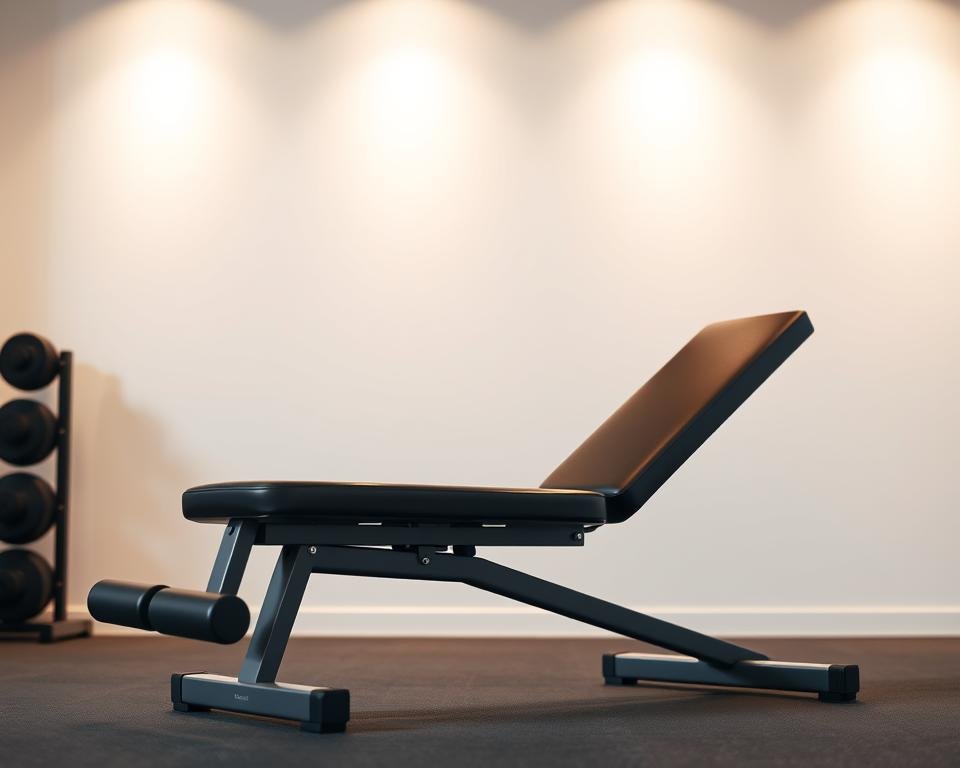

The TDS Flat/Incline/Decline Weight Bench is built for home-gym users who want more adjustment options than a basic flat bench and who have enough room for a heavier, non-folding setup. Amazon currently lists the bench at about 71 lb, with dimensions of roughly 67 x 30 x 53 in and a stated 1,000-lb weight limit.
Those numbers tell only part of the story. A 71-lb adjustable bench can make sense in a dedicated training area, but it is a different purchase from a lightweight bench you fold after every workout. Likewise, the stated 1,000-lb limit is a product specification, not a recommendation for how much any individual should lift.
This review focuses on the practical buying question: does the TDS bench’s size, adjustment design, decline capability, and handling fit the way you actually train at home?
Quick Verdict
The TDS bench is worth considering if you want flat, incline, and decline capability in one substantial bench and expect to leave it set up in a dedicated workout area. Its main tradeoff is convenience: at roughly 71 lb and with a sizable footprint, it is not the obvious choice for someone who regularly folds or carries equipment into storage.
If decline training matters to you, the TDS design has a clearer reason to be on your shortlist. If you mainly need flat and incline positions or have tight storage constraints, one of the alternatives later in this review may fit better.
Key Takeaways
- Amazon currently lists the TDS bench at approximately 71 lb and about 67 x 30 x 53 in.
- The product is presented as a flat/incline/decline adjustable bench with wheels.
- Amazon lists alloy-steel construction and a stated 1,000-lb weight limit.
- A current specialist TDS retailer also describes 11-gauge steel construction, ladder-style adjustment, an adjustable foot holder, and an approximately 18-in flat pad height.
- The bench makes more sense for a dedicated home-gym space than for frequent folding or carrying.
- The listed capacity should not be treated as a personalized safe working load.

Product Snapshot
| Specification | Verified Detail |
|---|---|
| Product type | Adjustable flat/incline/decline weight bench |
| Listed item weight | Approximately 71 lb |
| Listed dimensions | Approximately 67 x 30 x 53 in |
| Material description | Alloy steel |
| Stated weight limit | 1,000 lb |
| Mobility | Wheels |
| Storage style | Non-folding; official vertical-storage approval not verified |
Current specialist-retailer information adds a few useful details: the bench is described as using 11-gauge steel, ladder-style adjustment, an adjustable foot holder, and incline adjustment for both padded sections. That same retailer lists the flat pad height at about 18 inches.
Several older specifications often repeated about this model are less certain. Exact backrest-position counts, seat-position counts, incline and decline angles, pad thickness, pad gap, assembly time, and official vertical-storage guidance were not clearly verified for this review, so they should not drive the buying decision.
You can check the current TDS bench details on Amazon before ordering, since listing information and availability can change.
What Is the TDS Weight Bench Designed For?
The main reason to consider this model is positional versatility. It is presented as a flat/incline/decline bench rather than a simpler flat-to-incline design. The adjustable foot holder also matters because decline-oriented setups generally require a way to help secure the lower body.
That makes the TDS more relevant for someone trying to cover several pressing and seated exercise positions with one bench. It is less compelling if your routine consists mainly of flat pressing or if you already know you will never use decline.
Its physical design also points toward a more permanent home-gym role. A listed 71-lb weight is manageable with wheels, but it is still substantially different from a bench built around frequent folding and carrying.
TDS Weight Bench Full Review
Frame, Construction, and Stated Capacity
Amazon describes the bench as alloy steel and lists a 1,000-lb weight limit. A specialist TDS retailer further identifies the frame as 11-gauge steel. Those specifications suggest a heavier-duty design approach than many lightweight folding benches, but they should not be translated into claims about long-term durability or guaranteed stability without direct testing.
The 1,000-lb figure also needs context. Manufacturers may use different methods when establishing stated product limits, and a published capacity does not tell an individual lifter what their safe working load should be. The number is useful for comparing the product’s intended design range, not for deciding how much weight you personally should press.
At around 71 lb, the bench has enough mass that it is better thought of as part of a semi-permanent or permanent gym station rather than something most people will want to carry into another room after each session.
- Easy assembly. No professional help needed.
- Adj. foot holder.
- Rated for 1000 lbs.
- 11 gauge steel construction
Backrest and Seat Adjustability
The current product information confirms ladder-style adjustment and positioning for flat, incline, and decline use. The specialist retailer also describes incline adjustment for both padded sections.
The practical benefit is not simply having more positions. Adjustable seating can matter when the backrest becomes steeper because the relationship between the seat and back pad affects how securely and comfortably a user can position themselves. Exact TDS adjustment counts and angles were not verified, so the safest way to evaluate the system is by deciding whether you actually need the three broad training modes it offers.
If your workouts include flat pressing, incline pressing, seated dumbbell work, and decline-oriented movements, a fuller FID design may justify its additional hardware. If you mainly perform flat and incline work, a simpler adjustable bench can reduce unnecessary complexity.
Padding and Bench Dimensions
Comfort is difficult to judge from specifications alone. The retailer describes contoured padding, but pad firmness and feel remain subjective. Exact pad width, thickness, and gap were not verified well enough to present as current facts.
The approximately 18-in flat pad height reported by the specialist retailer may be useful for buyers comparing bench geometry with their own body size, rack setup, and floor position. Even then, a single dimension does not tell you whether the bench will feel ideal for your proportions.
This is a good example of where product reviews often overreach. A bench can have substantial padding without being universally comfortable, and a pad dimension that works well for one lifter may feel too wide or narrow for another.
Footprint, Mobility, and Storage
The listed dimensions are approximately 67 in deep by 30 in wide, with a listed height of 53 in. The important buying question is not whether those numbers sound “compact,” but whether you can leave that footprint available around your rack, dumbbells, and walking paths.
The wheels help with repositioning, but wheels and easy storage are not the same thing. At 71 lb, the TDS bench should be easier to roll than to carry, and no official folding design or vertical-storage approval was verified.
For a dedicated garage or basement gym, that may be perfectly acceptable. For an apartment, bedroom, or shared living area where the bench must disappear after every workout, it becomes a much bigger compromise.
Assembly and Everyday Setup
The product requires some setup, but an exact current assembly time was not verified. That means claims such as “takes 30 minutes” or “assembles in under an hour” would be guesswork.
The more useful planning point is that this is a heavier adjustable bench with moving components and a foot-holder arrangement. Buyers should expect to confirm all fasteners, adjustment points, wheels, and moving parts before loaded use and recheck them periodically according to the product instructions.
What Stands Out
The strongest reason to choose the TDS bench is not its capacity number by itself. It is the combination of a heavier adjustable frame, flat/incline/decline positioning, an adjustable foot holder, and a design that appears intended to remain part of a dedicated training setup.
That combination matters most to someone who knows they will use decline capability. Without that requirement, the extra design complexity becomes less valuable, and a flat/incline bench may be easier to live with.
The other defining characteristic is its weight. A 71-lb bench can be moved on wheels, but it changes the daily experience of owning the equipment. If you want a bench you can quickly fold and place against a wall or carry out of the room, this is not the most natural design.
Buyer-Fit Guide: Who Should Consider It?
The American Academy of Orthopaedic Surgeons recommends choosing home exercise equipment according to factors such as your needs, available space, and budget. That approach is especially useful here because the TDS bench’s suitability depends more on your setup than on any single specification.
| Buyer Type | How the TDS Bench Fits |
|---|---|
| Versatility-first buyer | Strong fit if flat, incline, and decline capability are all useful to your training. |
| Dedicated home-gym owner | More practical if the bench can stay assembled in one workout area. |
| Decline-focused user | More relevant because of the decline-oriented design and adjustable foot holder. |
| Frequent-storage buyer | Less natural fit because the bench is about 71 lb and is not verified as foldable. |
| Flat/incline-only user | May be more bench than necessary if decline is unlikely to be used. |
A useful decision rule is simple: buy the additional adjustment capability only if you expect to use it. More positions are not automatically better if they add size, hardware, or handling inconvenience without changing your workouts.
Who Should Skip It?
The TDS bench is easier to rule out if one of the following describes your setup:
- You need to fold and store the bench after most workouts.
- You regularly carry equipment between rooms.
- You only need a flat bench.
- You want flat and incline positions but have little interest in decline.
- Your workout area cannot comfortably accommodate a roughly 67 x 30-in bench footprint.
- You prefer a lighter bench that is easier to reposition manually.
None of those points make the TDS bench a poor product. They simply identify situations where its design priorities do not match the buyer’s priorities.
Pros and Cons
Pros
- Flat, incline, and decline positioning.
- Wheels for repositioning.
- Approximately 71-lb listed product weight.
- 1,000-lb manufacturer/listing-stated weight limit.
- Adjustable foot holder described by a current specialist retailer.
- Ladder-style adjustment.
Cons
- Heavy compared with storage-first folding benches.
- Large enough that buyers should measure their available space carefully.
- No verified folding design.
- Official vertical-storage approval was not confirmed.
- Exact angles, pad dimensions, and several older specifications remain unclear.
- Decline hardware adds little value if you only train flat and incline.
What to Check Before Buying
- Measure the floor space. Do not rely on the word “home gym” to imply a small footprint. Compare the roughly 67 x 30-in listed dimensions with the usable space around your rack and other equipment.
- Decide whether decline matters. If you will rarely use it, a simpler flat/incline bench may suit you better.
- Think about movement, not just storage. Wheels help, but a 71-lb bench still requires more effort to reposition than a lightweight folding model.
- Do not shop by capacity alone. The stated 1,000-lb limit is one specification, not an individualized lifting prescription.
- Check the current listing before ordering. Product details, seller information, and availability may change over time.
Basic Safety and Use Considerations
Before using any adjustable bench with loaded exercises, confirm that the bench is fully assembled, adjustment points are securely engaged, and the bench is positioned on a suitable stable surface. Follow the manufacturer’s instructions for setup and use rather than relying on the capacity number alone.
Mayo Clinic’s guidance on proper weight-training technique also stresses controlled form, manageable resistance, and avoiding loads that cause technique to break down. Those general principles matter regardless of which bench you buy.
A product’s stated weight limit does not establish a safe working load for every person, exercise, rack configuration, or lifting situation. If you are unsure whether your setup is appropriate for a particular load or exercise, use a more conservative setup or seek qualified instruction.
Is the TDS Weight Bench Worth Buying?
Yes, for the right home gym. The TDS bench makes the most sense when three things are true: you have enough dedicated floor space, you expect to use flat/incline/decline positioning, and you do not need a bench that folds away after each workout.
Its roughly 71-lb listed weight and larger footprint are not necessarily disadvantages in that setting; they are simply part of the ownership tradeoff. The same characteristics become less attractive in a bedroom, apartment, or multipurpose room where equipment must be stored frequently.
The 1,000-lb stated limit can be useful as a manufacturer specification, but it should not be the main reason to buy the bench. Adjustment needs, available space, mobility, and how often you expect to use decline are more practical decision factors.
If those factors match your setup, you can view the TDS Flat/Incline/Decline Weight Bench on Amazon and compare the current listing with your available space before ordering.
Alternatives to Consider
An alternative should solve the reason the TDS bench does not fit you. There is little value in switching products simply because another bench has a different brand name or another large capacity number.
REP Fitness AB-3100: For Flat/Incline Training and Easier Repositioning
If you do not need decline capability, the REP Fitness AB-3100 is a more focused alternative. It is a flat-to-incline adjustable bench with six ladder-style backrest settings, three seat positions, and a backrest that reaches up to 85 degrees.

The AB-3100 also includes rear wheels and a front lifting handle, which makes its mobility features easy to understand. Its listed flat pad height is 17.5 in, while the back pad is listed at 11.5 in wide at the shoulders.
The important distinction is what it leaves out: it is not the natural choice for someone specifically shopping for decline functionality. That can actually be an advantage if your routine is based around flat pressing, incline pressing, seated dumbbell work, and similar exercises.
Choose this type of bench when you would rather have straightforward flat/incline adjustment and practical movement around the gym than pay for or accommodate decline-oriented hardware you do not expect to use.
- Heavy-Duty Adjustable Weight Bench: Built with a solid steel frame, this bench supports intense weight training sessions with ease. Perfect for lifters who demand stability, strength, and performance.
- Compact Foldable Home Gym Equipment: Designed to save space, this bench folds vertically for easy storage in garage gyms, apartments, or small workout areas—perfect for home fitness setups.
- High-Density Padding & Durable Upholstery: Premium foam and sweat-resistant vinyl provide lasting comfort and support during reps. Easy to clean and built to withstand daily use at home or in training spaces.
- Versatile Full-Body Workout Bench: Supports a wide range of strength training exercises using dumbbells, resistance bands, and bodyweight. Great for beginner to advanced athletes training at home.
FLYBIRD WB5: For Frequent Folding and Storage
If the TDS bench’s 71-lb weight and fixed footprint are the main reasons you hesitate, the FLYBIRD WB5 addresses a different priority. It is a lighter adjustable bench designed around foldable home-gym storage.

Amazon currently lists the WB5 at approximately 29.5 lb with an 800-lb stated capacity. Current comparison information also lists a 30-in backrest/cushion length.
The weight difference is substantial enough to change how the product fits into a room. A roughly 29.5-lb foldable bench is more practical for someone who expects to move or store the bench regularly, while the heavier TDS design is more naturally suited to remaining in place.
The WB5 should not be treated as a like-for-like heavy fixed-frame replacement. Its value is different: it solves a storage and handling problem rather than trying to duplicate the TDS bench’s overall design.
- 【FLYBIRD】Design and produce fitness equipment for 20 years. Especially in WEIGHT BENCH, the bench was designed with advice of professional coach. You need a durable bench, Not a one month bench.
- 【2021 High Quality Bench】Made of commercial thickness steel, past thousands of weight test to ensure safety for workout everytime, Not the mendacious bench.
- ASTM-Certified & 800lbs Heavy-Duty Support: Its elongated thickened steel frame, dual-triangle structure, and double-locking mechanism reliably support up to 800lbs; weighing 28.5 lbs, it is designed for fitness enthusiasts—whether beginners seeking long-term use or pros upgrading—the FB800 delivers a trustworthy solution in home gym
- 144 Adjustable Positions for Full-Body Training: With a range from -30° to 90° (flat/incline/decline/upright), this workout bench enables effective exercise for every major muscle group from chest and shoulders to core; The -10° decline offers a gentle intro to decline bench press lifting; Perfect 90° upright lock for shoulder & arm isolation
Final Verdict
The TDS Flat/Incline/Decline Weight Bench is easiest to recommend to someone building a dedicated home-gym station who wants decline capability and does not mind owning a larger, roughly 71-lb bench.
Its strongest buying argument is the combination of flat, incline, and decline use rather than any single headline specification. The main question is whether you will use that versatility enough to justify the additional size and handling compared with simpler or foldable benches.
If you have the space and expect to use its broader adjustment range, the TDS model is a reasonable bench to keep on your shortlist. If you mainly need flat/incline training or expect to store the bench frequently, the REP AB-3100 or FLYBIRD WB5 provides a clearer match for those specific needs.
Frequently Asked Questions
Is the TDS weight bench suitable for a small home gym?
It can work in a smaller gym if you have enough dedicated floor space, but its roughly 67 x 30-in listed footprint and 71-lb weight make it less storage-friendly than a folding bench. Measure your usable training area before ordering.
Does the TDS bench support decline-oriented use?
Yes. The current product presentation identifies it as a flat/incline/decline bench, and specialist-retailer information also describes an adjustable foot holder associated with that design.
How much does the TDS bench weigh?
Amazon currently lists the bench at approximately 71 lb. That makes wheels useful for repositioning, but it is still much heavier than storage-focused folding alternatives.
What does the 1,000-lb stated weight limit mean?
It is the weight limit currently listed for the product. It should not be interpreted as a recommendation that every user can safely train at or near that amount. Exercise choice, technique, rack setup, equipment condition, and individual capability all matter.
Is the TDS bench easy to move?
It includes wheels, which should make repositioning more practical than carrying the entire bench. However, at roughly 71 lb, it is not as easy to handle as a lightweight folding model.
Can the TDS bench be stored vertically?
Official vertical-storage approval was not clearly verified. Do not assume vertical storage is supported simply because the bench can potentially be tipped or moved. Follow the manufacturer’s current instructions.
Who should consider a lighter or foldable alternative?
A lighter bench makes more sense if you train in a shared room, apartment, bedroom, or other space where equipment needs to be moved or stored after most workouts. In that situation, foldability may matter more than having a heavier FID-style frame.


Don’t Miss These Picks