
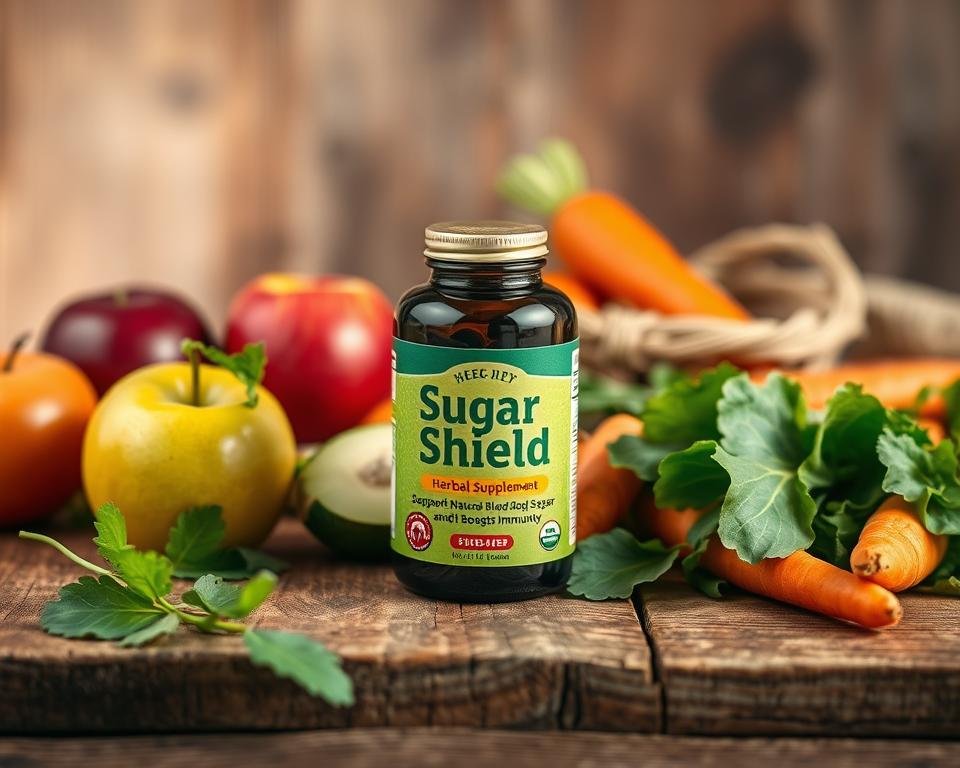

Sugar Shield is difficult to evaluate as one specific supplement because the name is currently used by several unrelated products with different formulations. That matters more than it may seem. Before asking whether Sugar Shield “works,” you first need to know which Sugar Shield product is being discussed, what is actually on its current Supplement Facts panel, and how much of each ingredient it provides.
The older version of this review treated berberine, cinnamon, alpha-lipoic acid, chromium, and Gymnema as though they belonged to one established Sugar Shield formula. Current verification could not confirm that assumption. Some ingredients have been studied individually for glucose-related outcomes, but ingredient research does not prove that an unidentified multi-ingredient supplement produces the same effects.
This review therefore takes a more useful approach: identify what can be verified, separate ingredient evidence from finished-product evidence, explain the safety issues that matter, and show why the exact label and dose are essential before making a buying decision. This is especially important if you have diabetes, prediabetes, or take glucose-lowering medication. The American Diabetes Association guidance on supplements emphasizes that supplements are not an established substitute for appropriate diabetes care and may interact with medications.
Key Takeaways
- “Sugar Shield” is not one uniquely identifiable formula. Several unrelated supplements currently use the name, so the product discussed in the older article cannot be reliably matched to one current label.
- The assumed formula is unverified. Berberine, cinnamon, alpha-lipoic acid, chromium, and Gymnema should not be presented as current Sugar Shield ingredients without identifying the exact product.
- Ingredient research is not product research. Evidence involving berberine or cinnamon does not establish that a particular Sugar Shield formula works.
- Dose relevance cannot be judged yet. Without an authenticated Supplement Facts panel, there is no reliable way to compare Sugar Shield’s doses with amounts used in human studies.
- Safety depends on the actual formula. Some ingredients commonly used in glucose-related supplements may interact with medicines or be inappropriate during pregnancy or breastfeeding.
- No applicable human trial was identified during verification for the exact unidentified Sugar Shield formula discussed in the older review.
Which Sugar Shield Is This Review Actually About?
This is the central problem with the original review. The name Sugar Shield currently appears on multiple supplements from different companies, and their formulas are not interchangeable.
Some products sold under the Sugar Shield name emphasize combinations that include cinnamon, Gymnema, alpha-lipoic acid, chromium, and other ingredients. Another version prominently discusses berberine, alpha-lipoic acid, and biotin. Life Extension’s Tri Sugar Shield uses a substantially different formula built around ingredients such as sorghum bran extract, white mulberry extract, and phloridzin. Other Sugar Shield products use still different botanical combinations.
There is also a current Sugar Shield website describing a formula involving several ingredients mentioned in the older article, including berberine, chromium, cinnamon, alpha-lipoic acid, and Gymnema. However, that overlap is not enough to prove it is the same product originally reviewed. A matching manufacturer identity, complete current label, Amazon listing, and clear continuity with the source article were not established.
Because of that uncertainty, it would be misleading to choose one current Sugar Shield product and quietly treat it as the subject of the original review. The more defensible conclusion is that the original product identity was never established well enough for a reliable current product-specific assessment.
What the Older Review Assumed Was in Sugar Shield
The earlier article discussed five main ingredients: berberine HCl, cinnamon bark extract, alpha-lipoic acid, chromium picolinate, and Gymnema sylvestre. Those ingredients can still be useful to examine because they show the type of evidence the older review relied on. But they should be treated as an assumed historical ingredient profile, not verified current Supplement Facts.
This distinction prevents a common supplement-review mistake: taking research on several interesting ingredients and using it as though it automatically validates a commercial formula.
What the Evidence Says About the Main Ingredients
Berberine
Berberine has been studied in humans for glucose-related and metabolic outcomes, and some studies suggest possible effects. However, the evidence is heterogeneous. Studies differ in population, dose, formulation, duration, background treatment, and methodological quality.
The NCCIH review of diabetes and dietary supplements notes that berberine research has shown some potentially favorable findings but also emphasizes limitations in the available evidence. That is a much narrower conclusion than saying that any supplement containing berberine is proven to improve blood sugar.
It also means the old comparison between berberine and metformin should not be used as a shorthand buying argument. A result from a specific study does not establish that an unidentified Sugar Shield formula can reproduce the effects of a prescription medication.
Cinnamon
Cinnamon is frequently included in supplements marketed for glucose support, but the evidence is less straightforward than many product pages suggest. Different studies use different cinnamon species, extracts, doses, and populations, making the results difficult to generalize.
The NCCIH review of cinnamon research says that studies related to diabetes have produced results that are difficult to interpret and do not clearly establish cinnamon supplementation as an effective treatment for diabetes.
That does not mean cinnamon has no biological effects. It means statements such as “cinnamon mimics insulin” or predictably improves glucose control go beyond what this evidence can establish for a commercial supplement.
Alpha-Lipoic Acid
Alpha-lipoic acid, or ALA, is an antioxidant compound that has been researched in several metabolic and neurological contexts. The older review treated it as though evidence for ALA directly established better glucose control.
That is too broad. Research on ALA for outcomes such as diabetic neuropathy should not automatically be converted into a claim that a Sugar Shield formula will improve fasting glucose, A1c, or insulin sensitivity. Those are separate outcomes and require appropriately designed evidence.
Chromium
Chromium plays a role in normal nutrient metabolism, but supplementation does not predictably improve glucose control simply because chromium is biologically involved in insulin-related processes.
The NIH Office of Dietary Supplements chromium review describes mixed evidence for chromium supplementation and glycemic outcomes. It does not support treating chromium as a reliable glucose-lowering ingredient for people with diabetes.
Chromium is also relevant to safety. The same NIH review notes the possibility of additive glucose-lowering effects when chromium supplements are combined with insulin, metformin, or other antidiabetes medicines. That does not mean every chromium-containing product will cause hypoglycemia, but it is a reason to involve a clinician when medication is already part of the picture.
Gymnema Sylvestre
Gymnema is another botanical frequently marketed for blood-sugar support. However, simply listing it alongside better-known ingredients does not establish that an unidentified Sugar Shield formula contains a meaningful amount or that the finished product will produce a clinically useful effect.
Without an authenticated current label and product-specific evidence, Gymnema should be treated as another ingredient that requires separate evaluation rather than part of a presumed proven blend.
The Product Evidence Ladder
A useful way to judge a supplement like Sugar Shield is to work through the evidence in order. If the early steps are weak, later claims become less certain.
| Evidence Step | What We Can Verify | Practical Meaning |
|---|---|---|
| Current Formula | The exact Sugar Shield product behind the older review could not be uniquely identified. | Current ingredients cannot be confidently assigned to the reviewed product. |
| Dose Relevance | No authenticated Supplement Facts panel for the reviewed product was established. | Its ingredient amounts cannot be reliably compared with study doses. |
| Ingredient Evidence | Some historically assumed ingredients have human research, but evidence strength varies. | Ingredient findings can inform questions, but they do not prove the product works. |
| Finished-Product Evidence | No applicable human trial for the exact unidentified reviewed formulation was identified during verification. | There is no verified product-specific clinical evidence supporting the old positive verdict. |
| Practical Meaning | The first two evidence steps remain unresolved. | A reliable product-specific efficacy judgment cannot be made until the exact product and label are confirmed. |
This ladder exposes the main weakness in the original article. It started near the third step by discussing interesting ingredients, then jumped to a favorable conclusion about Sugar Shield itself. But the first two questions—what is actually in the product, and at what dose—were never securely answered.
Are the Ingredient Doses Meaningful?
At present, this cannot be determined for the Sugar Shield product discussed in the source article.
The older review presented specific “typical” doses for Sugar Shield alongside commonly studied amounts. Those figures should not be retained because the exact product label was not authenticated. Even when a supplement contains a researched ingredient, dose matters. A label may contain far less than was used in a study, a different extract, a different chemical form, or a blend that prevents meaningful dose comparison.
The reverse is also important: providing a dose similar to one used in research does not prove a product will deliver the same outcome. Study populations, formulation, duration, concurrent medications, diet, and other variables all influence the result.
Has Sugar Shield Itself Been Clinically Tested?
During verification, no applicable human clinical trial was identified that could be confidently tied to the exact unidentified Sugar Shield formulation discussed in the older article.
That wording is intentional. It does not prove that no study exists anywhere. It means there was not enough product identity information to connect a specific Sugar Shield formulation with reliable finished-product clinical evidence.
This is why claims about “synergy” should also be treated cautiously. Two ingredients can each have biological effects without producing a proven additional benefit when combined in one commercial formula. Demonstrating synergy requires evidence on the actual combination, not just plausible mechanisms described separately.
Safety, Side Effects, and Medication Interactions
Safety is especially difficult to judge when the exact formula is uncertain. A multi-ingredient supplement should not automatically be described as “safe for most healthy adults” simply because its individual ingredients are commonly sold.
Berberine can cause gastrointestinal side effects and may interact with medicines. NCCIH also advises against berberine use during pregnancy and breastfeeding. If a Sugar Shield formula contains berberine, those cautions become relevant, but the exact ingredient list still needs to be confirmed first.
Chromium deserves similar care. NIH notes that chromium supplements may have additive effects when combined with insulin, metformin, or other medications used to lower blood glucose. The concern is not that every combination will necessarily cause a problem; it is that the effect can depend on the dose, medication regimen, and individual response.
More broadly, the American Diabetes Association advises people with diabetes to discuss supplement use with their health care team because supplements can affect glucose levels or interact with medications. This is more useful than a blanket rule saying a supplement is always safe or always unsafe with metformin.

Who Should Ask a Clinician Before Using a Glucose-Related Supplement?
- Anyone taking insulin, metformin, sulfonylureas, or other glucose-lowering medication.
- Anyone with diagnosed diabetes or prediabetes who is considering a supplement specifically to influence glucose control.
- Anyone who is pregnant or breastfeeding, particularly if the formula contains berberine.
- Anyone taking multiple medications or using other supplements that may affect blood glucose.
- Anyone with a medical condition that makes supplement interactions or metabolism a concern.
If a product is marketed as treating, preventing, curing, or replacing treatment for diabetes, that is also a reason for caution. The FDA warning on unapproved diabetes-treatment products explains why consumers should be wary of supplements promoted as substitutes for established medical care.
Who Might Consider Sugar Shield—and Who Should Be Cautious?
A clearly identified supplement with a transparent label may be something a person chooses to discuss with a clinician as part of a broader wellness routine. But that is very different from recommending Sugar Shield specifically for prediabetes, insulin resistance, or diagnosed diabetes.
Those conditions increase the importance of accurate diagnosis, monitoring, medication decisions when needed, nutrition, physical activity, sleep, weight management where appropriate, and ongoing medical care. An unidentified supplement with uncertain doses should not be positioned as the central solution.

For a reader simply interested in supplements, the practical buying question is more basic: can you verify the manufacturer, full Supplement Facts panel, serving size, ingredient forms, amounts, safety information, and current product identity? If not, there is not enough information to judge the product confidently.
Value and Practical Tradeoffs
Without a verified current Sugar Shield product and price, it would be artificial to assign a strong value verdict. But there is still a useful principle: evidence transparency is part of value.
A complex formula can look appealing because it combines many recognizable ingredients. The tradeoff is that it becomes harder to know which ingredient is responsible for an effect, whether each one is present at a meaningful amount, and whether the combined formula has ever been studied.
A clearly labeled product with fewer ingredients may be easier to evaluate, even though a simpler formula is not automatically more effective. For a supplement connected to glucose-related goals, knowing exactly what you are taking matters more than the number of ingredients on the front label.
If your interest in Sugar Shield came mainly from its discussion of berberine, one simpler option is to evaluate a standalone berberine product separately rather than assuming another multi-ingredient “Sugar Shield” formula is equivalent.
The SOLARAY product below is a verified Amazon option centered on berberine. It is not a Sugar Shield substitute, does not reproduce the presumed historical formula, and should not be expected to deliver the same effects attributed to multi-ingredient products.
- Traditional Berberine – Obtained from the roots and stems of Indian barberry, Oregon grape root and other plants, berberine (Berberis aristata) is a golden yellow alkaloid that has been used for 3000+ years for a variety of health benefits.*
- Go for Your Goals – An excellent aid in healthy lifestyle goals when combined with proper diet and exercise, berberine may help provide powerful support to help keep you feeling your best.*

Its main advantage from an evaluation standpoint is simplicity: it is easier to identify berberine as the principal ingredient being considered. That still does not mean the commercial product has been proven to lower A1c, replace medication, improve insulin resistance, or produce the outcomes seen in separate berberine studies.
Anyone taking glucose-lowering medication, or anyone considering berberine specifically for diabetes or prediabetes, has a stronger reason to discuss it with a clinician before use. Berberine also should not be recommended during pregnancy or breastfeeding.
Final Verdict
The strongest conclusion from this review is not that Sugar Shield works or does not work. It is that the product discussed in the older article was never identified precisely enough to support that kind of verdict.
Several unrelated products currently share the Sugar Shield name, their formulations differ substantially, and the older article’s assumed combination of berberine, cinnamon, alpha-lipoic acid, chromium, and Gymnema could not be securely matched to one current product. Without an authenticated label, dose relevance cannot be assessed, and no applicable human trial for the exact unidentified formulation was identified during verification.
Some of the ingredients discussed historically do have human research behind them, particularly berberine, but the evidence is ingredient-specific, mixed in strength, and not proof of a finished commercial formula. That makes the earlier positive verdict too confident.
If you are considering a Sugar Shield product, first verify the exact manufacturer and current Supplement Facts panel. Then evaluate the actual ingredients, amounts, medication interactions, and evidence for that specific formula. If your goal relates to diabetes, prediabetes, or glucose-lowering medication, that decision belongs alongside established medical care rather than in place of it.
Frequently Asked Questions
What is actually in Sugar Shield?
There is no single verified answer because several unrelated supplements currently use the Sugar Shield name. Their formulas differ. The older article discussed berberine, cinnamon, alpha-lipoic acid, chromium, and Gymnema, but those ingredients could not be authenticated as the current formula of one uniquely identified reviewed product.
Has Sugar Shield itself been clinically tested?
No applicable human clinical trial was identified during verification for the exact unidentified Sugar Shield formulation discussed in the source article. That is different from saying no research exists on any ingredient or any product that happens to use the Sugar Shield name.
Can I take Sugar Shield with metformin or other diabetes medication?
That cannot be answered safely without knowing the exact formula, your medications, and your health situation. Some ingredients used in glucose-related supplements, including chromium and berberine, may affect glucose or interact with medicines. If you take metformin, insulin, or another glucose-lowering drug, discuss the specific supplement and label with your clinician before adding it.
Why don’t studies on berberine or cinnamon prove Sugar Shield works?
Because ingredient studies test specific doses, formulations, populations, durations, and outcomes. A commercial blend may contain different amounts, different forms, additional ingredients, or combinations that have never been studied together. Evidence for one ingredient cannot automatically be transferred to the finished product.
What should I do if I cannot verify which Sugar Shield product I have found?
Do not rely on a review of another product with the same name. Check the manufacturer, Supplement Facts panel, serving size, ingredient amounts, and current product page. If those details cannot be confirmed, there is not enough information for a reliable product-specific judgment.
Do I still need diet, exercise, and medical care if I use a supplement?
Yes. A supplement should not replace an appropriate eating pattern, physical activity, prescribed medication, monitoring, or professional care when those are needed. This is especially important for diabetes and prediabetes, where supplement marketing should not substitute for evidence-based management.


Don’t Miss These Picks